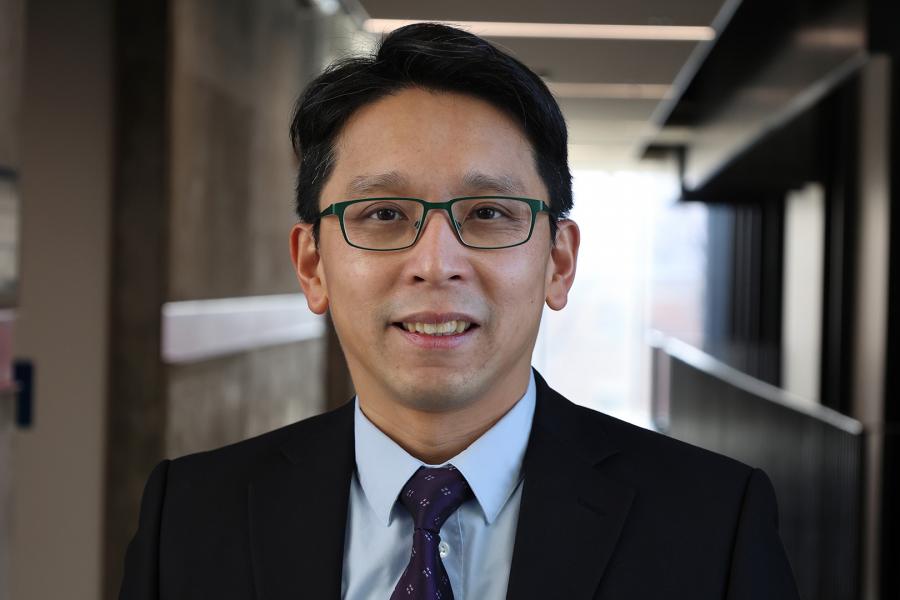
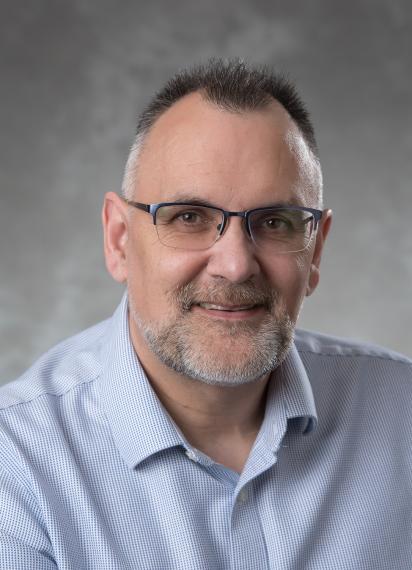
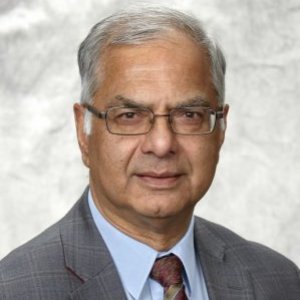
Shiyu Su is an Assistant Professor in the Department of Electrical and Computer Engineering at the University of Waterloo. His research focuses on high-speed data converters, wireless transceivers, digital phase-locked loops (PLL), and AI-assisted analog/mixed-signal design automation. He holds a Ph.D. from the University of Southern California (2019) and teaches courses such as ECE 340 (Electronic Circuits 2) and ECE 432 (Radio Frequency Integrated Devices and Circuits). Education: B.S. from Beijing University of Post and Telecommunication (China) and Queen Mary, University of London (UK), 2011; M.S. and Ph.D. from USC, 2013 and 2019, all in electrical engineering. Research Interests: High-speed ADCs/DACs RF/mm-wave transceivers Time-approximation filters (TAF) Analog/mixed-signal design automation Memristor-based computing Biomedical interfaces Key Awards: IEEE SSCS Predoctoral Achievement Award (2017–2018) Best Student Paper Award at IEEE RFIC (2022) Ming Hsieh Institute Scholar (2019–2020) Lab Focus: The Shiyu Su Lab develops integrated circuits for communications, sensing, and computing, with a focus on AI-driven methodologies and digital-analog co-design. Collaborations include work with Prof. Wei Wu (USC) on memristor-based systems.
Lan Wei is an Associate Professor in the Department of Electrical and Computer Engineering at the University of Waterloo, Canada. She leads the Waterloo Emerging Integrated Systems Group, focusing on device-circuit co-optimization, cryogenic CMOS for quantum computing, and emerging technologies like GaN, RRAM, and low-dimensional materials. Her work bridges nanoelectronics and system-level applications, with notable contributions to the MIT Virtual Source GaN HEMT (MVSG) compact model, an industry-standard tool. Education: B.S. in Microelectronics and Economics, Peking University (2005) M.S. and Ph.D. in Electrical Engineering, Stanford University (2007, 2010) Research Interests: Nanoelectronic devices Cryogenic CMOS for quantum computing GaN-based circuits and systems RRAM-based neuromorphic computing Device-circuit interactive design Publications reflect her expertise in GaN modeling, quantum computing hardware, and RRAM applications. Recent work emphasizes scalable quantum control circuits and error-resilient neural networks using emerging technologies. Awards include the 2019 Ontario Early Researcher Award and the 2020 UWaterloo President's Excellence Award in Research. She has served on technical committees for IEDM, DATE, and ICCAD, and contributed to the ITRS roadmap. Teaching includes courses like ECE 240 (Electronic Circuits) and ECE 730 (Solid State Devices). Her group actively seeks graduate students with interest in integrated systems and nanoelectronics.
Mariana Resener is an Assistant Professor in the School of Sustainable Energy Engineering at Simon Fraser University (SFU). She holds a Ph.D. in Electrical Engineering (2016) from the Federal University of Rio Grande do Sul, Brazil, alongside M.Sc. (2011) and B.Sc. (2008) degrees in the same field. Her research focuses on optimizing power systems, particularly in distributed energy resources, energy storage, and volt/var control. She teaches courses like Power Electronics and Power Systems Analysis & Design. Her work emphasizes sustainable development in grid planning and energy infrastructure. As a Senior Member of IEEE and an Associate Editor for the Energy Systems Journal (Springer), she contributes to advancing smart grid technologies and renewable integration. Her research spans metaheuristic optimization, stochastic modeling, and grid resilience strategies for distributed systems. Recent projects include hybrid renewable energy systems for substations, EV charging station optimization, and fault analysis in unbalanced grids. She collaborates with industry on practical solutions for grid modernization and reliability enhancement.
Dr. Chih-Hung (James) Chen is a Professor in the Department of Electrical & Computer Engineering at McMaster University. His research focuses on noise-related issues in semiconductor devices, low-noise circuit design for medical and communication applications, and thermal noise characterization in nano-scale transistors. He holds senior member status in IEEE and is a licensed Professional Engineer in Ontario. Education: Ph.D., McMaster University, 2002 M.A.Sc., Simon Fraser University, 1997 B.Sc., National Central University, Taiwan, 1991 Research interests include biomedical technologies, microelectronics & VLSI, and digital/smart systems. He has collaborated with companies like Sony Corporation, United Microelectronics Corporation, and Focus Microwaves. His work is supported by grants from the Canada Foundation for Innovation (CFI), NSERC, and the Ontario Innovation Trust (OIT). Notable achievements include serving on the International Advisory Committee of the International Conference on Noise and Fluctuations (2015) and as an editor for the Journal of Low Power Electronics and Applications since 2022. Teaching includes courses like Analysis and Design of RF ICs for Communications and Electronic Devices and Circuits 2. His research lab focuses on advancing noise measurement techniques and designing ultra-low-power analog circuits for emerging applications.
Xilin Liu is an Assistant Professor at the Edward S. Rogers Sr. Department of Electrical & Computer Engineering (University of Toronto) and the Center for Advancing Neurotechnological Innovation to Application (CRANIA) . He obtained his PhD from the University of Pennsylvania and previously worked at Qualcomm Inc. in California. Expertise in integrated circuits and systems for brain-machine interfaces , neuromodulation , and edge AI Published in top venues including Nature Electronics , IEEE JSSC , and ISSCC Recipient of multiple best paper awards and IEEE Senior Member His research spans three main themes: High-speed data converters for wireless/wireline communication IC design for neural interfacing Accelerating machine learning via hardware Recent publications focus on closed-loop neuromodulation , ultra-wideband transceivers , and flexible biomedical sensors . These works integrate analog IC design , edge AI , and real-time neural interfacing across medical rehabilitation , parkinson's monitoring , and memory research . Awards include: IEEE Solid-State Circuits Society Predoctoral Achievement Award (2016) Best Paper Award at BioCAS (2015) ECE Department Teaching Award (2022) Multiple conference best paper finalists His lab collaborates with UHN , EMBS , and global institutions while maintaining strong commitments to equity, diversity, and inclusion (EDI) in research practices.
John R. Long is a Professor in the Department of Electrical and Computer Engineering at the University of Waterloo, specializing in high-speed wireline and high-frequency circuit design for integrated wireless communications systems. His work bridges theoretical innovation with practical applications in mobile transceiver technologies. His academic credentials include: Doctorate in Electronics from Carleton University, Canada (1996) Master of Engineering in Electronics from Carleton University, Canada (1992) Bachelor of Science in Electrical Engineering from the University of Calgary, Canada (1984) Dr. Long's research concentrates on energy-efficient circuit architectures for next-generation wireless systems. His expertise spans millimeter-wave frequency doublers, low-voltage RF design, and wideband transceivers, addressing critical challenges in mobile communications bandwidth and power consumption. Recent work demonstrates significant advancements in DC-100 GHz circuit operation and autonomous system integration. Publications from 2015-2016 reveal a consistent focus on pushing the boundaries of solid-state circuit performance, particularly in high-frequency analog design and system-on-chip implementations for wireless applications. No scientific awards were documented in the provided materials. As an active educator, Dr. Long mentors graduate students and teaches core courses including Radio Frequency Integrated Devices (ECE 432) and Integrated Analog Electronics (ECE 444), emphasizing hands-on circuit design principles. His leadership extends to administrative roles, having previously chaired the Electronics Research Laboratory at Delft University of Technology.
Dr. Scott Chen is an Assistant Professor in the Department of Electrical & Computer Engineering at McMaster University, where he focuses on teaching and research in embedded systems, RF technologies, and biomedical sensors. He previously held roles as a lecturer at the University of Waterloo and program coordinator at Conestoga College, alongside industry experience in embedded systems engineering and sensor development. Education: B.A.Sc. (Simon Fraser University, 2007) and Ph.D. (University of Waterloo, 2015), followed by a MITAC postdoctoral fellowship. His industry experience includes roles at Thalmic Labs/North, Sober Steering Sensors, and Equustek Solutions. Research interests span embedded systems for IoT, RF biomedical sensors, cleanroom micro/nano-fabrication, and game design in Unity. Notable achievements include a 2018 US patent for ethanol sensing technologies and a 2021 teaching award nomination. Current courses taught include Principles of Programming (COMPENG 2SH4), Data Structures and Algorithms (COMPENG 2SI3), and Introduction to Electrical Engineering (ELECENG 2CI4). Awards: US Patent 9,958,444B2 (2018), nominated for Aubrey Hagar Distinguished Teaching Award (2021). His work bridges academia and industry, emphasizing practical applications in wearable sensors, quantum computing components, and interdisciplinary engineering solutions.
Raman Kashyap is a Full Professor at the Department of Electrical Engineering and Department of Engineering Physics at Polytechnique Montréal . He serves as a researcher at the Centre d’optique, photonique et laser (COPL) and a member of the Advanced Research Centre in Microwaves and Space Electronics (POLY-GRAMES) . His work spans multiple domains in photonics and laser technology. B.Sc. (King's College), Ph.D. (Essex) Research Interests : Professor Kashyap's research focuses on optical fibers , laser cooling , Bragg gratings , optoelectronics , nonlinear optics , and periodically poled crystals . His work explores stimulated Brillouin scattering , optical sensors , and material modification via lasers , contributing to advancements in quantum photonics and microwave engineering . Recent Research Trends : His latest publications emphasize Anti-Stokes fluorescence cooling in silica and oxide glasses, elastic optical network optimization , and femtosecond laser writing for photonic devices. These works bridge material science , quantum computing , and telecommunications , showcasing innovative applications in temperature sensing , optical delay systems , and 3D integrated optics . Scientific Awards : 2016 - Québec Science's 10 Discoveries of the Year 2014 - Royal Society of Canada (RSC) Fellow 2013 - SPIE Fellow 2012 - Killam Fellowship (Canada Council for the Arts) 2011 - Engineering Institute of Canada (EIC) Fellow 2010 - Institute of Physics Fellow 2004 - Optical Society of America (OSA) Fellow Academic Supervision : Professor Kashyap has supervised 36 students , including 24 Ph.D. candidates and 12 Master’s students . His supervised projects cover spherical Bragg resonators , laser-induced cooling , optical frequency domain reflectometry , and femtosecond laser writing . Labs & Collaborations : He leads research at the Fabulas laboratory and collaborates with the POLY-GRAMES center. His work involves partnerships with institutions like INRS and Québec Science , influencing quantum computing and optical fiber communication technologies.
Dr. Carl Ho (Ngai Man) is a Full Professor and Canada Research Chair in Efficient Utilization of Electric Power at the University of Manitoba's Price Faculty of Engineering, Department of Electrical and Computer Engineering. Appointed Associate Head (Electrical Engineering) in July 2021, he leads the Renewable-energy Interface and Grid Automation (RIGA) Lab established with CFI funding in 2014. His educational background includes: PhD in Electronic Engineering (2007), City University of Hong Kong MEng in Electronic Engineering (2002), City University of Hong Kong BEng in Electronic Engineering (2002), City University of Hong Kong Dr. Ho's research focuses on power electronics applications for sustainable energy systems, with particular expertise in power conversion technologies for electric vehicles, renewable integration, and smart grid infrastructure. His work bridges industrial application and academic innovation, evidenced by over 40 IEEE journal publications, 80 conference papers, and 20+ patents. Current research emphasizes wide-bandgap semiconductor applications, power hardware-in-loop validation, and DC microgrid architectures for remote communities. Analysis of his recent publications reveals a strong trend toward practical implementation of power electronics solutions, with increasing focus on GaN/SiC devices, grid-forming converters, and modular architectures for microgrids. His work consistently addresses real-world challenges in efficiency, reliability, and cost-effectiveness across renewable integration, electric transportation, and power quality domains. Notable awards include: Second Place Winner for 2018 IEEE Transactions on Power Electronics Prize Paper Multiple IEEE JESTPE Star Associate Editor Awards (2022-2023) IEEE TPEL AE Excellence Award (2023) Best Student Team Regional Award in IEEE Empower a Billion Lives 2019 As an active mentor, Dr. Ho supervises numerous graduate students across multiple cohorts and leads significant research initiatives including NSERC Discovery Grants, MITACS collaborations with Power Integrations Inc., Research Manitoba Innovation Proof-of-Concept Grants, and Natural Resources Canada projects on zero-emission heavy vehicles. His RIGA Lab serves as a hub for industry-academic collaboration with Manitoba Hydro and transportation sector partners. The RIGA Lab, completed in 2016 and renovated in 2019, houses specialized equipment for power electronics prototyping, real-time simulation, and hardware-in-loop testing. Current projects include advanced wireless EV charging, GaN-based controller development, and DC microgrid solutions for remote communities, with recent recognition including a visit from Prime Minister Justin Trudeau in April 2023.
Gary Grewal is an Associate Professor at the School of Computer Science , University of Guelph. His research focuses on developing intelligent Computer-Aided Design (CAD) tools for Field Programmable Gate Arrays (FPGAs) , integrating classical optimization techniques with machine learning and deep learning to address challenges in placement and routing for heterogeneous devices. He has received the Michal Servit Award (2017, 2018) for outstanding FPGA research and the University of Guelph Faculty Association Distinguished Professor Award for Excellence in Teaching (2017) . Grewal has held NSERC Discovery Grants annually from 1999 to 2023. Co-founder of the Guelph FPGA CAD Group Key collaborator with institutions like Ryerson University , University of Toronto , and University of British Columbia His work extends to health technology through the IronTracker mobile app , developed with Andrew Hamilton-Wright and students (A. D'Angelo, J. Carter, F. Liu, R. Pattison) to manage Hereditary Hemochromatosis (HHC) . The app, available in four languages and adopted in 100+ countries, was recognized at Parliament Hill and the Ontario Legislature. Scientific Awards : Michal Servit Award (2018) Michal Servit Award (2017) Distinguished Professor Award for Teaching (2017) NSERC Discovery Grants (1999-2023) His recent publications highlight trends in machine learning for FPGA CAD , including reinforcement learning for partitioning, deep learning for congestion estimation, and adaptive algorithms for placement. Grewal remains active in teaching courses like Discrete Optimization (CIS*6070) and Digital Systems I (CIS*3120).
Ksenia Dolgaleva is an Associate Professor at the University of Ottawa's School of Electrical Engineering and Computer Science, and holds a Canada Research Chair in Integrated Photonics (Tier 2). She joined the university in July 2013 as part of the Canada Excellence Research Chair team led by Professor Robert Boyd. Education: She earned a Diploma in Physics from Moscow State University (Russia) and a Ph.D. in Optics from the University of Rochester (USA, 2009). She completed a postdoctoral fellowship at the University of Toronto (2009–2013), supported by a Mitacs Elevate fellowship (2011–2012). Research Interests: Her work focuses on integrated photonics, nonlinear optics, THz technology, and advanced optical materials. Key areas include artificial photonic structures, nonlinear responses in materials like InP, GaN, and quartz, and plasmonic metamaterials for sensing and frequency conversion. Publications & Trends: Over 20 peer-reviewed articles highlight her contributions to nonlinear photonics platforms, THz spectroscopy, and material characterization. Recent work emphasizes phase-matched processes, ultra-high-Q resonances, and THz plasmonic metasurfaces. Scientific Awards: Outstanding undergraduate thesis award (Russian Physical Society, 2009) Outstanding student presentation (OSA Frontiers in Optics, 2008) Advising & Grants: Trained 8 students during her Ph.D. and postdoc. Currently building her research group to explore optics and photonics. Labs/Teams: Active in the Canada Excellence Research Chair team and collaborates on projects involving III-V semiconductors and THz technologies.
Dr. Vijay K. Sood is a Professor in the Department of Electrical, Computer and Software Engineering at Ontario Tech University. He holds a PhD in Power Electronics from Bradford University (UK), and has extensive experience in power systems, power electronics, and renewable energy integration. His research focuses on High Voltage Direct Current (HVDC) systems, Flexible AC Transmission Systems (FACTS), power electronics converters, and grid protection. He has received numerous awards, including Life Fellow of IEEE, Emeritus Fellow of the Canadian Academy of Engineers, and the 2000 IEEE Third Millennium Medal. Dr. Sood has authored/co-authored over 100 publications, including peer-reviewed articles in top journals like IEEE Transactions on Power Electronics and International Journal of Electrical Power & Energy Systems. His work addresses challenges in grid stability, renewable energy integration, and advanced control strategies for power systems. Education: PhD (Power Electronics), Bradford University, UK (1977) MASc (Electrical Machines), Strathclyde University, Scotland (1969) BSc (Electrical Engineering), Nairobi University, Kenya (1967) Awards: IEEE Third Millennium Medal (2000) Canadian Pacific Railway Engineering Award (2002) IEEE Regional Activities Board Achievement Awards (2001, 2006) His research emphasizes practical solutions for modern power systems, including HVDC controller design, synthetic inertia control for renewable grids, and advanced fault detection techniques. He has collaborated internationally on projects like the Energy System Observatory of Honduras and grid architecture models for multi-terminal DC systems.
Mustapha C.E. Yagoub is a Full Professor at the School of Electrical Engineering and Computer Science, University of Ottawa, with over 500 publications in RF/microwave CAD, RFID systems, neural networks, and applied electromagnetics. He leads research in the ELEMENT Laboratory and RFM Research Group , focusing on wireless communication systems and nonlinear device modeling. PhD in Electronics (Institut National Polytechnique de Toulouse, 1994) Magister in Telecommunications (École Nationale Polytechnique d'Alger, 1987) Dipl.-Ing. in Electronics (École Nationale Polytechnique d'Alger, 1979) His research bridges Microwave Circuit Design with Artificial Intelligence , including applications in Energy Conservation and Telecommunication Systems . Key trends in his publications include hybrid modeling techniques combining Neural Networks with Computational Electromagnetics for optimizing Antenna Design and RF Components . He is a Senior Member of IEEE and licensed with the Professional Engineers of Ontario and Ordre des Ingénieurs du Québec . His lab teams focus on High-Tc Superconducting Devices and Directional Antenna Optimization for RFID networks.
Pragasen Pillay is a Professor of Electrical and Computer Engineering at Concordia University and holds the Concordia University Research Chair in the same field. His research focuses on electric machines and drives, electric vehicles, and renewable energy systems. He leads advanced studies in variable flux motors, soft magnetic composite materials, and power hardware-in-the-loop (PHIL) emulation for fault diagnosis. Education: PhD from Virginia Polytechnic Institute (1987), MSc and B.Eng from University of Kwa-Zulu Natal (1983 and 1981). Research emphasizes electric vehicle drivetrain design, renewable energy integration, and high-efficiency motor development. Notable contributions include work on rare-earth-free magnets, torque pulsation reduction, and thermal modeling of electric machines. His lab facilities include a 200 hp dynamometer and solar power electronics systems for the Future Building Laboratory. Publications span over 30 years, with recent focus on PHIL-based fault emulation, variable flux motor topologies, and SMC material applications. His work bridges theoretical analysis with experimental validation, addressing challenges in both academic and industrial settings.
Ghyslain Gagnon is a Professor in the Department of Electrical Engineering at École de technologie supérieure (ÉTS) in Montreal, Canada. He leads research activities within the LACIME – Communications and Microelectronic Integration Laboratory, focusing on cutting-edge developments in microelectronics, sensors, and communication systems. His work bridges theoretical research and practical applications across multiple domains including health technologies, wireless communications, and quantum engineering. Education: B.Ing. from École de technologie supérieure M.Ing. from École de technologie supérieure Ph.D. from Université de Carleton Professor Gagnon's research spans several interconnected domains with emphasis on Radiofrequency circuits and antennas, Microelectronics, Wireless communications, Sensors and monitoring systems, Machine learning applications, Health technologies, and Quantum engineering. His work demonstrates a strong commitment to translating theoretical concepts into practical solutions with real-world impact, particularly in the areas of health monitoring systems and advanced communication technologies. His recent publications reveal a clear trajectory toward increasingly interdisciplinary research, combining traditional electrical engineering with machine learning, health monitoring, and quantum technologies. The trend shows growing emphasis on practical applications in automotive safety systems, wireless communications for next-generation networks, and health monitoring technologies that leverage flexible electronics and novel sensor designs. Professor Gagnon has successfully supervised numerous graduate students through their doctoral and master's research, with recent theses focusing on smart hearing protection devices, machine learning applications, energy monitoring systems, and flexible sensor technologies. His supervision record demonstrates consistent productivity and relevance to contemporary engineering challenges. He is an active member of the LACIME research laboratory, which focuses on six key areas: Functional materials, Micro- and nanofabrication processes, Conception and design of integrated circuits, Design and fabrication of hybrid components, Photonic and electronic microsystems, and Signal processing and communication. This environment provides students with access to cutting-edge tools and fosters innovation through interdisciplinary collaboration.