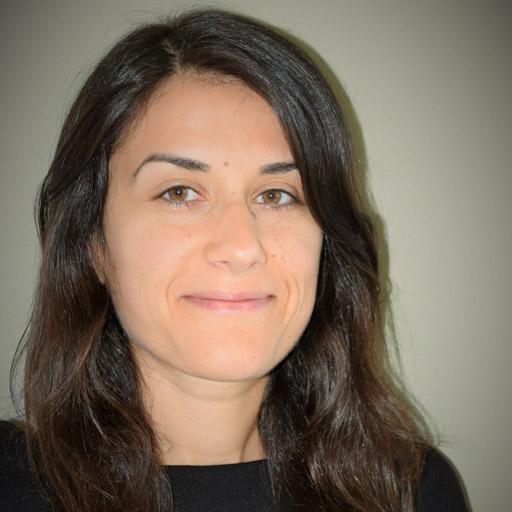
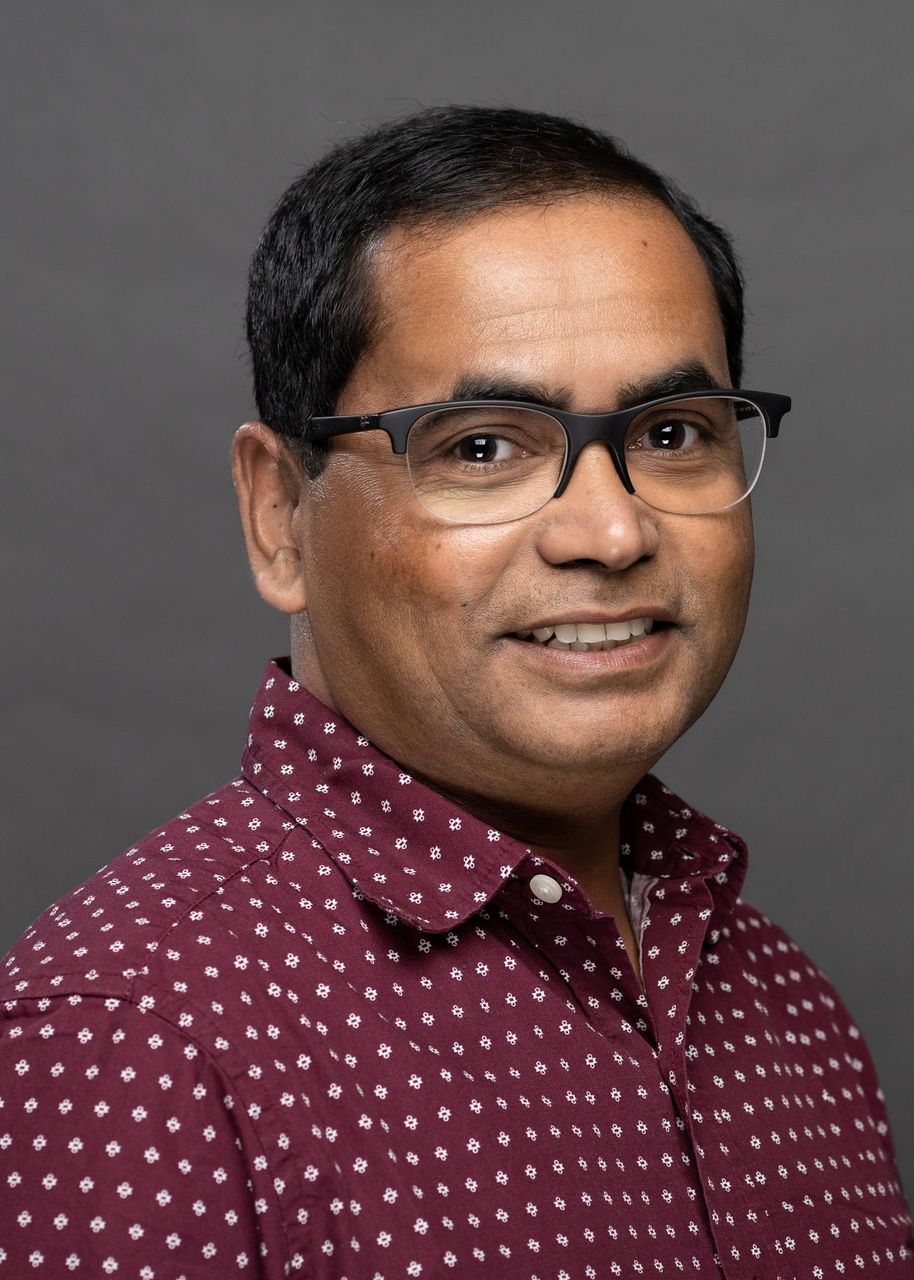
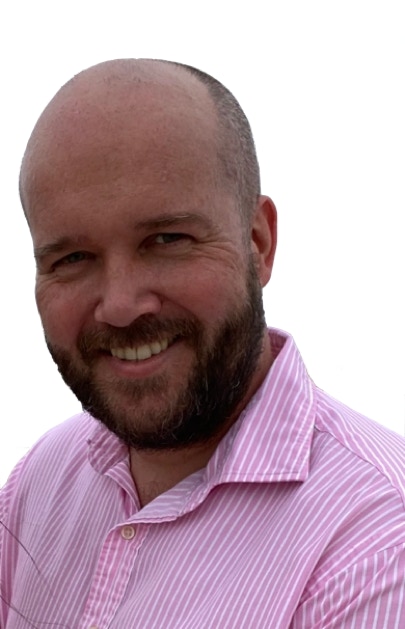
Dr. Carole El Ayoubi is a Senior Lecturer in the Mechanical, Industrial and Aerospace Engineering department at Concordia University. Her expertise focuses on aero-thermal design of gas turbines, with a particular emphasis on film cooling optimization for turbine airfoils. She teaches courses such as MECH 352: Heat Transfer and AERO 462: Turbomachinery and Propulsion. Her research explores advanced methods to enhance thermal efficiency and reduce heat transfer in turbine components through computational fluid dynamics (CFD) modeling and experimental validation. Recent publications (2010–2015) highlight contributions to discrete film cooling hole design, aero-thermal optimization, and unsteady tip leakage flow analysis in high-pressure turbine systems. No scientific awards or grants have been explicitly listed in the provided information.
Hadjiefthymiades Stathes is a Professor at the Department of Informatics and Telecommunications, National and Kapodistrian University of Athens. His primary research division focuses on Computer Systems and Applications. He specializes in IoT security, cloud computing, machine learning, and edge computing, with notable contributions to data analytics, trust management, and cybersecurity in distributed systems. Research Interests: His work spans IoT security protocols, optimization of cloud storage systems, anomaly detection in Kubernetes environments, and predictive analytics for sensor networks. He has explored trust models in pervasive computing, energy-efficient node authentication, and hardware-accelerated mixed reality interfaces. His recent projects include frameworks for Earth observation data accessibility and next-generation internet experimentation platforms. Publications: His recent articles highlight advancements in IoT data reduction techniques, trust sustainability in infrastructure, and the application of Markov chains for multivariate event correlation. He has also contributed to the design of experiment description languages for mobile IoT and emergency response platforms for radiological incidents. Awards & Grants: No scientific awards or grants were explicitly mentioned in the provided texts. Labs & Teams: His research involves collaborations on projects like EO4EU-AI (Earth observation with extended reality interfaces) and TRACE (logistics integration systems). He is affiliated with the university's advanced systems research groups focusing on edge computing and secure IoT ecosystems.
Mikael Salson is a researcher specializing in bioinformatics and algorithm design for genomic data analysis. He completed his PhD in 2009 at the University of Rouen, France, focusing on dynamic text indexing structures. His work bridges algorithmic innovation and practical bioinformatics tools, particularly in high-throughput sequencing analysis. Research Interests: Salson's research centers on developing efficient algorithms for genomic data processing, including V(D)J repertoire analysis, RNA-Seq, and alignment-free methods. He has contributed to open-source platforms like Vidjil (for immune repertoire analysis) and CRAC (RNA-Seq analysis). His work emphasizes scalability, efficiency, and clinical applicability of bioinformatics tools. Recent Trends in Publications: Salson's recent work explores compressed indexing for viral genomics (2024), clinical applications of string algorithms (2020), and interactive visualization of immune repertoires (2019). His articles highlight advancements in algorithm efficiency, alignment-free approaches, and software development for genomic challenges. Labs/Teams: Collaborations include the development of the Vidjil platform and contributions to projects like SeqBIM and the ANR Mappi initiative. His work often involves interdisciplinary teams in bioinformatics, computer science, and medical research.
Dr. Tarun Sheel is a Teaching Assistant Professor in the Department of Mathematics & Statistics at Memorial University of Newfoundland. With a PhD in Mechanical Engineering from Keio University, his research focuses on computational fluid dynamics, vortex methods, and high-performance computing techniques. His expertise includes developing accelerated vortex methods using Fast Multipole Method (FMM) and special-purpose computers like MDGRAPE systems. Current research investigates scour reduction at bridge piers using RANS turbulence modeling and bluff body flow control. Additional work spans parallel mesh generation, fluid-structure interaction, and multiphase flow simulation. Dr. Sheel's publications demonstrate consistent focus on computational acceleration techniques, with applications ranging from turbulent flow simulation to geotechnical problems like submarine landslides. His work integrates numerical analysis with hardware-specific optimizations for scientific computing. Teaching responsibilities include calculus, linear algebra, differential equations, and numerical methods across undergraduate and graduate levels at multiple institutions internationally.
Fredrik Lundell is Professor of Fluid Mechanics at KTH Royal Institute of Technology, where he leads research in fluid physics, biopolymer assembly, and experimental mechanics. His work bridges fundamental fluid dynamics with applications in sustainable materials, utilizing techniques including synchrotron imaging, microfluidics, and optical coherence tomography. Research encompasses nanocellulose processing, protein nanofibril assembly, turbulence modulation, and multiphase flows. Recent work emphasizes flow-directed assembly of hierarchical biomaterials and energy-efficient fabrication methods. Experimental approaches combine advanced imaging with microfluidic platforms to study complex fluid-structure interactions. Publications demonstrate innovations in nanofiber alignment control, sustainable material design, and multiphase flow characterization. Recent articles focus on microfluidic assembly strategies, interfacial phenomena, and non-Newtonian fluid dynamics. Advises doctoral students investigating diverse topics from turbulent suspensions to biopolymer physics. Directs laboratory facilities for flow measurements and materials characterization, collaborating extensively through the Wallenberg Wood Science Center.
Chudi Zhong is an Assistant Professor at the School of Data Science and Society and Department of Statistics and Operations Research, University of North Carolina at Chapel Hill. She obtained her Ph.D. in Computer Science from Duke University. Research Focus: Develops interpretable machine learning algorithms and pipelines for high-stakes decision-making, including optimization of accuracy-sparsity tradeoffs and Rashomon set visualization. Award Highlights: Bell Labs Prize (Second Place, 2023) Rising Stars in Data Science (University of Chicago, 2023) Teaching: Leads courses on Programming, Artificial Intelligence, and Research Software.
Paul McNicholas is a Professor in the Department of Mathematics and Statistics at McMaster University, where he holds a Tier 1 Canada Research Chair in Computational Statistics. He serves as Editor-in-Chief of the Journal of Classification and has directed the MacData Institute (2017-2022). His academic leadership extends to his role as Associate Chair of Statistics (2021-2023) and his extensive supervision of graduate students across multiple cohorts. Dr. McNicholas earned his academic credentials from Trinity College Dublin, including a Sc.D. in Statistics, Ph.D. in Statistics, M.Sc. in High Performance Computing, and B.A./M.A. in Mathematics. His educational background reflects the interdisciplinary nature of modern computational statistics, combining deep mathematical knowledge with advanced computational skills essential for contemporary data science. His research focuses on computational statistics, particularly mixture model-based clustering and classification. Current research includes work on non-Gaussian mixtures, matrix variate distributions, and real problems in big data analytics. McNicholas has made significant contributions to developing statistical methods for higher-order data, mixed-type data, and multivariate longitudinal data, with special applications in autism and aging research. His methodological innovations have enabled more sophisticated analysis of complex datasets across various domains, particularly in health sciences. Analysis of his recent publications reveals a strong focus on advancing mixture model methodology for increasingly complex data structures. His work spans theoretical developments in distribution theory, computational algorithms for model fitting, and practical applications in health sciences. A notable trend is the extension of traditional statistical methods to handle high-dimensional, non-Gaussian, and structured data while maintaining computational efficiency, with increasing attention to applications in autism spectrum disorder and aging research. Dr. McNicholas has received numerous prestigious awards recognizing his contributions to statistics: Dorothy Killam Fellowship (2023) John L. Synge Award, Royal Society of Canada (2021) Steacie Prize for the Natural Sciences (2020) E.W.R Steacie Memorial Fellowship (2019) College Member, Royal Society of Canada (2017) University Scholar (2017) Tier 1 Canada Research Chair (2015) Dr. McNicholas actively mentors the next generation of statisticians, currently supervising eight Ph.D. students, a Master's student, and an undergraduate researcher. His research group has secured significant funding through various grants and fellowships, enabling cutting-edge research in computational statistics. He has also contributed to the field through software development, with R packages like 'mixture', 'pgmm', 'CDGHMM', 'longclust', and 'vscc' that implement his methodological innovations and make advanced statistical techniques accessible to practitioners. His research group operates within the broader context of the MacData Institute at McMaster University, which he directed from 2017-2022. The group fosters interdisciplinary collaboration, particularly in applications related to health sciences, including autism spectrum disorder research and aging studies. McNicholas has built a vibrant research community that bridges theoretical statistics with practical applications through regular seminars, workshops, and collaborative projects with researchers across multiple disciplines, with particular emphasis on methodological innovations that address real-world challenges in health analytics.
Dr. Dean Charles Hay serves as Director of the School of Physical and Health Education within the Faculty of Education and Professional Studies at Nipissing University. He holds a Professor position in the Schulich School of Education's Physical and Health Education department and is actively involved as Graduate Program Faculty and in academic administration. Dr. Hay earned his BSc from the University of Toronto and completed his PhD at the University of Tokyo. His academic journey has positioned him as a leading researcher in biomechanics with expertise spanning multiple sophisticated analytical techniques. Dr. Hay's primary research interests focus on biomechanics with specialized expertise in artificial neural networks, wavelet transforms, bilateral asymmetry, and energy expenditure modeling. His work explores how humans maintain balance and execute movements efficiently, developing applied modeling tools to better understand human movement in both controlled and free-living environments. He has pioneered the use of Artificial Neural Networks to model energy expenditure and classify movements from EMG, accelerometry, and heart rate data, while also advancing the application of Continuous Wavelet Transform techniques for analyzing transient postural events. His publication record demonstrates consistent output in high-impact biomechanics and biomedical engineering journals, with research trending toward increasingly sophisticated signal processing techniques applied to movement analysis. Recent work shows expansion into practical applications across sports performance, rehabilitation, and ergonomics, with growing emphasis on translating biomechanical research into real-world settings. Dr. Hay actively mentors graduate students through the MScKin program, supervising multiple successful thesis defenses on topics ranging from computer mouse ergonomics to age-related changes in gait biomechanics. His students regularly present at major biomechanics conferences including the Canadian Society for Biomechanics and Ontario Biomechanics Conference. The Biomechanics and Ergonomics Lab, which Dr. Hay leads, maintains a comprehensive research facility equipped with electromyography systems, cycle ergometers with metabolic measurement capabilities, and motion capture systems for 3D body movement analysis. The lab actively engages with the North Bay community through events like Nipissing University's Research Month and the An Evening at Nipissing University event, demonstrating research equipment and findings to the public.
Lu Tian is a Professor of Biomedical Data Science in the School of Medicine at Stanford University, with a courtesy appointment as Professor of Statistics. He has been at Stanford since 2008, progressing from Assistant Professor to his current full Professor position in the Department of Biomedical Data Science. Sc.D. in Biostatistics, Harvard University (1998-2002) M.S. in Mathematics, Nankai University, Tianjin, P.R. China (1995-1998) B.S. in Mathematics, Nankai University, Tianjin, P.R. China (1991-1995) Professor Tian's research spans several critical areas in biostatistics and data science. His work focuses on developing innovative statistical methodologies with direct clinical applications. He has made significant contributions to survival analysis, particularly in restricted mean survival time methods, which offer clinically interpretable alternatives to traditional hazard ratios in clinical trials. His research in meta-analysis addresses limitations of existing methods, especially for studies with sparse data or few studies. In personalized medicine, he develops statistical frameworks for identifying patient subgroups that benefit most from specific treatments. His recent publications demonstrate a clear trend toward developing statistically rigorous methods with direct clinical interpretability. Rather than focusing solely on theoretical advances, his work emphasizes practical applications in oncology and cardiology clinical trials, where he develops methods that provide clear, actionable insights for clinicians. His research bridges the gap between complex statistical theory and real-world clinical decision-making, with particular emphasis on survival analysis techniques that clinicians can readily interpret and apply. Wangkechang Scholarship, Nankai University (1991-1998) Howard Hughes Fellowship (1999-2002) Robert B. Reed Award for Excellence in Biostatistics, Harvard (2000) Distinction in Teaching Award, Harvard School of Public Health (2000-2002) Professor Tian has served as Associate Editor for several prominent journals including Biometrics, Statistics in Medicine, and Biostatistics and Epidemiology, and as Book Editor for Advanced Medical Statistics. He was a Board Director of the International Chinese Statistical Association (2015-2018). His methodological contributions have been widely adopted in clinical research, particularly his work on restricted mean survival time which has changed how treatment effects are reported in oncology trials. His development of exact inference methods for meta-analysis has provided more reliable approaches for combining evidence from small studies.
Professor Peter Ireland FREng is a Donald Schultz Professor of Turbomachinery and Director of the Oxford Thermofluids Institute at the University of Oxford. He specializes in advanced cooling technologies for aero-engines and decarbonization strategies for aviation. His research pioneered temperature-sensitive liquid crystal techniques for heat transfer analysis, now widely used in industry. He previously served as a senior heat transfer specialist at Rolls-Royce (2007–2011), addressing turbine cooling, nuclear power, and fire modeling challenges. Currently, he leads a team of 16 researchers and co-founded two companies focused on cooling innovations and zero-carbon flight. His research interests include turbine blade cooling systems, high-heat-flux materials, and plasma-facing components for fusion reactors. He has authored over 230 papers and holds 25+ patents, with recent work emphasizing transpiration cooling, aerothermal stress modeling, and effusion cooling optimization. Awards include Fellowships from the Royal Academy of Engineering, the Institution of Mechanical Engineers, and St. Catherine’s/St. Anne’s Colleges. Key contributions: Liquid crystal cooling measurement techniques, high-performance turbine cooling designs Consultancies: Heat exchangers, zero-carbon flight technologies Labs: Oxford Thermofluids Institute
Iaroslav Melekhov is a Postdoctoral Researcher at Aalto University's Department of Computer Science, affiliated with the Professorship Kannala Juho. His work focuses on advancing computer vision techniques, particularly in camera relocalization, 3D reconstruction, semantic segmentation, and autonomous systems. He has contributed to high-impact datasets like ECLAIR and developed methods for memory-efficient visual localization and medical image analysis. Melekhov holds a Nokia Foundation Scholarship (2018) and has engaged in collaborative research with institutions such as Wayve Technologies and ETH Zurich. Research Interests: 3D Reconstruction and Gaussian Splatting Camera Relocalization and Visual Localization Semantic Segmentation and Dataset Development Deep Learning for Autonomous Systems Self-Supervised Learning and Feature Descriptors Key Contributions: Co-developed the ECLAIR aerial LiDAR dataset for semantic segmentation. Advanced memory-efficient camera relocalization via differentiable product quantization. Explored medical image segmentation using SAM-generated annotations. Grants & Awards: Nokia Foundation Scholarship, 2018 Labs & Collaborations: Associated with the imedslab research group, contributing to open-source tools like SOLT. Collaborative efforts include projects with Wayve Technologies and ETH Zurich, focusing on autonomous driving and robotics.
Sungha Yoon is a Visiting Assistant Professor in the Department of Applied and Computational Mathematics at the University of California, Irvine (UCI). His research focuses on developing advanced numerical methods for solving complex physical phenomena, with a strong emphasis on phase-field models, reaction-diffusion systems, and fluid dynamics. He collaborates with Professor John Lowengrub as part of his research group. Key research interests include: Numerical simulation of phase transitions and material science problems Development of efficient algorithms for partial differential equations (PDEs) Applications in biomedical engineering, renewable energy optimization, and environmental modeling Geometric modeling and 3D printing of complex structures His recent work explores topics such as ice crystal growth dynamics, solar panel optimization, and the coffee-ring effect in fluid systems. Yoon’s publications demonstrate expertise in convex splitting schemes, stability analysis, and high-order polynomial free energy modeling. His research also extends to educational innovations, such as applying OHP film-overlapping techniques to study dermatome maps in medical education.
Chloe Dedic is an Associate Professor at the University of Virginia School of Engineering and Applied Science, Department of Mechanical and Aerospace Engineering. She holds a B.S. and Ph.D. from Iowa State University and serves as the UVA MAE Director for Diversity, Equity, and Inclusion. Her research focuses on ultrafast laser diagnostics applied to hypersonic propulsion, clean energy conversion, and combustion systems. She develops advanced measurement techniques for harsh environments featuring extreme pressures, shock waves, and non-equilibrium flows. Recent publications demonstrate consistent focus on optical diagnostics for propulsion systems, with emerging themes in scramjet flowpath control and multi-physics measurement techniques combining spectroscopy with computational modeling. Awards: AFOSR Young Investigator Award (2021) NASA Early Career Faculty Award (2020) DARPA Young Faculty Award (2020) Virginia Space Grant Consortium New Investigator Award (2019) NSF Graduate Research Fellow (2012-2017) She teaches courses in Thermodynamics, Applied Engineering Optics, and Thermal Systems Analysis, and leads the Reacting Flow Lab where interdisciplinary teams collaborate on propulsion and energy conversion challenges.
Professor Anil Kokaram is a distinguished academic and researcher in Electronic Engineering at Trinity College Dublin (TCD), Ireland. He holds a PhD in Signal Processing from the University of Cambridge (1993). As a Fellow of Engineers Ireland and recipient of an Academy Award (Oscar) for his work in video processing, he is renowned for contributions to digital video restoration, multimedia forensics, and video compression. From 2011–2017, he led the Media Algorithms Team at YouTube/Google, advancing cloud-based video transcoding and enhancement technologies. His research bridges academia and industry, with innovations in Bayesian inference, motion estimation, and neural network applications for video processing. **Education**: PhD in Signal Processing, University of Cambridge (1993). **Key Roles**: Former Associate Editor of IEEE Transactions on Video Technology and Image Processing. Founded GreenParrotPictures (acquired by Google), producing video enhancement software. **Research Focus**: Video compression artifacts, perceptual quality metrics (e.g., ViSQOL), and adaptive streaming algorithms. **Notable Projects**: Developed frameworks for automated sports broadcasting, noise reduction in medical imaging, and synchronization of user-generated videos. **Awards**: 2007 Science & Engineering Academy Award (Oscar), 2007 Fellow of Engineers Ireland. **Labs/Teams**: Leads the Signal Media Algorithms group at TCD, collaborating with industry partners like Google on large-scale video analysis systems. His work emphasizes practical applications of signal processing in creative industries, including film post-production and virtual production.
Siyu Huang is an Assistant Professor in the School of Computing at Clemson University, leading the Vision and Learning Lab (ViL). His research focuses on 2D/3D vision, generative models, and data-efficient learning with applications in biomedical and AI-driven systems. Huang holds a Ph.D. from Zhejiang University (2014–2019), a visiting scholar position at Carnegie Mellon University (2018–2019), and prior industry experience at Baidu Research and Harvard University's Visual Computing Group. He teaches advanced courses like Machine Learning-based Image Synthesis and Applied Computer Vision. Education: Ph.D., Information Science & Electronic Engineering, Zhejiang University (2014–2019) Visiting Scholar, Carnegie Mellon University (2018–2019) Bachelor's, Zhejiang University (2010–2014) Research Interests: Generative AI, 3D reconstruction, biomedical image analysis, and scalable unpaired translation. His work bridges vision and generative models for small-data scenarios. Publications: Over 30+ peer-reviewed papers in top venues like CVPR, ICCV, ICLR, and TPAMI, focusing on generative models, active learning, and medical imaging. Awards: Includes Baidu Research’s Outstanding Research Award (2020), ACM MM Travel Award (2018), and multiple scholarships from China’s Ministry of Education. Lab & Team: The ViL lab emphasizes interdisciplinary research, with current students focusing on 3D vision and generative models. Collaborations include Harvard, NTU, and industry partnerships.