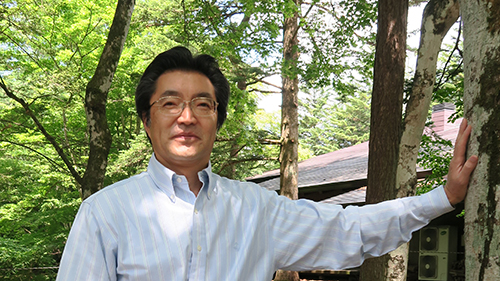
Marco Panesi is a Professor in the Department of Aerospace Engineering at the University of Illinois at Urbana-Champaign and Director of the Center for Hypersonics and Entry Systems Studies (CHESS). His research focuses on non-equilibrium phenomena in high-enthalpy flows, plasma dynamics, and uncertainty quantification. He holds a Ph.D. from the von Kármán Institute for Fluid Dynamics (2009) and M.S. degrees from Università di Pisa (2003) and VKI (2005). Roles: Faculty Member, Research Director, Principal Investigator Key Affiliations: CHESS, University of Illinois, VKI Research Interests: Hypersonic flow modeling, non-equilibrium plasmas, radiation effects, machine learning applications in aerothermodynamics, ablation processes, and state-to-state chemistry. His work bridges computational fluid dynamics with experimental validation in facilities like the Plasmatron X wind tunnel. Publications: Over 100 peer-reviewed articles on topics ranging from plasma kinetics to thermal protection systems. Recent work emphasizes adaptive neural operator models and Bayesian uncertainty quantification. Awards: Includes the Vannevar Bush Faculty Fellowship (2021), NASA Groundbreaker Award (2021), and multiple early-career recognitions from AFOSR, NASA, and ESA. Grants & Leadership: Secured funding from NSF, NASA, and DOD. Leads multidisciplinary teams on projects like the CHyPS material response solver and hypersonic entry modeling. Labs & Facilities: Principal investigator for the UIUC Plasmatron X facility, a key resource for studying high-enthalpy plasma flows.
Steven Corcelli is a Professor and Interim Dean of the College of Science at the University of Notre Dame, with a joint appointment in the Department of Chemistry and Biochemistry. He has held key leadership roles including Department Chair (2022–2025) and Associate Dean for Interdisciplinary Studies (2019–2022). His research is centered in the Computational Molecular Science & Engineering Laboratory (CoMSEL), where he leads a team exploring molecular and biomolecular systems through advanced simulations. Education: Ph.D. in Chemistry, Yale University, 2001 Sc.B. in Chemistry, Brown University, 1997 His research interests bridge theoretical and experimental physical chemistry, with a strong emphasis on aqueous electrolytes, biomolecular binding, and vibrational spectroscopy . He employs GPU-accelerated molecular dynamics and enhanced sampling techniques to study ion transport in aqueous solutions and the mechanisms of protein-DNA and protein-protein interactions, particularly in immunological contexts such as T-cell receptor binding. His work has significant implications for battery technologies and drug design. The 15 most recent publications reveal a consistent focus on molecular simulation, biophysical chemistry, and spectroscopy , with recurring themes in DNA-ligand binding, ion solvation, and immune recognition. His group develops and applies novel computational methods, such as the coupled local mode approach, to interpret vibrational spectra with high accuracy. Scientific Awards: Thomas P. Madden Award (2020) Rev. Edmund P. Joyce, C.S.C. Award for Excellence in Undergraduate Teaching (2019, 2012) Fellow, American Chemical Society (2016) Sloan Research Fellowship (2009) NSF CAREER Award (2009) Camille and Henry Dreyfus New Faculty Award (2005) Kavli Fellow, National Academies of Science (2011) Corcelli has advised numerous graduate students and postdoctoral researchers, many of whom have gone on to successful careers in academia and industry. His lab collaborates extensively with experimental groups, particularly in spectroscopy and immunology. He has secured substantial research funding and published over 85 peer-reviewed articles. His lab, CoMSEL, benefits from high-performance computing resources through the Center for Research Computing at Notre Dame, enabling large-scale simulations of complex molecular systems. Research Labs and Teams: The Computational Molecular Science & Engineering Laboratory (CoMSEL) is a multidisciplinary research group that combines theoretical chemistry, biophysics, and materials science. The team includes graduate students and staff scientists working on projects ranging from fundamental solvation dynamics to applied biomedical simulations.
Yves Bourgault is a Full Professor in the Department of Mathematics and Statistics at the University of Ottawa. He holds a MSc and PhD from Laval University. His research focuses on computational fluid dynamics, numerical methods, finite element techniques, and continuum mechanics modeling, with applications in cardiac electrophysiology and ecological systems. Dr. Bourgault has supervised several graduate students, including Edward Boey (co-supervised), Sana Keita, Saint-Cyr Koyagurebo-Ime, and Kak Choon Loy. His work integrates advanced numerical techniques to address complex problems in biomedical engineering, environmental science, and mathematical physics. Key methodologies include finite element methods, deferred correction schemes, and anisotropic mesh adaptation. His research group is part of the Applied Mathematics division at the University of Ottawa, emphasizing interdisciplinary applications. Recent work explores climate change impacts on ecological systems, cardiac tissue modeling using high-resolution MRI data, and robust numerical methods for reaction-diffusion equations. Publications span topics such as bidomain models for cardiac electrophysiology, fluid-structure interaction in heart mechanics, and mathematical modeling of fuel cells. His contributions bridge theoretical numerical analysis with real-world biomedical and environmental challenges.
Jia-Bin Huang is an Associate Professor in the Department of Computer Science at University of Maryland, College Park , with a secondary appointment at the University of Maryland Institute for Advanced Computer Studies . His work bridges computer vision , computer graphics , and machine learning . His research focuses on 3D scene reconstruction , neural radiance fields , generative models , and multimodal foundation models . He has made significant contributions to video super-resolution , text-driven 3D modeling , and inverse rendering techniques. 15 recent publications (2024-2025) at top venues: CVPR , NeurIPS , SIGGRAPH Asia , 3DV , and ECCV Pioneering work in Urban Scene Inverse Rendering , Generative Video Editing , and 3D Human Digitization He has received multiple awards including the 3M Non-Tenured Faculty Award , ETRA Best Paper , and NSF Grants . His lab trains 12 PhD students and has graduated 18 Masters/PhD students now at institutions like Stanford , Meta , and Google .
Roles & Affiliations: Prof. Piotr Dudek is a Professor of Circuits and Systems in the School of Electrical and Electronic Engineering at The University of Manchester. He has held visiting roles at Hong Kong University of Science and Technology, Gdansk University of Technology, and Sorbonne University. He is a Senior Member of the IEEE and chairs/co-chairs technical committees in circuits and systems. Education: Mgr inz (Technical University of Gdańsk, Poland), MSc and PhD (UMIST, UK). Research Interests: Focuses on VLSI design, vision sensors (SCAMP chip family), cellular processor arrays, neuromorphic engineering, and brain-inspired systems. Develops low-power, high-performance embedded vision systems for robotics, biomedical applications, and autonomous systems. Projects & Contributions: Leads projects like SCAMP vision chips, FORTE (memristor-based systems), and Agile robotic vision. Involved in EPSRC-funded initiatives and collaborates internationally. Active in reviewing for journals/conferences and holds editorial roles. Awards: Recipient of Best Paper/Demo awards at ISCAS, CNNA, IJCNN, and ICDSC. Holds the Royal Academy of Engineering/Leverhulme Trust Senior Research Fellowship. Lab & Teams: Directs the Microelectronics Design Lab, fostering interdisciplinary work between VLSI design, robotics, and neuroscience. Supervises 11 PhD students and collaborates with global researchers in bioelectronics and computational systems.
Professor Klaus McDonald-Maier is a full Professor in the School of Computer Science and Electronic Engineering (CSEE) at the University of Essex , where he leads the Embedded and Intelligent Systems (EIS) Research Laboratory and heads the Intelligent Embedded Systems and Environments Research Group . He is also Director of Impact , Visiting Professor at the University of Kent, and Visiting Research Affiliate at NASA Jet Propulsion Laboratory, California Institute of Technology. Education PhD in High-Performance Parallel Neural Network Architectures, Friedrich-Schiller-University Jena (Germany, 1999) Electronic Engineering studies, University of Ulm (Germany) Electronic Engineering studies, Cardiff University (Wales) Electronic Engineering studies, École Supérieur de Chimie Physique Électronique de Lyon (CPE-Lyon) (France) Research Interests Professor McDonald-Maier’s research integrates embedded systems , System-on-Chip (SoC) architectures , and AI-driven robotics . He pioneers visual place recognition techniques that remain robust under severe appearance and viewpoint changes, develops cybersecurity frameworks based on ICMetrics for autonomous vehicles and IoT, and designs approximate real-time computing solutions for energy-constrained multicore and FPGA platforms. His work on radiation-tolerant systems supports space and nuclear applications, while his bio-inspired algorithms enable lightweight, neuromorphic perception on resource-limited robots. Publication Trends Between 2022 and 2025 his output converges on FPGA-accelerated AI , secure edge intelligence , visual navigation for autonomous systems , and healthcare analytics . He repeatedly couples rigorous algorithmic innovation with practical hardware deployment, yielding energy-efficient, real-time systems validated in domains ranging from autonomous driving to post-stroke rehabilitation. Scientific Awards & Recognition Best Paper Award – IEEE Transactions on Sustainable Computing (2024) Best Paper Award – IEEE/ACM DATE (2024) Best Paper Award – IEEE Systems Journal (2022) Best Paper Award – IEEE Sensors Journal (2021) Best Paper Award – IEEE Access (2020) Research Grants & Industrial Collaboration He has secured major funding from EPSRC , EU Horizon 2020 , Innovate UK , and industry partners. Current projects span trustworthy autonomy, radiation-hardened edge AI, and AI-enhanced rehabilitation technologies. He is Chief Scientist of UltraSoC Technologies Ltd and CEO of Metrarc Ltd , commercialising University research in semiconductor debug and cybersecurity respectively. Laboratory & Team Leadership As Director of the Embedded and Intelligent Systems Laboratory (EIS Lab) , he oversees a multidisciplinary team of researchers and PhD students, providing state-of-the-art FPGA, robotics, and embedded-systems facilities. The lab collaborates closely with NASA JPL, UK Atomic Energy Authority, and leading semiconductor firms to translate fundamental research into high-impact industrial solutions.
Chi (Jesse) Zhang is a Research Professor at Purdue University's Department of Chemistry, leading the Zhang Research Group. His work focuses on developing novel optical spectroscopy, imaging, and opto-control technologies to study chemical processes in living systems. He has pioneered techniques like Real-Time Precision Opto-Control (RPOC) and applies them to biomedical problems, including cancer metabolism and neurodegenerative diseases. His lab collaborates with institutions like Merck and has been recognized with awards such as the Astronaut Scholarship and Alice Watson Kramer Award. Education details are not explicitly provided, but his postdoctoral research at the Beckman Institute (2018–2020) indicates prior training in advanced scientific technology. His research integrates optical engineering with biological systems, emphasizing label-free imaging and real-time manipulation of cellular components. Key achievements include over 50 peer-reviewed publications and the development of the photokinesis technology platform (http://www.photokinesis.tech). His group hosts an active wet lab with projects ranging from lipid metabolism studies to optical device innovation. Recent milestones include successful student defenses, conference presentations, and impactful publications in ACS Photonics , Anal. Chem , and npj Imaging .
Saleh Javadi is a Senior Lecturer at the Department of Mathematics and Natural Sciences at Blekinge Institute of Technology (BTH) in Karlskrona, Sweden. He is actively engaged in research and teaching within the field of systems engineering. His educational background includes: B.Sc. in Electrical-Control Engineering from Amirkabir University of Technology (2009) M.Sc. in Electrical, Electronic and Systems Engineering from The National University of Malaysia (2013) Ph.D. in Systems Engineering from Blekinge Institute of Technology (BTH) (2021) Saleh Javadi's research focuses on signal processing, machine learning, and computer vision , with applications spanning remote sensing, intelligent transportation systems, and AI-driven industrial optimization. His work bridges theoretical advancements with practical implementations, particularly in SAR imagery analysis, drone-based agricultural monitoring, and traffic surveillance systems. His recent publications demonstrate a strong focus on remote sensing technologies, particularly Synthetic Aperture Radar (SAR) image processing and analysis. There's a clear trend toward applying machine learning techniques to solve complex problems in aerial and satellite imagery, traffic monitoring, and agricultural applications. His research shows interdisciplinary connections between computer vision, signal processing, and practical engineering applications. Saleh Javadi has received significant recognition for his innovative work: Innovator of the Year award (SKAPA – Innovation Prize in Memory of Alfred Nobel) in Blekinge for innovative efforts in optimizing and reducing energy consumption in industries by using artificial intelligence ÅForsk Entrepreneur's prize at the Swedish Innovation Council Day – Swedish Incubators & Science Park's annual conference in May 2019 Dr. Javadi is involved in practical applications of his research through projects such as "Artificiell intelligens AI kan reducera ogräsfrön i utsäde" (ongoing) and "Bekämpa Renkavle med hjälp av drönare och Artificiell Intelligens (AI)" (completed). His work demonstrates a strong commitment to translating academic research into real-world solutions that address industrial and environmental challenges. His research appears to be conducted within a collaborative framework, working with colleagues on drone technology, SAR image analysis, and AI applications across multiple domains including agriculture, maritime monitoring, and transportation systems.
Professor Caroline Ford is a leading researcher at the University of New South Wales, serving within the School of Women's and Children's Health and the Adult Cancer Program at the Lowy Cancer Research Centre. She leads the Gynaecological Cancer Research Group (GCRG), which focuses on understanding the development, spread, and treatment of gynaecological cancers, with particular emphasis on ovarian and endometrial cancer. Established in 2010 after international postdoctoral fellowships at the University of Toronto and Lund University, her laboratory has maintained consistent competitive research funding for over 13 years. Her research spans Cancer Cell Biology with specific expertise in ovarian cancer, endometrial cancer, endometriosis, metastasis mechanisms, ascites biology, and cell-free DNA analysis. Major projects include developing an early detection test for ovarian cancer and identifying key targets for anti-metastatic therapies. The GCRG works closely with clinicians at the Royal Hospital for Women and conducts studies involving biospecimen collection from women with gynaecological cancers. Professor Ford has pioneered innovative in vitro organotypic models of ovarian and endometrial cancer for pre-clinical drug testing. Her publication record shows consistent focus on ROR1/ROR2 receptors, Wnt signaling pathways, and cell-free DNA applications in cancer diagnostics. Recent work has emphasized liquid biopsy techniques using ascites fluid, 3D cancer models, and computational approaches to predict treatment outcomes. She has published extensively on the molecular mechanisms of gynaecological cancers and their clinical applications. Superstar of STEM (2017) Women's Agenda Award for Female Leader in Science, Medicine & Health (2018) Professor Ford actively supervises PhD students including Kate Gunther and Bonnie Werner, and co-supervises Zoe Phan. She convenes UNSW's General Education course on Personalised Medicine and developed Australia's first MOOC on this subject. She serves as Chair of the ANZGOG Uterine Tumour Type Working Group and Research Chair of Cure Cancer Australia. Her community engagement includes founding the STEMMinist Book Club and leading the 'Ovaries. Talk About Them' campaign to raise awareness about ovarian cancer.
Stephen Brooks is a Professor in the Faculty of Computer Science at Dalhousie University, actively contributing to research and education in computer graphics, visualization, and human-computer interaction. He is affiliated with the Human-Computer Interaction, Visualization & Graphics research cluster and currently supervises multiple graduate students on diverse projects. PhD in Computer Science, University of Cambridge (2004) MSc in Computer Science, University of British Columbia (2000) BSc, Brock University (1998) His research focuses on computer graphics and visualization, particularly non-photorealistic rendering, image editing, 3D geospatial systems, ocean visualization, and real-time rendering of natural phenomena. He has also worked in sound synthesis and motion editing. His recent publications show a strong emphasis on visual analytics, network flow visualization, and ocean science applications. His work spans interdisciplinary domains including environmental science, genomics, cybersecurity, and digital art. He has developed visualization tools for ocean science under a major CFREF-funded initiative and created novel methods for rendering stained glass, mixed media art, rivers, and ocean surfaces. His research integrates perception, automation, and user interaction to enhance visual analysis. Notable scientific contributions include work on tone mapping optimization, uncertainty visualization using chromatic aberration, semantic object clouds, and hybrid 2D/3D GIS. His publications appear in top venues such as IEEE TVCG, ACM Transactions, and SIGGRAPH. NSERC Discovery Grants Canada First Research Excellence Fund (CFREF) NSERC CREATE Mitacs Accelerate and Globalink CFI New Opportunities Grant Cyber Security Research and Development Grant He has supervised numerous PhD, Master’s, and undergraduate students in areas including ocean visualization, tone mapping, network security, VR, and geospatial analytics. He teaches courses in Game Design, Visualization, Computer Animation, and Network Computing, emphasizing project-based and interdisciplinary learning. He leads research in visual analytics for network data (FloVis), ocean science, and mixed reality collaboration. His lab develops interactive systems for data exploration in domains ranging from marine biology to cybersecurity. Future work includes expanding ocean-first climate visualization and enhancing mixed presence collaboration in immersive environments.
Professor Adrian Hilton is a distinguished faculty member at the University of Surrey, serving as Director of the Centre for Vision, Speech and Signal Processing (CVSSP) and Director of the Surrey Institute for People-Centred AI. He is affiliated with the School of Computer Science and Electronic Engineering and leads the Visual Media Research Lab (V-Lab). His research focuses on pioneering next-generation 4D computer vision technologies that enable machines to understand and model dynamic real-world scenes. Key areas include 3D/4D shape capture, computer vision, machine learning, graphics, and animation for applications in sports analysis, film/TV production, virtual reality, and medical imaging. His work bridges the gap between real and computer-generated imagery, with notable contributions in volumetric capture, motion capture, and free-viewpoint video. Hilton's recent publications demonstrate a strong trend toward multimodal integration, particularly combining audio and visual processing for spatial audio applications, while advancing 4D reconstruction techniques for human performance capture. His work increasingly incorporates transformer architectures and neural rendering techniques for improved illumination estimation, shadow modeling, and multi-view consistency. Scientific Awards and Recognition Two EU IST Innovation Prizes Manufacturing Industry Achievement Award Royal Society Industry Fellowship (2008-2011) Royal Society Wolfson Research Merit Award in 4D Vision (2013-2018) Fellow of the Royal Academy of Engineering (FREng) Fellow of the International Association for Pattern Recognition (FIAPR) Fellow of the Institution of Engineering and Technology (FIET) Hilton actively mentors PhD and post-doctoral researchers through his leadership of CVSSP, which has a grant portfolio exceeding £31M and comprises 170 researchers. He has successfully commercialized several technologies, including systems used by the BBC for sports commentary visualization. His research collaborations span major industry partners including BBC, BT, Sony, Framestore, and The Foundry. He co-founded the G3 Games forum and the CVMP Conference on Visual Media Production, demonstrating strong engagement with the creative industries. Current research projects include the S3A Programme Grant in Future Spatial Audio and InnovateUK's ALIVE project for 360 video reconstruction.
Dr. Nicolas Francois is an Associate Professor in the Department of Materials Physics at Australian National University (ANU), specializing in experimental geomaterials physics, soft matter, and fluid hydrodynamics. He leads the X-ray Tomography and Applications Research Group, combining curiosity-driven and applied research in out-of-equilibrium systems. ARC Industry Fellow (2024-2030): Improving Australian iron ore comminution for green steel production ARC DECRA Fellow (2016-2018): Biofilms in two-dimensional turbulent flows His research spans fundamental questions in: Fragmentation of solid materials Autonomous devices powered by chaotic flows Hydrodynamic waves Stochastic thermodynamics Granular matter Polymer rheology and applied areas in: Comminution of geomaterials Mechanics of fractured rocks Wave-energy conversion Environmental fluid mechanics Publications reveal a trajectory focused on X-ray tomography applications, granular dynamics, and turbulence-driven systems. He utilizes advanced imaging techniques to study material failure mechanisms and fluid-structure interactions, contributing to fields ranging from green steel production to biofilm dynamics. Current student projects and grants emphasize sustainable resource processing and fundamental fluid physics.
Edgar J.D. Vredenbregt is an Associate Professor in the Department of Applied Physics at Eindhoven University of Technology (TU/e). His research focuses on quantum technologies, including ultracold atom trapping for quantum computing and novel charged particle sources. He leads projects on Rydberg atom-based quantum computing and ultracold ion beams for nanoscale applications. Education: MSc in Applied Physics (TU/e, 1986), PhD in Atomic and Molecular Physics (TU/e, 1990). Postdoctoral research at SUNY Stony Brook (1991-1993) and NIST (1998). He holds a KNAW fellowship (1995-2000) and has been a project member in KAT-1: Rydberg Atom Quantum Computing and Simulation since 2020. Research interests include ultracold electrons/ions for high-brightness applications, Rydberg atom arrays for quantum gates, and laser-cooled ion beams for nanotechnology. He has developed ultracold electron sources for ultrafast diffraction and focused-ion beam tools for 1 nm-scale silicon wafer modification. Publications span quantum computing, atomic physics, and nanotechnology. He teaches courses like Hybrid Quantum Computing and Physics of Plasma and Radiation. Supervised 69 student works but no names are listed in the provided texts.
Dr. Armin Mustafa is an Associate Professor in Computer Vision and AI at the University of Surrey, where he holds a prestigious Royal Academy of Engineering Research Fellow position. He is affiliated with the Centre for Vision, Speech and Signal Processing (CVSSP), the School of Computer Science and Electronic Engineering, and the Surrey Institute for People-Centred Artificial Intelligence (PAI). His research focuses on developing AI systems for visual understanding of complex dynamic scenes, with applications in entertainment, autonomous systems, and augmented/virtual reality. Dr. Mustafa completed his PhD in general dynamic scene reconstruction from multi-view videos in 2016 from the University of Surrey under the supervision of Prof. Adrian Hilton. Prior to his doctoral studies, he worked for three years (2010-2013) at Samsung Research Institute in Bangalore, India, in the field of Computer Vision. His research expertise spans Computer Vision, Scene Understanding, 3D/4D Vision, Virtual Reality, Light Fields, Machine Learning, Video Captioning, Augmented Reality, Artificial Intelligence, and Audio-visual Video Understanding. Dr. Mustafa has pioneered advances in 4D vision, NLP, and Scene Understanding over the past decade, with a particular focus on enabling machines to model and interpret real-world environments for socially beneficial applications. His work bridges theoretical advances in computer vision with practical applications in media production, virtual reality, and autonomous systems. Analysis of Dr. Mustafa's recent publications reveals a strong focus on multimodal learning, particularly the integration of audio and visual information for scene understanding. His work spans diverse areas including shadow detection and removal, audio event classification, video captioning, person image generation, and dynamic scene reconstruction. A notable trend is his exploration of transformer architectures for both vision and audio tasks, as well as the application of self-supervised learning techniques to reduce dependency on labeled data. Dr. Mustafa has received numerous prestigious awards: 2018 - Research Fellowship, The Royal Academy of Engineering, UK 2017 - Young Researcher award, CVPR 2016 - Doctoral Consortium grant, CVPR 2015 - BMVA travel grant for ICCV 2014 - Set-Squared Research to Innovator grant 2013 - Overseas Research Scholarship, FEPS, The University of Surrey 2010 - Cadence Silver Medal, Indian Institute of Technology, Kanpur As a dedicated mentor, Dr. Mustafa supervises several PhD students working on cutting-edge topics including multi-person reconstruction, audio-visual scene understanding, and automatic storyboard generation. His research is supported by significant grants including a £15 million UKRI Prosperity Partnership with the BBC (AI4ME), a 5-year Royal Academy of Engineering fellowship (4D Vision for Perceptive Machines), and multiple projects with industry partners such as Figment Productions and Foundry. Dr. Mustafa is an active member of the Centre for Vision, Speech and Signal Processing (CVSSP), one of the world's leading research centers in vision, speech, and signal processing. He also contributes to the Surrey Institute for People-Centred Artificial Intelligence (PAI), where he serves as a Surrey AI Fellow. His work often involves collaboration with industry partners and other academic institutions across Europe.
Professor Masatoshi Okutomi is affiliated with the Department of Systems and Control Engineering at the School of Engineering, Institute of Science Tokyo. His research focuses on advanced medical imaging techniques, particularly in endoscopy and 3D reconstruction, leveraging deep learning and neural networks. Key interests include virtual chromoendoscopy for cancer detection, image restoration, and stereo matching under challenging conditions. His work bridges computer vision and healthcare, addressing real-world applications such as MRI reconstruction and foggy stereo matching. Notable contributions include developing lightweight medical segmentation networks for edge devices and advancing neural radiance fields (NeRF) for novel view synthesis. His research spans diverse domains: from improving video quality assessment to enhancing object detection in high-dynamic-range images. Collaborative projects emphasize practical solutions for medical diagnostics and robust image processing in adverse environments. Recent articles highlight advancements in temporally-consistent video restoration, few-shot view synthesis, and degraded image classification using knowledge distillation. These innovations underscore his commitment to pushing boundaries in both theoretical computer vision and applied medical technology.