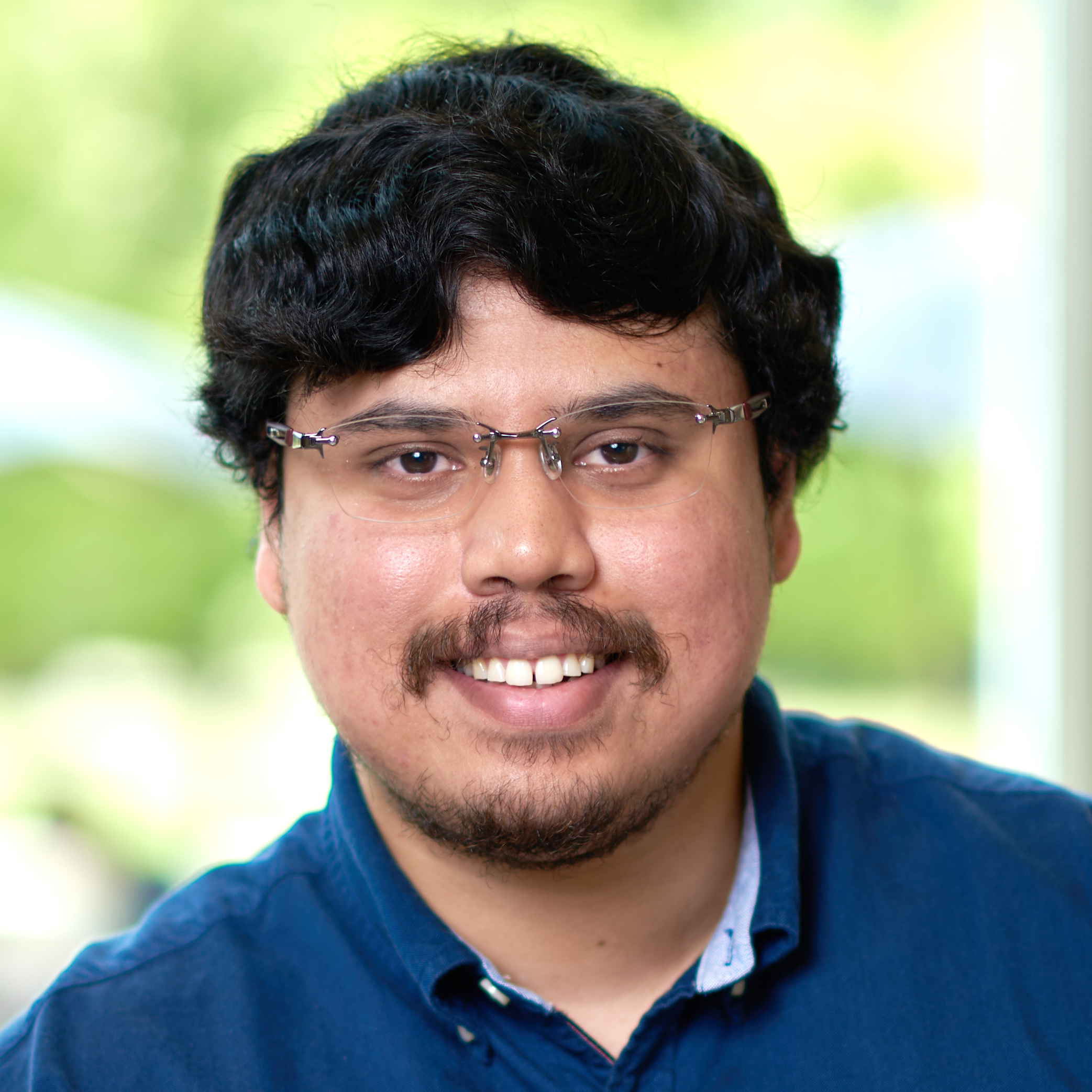
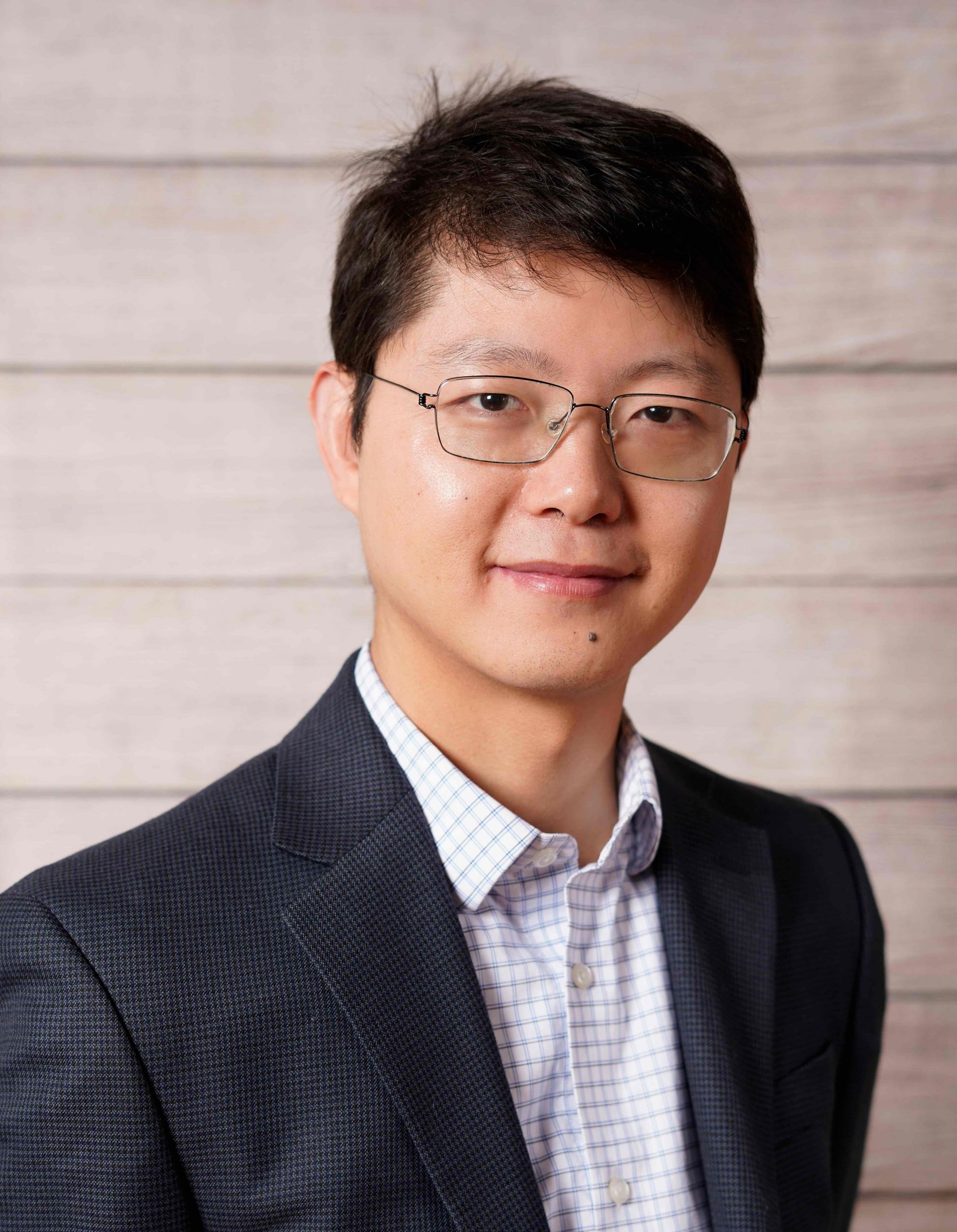
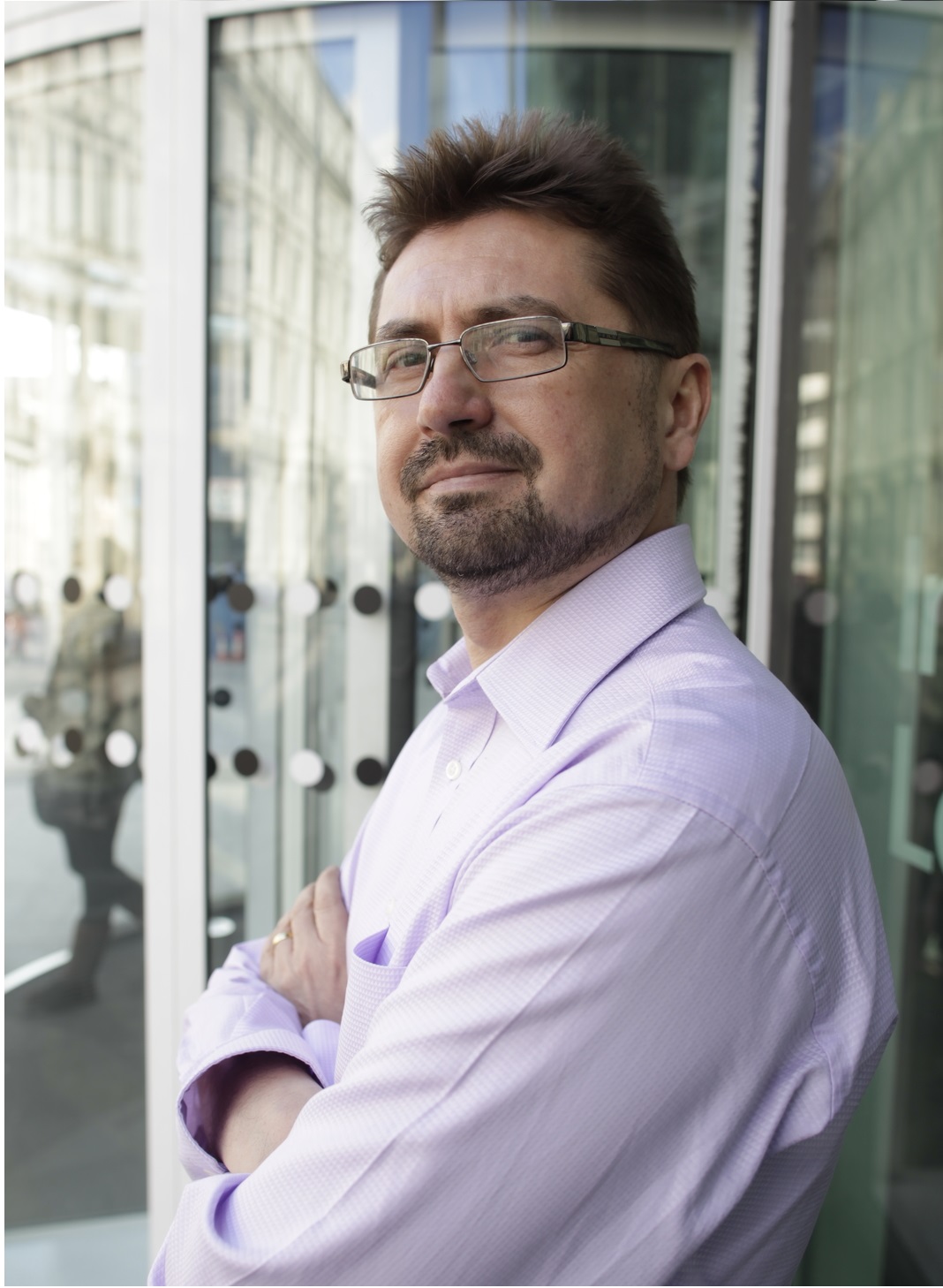
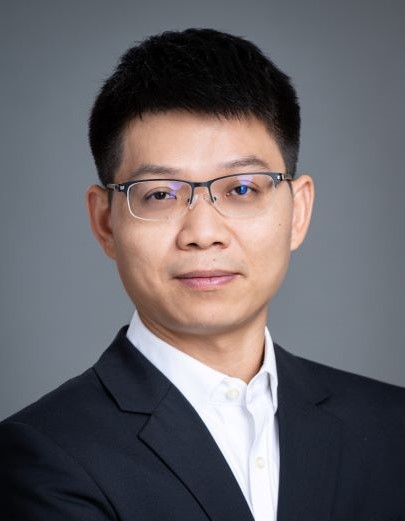
Dogyoon Song is an Assistant Professor in the Department of Statistics at the University of California, Davis. His work bridges theoretical and applied domains in data science, with a focus on optimization, machine learning theory, and high-dimensional statistics. He also explores causal inference, contributing to foundational and algorithmic advancements in modern statistical learning. Research Interests: Optimization, Machine learning theory, High-dimensional statistics, Causal inference Publication Trends reveal expertise in high-dimensional inference, matrix estimation methods, and theoretical analysis of machine learning algorithms. His work spans temporal graph analysis, diffusion models, and robustness in learning systems, with applications to statistical modeling and optimization challenges.
Anuran Makur is an active Assistant Professor at Purdue University with dual appointments in the Department of Computer Science (College of Science) and the Elmore Family School of Electrical and Computer Engineering (College of Engineering). He is affiliated with the Institute for Control, Optimization and Networks (ICON) and teaches foundational courses in machine learning and data science. His educational background includes a B.S. in Electrical Engineering and Computer Sciences from UC Berkeley (2013, summa cum laude), an S.M. in Electrical Engineering and Computer Science from MIT (2015), and a Sc.D. from MIT (2019). B.S., UC Berkeley, 2013 S.M., MIT, 2015 Sc.D., MIT, 2019 Makur's research bridges theoretical machine learning, information theory, and applied probability. Key interests include ranking/preference learning, optimization for ML, non-parametric inference, information measures, permutation channel limits, broadcasting on graphs, and reliable computation. His work emphasizes fundamental theoretical limits and mathematical rigor in complex systems. Recent publications reveal strong trends in statistical learning theory (40%), information-theoretic methods (35%), and networked systems (25%), with growing emphasis on privacy-aware inference and high-dimensional statistics. His scientific achievements are recognized by prestigious awards: Arthur M. Hopkin Award (UC Berkeley, 2013) Ernst A. Guillemin Master's Thesis Award (MIT, 2015) Jin Au Kong Doctoral Thesis Award (MIT, 2020) Thomas M. Cover Dissertation Award (IEEE, 2021) NSF CAREER Award (2023) While specific advising details aren't public, his research leadership is evident through ICON affiliation and collaborations with MIT's LIDS/IDSS groups. The NSF CAREER grant supports his work on information-theoretic foundations of machine learning. He maintains active roles in theoretical computer science and information theory communities through conference organization and editorial work. Makur leads research within ICON, focusing on control-theoretic approaches to networked learning systems. His work integrates probabilistic modeling with optimization theory, particularly for distributed inference and networked decision-making under uncertainty.
Prof. Daniel Kressner is a Professor at the École Polytechnique Fédérale de Lausanne (EPFL), holding positions in the School of Basic Sciences (SB), Mathematics Institute (MATH), and the Numerical Algorithms and High-Performance Computing (ANCHP) group. He also leads the SMA-ENS unit within the SB-SMA division. His research focuses on numerical linear algebra, high-performance computing, and tensor approximation methods, with applications in scientific computing and data science. Education details are not explicitly listed, but his career at EPFL includes leadership in key research groups and doctoral programs. He supervises multiple doctoral students, including Alice Cortinovis, Peter Effenberger, and others. Research interests emphasize low-rank methods, matrix equations, and efficient algorithms for large-scale problems. Recent work includes advancements in randomized algorithms, tensor networks, and preconditioning techniques for eigenvalue problems. His publications span high-impact journals like Siam Journal on Matrix Analysis and Applications and Numerical Linear Algebra with Applications, addressing topics such as compressed sensing, multigrid methods, and distributed signal processing. Prof. Kressner advises doctoral candidates and contributes to the Program doctoral Mathématiques (EDMA-GE) committee. His lab, ANCHP, develops software tools for hierarchical matrices and tensor computations, such as the hm-toolbox for HODLR and HSS matrices.
Xiuyuan Cheng is an Associate Professor of Mathematics at Duke University, affiliated with the Trinity College of Arts & Sciences. Her expertise lies in applied analysis, focusing on developing theoretical and computational techniques for high-dimensional data analysis, signal processing, and machine learning. She holds a Ph.D. from Princeton University (2013). Her research emphasizes graph-based methods, kernel techniques, and deep learning applications in manifold data analysis. Notable contributions include work on graph Laplacian convergence, optimal transport for single-cell data, and rotation-equivariant neural networks. She has received grants from the National Science Foundation, including a CAREER award (2023–2028) for learning graph diffusion from high-dimensional data. Recent publications explore topics such as bi-stochastic graph normalization, neural tangent kernels, and adversarial defense using basis transformations. Teaching includes advanced courses like Measure and Integration and High-Dimensional Data Analysis. She collaborates extensively in interdisciplinary projects, integrating mathematical theory with computational tools for real-world applications.
Boris Landa is an Assistant Professor in the Department of Electrical & Computer Engineering at Yale University. His research focuses on statistical signal processing and geometric data analysis, developing theoretical and computational tools for analyzing large, complex datasets. He holds a Ph.D. and M.S. from Tel Aviv University, Israel, and a B.S. from the Technion - Israel Institute of Technology. His work bridges computational methods with applications in molecular biology, cryo-electron microscopy, and high-dimensional data analysis. Notable contributions include robust inference of manifold geometry, doubly stochastic scaling techniques, and multi-reference factor analysis for alignment problems. Recent research explores optimal transport metrics for single-cell data and noise stabilization in signal recovery. Landa's publications span prestigious journals such as SIAM Journal on Mathematics of Data Science and Information and Inference. His methodologies address challenges in manifold learning, graph Laplacian normalization, and biological dataset integration. Active areas include developing adaptive algorithms for low-rank signal detection and robust statistical techniques for heterogeneous data. His educational background includes advanced studies in applied mathematics and engineering, with a strong emphasis on interdisciplinary applications. Ongoing projects involve geometric approaches to omics data analysis and scalable solutions for large scientific imaging datasets.
Zhengwu Zhang is an Associate Professor in the Department of Statistics and Operations Research at the University of North Carolina at Chapel Hill. His research focuses on developing statistical and machine learning methods for analyzing high-dimensional neuroimaging data, particularly structural and functional brain connectomics. He leads the UNC Education Program of Intelligence and Connectomics (EPIC), an interdisciplinary initiative training students in brain network analysis. His work addresses challenges in large-scale neuroimaging datasets, including computational efficiency and reproducibility. Zhang completed his Ph.D. in Statistics at Florida State University under Anuj Srivastava. His funding includes NIH grants for CRCNS, structural connectome analysis, and personalized cognitive training. He serves as an Associate Editor for the Journal of the American Statistical Association (Reproducibility). Key contributions include tools like the Surface-Based Connectivity Integration (SBCI) GitHub repository for brain network analysis pipelines. His awards include the 2022 UNC Junior Faculty Development Award and the Oak Ridge Powe Award. Teaching roles include courses on data science, machine learning, and statistical consulting. His research spans brain network dynamics, genetic contributions to connectome structure, and applications of deep learning in neuroscience.
Professor Dan Crisan is a Professor of Mathematics at Imperial College London and Director of the EPSRC Centre for Doctoral Training in the Mathematics of Planet Earth. He holds a PhD in Mathematics from the University of Edinburgh and an MSci in Mathematics from the University of Bucharest. His research focuses on Stochastic Analysis, Stochastic PDEs, Fluid Dynamics, Nonlinear Filtering, and Data Assimilation. He leads the Stochastic Transport in Upper Ocean Dynamics (STUOD) project, supported by an ERC Synergy Grant, exploring stochastic models in geophysical fluid dynamics. His academic roles include directing the MPE CDT and teaching advanced courses like Stochastic Calculus with Applications to Non-Linear Filtering. He collaborates extensively with researchers globally on topics including stochastic fluid dynamics, particle methods, and Bayesian inference. His work bridges theoretical advancements with applications in climate modeling and environmental systems. Education: PhD (University of Edinburgh, 1996), MSci (University of Bucharest, 1992). Professional roles include Director of MPE CDT (2013–present), Professor at Imperial College (2011–present), and prior academic appointments at the University of Cambridge and Imperial College. His research emphasizes stochastic processes in fluid dynamics, with projects funded by EPSRC and EU grants. Current PhD supervision opportunities are available in areas like stochastic fluid dynamics and data assimilation. Key achievements include foundational contributions to particle filtering, numerical methods for stochastic PDEs, and stochastic transport models. His work on the Camassa-Holm equation and rotating shallow water models demonstrates expertise in nonlinear wave dynamics and stochastic parametrization. He actively engages in international collaborations and serves on editorial boards for leading journals in stochastic analysis.
Jacob Fish holds the Rosalind and John J. Redfern Jr. Chair in Engineering at Columbia University's Department of Civil Engineering and Engineering Mechanics within the Fu Foundation School of Engineering and Applied Science. His research program focuses on computational mechanics and multiscale modeling with applications across material science and structural engineering. His research interests center on developing advanced computational frameworks for multiscale analysis of heterogeneous materials. Key areas include computational continua, atomistic-to-continuum coupling, fracture mechanics of composites, and thermomechanical modeling of advanced materials. His work bridges theoretical developments with practical engineering applications through reduced-order modeling and data-physics integration. His recent publications demonstrate strong trends in multiscale computational engineering, particularly in homogenization techniques, phase-field fracture modeling, and data-driven approaches for material behavior prediction. The research spans from atomistic simulations to structural-scale analysis with emphasis on computational efficiency and physical fidelity. Fellow, U.S. Association for Computational Mechanics (USACM) Computational Structural Mechanics Award, 2005 Fellow, International Association for Computational Mechanics (IACM), 2002 National Science Foundation Presidential Young Investigator Award, 1992 Walter P. Murphy Fellowship, Northwestern University, 1986 Fish serves as Editor-in-Chief of the International Journal for Multiscale Computational Engineering and has secured numerous research grants focused on multiscale modeling of advanced materials. His collaborative network spans multiple institutions and disciplines, particularly in computational mechanics and material science. His laboratory develops computational frameworks for multiscale analysis with applications in structural engineering, material science, and biomechanics, focusing on efficient algorithms for complex material behavior prediction.
Frank Röttger is an Assistant Professor at Eindhoven University of Technology, specializing in Mathematical Statistics. His primary research focuses on graphical models, multivariate extremes, and statistical inference in high-dimensional settings. Research Interests : Extreme value theory, probabilistic graphical models, causal inference in extremes, and data-driven risk modeling. Awards : NWO Prize (Scientific) - 2024 Organized Activities : Eurandom Workshop on Graph Laplacians, Multivariate Extremes, and Algebraic Statistics (2024) Causality in Extremes Workshop (2024) Courses Taught : Dependence Modeling Foundations of Statistics Mathematical Statistics Contact : Email: f.rottger@tue.nl
Dr. John Haslegrave is a Lecturer in Probability at Lancaster University's School of Mathematical Sciences, where he is an active member of both the Probability and Combinatorics research groups. Previously, he held positions at the University of Oxford (working with Peter Keevash), University of Warwick (with Agelos Georgakopoulos), and University of Sheffield (with Hong Liu and Chris Cannings). He completed his PhD at Trinity College, Cambridge under Béla Bollobás. His research focuses on: Random graphs and evolving network models (especially preferential attachment) Interacting particle systems and random walks on graphs Extremal problems in graph/hypergraph theory Percolation theory and geometric probability Combinatorial optimization and graph invariants Analysis of recent publications reveals strong emphasis on probabilistic combinatorics, with frequent exploration of: structural graph properties, asymptotic behavior of stochastic processes, geometric embeddings, and optimization problems. His work consistently bridges discrete mathematics with statistical physics concepts. Dr. Haslegrave welcomes PhD students interested in discrete probability and graph theory, with current supervision interests including preferential attachment models, interacting particle systems, planar percolation, and extremal problems. He teaches undergraduate courses in Graph Theory (MATH326) and Probability (MATH103), and organizes Lancaster's Pure Mathematics Seminar series.
Vicky Fasen-Hartmann is a Professor at the Karlsruhe Institute of Technology (KIT) within the Department of Mathematics, specifically affiliated with the Institute of Stochastics. She has held her W3 Professor position since October 2012, with two periods of parental leave (August 2016-August 2017 and October 2018-October 2019). Prior to her current position, she held postdoctoral research positions at ETH Zurich (RiskLab), TU Munich, Université Pierre et Marie Curie, and Cornell University. Her educational background includes: Habilitation (2010) in Heavy Tails in Finance, Insurance and Telecommunication from TU Munich Ph.D. (2004) in Extremes of Lévy Driven Moving Average Processes with Applications in Finance from TU Munich Diploma in Mathematics (2002) from Karlsruhe Institute of Technology Professor Fasen-Hartmann's research spans multiple areas of theoretical and applied statistics with a focus on extreme value theory, heavy-tailed distributions, and their applications in finance and risk management. Her work bridges theoretical probability with practical financial applications, particularly in modeling rare events and systemic risks. She has made significant contributions to the understanding of Lévy processes, continuous-time ARMA models, and multivariate extremes. Her research combines rigorous mathematical theory with practical applications in financial mathematics, insurance, and telecommunications networks. The trends in her recent publications (2020-2025) show a clear evolution toward high-dimensional extreme value theory, financial network risk contagion, and advanced modeling of continuous-time processes. Her work increasingly addresses the challenges of modern financial systems, including systemic risk measurement, high-dimensional dependency structures, and the statistical properties of extreme events in complex systems. She has developed innovative methodologies for analyzing multivariate extremes, risk contagion, and continuous-time state space models. Professor Fasen-Hartmann has served in significant editorial roles including Associate Editor for the Scandinavian Journal of Statistics since 2014, Managing Editor of Lévy Matters (2008-2014), and Editor of Bernoulli News (2009-2011). She has also been active in academic service through committee work, including the Steering Committee of the Probability and Statistics Group in Germany (2014-2016) and the Examination Board of the Department of Mathematics at KIT (since 2017). She has supervised numerous doctoral and master's students, with current PhD candidates including Lucas Butsch (since 2021) and previously Lea Schenk, Celeste Mayer, Markus Scholz, and Sebastian Kimmig. Her teaching portfolio includes advanced courses in Time Series Analysis, Continuous Time Finance, Extreme Value Theory, and Asymptotic Stochastics. She regularly organizes workshops and conferences on specialized topics in probability and statistics, demonstrating her leadership in the academic community.
Dominic Edelmann is a researcher at Heidelberg University, Germany, specializing in mathematical statistics and its applications in biostatistics and high-dimensional molecular data. His work bridges theoretical statistics and biomedical research, particularly in developing and applying distance-based dependence measures. Research Interests: His research centers on distance correlation , survival analysis for high-dimensional data , epigenetic data analysis , and machine learning . He investigates nonlinear relationships in complex datasets, with applications in oncology and molecular biology. The recent publications show a strong trend in extending distance correlation methods to survival and competing risks data, as well as time series and high-dimensional settings. His work combines rigorous mathematical foundations with practical applications in biomedicine. Scientific Funding: DFG Grant "dCortools: Distanzkorrelationsverfahren zur Erkennung Nichtlinearer Zusammenhänge in Hochdimensionalen Molekularen Daten" (2019–present) Academic Supervision: He has co-supervised Master’s theses on bias correction in distance correlation and regression models for bounded responses in DNA methylation studies, indicating active involvement in training the next generation of statisticians. He holds a Dr. rer. nat. in Mathematics from Heidelberg University (2015) and was a research assistant there during his doctoral studies. His work continues to be centered at Heidelberg University, contributing to both theoretical and applied statistical science.
Martin Skovgaard Andersen is an Associate Professor in the Department of Applied Mathematics and Computer Science at the Technical University of Denmark (DTU), where he specializes in Scientific Computing. His research integrates numerical methods, optimization, and machine learning to solve complex computational problems in engineering and data science. Education: Ph.D., University of California, Los Angeles (2006–2011) M.Sc., Aalborg Universitet (2001–2006) Postdoc, Linköping University, Sweden (2011–2012) His research interests include optimization (particularly conic and stochastic programming), numerical algorithms, signal processing, system identification, and fast solvers for integral equations. He works extensively on matrix analysis, regularization, and low-rank approximations, contributing to both theoretical and applied advancements in computational mathematics. The recent publications highlight a strong trend in developing efficient numerical algorithms for large-scale optimization and solving integral equations. His work emphasizes preconditioning, matrix truncation, and Bayesian inversion, with applications in electromagnetics, structural health monitoring, and network identification. There is a consistent focus on improving computational efficiency and scalability of solvers. Scientific Awards: No specific awards mentioned in the provided text. Andersen actively supervises PhD students and leads multiple research projects, including those on non-symmetric conic optimization, data-sparse models, and fast direct solvers. He is the Principal Investigator (PI) on projects related to physics-informed structural health assessment. His collaborative network spans Denmark and international institutions, particularly in computational mathematics and engineering. Labs and Research Teams: He is affiliated with the Scientific Computing section at DTU, which focuses on high-performance computing, numerical algorithms, and mathematical modeling. His work is embedded in a collaborative environment involving researchers in optimization, control theory, and computational electromagnetics.
Professor Simon Ringer is the Pro-Vice-Chancellor (Research Infrastructure) at The University of Sydney and a Professor of Materials Science and Engineering in the School of Aerospace, Mechanical & Mechatronic Engineering. He is also an academic member of the Australian Centre for Microscopy & Microanalysis and a member of The Net Zero Institute. With an international career spanning Sweden, Japan, the USA, and Australia, Professor Ringer has established himself as a leading researcher in atomic-scale materials design. His research focuses on how atomic clusters create materials with remarkable properties for applications in semiconductors, photovoltaics, catalysis, and lightweight metal alloys. Professor Ringer's work particularly addresses 'property conflicts' in materials engineering, such as balancing strength and ductility or superconductivity and magnetism. His research group has achieved significant breakthroughs in atomic-level characterization, advanced steels development, computer memory technologies, and nanoelectronics, with publications in high-impact journals including Nature Materials, Physical Review Letters, and Advanced Materials. Professor Ringer leads the University's Core Research Facilities program, overseeing strategic planning and implementation of high-end research infrastructure initiatives. His leadership extends to national research infrastructure strategy engagement, positioning the University of Sydney as a leader in Australia's research facilities landscape. Current research projects in his group focus on atomic-scale materials design, functionalized photovoltaic surfaces, additive manufacturing, and new frontiers in microscopy techniques. Professor Ringer has published over 100 papers, authored two significant books ( Atomic-Scale Analytical Tomography in 2022 and Atom Probe Microscopy in 2012), and holds patents in steel and nanomaterial design. His research has practical implications for reducing CO2 emissions through lightweighting technologies and advancing computer memory capacity. He currently supervises several research students including Kirk CHEN, Jeffrey LU, and Samia RAZZAQ, and actively recruits for Honours, Master's, PhD, and postdoctoral positions. Former team members have gone on to work at prestigious institutions worldwide including Texas A&M University, University of Oxford, Max Planck Institute, and various multinational corporations. Professor Ringer's research team utilizes advanced tools including atom probe microscopy, transmission electron microscopy, density functional theory, and computational modeling techniques to gain insights into materials behavior at the atomic scale. His qualifications include BAppSc from Uni SA, PhD from UNSW, and numerous professional designations including CMatP, FIEAust CPEng APEC Engineer IntPE(Aus), FRSN, and FTSE.
Ming Yan is an Associate Professor and Assistant Dean at the School of Data Science, The Chinese University of Hong Kong, Shenzhen (CUHK-Shenzhen), where he has been serving since 2022. Prior to this position, he was an Associate Professor at Michigan State University from 2021 to 2023 (on leave from 2022 to 2023) and an Assistant Professor from 2015 to 2021. His academic journey includes postdoctoral positions at UCLA and Rice University. His educational background includes: Ph.D. in Mathematics from University of California, Los Angeles (UCLA), 2012 M.S. in Mathematics from University of Science and Technology of China (USTC), 2008 B.S. in Mathematics from University of Science and Technology of China (USTC), 2005 Ming Yan's research focuses on optimization methods , particularly for sparse recovery and inverse problems . His work extends to federated and machine learning algorithms , parallel and distributed algorithms for large-scale data , and variational techniques in image processing . His approach often combines theoretical analysis with practical applications, developing algorithms that address computational challenges in modern data science. His recent publications demonstrate a strong focus on decentralized optimization , primal-dual algorithms , and sparse recovery techniques . These works span theoretical developments in convergence analysis and practical applications in machine learning and signal processing. His research has evolved from foundational work in image processing to more recent contributions in distributed learning and federated systems, reflecting the changing landscape of data science. Ming Yan is actively involved in mentoring students and has indicated that he is recruiting Ph.D. students, postdocs, and visiting students at CUHK-Shenzhen. His teaching portfolio includes courses in calculus, optimization, and computational methods across multiple institutions. His research is supported by various grants, though specific details are not provided in the available information. He has developed several algorithms and software implementations, including the PD3O framework for convex optimization algorithms.