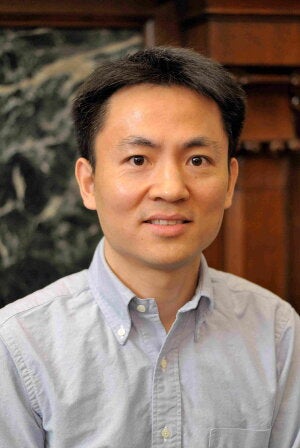
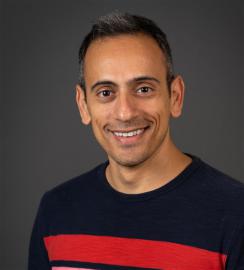
Yuguo Chen is a Professor in the Department of Statistics at the University of Illinois at Urbana-Champaign (UIUC), serving as Interim Department Chair and Director of the Illinois Statistics Office. He holds affiliations with the Department of Computer Science, Information Trust Institute, Coordinated Science Lab, and Illinois Informatics Institute. Chen earned his PhD in Statistics from Stanford University (2001) and a B.S. in Mathematics from the University of Science and Technology of China (1997). His research focuses on Monte Carlo methods, network data analysis, state space models, bioinformatics, and Bayesian inference. Key interests include scalable network estimation, community detection, and applications in public health, education, and computational biology. Recent work highlights include advancements in dynamic network modeling, Bayesian latent class models for cognitive diagnosis, and statistical methods for analyzing multi-layer networks. His contributions have been recognized through awards such as the American Statistical Association Fellowship (2018) and the Charles Edison Lectureship (2018). Editorial Roles: Associate Editor of Journal of the American Statistical Association , Journal of Computational and Graphical Statistics , and Journal of Algebraic Statistics . Grants & Consulting: Directs the Illinois Statistics Office, providing interdisciplinary research support. Active in collaborative projects involving healthcare, education, and computational infrastructure. Labs & Teams: Leads initiatives at the Coordinated Science Lab and Information Trust Institute, integrating statistical methods with cybersecurity and data-driven decision-making.
Dr. Matthew Brookhouse is a Senior Lecturer at the Fenner School of Environment & Society, part of the Australian National University's Institute for Climate, Energy & Disaster Solutions. With a PhD in Dendroclimatology from ANU, he specializes in using forest structural complexity and tree-ring analysis to understand climate interactions and ecological responses in Australian subalpine environments. Research Focus: Sub-alpine ecology, Dendrochronology, CO2 responsiveness in eucalypt species Teaching: First-year research methods with emphasis on statistical application, advanced modeling and field botany Projects: Leading collaborative snow-gum dieback research and dendrochronological monitoring initiatives His publications span 2006-2025 with recent emphasis on machine learning applications for forest monitoring, tropical tree-ring chronologies for climate change, and climate sensitivity in Australian alpine ecosystems. Key collaborations include institutions like Australian Nuclear Science and Technology Organisation and University of Canberra researchers. Current projects focus on snow-gum woodland dieback mechanisms, high-resolution dendrometric monitoring, and integrating dendrochronology with environmental policy frameworks. He maintains active supervision of research students and contributes to both undergraduate and postgraduate curriculum development.
Nicolò Cesa-Bianchi is a Professor of Computer Science at the University of Milan, where he serves as head of the Computer Science programs. He is also associated with the Department of Electronics, Information and Bioengineering (DEIB) at Politecnico di Milano. Cesa-Bianchi holds significant leadership roles including Board member, Fellow and co-director of the Milan unit of the European Laboratory for Learning and Intelligent Systems (ELLIS), and membership in the prestigious Accademia Nazionale dei Lincei. He is also involved with The European Lighthouse on Secure and Safe AI (ELSA), The European Lighthouse of AI for Sustainability (ELIAS), and The FAIR foundation. Professor Cesa-Bianchi's research focuses on the theoretical foundations of machine learning, with special emphasis on sequential decision making and online learning algorithms. His work spans multiple areas including multi-armed bandit problems, regret analysis, prediction with expert advice, and learning on graphs. He has made significant contributions to understanding the theoretical limits of learning algorithms and developing efficient methods for various learning scenarios. His research has important applications in online markets, social networks, and bioinformatics. His monographs 'Prediction, Learning, and Games' and 'Regret Analysis of Stochastic and Nonstochastic Multi-armed Bandit Problems' are considered seminal works in the field. His recent publications demonstrate continued leadership in advancing the theoretical understanding of machine learning, with 2024-2025 papers covering cooperative online learning, multitask learning, fair trade mechanisms, and refined analyses of bandit algorithms. The research shows increasing focus on practical economic applications while maintaining strong theoretical foundations. Google Research Award Xerox Foundation UAC Award Member of the Accademia Nazionale dei Lincei ELLIS Fellow Cesa-Bianchi has been deeply involved in academic service, having served as action editor for the Machine Learning Journal, IEEE Transactions on Information Theory, and the Journal of Machine Learning Research. He currently serves as associate editor for the Journal of Information and Inference and TheoretiCS. He has held leadership positions including President of the Association for Computational Learning and member of the steering committee for the EC-funded Network of Excellence PASCAL2. He was program chair of the 13th Annual Conference on Computational Learning Theory and the 13th International Conference on Algorithmic Learning Theory. He leads the Laboratory for AI and Learning Algorithms (ALGA) at the University of Milan, which focuses on theoretical and applied research in machine learning. His international collaborations are extensive, with visiting positions at UC Santa Cruz, Graz Technical University, Ecole Normale Supérieure in Paris, Google, and Microsoft Research. As an educator, he teaches advanced courses including Reinforcement Learning and Statistical Methods for Machine Learning, and has supervised numerous students through the years.
Francis Bach is a Professor and researcher at INRIA, leading the SIERRA project-team since 2011, which is part of the Computer Science Department at Ecole Normale Supérieure (ENS) within PSL Research University. His work bridges CNRS, ENS, and INRIA as a joint research effort. Elected to the French Academy of Sciences in 2020, he currently runs the ERC project SEQUOIA following his previous ERC project SIERRA (2009-2014). His research spans statistical machine learning with focus on optimization, sparse methods, kernel-based learning, neural networks, graphical models, and signal processing. Bach completed his Ph.D. in Computer Science at U.C. Berkeley under Professor Michael Jordan, followed by work at Ecole des Mines de Paris and the WILLOW project-team at INRIA/ENS/CNRS (2007-2010). His recent book "Learning Theory from First Principles" was published by MIT Press in December 2024. Bach's publication record shows consistent high-impact contributions across machine learning theory and applications, with recent work focusing on conformal prediction, diffusion models, optimization theory, and learning theory foundations. His research demonstrates strong connections between theoretical guarantees and practical algorithms, with applications spanning generative modeling, robust optimization, and statistical inference. Elected to French Academy of Sciences (2020) ERC project SIERRA (2009-2014) ERC project SEQUOIA (current) Author of "Learning Theory from First Principles" (MIT Press, 2024) Bach actively mentors numerous PhD students and postdocs, with many alumni now holding faculty positions at institutions like EPFL, Ecole Polytechnique, University of Washington, and University of Montreal. His teaching includes advanced courses on learning theory at ENS's Master's programs. He regularly presents tutorials at major conferences including COLT, NeurIPS, and ICML, demonstrating his leadership in the theoretical machine learning community.
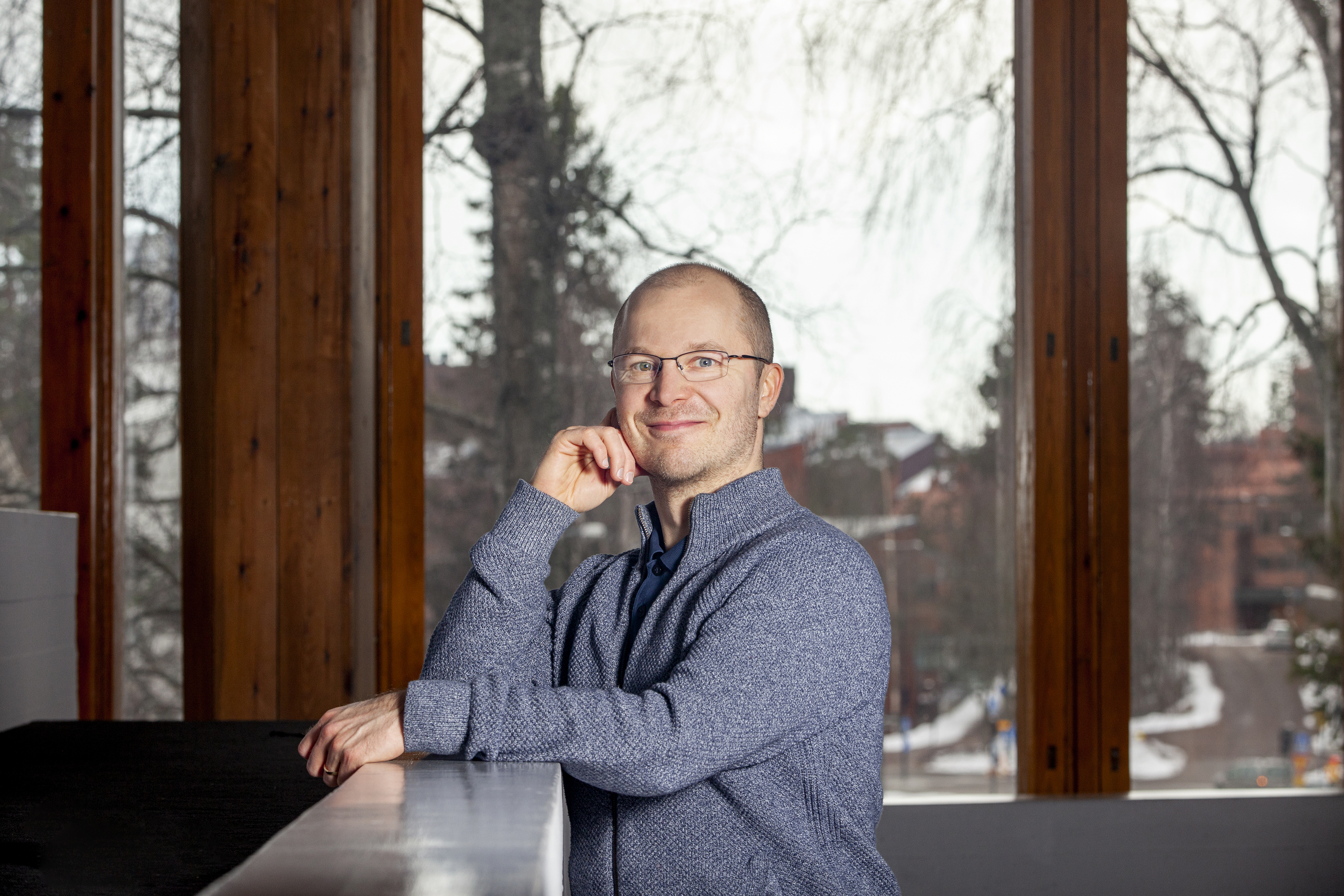
Pekka Marttinen is a tenured Associate Professor of Machine Learning at Aalto University, Department of Computer Science, and leads the Machine Learning for Health (Aalto-ML4H) group within the Helsinki Institute for Information Technology HIIT. Education: M.Sc. in Applied Mathematics, University of Helsinki (2004) Ph.D. in Statistics, University of Helsinki (2008) Title of Docent in Information and Computer Science, Aalto University (2015) Research Focus: His methodological work spans large language models, reinforcement learning, deep learning, probabilistic machine learning, and causal inference . These techniques are applied to critical domains of healthcare, bioinformatics, statistical genetics, epidemiology, and personalized medicine . The group develops novel algorithms, theoretical guarantees, and open-source software that enable data-driven discovery and decision-making in medicine and biology. Publication Trends: Across 2022-2024 the lab has concentrated on (i) rigorous causal reasoning over temporal clinical data, (ii) principled uncertainty quantification in LLMs, (iii) representation learning for neural network comparison, and (iv) translational projects that turn raw EHRs into actionable clinical insights. Earlier work integrated high-dimensional genomics with metabolomics and mapped evolutionary forces in bacterial pathogens. Scientific Awards & Recognition: While no specific awards are listed, his sustained publication record in top-tier venues (NeurIPS, ICML, AISTATS, Nature Genetics, PLOS CB) and his role as responsible professor of the Machine-Learning, Data-Science and AI major signify significant peer recognition. Advising & Grants: Prof. Marttinen currently mentors 8 PhD students as primary supervisor and an additional 7 PhD students as co-supervisor. He has already graduated 8 PhDs since 2014. The group is supported through competitive funding including the Finnish Center for Artificial Intelligence (FCAI) doctoral program. Labs & Teams: He directs the Machine Learning for Health (Aalto-ML4H) research group, comprising postdocs Hans Moen, Ti John, Alexander Nikitin, Negar Safinianaini, Linli Zhang, Zhiyuan Li, and the above-mentioned PhD cohort.
Dr. Jia Zhang is the Inaugural Robert H. Dedman Jr. Endowed Department Chair and Professor of Computer Science at Southern Methodist University (SMU Lyle School of Engineering). She holds the Cruse C. and Marjorie F. Calahan Centennial Chair in Engineering and has a courtesy appointment in the Department of Operations Research and Engineering Management. Her research focuses on applying machine learning, natural language processing, and information retrieval to data science infrastructure, particularly scientific workflows, provenance mining, software discovery, knowledge graphs, cloud computing, immune AI, and applications in earth science and healthcare. Education: Ph.D. in Computer Science, University of Illinois at Chicago M.S. in Computer Science, Nanjing University B.S. in Computer Science, Nanjing University Dr. Zhang's work emphasizes data science infrastructure and machine learning for scientific workflows and knowledge graphs. Her recent publications highlight deep learning , graph neural networks , and optimization algorithms in cloud computing, cybersecurity, and environmental applications. Key trends include spatiotemporal modeling , hybrid neural architectures , and AI-driven service ecosystems . Scientific Awards: Best Paper Awards IEEE SCC (2011, 2017) Best Student Paper Awards IEEE ICWS (2014, 2018), IEEE ICCC (2018) Distinguished Paper Award ICSOC (2023) First Outstanding Service Award IEEE Technical Committee on Services Computing (2016) She has secured over $5 million in federal grants (as PI) and $11 million as PI/Co-PI from NSF, NASA, NIH, UTSW, Ericsson, SAP, and Google. Her lab (Caruth Hall 308) actively recruits research assistants. She previously served as a faculty member at Carnegie Mellon University, Northern Illinois University, and Nanjing University, and worked in industry as a software architect.
Melanie Weber is an Assistant Professor of Applied Mathematics and Computer Science at Harvard University's John A. Paulson School of Engineering and Applied Sciences (SEAS), leading the Geometric Machine Learning Group. Her research focuses on leveraging geometric structures in data for designing efficient machine learning and optimization algorithms with theoretical guarantees. She holds a PhD from Princeton University (2021) and has held fellowships at the Mathematical Institute of Oxford, Brasenose College, and the Simons Institute. Her work bridges geometry, optimization, and machine learning, with funding from NSF, Sloan Foundation, and Harvard initiatives. Education : PhD in Applied Mathematics, Princeton University (2021) BSc/MSc in Mathematics and Physics, University of Leipzig (2016) Research Interests : Dr. Weber's research integrates geometric principles into machine learning and optimization, focusing on non-Euclidean spaces, graph structures, and manifold-based methods. Key areas include optimization on Riemannian manifolds, curvature-based analysis (e.g., Ricci curvature), and developing algorithms resilient to data geometry challenges like over-smoothing in graph neural networks. Her work emphasizes theoretical foundations while addressing practical scalability in high-dimensional data. Awards & Recognition : 2024 Sloan Research Fellowship 2023 Leslie Fox Prize in Numerical Analysis 2023 NSF Grant for Geometric Optimization Grants & Funding : Supported by National Science Foundation (NSF), Alfred P. Sloan Foundation, Aramont Foundation, Harvard Dean’s Fund, and Harvard Data Science Initiative. Labs & Collaborations : Leads the Geometric Machine Learning Group at SEAS, collaborating with institutions like MIT, Max Planck Institute, and industry labs (Facebook, Google, Microsoft). Active in organizing workshops on geometric methods and curvature analysis.
Ahmed El Alaoui is an Assistant Professor in the Department of Statistics and Data Science at Cornell University, with a secondary affiliation in the Department of Computer Science. He joined Cornell in 2021 after completing a postdoctoral fellowship at Stanford University under Andrea Montanari. His research focuses on high-dimensional statistics, probability theory, algorithms on random structures, and statistical physics, with particular emphasis on spin glasses and algorithmic thresholds. El Alaoui holds a PhD in Electrical Engineering and Computer Sciences from UC Berkeley (2018), advised by Michael I. Jordan, and a Master's from Ecole Normale Supérieure/Ecole des Ponts Paristech. His work bridges theoretical and applied domains, addressing challenges in high-dimensional inference, computational trade-offs, and probabilistic models. He has contributed to foundational results in random matrix theory, detection limits in spiked models, and algorithmic approaches to complex systems. His teaching includes courses on high-dimensional statistics, probability models, and theoretical computer science. He has been recognized for his innovative approaches to sampling and optimization in disordered systems, with publications in top journals like Annals of Probability and venues such as NeurIPS and FOCS. El Alaoui's research explores the interplay between statistical physics principles and algorithm design, aiming to uncover computational barriers in high-dimensional problems. His lab develops methodologies for analyzing complex systems and improving the efficiency of statistical estimation in challenging scenarios.
Lucas Janson is an Associate Professor of Statistics and Affiliate in Computer Science at Harvard University. He leads the Harvard Statistical Consulting Service, supervising PhD students advising hundreds of researchers annually. His research focuses on high-dimensional inference, statistical machine learning, and applications in genetics, political science, and climatology. He teaches courses such as Statistical Inference I, Reinforcement Learning, and Statistical Machine Learning. His work bridges theoretical advancements with practical applications, including contributions to robotics motion planning and microbiome data analysis. Key research areas include variable importance inference, safe reinforcement learning, compositional data analysis, and robust paleoclimate reconstructions. His methodologies are implemented in software packages like Floodgate, EigenPrism, and Fast Marching Tree (FMT*). He advises a dynamic group of PhD students and has mentored alumni now in academia and industry roles. Notable contributions include the development of model-X knockoffs for controlled variable selection, conditional randomization tests, and optimization algorithms for adaptive control systems. His work emphasizes statistical rigor while addressing real-world challenges in healthcare, environmental science, and robotics.
Rayan Saab is an Assistant Professor in the Department of Mathematics at the University of California, San Diego. His research focuses on the mathematics of information, data science, and signal processing, with an emphasis on quantization, compressed sensing, and machine learning algorithms. Education: Ph.D. in Electrical and Computer Engineering from the University of British Columbia (2010). His work bridges theoretical mathematics and practical applications in data acquisition, digitization, and processing. Recent publications analyze quantization methods for neural networks and compressed sensing systems. He has taught graduate and undergraduate courses in numerical analysis, optimization, and mathematical methods in data science. Research trends include: Developing quantization algorithms with provable guarantees. Applications in high-dimensional data and machine learning. Stochastic frameworks for neural network compression. Scientific awards: Banting Postdoctoral Fellowship (2011-2013). Hellman Fellowship. Advising and grants: Advised students in thesis projects related to signal processing and data science. Received funding for research in mathematical data acquisition. Contact: rsaab@ucsd.edu | Office: AP&M 5157.
Bryon Aragam is an Associate Professor of Econometrics and Statistics and Robert H. Topel Faculty Scholar at the University of Chicago Booth School of Business. His research focuses on the intersection of causality, statistical machine learning, and probabilistic modeling, with particular emphasis on applications to artificial intelligence systems including large language models like ChatGPT and generative models like DALL-E. Dr. Aragam completed his PhD in Statistics and a Masters in Applied Mathematics at UCLA, where he was an NSF graduate research fellow. Prior to joining the University of Chicago, he was a project scientist and postdoctoral researcher in the Machine Learning Department at Carnegie Mellon University. Research Focus: Causal structure learning in probabilistic generative models Key Areas: Causal machine learning, deep generative models, latent variable models, statistical learning theory Applications: AI interpretability, ethics, and fairness in artificial intelligence systems Teaching: Business Statistics, Econometrics and Statistics Colloquium His recent publications demonstrate a strong theoretical foundation combined with practical applications, particularly in understanding and improving AI systems. His work spans causal discovery, graphical models, deep learning, and latent variable modeling, with particular attention to the theoretical properties of these methods and their applications to real-world AI challenges. The research shows a progression toward increasingly complex problems in causal representation learning and AI interpretability. Scientific Awards: Robert H. Topel Faculty Scholar NSF Graduate Research Fellow Dr. Aragam's work has been published in top statistics and machine learning venues including the Annals of Statistics, Neural Information Processing Systems (NeurIPS), the International Conference on Machine Learning (ICML), and the Journal of Machine Learning Research (JMLR). His research group publishes broadly across both statistical and machine learning communities, demonstrating the interdisciplinary nature of his work at the intersection of statistics, machine learning, and causal inference. As a data science consultant for technology and marketing firms, Dr. Aragam has applied his expertise to problems in survey design, customer retention, logistics, and ranking, bridging the gap between theoretical research and practical applications.
Yuxin Chen is a Professor at the University of Pennsylvania , holding joint appointments in the Department of Statistics and Data Science and the Department of Electrical and Systems Engineering . Prior to UPenn, he was an Assistant Professor at Princeton University (2017-2021) and a Postdoctoral Researcher at Stanford University (2015-2017). His research spans statistics, optimization, reinforcement learning theory, diffusion models, and information theory , with a focus on theoretical foundations and practical algorithms for machine learning. Education : Ph.D. in Electrical Engineering (Stanford, 2015), M.S. in Statistics (Stanford, 2013), M.S. in Electrical and Computer Engineering (UT Austin, 2010), B.E. in Electrical/Microelectronics (Tsinghua, 2008). Research Interests encompass theoretical and applied aspects of machine learning, including nonconvex optimization , sample complexity analysis , low-dimensional adaptation , and generative modeling . His work bridges mathematical rigor with real-world applications, particularly in scientific imaging and high-dimensional data analysis. Scientific Awards include the SIAM Activity Group on Imaging Science Best Paper Prize (2024) Alfred P. Sloan Fellowship (2022) NSF Career Award (2022) Google Research Scholar Award (2022) IEEE Transactions on Power Electronics Prize Paper Award (2024) Advising and Grants : He has mentored numerous students who have transitioned to academic roles at institutions like UIUC and UW-Madison. His research is supported by grants from the NSF , Amazon , and Google , with recent projects focusing on controllable diffusion models and efficient reinforcement learning algorithms .
Gautam Kamath is an Assistant Professor at the University of Waterloo's Cheriton School of Computer Science, a Faculty Member at the Vector Institute, and a Canada CIFAR AI Chair. He leads The Salon, a research group focused on statistics, algorithms, machine learning, and optimization. His work bridges theoretical foundations with practical applications in data privacy and robustness, contributing to both academic research and real-world deployments that impact millions of users. Dr. Kamath earned his PhD and SM degrees in Electrical Engineering and Computer Science at MIT, where he was advised by Costis Daskalakis. Prior to MIT, he graduated from Cornell University in May 2012 with a degree in Computer Science and Electrical and Computer Engineering, where he worked with Bobby Kleinberg. His academic journey reflects a strong foundation in both theoretical computer science and practical applications. His research focuses on developing solutions for trustworthy and reliable machine learning and statistics, with particular emphasis on data privacy and robustness. He addresses fundamental problems in these areas, revitalizing statistical toolkits for the modern data era where privacy preservation is paramount. His work spans theoretical foundations of differential privacy to practical applications that have been deployed at scale, including contributions to systems that protect the sensitive information of hundreds of millions of individuals. Analysis of his recent publications reveals a strong trend toward addressing the interplay between privacy, robustness, and machine learning performance. His work increasingly examines practical deployment challenges while maintaining theoretical rigor, with growing emphasis on diffusion models, generative AI, and the legal implications of AI systems. There's a clear trajectory from foundational privacy theory toward addressing real-world implementation challenges across diverse application domains. Canada CIFAR AI Chair Ontario Early Researcher Award 2024 Caspar Bowden Award for Outstanding Research in Privacy Enhancing Technologies STOC Best Student Presentation Award ICML 2024 Best Paper Award Microsoft Research Fellow at the Simons Institute for the Theory of Computing Dr. Kamath actively mentors students, with notable successes including Valentio Iverson winning the Germain-Erdős Undergraduate Award and Chris Trevisan receiving the CRA Outstanding Undergraduate Researcher Award. His service to the research community is extensive, serving as Editor-in-Chief of TMLR, on the Executive Committee of the Learning Theory Alliance, and on steering committees for major conferences including ICML, COLT, and ALT. He has organized numerous workshops focused on privacy-preserving machine learning and differential privacy. Through The Salon research group, Dr. Kamath fosters a collaborative environment where postdoctoral fellows, graduate students, and undergraduates work together on cutting-edge problems at the intersection of statistics, algorithms, machine learning, and optimization. The group maintains strong connections with industry partners and participates in major research initiatives, including the Vector Institute's privacy and security research efforts. Looking forward, Dr. Kamath will be moving to the Computer Science department at NYU's Courant Institute of Mathematical Sciences in September 2026, where he plans to expand his research program.
Olivier Pfister is a Professor in the Department of Physics at the University of Virginia , with courtesy appointments in Electrical and Computer Engineering (2022–). His research focuses on experimental quantum optics and quantum information , particularly leveraging optical frequency combs to develop scalable quantum computing platforms. The Quantum Fields and Quantum Information (QFQI) group , which he leads, has pioneered techniques for generating multipartite entanglement in continuous-variable systems, achieving cluster-state entanglement in 60+ qumodes (with potential scaling to thousands). Collaborations span institutions like NIST, University of Sydney, CUNY, and Jefferson Laboratory, with applications in quantum simulation , non-Gaussian state characterization , and hybrid quantum technologies . Key contributions include the 2013 APS Fellowship for groundbreaking work on quantum frequency combs, NSF Distinguished Research Awards , and patents in quantum photonic devices. His group’s NSF-funded research (e.g., QLCI Preliminary Proposal, $3.2M; RAISE-EquIP, $750K) explores fault-tolerant quantum computing, machine learning integration, and microresonator-based entanglement. Pfister’s scientific awards include the 2013 UVA Distinguished Research Career Award and the 1996 JILA Clever Idea Contest Second Prize . His students and postdocs (e.g., Amr Hossameldin , Miller Eaton , Rajveer Nehra ) have published extensively on quantum tomography, cluster states, and photonic detector design. Pfister also serves on advisory and planning committees at UVA, emphasizing interdisciplinary collaboration across physics , engineering , and quantum information .
Lili Zheng is an Assistant Professor in the Department of Statistics at the University of Illinois. Her research focuses on statistical methodology, machine learning, and high-dimensional data analysis with applications in neuroscience and network science. Key areas of expertise include graphical models, stochastic processes, and algorithmic optimization. She collaborates extensively on projects involving functional connectivity analysis, neuronal data imputation, and interpretable machine learning frameworks. Her work bridges statistical theory and computational practice, addressing challenges in model inference, feature importance assessment, and low-rank tensor completion. Notable contributions include techniques for distribution-free inference, spectral clustering in patchwork learning, and Gaussian process parameter estimation using mini-batch stochastic gradient descent. Dr. Zheng's research emphasizes interdisciplinary applications, particularly in neuroimaging (calcium imaging, functional connectivity) and multi-modal data integration. She actively explores statistical challenges in big data contexts, emphasizing robust methodologies for real-world datasets.