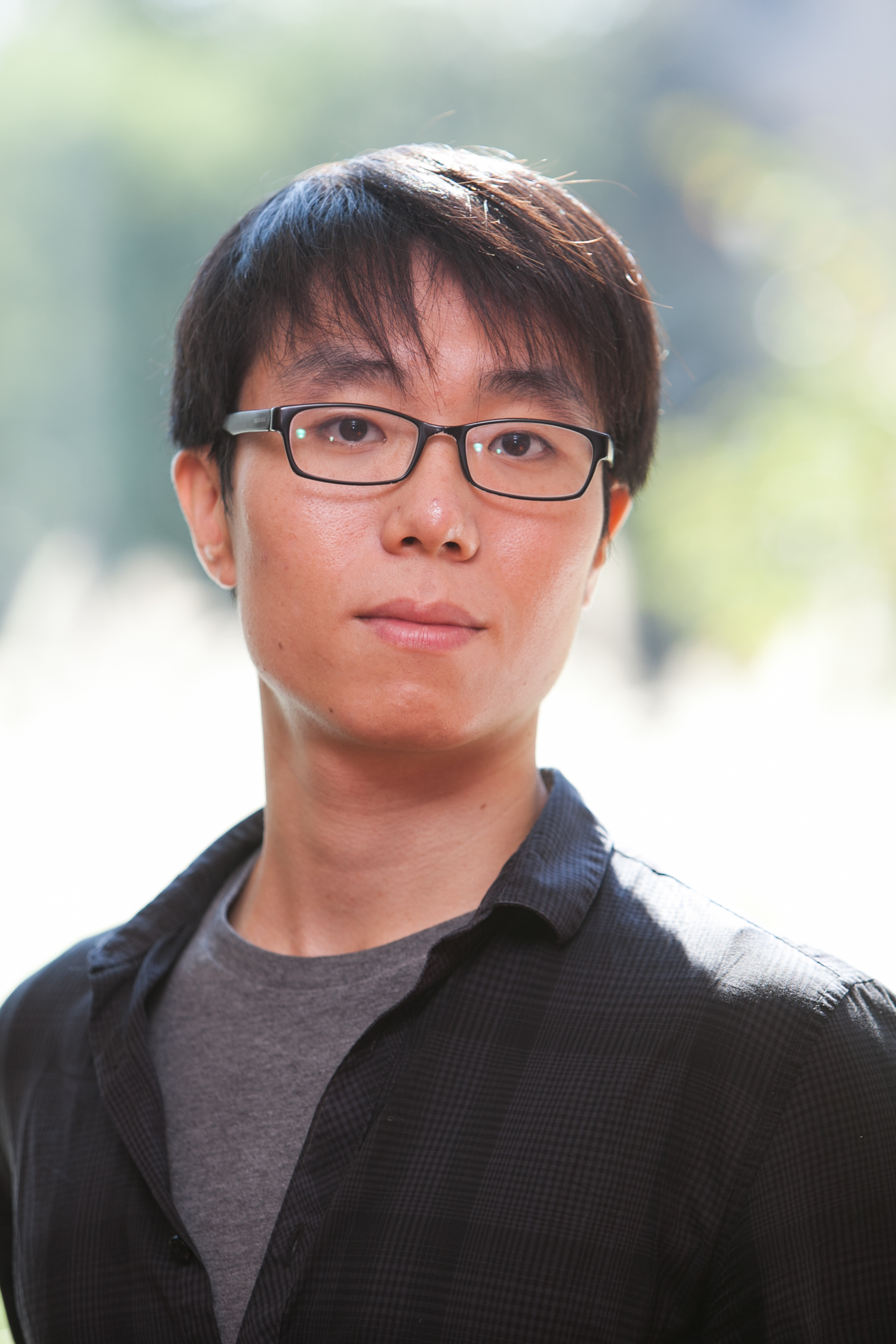
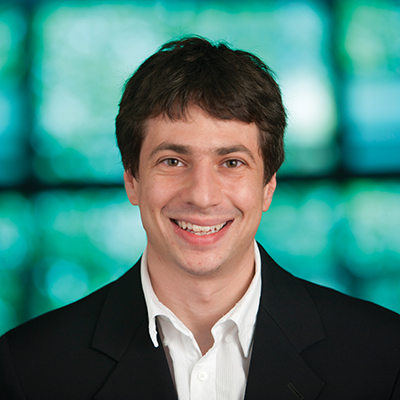
Euiwoong Lee is an Assistant Professor in the Computer Science and Engineering Division at the University of Michigan. He holds a PhD from Carnegie Mellon University, advised by Venkatesan Guruswami, and has held postdoctoral positions at New York University and the Simons Institute for the Theory of Computing. His research focuses on approximation algorithms, hardness of approximation, and parameterized complexity. **Education:** PhD in Computer Science, Carnegie Mellon University (2017), advised by Venkatesan Guruswami Postdoctoral Fellowships: NYU (2017–2020), Simons Institute (2017–2020) **Research Interests:** Approximation Algorithms & Hardness of Approximation Convex Hierarchies (e.g., Sum-of-Squares) Clustering Algorithms (e.g., Correlation Clustering) Parameterized Complexity Facility Location & Metric Optimization **Awards:** Edmund M. Clarke Doctoral Dissertation Award (2017) Simons Award for Graduate Students in Theoretical Computer Science **Advising & Grants:** PhD Students: Anthony Della Pella, Aditya Anand, Amatya Sharma, Ian DeHaan Co-organizes the Michigan Theory Seminar **Labs/Teams:** Collaborates with researchers in approximation algorithms, optimization, and theoretical computer science at the University of Michigan and beyond.
Mark Trodden is the Dean of the School of Arts & Sciences and Thomas S. Gates Jr. Professor of Physics and Astronomy at the University of Pennsylvania. He previously served as the Fay R. and Eugene L. Langberg Professor of Physics, Department Chair, and Co-Director of the Center for Particle Cosmology. His career includes faculty roles at Syracuse University (2000–2009) and visiting positions at Case Western Reserve University and Cornell University. Ph.D. and M.Sc. in Physics, Brown University (1992–1995) Advanced Study in Mathematics, University of Cambridge (1990–1991) M.A. in Mathematics, University of Cambridge (1987–1990) Trodden’s research focuses on the intersection of cosmology and particle physics, addressing fundamental questions such as the nature of dark energy, dark matter, the baryon asymmetry of the universe, inflation, and modified gravity theories. His work explores how cosmological data can constrain physics beyond the Standard Model and general relativity. His publications span topics like dark energy models , inflationary spacetimes , topological defects , and BPS states in supersymmetric theories , reflecting his expertise in connecting high-energy physics to cosmological observations. At Penn, Trodden has held editorial roles for journals like Physics Letters B and Journal of Cosmology and Astroparticle Physics , and has contributed to collaborative workshops advancing cosmology and particle physics.
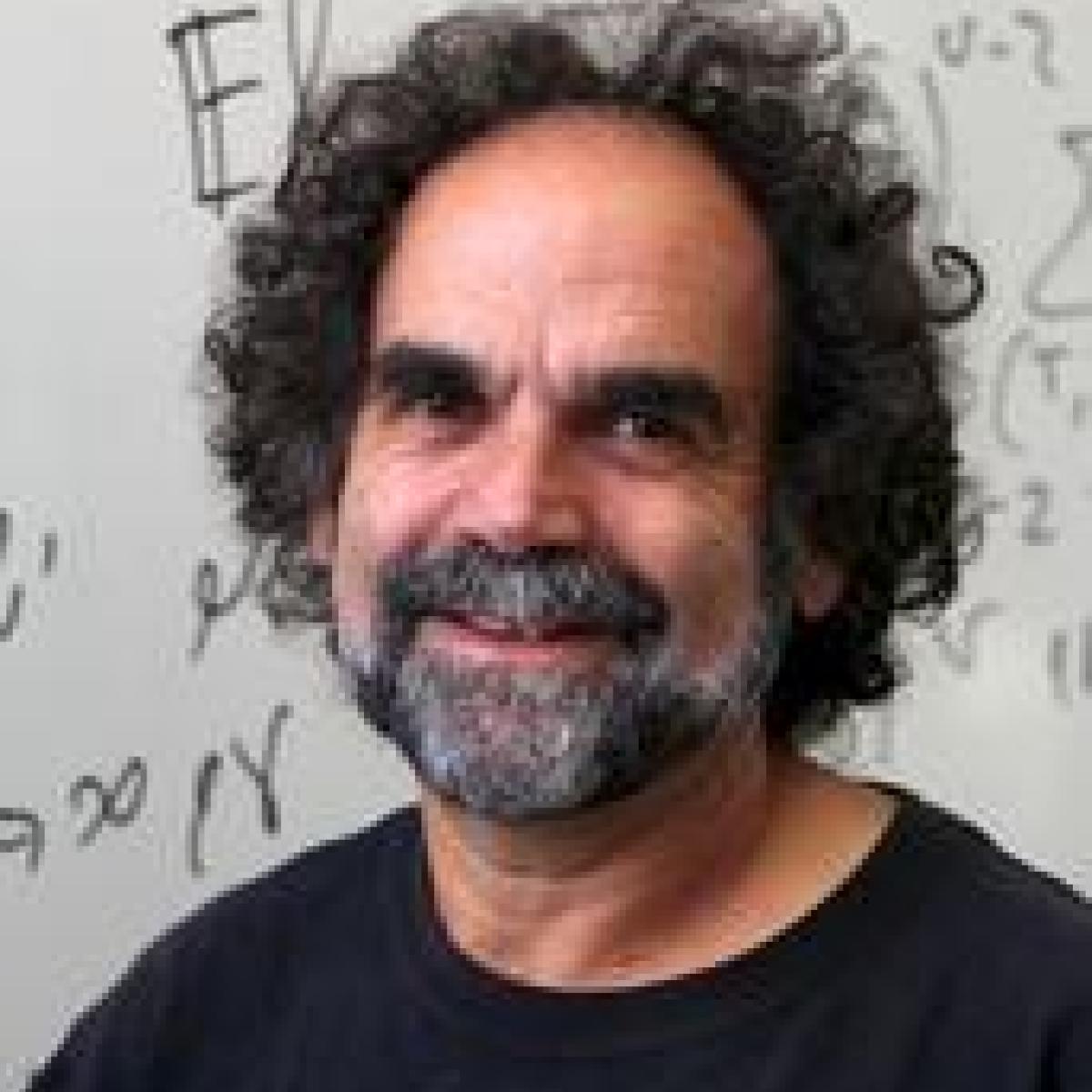
Nathan (Nati) Linial is a Professor at the School of Computer Science and Engineering at the Hebrew University of Jerusalem, where he has been a faculty member since completing his postdoctoral period at UCLA. He earned his undergraduate degree in mathematics from the Technion and his PhD in graph theory from the Hebrew University. His research spans multiple areas of theoretical computer science and mathematics, with primary focus on combinatorics, theoretical computer science, and bioinformatics. Linial's work has made significant contributions to high-dimensional combinatorics, expander graphs, metric embeddings, and computational molecular biology. His research often bridges geometry, analysis, and combinatorial structures, demonstrating deep connections between seemingly disparate mathematical fields. Linial's recent publications reveal a strong trend toward high-dimensional combinatorial structures, including simplicial complexes, hypertrees, and high-dimensional permutations. His work frequently employs probabilistic methods, linear programming techniques, and geometric approaches to solve fundamental combinatorial problems. The breadth of his research is evident in both pure mathematical contributions and applications to computational biology. Fellow of the American Mathematical Society ISI Highly Cited Researcher Conant Prize (2008) for the influential survey paper "Expander graphs and their applications" Linial has served on the editorial boards of several prestigious journals including the Israel Journal of Mathematics (as Chief Editor 2013-2017), Random Structures and Algorithms, and Combinatorica. His academic leadership extends to organizing conferences and workshops in combinatorics and theoretical computer science. He has mentored numerous students whose work spans theoretical computer science, combinatorics, and computational biology. Linial is associated with research projects including ProtoNet (for protein sequence classification) and EVEREST (for evolutionary conserved protein domains), demonstrating his commitment to interdisciplinary research that bridges computer science with molecular biology.
Nicolò Cesa-Bianchi is a Professor of Computer Science at the University of Milan, where he serves as head of the Computer Science programs. He is also associated with the Department of Electronics, Information and Bioengineering (DEIB) at Politecnico di Milano. Cesa-Bianchi holds significant leadership roles including Board member, Fellow and co-director of the Milan unit of the European Laboratory for Learning and Intelligent Systems (ELLIS), and membership in the prestigious Accademia Nazionale dei Lincei. He is also involved with The European Lighthouse on Secure and Safe AI (ELSA), The European Lighthouse of AI for Sustainability (ELIAS), and The FAIR foundation. Professor Cesa-Bianchi's research focuses on the theoretical foundations of machine learning, with special emphasis on sequential decision making and online learning algorithms. His work spans multiple areas including multi-armed bandit problems, regret analysis, prediction with expert advice, and learning on graphs. He has made significant contributions to understanding the theoretical limits of learning algorithms and developing efficient methods for various learning scenarios. His research has important applications in online markets, social networks, and bioinformatics. His monographs 'Prediction, Learning, and Games' and 'Regret Analysis of Stochastic and Nonstochastic Multi-armed Bandit Problems' are considered seminal works in the field. His recent publications demonstrate continued leadership in advancing the theoretical understanding of machine learning, with 2024-2025 papers covering cooperative online learning, multitask learning, fair trade mechanisms, and refined analyses of bandit algorithms. The research shows increasing focus on practical economic applications while maintaining strong theoretical foundations. Google Research Award Xerox Foundation UAC Award Member of the Accademia Nazionale dei Lincei ELLIS Fellow Cesa-Bianchi has been deeply involved in academic service, having served as action editor for the Machine Learning Journal, IEEE Transactions on Information Theory, and the Journal of Machine Learning Research. He currently serves as associate editor for the Journal of Information and Inference and TheoretiCS. He has held leadership positions including President of the Association for Computational Learning and member of the steering committee for the EC-funded Network of Excellence PASCAL2. He was program chair of the 13th Annual Conference on Computational Learning Theory and the 13th International Conference on Algorithmic Learning Theory. He leads the Laboratory for AI and Learning Algorithms (ALGA) at the University of Milan, which focuses on theoretical and applied research in machine learning. His international collaborations are extensive, with visiting positions at UC Santa Cruz, Graz Technical University, Ecole Normale Supérieure in Paris, Google, and Microsoft Research. As an educator, he teaches advanced courses including Reinforcement Learning and Statistical Methods for Machine Learning, and has supervised numerous students through the years.
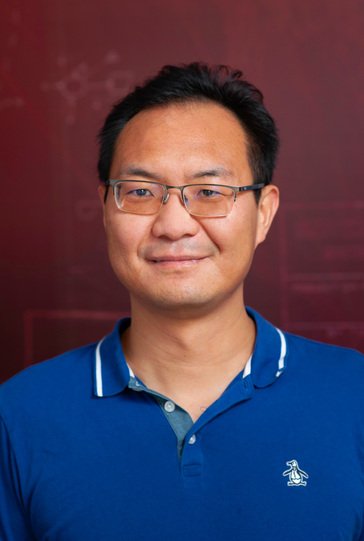
Dr. Jia Zhang is the Inaugural Robert H. Dedman Jr. Endowed Department Chair and Professor of Computer Science at Southern Methodist University (SMU Lyle School of Engineering). She holds the Cruse C. and Marjorie F. Calahan Centennial Chair in Engineering and has a courtesy appointment in the Department of Operations Research and Engineering Management. Her research focuses on applying machine learning, natural language processing, and information retrieval to data science infrastructure, particularly scientific workflows, provenance mining, software discovery, knowledge graphs, cloud computing, immune AI, and applications in earth science and healthcare. Education: Ph.D. in Computer Science, University of Illinois at Chicago M.S. in Computer Science, Nanjing University B.S. in Computer Science, Nanjing University Dr. Zhang's work emphasizes data science infrastructure and machine learning for scientific workflows and knowledge graphs. Her recent publications highlight deep learning , graph neural networks , and optimization algorithms in cloud computing, cybersecurity, and environmental applications. Key trends include spatiotemporal modeling , hybrid neural architectures , and AI-driven service ecosystems . Scientific Awards: Best Paper Awards IEEE SCC (2011, 2017) Best Student Paper Awards IEEE ICWS (2014, 2018), IEEE ICCC (2018) Distinguished Paper Award ICSOC (2023) First Outstanding Service Award IEEE Technical Committee on Services Computing (2016) She has secured over $5 million in federal grants (as PI) and $11 million as PI/Co-PI from NSF, NASA, NIH, UTSW, Ericsson, SAP, and Google. Her lab (Caruth Hall 308) actively recruits research assistants. She previously served as a faculty member at Carnegie Mellon University, Northern Illinois University, and Nanjing University, and worked in industry as a software architect.
Sean Carroll serves as the Homewood Professor of Natural Philosophy at Johns Hopkins University and holds External Faculty status at the Santa Fe Institute. His research bridges cosmology, quantum mechanics, and philosophy, focusing on foundational questions about spacetime emergence, quantum interpretation, and complexity across cosmic scales. Carroll earned his Ph.D. from Harvard University in 1993. His academic trajectory reflects deep engagement with theoretical physics and philosophical inquiry, culminating in his current named professorship at Johns Hopkins. Carroll's research centers on the intersection of physics and philosophy, with significant contributions to quantum foundations, cosmology, and the nature of emergence. He is a leading proponent of the many-worlds interpretation of quantum mechanics and has pioneered work on the thermodynamic arrow of time, quantum decoherence, and the fine-tuning of initial cosmic conditions. His recent investigations explore discretized quantum systems, holographic principles in gravity, and the philosophical implications of quantum gravity. Analysis of his 2022-2025 publications reveals a pronounced shift toward computational approaches in quantum gravity, with increasing emphasis on finite-dimensional Hilbert spaces and GPU-accelerated modeling. His work consistently integrates quantum information theory with cosmological questions, particularly examining how spacetime geometry emerges from quantum entanglement and how complexity evolves in closed systems. Carroll's scientific recognition includes: National Science Foundation Fellowship NASA Fellowship Sloan Research Fellowship Packard Fellowship Fellow of the American Physical Society American Institute of Physics Award Fellow of the Royal Society Guggenheim Fellowship Fellow of the American Association for the Advancement of Science His research has been sustained through major fellowships from NSF, NASA, Sloan, and Packard foundations, enabling interdisciplinary collaborations across physics and philosophy. Carroll actively mentors graduate students at Johns Hopkins and contributes to public discourse through his popular science books (including the Biggest Ideas in the Universe series) and the weekly Mindscape podcast. As Fractal Faculty at the Santa Fe Institute, Carroll participates in cross-disciplinary research on complex systems, exploring how emergent phenomena arise from fundamental physical laws. His work bridges theoretical physics with broader questions about complexity in biological, cognitive, and social systems.
Academic Profile: Damir Filipovic is a Full Professor and the Swissquote Chair in Quantitative Finance at the College of Management of Technology (CDM) of École Polytechnique Fédérale de Lausanne (EPFL), Switzerland. He previously held academic positions at the University of Vienna, University of Munich, and Princeton University, and served as Head of the Vienna Institute of Finance. Research Focus: Quantitative finance, risk management, stochastic processes, term structure modeling, volatility risk, and machine learning applications in financial markets. Industry Collaboration: Co-developed the Swiss Solvency Test for insurance capital requirements while consulting for the Swiss Federal Office of Private Insurance. Publications: Contributed extensively to journals like Journal of Financial Economics, Mathematical Finance, and Annals of Applied Probability, with a textbook on Term-Structure Models. Academic Service: Editorial board member of multiple journals and organizer of advanced workshops on systemic risk and financial technology. Recent Research: His work emphasizes machine learning for portfolio risk management, kernel-based yield curve estimation, and robust stochastic modeling. Keynote speaker at international conferences on finance and insurance mathematics, with over 15 recent publications in 2023-2025 addressing high-dimensional financial problems, neural control systems, and causal inference in market data. Education: Ph.D. in Mathematics from ETH Zurich (2000). Graduate of ETH Zurich and University of Vienna. Teaching & Mentorship: Supervises current and former EPFL Ph.D. students in quantitative finance, including Nicolas Camenzind, Joshua Hayes, Andrea Ruglioni, and ten others. Former students like Damien Ackerer and Lotfi Boudabsa now lead research in risk management. Labs & Programs: Directs EPFL's Finance and Technology Programme, leads the Computational Finance Group (CSF) at EPFL, and contributes to Swiss Finance Institute initiatives. Scientific Leadership: Served on EPFL Committee of Academic Evaluation and Doctoral Program Finance committee.
Ju Sun is an Assistant Professor at the University of Minnesota, Twin Cities, in the Computer Science & Engineering department. He leads the Group of Learning, Optimization, Vision, Healthcare, and X (GLOVEX) and plays key roles in the UMN Data Science Initiative (DSI), Program for Clinical AI, and AI-CLIMATE institute. Research Focus : Theoretical foundations of machine learning, computer vision, and numerical optimization with applications in healthcare, inverse problems, and medical imaging. Grants : $4.5M+ in funding including NSF ACED Program and NIH R01 grants for constrained deep learning and imbalanced classification. Teaching & Leadership : Featured in UMN seminars and AI institutes, with affiliations across Electrical and Computer Engineering, Health Informatics, and Medical School. Recent Publications address inverse problems, federated learning, imbalanced classification, and phase retrieval using deep generative priors and diffusion models. His group website details these innovations. Scientific Awards : McKnight Land-Grant Professorship (2025–2027) 2021 AAAI New Faculty Highlights Advising : Mentored three PhD graduates now at Meta, Amazon, and UCLA. Collaborations span medicine, materials science, and biomedical engineering, integrating physics-informed constraints into AI.
Ahmed El Alaoui is an Assistant Professor in the Department of Statistics and Data Science at Cornell University, with a secondary affiliation in the Department of Computer Science. He joined Cornell in 2021 after completing a postdoctoral fellowship at Stanford University under Andrea Montanari. His research focuses on high-dimensional statistics, probability theory, algorithms on random structures, and statistical physics, with particular emphasis on spin glasses and algorithmic thresholds. El Alaoui holds a PhD in Electrical Engineering and Computer Sciences from UC Berkeley (2018), advised by Michael I. Jordan, and a Master's from Ecole Normale Supérieure/Ecole des Ponts Paristech. His work bridges theoretical and applied domains, addressing challenges in high-dimensional inference, computational trade-offs, and probabilistic models. He has contributed to foundational results in random matrix theory, detection limits in spiked models, and algorithmic approaches to complex systems. His teaching includes courses on high-dimensional statistics, probability models, and theoretical computer science. He has been recognized for his innovative approaches to sampling and optimization in disordered systems, with publications in top journals like Annals of Probability and venues such as NeurIPS and FOCS. El Alaoui's research explores the interplay between statistical physics principles and algorithm design, aiming to uncover computational barriers in high-dimensional problems. His lab develops methodologies for analyzing complex systems and improving the efficiency of statistical estimation in challenging scenarios.
Bryon Aragam is an Associate Professor of Econometrics and Statistics and Robert H. Topel Faculty Scholar at the University of Chicago Booth School of Business. His research focuses on the intersection of causality, statistical machine learning, and probabilistic modeling, with particular emphasis on applications to artificial intelligence systems including large language models like ChatGPT and generative models like DALL-E. Dr. Aragam completed his PhD in Statistics and a Masters in Applied Mathematics at UCLA, where he was an NSF graduate research fellow. Prior to joining the University of Chicago, he was a project scientist and postdoctoral researcher in the Machine Learning Department at Carnegie Mellon University. Research Focus: Causal structure learning in probabilistic generative models Key Areas: Causal machine learning, deep generative models, latent variable models, statistical learning theory Applications: AI interpretability, ethics, and fairness in artificial intelligence systems Teaching: Business Statistics, Econometrics and Statistics Colloquium His recent publications demonstrate a strong theoretical foundation combined with practical applications, particularly in understanding and improving AI systems. His work spans causal discovery, graphical models, deep learning, and latent variable modeling, with particular attention to the theoretical properties of these methods and their applications to real-world AI challenges. The research shows a progression toward increasingly complex problems in causal representation learning and AI interpretability. Scientific Awards: Robert H. Topel Faculty Scholar NSF Graduate Research Fellow Dr. Aragam's work has been published in top statistics and machine learning venues including the Annals of Statistics, Neural Information Processing Systems (NeurIPS), the International Conference on Machine Learning (ICML), and the Journal of Machine Learning Research (JMLR). His research group publishes broadly across both statistical and machine learning communities, demonstrating the interdisciplinary nature of his work at the intersection of statistics, machine learning, and causal inference. As a data science consultant for technology and marketing firms, Dr. Aragam has applied his expertise to problems in survey design, customer retention, logistics, and ranking, bridging the gap between theoretical research and practical applications.
Gautam Kamath is an Assistant Professor at the University of Waterloo's Cheriton School of Computer Science, a Faculty Member at the Vector Institute, and a Canada CIFAR AI Chair. He leads The Salon, a research group focused on statistics, algorithms, machine learning, and optimization. His work bridges theoretical foundations with practical applications in data privacy and robustness, contributing to both academic research and real-world deployments that impact millions of users. Dr. Kamath earned his PhD and SM degrees in Electrical Engineering and Computer Science at MIT, where he was advised by Costis Daskalakis. Prior to MIT, he graduated from Cornell University in May 2012 with a degree in Computer Science and Electrical and Computer Engineering, where he worked with Bobby Kleinberg. His academic journey reflects a strong foundation in both theoretical computer science and practical applications. His research focuses on developing solutions for trustworthy and reliable machine learning and statistics, with particular emphasis on data privacy and robustness. He addresses fundamental problems in these areas, revitalizing statistical toolkits for the modern data era where privacy preservation is paramount. His work spans theoretical foundations of differential privacy to practical applications that have been deployed at scale, including contributions to systems that protect the sensitive information of hundreds of millions of individuals. Analysis of his recent publications reveals a strong trend toward addressing the interplay between privacy, robustness, and machine learning performance. His work increasingly examines practical deployment challenges while maintaining theoretical rigor, with growing emphasis on diffusion models, generative AI, and the legal implications of AI systems. There's a clear trajectory from foundational privacy theory toward addressing real-world implementation challenges across diverse application domains. Canada CIFAR AI Chair Ontario Early Researcher Award 2024 Caspar Bowden Award for Outstanding Research in Privacy Enhancing Technologies STOC Best Student Presentation Award ICML 2024 Best Paper Award Microsoft Research Fellow at the Simons Institute for the Theory of Computing Dr. Kamath actively mentors students, with notable successes including Valentio Iverson winning the Germain-Erdős Undergraduate Award and Chris Trevisan receiving the CRA Outstanding Undergraduate Researcher Award. His service to the research community is extensive, serving as Editor-in-Chief of TMLR, on the Executive Committee of the Learning Theory Alliance, and on steering committees for major conferences including ICML, COLT, and ALT. He has organized numerous workshops focused on privacy-preserving machine learning and differential privacy. Through The Salon research group, Dr. Kamath fosters a collaborative environment where postdoctoral fellows, graduate students, and undergraduates work together on cutting-edge problems at the intersection of statistics, algorithms, machine learning, and optimization. The group maintains strong connections with industry partners and participates in major research initiatives, including the Vector Institute's privacy and security research efforts. Looking forward, Dr. Kamath will be moving to the Computer Science department at NYU's Courant Institute of Mathematical Sciences in September 2026, where he plans to expand his research program.
Tara Brendle is Professor of Mathematics at the University of Glasgow within the School of Mathematics and Statistics, specializing in the interplay between algebra and topology. Her research centers on mapping class groups of surfaces and their profound connections to braid groups, Coxeter groups, arithmetic groups, and automorphism groups of free groups. Her primary research explores how these algebraic structures determine the topology of 3- and 4-manifolds through constructions like Heegaard splittings and Lefschetz fibrations. She investigates cohomological properties, subgroup structures, and representation-theoretic aspects of mapping class groups, with significant contributions to understanding the Johnson kernel and hyperelliptic Torelli groups. Over the past two decades, Brendle's publications reveal a consistent focus on geometric and algebraic properties of surface automorphism groups, evolving from foundational work on generators and relations to cutting-edge research on high-dimensional cohomology of moduli spaces and stability phenomena. Her collaborations with leading mathematicians like Dan Margalit and Andrew Putman have produced influential results across geometric group theory. She actively supervises doctoral research on mapping class groups, braid groups, and low-dimensional topology, guiding students including Bader, Philipp; Corrigan, Gabriel; Giannini, Riccardo; and Pietrzak, Alicja on advanced topics at the intersection of algebra and geometry.
Aaron Roth is the Henry Salvatori Professor of Computer and Cognitive Science at the University of Pennsylvania, affiliated with the Department of Computer and Information Science in the School of Engineering and Applied Science. He holds a secondary appointment in the Department of Statistics and Data Science at the Wharton School and is associated with several research centers including PRiML, the Warren Center for Network and Data Sciences, and the AMCS program. He received his PhD from Carnegie Mellon University under Avrim Blum and was a postdoc at Microsoft Research New England. His research focuses on algorithms and machine learning, particularly in private data analysis, fairness in machine learning, game theory, mechanism design, and learning theory. His work bridges theoretical computer science with societal concerns, advocating for ethically aware algorithm design. He co-authored the book The Ethical Algorithm with Michael Kearns, which explores how to embed social values like privacy and fairness into algorithmic systems. His recent publications show a strong trend toward uncertainty quantification, multicalibration, conformal prediction, and fairness in reinforcement learning and high-dimensional settings. He frequently publishes in top-tier venues such as STOC, FOCS, ICML, NeurIPS, and COLT, often with a focus on rigorous theoretical foundations with practical implications. Hans Sigrist Prize Presidential Early Career Award for Scientists and Engineers (PECASE) Alfred P. Sloan Research Fellowship NSF CAREER award Google Faculty Research Award Amazon Research Award Yahoo Academic Career Enhancement award Roth has advised numerous PhD students and postdocs, many of whom now hold academic or industry research positions. He is also an Amazon Scholar at AWS and has served in advisory roles for companies like Apple, Facebook, Leapyear, and Spectrum Labs. He has been active in organizing workshops and tutorials on differential privacy, fairness, and adaptive data analysis, and has given keynotes at major conferences and institutions worldwide. He leads research groups and collaborates widely across Penn, focusing on responsible AI, privacy, and algorithmic fairness. His lab produces foundational work on calibration, unlearning, privacy-preserving learning, and equitable decision-making systems.
Alyssa Ney is a leading Professor of Philosophy at Ludwig-Maximilians University Munich (LMU), holding the Chair of Metaphysics within the Faculty of Philosophy, Philosophy of Science, and Religious Studies. Her work bridges metaphysics with the philosophy of physics and mind, focusing on the interpretation of quantum theories, fundamentality, and the unity of science. Education: PhD in Philosophy (Brown University), MS in Physics (UC Davis), BS in Physics and Philosophy (Tulane University) Previous appointments: UC Davis (2019-2024), University of Rochester (2005-2019) Ney’s research explores the metaphysical implications of quantum mechanics, particularly wave function realism and its challenges in grounding macro-objects. She investigates the relationship between quantum theory and classical conceptions of space, time, and causation, with a focus on locality and nonlocality. Her work also addresses physicalism, mental causation, and the methodology of metaphysical inquiry. Recent publications include analyses of density matrix realism (“ Is the Universe Fundamentally a Density Matrix? ”), many-worlds interpretations (“ Branching (Almost) Everywhere and All At Once ”), and the metaphysical status of spacetime in quantum gravity contexts. She was awarded the 2025 Patrick Suppes Prize for her book The World in the Wave Function and the 2024 Humboldt Foundation Bessel Award. Scientific Awards Patrick Suppes Prize (2025) Friedrich Wilhelm Bessel Research Award (2024) FQxI Essay Contest Second Prize (2018) Elsie Field Dupre Prize in Physics (1999) Ney actively mentors underrepresented scholars in philosophy of science and serves on editorial boards for Philosophy of Physics and British Journal for the Philosophy of Science . She has organized workshops connecting metaphysics with philosophy of physics and quantum interpretation.
Prof. Ruth King is the Thomas Bayes’ Professor of Statistics at the University of Edinburgh’s School of Mathematics. Her research focuses on applying Bayesian statistical methods to ecological and public health challenges, including population estimation for hidden groups (e.g., injecting drug users, modern-day slaves) and wildlife conservation. She develops computationally efficient techniques for analyzing large datasets, such as spatial capture-recapture models for animal populations and spatio-temporal abundance models for hidden human populations. Key projects include estimating survival rates of guillemots (30,000 individuals) and improving capture-recapture models to account for animal movement dynamics. Her work bridges statistical methodology with real-world applications, emphasizing rigorous inference and scalable algorithms. King’s academic contributions span Bayesian modeling frameworks, parameter clustering in neuroscientific data, and hierarchical centering in random effects models. She collaborates with biologists and policymakers to address conservation and public health issues. Notable recent projects include incorporating memory effects into spatial capture-recapture models and developing semi-complete data augmentation for state-space models. Her interdisciplinary approach addresses challenges in ecology, epidemiology, and computational statistics, with a focus on methodological innovation for large-scale data. Her scientific contributions are highlighted through over 100 peer-reviewed articles, including work on integrated population models, animal movement dynamics, and hidden Markov models for seabird behavior. King emphasizes the importance of statistics in uncovering hidden information within datasets, advocating for robust methodologies that ‘stand up in court’ when applied to critical real-world problems.