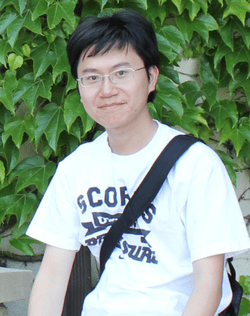
Junyang Wang is a Research Associate in the Department of Mathematics at Imperial College London's Faculty of Natural Sciences. His research focuses on Bayesian methodology with applications in sustainability and public health, including Bayesian computation, probabilistic numerics, and variational inference. He collaborates with Dr. Sarah Filippi on scalable Bayesian mixture models for clustering risk factor data, and with NCD-RisC on public health applications. Previously, he worked on Bayesian statistical methods for material flow analysis in civil engineering. He holds a PhD in Statistics from Newcastle University (focused on Bayesian probabilistic numerical methods for differential equations) and a Mathematics degree from the University of Cambridge. His work bridges computational statistics with real-world challenges, emphasizing interdisciplinary collaboration across environmental science, epidemiology, and engineering systems. Current projects aim to advance scalable Bayesian techniques for high-dimensional data and complex systems analysis.
Gongjun Xu is an Associate Professor of Statistics and courtesy Associate Professor of Psychology at the University of Michigan. He leads the Master's Program in Applied Statistics and holds positions in the Department of Statistics within the College of Literature, Science, and the Arts (LSA). His research focuses on latent variable models, psychometrics, statistical learning, and high-dimensional statistics. Xu completed his Ph.D. in Statistics at Columbia University and B.S. at the University of Science and Technology of China (USTC). His research interests include advanced statistical methodologies for educational and psychological measurement, such as cognitive diagnosis models, item response theory, and network data analysis. He has contributed to high-dimensional inference, survival analysis, and machine learning applications in healthcare. Xu serves as Co-Editor-in-Chief of the Journal of Educational and Behavioral Statistics and holds editorial roles in multiple top-tier journals. Xu has been recognized with prestigious awards including the AERA Research Methodology Award (2025), ICSA President’s Citation (2024), and COPSS Emerging Leader Award (2023). His team advises numerous graduate and undergraduate students, many of whom pursue academic and industry roles in statistics, data science, and education. Key collaborations include work on educational testing, health analytics, and AI-driven scientific methods via the Schmidt AI in Science Fellowship. He oversees a vibrant research group with active projects in latent variable modeling, differential item functioning detection, and scalable Bayesian methods for large-scale assessments. His lab emphasizes interdisciplinary applications spanning education, healthcare, and social sciences.
Nayel Bettache is a Visiting Assistant Professor in the Department of Statistics and Data Science at Cornell University since August 2024. He holds a PhD in Mathematical Statistics from Institut Polytechnique de Paris (advised by Cristina Butucea). His research focuses on foundational aspects of mathematical statistics and machine learning, emphasizing provable theoretical guarantees for practical methods. Key areas include time series analysis, random matrices, and high-dimensional problems. He has held visiting roles at Harvard and Cornell, and was a researcher at CREST-ENSAE. Education : PhD in Mathematical Statistics, Institut Polytechnique de Paris (2021–2024) M.Sc. in Statistics and Learning, ENSAE IP Paris (2017–2020) M.Sc. in Data Science, Ecole Polytechnique (2019–2020) Classes Préparatoires MPSI-MP, Institution Aux Lazaristes (2014–2017) Research Interests : His work bridges theoretical statistics and applied machine learning, with emphasis on matrix regression, high-dimensional estimation, and time series analysis. He designs methods with rigorous statistical guarantees while maintaining computational efficiency. Teaching : Currently teaches Statistical Methods II, R Programming, and Machine Learning at Cornell. Previously served as a teaching assistant at ENSAE with top pedagogical ratings. Awards : Junior Scientific Visibility Grant (2023, Fondation Mathématique Jacques Hadamard) PhD Grant (2021–2024, Genes Foundation) Other Activities : Founded NayelPrepa, an educational company with 250k+ video views and 100+ trained students, rated 100% 5-star on Trustpilot. Conducted industrial research at BNP Paribas and Advestis.
Dr Christiern Rose is a Senior Lecturer in the School of Economics at The University of Queensland (UQ), within the Faculty of Business, Economics and Law. He holds a PhD in Economics from the University of Bristol (2016) and completed a post-doctoral fellowship at Toulouse School of Economics. His research focuses on applied microeconometrics with emphasis on peer effects, high-dimensional econometrics, health economics, and illicit drug markets. He is affiliated with the Centre for Efficiency and Productivity Analysis. Education: PhD in Economics, University of Bristol (2016) Post-doctoral Research, Toulouse School of Economics (2016–2018) Joined UQ in 2017 Research Interests: Dr Rose investigates peer effects in social networks, health economics (including mental health, healthcare utilization, and aging populations), and the economics of illicit drugs. He develops econometric methods for high-dimensional data and network analysis, with applications to policy evaluation and social spillovers. Research Trends: His work bridges theoretical econometrics and empirical policy analysis, often using advanced statistical techniques to address causal questions. Recent studies explore housing insecurity’s mental health impacts, physician networks’ influence on innovation adoption, and the role of social peers in addiction recovery. Grants & Supervision: Leading the ARC Discovery Project Understanding macroeconomic fluctuations with unobserved networks (2022–2025) Available for PhD supervision in health economics, network econometrics, and applied microeconometrics Labs/Teams: Affiliate of the Centre for Efficiency and Productivity Analysis, collaborating on productivity measurement and efficiency analysis methods.
Audrey Repetti is an Associate Professor at Heriot-Watt University, affiliated with both the School of Mathematical and Computer Sciences and the School of Engineering and Physical Sciences. She holds a PhD in optimization from Université Paris-Est Marne-la-Vallée (2015) and an MSc in applied mathematics from Université Pierre et Marie Curie (2011). Her research focuses on optimization (convex/nonconvex/stochastic), deep learning, Bayesian inference, and inverse problems in imaging and graph processing. She received the Royal Society of Edinburgh Fellowship (2022) for her work in optimization for data science. Her teaching includes courses like Bayesian Inference and Computational Methods. She collaborates internationally on projects in radio astronomy imaging, medical imaging, and computational optics. Repetti’s work bridges optimization theory with practical applications, emphasizing scalable algorithms for large-scale data problems.
Gianluca De Nard serves as a Senior Research Associate at the University of Zurich's Department of Economics, Research Fellow at New York University's Volatility and Risk Institute, and Head of Quantitative Research at OLZ AG in Zurich. His career bridges academic research and practical finance applications, with significant contributions across multiple institutions. Dr. De Nard specializes in quantitative finance with expertise in portfolio optimization, covariance matrix estimation, and financial econometrics. His research focuses on developing robust statistical methods for handling large-dimensional financial data, with particular emphasis on shrinkage techniques and factor models. His work addresses fundamental challenges in modern portfolio theory, including nonstandard errors in financial research, climate risk integration, and AI applications in investment management. Analysis of his recent publications reveals a clear evolution toward integrating machine learning with traditional financial econometrics. His 2024-2025 work shows increasing sophistication in applying AI techniques to portfolio construction while maintaining rigorous statistical foundations. The recurring themes across his research include improving covariance matrix estimation, developing factor models for portfolio selection, and addressing methodological challenges in financial research. Dr. De Nard has established collaborations with leading researchers including Nobel laureate Robert F. Engle, Olivier Ledoit, and Michael Wolf. His work appears in top finance journals including the Journal of Finance, Journal of Financial Econometrics, and Journal of Banking and Finance, with his 2024 paper 'Nonstandard Errors' accumulating over 17,000 downloads. At OLZ AG, he applies his academic research to practical investment challenges as Head of Quantitative Research, demonstrating his ability to translate theoretical advances into real-world solutions. His dual academic-industry roles position him at the forefront of quantitative finance research and application.
Xiong Wang is a J.J. Sylvester Assistant Professor in the Department of Mathematics at Johns Hopkins University (non-tenure track). His research focuses on probability theory, stochastic analysis, and their applications to machine learning and complex systems. He holds a Ph.D. from the University of Alberta (2022), where he received the Faculty of Science Dissertation Award. Education: Ph.D. in Mathematics, University of Alberta (2022) Advisor: Professor Yaozhong Hu Research Interests: Probability Theory & Stochastic Processes Machine Learning Algorithms Partial Differential Equations (PDEs) Interacting Particle Systems Inverse Problems in Stochastic Dynamics Mathematical Foundations of Data Science Teaching: Instructor for advanced courses at Johns Hopkins, including Stochastic Differential Equations, Partial Differential Equations, and Real Analysis Prior teaching roles at University of Alberta (Calculus, Linear Algebra) Recent Activities: Speaker at over 30 international conferences/seminars since 2021 Active in SIAM, CMS, and ICERM events Collaborations with institutions globally (e.g., Peking University, Brown University)
Lingzhou Xue is a Professor of Statistics at The Pennsylvania State University, affiliated with the Eberly College of Science. He holds dual roles as a faculty member and the Associate Director of the National Institute of Statistical Sciences (NISS). His research focuses on high-dimensional statistics, nonparametric methods, statistical learning, and optimization, with applications in biomedical, environmental, and social sciences. He leads the SLDM (Statistical Learning and Data Mining) Lab and MDS (Microbiome Data Science) Lab. Education: B.Sc. in Statistics from Peking University (2008), Ph.D. in Statistics from the University of Minnesota (2012), postdoctoral training at Princeton University (2012–2013). Professional roles include Associate Editorships at the Journal of the American Statistical Association, Annals of Applied Statistics, and ACM Transactions on Probabilistic Machine Learning. Research Interests: Federated learning, causal inference, graphical models, reinforcement learning, optimal transport, and large-scale optimization. Recent work emphasizes theoretical guarantees for sparse PCA and federated Q-learning algorithms. Awards: IMS Fellow (2024), ASA Fellow (2023), COPSS Emerging Leader Award (2021), and Bernoulli Society New Researcher Award (2019). He has mentored 17 Ph.D. students and 3 postdocs, with four students securing tenure-track faculty positions. Service: Organized multiple NISS writing workshops, co-chaired the Ingram Olkin Statistics Serving Society Forum on Gun Violence, and contributed to the ASA whitepaper 'Discovery with Data' (2014).
Shahin Tavakoli is a Senior Lecturer in the Research Institute for Statistics and Information Science at the Geneva School of Economics and Management (University of Geneva). He holds a PhD in Mathematical Statistics from EPFL and has held positions as a University Research Fellow at the University of Cambridge and a tenure-track Assistant Professor at the University of Warwick. His research focuses on functional data analysis with applications in neuroimaging, phonetics, biophysics, econometrics, and genomics. Education: BSc/MSc in Mathematics (EPFL), PhD in Mathematical Statistics (EPFL). Key roles include Associate Editor for the Journal of Statistical Planning and Inference and proposer for a JRSS B discussion paper. Teaching includes Applied Bayesian Statistics, Multivariate Analysis, and Mathematics courses at the University of Geneva. Research interests emphasize statistical methodologies for complex data structures, including high-dimensional functional time series and spatial modeling of linguistic data. Notable recent publications address phonetic analysis, brain imaging, and econometric factor models. Collaborations span institutions like the University of Cambridge, University of Warwick, and LMU Munich. Advising includes PhD students Marco Palma and Beatrice Matteo, with contributions to projects such as functional regression clustering and normative brain mapping. His work bridges theoretical statistics with applied domains, reflecting interdisciplinary impact across natural and social sciences.
Dr. Tong Tong Wu is a Professor of Biostatistics and Computational Biology at the University of Rochester, serving as Director of Master's Programs in her department. She holds a Ph.D. from UCLA (2006). Her research focuses on high-dimensional data analysis, machine learning, survival analysis, and computational biology, with applications in cancer, HIV, epidemiology, dental health, and medical engineering. Education: Ph.D. in Biostatistics, University of California, Los Angeles (2006) Affiliations: UR Medicine, Department of Biostatistics and Computational Biology Roles: Director of Master's Programs, Faculty Member, and Researcher Her research interests emphasize statistical methodologies for complex biomedical data, including variable selection, clustering, and longitudinal trajectory analysis. Recent work explores oral microbiome dynamics in child-mother dyads, antifungal susceptibility, and machine learning for caries prediction. Dr. Wu collaborates across disciplines, contributing to studies on neurological disorders (e.g., Charcot-Marie-Tooth disease) and clinical outcomes in hemodialysis patients. Publications highlight innovations in penalized empirical likelihood, high-dimensional inference, and statistical modeling for biomedical applications. She advises students on topics ranging from longitudinal hemodynamic responses to physical activity clustering in young females. Her work bridges theoretical statistics and applied health research, addressing critical questions in public health and precision medicine.
Konrad Paul Kording is the Nathan Francis Mossell University Professor at the University of Pennsylvania's School of Engineering and Applied Science, holding primary appointments in Bioengineering and Neuroscience, and a secondary appointment in Computer and Information Science. His research focuses on computational neuroscience, machine learning, and their applications to understanding neural systems and human behavior. He leads a research group located in Room 404 Richards and maintains an active research website and personal academic page. His work explores topics such as neural decoding, causal inference, and the alignment of artificial neural networks with biological systems. He has pioneered methods for analyzing neural activity in macaques, developing large-scale facial analysis resources like PrimateFace. His interdisciplinary approach integrates computer vision, medical informatics, and robotics to address challenges in neurology and developmental disorders. Recent research highlights include advancing techniques for early prediction of cerebral palsy using motion tracking and automated segmentation of synchrotron-scanned fossils. His contributions to causal discovery methodologies and neural network interpretability have been influential in both neuroscience and machine learning communities.
Dr. Hai Shu is an Assistant Professor in the Department of Biostatistics at NYU's School of Global Public Health. He earned his Ph.D. in Biostatistics from the University of Michigan and B.S. from Harbin Institute of Technology. Previously, he was a Postdoctoral Fellow at MD Anderson Cancer Center. Education: Ph.D. in Biostatistics - University of Michigan B.S. in Information and Computational Science - Harbin Institute of Technology His research focuses on high-dimensional data analysis, machine/deep learning, and medical image applications in neurodegenerative diseases and oncology. He develops statistical methods for analyzing complex biomedical data from neuroimaging and genomics. His publications demonstrate consistent focus on developing novel statistical methods for medical imaging data, with increasing emphasis on deep learning approaches and multi-modal data integration in recent years. Awards: NYU GPH Goddard Award (2023) He mentors graduate students and serves as associate editor for Statistica Sinica and The American Statistician. His NIH-funded research includes studies on neuroimaging analysis and AI applications in healthcare. Leads research in medical image analysis and statistical learning, collaborating with neuroscience and oncology teams to develop computational tools for disease diagnosis and progression tracking.
Einar Malvin Rønquist is a Professor and Head of the Department of Mathematical Sciences at NTNU since August 2013. He holds a MSc from NTNU (1980) and a PhD from MIT (1988). His research focuses on numerical solutions of partial differential equations, spectral element methods, reduced basis methods, and computational fluid dynamics. He has been a leader in several research initiatives, including the Computational Science and Visualization program at NTNU (2003–2011). Rønquist is a member of prestigious academies: NTVA (since 2005) and DNKVS (since 2010). He has supervised 8 PhD students and 25 MSc students. His work spans computational science, with notable contributions to parametric modeling, parallel computing, and fluid dynamics simulation. His administrative roles include Vice President of R&D at Nektonics, Inc. (1991–1999) and Deputy Head of NTNU’s Department of Mathematical Sciences (Fall 2012). His publications highlight advancements in numerical methods for PDEs, including spectral element techniques, reduced basis approaches, and high-order approximations for complex geometries.
Anna Seigal is an Assistant Professor of Applied Mathematics at Harvard University's School of Engineering and Applied Sciences (SEAS), with an affiliation in the Department of Statistics. Her research focuses on applied algebraic geometry, tensors, multilinear algebra, and algebraic statistics, particularly in the context of data science. She explores algebraic approaches to data analysis, including matrix/tensor factorizations, parameter estimation, causal inference, and optimization, with applications to physical and biological systems. Her work is supported by the Sloan Foundation and Harvard's Dean’s Competitive Fund. Research Interests: Algebraic statistics, tensors and multilinear algebra, applied algebraic geometry, and the mathematics of data science. She investigates group symmetries in models, dimensionality reduction techniques, and machine learning algorithms. Current projects include causal disentanglement via cumulants and invariant theory applications to maximum likelihood estimation. Her academic contributions span theoretical advancements and interdisciplinary applications, such as genomic template analysis and COVID-19 molecular phenotyping. She collaborates with postdocs and students on research projects and teaches courses like Applied Math 210. Awards and Funding: Supported by the Alfred P. Sloan Foundation and Harvard's internal grants. No explicit named awards listed, but her research is institutionally recognized. Labs/Teams: Leads a research group focused on applied algebra and geometry in data science. Collaborates across departments in SEAS and the Statistics Department.
Neill Campbell is a Professor of Visual Computing and Machine Learning in the Department of Computer Science at the University of Bath . He is the Director of the Centre for the Analysis of Motion, Entertainment Research and Applications (CAMERA) and co-director of the Centre for Mathematics and Algorithms for Data (MAD) . He holds an external position as Honorary Associate Professor at University College London and is a Royal Society Industry Fellow. His research spans visual computing, machine learning, and their applications in graphics, vision, and healthcare. His educational background includes a Master of Engineering and a Doctor of Philosophy in Engineering from the University of Cambridge, with his PhD focusing on Automatic 3D Model Acquisition from Uncalibrated Images. Neill Campbell’s research interests lie at the intersection of shape modeling , machine learning , and computer vision . He develops probabilistic and deep learning models to understand and generate visual content, with applications in digital humans, virtual production, biomechanics, and medical imaging. His work emphasizes uncertainty quantification, generative modeling, and alignment learning using Gaussian processes and Bayesian nonparametrics. He leads interdisciplinary projects that bridge computer science and mathematical sciences. The recent publications reflect a strong trend in probabilistic modeling , geometric deep learning , and medical applications . Topics include Gaussian process-based shape modeling, anomaly detection in safety-critical systems, and sparse approximations for geometric representations. His work increasingly integrates theoretical machine learning with real-world applications in health, engineering, and creative industries. Royal Society Industry Fellow Neill Campbell actively supervises PhD students across multiple Centres for Doctoral Training (ART-AI, SAMBa, CDE) and leads significant research grants such as MyWorld (UKRI Strength in Places Fund) and REMODEL (EPSRC). His group collaborates with industry leaders like Rolls-Royce, NVIDIA, Adobe, and DNEG, and he supports student internships and industrial placements. He is also involved in spin-out activities, including contributions to Forceteck Ltd. He leads the Visual Computing Group and is deeply embedded in research centers including CAMERA , MAD , and MyWorld . His team includes postdoctoral researchers and PhD students working on 3D reconstruction, biomechanics, inverse problems, and generative models, fostering a collaborative and interdisciplinary research environment.