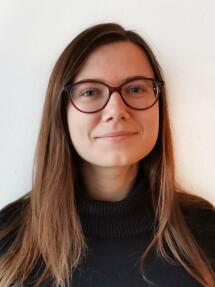
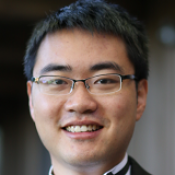
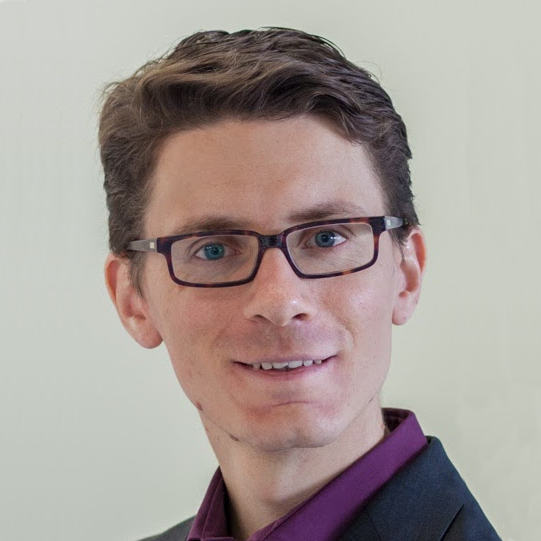
Katherine Brown is an Associate Professor of Physics at Hamilton College, where she has been a faculty member since 2014. Her research spans cosmology, non-Hermitian quantum mechanics, and interdisciplinary studies at the intersection of physics and art. Education: B.S., University of New Mexico M.S. and Ph.D., Case Western Reserve University (2010) Her research in cosmology focuses on gravitational radiation from phase transitions, chameleon dark energy models, and extra-dimensional theories. In non-Hermitian quantum mechanics, she explores PT-symmetric systems and their implications for fundamental physics. She also investigates interdisciplinary topics, notably challenging claims about fractal patterns in Jackson Pollock's drip paintings. Her work has been featured in Nature Physics as a research highlight (2010). She mentors Hamilton students in research projects, bridging theoretical physics and cosmology with accessible mathematical frameworks.
Professor Martin H H Kuball is a distinguished academic at the University of Bristol's School of Physics, holding the prestigious Royal Society Wolfson Research Merit Award. He serves as the Royal Academy of Engineering Chair in Emerging Technologies and leads the Center for Device Thermography and Reliability (CDTR), a research center focused on thermal management, electrical performance, and reliability of novel semiconductor devices. His work spans multiple international collaborations and significant research funding. Professor Kuball's research interests center on wide and ultra-wide bandgap semiconductor materials including GaN, Ga 2 O 3 , SiC, and diamond. His team pioneered numerous experimental techniques now widely used in academia and industry, such as Raman thermography for high spatial resolution temperature measurement of semiconductor devices and substrate backbiasing for power electronic device development. Current research focuses on GaN-on-Diamond technology, Ga 2 O 3 power devices, phonon transport in diamond, and next-generation 2D materials beyond graphene. His recent publications demonstrate a strong focus on thermal management challenges in next-generation power and RF devices, with particular attention to GaN-on-Diamond integration, Ga 2 O 3 device physics, and interface engineering for improved thermal boundary resistance. The research spans fundamental material properties to practical device implementation for communications, microwave, and power electronics applications enabling the low carbon economy. Royal Society Wolfson Research Merit Award Holder Royal Academy of Engineering Chair in Emerging Technologies Fellow of IEEE Fellow of Materials Research Society (MRS) Fellow of Society of Photo-Optical Instrumentation Engineers (SPIE) Fellow of IET (Institute of Engineering and Technology) Fellow of IoP (Institute of Physics) Professor Kuball leads numerous large research programmes including the EPSRC Programme Grant GaN-DaME and Platform Grant MANGI, and is part of the US Department of Energy funded Energy Frontier Research Center (EFRC) ULTRA. His group of approximately 20 international researchers and PhD students collaborates with industry and academia globally. He co-founded TherMap Solutions, a spin-out company providing thermal conductivity measurement tools for electronics, aerospace, and nuclear applications. The Center for Device Thermography and Reliability (CDTR) under Professor Kuball's leadership focuses on developing and applying new techniques for temperature, thermal conductivity, electrical conductivity, and traps analysis. The team is currently establishing the first UK site for Ga 2 O 3 material growth for high-voltage power device technology and exploring innovative thermal management solutions including metal-diamond composites and nano-silver die attaches.
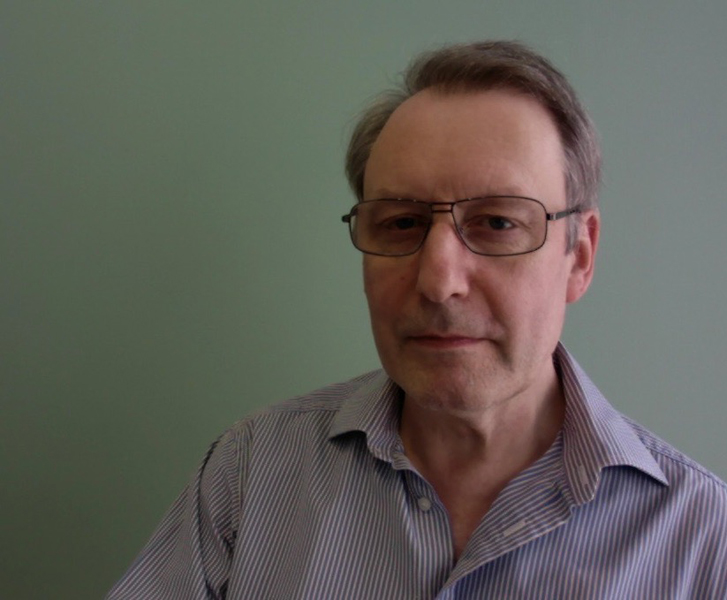
Anna Gusakova is a Junior Professor at the Institute for Mathematical Stochastics, University of Münster, Germany. Her research lies at the intersection of stochastic geometry , probability theory , and high-dimensional analysis , with a focus on random polytopes, tessellations, and concentration phenomena. Education: She completed her Ph.D. under the supervision of Prof. Dr. Friedrich Götze, with a thesis titled Application of Probability Methods in Number Theory and Integral Geometry . Research Interests: Her work spans a broad range of topics including: Stochastic geometry of random polytopes and tessellations High-dimensional probability and concentration inequalities Poisson processes and their geometric applications Convex and integral geometry Number-theoretic aspects of random structures Publications Overview: Her recent publications demonstrate a deep engagement with theoretical foundations and asymptotic analysis in stochastic geometry. Notable contributions include studies on the β-Delaunay tessellation , spherical convex hulls , and concentration inequalities for Poisson functionals . These works often involve advanced tools from integral geometry, functional analysis, and probabilistic limit theory. Teaching and Mentorship: She teaches a variety of courses including master's seminars on stochastic geometry, probability theory, and high-dimensional probability. Her teaching emphasizes both theoretical depth and practical applications in modern probability and geometry. Collaborations and Grants: While specific grant details are not provided, her extensive collaboration network includes researchers like Christoph Thäle, Zakhar Kabluchko, and Florian Besau, indicating active participation in international research projects. Laboratory and Team: She is associated with the working group in Mathematical Stochastics at the University of Münster, contributing to a vibrant research environment in probability and geometry.
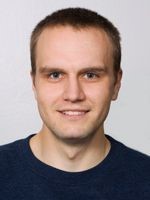
Vegard Antun is a Postdoctoral Fellow at the Department of Mathematics, University of Oslo , specializing in applied mathematics with a focus on inverse problems, imaging, and deep learning. Education: PhD (2020), Master's (2016), and Bachelor's (2013) degrees from the University of Oslo. Research Interests: Stability and accuracy in AI algorithms, compressive sensing, signal recovery, and mathematical paradoxes in deep learning. Key Projects: Supervised a 2022 interdisciplinary project on deep learning observables for partial differential equations. His work explores the theoretical limitations of AI, particularly the instability of neural networks in inverse problems and their implications for scientific computing, as highlighted in his research on mathematical paradoxes and Smale’s 18th problem. His publications span topics such as binary sampling , wavelet reconstruction , and data-efficient neural networks , emphasizing the tension between AI accuracy and robustness. He has contributed to understanding implicit regularization , existence of optimal decoders , and hybrid concept-based models for scientific applications.
Jukka Corander serves as Professor in the Department of Mathematics and Statistics at the University of Helsinki, holding a Docent title in the same department. He is affiliated with the Helsinki Institute for Information Technology and supervises three doctoral programs: Integrative Life Science, Mathematics and Statistics, and Population Health. His academic contact includes email jukka.corander@helsinki.fi and phone +358504155294. Corander's research centers on statistical genetics and computational biology , with expertise spanning population genetics, genomic epidemiology, and Bayesian inference methods. His work integrates advanced statistical modeling with microbial genomics to address evolutionary dynamics and pathogen spread. Recent projects examine bacterial evolution in Streptococcus pneumoniae , Enterococcus species, and Escherichia coli , emphasizing computational solutions for high-dimensional genomic data. His 2025 publications reveal a strong focus on genomic epidemiology and computational methodology , featuring studies on Streptococcus pyogenes spread in Australia, plasmid-driven E. coli evolution, and innovations in approximate Bayesian computation. These works demonstrate interdisciplinary collaboration across microbiology, statistics, and public health, often published in high-impact journals like Nature Communications and The Lancet Microbe . Notable recognition includes the Per Brahe Prize for Young Scientist (2008) . Additional professional activities encompass: 62 academic activities including conference organization (e.g., 4th Permafrost Workshop) International research visits to Wellcome Trust Sanger Institute Membership in Norwegian Research Council Editorial roles and doctoral thesis examination Corander actively mentors doctoral candidates through three university programs and participates in media engagement, including Finnish science programs and radio interviews discussing statistics' societal role. His current research includes the active project Comparative genome analysis, population genetics and functional genomics of animal gastric Helicobacter species (since 2013).
Matthew Enjalran is Professor of Physics at Southern Connecticut State University , a position he has held since fall 2003. In addition to teaching across the undergraduate and graduate physics curriculum, he maintains an active research program in theoretical condensed-matter physics focused on strongly correlated and geometrically frustrated systems. Education & Background: While explicit degree details are not provided, the profile notes that Dr. Enjalran arrived at SCSU with prior experience in the private sector and secondary education, bringing a broad perspective to his academic role. Research Interests: Dr. Enjalran’s work centers on theoretical condensed-matter physics , particularly strongly correlated electron systems and frustrated magnetism . He investigates emergent phenomena in spin-ice materials, Hubbard-model realizations on geometrically frustrated lattices (kagome, pyrochlore, triangular), and the quantum phase transitions that arise from competing interactions. A signature theme is the development of advanced numerical techniques—such as extensions of the Thouless–Anderson–Palmer method and Monte Carlo algorithms—to go beyond conventional mean-field treatments. Publication & Dissemination Trends: Across more than a decade of output, his articles consistently target the intersection of geometric frustration , magnetism , and strongly correlated electrons . Key contributions include studies of Dy₂Ti₂O₇ spin ice, fluctuation-driven selection of multi-k order on the pyrochlore lattice, and metal–insulator transitions in the anisotropic Hubbard model. The body of work is published in high-impact journals such as Physical Review B and Physical Review Letters , and is regularly presented at premier venues including the American Physical Society March Meeting and the International Conference on Highly Frustrated Magnetism. Grants & Funding: Nanotechnology Industry Academic Fellowship Program – Co-PI with C. C. Broadbridge & T. C. Schwendemann, Werth Family Foundation (2014-2024) Going beyond mean-field theory in frustrated magnetism with the extended-TAP method – Principal Investigator, SCSU internal grant, $2,500 (2017-2018) Development of Monte Carlo methods to study many-body models of magnetism – PI, Connecticut State University System, $3,550 (2014-2015) A mean-field study of magnetic and charge correlations of electrons on the kagome lattice – PI, SCSU internal grant, $2,500 (2013-2014) Center For Research On Innovative Structure and Phenomena (CRISP) – Supporting Team Member, National Science Foundation (2012-2013) Numerical studies of correlated electrons in confined geometries – PI, SCSU internal grant, $2,500 (2011-2012) Theoretical investigations of interacting electrons on a triangular lattice – PI, Connecticut State University System, $4,750 (2011-2012) A study of geometric frustration in the two-dimensional Hubbard model – PI, multi-year internal award (2006-2010) Laboratory & Team Environment: While no dedicated laboratory name is listed, Dr. Enjalran’s research is conducted within the Department of Physics at Southern Connecticut State University. He collaborates extensively with national and international colleagues, as evidenced by multi-author publications and joint conference presentations, and mentors both undergraduate and master’s students in theoretical and computational projects.
Rene Carmona is the Paul M. Wythes '55 Professor and Chair in Operations Research and Financial Engineering at Princeton University. His research focuses on stochastic control, reinforcement learning, financial mathematics, and mean field games, with applications spanning energy systems, quantitative finance, and optimization. Carmona's research explores probabilistic modeling in finance and energy markets, including stochastic optimization, mean field games, and high-dimensional control problems. His recent work integrates machine learning techniques with traditional stochastic methods to solve complex dynamic optimization problems. His publications demonstrate consistent focus on stochastic modeling, control theory, and financial applications. Recent trends show increased attention to energy grid optimization, reinforcement learning algorithms, and mean field approximations for large-scale systems.
Stephen T Chen is a Health Sciences Clinical Professor in the Department of Psychiatry and Biobehavioral Sciences at the UCLA School of Medicine. His academic career spans over two decades with significant contributions to both dental implantology and geriatric psychiatry. University: University of California, Los Angeles School: School of Medicine Department: Psychiatry and Biobehavioral Sciences Academic Rank: Clinical Professor Dr. Chen's research interests bridge two distinct yet interconnected fields. In dental implantology, he focuses on aesthetic zone rehabilitation, immediate implant placement, and ridge preservation techniques. In geriatric psychiatry, his work centers on cognitive aging, Alzheimer's disease, brain imaging biomarkers, and therapeutic interventions for cognitive impairment. His interdisciplinary approach reflects the growing recognition of the connections between oral health and cognitive function in aging populations. Analysis of Dr. Chen's publication record from 2002-2023 shows a consistent output with approximately 40 publications. His work demonstrates a clear evolution from primarily dental implant-focused research in earlier years to a more balanced portfolio incorporating geriatric psychiatry and cognitive neuroscience in recent years. The publications span high-impact journals in both dentistry and psychiatry, indicating successful cross-disciplinary integration. Notable scientific contributions include the development of clinical guidelines for esthetic dental implant procedures, particularly the '10 Keys' protocols, and significant work on brain imaging biomarkers in cognitive aging and Alzheimer's disease. His research has been cited hundreds of times, with several publications exceeding 100 citations. Dr. Chen has collaborated with a diverse network of researchers including David Sultzer (UCI), Natacha Emerson (UCLA), Christopher Giza (UCLA), and Pauline Wu (UCLA), reflecting his interdisciplinary approach. His work shows strong institutional connections within the University of California system, particularly between UCLA's dental and medical schools.
Egor Dmitrievich Kosov is an Associate Professor at the Faculty of Computer Science of the National Research University Higher School of Economics (HSE), where he has been working since 2016. He also serves as a Senior Research Fellow at the International Laboratory of Stochastic Algorithms and Multidimensional Data Analysis within HSE's Institute of Artificial Intelligence and Digital Sciences. Additionally, he holds positions as Senior Researcher at the Steklov Mathematical Institute's Department of Function Theory and Junior Researcher at the Laboratory of Multidimensional Approximation and Applications. Dr. Kosov earned his Candidate of Physical and Mathematical Sciences degree from Lomonosov Moscow State University in 2018, where he also completed postgraduate studies specializing in Mathematics and Mechanics with a qualification as Researcher. His research focuses on measure theory , particularly Gaussian measures , measures on infinite-dimensional spaces , logarithmically concave measures , and measurable polynomials . Kosov's work bridges theoretical mathematics with applications in stochastic analysis, exploring the regularity properties of distributions and developing discretization techniques for functional norms. His research has significant implications for understanding complex probabilistic structures in high-dimensional spaces. Analysis of Kosov's recent publications reveals a strong focus on polynomial mappings of random variables, particularly Gaussian and log-concave distributions. A significant portion of his research addresses discretization problems—developing methods to approximate continuous mathematical structures through discrete sampling. His publications demonstrate growing recognition in the mathematical community, with appearances in prestigious journals across multiple subfields of mathematical analysis. Letter of gratitude from the First Vice-Rector of HSE (March 2023) Letter of Gratitude from the Faculty of Computer Science at HSE (September 2019) Bonus for publication in List A journals (2023-2024) Multiple bonuses for international peer-reviewed publications (2019-2023) Best Teacher award (2018) Moscow Mathematical Society award (2021) At HSE, Kosov teaches Mathematical Analysis, Probability Theory, and Functional Analysis to undergraduate students in the Applied Mathematics and Computer Science program across both the Faculty of Computer Science and the Faculty of Economic Sciences. His teaching spans multiple academic years (2020-2023), demonstrating his commitment to education alongside research. Dr. Kosov is actively involved in research teams including the International Laboratory of Stochastic Algorithms and Multidimensional Data Analysis at HSE and the Laboratory of Multidimensional Approximation and Applications. His work connects with the broader mathematical community through collaborations with researchers such as V.I. Bogachev, V.N. Temlyakov, and others, contributing to Russia's strong tradition in mathematical analysis and probability theory.
Ricardo Javier Principe Rubio is a Researcher at the Universitat Politècnica de Catalunya (UPC), affiliated with the Barcelona East School of Engineering (EEBE) and the Department of Fluid Mechanics. He is a key member of the ANiComp (Numerical Analysis and Scientific Computing) and (MC)² (Computational Mechanics in Continuous Media) research groups. His work bridges high-performance computing, fluid dynamics, and numerical methods, with applications in fusion technology, environmental engineering, and nanomaterials. His research focuses on advanced computational techniques, including finite element methods, uncertainty quantification, and parallel algorithms for large-scale simulations. Recent projects involve anisotropic mesh adaptation, multilevel Monte Carlo methods, and stabilized formulations for multiphase flows. Principe actively contributes to UPC's scientific software ecosystem, notably through the FEMPAR framework for parallel finite element modeling. Awards include the Premi Extraordinari de doctorat 2010 for outstanding doctoral research. He leads/participates in competitive R&D projects funded by Catalan and EU programs, such as EXAscale Quantification of Uncertainties for Technology and Science Simulation (EXAQUAT). Collaborative networks span Barcelona Supercomputing Center and international consortia.
Christian Janos Lebeda serves as a Guest Researcher in the Department of Computer Science at the University of Copenhagen, specializing in the Algorithms and Complexity group with a focus on theoretical privacy mechanisms. His research centers on differential privacy , particularly developing efficient algorithms for private statistical estimation in data streams. Key contributions include variance-aware mean estimation techniques and privacy-preserving histogram construction using sketching methods like Misra-Gries, addressing fundamental challenges in high-dimensional data analysis. Recent publications demonstrate a cohesive research trajectory advancing privacy guarantees in streaming algorithms, with work appearing in premier venues such as PODS and Proceedings on Privacy Enhancing Technologies. This reflects growing expertise at the intersection of theoretical computer science and practical privacy preservation for big data systems.
Martin Wainwright is the Cecil H. Green Professor in Electrical Engineering and Computer Science and Mathematics at MIT, affiliated with the Laboratory for Information and Decision Systems and the Statistics and Data Science Center. He joined MIT in 2022 from UC Berkeley, where he held the Howard Friesen Chair. He earned his B.Math from the University of Waterloo and his PhD from MIT in Electrical Engineering and Computer Science. His research focuses on statistics, machine learning, information theory, and optimization. Wainwright has received numerous awards, including the COPSS Presidents’ Award, Blackwell Award, and Sloan Fellowship. He co-authored influential books on graphical models, sparse statistical modeling, and high-dimensional statistics. His work spans theoretical foundations and applications in reinforcement learning, statistical inference, and algorithmic design. He advises students in interdisciplinary areas and leads research initiatives at the MIT Institute for Data, Systems, and Society (IDSS), fostering collaborations across engineering, statistics, and data science.
Keith Martin Ball is a leading mathematician specializing in functional analysis, convex geometry, and information theory. He holds the Professorship at the University of Warwick since 2010 and previously held prominent positions at University College London, Texas A&M University, and the International Centre for Mathematical Sciences (ICMS) in Edinburgh. Alma Mater: Trinity College, Cambridge (PhD 1987 under Béla Bollobás) Key Contributions: Extension theorems for Lipschitz functions, reverse isoperimetric inequalities, Banach-Steinhaus Theorem advancements, and entropy-driven central limit theorem proofs. His research spans high-dimensional geometry, discrete geometry, and applications to information theory. He has authored the popular mathematics book Strange Curves, Counting Rabbits, & Other Mathematical Explorations . Recent Publications focus on zeta function irrationality, entropy inequalities, and geometric functional analysis, reflecting his interdisciplinary approach combining pure mathematics with probabilistic and information-theoretic methods. Scientific Honours Fellow of the Royal Society (FRS) (2013) Fellow of the American Mathematical Society (AMS Fellow) (2013) Shephard Prize (2015) Whitehead Prize (1992) Leverhulme Fellow (2003-2004) Member of Academia Europaea (2023)
Jiantao Jiao is an Assistant Professor at the University of California, Berkeley, affiliated with the Department of Electrical Engineering and Computer Sciences and the Department of Statistics. His research spans generative AI, foundation models, and systems for robust machine learning, integrating economics, statistics, and computation. Ph.D., Electrical Engineering, Stanford University (2018) His research interests include: Generative AI and foundation models Statistical machine learning and reinforcement learning Privacy and security in machine learning Optimization and economic perspectives of ML Applications in NLP, code generation, computer vision, and robotics Recent publications focus on reinforcement learning, generative AI alignment, and robust statistical methods. He co-directs the CLIMB research center and is affiliated with BAIR, RDI, and BLISS labs. His advisees include prominent graduate students working on foundational and applied machine learning. Teaching includes courses on statistical signal processing, probability, and convex optimization.
Robert Bamler is a Professor of Data Science and Machine Learning at the University of Tübingen, Germany , and a member of the Cluster of Excellence "Machine Learning: New Perspectives for Science" and the Tübingen AI Center . Current affiliation: University of Tübingen (since November 2020) Prior roles: Postdoctoral Scholar at UC Irvine (with Stephan Mandt), Machine Learning Researcher at Disney Research (Pittsburgh/Los Angeles) Education: PhD in Theoretical Statistical and Quantum Physics from University of Cologne (2016), advised by Achim Rosch Research Focus : Algorithm development for deep generative models (including large language models) Resource-efficient inference and model compression Probabilistic machine learning applications in natural sciences Theoretical foundations in statistics, information theory, and physics Scientific Contributions : German Telekom Foundation PhD scholarship awardee Co-founder of the BamlerLab reading group on probabilistic modeling and compression Key Collaborations : Stephan Mandt (UC Irvine) Bernhard Schölkopf (MPI-IS) Cluster of Excellence "Machine Learning" (Tübingen) Teaching : Lecturer for "Data Compression With and Without Deep Probabilistic Models" (2021-2025) Organizer of weekly reading groups on function-space inference and compression algorithms