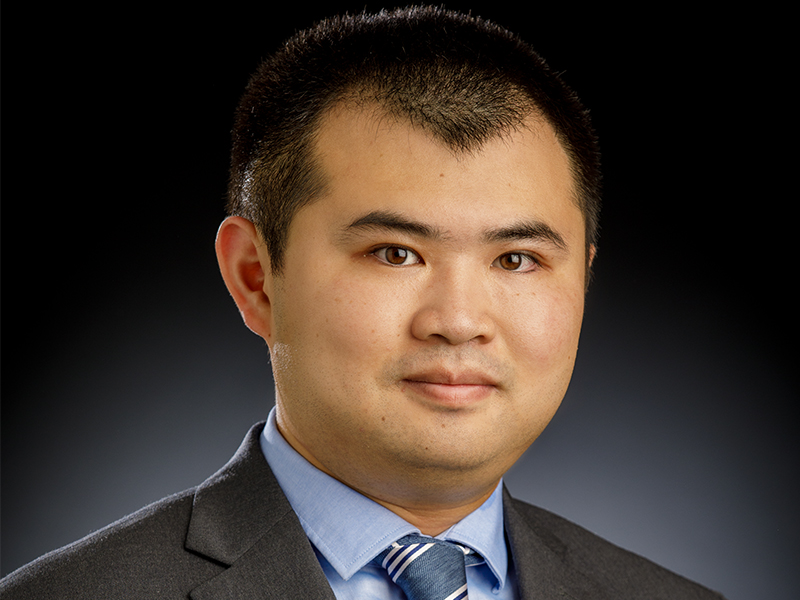
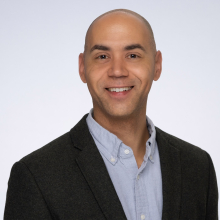
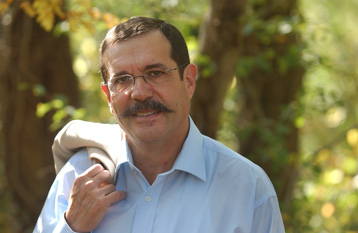
Stefano Gogioso is a Departmental Lecturer at the University of Oxford , specializing in quantum theory and quantum software. He holds a DPhil in Computer Science from Oxford (2013–2017) and advanced degrees from Cambridge (MASt, BA) and the University of Genova (MSc, BSc). As a Fellow at Kellogg College and co-founder of Hashberg Ltd , he develops quantum programming tools and focuses on quantum causal structures, quantum field theory, and natural language processing applications. His research bridges foundational quantum theory with practical applications, including near-term quantum computing and educational outreach through visual methods like Quantum in Pictures . Research Interests: Quantum foundations, quantum software, categorical quantum mechanics, quantum field theory, and quantum causality. His work emphasizes pictorial formalisms and compositional methods, with contributions to indefinite causality, quantum cellular automata, and quantum natural language processing (QNLP). Key Contributions: Published over 25 papers, including works on causal polytopes, categorical Feynman diagrams, and QNLP pipelines. Co-developed Hashberg 's quantum programming tools and serves as a mentor for AI initiatives at CDL-Oxford. His thesis introduced dynamics in categorical quantum mechanics, addressing symmetry and quantum clocks. Teaching: Teaches quantum computing courses for MSc/MFoCS students, professionals, and continued education. Courses include Quantum Software , Quantum Computing for Software Engineers , and bespoke corporate training. Labs/Teams: Part of the Oxford Quantum Group and involved in collaborative projects with industry and academia. Advising: Supervised students like Nicola Pinzani (causal orders) and Maria Stasinou (quantum field theory). Grants/Awards: Not explicitly listed, but recognized for contributions to quantum foundations and education.
Cody Hyndman is a Full Professor and Acting Department Chair at the Department of Mathematics and Statistics, Concordia University, with a focus on Mathematical Finance, Machine Learning, and Stochastic Analysis. He has held significant administrative roles including Department Chair (2017–2023) and Acting Graduate Programs Director (2025–2025). Education: PhD, University of Waterloo (2005) MSc, University of Alberta BCom, University of Alberta His research spans Mathematical Finance , Stochastic Differential Equations , and Machine Learning , with notable contributions to arbitrage-free modeling, neural networks, and computational methods. Recent publications emphasize geometric deep learning and regularization techniques in finance. Scientific Awards: 2023: Concordia Academic Leadership Award Hyndman supervises graduate students in Mathematics and Statistics and co-founded the NSERC CREATE Program on Machine Learning in Quantitative Finance and Business Analytics (FIN-ML) , fostering industrial internships and interdisciplinary training.
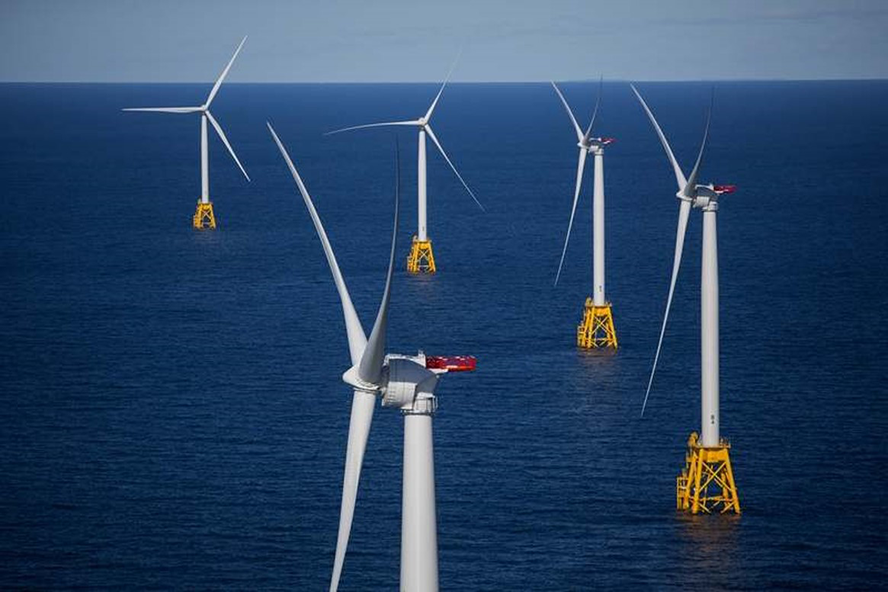
Babak Moaveni is a Professor in the Department of Civil and Environmental Engineering at Tufts University, serving as the Associate Chair since September 2024. He also holds a joint appointment as a Professor in Electrical and Computer Engineering. His research focuses on structural health monitoring, Bayesian inference, earthquake engineering, and offshore wind energy systems. Moaveni earned his Ph.D. in Structural Engineering from the University of California San Diego (2007), following an M.S. (2001) and B.S. (1999) from Sharif University of Technology in Tehran, Iran. His research interests span probabilistic system identification, signal processing, uncertainty quantification, and verification/validation of computational models. Notable grants include leadership in the PIRE project on offshore wind energy digital twins and the Coastal Virginia Offshore Wind Pilot Project. He has supervised multiple Ph.D. and M.S. students, with current advisees including Mehdi Akhlaghi and Nasim Partovi-Mehr. Moaveni has received the Best Presentation Award at the 2022 EDGE Symposium and serves on editorial boards for journals like Structural Health Monitoring and Frontiers in Built Environment . His lab, the Structural Health Monitoring Lab, specializes in infrastructure management and offshore wind energy systems. Key professional activities include membership in the American Society of Civil Engineers (ASCE) and roles on Tufts' Tenure and Promotion Committee. His teaching includes courses on structural health monitoring, numerical methods, and structural reliability.
Andrei Khrennikov is Professor of Mathematics at the Department of Mathematics, Linnaeus University, where he also serves as director of the International Center for Mathematical Modeling (ICMM) . He leads a vibrant research group focused on interdisciplinary modeling in physics, biology, cognition, and social systems. Research Interests: His work spans a vast interdisciplinary landscape, including mathematical physics, p-adic and non-Archimedean analysis, quantum foundations, quantum-like modeling of cognition and decision-making, econophysics, and biological dynamics . He is a pioneer in applying quantum probability and formalism outside quantum physics, especially in psychology and social sciences. The Växjö series of quantum theory conferences , which he organizes, is the longest-running continuous conference series on quantum foundations, fostering dialogue between theorists, experimentalists, and philosophers. His recent publications (2021–2025) show a strong focus on quantum cognition, p-adic biology, entanglement models, and social laser theory , often leveraging generalized probability and open quantum systems frameworks. Scientific Contributions: Developed quantum-like models for cognition, decision-making, and biological processes. Pioneered use of p-adic and ultrametric analysis in genetics and brain dynamics. Advanced classical random field models as alternatives to quantum interpretations. Introduced the social laser model for collective emotional amplification in societies. He is actively involved in major research projects such as QUARTZ (Quantum Information Access and Retrieval Theory) and DYNALIFE (Information, Coding, and Biological Function) . His work bridges mathematics, physics, and cognitive science, promoting a unified framework for understanding complex systems through quantum-inspired tools.
Ardo van den Hout is a Professor of Statistics at the Department of Statistical Science, University College London. He holds a PhD in Social Statistics from Utrecht University (2004) and has previously worked at the MRC Biostatistics Unit in Cambridge. His research focuses on advanced statistical methodologies including longitudinal data analysis, survival analysis, multi-state models, and applications in aging research and public health. He has authored influential works such as Multi-state Survival Models for Interval-censored Data (2017). Research Interests Development and application of multi-state models for complex health data Survival analysis techniques for interval-censored and longitudinal datasets Methodological advancements in cognitive decline and disease progression modeling Integration of socio-economic factors in health expectancy analysis Key Contributions Pioneered penalized likelihood approaches for multi-state models Developed frameworks for estimating life expectancies in health and disease Advanced methods for handling missing/misclassified data in longitudinal studies Awards Recipient of the Gopal Kanji Prize 2012 for outstanding contributions to statistics Professional Activities Maintains an active research program with collaborations across biostatistics, epidemiology, and health economics. Supervises doctoral students focusing on statistical methodologies with real-world health applications. His work frequently addresses critical questions in aging populations, cancer research, and public health policy.
Dr. Gaël Kermarrec is a researcher at the Boundary Layer Meteorology Group , part of the Institute of Meteorology and Climatology within the Faculty of Mathematics and Physics at Leibniz University Hannover . His work focuses on atmospheric turbulence, GNSS applications, and remote sensing for environmental monitoring. Boundary layer meteorology Turbulence theory GNSS signal processing Terrestrial laser scanning Climate change impacts Geodetic time series analysis His research integrates advanced mathematical models like LR B-splines and Matérn covariance with large eddy simulations to study: Atmospheric turbulence effects on optical/GNSS signals Hydrospheric mass loading Deformation analysis of terrain/port infrastructure Climatic sea-level changes Machine learning for remote sensing The 15 most recent articles (2025-2023) demonstrate his focus on: GNSS-based turbulence detection AI-enhanced climate mapping Advanced surface approximation techniques Multi-sensor data fusion Stochastic modeling of geodetic observations Environmental impacts on optical measurements He has developed tools like the Klimascanner QGIS plugin for urban climate resilience and contributes to: Understanding atmospheric scale lengths Improving TLS/GNSS deformation monitoring Analyzing hydrospheric changes Wavefront modeling Ionospheric corrections
Dr. Chenang Liu is an Associate Professor in the Department of Industrial Engineering & Management at Oklahoma State University's College of Engineering, Architecture and Technology (CEAT). Their research focuses on smart manufacturing systems, real-time quality monitoring, and machine learning applications in manufacturing and healthcare. Ph.D., Industrial and Systems Engineering, Virginia Tech, 2019 M.S., Statistics, Virginia Tech, 2017 B.S., Mathematics (Statistics track), Zhejiang University, China, 2014 B.S., Environmental and Resource Sciences, Zhejiang University, China, 2014 Research Interests: Dr. Liu develops advanced sensing and data analytics methodologies for smart manufacturing, statistical frameworks for real-time quality control, and mathematical models integrating machine learning with healthcare applications. Their work bridges industrial engineering principles with cutting-edge data science techniques. Publication Trends: Recent articles demonstrate expertise in diabetic retinopathy prediction via interpretable AI, supply chain coordination mechanisms, EHR analytics for disease progression modeling, and combinatorial optimization algorithms. Key themes include healthcare data science, resilient manufacturing systems, and stochastic resource allocation. Scientific Recognition: Featured Article in ISE Magazine, IISE, 2019 Gilbreth Memorial Fellowship, IISE, 2018-2019 Best Poster Award, INFORMS Annual Meeting, 2018 Best Student Paper Finalist, IISE Annual Conference, 2018 Best Paper Awards at INFORMS (2017) and IISE (2017)
Dr. Philippe Dixon is an Assistant Professor in the Department of Kinesiology & Physical Education at McGill University, with a division in Biomechanics and Neuroscience. He holds adjunct professor roles at the University of Montreal (School of Kinesiology and Physical Activity Sciences) and the University of Laval (Department of Kinesiology). His research focuses on human movement biomechanics using motion capture systems and wearable sensors, combined with machine learning for health and athletic performance optimization. He has expertise in gait analysis, muscle coactivation patterns in cerebral palsy, and predictive modeling of physiological states. Dr. Dixon earned a Post-doctoral fellowship in Public Health at Harvard University, a PhD in Engineering Science from the University of Oxford, and dual degrees in Biomechanics and Physics from McGill University. His education includes a Bachelor of Education in Mathematics and Physics (McGill), a Master of Science in Biomechanics (McGill), and a PhD in Engineering Science (Oxford). He has received grants such as the NSERC Discovery Grant (2022–2027) and the FRQSC AUDACE Grant (2022). His work emphasizes wearable sensor integration, with contributions to datasets like NACOB and tools like OpenOFM. He currently supervises Master’s and PhD students in biomechanics and machine learning applications. Key research themes include gait adaptations on uneven surfaces, machine learning for cough detection via smart garments, and musculoskeletal coordination in clinical populations. His articles span biomechanical modeling, wearable sensor validation, and neuro-musculoskeletal analysis, reflecting interdisciplinary innovation in human movement science.
Erik Kwakkel is a Professor at the University of British Columbia, School of Information , specializing in the History of the Book , Codicology , and Digital Humanities . His research examines premodern communication systems, focusing on manuscript design, marginalia, and knowledge dissemination before print culture. Director, UBC iSchool (2020–present) Member, Comité International de Paléographie Latine (CIPL) Active in digitization projects and outreach through medievalbooks.nl blog and social media His research bridges material culture with digital innovation, analyzing medieval parchment reuse, manuscript fragments in early-modern bindings, and collaborative book production networks in Paris. He pioneered framed fragment storage at UBC for safer pedagogical use of delicate materials. Selected Publications include Books Before Print (2018), Medicine at Monte Cassino (2019), and The European Book in the Twelfth Century (2018). His media impact spans BBC World Service , CNN , and Smithsonian Magazine . Awards & Recognition : International expert on medieval manuscripts Buzzfeed's '8 Book Historians Killing It Online' (2014) CIPL Membership
Pearl Sandick is a Professor in the Department of Physics and Astronomy and Interim Dean in the College of Science at the University of Utah. She has previously served as Associate Chair of the Department of Physics and Astronomy and Associate Dean for Faculty and Research in the College of Science. Her academic journey at the University of Utah began in 2011 as an Assistant Professor, progressing to Associate Professor in 2017, and achieving the rank of Professor in 2022. Her educational background includes: BA in Mathematics from New York University (2003) PhD in Physics from the University of Minnesota (2008) Sandick is a theoretical particle physicist whose research focuses on physics beyond the Standard Model, with particular emphasis on dark matter. Her work spans theoretical modeling, connections to astrophysical observations, and implications for experimental detection. She investigates various dark matter candidates and their potential signatures in current and future experiments, including collider searches, direct detection experiments, and indirect detection through astrophysical observations. Her research also extends to connections between particle physics and cosmology, including early universe phenomena and implications for cosmic structure formation. She has developed computational tools like MADHAT for dark matter analysis and has made significant contributions to understanding how stellar evolution can constrain axion physics. Her scholarly contributions have been recognized with several prestigious awards: University of Utah Early Career Teaching Award (2016) University of Utah Distinguished Mentor Award Linda K. Amos Award for Distinguished Service to Women University of Utah Presidential Scholar Sandick has been actively involved in mentoring graduate students, as evidenced by her teaching of PhD thesis research and Master's research courses. She has secured significant research funding from the National Science Foundation and other agencies to support her work on dark matter, dark energy, and new physics. Her grant portfolio includes projects on theoretical particle physics, connections to astrophysical observations, and studies on graduate education reform following a departmental tragedy. She is an active member of the American Physical Society, having served as Chair of the regional Four Corners Section in 2021-2022, demonstrating her commitment to the broader physics community and leadership in her field.
Andre Marquand is an active researcher in neuroscience, psychiatric disorders, and neuroimaging, with a strong focus on machine learning applications for clinical data analysis. His work spans autism, major depressive disorder, schizophrenia, and neurodegenerative diseases like Alzheimer’s. Research Interests: Neuroscience, neuroimaging, normative modeling, autism, psychosis, computational psychiatry, and brain network analysis. Projects: Co-Investigator in 11 finished projects, including biomarker development for ADHD, psychosis recovery, and Alzheimer’s disease. Recent Publications highlight trends in leveraging multimodal neuroimaging, extreme value statistics, and digital phenotyping to dissect heterogeneity in psychiatric and neurological conditions. His studies often employ normative modeling to personalize brain disorder trajectories. Collaborations: Long-term partnerships with institutions like King’s College London and MRC units, alongside experts in psychiatry and neuroimaging. Supervised Work: Mentored 3 projects, though student names are not explicitly listed.
Wayne Myrvold is a Professor in the Department of Philosophy at Western University, Faculty of Arts and Humanities. His research lies at the intersection of philosophy of physics and philosophy of science, with a focus on quantum mechanics, statistical mechanics, and the foundations of probability. His primary research interests include: Philosophy of Physics, especially quantum mechanics and relativity Foundations of probability and its role in science Statistical mechanics and thermodynamics Quantum state realism and ontology Unification and scientific explanation Epistemology of scientific inference Myrvold's recent publications, including his 2021 book Beyond Chance and Credence , explore hybrid conceptions of probability that bridge epistemic and physical interpretations. His articles span topics such as quantum collapse theories, Bell’s Theorem, and the nature of the wavefunction, reflecting a deep engagement with both technical and philosophical dimensions of modern physics. His work frequently appears in leading journals like Studies in History and Philosophy of Modern Physics , Physical Review A , and Synthese . He is the Subject Editor for Quantum Mechanics in the Stanford Encyclopedia of Philosophy and has co-authored key entries, including the comprehensive overview of Bell’s Theorem. His scholarly contributions emphasize rigorous analysis of foundational concepts in physics and their philosophical implications. Myrvold holds a BSc from McGill University and a PhD from Boston University. He maintains an active research profile with a continually updated list of publications available via Google Scholar. He advises graduate students in philosophy of science and supervises research in foundational physics. While specific grant details are not listed, his sustained publication output suggests active research support. He is affiliated with the Rotman Institute of Philosophy, which supports interdisciplinary research in philosophy of science.
Monika Abels is an Associate Professor at UiT The Arctic University of Norway , affiliated with the Child development research group. Her work focuses on cross-cultural child development, infant socialization, emotion regulation, and the impact of digital technology on parental responsiveness. Research Interests : Child development, cross-cultural parenting, emotion understanding, hunter-gatherer societies, and fieldwork ethics. Labs/Teams : Member of the Barns utvikling (Child Development) research group at UiT. Recent Research Trends : Her publications highlight comparative studies across Norway, Tanzania, India, and sub-Saharan Africa, examining infant sleep, parental phone use, triadic interactions, and cultural differences in hidden emotion understanding. Collaborative work with African communities (San, Hadza) explores regulatory and ethical fieldwork challenges. Email : m.abels@uit.no
Professor Tomasz Kapitaniak is a distinguished academic in the field of nonlinear dynamics and theoretical mechanics. He serves as a Professor of Theoretical and Applied Mechanics and Head of the Division of Dynamics at the Faculty of Mechanical Engineering, Technical University of Lodz, Poland. His career spans over three decades at the university, where he has made significant contributions to the understanding of nonlinear systems, chaos theory, and mechanical oscillations. Professor Kapitaniak holds advanced degrees in both mechanics and applied mathematics from the Technical University of Lodz and the University of Lodz. His educational background includes: M.Sc. in mechanics, Faculty of Mechanical Engineering, Technical University of Lodz (1982) M.Sc. in applied mathematics, Faculty of Mathematics, Physics and Chemistry, University of Lodz (1985) Ph.D. in mechanics, Faculty of Mechanical Engineering, Technical University of Lodz (1985) D.Sc. in mechanics, Faculty of Mechanical Engineering, Technical University of Lodz (1988) Professor of technical science, title given by the President of Poland (1995) His research focuses on nonlinear dynamics, with particular emphasis on mechanical oscillations, stability, bifurcations and chaos, stochastic dynamics, and applications of nonlinear dynamics in mechanical engineering. Professor Kapitaniak is renowned for his work on the development of methods for controlling chaos without feedback, identification of new types of bifurcations, synchronization mechanisms in coupled mechanical oscillators, and explaining the origin of randomness in mechanical systems. His research has evolved from fundamental theoretical work to increasingly applied studies involving complex networks, biological systems, and engineering applications. Professor Kapitaniak has published over 300 scientific papers in renowned journals, cited over 8,000 times. His work exhibits a consistent focus on understanding complex nonlinear phenomena across various physical systems. The trend in his recent publications shows continued exploration of synchronization phenomena, extreme events in dynamical systems, and applications of nonlinear dynamics to biological, mechanical, and physical systems. His most recent work demonstrates a growing interest in multistability, chimera states, and the prediction of tipping phenomena in complex systems. Among his notable scientific achievements and distinctions are: Election as a member of the Polish Academy of Sciences (corresponding member in 2013, ordinary member in 2019) Election to Academia Europaea in 2021 Honorary doctorates from Saratov State University (Russia, 2001) and Lublin University of Technology (Poland, 2014) Multiple prestigious fellowships including the British Council Fellowship (1989), King Abdul Aziz Award Fellowship (1990), and Fulbright Fellowship (1997) Editorial roles including Associate editor of Chaos, Solitons and Fractals since 1990 and member of editorial boards of several other prestigious journals Throughout his career, Professor Kapitaniak has been actively involved in mentoring the next generation of researchers, having supervised numerous PhD students including Jerzy Wojewoda, Anton van Wyk, Barbara Błażejczyk-Okolewska, Andrzej Stefański, Andrzej Kozłowski, and Przemysław Szumiński. He has secured significant research funding from various national and international sources including the Ministry of Science and Higher Education (Poland), Deutscher Akademischer Austauschdienst, The Royal Society of London, and others. His research team has maintained strong international collaborations with institutions worldwide, including universities in the United States, United Kingdom, Germany, Brazil, Russia, and Ukraine. He leads the Division of Dynamics at the Technical University of Lodz, which serves as a hub for research in nonlinear dynamics, mechanical oscillations, and related fields. The division maintains strong international collaborations with institutions worldwide and continues to produce cutting-edge research in the field of nonlinear dynamics and its applications.
Alain Aspect is a renowned Professor at École Polytechnique and Augustin Fresnel Professor at Institut d'Optique, holding the rank of CNRS distinguished scientist (directeur de recherche de classe exceptionnelle). He has led the Atom Optics group at Laboratoire Charles Fabry since 1992. His career spans roles from assistant lecturer (1969–1971) to distinguished academic positions across institutions, including the Collège de France and international academic fellowships. His research focuses on quantum optics, foundational tests of quantum mechanics (e.g., Bell's theorem experiments), laser cooling, and ultra-cold atoms. Notably, his groundbreaking work violating Bell’s inequalities earned him the 2022 Nobel Prize in Physics. His contributions also include pioneering quantum information science and atom optics. Aspect has received over 30 prestigious awards, including the Balzan Prize, Wolf Prize, and multiple honorary doctorates. He is a member of the French Académie des Sciences, the Royal Society, and the U.S. National Academy of Sciences. His lectureship engagements include the Elliott W. Montroll Lecture (U of Rochester) and the Asher Peres Memorial Lecture (Technion). Aspect’s research groups at Laboratoire Charles Fabry have advanced Bose-Einstein condensates, quantum correlations, and Anderson localization of matter waves. His work bridges experimental quantum optics with foundational physics, influencing both theoretical and applied quantum technologies.