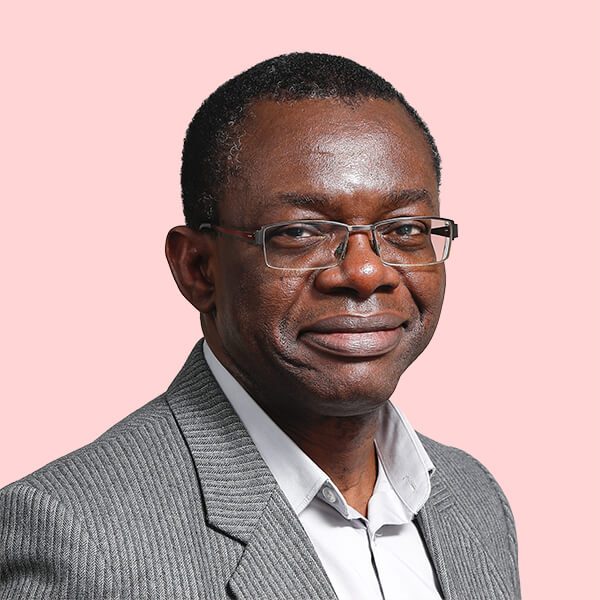
Mr. Nicolas THIBAULT is a Lecturer in Computer Science at Paris-Panthéon-Assas University, affiliated with the Center for Research in Economics and Law (CRED). His academic career combines teaching and research in theoretical computer science, with a focus on algorithms and network optimization. His research interests include: Algorithms (particularly randomized and truthful scheduling) Dynamic graph maintenance and incremental/decremental tree problems Online computation and bicriteria optimization Network interconnection and parallel machine scheduling Recent publications highlight his work on: Truthful mechanisms for weighted completion times Disturbance minimization in connection trees Hardness results for multi-group interconnection Competitive analysis of online scheduling Optimal rebuilding strategies for dynamic trees Scientific awards include the Best Young Researcher Article at AlgoTel 2006 for his work on connection tree updates. He co-heads the Professional License program in Organizational Management, specializing in Network and Information Systems Management.
Giovanni Iacca is an Associate Professor at the Department of Information Engineering and Computer Science (DISI) of the University of Trento, Italy, where he leads the Distributed Intelligence and Optimization Lab (DIOL). He serves as Coordinator of the Master's Degree in Computer Science and Deputy Director of the Information Engineering and Computer Science Doctoral School. Dr. Iacca has over 15 years of industrial experience in mechatronics and optimization applied to engineering, logistics, and scheduling. Dr. Iacca received his PhD in 2011 from the University of Jyväskylä, Finland, and his MSc in 2006 from the Technical University of Bari, Italy. His academic career includes: 2021-present: Associate Professor, University of Trento 2018-2021: Tenure-track Assistant Professor, University of Trento 2017-2018: Postdoc, RWTH Aachen University, Germany 2013-2016: Postdoc, EPFL and University of Lausanne, Switzerland 2012-2016: Postdoc, INCAS³, The Netherlands Dr. Iacca's research bridges fundamental and applied aspects of artificial intelligence with particular emphasis on evolutionary computation and explainable AI. His work spans machine learning, optimization techniques, distributed systems, and their practical implementations. Recent research directions include federated learning, interpretable reinforcement learning, neural architecture search, and optimization for resource-constrained environments. He teaches courses on Computer Architectures, Introduction to Machine Learning, Bio-Inspired Artificial Intelligence, Optimization Techniques, and AI in Medicine. His publication record demonstrates a strong trend toward developing transparent and efficient AI systems. Recent papers focus on making complex AI models more interpretable while maintaining performance across diverse domains from healthcare to supply chain management. His work on evolutionary approaches to explainable AI has gained significant recognition in the computational intelligence community. Scientific Awards and Editorial Roles EvoApplications Best Paper Award (2017) UKCI AWARENESS Best Paper Award (2012) IEEE CIS Outstanding Student-Paper Award (2011) IEEE Senior Member (2023) Associate Editor, Evolutionary Intelligence (2024) Editorial Board Member, Memetic Computing (2024) Associate Editor, IEEE Transactions on Evolutionary Computation (2023) Dr. Iacca has successfully supervised multiple PhD students including Andrea Ferigo, Hyunho Mo, and Leonardo Lucio Custode. His research is supported by various grants and collaborations with industry partners like MyAv. He serves as chair for PPSN 2026 and has organized workshops including the Workshop on Awareness and Consciousness in Artificial Intelligence (ACAI). As leader of the Distributed Intelligence and Optimization Lab (DIOL), Dr. Iacca oversees a research team working at the intersection of evolutionary computation, machine learning, and distributed systems. The lab focuses on developing novel algorithms that balance computational efficiency with interpretability, with applications spanning from embedded systems to large-scale distributed computing environments. Current projects include interpretable reinforcement learning, federated neuroevolution, and optimization for edge computing.
Günter Hotz is a full Professor at the Department of Computer Science (Fachrichtung Informatik), Universität des Saarlandes , Germany. His academic career spans over five decades, including roles as Director of the Computer Center (1972-1974) Spokesperson for SFB 100 (1982-1984) and SFB 124 (1991-1992) . Research Interests include Theoretical Computer Science Circuit Design Computational Complexity Information Theory Geometric Motion Planning Formal Verification . His work focuses on analytic machines, hardware verification, and motion planning algorithms, with applications in linguistics and VLSI design. Publications emphasize formal methods for hardware, computational models over real numbers, and efficient parsing algorithms. Key trends involve integrating mathematical theory with practical circuit design and motion planning solutions. Scientific Awards include Leibniz Prize (1986) Konrad Zuse Medal (1999) Grand Cross of Merit (1998) . Students : Supervised 40 dissertations, with over a third of his advisees becoming professors in mathematics and computer science. Labs & Projects : Led major research initiatives like SFB 100 (COMSKEE system) and SFB 124 (VLSI design methods). Collaborative works with international institutions in France, the U.S., and Georgia.
Le Chen is a Doctoral Researcher at the Empirical Inference Department of the Max Planck Institute for Intelligent Systems and ETH Zurich , advised by Prof. Bernhard Schölkopf and Prof. Dieter Büchler. Previously, he obtained his M.S. in Electrical Engineering and Information Technology from ETH Zurich and gained research experience at Microsoft Mixed Reality & AI Lab, Tencent AI Lab, and Tencent Robotics X Lab. Research Interests: Le Chen focuses on the intersection of robotics and machine learning, with a specific emphasis on reinforcement learning for dexterous manipulation, visual-inertial calibration, and uncertainty-aware robotic perception. His work spans dynamic motion control, policy gradient subspaces, and novel algorithms for 3D/4D reconstruction. Key Contributions: He co-developed the RP1M dataset for bimanual piano manipulation and contributed to tendon-driven robot design ( Safe & Accurate ) and LEAP-VO for robust visual odometry. His research also includes Gaussian splatting dynamics for 4D content creation ( GaussianFlow ). Scientific Awards: Best Systems Paper Finalist at RSS 2024 for the RP1M dataset
Buddhika W. Nettasinghe is an Assistant Professor in the Department of Business Analytics at the Tippie College of Business, University of Iowa. He holds a PhD in Electrical and Computer Engineering from Cornell University, along with advanced degrees from Cornell and the University of British Columbia, and a BSc in Electrical and Electronic Engineering from the University of Peradeniya. His research focuses on network science, complex systems, and uncertainty quantification, with applications to social networks, polarization, and information diffusion. Research Interests Network Science Complex Systems Uncertainty Quantification His recent work explores affective polarization, structural inequalities in networks, and statistical inference methods like friendship paradox-based sampling. Publications highlight his contributions to directed network analysis, conformal prediction for hidden Markov models, and computational approaches to social segregation. Scientific Awards Recognition of Meritorious Reviewers (2024)
Olga Battaïa is Senior Professor in the Department of Operations Management and Information Systems at KEDGE Business School, where she also serves as Associate Dean for Research. Her academic journey includes a PhD in Industrial Engineering from École nationale supérieure des mines de Saint-Étienne (2007) and accreditation to supervise research (HDR, 2014). Education PhD in Industrial Engineering, École nationale supérieure des mines de Saint-Étienne, 2007 HDR (Accreditation to Supervise Research), 2014 Research Focus Professor Battaïa’s research lies at the intersection of operations management , supply-chain optimization , and decision-science methods . She develops mathematical models and algorithms that improve the design and performance of production systems, reconfigurable manufacturing lines, closed-loop supply chains, and collaborative human-robot systems. Her work embraces sustainability challenges, ergonomic considerations, and uncertainty management. Recent investigations include: Dynamic vaccine-allocation models responding to pandemic realities Ergonomic integration in human-robot collaborative workstations Electric-bus charging-network design for sustainable urban mobility Robust resource-leveling techniques under project uncertainty Publication Impact Across 200+ refereed publications, her 2023–2025 output alone spans International Journal of Production Economics , IJPR , Computers & Industrial Engineering , Transportation Research Part E , and flagship conferences such as CIRP ANNALS. Thematic trends reveal deepening emphasis on (i) sustainable and resilient supply-chain design, (ii) advanced exact and heuristic optimization for reconfigurable manufacturing, and (iii) human-centric production systems. Editorial & Professional Service Associate Editor, Journal of Manufacturing Systems (Elsevier) Associate Editor, IISE Transactions Associate Editor, Omega—The International Journal of Management Science Associate Member, International Academy for Production Engineering (CIRP) Member, IFAC Technical Committee on “Manufacturing Modelling for Management and Control” Doctoral Advising & Research Leadership Professor Battaïa has co-supervised 11 PhD thestrong>ses to completion and delivered more than 15 invited lectures worldwide. She coordinates multi-partner research projects with industry and academic institutions, securing sustained funding for large-scale optimization and sustainability initiatives. Laboratories & Teams She leads research activities within KEDGE’s Operations, Supply Chain and Information Management group, collaborating closely with the Reconfigurable Manufacturing Systems and Sustainable Supply Chain Design research teams.
Dr. William N. Caballero is an Assistant Professor of Data Science in the Department of Operational Sciences at the Air Force Institute of Technology (AFIT). His research focuses on developing statistical and mathematical models for decision support in uncertain, multi-agent environments, with applications in defense and security. Methodologically, his work integrates deterministic/stochastic optimization, Bayesian analysis, and interpretable machine learning. Education: Doctor of Philosophy in Operations Research, Air Force Institute of Technology (2019) Master of Science in Operations Research, Air Force Institute of Technology (2017) Bachelor of Science in Industrial Engineering, University of Houston (2011) Research Interests: His interdisciplinary research bridges statistics and operations research, emphasizing Bayesian decision analysis for security problems and modern data science applications in defense contexts. Primary domains include adversarial risk analysis, security games, ethical AI systems, automated driving technologies, and military personnel training optimization. Publication Trends: Recent articles demonstrate strong focus on machine learning applications in national security (LLMs, pilot selection), adversarial modeling (security games, data poisoning), and autonomous systems (driving mode management, ethical frameworks). Methodological innovations frequently combine Bayesian approaches with optimization techniques. Awards and Honors: Seiler Award for Mathematical Sciences Research (2023) Finalist for Clemen-Kleinmuntz Decision Analysis Best Paper (2022) USAF-MIT AI Accelerator Datathon: 5 awards including Overall Winner (2021) Multiple Field/Company Grade Officer of the Quarter awards (2013-2024) Distinguished Graduate honors (AFIT, OTS, Squadron Officer School) General Omar Nelson Bradley Fellowship (2018) Inductee to Omega Rho and Tau Beta Pi honor societies
Professor Francisco Saldanha da Gama is a Chair in Supply Chain Management at the University of Sheffield Management School. His expertise spans facility location, supply chain optimization, and stochastic programming, with over 150 conference presentations and editorial leadership as Editor-in-Chief of Computers & Operations Research . He has co-edited the seminal Springer volumes Location Science and contributed to humanitarian logistics, robust optimization, and multi-period network design. PhD in Statistics and Operations Research from University of Lisbon Research interests focus on integrating strategic supply chain decisions with operational constraints under uncertainty. Key areas include: Facility location under stochastic and risk-averse frameworks Dynamic lot-sizing and assembly line rebalancing Hub location-routing with congestion modeling Humanitarian logistics for sheltering and evacuation Recent publications (2023-2025) address multi-stage stochastic districting, risk-averse transportation planning, and battery swapping station optimization. Collaborators include Stefan Nickel and Gilbert Laporte. Editor-in-Chief, Computers & Operations Research (2020-present) Editorial Advisory Board, Journal of Operational Research Society (UK) Consulting Editor, Social Sciences & Humanities Open Supervises PhD researchers like Jue Huang (Electric vehicle supply chain sustainability). Professional affiliations include INFORMS, Operational Research Society (UK), and leadership roles in EURO working groups on stochastic optimization and location analysis.
Cyril Allignol is a Lecturer and Researcher in the OPTIM team at the National School of Civil Aviation (ENAC) research laboratory. His work focuses on two primary themes: (1) solving combinatorial optimization problems related to air traffic and airport operations using constraint programming , and (2) formalizing reactive languages to ensure guaranteed properties for air traffic control and piloting assistance tools. PhD in Computer Science and Telecommunications (2011) from the University of Toulouse ENAC Engineer (2006) Master's in Computer Science and Telecommunications (2006) from the University of Toulouse His research spans air traffic conflict resolution , detect-and-avoid algorithms for UAVs/UAS , and formal methods in reactive language compilation . He has contributed to constraint programming frameworks, robust gate allocation models, and 3D trajectory deconfliction systems. His work integrates metaheuristics , geometrical algorithms , and formal verification techniques. Publications reveal expertise in mathematical optimization , UAS integration , and bigraph-based modeling for avionics systems. He collaborates with institutions across France, Italy, Georgia, and the United States through conferences like ICRAT , ATM Seminar , and ROADEF . His team affiliation ( OPTIM ) and technical focus on conflict resolution , self-separation , and navigation accuracy highlight his contributions to air traffic safety and efficiency . Current projects include 4D-trajectory deconfliction and formal methods for avionics software .
Dr. Asyl Hawa is a Research Fellow at the University of Southampton, specializing in Health Technology Assessment and Modelling. Her work bridges operational research and clinical medicine, focusing on pharmaceutical interventions and optimization algorithms. Key Research Areas: Health Technology Assessment, Operational Research, Pharmaceutical Research. Notable Projects: Relugolix for prostate cancer, Linzagolix for uterine fibroids, and algorithmic solutions for packing problems. Publications: Span clinical reports (2022-2024) and computational research (2018-2022) in journals like the European Journal of Operational Research. Collaborates with multidisciplinary teams across medicine and engineering. Contact: Email A.Hawa@soton.ac.uk .
OKONGWU Uche is a Professor at the Toulouse Business School within the Department of Information, Operations and Decision Sciences . His academic work focuses on the intersection of supply chain management, decision science, and operational optimization, with a particular emphasis on sustainability and responsiveness in complex systems. Supply Chain Management Operations Research Decision Support Systems Humanitarian Logistics Genetic Algorithms Order Fulfillment His research explores advanced methodologies like heuristic-based genetic algorithms for multi-project scheduling, robust humanitarian facility location models, and sustainable supply chain planning frameworks. He has contributed to empirical studies on how supply chain practices impact organizational performance and tactical planning determinants. Recent publications highlight trends in humanitarian logistics , emergency response systems , and supply chain sustainability . His work includes tools for optimizing order fulfillment in stock-out situations and improving the maturity of sustainability disclosures in supply chains. For detailed publications, refer to the articles section. Contact: u.okongwu@tbs-education.fr .
Bénédicte Talon is an Associate Professor at the University of the Côte d'Opale, affiliated with the LISIC laboratory (Laboratoire d'Informatique Signal et Image de la Côte d'Opale). Her research focuses on computational optimization, evolutionary algorithms, and metaheuristics. Her work explores multiobjective optimization in discrete spaces, including the design of local search strategies , fitness landscape analysis , and algorithm configuration for imbalanced data classification. Recent publications highlight her contributions to neighborhood search techniques, expansion-based pivoting rules, and applications in medical diagnostics and traffic modeling. The 15 most recent publications span 2018–2024 , demonstrating sustained expertise in evolutionary computation , combinatorial optimization , and fitness landscape theory . While no explicit awards or students are listed, her collaborative work extends to interdisciplinary applications like cancer prediction via VOC analysis and transportation system modeling .
Philipp Hungerländer is an Associate Professor at the Institute of Mathematics, University of Klagenfurt. He is a member of the combinatorial optimization working group led by Prof. Franz Rendl, focusing on advanced optimization techniques for real-world industrial applications. Research Interests: His work spans three core areas: (1) semidefinite, conic, and polynomial optimization for nonlinear discrete problems, (2) quadratic programming and active-set algorithms for convex/nonconvex models, and (3) exact and heuristic methods for combinatorial optimization in routing and scheduling. Additionally, he explores game theory and dynamic games. Recent Publications: His 15 most recent articles reflect expertise in railway logistics, facility layout, home delivery services, and medical pandemic response. Topics include integrated freight routing, dial-a-ride optimization, and applications of mixed-integer programming. Contact: Email: Philipp.Hungerlaender@aau.at
Jacek Malec is a Professor at the Department of Computer Science, Faculty of Engineering, Lund University. He serves as a project manager and office director, actively contributing to research in Artificial Intelligence and Robotics. His work focuses on Knowledge Representation and Reasoning, with applications in Intelligent Collaborative Robotics and Computational Efficiency. Active in ELLIIT (Linköping-Lund IT and Mobile Communication Initiative) Member of Lund University's AI and Digitalization and Natural and Artificial Cognition profile areas Coordinated projects like Mixed-Initiative Interaction for Collaborative Robotics and AI Lund His research spans Computer Science , Robotics , and Artificial Intelligence , with recent publications on Order Batching Optimization and Metropolis Sampling. He has participated in interdisciplinary activities, including symposiums on Synthetic Biology and its role in climate change mitigation. Current projects include Robotics week for schools and infrastructure management for RobotLab LTH . His collaborations extend internationally, with affiliations in fields like Algorithms, Ontology, and Industry 4.0.
Dr Fatima Ezzahra Achamrah serves as a Lecturer in Operations and Supply Chain Management at the Sheffield University Management School, University of Sheffield, where she contributes to advancing research at the intersection of operations research and artificial intelligence. Her work focuses on developing innovative methodologies to solve complex logistical challenges in modern supply chains. Education: Ph.D. in Industrial Engineering from Paris Saclay University, CentraleSupelec, France Engineering degree (MEng/CEng) in Process Engineering from the National School of Applied Sciences, Morocco Research Interests: Dr Achamrah's research centers on Combinatorial Optimization in Logistics and Production Systems , Resilience in Cyber-Physical and Collaborative Networks , and Machine Learning/AI in OR . She pioneers interdisciplinary approaches that integrate reinforcement learning with exact and meta-heuristic methods to address vehicle routing, inventory management, and 3D bin packing problems. Her groundbreaking work on flow management within cyber-physical networks, particularly the 'Physical Internet' concept, aims to revolutionize supply chain resilience and efficiency through AI-driven solutions. Publication Trends: Her recent publications (2022-2025) reveal a dominant focus on deep reinforcement learning applications for combinatorial optimization under uncertainty, with significant contributions to sustainable cargo-bike delivery systems, selective maintenance in cyber-physical manufacturing, and Physical Internet protocols. These works consistently address stochastic demands and dynamic environments, demonstrating how AI-enhanced optimization can transform logistics operations while enhancing environmental sustainability. Grants and Supervision: Principal Investigator for The Grantham Centre for Sustainable Futures (GCSF) GO Fund (2024, £10,000) Co-Investigator for APR&D programme (2021-2023, £420,000) She actively supervises PhD research in operations and supply chain efficiency, resilience, sustainability, and cyber-physical network management, guiding next-generation researchers in developing intelligent logistics solutions. Research Group: Dr Achamrah is a core member of the Operations Management and Decision Sciences (OMDS) research group, driving collaborative projects that bridge theoretical innovation with practical industry applications.