Vienna University of Economics and BusinessAustria
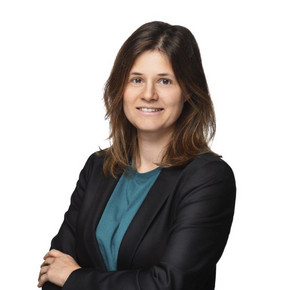
Associate Professor Vera Hemmelmayr is affiliated with the Institute of Transport Economics and Logistics at the Vienna University of Economics and Business . Her research spans Operations Research , Logistics , Supply Chain Management , and Circular Economy , with a focus on vehicle routing , city logistics , and metaheuristics . She has led major projects like CREATE_AT (circular timber supply chains) and Sustainable Urban Deliveries . Research trends in her recent work include real-time optimization algorithms for railway disruptions, sustainable urban freight solutions , and integrated railcar fleet management . Her publications often bridge transport policy with computational methods , emphasizing green supply chains and smart city logistics . 2025: Preis für innovative Lehre 2017: Best Application Paper Honorable Mentions (IIE Transactions) 2012: Dr.-Maria-Schaumayer-Habilitationsstipendium 2012: WU Visiting Fellow 2005: Prämierung ausgezeichneter Diplomarbeiten She has supervised research projects on topics including two-echelon delivery systems , railway disruption management , and digital transformation in logistics, while contributing to policy frameworks for circular economy in transportation.
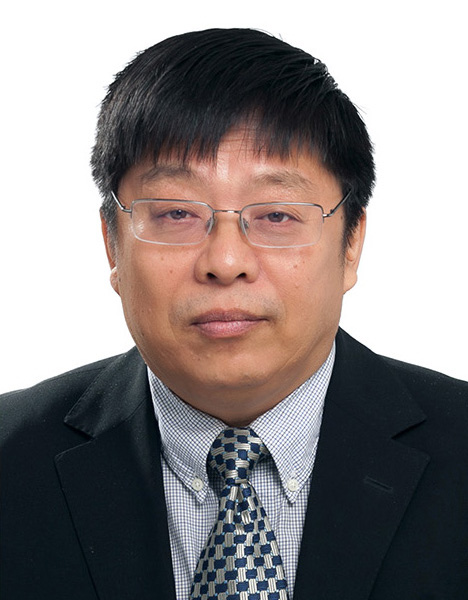
Liu Derong is a distinguished academic holding the position of Chair Professor at Southern University of Science and Technology (Shenzhen, China) since 2022. He is also a Full Professor at the University of Illinois at Chicago (UIC) since 2006. His academic journey includes roles as Professor at Guangdong University of Technology (2017–2022) and the Chinese Academy of Sciences' Institute of Automation (2008–2016). He earned his Ph.D. in Electrical Engineering from the University of Notre Dame (1994), M.S. from the Chinese Academy of Sciences (1987), and B.S. from Nanjing University of Science and Technology (1982). His research focuses on neural networks, reinforcement learning, intelligent control, and adaptive dynamic programming. He has authored 19 books and 260+ journal papers, contributing significantly to computational intelligence and control systems. Notable works include Adaptive Dynamic Programming with Applications in Optimal Control (2017) and co-editing volumes like Frontiers of Intelligent Control and Information Processing (2014). Liu Derong has held leadership roles in professional societies, including Editor-in-Chief of Artificial Intelligence Review , Deputy Editor-in-Chief of the IEEE/CAA Journal of Automatica Sinica , and President of the Asia Pacific Neural Network Society (2018). He has organized major conferences such as the IEEE World Congress on Computational Intelligence (2014) and received prestigious awards like the Dennis Gabor Award (2018) and membership in Academia Europaea (2021). His contributions span theoretical advancements and practical applications in control systems, with a focus on optimization, robotics, and energy systems. He has also served on editorial boards of leading journals and as a keynote speaker at 30+ international conferences.
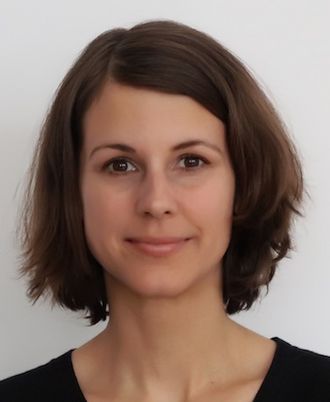
Martin Bicher is a PostDoc Researcher at TU Wien, affiliated with the Department of Data Science under the Faculty of Informatics. He specializes in agent-based simulation, epidemiological modeling, and decision support systems for public health crises. His work focuses on optimizing resource allocation, vaccination strategies, and policy evaluation during pandemics. He teaches courses such as Modeling and Simulation (194.076), Modelling and Simulation in Health Technology Assessment (194.094), and Advanced Modeling and Simulation (194.056). His research is supported by projects like DynOptTestControl (2022–2026) and KLIPHA-COVID19 (2020–2021). Key research interests include agent-based modeling frameworks, integration of machine learning into simulation systems, and multi-criteria decision support for public health interventions. His publications analyze pandemic response strategies, vaccination prioritization, and the impact of environmental factors on disease spread. Recent work includes developing mathematical models for equitable disease testing, simulating vaccination strategies under supply uncertainties, and evaluating contact-tracing policies. He collaborates with interdisciplinary teams to address challenges in healthcare resource optimization and policy design. Advising two students, Bicher has mentored theses on railway simulation and delay modeling. His contributions to pandemic decision support have been featured in high-impact journals like Omega and PLoS ONE.
Radu Ioan Bot is a Professor and Dean of the Faculty of Mathematics at the University of Vienna, where he also serves as Head of the Department of Mathematics. His primary affiliations include the Department of Mathematics (Oskar-Morgenstern-Platz 1, 1090 Wien) and the Research Network Data Science (Währinger Straße 29, 1090 Wien). Bot's research centers on optimization theory with emphasis on convex/nonconvex optimization, monotone operators, and dynamical systems. He develops fast algorithms for variational inequalities and monotone inclusions by bridging continuous-time dynamics with discrete optimization methods. His work frequently addresses bilevel optimization, Tikhonov regularization, and second-order dynamics, yielding accelerated convergence rates for complex problems. Analysis of his 15 most recent publications (2023-2025) reveals dominant trends in time-scaling techniques, vanishing damping dynamics, and structured splitting methods. Key contributions include unifying Nesterov acceleration with Heavy Ball dynamics, developing reflected forward-backward algorithms for constrained optimization, and establishing strong convergence guarantees for monotone operator flows. These advances demonstrate consistent innovation in accelerating optimization while maintaining theoretical rigor. No scientific awards were mentioned in the provided source material. Details regarding student advising and research grants were not specified in the available information, though his leadership roles as Dean and Department Head indicate significant administrative responsibilities alongside active research. Bot participates in the University of Vienna's Research Network Data Science, suggesting interdisciplinary engagement in data-driven methodologies with potential applications in machine learning and computational mathematics.
Nelson Nicolas Higuera Ruiz is a PreDoc Researcher at the Vienna University of Technology, affiliated with the Faculty of Informatics' Knowledge-Based Systems research group. His work bridges logic programming and deep learning for explainable AI. Research Focus: Neurosymbolic AI, Visual Question Answering (VQA), Answer Set Programming (ASP), and hybrid reasoning systems Projects: Leads optimization research in the LCS (2017–2025) project, developing neurosymbolic approaches for intelligent systems Key Contributions: Pioneering adaptive large-neighbourhood search algorithms for ASP optimization, modular neurosymbolic architectures, and contrastive explainability frameworks for VQA Collaborations: Active in international workshops and conferences including IJCAI, AAAI, and CLeaR, frequently collaborating with researchers like Thomas Eiter and Johannes Oetsch Publications: Focus on neurosymbolic integration, optimization algorithms, and explainability across AI, logic programming, and computer vision domains
Sophie N. Parragh is Professor and Head of the Institute of Production and Logistics Management at Johannes Kepler University Linz, where she also serves as program director of the master's degree program in Economic and Business Analytics. She received her PhD from the University of Vienna in 2009 and completed her habilitation in 2016, following postdoctoral research at the IBM Center for Advanced Studies in Porto and a visiting professorship at the Vienna University of Economics and Business. Her research focuses on developing exact and heuristic optimization algorithms for complex logistics and transportation problems. Key areas include vehicle routing, green logistics, disaster relief distribution planning, scheduling, and multi-objective optimization. She has particular expertise in branch-and-bound, branch-and-price, column generation, and metaheuristics approaches to solve challenging combinatorial optimization problems. Dr. Parragh's publication record shows a consistent trend toward increasingly complex multi-objective problems, with recent work focusing on electric vehicle routing, multi-echelon production planning under uncertainty, and bi-objective facility location problems with applications in disaster relief. Her research bridges theoretical optimization methods with practical applications in logistics and transportation. Scientific Awards: ÖGOR (Austrian Society for Operations Research) dissertation prize doc.award from the University of Vienna Hertha Firnberg Postdoc fellowship from the Austrian Science Fund (FWF) Dr. Parragh has served as department editor for OR Spectrum and as associate editor for Transportation Science, Transportation Research Part B: Methodological, INFORMS Journal on Computing, and Networks. She has led and participated in numerous third-party funded research projects in operations research, including work in healthcare logistics, field staff routing, production planning, and electric vehicle routing. In 2021-2022, she co-organized the monthly VeRoLog webinar series, demonstrating her active engagement with the international operations research community. She maintains strong research collaborations across Europe, evidenced by her co-authored publications with researchers from institutions in Austria, France, Portugal, Denmark, and beyond. Her work consistently addresses both theoretical challenges in optimization and practical applications in industry and public service contexts.
Vienna University of Economics and BusinessAustria
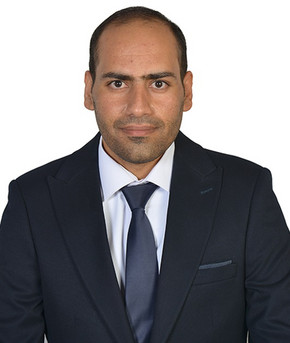
Dr. Adel Aazami is an Assistant Professor at the Institute of Transport Economics and Logistics at Vienna University of Economics and Business (WU Vienna) since 2023. His academic journey began with a B.Sc. in Industrial Engineering from University of Tehran (2010-2014), followed by an M.Sc. (2014-2016) and Ph.D. (2016-2021) from Iran University of Science and Technology (IUST), Tehran. Prior to his current position, he worked as a Postdoctoral Researcher at Sharif University of Technology (2021-2022) and was a Visiting Researcher at the University of Toronto (2020). His educational background includes: Ph.D. in Industrial Engineering (2016-2021) - Iran University of Science and Technology (IUST), Tehran, Iran M.Sc. in Industrial Engineering (2014-2016) - Iran University of Science and Technology (IUST), Tehran, Iran B.Sc. in Industrial Engineering (2010-2014) - University of Tehran, Tehran, Iran Dr. Aazami's research spans multiple interconnected domains within operations research and supply chain management. His primary focus areas include Operations Research and Optimization, Supply Chain and Logistics, Production and Distribution/Transportation Planning, Competition and Game Theory, Stochastic Programming, and Decomposition Algorithms. His work demonstrates a strong emphasis on developing mathematical models and optimization algorithms for complex supply chain problems, particularly those involving perishable goods, competitive environments, and sustainability considerations. He has made significant contributions to integrating environmental factors into traditional logistics problems and developing robust optimization approaches for supply chain networks. Analysis of Dr. Aazami's publication record reveals a consistent trajectory of increasingly sophisticated research in supply chain optimization. His work shows a clear progression from foundational mathematical optimization techniques to increasingly complex integrated problems involving multiple stakeholders, uncertainty, and environmental considerations. A notable trend is his focus on perishable products within supply chains, developing models that account for limited product lifetimes while optimizing across multiple echelons of the supply chain. More recently, his research has expanded to incorporate green logistics considerations, developing algorithms that balance economic and environmental objectives in transportation and distribution problems. His notable scientific achievements include: Winner of the 'Best Student' award among nationwide students evaluated by the Iranian Ministry of Science (2020) Winner of the Iranian Nobel Prize (known as the Alborz National Foundation Prize) (2019) Winner of the Best Student Award at IUST (2018) Winner of the Top Researcher Award at IUST (2018) Annual Awards of the National Elites Foundation Iran (2015-2020) Dr. Aazami has extensive teaching experience across multiple Iranian universities including Tehran University, Amirkabir Technical University, Isfahan University, Yazd University, Zanjan University, Damghan University, Abrar University and Iran Technical University. His peer review activities include reviewing for prestigious journals such as Soft Computing, Expert Systems with Applications, and Annals of Operations Research. While specific grant information isn't detailed in the provided text, his research output suggests active engagement with complex optimization problems relevant to transportation and logistics industries. At WU Vienna, Dr. Aazami is part of the research team at the Institute of Transport Economics and Logistics, working alongside other faculty members including Prof. Kummer and Prof. Wakolbinger. His research integrates theoretical optimization methods with practical applications in transportation and logistics, contributing to the institute's focus on sustainable and efficient supply chain solutions.
Richard English is currently Professor of Politics at Queen’s University Belfast (QUB) and serves as Director of the Senator George Mitchell Institute. He held leadership roles including Pro Vice-Chancellor for Internationalisation and Engagement (2016–2021) and Wardlaw Professor of Politics at the University of St Andrews (2011–2016). His research focuses on radicalism, political violence, nationalism, and Irish/British politics. A Fellow of the British Academy and recipient of the Royal Irish Academy Gold Medal (2019), he has authored influential works such as Armed Struggle: The History of the IRA and Irish Freedom: The History of Nationalism in Ireland . Research Trends: His recent publications (2022–2025) address energy systems, building simulations, and sustainable urban infrastructure, with keywords spanning Building Simulation , Sustainable Energy , and Smart Grids . Subfields include District Heating , Thermal Modeling , and Machine Learning in Energy Management . Honors: CBE (2018) Gold Medal, Royal Irish Academy (2019) Fellow, British Academy (2009) Ewart-Biggs Memorial Prize (2007)
Katharina Kaiser is affiliated with TU Wien's Fachbereich Software Services. She specializes in medical informatics with a focus on computerized clinical guidelines and healthcare system optimization. Her work bridges temporal data analysis, information extraction from clinical texts, and workflow modeling in medical contexts. Key areas: Clinical decision support systems, guideline implementation frameworks, temporal logic in healthcare processes Notable contributions: Development of TimeML-based clinical guideline modeling, heuristic methods for condition-action sentence identification Her research emphasizes semantic enrichment of medical documents and interactive visualization tools for therapy planning and patient data correlation. Collaborations include the PROTOCOL project and ReMINE deliverables in adverse risk management.
Cezary Kaliszyk is a Professor in Theoretical Computer Science at the University of Melbourne. His research focuses on automated reasoning, formal methods, and learning for reasoning, particularly in the context of interactive theorem proving and formalized mathematics. He leads the ERC project 'FormalWeb3' and has been involved in several other significant research initiatives. Theoretical Computer Science Automated Reasoning Formal Methods Interactive Theorem Proving Machine Learning for Theorem Proving Formalized Mathematics Proof Guidance Learning for Reasoning His research explores the integration of machine learning techniques with formal reasoning systems to enhance automation in theorem proving. This includes developing systems like CoqHammer and Tactician, advancing premise selection, proof guidance, and learning-based proof search strategies. His work bridges logical foundations with practical AI-driven tools for formal verification. The recent publications demonstrate a consistent focus on advancing automated and interactive theorem proving through learning techniques, formalization of mathematical concepts (like surreal numbers), and improving reasoning systems (e.g., Prover9, tableaux methods). There is a strong emphasis on practical system development, formalization projects, and learning-based enhancements to reasoning. ERC project 'FormalWeb3' - Principal Investigator Cost Action EuroProofNet - WG5 Leader until 2024 FWF project P26201 - developing HOL(y)Hammer Other projects: JSPS P10044, NWO MathWiki, SURF WebDed, ProofWeb He has advised several PhD students to completion, including Michael Färber, Thibault Gauthier, Yutaka Nagashima, Stanisław Purgał, and Liao Zhang, and is currently supervising Daniel Ranalter and Neil Vyas. He has not received any explicitly mentioned scientific awards in the provided text. His work involves leadership in collaborative systems such as ProofWeb and HOL Import, and participation in major formalization efforts including the Mizar library integration with Isabelle. He is actively involved in the development of tool ecosystems for formal mathematics and automated reasoning.
Prof. Dr. Werner Zorn is a renowned computer scientist and Professor of Communication Systems at the Hasso Plattner Institute (HPI) in Potsdam, Germany. With a foundational role in establishing Germany's early internet infrastructure and connecting China to the global internet, his work has been pivotal in shaping international network connectivity. His academic career spans from the University of Karlsruhe, where he was appointed Professor of Computer Science in 1979, to his current position at HPI since 2001. Education: He studied electrical engineering with a focus on communications at TH Karlsruhe (1962–1967) and earned his Dr.-Ing. with distinction in 1971. Research Focus: His research encompasses performance analysis of computing systems, computer networks, and the development of quantitative modeling methodologies such as FMC-QE (Fundamental Modeling Concepts for Quantitative Evaluation). His work bridges theoretical modeling with practical applications in network design and optimization. Publications & Articles: His publications reflect a deep engagement with internet history, network performance, and system modeling. Notable works include detailed accounts of China's first email connection and the evolution of the Chinese Academic Network (CANET), as well as innovative approaches to system performance modeling. Awards & Recognition: He has received numerous accolades, including the Order of Merit of the Federal Republic of Germany, induction into the Internet Hall of Fame, and the Chinese Government Friendship Award, underscoring his global impact. Current Projects: He leads projects like FMC-QE for hierarchical system modeling and the IT Services Atlas for implementing EU directives, alongside mentoring doctoral students in advanced network and system research.
Kathrin Figl is a Full Professor (Tenured) for Human-centric Information Systems Design at the Department of Information Systems, Production and Logistics Management at the University of Innsbruck. Previously, she held positions as an Assistant Professor at WU Vienna University of Economics and Business and as a research associate at the University of Vienna. Her educational background includes a doctoral degree in Information Systems (2008, with honors, awarded the Dr. Maria Schaumayer Prize) and dual master's degrees in Information Systems (2004) and Psychology (2006), all from the University of Vienna. This interdisciplinary foundation bridges technical and psychological perspectives in her research approach. Professor Figl's research centers on human-centered information systems with particular emphasis on cognitive aspects of digital interaction: Human-AI interaction and algorithmic management systems Digital nudging techniques and online manipulation Eye-tracking methodologies in user research Cognitive biases and heuristics in digital environments Fake news perception and detection mechanisms Webpage prototypicality and its effects on user attitudes Business process modeling as cognitive tools Her publication trajectory demonstrates a sophisticated evolution from foundational work on business process modeling to cutting-edge research on device-specific cognitive effects and misinformation perception. A hallmark of her methodology is the rigorous application of empirical approaches, particularly eye-tracking studies, to investigate how screen design, device type, and interface elements influence human cognition and decision-making across digital platforms. Professor Figl has earned significant recognition for her scholarly contributions: Dr. Maria Schaumayer Prize for doctoral excellence Three Best Paper Awards at major international conferences Excellent Teaching Award from WU Vienna Recognition as a top reviewer for Software & Systems Modeling journal Outstanding service awards as associate editor and track chair She has secured substantial research funding including an FWF Lisa Meitner Programme grant (€145,260) on Web Design Prototypicality and an Austrian Nationalbank Research Grant (€55,000) on Cognitive Effectiveness in Business Process Modeling. While specific advisees aren't documented in the provided materials, her extensive publication record with numerous co-authors indicates active mentorship of graduate researchers. Her work with eye-tracking technology suggests leadership of a specialized laboratory environment for studying human-computer interaction, with established collaborations including the Technical University of Denmark and Queensland University of Technology.
Stefan Rass is a Professor at the Institute of Networks and Security within the Faculty of Engineering & Natural Sciences at Johannes Kepler University Linz (JKU), where he leads the LIT Secure and Correct Systems Lab. As Principal Investigator for FFG-funded projects including reSilienz (digital supply chain resilience, 2023–2025) and ITPUK (AI signature verification, 2022–2024), he bridges theoretical game theory with practical cybersecurity solutions for critical infrastructures and robotics systems. His research spans game-theoretic security models (patrolling games, defense-in-depth strategies), quantum cryptography (QKD network architectures), and cyber deception frameworks like Honeyquest for measuring honeypot effectiveness. Recent work addresses robotics security benchmarking (RobotPerf), cryptographic instruction chaining for control flow protection, and risk assessment methodologies for interdependent infrastructures. His mathematical decision-making approach integrates bounded rationality and stochastic modeling to solve real-world security challenges. Professor Rass actively shapes the field through program committee roles (ARES 2023), peer reviews, and invited talks on security transparency. His current projects focus on cost-benefit-aware monitoring for cyber-physical systems and quantum key distribution standardization, reflecting Austria’s strategic priorities in digital resilience. The LIT Secure and Correct Systems Lab under his direction develops foundational theories while deploying tools for industrial applications, particularly in critical infrastructure protection and secure robotics workflows.
Gerhard Friedrich is a Full Professor at the University of Klagenfurt, leading the Institute for Artificial Intelligence and Cybersecurity. He previously served as Dean of the Faculty of Technical Sciences (2013–2021). His roles include Coordinator for International Relations of the Faculty of Engineering and Member of the Faculty Conference of Technical Sciences. He holds a PhD in Computer Science from Vienna University of Technology and has extensive industry experience, including heading departments at Siemens Austria and research roles at Siemens Corporate Research and Stanford Research Institute. Research focuses on knowledge-based systems, recommender systems, configuration and planning, and production informatics. His work bridges theoretical AI with practical applications in manufacturing, software development, and business processes. He has authored a book on recommender systems (translated into Japanese and Chinese) and contributed to prestigious journals like Artificial Intelligence and IEEE Transactions . He has organized major conferences such as the German Conference on Artificial Intelligence (2016) and served as editor and program committee member for leading venues. His awards include Fellowships from the European and Asia-Pacific AI Associations (2012, 2023). His advising and grants include leadership in applied AI projects and international collaborations. He directs the Intelligent Systems and Business Informatics research group, emphasizing interdisciplinary innovation.
Kristina Harthaller is a Professor of Omnichannel Marketing & Sales at MCI Management Center Innsbruck, leading the Marketing & Sales Department since 2023. She holds a Dr. oec. HSG from the University of St. Gallen (2019) and previously served as an Associated FH Professor (2021–2024) and Senior Lecturer (2021) at MCI. Her academic career includes a postdoc role (2019–2021) at the University of St. Gallen's Research Center for Retail Management. She teaches courses on Consumer Psychology, Digital Transformation, and Omnichannel Commerce, focusing on practical retail innovations. Her research emphasizes customer journey dynamics, multi-channel strategies, and the impact of AI on retail. Notable awards include the 2021 AMA Retail SIG Best Paper Award and the 2020 Journal of Retailing Davidson Award. She advises over 30 students in bachelor and master theses, exploring topics like social commerce, frontline employee inspiration, and impulse buying. Kristina collaborates with industry partners like TIROLER Wirtschaftskammer, delivering workshops on AI in business and retail. She chairs the Bachelor's program in Luxury Hotel Management at Bodensee Campus and contributes to academic associations including the American Marketing Association and European Marketing Academy.