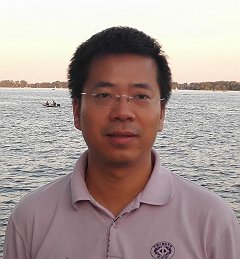
Fei He is an Associate Professor at Tsinghua University's School of Software, where he leads the THUFV research lab focused on formal verification and program analysis. His research spans formal methods, automated reasoning, and program verification, with applications in concurrent systems, networking (P4 programs), and probabilistic systems. Education & Employment: PhD from Tsinghua University (2008) Visiting Scholar at Carnegie Mellon University (2010-2011) and Politecnico di Milano (2006-2007) Faculty positions at Tsinghua since 2008 (Assistant Professor 2008-2011, Associate Professor 2011-present) Research: He's developed innovative techniques in SMT solving for concurrency verification, termination analysis, and regression verification. His tools like Deagle have won gold medals at SV-COMP. Current work focuses on probabilistic program verification and network program analysis. Publications: His 80+ publications demonstrate consistent contributions across formal methods (PLDI, OOPSLA, ICSE), networking (NSDI, INFOCOM), and software engineering (TSE, TOSEM), with recent emphasis on data-driven verification and automated invariant inference. Awards: Gold Medals in SV-COMP ConcurrencySafety (2022, 2023, 2025) Best Paper Awards at PPoPP 2022 and SETTA 2022 Advising: Mentors 13 PhD/Master's students in THUFV lab, with graduates joining Huawei, MPI-SP, and research institutions. Secured multiple NSF China grants for trustworthy software research. Service: Associate Editor for Theory of Computing Systems, program committees for PLDI/ICSE/OOPSLA, and former Local Chair for ISSTA 2019.
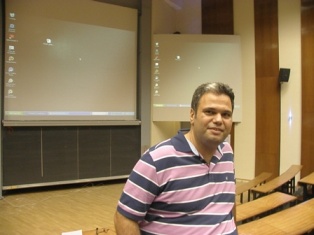
Sotiris Christodoulou is an Associate Professor at the Department of Electrical and Computer Engineering within the College of Engineering at the University of Peloponnese. He also serves as a research associate at the 'Diofantos' Institute of Computer Technology and Publishing. His academic career spans multiple institutions where he has taught graduate and undergraduate courses across seven different universities since 2004. Dr. Christodoulou earned his B.A. in Computer Engineering and Informatics from the University of Patras in 1994 and completed his PhD in Web Engineering from the same institution in 2004. His educational background established the foundation for his extensive research career focused on web technologies and applications. His primary research interests include Web Engineering, Web Application Performance Optimization, Web Code Quality, Semantic Web technologies, Hypermedia Systems, and emerging Web 2.0 and Web 3.0 technologies. His work extends to Virtual Interactive Environments, 3D and Augmented Reality applications, and Spatial Hypertext systems. Christodoulou's research bridges theoretical web engineering principles with practical applications in cultural heritage, education, and urban infrastructure systems. His research output comprises over 45 publications in international journals, book chapters, and conferences, accumulating more than 450 citations. He has participated in over 23 European and National Research and Development Projects focused on web software technology, hypermedia applications, and 3D educational and cultural applications. Professional member of ACM Professional member of IEEE Member of organizing committees for over 15 international scientific conferences Reviewer for recognized international journals (ACM, IEEE, etc.) Christodoulou has extensive teaching experience across seven universities, specializing in programming languages, web software engineering, software quality, and data management. His research projects typically combine applied research with cutting-edge technology implementation for real-world problems in large organizational information systems. He maintains regular office hours at Building K, Office K2.02 at the University of Peloponnese, with appointments available on Mondays and Thursdays.
Michail G. Lagoudakis is a Professor at the Department of Electronic and Computer Engineering, Technical University of Crete. His academic journey includes a Ph.D. in Computer Science from Duke University (2003), an M.Sc. from the University of Louisiana, Lafayette (1998), and a B.Sc. from the University of Patras (1995). He has held prestigious positions such as Postdoctoral Fellow at Georgia Institute of Technology's School of Industrial and Systems Engineering. Research Interests : Spanning machine learning (especially reinforcement learning), decision-making under uncertainty, robotics, algorithm selection, computational biology, and human-computer interaction. Publications : Over 15 recent works, including key contributions to robotics (auction-based multi-robot routing), medical diagnosis (urgent endoscopy prediction), and foundational machine learning (Least-Squares Policy Iteration, RCPI algorithm). Scientific Recognition : Recipient of Duke University's Outstanding Dissertation Award (2002-2003) and two Outstanding Teaching Assistant Awards. Professional Affiliations : Member of AAAI, IEEE, and ACM. Collaborations include industrial applications in disassembly planning, dynamic packet routing, and medical imaging. He advocates for computational biology and interdisciplinary research, aiming to integrate tools from mathematics and control theory into machine learning.
Evangelos F. Mageirou serves as Professor of Operations Research at the Department of Informatics, School of Information Sciences and Technology, Athens University of Economics and Business (AUEB), a position held continuously since 1986. Previously, he worked at the Scientific Secretariat of the National Energy Council under Greece's Ministries of Coordination, Industry and Energy from 1977-1986. His academic credentials include: PhD in Decision and Control Sciences, Harvard University (1972-1976), Thesis: 'Topics in the Analysis of Interconnected Systems' MS in Decision and Control Sciences, Harvard University (1971-1972) BS in Electrical Engineering, Princeton University (1967-1971) Mageirou's research centers on Theoretical and Applied Operations Research with significant applications to the Greek business environment, particularly in finance, shipping logistics, and production systems. His foundational work spans optimization theory, probabilistic modeling, and quantitative methods development. The consistent publication record through 2020 demonstrates enduring scholarly productivity in his core domains. Analysis of recent publications reveals three dominant research trajectories: maritime logistics optimization (vessel speed/positioning studies), game-theoretic security applications (spam email modeling), and control theory extensions (policy iteration algorithms). These threads demonstrate methodological continuity from his early work on interconnected systems to contemporary applications in financial mathematics and pandemic response modeling.
Isambo Karali is an Assistant Professor in the Department of Informatics and Telecommunications at the National and Kapodistrian University of Athens, a position she has held since November 2007. Prior to this, she served as a Lecturer at the same department from September 1999 to November 2007. Her academic career spans over three decades with significant contributions to knowledge representation, uncertainty reasoning, and semantic web technologies. Dr. Karali's educational background includes: PhD in Informatics (1995) from the University of Athens MSc in Computer Science (1988) from University College, University of London Bachelor of Mathematics (1986) from the Department of Mathematics, University of Athens Dr. Karali's research focuses on Knowledge Representation and Reasoning with Uncertainty, Artificial Intelligence, Logic Programming, and Object-Oriented Programming. She has made significant contributions to applying Dempster-Shafer theory for handling uncertainty in Semantic Web applications. Her work bridges theoretical foundations of logic programming with practical applications in knowledge representation, particularly in distributed and heterogeneous environments. She has supervised numerous PhD and master's theses in these areas. Her recent publications demonstrate a strong trend toward integrating uncertainty reasoning with Semantic Web technologies, particularly using Dempster-Shafer theory and fuzzy logic. Her work addresses challenges in managing imprecise and uncertain information in large-scale knowledge systems, with applications in recommendation systems, news analysis, and semantic search. The interdisciplinary nature of her research connects artificial intelligence, knowledge representation, and web technologies to solve complex information management problems. Dr. Karali has been actively involved in research funding and collaboration: Principal Investigator for "Handling uncertainty in data intensive applications on a distributed computing environment (cloud computing)" under the "Thalis" Program Scientific Responsible for "Artificial Intelligence and Logic Programming Techniques for Knowledge on the World Wide Web" at the National and Kapodistrian University of Athens Scientific Responsible for "Semantic Web and Logic Programming - Application to Guided Search" at the National and Kapodistrian University of Athens Participant in multiple EU research projects including MISSION, COSMOS, ADDSIA, PARACHUTE, APPLAUSE, and EDS As an educator, Dr. Karali has taught core undergraduate courses including Object-Oriented Programming and Logic Programming, as well as graduate courses on Knowledge Technologies and Artificial Intelligence. She has supervised numerous PhD and master's students, with a focus on uncertainty reasoning, semantic web technologies, and logic programming applications. Her mentorship extends to student competitions, including guiding the Department's team in the Microsoft ImagineCup 2009. Dr. Karali has also contributed to the academic community through service activities, including membership on program committees for conferences like IEEE ICTAI, reviewer for prestigious journals, and organizational roles in academic events. From 2000 to 2012, she was responsible for the Department's website, contributing to its architecture design and system development.
Konstantinos Parsopoulos is a Professor at the Department of Computer Science & Engineering, University of Ioannina. He holds a Dipl. Mathematics (1998) and M.Sc. in Mathematics of Computers and Decision Making (2000) from the University of Patras, where he also earned his Ph.D. in Intelligent Optimization (2005). Prior to his current role, he served as a Lecturer at the Department of Mathematics, University of Patras (2008–2009). His academic journey includes positions as Assistant Professor (2009–2016), Associate Professor (2016–2022), and Professor (since 2022) at the University of Ioannina. His research focuses on Numerical Optimization, Computational Intelligence (including Evolutionary Computation and Swarm Intelligence), and Computational Operations Research. These areas encompass the development and analysis of metaheuristics, algorithm portfolios, and optimization techniques for real-world applications such as logistics, financial forecasting, and engineering systems. His work emphasizes parallel computing strategies, reinforcement learning for parameter adaptation, and software tools like SOMO-VCB for stochastic optimization. Parsopoulos has contributed to diverse optimization challenges, including crowdshipping models, neural network-based differential equation solvers, and variance counterbalancing in stochastic systems. His publications span topics from theoretical algorithm design to practical implementations in MATLAB and distributed computing environments. Despite his extensive contributions, no scientific awards are explicitly mentioned in the provided texts. In terms of academic leadership, he has advised numerous students (though no names are listed) and has been involved in grants related to optimization software and algorithmic research. His collaborations extend to cross-disciplinary projects in visual sensor networks, traffic light optimization, and bioinformatics, reflecting the broad applicability of his optimization methodologies.
Panagiotis Stamatopoulos is an Assistant Professor at the Department of Informatics and Telecommunications, National and Kapodistrian University of Athens, where he has been employed since 1993. He holds a PhD in Computer Science (1988) and a Diploma in Physics (1982) from the University of Athens. His research spans artificial intelligence, constraint programming, natural language processing, machine learning, and optimization. Specific interests include: Hybrid approaches combining constraint programming with operations research Natural language understanding for database access Parallel processing and distributed constraint solving Multi-agent systems and web intelligence applications His publications show consistent focus on constraint satisfaction algorithms, text summarization techniques, educational timetabling systems, and AI applications in diverse domains like sports analytics and robotics. Recent works demonstrate increased attention to NLP evaluation metrics and multimodal learning. He has supervised numerous diploma theses and led projects funded by the European Union (EDS, APPLAUSE, PARACHUTE, PARROT), University of Athens, and Olympic Airways. Stamatopoulos teaches undergraduate courses in Introduction to Programming and Logic Programming, plus postgraduate courses in Advanced Artificial Intelligence. He previously taught Artificial Intelligence, System Programming, and Expert Systems.
Pourkos Marios is a Professor of Psychopedagogy at the University of Crete, affiliated with the Faculty of Education. His work focuses on embodied/ecological/systemic psychology, qualitative methodologies, and alternative educational contexts. He holds a PhD in Psychology from Jagiellonian University and has authored over 30 books and numerous academic papers. His research explores time perception in education, cultural-historical psychology, and the role of art/play-based methods in fostering moral and cognitive development. Education: MA in Psychology, Sociology, Philosophy, and a PhD in Psychology from Jagiellonian University. Academic career includes international lectures and editorships of key volumes in qualitative research and dialogic pedagogy. His recent work addresses crisis-era education through embodied and heuristic approaches. Research interests include creative pedagogies, dialogism, and interdisciplinary methods. He has organized conferences on embodiment, art, and crisis responses, emphasizing practical applications of theory in education and social contexts.
Dr. Yannis Marinakis is a Professor at the School of Production Engineering and Management , Technical University of Crete, specializing in Stochastic Optimization, Combinatorial Optimization, and Nature Inspired Algorithms. He holds a Diploma, M.Sc., and Ph.D. from the same university, with over 4,687 citations and recognition in top 2% global scientists. He teaches courses on Combinatorial Optimization, Game Theory, and Supply Chain Management, and supervises numerous graduate and doctoral students. His research focuses on metaheuristic algorithms for logistics optimization, vehicle routing problems, and game theory applications. Education: Technical University of Crete (Diploma 1999, M.Sc. 2001, Ph.D. 2005) Affiliations: Hellenic Open University (Quantitative Methods and Business Administration), University of the Aegean (Financial Management Engineering) Research Interests: He designs and applies nature-inspired algorithms (e.g., Ant Colony, Particle Swarm) to solve complex optimization problems in logistics, supply chain, and transportation. Key areas include vehicle routing problems (VRP), stochastic optimization, and game theory. Recent Work: His articles address blockchain applications in maritime logistics, electric vehicle routing with drones, and swarm intelligence for VRP solutions. His 2025 work on blockchain-aided berth allocation demonstrates interdisciplinary innovation. Awards: Top 100,000 Scientists (Stanford, 2019–2021), Top 2% Global Researchers Grants: Led projects on maritime logistics algorithms, berth allocation optimization, and energy-efficient routing systems. Collaborations: Active in EU-funded initiatives (e.g., ARTISAN for energy-aware systems) and cross-disciplinary teams in computational logistics.
Pavlos Petoumenos is a Lecturer (Assistant Professor) in the Department of Computer Science at the University of Manchester and a Research Fellow of the Royal Academy of Engineering. He leads research within the Advanced Processor Technology (APT) group, focusing on compiler optimization and energy-efficient computing. Previously, he worked as a Research Associate and Senior Researcher at the University of Edinburgh under Hugh Leather. His research centers on compilers, runtime systems, and development tools designed to help programmers write fast, energy-efficient programs with minimal effort. With electronic systems consuming 10% of global electricity (projected to reach 20% by 2030), his work addresses the critical challenge of bridging the complexity gap between programmers and modern energy-efficient hardware. Key research areas include compiler optimization, machine learning applications in compilation, code size reduction, and quantum-classical programming integration. His recent publications reveal strong trends in applying machine learning to compiler optimization, particularly through active learning techniques and deep learning models. The research spans multiple domains including function merging, branch fusion, loop transformations, and energy profiling, with significant contributions to quantum programming language design. His work consistently targets real-world applications in multicore processors and interactive mobile environments. Award highlights include: Best Paper Award at CGO 2019 Distinguished Paper Award at ISSTA 2018 Best Paper Award at PACT 2017 Best Paper Award at CGO 2017 Best Paper Award at IISWC 2014 Royal Academy of Engineering Research Fellowship Petoumenos actively contributes to the research community through mentoring PhD students, organizing the biennial International Workshop on Code Optimisation for Multi and Many-Cores (COSMIC), and co-hosting the Compucast podcast where he serves as chief editor. His collaborations span multiple institutions including the University of Edinburgh, University of Lancaster, and University of St Andrews. He has secured significant research impact through tools like BenchPress and F3M that address practical challenges in compiler design and optimization. He leads the Advanced Processor Technology group and contributes to the Compucast podcast, which features interviews with computer science researchers, academic and industry news, and technical discussions. The podcast represents a collaboration between multiple UK universities and serves as an important outreach platform for computer science research.
Evangelos F. Magirou is a Professor of Operations Research at the Department of Informatics of Athens University of Economics and Business (AUEB). He holds a BS in Electrical Engineering from Princeton University (1971), an MSc in Decision and Control Sciences from Harvard University (1972), and a Ph.D. in Decision and Control Sciences from Harvard (1976). His research focuses on theoretical and applied Operations Research, with specializations in Finance, Shipping, and Energy Policy. He has held significant administrative roles, including Deputy Chairman of the Department of Informatics at AUEB and Chairman of the Hellenic Procurement Institute (1994–1997). Education: BS in Electrical Engineering, Princeton University (1971) MSc in Decision and Control Sciences, Harvard University (1972) Ph.D. in Decision and Control Sciences, Harvard University (1976) Research Interests: Operations Research applications in Finance, Shipping, and Energy Policy Optimization, Game Theory, and Decision Theory Algorithm design and dynamic optimization Recent Publications Trends: Magirou’s work spans theoretical contributions to graph theory, kernel enumeration, and default logic, alongside applied research in shipping logistics, energy policy, and financial modeling. His 2000s publications emphasize computational finance and policy iteration methods, reflecting a shift toward quantitative finance and algorithmic innovation. Awards and Grants: No specific awards are listed, but his extensive involvement in energy policy research and industry partnerships (e.g., Public Power Corporation) highlights impactful applied work. Teaching and Advising: He teaches courses in mathematics of finance, operations research, and algorithms. His academic leadership includes directing the MSc Program in Business Mathematics (jointly with the University of Athens). Labs/Teams: Collaborates with the Center for Economic Research at AUEB and has contributed to shipping industry studies through collaborative projects with industry experts.
Giorgio Lucarelli is a Teaching and Research Associate at ENSIMAG, Grenoble Institute of Technology, and a member of the DataMove team at INRIA and LIG. He earned his PhD in Theoretical Computer Science from Athens University of Economics and Business in 2009, preceded by an M.Sc. in Computer Science (2005) and a B.Sc. in Informatics (2003). PhD Advisor: Professor Ioannis Milis Key Research Areas: Algorithms and Complexity, Power-Aware Scheduling, Graph Theory, Online Optimization His work focuses on energy-efficient scheduling in large-scale systems, with applications to heterogeneous architectures , optical networks , and MapReduce jobs . Recent publications explore online scheduling, dual-fitting methods, and geometric constraints in resource allocation. Collaborations span institutions like INRIA , LIG , and University of Illinois . Notable trends in his research include speed-scaling algorithms , non-preemptive scheduling , and primal-dual optimization . While no explicit awards are listed, his contributions to exact and approximation algorithms for problems like max-edge coloring and densest k-subgraph highlight his expertise in combinatorial optimization. As an educator, he teaches modules on Unix , Imperative Programming , Operating Systems , and Algorithm Design at ENSIMAG, and contributes to the MSc in Informatics (MOSIG) at Grenoble.
Grammati Pantziou is a Professor at the Department of Informatics and Computer Engineering, University of West Attica (since 2018). She previously held roles as Vice Rector for Administrative Affairs (2019–2023), member of the Governing Committee, and president of the Research Committee at the same institution. Earlier positions include Assistant Professorships at Dartmouth College (1992–1994) and University of Central Florida (1994–1995), and Professor at the Technological Educational Institute of Athens (1998–2018). She served on the Greek Data Protection Authority (2003–2013). Education: Ph.D. in Computer Science, University of Patras, Greece (1991) Research Interests: Focuses on algorithmic optimization, parallel/distributed computing, mobile networks, and cybersecurity. Specializes in sensor networks, pervasive computing security, and smart city applications. Her work bridges theoretical algorithms with real-world systems like tourism route planning, vehicular networks, and IoT. Publications & Impact: Authored/co-authored 11 books, 165+ papers, and edited 5 books. Her research has 5,600+ citations (h-index:34, i10-index:80). Leads 29 funded projects on cybersecurity, transportation optimization, and smart systems. Editorial Roles: Editor-in-Chief of Algorithms Journal's 'Parallel and Distributed Algorithms' section, and editor for journals like Cybersecurity & Privacy (MDPI) and Security and Communication Networks (Wiley). Contributions: Developed frameworks like eCOMPASS for tourist route planning and ETHACA for cybersecurity training. Pioneered algorithms for vehicle relocation in sharing systems and energy-efficient data aggregation in sensor networks.
Zervoudakis Konstantinos is a Researcher at the School of Production Engineering and Management, Technical University of Crete. His work focuses on computational intelligence, optimization algorithms, and their applications in education and product design. He holds a fixed-term research position and is based in Office G3.0.01, Building G3. Research Interests: His primary areas include developing nature-inspired optimization algorithms (e.g., flying fox, mayfly, and bees algorithms), applying computational methods to educational challenges like student psychological fitness assessment and group formation, and optimizing product line design using metaheuristics like Tabu Search and Differential Evolution. He also investigates the impact of ICT on education and special education teacher efficacy. Publications Trends: Recent works emphasize hybrid optimization algorithms for real-world problems (maintenance scheduling, product design), AI-driven educational tools for mental health assessment and learning grouping, and algorithmic solutions for multi-objective decision-making. His research bridges computational innovation with practical applications in education and engineering. Awards: None explicitly mentioned in the provided texts. Advising & Grants: No student advisees listed. No grants disclosed in the data.
Magda Marinaki is a Researcher at the Technical University of Crete, affiliated with the School of Production Engineering and Management. She is part of the Computational Engineering and Optimization Laboratory, focusing on optimization algorithms and their applications in logistics, transportation systems, and sustainability. Her work spans blockchain technology in maritime logistics, vehicle routing problems (VRP), swarm intelligence algorithms, and energy-efficient transportation solutions. Her research interests include optimization methodologies like genetic algorithms, particle swarm optimization, and grey wolf optimizers. Recent studies address challenges such as electric vehicle charging infrastructure, drone integration in logistics, and flow shop scheduling. She has contributed to both theoretical advancements in metaheuristics and practical applications in supply chain management and environmental engineering. Key Projects: Blockchain applications in port operations, energy-minimizing EV routing, and UAV path planning. Collaborations: Interdisciplinary work on sustainability and smart infrastructure. Marinaki’s publications highlight a focus on solving complex real-world problems through innovative algorithmic approaches, with a particular emphasis on environmental and efficiency metrics.