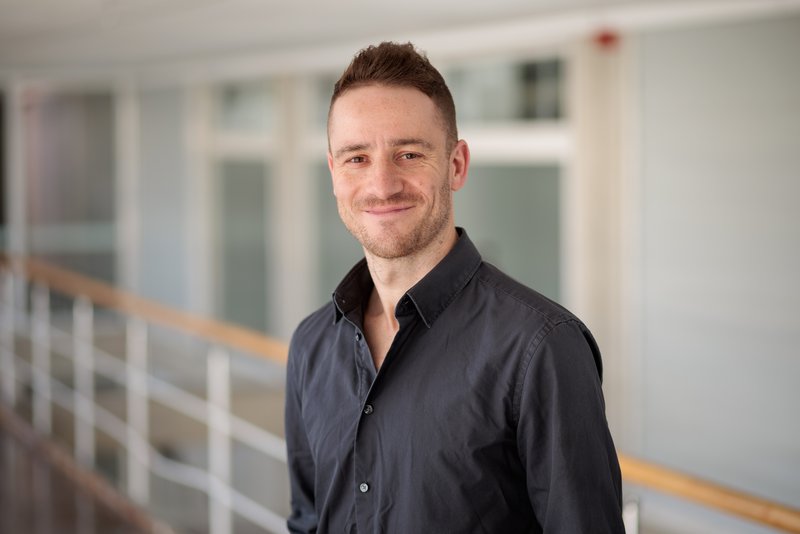
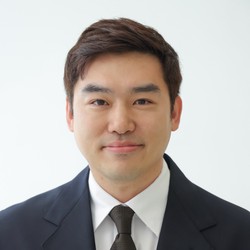
Chita R. Das is a Professor at Pennsylvania State University, known for extensive contributions in computer architecture, machine learning, and high-performance computing. Their research focuses on optimizing hardware-software co-design for edge computing, cloud infrastructure, and energy-efficient systems. Key areas include FPGA acceleration, GPU optimization, and serverless computing frameworks. Das collaborates frequently with institutions like AMD and Intel, addressing challenges in parallel computing and distributed systems. Their work bridges theoretical advancements with practical applications in recommendation systems, bioinformatics, and real-time video processing. Research interests span across hardware acceleration techniques, cloud resource management, and sustainable computing. Notable projects include adaptive training frameworks for intermittent power environments and neural-augmented game streaming for mobile platforms. Das's publications often address performance bottlenecks in modern architectures and propose novel solutions for latency and energy efficiency. Recent articles highlight innovations in serverless computing cost optimization, low-bandwidth VR streaming, and FPGA-based bioinformatics tools. Their contributions are characterized by interdisciplinary approaches combining computer architecture with machine learning and embedded systems.
Anastasia Ailamaki is a Professor at the Swiss Federal Institute of Technology in Lausanne (EPFL), renowned for her work in database systems and data management . Her research focuses on optimizing query processing for modern hardware, particularly GPUs and heterogeneous systems, and advancing cloud data analytics with serverless architectures like PixelDB . She has co-authored influential frameworks for adaptive query optimization , hardware-conscious database engines , and model-relational data management . Key research areas: GPU acceleration , HTAP , query approximation , spatial data processing , and cloud-native databases . Recent work emphasizes cross-task optimizations in distributed environments, efficient sampling , and context-aware joins integrating vector embeddings. In 2023, she contributed to adaptive recursive query optimization and speculative K-means clustering, while 2024 publications addressed proportional caching (HPCache) and model-relational systems . Her collaborations span institutions such as MIT, Microsoft, and ETH Zurich, with publications in top venues like SIGMOD , VLDB , and ICDE .
Jishen Zhao is an Assistant Professor in the Department of Computer Science and Engineering at the University of California, San Diego (Jacobs School of Engineering). His research focuses on computer architecture, non-volatile memory systems, and deep learning acceleration. Dr. Zhao has published extensively in top venues including ISCA, MICRO, ASPLOS, and IEEE Transactions. He collaborates with researchers at UCSD and beyond to advance systems for emerging applications in AI and autonomous vehicles. Dr. Zhao's primary research areas include persistent memory systems, hardware/software co-design for deep learning, and safety-critical computing. He develops techniques for crash consistency, memory disaggregation, and efficient neural network deployment. His work on autonomous vehicles addresses scenario generation and perception-aware system design. Recent projects explore LLM applications for software engineering and hardware verification. Analysis of Dr. Zhao's 2024-2025 publications reveals a strong shift toward AI-integrated systems research. He applies large language models to tasks like RTL verification and software issue localization while continuing to innovate in memory systems for serverless computing. There is growing emphasis on safety-critical systems for autonomous vehicles and energy-efficient neural network training using novel hardware architectures. Information about Dr. Zhao's scientific awards, advising activities, grants, and laboratory facilities was not available in the provided documentation.
Jianfeng Gu is a Ph.D. Candidate and researcher at the Technical University of Munich (TUM), affiliated with the Department of Computer Science and specifically the Chair of Computer Architecture and Parallel Systems led by Prof. Martin Schulz. He maintains an active research profile with numerous publications and contributes to the academic community through teaching seminars on Cloud Computing. His academic path began with a Bachelor of Software Engineering from Sun Yat-sen University in China (2014-2018), followed by a Master of Engineering from the same institution (2018-2020). Since April 2021, he has been pursuing his Ph.D. at TUM, advancing research in computing systems and architectures. Gu's research focuses on Heterogeneous Serverless Computing for Deep Learning applications, specializing in GPU, FPGA, and NPU technologies within serverless environments. His work addresses critical challenges in resource allocation, auto-scaling, and performance optimization for serverless inference systems. Additionally, he investigates Real-time Autonomous Driving Systems , developing advanced perception techniques through sensor fusion (particularly stereo-LiDAR fusion) for high-precision depth sensing and object detection in autonomous vehicles. His interdisciplinary approach bridges hardware acceleration, cloud infrastructure, and AI applications. His publication trajectory shows a progression from foundational computer vision and autonomous driving research (2018-2020) toward increasingly sophisticated work on serverless computing and federated learning (2021-2025). Recent publications focus on efficient resource sharing in heterogeneous serverless environments, with particular attention to GPU and FPGA allocation strategies that maintain service level objectives while optimizing costs. His work demonstrates strong technical depth across multiple computing domains. Best Paper Award at IEEE/ACM DATE 2021 15+ publications with 185+ citations Research featured in top venues for computer architecture and cloud computing As a Ph.D. researcher, Gu teaches seminars on Cloud Computing (IN2107) and contributes to multiple research projects at TUM's Chair of Computer Architecture and Parallel Systems. His work is supported by the department's research infrastructure and collaborations with faculty including Prof. Martin Schulz and Prof. Michael Gerndt. Gu works within TUM's advanced computing research environment, contributing to projects related to high-performance computing, serverless architectures, and autonomous systems. His research group maintains specialized hardware and software infrastructure for evaluating modern HPC architectures and accelerators, including FPGA clusters and GPU resources for deep learning research.
Tilmann Rabl is a Professor affiliated with the Hasso Plattner Institute (HPI) at the University of Potsdam, Germany. His research focuses on database systems, distributed computing, and scalable data processing. He leads projects exploring serverless cloud infrastructure, stream processing, and machine learning integration with databases. Key areas of research include optimizing GPU-based data processing, developing benchmarks like TPCx-IoT and TPCx-AI, and advancing techniques for distributed systems, including RDMA and NVLink-based architectures. His work emphasizes practical systems, such as Skyrise (serverless data processing), Rhino (distributed state management), and PROTEUS (scalable machine learning). Rabl has contributed to foundational tools like BlockJoin for matrix partitioning and has explored performance trade-offs in persistent memory and CXL device memory. His collaborative projects address challenges in real-time data analytics, sensor data coherence, and interoperable data science workflows.
Qian Li is a researcher working at the intersection of database systems and operating systems, with primary affiliation at DBOS Inc. and academic connections to Stanford University's School of Engineering, Department of Computer Science, and Peking University in Beijing, China. The research focuses on developing the Database Operating System (DBOS) concept, which reimagines operating systems with database technology at their core. Research interests center on database systems, operating systems integration, transaction processing, and serverless computing. The work explores how database principles like ACID transactions can improve system reliability, debugging, and application development, particularly in cloud environments. Key projects include DBOS, Epoxy for cross-data store transactions, and Apiary for transactional serverless computing. The publication record shows a strong trend toward integrating database transaction semantics with modern computing paradigms, particularly serverless architectures. Recent work demonstrates how transactional guarantees can simplify application development, improve debugging, and enable new approaches to cloud-native application design. The research bridges theoretical database concepts with practical systems implementation. As a core contributor to the DBOS project, Qian Li has collaborated extensively with leading researchers including Michael Stonebraker, Matei Zaharia, Christos Kozyrakis, and Peter Kraft. The work has been published consistently in top-tier venues including VLDB, USENIX ATC, and CIDR, reflecting significant impact in the systems research community.
Prof. Dr. Uwe Breitenbücher is a Professor of System Architecture at Reutlingen University's Faculty of Informatics. He holds a Diplom in Computer Science (2011) and a PhD (2016) from the University of Stuttgart. His research focuses on cloud computing, IT systems management, IoT, blockchain, and pattern languages for software architecture. He also leads educational initiatives in software engineering pedagogy, including gamified e-learning platforms like IT-REX and Gamify-IT. Education: Diplom-Informatiker (2011), University of Stuttgart Dr. rer. nat. (2016), University of Stuttgart His research interests emphasize practical deployment solutions for distributed systems, including cross-component issue management, blockchain interoperability, and cloud orchestration using TOSCA standards. He actively develops tools like Variability4TOSCA and Dromi to address challenges in deployment variability and microservice architecture. His recent articles highlight trends in cross-chain smart contract invocations, gamified education systems, and orchestration of heterogeneous deployment technologies. He has contributed to over 50 peer-reviewed publications since 2018, focusing on cloud automation, blockchain integration, and software engineering education. He chairs the Bachelor's Examination Board for Digital Business and collaborates with industry on projects like the 5G-PreCiSe initiative. His work bridges academic research with practical deployment challenges in modern distributed systems.
Ofer Biran is a prominent computer science researcher at the Technion - Israel Institute of Technology, where he serves as a Professor in the Department of Computer Science within the Faculty of Electrical Engineering and Computer Science. With a research career spanning over three decades from 1988 to present, Biran has established himself as a leading expert in distributed systems and cloud computing. His work bridges theoretical foundations with practical systems implementation, evolving from early theoretical distributed computing research to contemporary cloud infrastructure and policy analytics systems. Biran's research interests focus on the critical challenges of modern computing infrastructure. His early work investigated fundamental theoretical aspects of distributed task solvability and round complexity in distributed systems. Over time, his research evolved toward practical systems challenges, particularly in cloud computing environments. His recent work addresses virtual machine placement optimization, network-aware resource allocation, heterogeneous resource reservation, and policy-driven cloud ecosystems. This progression demonstrates his ability to identify and solve increasingly complex problems as computing paradigms shifted from theoretical distributed systems to large-scale cloud infrastructure. An analysis of his publication trends reveals a clear evolution from theoretical computer science toward applied systems research. His recent publications (2016-2023) predominantly focus on cloud computing infrastructure, policy analytics, and data center networking, while maintaining strong theoretical foundations. Biran has made significant contributions to understanding how to optimize resource allocation in heterogeneous environments, particularly through network-aware VM placement strategies that balance performance, reliability, and efficiency requirements in modern cloud systems. Biran has maintained extensive collaborations throughout his career, working with researchers including Yosef Moatti, Dean H. Lorenz, Shlomo Moran, Shmuel Zaks, Erez Hadad, and Richard E. Harper. His role as co-editor of the 2023 SYSTOR conference proceedings in Haifa demonstrates his continued active participation and leadership in the systems research community. His research has consistently addressed practical challenges in computing infrastructure while maintaining strong theoretical rigor, making significant contributions to both academic understanding and real-world system design.
David Breitgand is a senior researcher at IBM Research specializing in cloud computing, networking, and virtualization technologies. With a publication record spanning from 1997 to 2025, he has established himself as a significant contributor to the fields of cloud infrastructure, network management, and distributed systems. His work shows a clear evolution from traditional network management protocols to modern cloud-native architectures, serverless computing, and edge-to-cloud integration. Dr. Breitgand's research interests focus on optimizing resource allocation in distributed systems, with particular emphasis on cloud-edge continuum architectures. His work addresses critical challenges in network function virtualization, service function chaining, and 5G media applications. He has made significant contributions to the understanding of how to efficiently deploy and manage services across heterogeneous cloud environments, from data centers to the network edge. His research combines theoretical foundations with practical implementations, often resulting in systems that have been evaluated in real-world settings. Analysis of his recent publications (2021-2025) reveals a strong focus on edge-to-cloud integration, with particular attention to 5G media applications, service function chaining in distributed environments, and serverless computing paradigms. His work demonstrates consistent innovation in developing algorithms and frameworks that optimize resource usage while meeting service level objectives. The research spans theoretical foundations, system design, and practical implementation, with publications appearing in top-tier venues like INFOCOM, SYSTOR, and IEEE journals. Dr. Breitgand has collaborated extensively with researchers including Danny Raz, Dean H. Lorenz, and Avi Weit, indicating long-term institutional relationships. His work has been instrumental in several European research initiatives, particularly those focused on 5G media applications and cloud networking. While specific awards aren't documented in the available information, his consistent publication record in high-impact venues and sustained research contributions over nearly three decades speak to his standing in the research community. His research has practical implications for the design and operation of modern cloud and edge infrastructure, with applications in media delivery, network function virtualization, and distributed service deployment. Dr. Breitgand continues to be an active contributor to the field, with ongoing research addressing emerging challenges in the convergence of networking and cloud technologies.
Osama Abboud is a researcher affiliated with Technische Universität Darmstadt. He holds a PhD in Computer Science from the same institution (2012), focusing on quality adaptation in peer-to-peer video streaming using scalable video coding. His work spans computer networks, distributed systems, edge computing, and federated learning. Key contributions include innovations in P2P video streaming resilience, serverless federated learning optimization, and mission-critical AI systems. He has collaborated extensively with researchers like Ralf Steinmetz and Michael Gerndt, publishing in venues such as IEEE Trans. Ind. Informatics, NetSoft, and ICC. His research emphasizes practical system design for heterogeneous environments, energy efficiency, and real-time performance. Education: PhD in Computer Science (Darmstadt University of Technology, 2012). Research Interests: Peer-to-Peer Systems, Edge Computing Architecture, Federated Learning Optimization, AI-driven Network Adaptation, and Low-Power Hardware Integration. His work bridges theoretical foundations with practical implementations in distributed environments. Notable Projects: Development of Apodotiko (serverless federated learning framework), MARQ (mission-critical AI system), and contributions to edge computing architectures like Trabant and Host Bypassing. These projects aim to enhance scalability, reduce latency, and improve sustainability in distributed systems.
Christian Dietrich is a Professor for Reliable Distributed Systems at Technical University of Braunschweig since 2024, where he heads the Reliable System Software research group within the Institute of Operating Systems and Computer Networks, part of the Faculty of Electrical Engineering, Information Technology, and Physics. He previously held positions at Leibniz Universität Hannover where he completed his distinguished doctoral research. Professor Dietrich's research focuses on operating systems, distributed systems, and reliable systems with particular expertise in memory management, real-time systems, and embedded systems. His work spans both theoretical foundations and practical implementations, with significant contributions to system software reliability and efficiency. His research interests include operating system design, memory management techniques, real-time computing, embedded systems, fault tolerance, and compiler optimizations for system software. Dietrich's recent publications demonstrate a strong focus on memory management innovations (particularly for persistent memory), virtualization techniques, and reliability mechanisms for distributed systems. His work frequently bridges the gap between theoretical computer science and practical system implementation, with many contributions finding their way into production systems. The research shows increasing emphasis on hardware-software co-design and adapting operating systems to modern hardware capabilities. His scientific achievements have been recognized with numerous prestigious awards: USENIX ATC Distinguished Artifact Award (2023) for LLFree USENIX ATC Best Paper Award (2017) for cHash RTAS Best Paper Award (2015) for dOSEK Multiple Outstanding Paper Awards at ECRTS, OSPERT, and ISORC Wissenschaftspreis Hannover (2020, awarded in 2024) Professor Dietrich has secured significant research funding including multiple DFG projects (DI 2840/1-1, DI 2840/2-1) and has been involved in collaborative projects with industry partners. His teaching portfolio includes advanced courses on operating systems, programming languages, and compilers, for which he received teaching excellence awards. He leads an active research group focused on reliable system software with ongoing projects including ParPerOS (Parallel Persistency OS) and ATLAS (Adaptable Thread-Level Address Spaces). The Reliable System Software group maintains strong connections with both academic and industrial partners, contributing to open-source projects and collaborating on cutting-edge research in system software reliability. The group's work has practical impact, with some findings leading to more than 100 accepted patches in the Linux mainline kernel.
Dr. Eishi Arima is a researcher at the Chair of Computer Architecture and Parallel Systems within the Department of Informatics at the Technical University of Munich (TUM). His work focuses on cutting-edge computer architecture and high-performance computing systems, with particular expertise in power-aware computing, resource management, and heterogeneous systems. He actively contributes to numerous international conferences and collaborative research projects addressing challenges in modern computing infrastructure. Dr. Arima's research spans multiple critical areas in computer architecture including memory and storage systems, performance modeling and optimization, hardware/software codesign, and processor microarchitectures. His work demonstrates particular strength in addressing energy efficiency challenges in high-performance computing environments, with numerous publications on power capping, resource partitioning, and sustainable computing approaches. His research bridges theoretical concepts with practical implementations, often incorporating machine learning techniques to optimize system performance under various constraints. Analysis of Dr. Arima's publication record reveals a strong focus on addressing the energy efficiency challenges in modern computing systems. His work consistently targets the intersection of hardware architecture and system-level resource management, with particular emphasis on heterogeneous computing platforms combining CPUs, GPUs, and emerging memory technologies. Over time, his research has evolved from traditional cache and memory system optimizations toward more holistic approaches incorporating machine learning for resource management in power-constrained environments. Recent publications demonstrate increasing attention to sustainability aspects of computing, reflecting broader industry trends toward greener computing solutions. Dr. Arima has served in various organizational capacities for major international conferences including as Program Committee member for SC, IPDPS, and Cluster conferences, and as Program Co-Chair for ACM CF'20. His journal review activities span multiple prestigious publications including IEEE TPDS and Elsevier FGCS. This extensive service demonstrates his recognition as a respected member of the international computer architecture research community. Dr. Arima has mentored numerous students through bachelor's theses, master's theses, and guided research projects. His students have produced research on topics including reinforcement learning for resource management, job scheduling optimization, memory system improvements, and power-aware computing techniques. Several student projects have resulted in publications at reputable conferences, indicating the high quality of research conducted under his supervision. His mentoring covers both theoretical aspects of computer architecture and practical implementation challenges in real-world systems. Dr. Arima is actively involved in multiple research projects including SEANERGYS (EuroHPC), PlasmaPEPS, OpenCUBE, DaREXA-F, ScalNEXT, PDexa, MUNIQC-ATOMS, BB-KI_Chips, QuaST, and Q-DESSI. These projects address various aspects of high-performance computing, from energy efficiency to quantum computing integration. His work contributes to the development of next-generation computing infrastructure that balances performance requirements with sustainability concerns.
Junaid Shuja is a researcher with significant contributions to Mobile Edge Computing , Cloud Environments , and IoT Systems . Collaborating with scholars like Kashif Bilal , Abdullah Gani , and Ehzaz Mustafa , his work spans computation offloading, resource allocation, and security frameworks. Research Highlights 2017: Analysis of Vector Code Offloading in Heterogeneous Architectures 2021: Survey on Machine Learning for Edge Caching 2023: Reinforcement Learning for Computation Offloading in Vehicular Networks 2024: Blockchain Applications in Land Lease Systems and Employee Transfers 2025: Deep Reinforcement Learning for Resource Optimization His recent work focuses on Deep Learning and Blockchain for latency-sensitive applications in IoT and vehicular networks, published in IEEE Access , Cluster Computing , and Telecommunication Systems . Key co-authors include Faisal Rehman , Abdallah Namoun , and Muhammad Bilal .
Jongse Park is currently an Associate Professor at the School of Computing (SoC), KAIST , and a core member of the Computer Architecture and Systems Laboratory (CASYS) . He holds co-affiliations with the School of Electrical Engineering , Graduate School of AI Semiconductor , Graduate School of System Architect , and Department of Semiconductor System Engineering at KAIST. Since 2025, he has been serving as a Visiting Associate Professor at Stanford University's Pervasive Parallelism Lab within the EECS department. PhD in Computer Science, Georgia Institute of Technology (2018), advised by Prof. Hadi Esmaeilzadeh MS in Computer Science, KAIST (2012), advised by Prof. Seungryoul Maeng BS in Computer Science and Engineering, Sogang University (2010) His research focuses on accelerating AI serving systems , enabling on-device AI , processing-in-memory (PIM) architectures , and flexible AI compiler frameworks . Recent work explores transformer optimization, heterogeneous AI semiconductors, and efficient video-language processing. Recent publications include MICRO 2025 work on PIM for LLMs, VLDB 2025 research on video-language engines, and ISCA 2025 contributions to LLM quantization. His team's projects have received funding from the K-Cloud Project , NRF Young Researcher Program , and IITP Core Technology Development grants . Teaching Innovation Award Excellence Prize, KAIST (2025) Samsung Humantech Paper Award Gold Prize (2025) IEEE Senior Member (2024) Best Paper & Distinguished Artifact Awards at IISWC (2024) and ISCA (2024) He actively supervises PhD and MS students in AI systems research and serves on program committees for top conferences like ASPLOS , ISCA , and MICRO , including organizing roles as Sponsorship Chair for MICRO 2025.
Philipp Friese is a Researcher at the Technical University of Munich , affiliated with the Chair of Computer Architecture & Parallel Systems (Department of Computer Architecture & Parallel Systems). His research focuses on the integration of High-Performance Computing (HPC) with Cloud Computing , performance monitoring, and optimization of CPU topologies and high-speed networks . He contributes to projects such as SEANERGYS (EuroHPC) PlasmaPEPS OpenCUBE DaREXA-F ScalNEXT PDexa MUNIQC-ATOMS BB-KI_Chips QuaST Q-DESSI (MQV) SensE (BFS) and previously led work in Time-X (EuroHPC) DEEP SEA (EuroHPC) REGALE (EuroHPC) TurbO - GasTurbinenOptimierung (2017-2020) ENVELOPE - Effizienz und Zuverlässigkeit: Selbstorganisation in HPC-Systemen (2017-2019) Predictive Autoscaling Smart Cloud Operations Parallel in Time Integration with Rational Approximations targeting Weather and Climate Simulations (2020) FDN (Function Delivery Network) - Extending Serverless Computing to Heterogeneous Platforms (2019-2022) BEHAVE - Behavioral Modeling of Application Functions in Serverless Computing (2021-2022) His recent publications address HPC-cloud convergence , network monitoring , and CPU topology exploration , reflecting interdisciplinary expertise in Computer Science and Distributed Systems . Scientific recognitions include Best Presentation Award at ARCS 2024 He actively develops software tools like autopin DBrew DDS-Perf QMPI and works with hardware infrastructures CAPS Cloud and HimMUC . His research aligns with initiatives such as the MPI Forum and Eurolab4HPC .