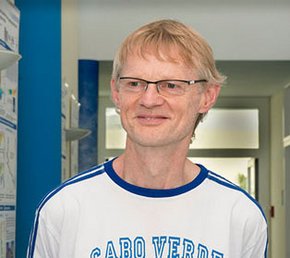
Andrew R. Teixeira is an Associate Professor in the Department of Chemical Engineering at Worcester Polytechnic Institute (WPI), where he has been faculty since 2017. He holds a B.S. from WPI (2009), a Ph.D. from UMass Amherst (2014), and completed postdoctoral training at MIT (2016). His research bridges reaction engineering and materials science, with core themes including: Dynamic catalysis for distributed manufacturing Waste valorization via hydrothermal liquefaction Pharmaceutical crystallization in continuous flow systems Microreactor design for water purification Recent publications (2020-2022) demonstrate strong emphasis on sustainable process engineering, with computational and experimental work in catalysis kinetics, zeolite synthesis, and biomass conversion. His scholarly output frequently appears in high-impact journals like Green Chemistry and Reaction Chemistry & Engineering . Professional recognition includes: Romeo L. Moruzzi Young Faculty Award (2021) Negative Emissions Science Fellow (2019) Leadership roles in AIChE and catalysis societies He leads the Dynamic Microreaction Engineering Lab, which focuses on microscale reaction systems. His teaching incorporates innovative pedagogies like flipped classrooms and augmented reality, covering core chemical engineering courses including reactor design and unit operations.
Prof. Dr. Sonja Grothe is a Professor of Physics and Applied Mathematics in the Department of Mechanical Engineering, Environmental and Building Technology at Westfälische Hochschule in Gelsenkirchen, Germany, a position she has held since September 2016. Her academic journey includes significant industrial experience in chemical manufacturing prior to her current faculty role. Professor of Physics and Applied Mathematics, Westfälische Hochschule (2016-present) Plant Manager for Titanium Dioxide White Production, Huntsman P&A Germany GmbH (2015-2016) Project Manager in Process Development, Huntsman (Sachtleben Chemie GmbH) (2014-2015) Laboratory Manager, Sachtleben Chemie GmbH in Product and Application Development (2008-2014) Prof. Grothe's research focuses on nanotechnology and materials science with particular emphasis on nanoparticle synthesis, composite materials, and surface modification. Her doctoral work on FePt nanoparticles from the gas phase established her expertise in nanomaterials, which she has since translated into numerous industrial applications. Her research bridges fundamental physics with practical industrial solutions, particularly in the fields of titanium dioxide and barium sulfate composites. Her publication record shows a clear evolution from fundamental nanoparticle research toward applied industrial materials science. Recent work demonstrates expertise in nanoparticle reinforcement of polymers, functionalization of inorganic particles, and development of specialized composites with enhanced mechanical, optical, and processing properties. The interdisciplinary nature of her work spans physics, chemistry, and engineering disciplines. Graduate Prize of the Year 2000 for exceptional academic achievement PhD in Physics completed with distinction ("mit Auszeichnung") Prof. Grothe teaches core physics courses including Physics 1, Physics 2, Electrical Engineering and Electrical Machines, and Computer-Aided Engineering Mathematics 2. Her extensive industrial experience in chemical manufacturing and materials development provides practical context to her academic instruction, creating a valuable bridge between theoretical principles and real-world engineering applications.
Guillaume Charrier is a Researcher at INRAe (French National Research Institute for Agriculture, Food and Environment) specializing in plant ecophysiology, with a focus on tree responses to environmental stresses. He is affiliated with the PIAF (Physique et Ingénierie pour l'Agriculture et l'Environnement) research unit based at Université Clermont Auvergne. His work bridges fundamental plant physiology with practical applications for agriculture and forestry in a changing climate. Dr. Charrier's research primarily investigates the physiological mechanisms of frost resistance in trees, freeze-thaw dynamics in xylem, and interactions between drought and frost stresses. He has conducted extensive research on walnut trees (Juglans regia) as a model system but also studies sugar maple, citrus, and various European tree species. His approach combines field observations, laboratory experiments, and mathematical modeling to understand and predict tree responses to environmental changes. His recent publications (2023-2025) demonstrate continued productivity with multiple papers in leading plant science journals. Key research themes include frost-drought trade-offs, tree phenology and frost risk, winter physiology of trees, and climate change impacts on tree species distributions. He is actively involved in the EU/LIFE FrostDefend project developing frost damage forecasting tools and the PETONCLE project studying urban trees in Clermont-Ferrand. Dr. Charrier's work has significant practical applications for agriculture and forestry, particularly in developing strategies to protect tree crops from climate-related stresses. His research provides fundamental insights into plant stress physiology while addressing urgent challenges related to climate change adaptation.
Dr. Albert Ansmann is a distinguished Associate Professor at the University of Leipzig and Head of the Ground-Based Remote Sensing Working Group at the Leibniz Institute for Tropospheric Research (TROPOS) in Leipzig, Germany. His career spans over three decades dedicated to advancing atmospheric remote sensing technologies and understanding aerosol-cloud interactions. At TROPOS, he leads the Ground-based Remote Sensing Group within the Department of Remote Sensing of Atmospheric Processes. Leibniz Institute for Tropospheric Research (TROPOS): Head of Ground-Based Remote Sensing Working Group since 1992 University of Leipzig: Associate Professor since 2005, Private Lecturer since 1999 Max Planck Institute for Meteorology: PhD research (1984-1988) Research Center Geesthacht: Postdoctoral researcher (1989-1992) Dr. Ansmann completed his Meteorology studies at the University of Hamburg (1977-1984) and earned his PhD from the Max Planck Institute for Meteorology in Hamburg (1984-1988). He achieved his Habilitation at the University of Leipzig in 1999, which qualified him as a university professor. His research focuses on developing lidar instruments and methodologies for investigating aerosols, clouds, and aerosol-cloud interactions, with particular emphasis on heterogeneous ice formation processes. His work has significantly advanced our understanding of mineral dust transport, Saharan aerosol long-range transport, and their impacts on cloud microphysics and climate. Dr. Ansmann's research integrates field campaigns across diverse geographical regions including Portugal, Morocco, Cape Verde, and the Arctic. The 15 most recent publications reveal a strong focus on Arctic atmospheric processes, wildfire smoke impacts on cirrus formation, mineral dust properties, and advanced lidar methodologies. His research increasingly addresses climate-relevant questions through international collaborations such as the MOSAiC expedition, SALTRACE, and BACCHUS projects, demonstrating a shift toward understanding the climate implications of aerosol-cloud interactions in polar regions. Inaba Prize (1994) for outstanding research on Raman lidar observation of the stratospheric Pinatubo aerosol layer American Geophysical Union Editor's Citation for Excellence in Refereeing (2005, 2010) Dr. Ansmann has been actively involved in mentoring doctoral students through seminars at TROPOS and lectures on active remote sensing at the University of Leipzig. His research has been supported through numerous international projects including SALTRACE, BACCHUS, and participation in major field campaigns across Europe, Africa, and polar regions. He has served on scientific steering committees, including the EU BACCHUS Project (2013-2017), and as guest editor for Atmospheric Measurement Techniques (2013-2015). The Ground-based Remote Sensing Group at TROPOS, which Dr. Ansmann leads, operates advanced lidar systems for atmospheric observations and participates in international networks like EARLINET. His team's work integrates ground-based, airborne, and satellite observations to address fundamental questions about aerosol-cloud interactions and their climate implications, with particular focus on polar regions through the MOSAiC expedition and related research.
Professor Hisashi Sato is a materials scientist at Nagoya Institute of Technology's Graduate School of Engineering, Department of Physics (Material Function Field). With a Doctor of Engineering from Tokyo Institute of Technology, his career spans fundamental research in metal processing and practical applications in industrial settings including Max Planck Institute for Iron and Steel Research and Kyushu Institute of Technology. His research focuses on heterogeneous nucleation theory , functionally graded materials , spark plasma sintering , and microstructure control in metallic materials. Key research areas include grain refinement of aluminum alloys, development of metal-ceramic composites, and additive manufacturing of titanium alloys using TiC nucleation sites. Professor Sato's publication record shows consistent output with 15 recent papers (2023-2024) covering topics from electrostatic levitation processing to additive manufacturing. His work demonstrates strong industry-academia collaboration, particularly in developing practical solutions for metal casting and electromagnetic applications. Selected Awards: The Sawamura Award (2010) Tsunemi Memorial Award (2022) Silver Medal Prize, Best Poster Award (2024) Light Metals Society Paper Award (2022) His research is supported by multiple competitive grants including JSPS KAKENHI projects as both principal and co-investigator. Current projects focus on shot peening surface modification, heterogeneous nucleation for additive manufacturing, and crystal orientation control in electromagnetic materials. Professor Sato actively collaborates with industry partners through commissioned research and cooperative projects.