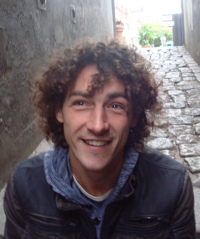
Sean Chester is an Assistant Professor in the Department of Computer Science at the University of Victoria, Canada. He is affiliated with the Faculty of Engineering and Computer Science and specializes in scalable data analytics, with a focus on data management, parallel computing, and algorithm engineering. His research interests include GPU-native algorithms, multicore optimization, spatio-temporal data processing, and graph-based analysis. He actively contributes to open-source projects and course materials on platforms like GitHub, emphasizing open science and education. Recent work highlights include advancements in skyline computation, GPU-accelerated algorithms, and efficient processing of large-scale datasets. His publications span topics such as kNN optimization, social network anonymization, and vectorized k-core decomposition. Sean is involved in teaching courses like CSC 485C/586C on data management on modern hardware and CSC 370 on database systems. No scientific awards or grants are explicitly mentioned in the provided texts. He collaborates with students and researchers through platforms like GitHub, where he maintains repositories related to algorithm engineering and educational materials.
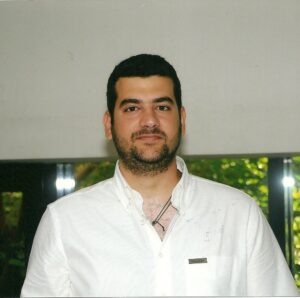
Dhrubajyoti Goswami is an Associate Professor and Graduate Program Director in the Department of Computer Science and Software Engineering at Concordia University, Montreal. He holds a PhD from the University of Waterloo, with prior degrees from McGill University and the Indian Institute of Science. His research focuses on high-performance computing, parallel algorithms, and distributed systems, with recent work emphasizing blockchain sharding and fault tolerance in distributed environments. Dr. Goswami teaches courses such as Operating Systems, Parallel Programming, and Distributed Systems, reflecting his expertise in system software and parallel computing. His publications span conferences like IEEE SBAC-PAD, IEEE ICBC, and IEEE ISPDC, addressing challenges in GPU computing, scalable algorithms, and blockchain optimization. He has secured grants including NSERC Discovery and CFI funding, supporting research in high-performance systems. Dr. Goswami’s advisory work includes supervising over 20 graduate and undergraduate students, with notable contributions in areas like efficient matrix multiplication on GPUs, hierarchical blockchain architectures, and fault-tolerant distributed systems. His professional memberships include IEEE Senior Member status.
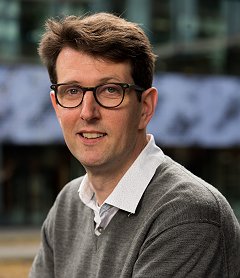
Dr. Daniel Mosse is a Professor in the Department of Computer Science at the University of Pittsburgh. He holds a PhD from the University of Maryland, College Park, and has been a faculty member since 1993. His research focuses on distributed systems, real-time systems, power management, security, and fault tolerance, bridging operating systems and networking research. He has held leadership roles, including Chair of the Department of Computer Science since 2009 and Visiting Professorships in Brazil. His work spans grants totaling millions, addressing energy-efficient computing, secure infrastructure, and embedded systems. Education: PhD (1993), MS (1990), and BS (1985) in Mathematics and Computer Science. Research interests include distributed real-time systems, multicore systems, embedded systems, and wireless networks. Notable awards include the 2007 Provost's Innovation in Education Award and the 2006 Bellet Teaching Award. Key grants include NSF-funded projects on energy-efficient data centers, secure emergency management systems, and power-aware scheduling. He advises numerous students and teaches courses on operating systems and distributed systems. His contributions to real-time systems, fault tolerance, and energy management have been recognized through over 150 publications and international collaborations.
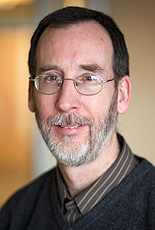
Christoph Kessler is a Professor and Head of the Software and Systems (SAS) division at the Department of Computer and Information Science (IDA), Linköping University, Sweden. He leads the Programming Environment Laboratory’s research group focusing on compiler technology, parallel computing, and heterogeneous systems. His work includes the development of tools like OPTIMIST, PARAMAT, and SkePU, and he has contributed over 100 publications in journals and conferences. He holds a PhD from the University of Saarbrücken and a Habilitation from the University of Trier. Research interests span parallel programming, compiler optimization, and energy-efficient scheduling for heterogeneous systems. He has secured a 30M SEK grant from SSF for the ASTECC project, advancing adaptive software for edge-cloud computing. Notable contributions include frameworks for GPU-based systems and methodologies for optimizing resource allocation on many-core architectures. His team’s work emphasizes practical applications in high-performance computing, including tools for course management (StASy) and energy-aware scheduling algorithms. The SAS division, under his leadership, focuses on software engineering and computer systems research with strong industry collaboration.
Kotronis Christos serves as an Assistant Professor in the Department of Informatics and Telematics at Harokopio University, Athens, with his office located at Omirou 9, Tavros (17778). His academic career is deeply rooted at this institution where he completed all his formal education. His educational qualifications include: Undergraduate Degree in Informatics and Telematics (2014) Postgraduate Diploma in Informatics and Telematics, Major: "Computer and Internet Technologies and Applications" (2016) PhD in Informatics and Telematics, Dissertation: "Model-Centric Design of Systems with Awareness of the Provided Quality of Service Based on the Systems Modeling Language (SysML)" (2021) His research focuses on model-centered systems design with strong emphasis on quality of service awareness, systems simulation, and human-centric requirements analysis. He bridges theoretical model-based engineering with practical applications in cyber-physical systems and Internet of Medical Things (IoMT), particularly addressing human concerns in healthcare monitoring and transportation systems. His methodologies heavily utilize SysML extensions for integrating non-functional requirements like cost and human factors. Analysis of his 15 most recent publications (2018-2025) reveals a cohesive research trajectory centered on model-based systems engineering with three dominant themes: (1) Human integration in cyber-physical systems design through multi-view approaches, (2) Quality of service and cost optimization in SysML frameworks, and (3) Real-world implementations in healthcare (ECG monitoring, fall detection) and transportation (railway passenger comfort). His work consistently demonstrates progression from foundational modeling to edge-computing implementations. Scientific Awards: No scientific awards mentioned in source materials Regarding academic supervision, the source materials do not specify current advisees though his PhD research and publications suggest involvement in graduate mentoring. His departmental role includes teaching undergraduate courses in Informatics and Telematics. While no specific research grants are documented, his publication pattern indicates participation in collaborative projects focused on cyber-physical systems and healthcare technology. The absence of explicit lab/team information suggests his work may be conducted within broader departmental frameworks rather than dedicated laboratories.
Professor Jon Kerridge is a distinguished academic at the School of Computing, Edinburgh Napier University, where he has made significant contributions to parallel programming, software systems, and database applications. With a career spanning several decades, he has published extensively in the field of computer science and has supervised numerous PhD students. BSc, MSc, PhD Fellow of the British Computer Society (FBCS) Chartered IT Professional (CITP) Fellow of the Higher Education Academy (FHEA) Chartered Engineer (CEng) Professor Kerridge's research primarily focuses on parallel programming models, particularly through his work on the Groovy Parallel Patterns Library and Communicating Sequential Processes (CSP). His research spans multiple domains including software engineering, database systems, and interdisciplinary work in neuroscience related to dyslexia. He has also made significant contributions to pedestrian movement modeling and evolutionary algorithms. His publications demonstrate a consistent focus on practical software engineering solutions for parallel and distributed systems. The research trajectory shows progression from foundational work in computer architecture education in the 1980s through database systems in the 1990s-2000s to modern parallel programming frameworks. His interdisciplinary work connecting computer science with visual processing in dyslexia represents an innovative application of computational approaches to neuroscience problems. Fellow of the British Computer Society (FBCS) Chartered IT Professional (CITP) Fellow of the Higher Education Academy (FHEA) Chartered Engineer (CEng) Professor Kerridge has supervised several PhD students to completion, including Kevin Chalmers (Investigating communicating sequential processes for Java to support ubiquitous computing) and Robert Kukla (A software framework for the microscopic modelling of pedestrian movement). His research has been supported by Edinburgh Napier University funding, with applications ranging from healthcare systems to pedestrian flow optimization. He is a key member of the Centre for Algorithms, Visualisation and Evolving Systems at Edinburgh Napier University, where his work continues to influence both theoretical and applied aspects of computing.
Andy D. Pimentel is a Full Professor at the University of Amsterdam, where he chairs the Parallel Computing Systems (PCS) group within the Systems and Networking Lab at the Informatics Institute. His work focuses on the design, programming, and run-time management of multi-core and multi-processor computer systems, with particular attention to performance, power/energy consumption, system dependability, and design productivity. His academic background includes: PhD in Computer Science, 1998, University of Amsterdam MSc in Computer Science, 1993, University of Amsterdam Professor Pimentel's research spans multiple critical areas in modern computing systems. His primary interests include multi-core embedded systems, system-level design and simulation, design space exploration, performance and power analysis, system dependability, hardware/software co-design, run-time resource management, and Edge AI. His work addresses the growing challenges of making computer systems faster, more sustainable, energy efficient, reliable, and secure in an era of increasing computational demands and climate concerns. The PCS group he leads performs research on the modeling, analysis and optimization of extra-functional aspects of computing systems, which play a pivotal role in their work. An analysis of Professor Pimentel's recent publications reveals a strong focus on edge computing, distributed AI, and energy-efficient system design. His work bridges theoretical computer architecture with practical implementation challenges, particularly in the context of resource-constrained environments. Key trends include the adaptation of AI models for edge devices, thermal management in advanced architectures, and optimization of multi-core systems for both performance and energy efficiency. His research increasingly addresses sustainability concerns in computing, reflecting broader industry and academic priorities. His notable scientific achievements include: IEEE CEDA Outstanding Service Recognition Award DATE Fellow Award Professor Pimentel has served in numerous leadership roles in the academic community, including as General Chair of Design Automation and Test in Europe (DATE) 2024, Vice General Chair of IEEE/ACM Embedded Systems Week 2025, and General Chair of IEEE/ACM Embedded Systems Week 2026. He has secured significant research funding for projects related to sustainable computing, edge AI, and multi-core system design. His professional service includes board membership with the ICT Research Platform Nederland (IPN) since 2020 and leadership roles in major conferences such as DATE, Embedded Systems Week, and SAMOS. The Parallel Computing Systems group he chairs is a vibrant research team within the Systems and Networking Lab at the Informatics Institute. The PCS group focuses on the challenges of modern computing systems, particularly addressing the extra-functional aspects like performance, power consumption, and system dependability. Their work is highly relevant to current technological challenges in edge computing, sustainable systems design, and the integration of AI into resource-constrained environments.
David H. Albonesi is a Professor in the Computer Systems Laboratory at Cornell University's School of Electrical and Computer Engineering. His research focuses on power-efficient computer architectures, including reconfigurable systems, accelerator design for deep learning, smart buildings, and silicon nanophotonics interconnects. He has held leadership roles in major conferences like ISCA and MICRO, and serves on editorial boards for IEEE Computer and IEEE Micro. Research interests span adaptive architectures for dynamic power management, sparse matrix/tensor accelerators, and energy-efficient smart building systems. His work bridges hardware-software co-design, emphasizing phase-aware resource allocation and energy minimization. Awards include the IEEE Fellow distinction, NSF CAREER Award, and multiple teaching accolades from Cornell. Over 30 years of industry-academic collaboration has led to innovations in GALS microarchitectures, clustered multi-threaded processors, and thermal-aware scheduling. Key contributions include the CuttleSys reconfigurable multicore framework, MatRaptor sparse matrix accelerator, and foundational work in silicon photonics for on-chip interconnects. Patents cover dynamic core power management and adaptive microprocessor designs.
Antonia Zhai is an Associate Professor in the Department of Computer Science and Engineering at the University of Minnesota. She holds a Ph.D. in Computer Science from Carnegie Mellon University (2005), an M.A.Sc. in Computer Engineering from the University of Toronto (1998), and a B.A.Sc. in Computer Engineering from the University of Toronto (1996). Her office is located at 6-205 Kenneth H. Keller Hall, Minneapolis, MN. Her research focuses on developing novel compiler optimizations and computer architecture features to enhance both performance and non-performance aspects of computing systems. Key interests include: Thread-level speculation for parallel processing Multicore architecture optimization Hardware/compiler co-design for security and reliability Dynamic performance tuning in heterogeneous systems High-speed network packet processing architectures Her publications demonstrate sustained focus on parallel computing, compiler optimizations, and hardware security, with recent work expanding into network function virtualization and cache-side channel attack detection. She leads the High-Performance Computing and Compilers (HPCC) group and organizes the weekly HPCC seminar series focused on architectures and compilers. She has advised 12+ graduate students including 8 PhD graduates now at companies like AMD, NVIDIA, and Oracle. Significant research grants include: NFLambda: NFV Framework (NSF 2021-2025) Dynamic Binary Translation (NSF 2015-2019) In Vivo Software Monitoring (NSF 2009-2014) Embedded Fault Detection (NSF 2009-2014)
Hammam Alsafrjalani is an Associate Professor of Practice in the Department of Electrical & Computer Engineering at the University of Miami. His roles include teaching undergraduate and graduate courses such as Computer Architecture, Embedded Systems, and Microprocessors, and supervising senior design projects. He holds a Ph.D. and M.S. in Electrical and Computer Engineering from the University of Florida (2015 and 2011, respectively), and a B.S. from the New Jersey Institute of Technology (2007). His research focuses on computer architecture, embedded systems, heterogeneous-and-configurable systems, AI for cybersecurity, and runtime optimization. Notable achievements include developing optimization techniques for energy, performance, and temperature in multicore systems, yielding up to 25% energy savings. His work has been published in peer-reviewed journals and conferences. Awards include the Faculty Learning Community Fellowship (2022 and 2019), Most Innovative Faculty Member (2020 and 2019), and the Student-Choice Best Engineering Faculty Member Award (2019). He has contributed to proposals in computer science, applied science, and multidisciplinary projects with psychology and communication schools. Teaching tools include Quartus Prime, Gem5, and Python, with a focus on hands-on projects. His research emphasizes practical applications in consumer electronics and augmented reality, leveraging industry experience from internships at Intel and Microsoft, and prior roles at Dialogic and Vonage.
Javier Verdu Mula is a Professor at the Departament d'Arquitectura de Computadors (Universitat Politècnica de Catalunya - UPC) and a key researcher at the CRAAX - Centre de Recerca d'Arquitectures Avançades de Xarxes . His work focuses on computer architecture, parallel processing, and networking systems. Fields of Research include RISC-V virtualization, multithreaded processor optimization, and performance analysis of stateful networking applications. Scientific Awards include the BDigital Global Congress (2015) and Wayra Barcelona (2012) recognitions. Collaborations span institutions like Barcelona Supercomputing Center and researchers such as Manuel Alejandro Pajuelo, Mateo Valero Cortes, and Mario Nemirovsky. His recent publications address RISC-V hypervisor extensions, deep packet processing in parallel architectures, and statistical thread assignment models. He also holds patents in hardware virtualization and resource control systems.
Rosa Maria Badia Sala is a Research Professor at the Universitat Politècnica de Catalunya (UPC), affiliated with the Departament d'Arquitectura de Computadors and the Barcelona Supercomputing Center (BSC-CNS). She specializes in distributed computing, heterogeneous systems, and task-based programming models. Her work focuses on advancing high-performance computing (HPC), cloud computing, and workflow management for large-scale scientific applications. She holds a Doctorat en Informàtica and has been actively involved in numerous research projects, including contributions to the COMPSs programming framework and the optimization of HPC workflows. Her collaborations span institutions like BSC-CNS and international initiatives such as JLESC. Recent research includes GPU-accelerated computing, quantum optimization algorithms, and digital twins for power networks. Badia's publications span journals like Future Generation Computer Systems and IEEE Transactions on Parallel and Distributed Systems, reflecting her expertise in parallel computing, distributed systems, and real-time data analysis. She has supervised multiple doctoral theses and contributes to research grants focused on HPC and AI integration.
Miguel Monteiro is an Assistant Professor at the Department of Informatics (DI) within the Faculty of Sciences and Technology (FCT) at New University of Lisbon (UNL) since 2006. He is affiliated with the research groups NOVA-LINCS (formerly CITI) and QUASAR . Research Interests: His work focuses on Software Engineering , particularly in Software Modularity , Aspect-Oriented Software Development (AOSD), and Program Reengineering and Evolution . He has extensively studied modularity challenges in MATLAB systems and developed techniques for aspect-oriented refactoring. Notable Projects: Funded by Portuguese Science and Technology Foundation (FCT) and international bodies, his projects include: GasPar (2010-2013): General-purpose AOSD framework for heterogeneous multicore parallel systems. AMADEUS (2007-2010): Aspect-oriented optimizations for MATLAB development. PRIA (2009-2011): International collaboration with University of Texas at Austin on parallel programming. PPC-VM (2004-2007): Portable parallel computing via virtual machines. SOFTAS (2005-2008): Aspect-oriented software development research. Academic Contributions: His research spans aspect-oriented refactoring, code smells, software visualization, and domain-specific languages. He has published in journals like Journal of Computer Languages , Expert Systems , and Scientometrics , and presented at conferences including AOSD, ICEIS, and ITNG.
Alberto José Gonçalves Carvalho Proença serves as Full Professor in the Department of Informatics at the School of Engineering, University of Minho, and holds the position of Senior Researcher with Dr. habil at Centro ALGORITMI. His academic career spans over 45 years, beginning at the University of Porto in 1976 before transitioning to the University of Minho in 1977 where he has remained ever since. His educational foundation includes: Licentiate in Electrical Engineering from Coimbra, Portugal (1976) MSc in Digital Electronics from UMIST, Manchester, UK (1979) PhD from Manchester, UK (1982) Dr. habil (Habilitation) from the University of Minho (1998) Professor Proença's research spans from digital electronics to cutting-edge high-performance computing, with core expertise in computer architecture, parallel computing, and heterogeneous computing systems. His work bridges theoretical computer science with practical applications across diverse domains including particle physics (LHC data analysis), forensic science (DNA library systems), materials science (crystallographic imaging), and cultural heritage preservation. Current research focuses on optimizing computational efficiency across heterogeneous resources for scientific applications, addressing challenges in big data processing, parallel random number generation, and scheduling algorithms for distributed environments. Throughout his career, Professor Proença has successfully supervised numerous MSc dissertations and PhD theses while contributing significantly to institutional computing infrastructure. He chaired the University Computer Centre for 17 years (1985-2002), establishing Portugal's first national parallel computing service. For 11 years (2006-2017), he led the Advanced Computing theme in the University of Texas at Austin-Portugal cooperation program. Since 2005, he has directed the university's SeARCH heterogeneous computing cluster, supporting research across multiple scientific disciplines. His research group has developed several influential frameworks including JaSkel (Java Skeleton-Based Framework for Cluster and Grid Computing), HEP-Frame (for LHC data analysis), Im2Cr (crystallographic imaging tool), and CROSS-Fire (risk management decision support system). These platforms demonstrate his commitment to translating theoretical advances into practical tools that address real-world scientific and societal challenges.
Simon Rommel is an Assistant Professor in the Department of Electrical Engineering at Eindhoven University of Technology (TU/e), specializing in Terahertz Systems and Quantum & Terahertz Systems. He holds a PhD from the Technical University of Denmark (2017) and prior degrees from the University of Stuttgart, Aston University, and Scuola Superiore Sant’Anna. His research focuses on converged mm-wave/THz radio and optical links, 5G/6G systems, quantum key distribution (QKD), and advanced optical fibers. He leads the QKD testbed development under Quantum Delta and QTe initiatives. Key projects include QCINed (National Quantum Communication Infrastructure), HiCONNECTS (Heterogeneous Integration), and ALLEGRO (Secure Networks). Rommel has received awards such as the 2023 EuCNC/6G Summit Best Student Paper and 2021 OECC Best Student Paper. His work spans 155+ publications, with recent articles addressing quantum-resistant TLS, polarization mitigation in optical fibers, and 5G/6G fronthaul architectures. He also contributes to editorial roles in journals like Frontiers in Future Transportation and scientific activities including 5G-MOBIX events.