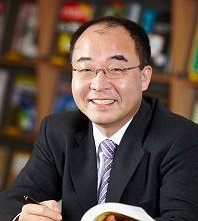
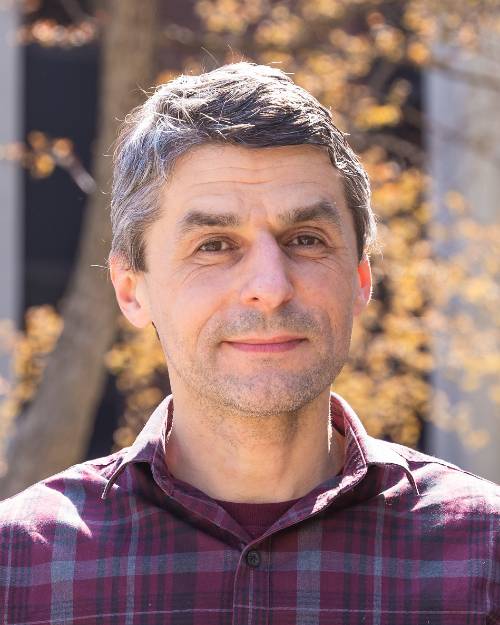
Damien Masson serves as an Associate Professor in the Systems Engineering department at ESIEE Paris, a founding member of Université Paris-Est. He is affiliated with the Gaspard-Monge computer science laboratory (LIGM) in the LRT team. Dr. Masson earned his PhD in 2008 with a thesis on integrating non-periodic events in real-time systems. His research focuses on real-time scheduling methodologies. His work explores energy-efficient task allocation and mapping strategies for heterogeneous multicore platforms, particularly in mixed criticality applications. Key areas include optimizing resource utilization while meeting real-time constraints.
Sohan Lal is a postdoctoral researcher at the Technical University of Berlin (TU Berlin), focusing on advanced modeling and runtime support for large-scale HPC clusters under a DFG-funded project. His PhD in Computer Engineering from TU Berlin (2019) explored power modeling and architectural techniques for energy-efficient GPUs. He contributed to EU-funded LPGPU projects on low-power GPU computing, leading tasks and collaborating across consortium members. Previously, he lectured at Shri Mata Vaishno Devi University and worked as an IT specialist in the Government of India. Education: PhD in Computer Engineering, TU Berlin (2019) Masters in Computer Science, IIT Delhi (2011) Bachelor in Computer Science and Engineering, GCET Jammu (2003) His research interests span GPU architecture, power/performance modeling, memory systems, and applied machine learning. Notable contributions include techniques like Selective Lossy Compression (SLC) for GPUs and entropy encoding-based memory compression (E²MC). He received HiPEAC travel/grants and was an ACM SRC semifinalist (2018). Grants & Collaborations: HiPEAC Collaboration Grant for joint work with TU/e DFG-funded postdoctoral research He actively teaches advanced computer architectures and multicore systems at TU Berlin, reflecting his passion for education developed during his early teaching career.
Dr. Ali Hurson is a Professor in the Department of Electrical and Computer Engineering at Missouri University of Science and Technology. His research spans high-performance computing, pervasive computing, mobile databases, personalized education, intelligent transportation systems, and cyber-physical systems. PhD, Computer Science, University of Central Florida MS, Computer Science, University of Iowa BS, Physics, University of Tehran Dr. Hurson’s research focuses on mobile data access systems, cybersecurity for critical infrastructure, and educational technologies. His work addresses challenges in data dissemination, power management, and fault propagation in heterogeneous systems. His recent publications emphasize agent-based modeling for cyber attacks, predictive analytics in education, and fault tolerance in cyber-physical systems. Trends include integration of machine learning, security frameworks, and sustainable computing. Editor-in-Chief, Advances in Computers Editor-in-Chief, Journal of Sustainable Computing and Communication Dr. Hurson has secured over $3 million in grants from NSF, DOE, DOT, and industry partners. He has held academic roles at Penn State University and the University of Oklahoma, transitioning to Missouri S&T in 2007.
Jiong He is a researcher affiliated with Nanyang Technological University, Singapore, focusing on optimizing database systems and data processing through heterogeneous computing architectures. PhD thesis (2016) on high-performance databases using CPU-GPU coupling Key research areas: GPU/FPGA acceleration, real-time analytics, stream processing His work bridges hardware-software co-design with 15+ peer-reviewed publications in top venues like SIGMOD, VLDB, FPGA, and ICDCS since 2013. 2022: Micro-architecture analysis for OLAP on persistent memory 2020: Heterogeneity-aware scheduling for cloud analytics 2019: Frameworks for stream processing and DNN mapping to FPGAs
Steven Bell is an Associate Teaching Professor in the Department of Electrical and Computer Engineering at Tufts University's School of Engineering. He has held roles including Assistant Teaching Professor (2019–2024) and Lecturer (2018–2019). His research focuses on engineering education, embedded systems, camera systems, and computational photography. He actively develops educational tools like VHDLweb , an online platform for learning VHDL, and advocates for affordable lab solutions using low-cost FPGAs. Bell has received the Teaching with Technology Awards Honorable Mention (2022) and the Tufts Teaching with Technology Award (2019) for his contributions to pedagogy. He teaches courses such as Embedded Systems, Intro to Computing in Engineering, and Special Topics in Advanced Embedded Systems. His professional activities include roles on the SoE Academic Standing Committee and First-Year Experience planning subcommittee. He has also secured grants, including the Affordable Course Materials grant (2022–2023). Bell's GitHub repositories showcase projects like VHDLweb , UPduino , and FPGA tools for educational and research use. His work emphasizes bridging theoretical concepts with hands-on, accessible engineering practices.
Manuel Alejandro Pajuelo González is a researcher at the Universitat Politècnica de Catalunya (UPC), affiliated with the Department of Computer Architecture and the School of Computer Science. His research focuses on Performance measurement Operating systems Virtualization Thread assignment in multithreaded processors Recent publications show strong trends in RISC-V architectures, cybersecurity, and performance optimization. Key themes include Hardware virtualization Intrusion detection frameworks Statistical thread assignment approaches Spin-lock overhead analysis Scientific awards include BDigital Global Congress 15ª Edició Computación de Altas Prestaciones VI HiPEAC Paper Award He participated in multiple competitive R&D projects, including the DRAC project focused on RISC-V accelerators for next-generation computing.
Dai Liu is a researcher at the Chair of Computer Architecture and Parallel Systems at the Technical University of Munich . His work focuses on Dataset Distillation , Deep Learning on Heterogeneous Systems , Network Compression , and Hardware Acceleration for AI , with a particular emphasis on AI optimization for edge devices and specialized hardware like Cerebras. Education : Master of Informatics in Computational Science and Engineering (Technical University of Munich), Bachelor of Engineering in Electrical and Electronic Engineering (Tel Aviv University) His teaching activities include contributions to courses on Parallel Programming Systems , Advanced Computer Architecture , and Efficient Programming of Multicore Processors and Supercomputers .
Dr. Andrew Butterfield is a Professor in the School of Computer Science and Statistics at Trinity College Dublin. He serves as Head of the Foundations and Methods Group and is actively involved with Lero: the Irish Software Research Centre. His academic work spans formal methods, functional programming, and theoretical computer science with applications in safety-critical systems. Butterfield's research primarily focuses on the Unifying Theories of Programming (UTP) paradigm, with specializations in shared-variable concurrency, formal verification of medical device software, and spacecraft operating systems. His work explores composition and local denotational semantics for concurrency, UTP theories for rely/guarantee reasoning, and implementations of proof assistance tools written in Haskell. Current projects include RTEMS-SMP (formal verification of multicore real-time scheduling funded by ESA) and FMHIDA (formal techniques for medical device software development funded by SFI through Lero). His recent publications reveal a strong emphasis on applying formal methods to real-world problems, with particular attention to concurrency models, medical systems verification, and tool development for UTP. The research shows consistent progression from theoretical foundations toward practical applications in safety-critical domains. Butterfield has developed several Haskell-based tools including the Theorem Proving Assistant for UTP, UTP Calculator, and Equational Reasoning Support. He has served on numerous program committees including TASE 2019, IWFM, FMICS, and FM, and is on the Editorial Board of Formal Aspects of Computing. He teaches courses including CS3016: Introduction to Functional Programming and CS2016/3D4 Concurrency and Operating Systems. Previously, he has taught Formal Methods, Functional Programming, Concurrency Theory, and various other computer science subjects. He also serves as School Disability Liaison Officer and Course Director for Creative and Cultural Entrepreneurship. Butterfield leads the Foundations & Methods Group at Trinity and has been involved in significant research projects including Formalising Interfaces between Software and Hardware (FISH) funded by SFI, Unifying Synchronous Systems, and ESA-funded activities on OS kernel formal verification. His work with the Irish School of VDM has produced LaTeX macros and Haskell implementations for formal method applications.
Ioannis Venetis is an Assistant Professor at the University of Piraeus, School of Information and Communication Technologies, Department of Informatics, specializing in Operating Systems and Parallel Computing. He earned his PhD from the Department of Computer Engineering and Informatics at the University of Patras. His research spans programming models for parallel systems, scheduling optimization, and applications in computational neuroscience and seismology. Research Interests Operating Systems Parallel Computing Scheduling Algorithms High-Performance Computing Computational Neuroscience Seismology Projects Participation in European and national research programs Development of Gisola (GPU-accelerated seismic inversion tool) His teaching portfolio includes courses like Operating Systems, Parallel Processing, and Symbolic Programming. Articles highlight expertise in GPU acceleration, tridiagonal solvers, sensor networks, and many-core architectures. Notable contributions include work on Chimera states in neuronal dynamics and hierarchical workload scheduling frameworks.
Swarnendu Biswas is an Assistant Professor in the Department of Computer Science and Engineering at the Indian Institute of Technology Kanpur. He teaches courses including Programming for Performance (CS 610), Analysis of Concurrent Programs (CS 636), and Compiler Design (CS 335), demonstrating his expertise across multiple areas of computer systems. His research interests center on Programming Languages, Compilers, Runtime Systems, and Parallel Software Systems. He leads the PROSPAR (Programming Languages and PARallel Systems) research group, which focuses on developing techniques to build efficient and correct parallel software through program analysis, compiler optimizations, and runtime systems. His recent publications reveal a strong trend in addressing fundamental challenges in parallel computing, with work spanning cache coherence, false sharing detection, data race analysis for GPUs, verification of neural networks, and thermal-aware management of heterogeneous systems. His research bridges theory and practice with significant contributions to both hardware and software aspects of parallel systems. His scientific achievements have been recognized through multiple prestigious awards: Google India Research Award 2021 Google Explore CSR 2022 Research Grant from Intel Corporation SERB Start-up Research Grant 2019 Google Cloud Platform Research Credits (2019, 2020) IITK Initiation Grant 2019 As an advisor, he mentors several PhD and MTech students working on cutting-edge research in parallel systems. His PROSPAR group has secured significant funding from industry and government sources, supporting innovative research in programming languages and parallel systems. The group actively collaborates with industry partners including Google and Intel, addressing real-world challenges in parallel computing. He leads the PROSPAR research group at IIT Kanpur, which brings together faculty, PhD students, and MTech researchers to tackle challenging problems at the intersection of programming languages, compilers, and parallel systems. The group maintains strong industry connections and focuses on practical solutions that can be deployed in real systems.
Jaejin Lee is a Professor in the Department of Computer Science and Engineering at Seoul National University (SNU) and serves as the Director of the Center for Manycore Programming and Multicore Computing Research Laboratory. He holds a BS in Physics from SNU (1991), an MS in Computer Science from Stanford University (1995), and a PhD in Computer Science from the University of Illinois at Urbana-Champaign (1999), where his research was supported by IBM and Korea Foundation for Advanced Studies fellowships. Research Focus: His work centers on heterogeneous computing systems with expertise in GPU/FPGA programming, deep learning compiler architectures, PyTorch/TensorFlow optimization, and quantum computing simulation environments. Key areas include parallelization techniques and performance enhancement for machine learning frameworks. Publications: His research output demonstrates consistent focus on GPU efficiency, compiler-directed optimizations, and distributed computing, with recent emphasis on deep learning acceleration and error resilience in heterogeneous architectures. Awards & Honors: IEEE Fellow IBM Graduate Fellowship Korea Foundation for Advanced Studies Graduate Fellowship Leadership: Directs the Multicore Computing Research Laboratory and Center for Manycore Programming, focusing on next-generation parallel computing architectures.
Cristinel Ababei serves as an Associate Professor in the Department of Electrical and Computer Engineering at Marquette University's Opus College of Engineering. He directs the Marquette Embedded Systems (MESS) Laboratory and holds a Ph.D. in Electrical and Computer Engineering from the University of Minnesota (2004), with prior degrees from Technical University of Iasi in Romania. Ph.D., 2004, Electrical and Computer Engineering, University of Minnesota M.S., 1998, Signal Processing, Technical University of Iasi B.S., 1996, Microelectronics, Technical University of Iasi Dr. Ababei's research spans network-on-chip architectures, embedded systems design, FPGA implementations, and energy optimization systems. His work particularly focuses on uncertainty modeling in embedded systems, multicore processor optimization, and applications in underwater drones, LiDAR systems, and battery management. The MESS Lab under his direction conducts research in embedded systems (including tinyML and IoT applications), FPGAs as accelerators for computer vision, and network-on-chip architectures with emphasis on carbon emissions and uncertainty modeling. His recent publications demonstrate a clear trajectory toward integrating machine learning techniques with traditional hardware design, particularly in energy management systems, battery optimization, and environmental monitoring applications. This includes work on HVAC optimization using reinforcement learning, carbon-aware datacenter scheduling, and TinyML applications for battery health monitoring. William and Nancy Stemper Award for underwater drone prototype IEEE Senior Member (2015) Multiple NSF research grants as PI and Co-PI Teaching innovation grants for entrepreneurship-focused courses Dr. Ababei actively mentors students through the NSF REU Site program 'Hardware, Embedded Software, and Analytics for Environment Quality Monitoring' and has graduated multiple Ph.D. and M.S. students. He has secured significant research funding including NSF grants for uncertainty modeling in heterogeneous embedded systems, cross-layer optimization of energy and cost in multiple buildings, and REU site funding for environmental monitoring. He also founded the 'Men as Advocates and Allies Group' at Marquette as part of the Advance Program. His laboratory work includes the development of underwater drones for water quality monitoring, SmartBuilds energy simulation framework, and various embedded systems for environmental sensing applications. He has been instrumental in organizing WE-GIRLS Summer Camps to encourage girls in engineering from grades 6-8.
Matthew Fluet is an Associate Professor and Graduate Program Director in the Department of Computer Science at Rochester Institute of Technology's Golisano College of Computing and Information Sciences. He received his PhD in Computer Science from Cornell University and his BS in Mathematics from Harvey Mudd College. Prior to joining RIT, he was a research assistant professor at the Toyota Technological Institute at Chicago. Dr. Fluet's research focuses on programming languages, with particular emphasis on: Functional programming Compiler construction Program analysis Type systems Parallelism and concurrency His research has resulted in several significant projects including Manticore (a heterogeneous-parallel functional programming language), MaPLe/MPL (a functional language for provably efficient and safe multicore parallelism), and contributions to MLton (a whole-program optimizing Standard ML compiler). His work is supported by multiple National Science Foundation grants. Dr. Fluet has published extensively in top programming languages conferences including ICFP, POPL, PLDI, and PPoPP. His recent work focuses on automatic parallelism management, type-and control-flow analysis, and memory management for parallel systems, demonstrating a consistent research trajectory in making parallel programming safer and more accessible through language design. His notable research grants include: National Science Foundation (CISE Research Infrastructure): $224,329 (2014-2017) National Science Foundation (Software and Hardware Foundations): $236,744 (2014-2018) National Science Foundation: $412,261 (2011-2014) National Science Foundation: $91,867 (2008-2012) Dr. Fluet actively mentors graduate students, currently advising several MS project and thesis students. He teaches courses including Programming Skills (with focus on Rust), Compiler Construction, and Programming Language Concepts. He also serves in leadership roles including as Graduate Program Director for the Computer Science MS program and participates in departmental governance through the CS Curriculum Committee and GCCIS Curriculum Committee. He is an active member of the programming languages community, having served on program committees for major conferences and as Information Director for ACM SIGPLAN (2015-2018), demonstrating his commitment to advancing the field through research, education, and community service.