Per Gunnar Kjeldsberg is a Professor at the Department of Electronic Systems, Norwegian University of Science and Technology (NTNU), and currently serves as acting head of the institute. His research focuses on embedded heterogeneous multi-processor systems , particularly in multimedia and digital signal processing applications . He has led and participated in numerous national and international projects, including EU Horizon 2020 initiatives like READEX (as work package leader) and Tulipp (as principal researcher), and supervises the MSCA-IF project Palmera . Kjeldsberg is a Senior Member of IEEE and part of the European Network of Excellence HiPEAC . Education : Sivilingeniør (MSc) in Electrical Engineering (1992), PhD (2001) from Norwegian Institute of Technology (NTH)/NTNU His work spans energy-efficient computing , radiation-hardened memory design for space applications, and dynamic hardware management . Publications include co-authoring three books and over 150 peer-reviewed articles in journals and conferences. He leads the Circuit and Radio Systems group and drives a strategic NTNU initiative on Energy Efficient Computing Systems . Kjeldsberg has held visiting researcher roles at imec (Belgium), University of California, Irvine, imec Netherlands (Holst Centre), and University of New South Wales (Australia). Scientific Awards : Senior Member of IEEE Mikroelektronikkprisen (2006–2015)
Per Gunnar Kjeldsberg is a Professor and acting head of the Department of Electronic Systems at NTNU. He holds a PhD (Dr.ing) from NTNU (2001) and an MSc (Siv.ing) from NTH (1992). His research focuses on energy-efficient embedded systems, heterogeneous multi-processor architectures, and IoT applications. He leads the Circuit and Radio Systems group and the Energy Efficient Computing Systems (EECS) initiative at NTNU. Kjeldsberg has been principal researcher in EU projects like READEX (FET-HPC) and TULIPP (LEIT), and currently supervises the MSCA-IF project Palmera. Education: Dr.ing. (PhD), NTNU, 2001 Siv.ing. (MSc), NTH, 1992 Research Interests: Embedded systems design, low-power cache optimization, multi-media signal processing, and scenario-driven design methodologies. Collaborations include imec (Leuven), UC Irvine, and UNSW Sydney. Teaching: Master courses: TFE4141, TFE4208, TFE02 PhD course: FE8109 Key Projects: PALMERA (EU MSCA-IF): Low-power cache design READEX: Runtime optimization for exascale computing TULIPP: Ubiquitous image processing platforms HiPEAC: European HPC/Embedded Architecture Network Professional Activities: Senior Member of IEEE, Board Member roles, frequent journal/conference reviewer, and visiting researcher at imec (Belgium), UC Irvine, and UNSW Sydney.
Alexander Wold is an Associate Professor at the University of Oslo, affiliated with the Research Group for Robotics and Intelligent Systems within the Faculty of Mathematics and Natural Sciences. His work focuses on reconfigurable computing, embedded systems, and robotics, with notable contributions to FPGA design, real-time systems, and educational technology. He holds a position at the Institute of Informatics (IFI) and can be contacted at alexawo@ifi.uio.no . Research interests include optimizing hardware-software co-design, thermal management in 3D-IC systems, and developing open-source tools like EasyPR for pattern recognition. His publications span topics such as remote cloud labs for reconfigurable logic education, network traffic management in industrial Ethernet, and constraint programming for module placement in FPGAs. Dr. Wold’s articles reflect a strong emphasis on practical applications of robotics and intelligent systems, with a focus on safety-critical industrial systems and autonomic computing. He has contributed to multi-core system design, thermal-aware FPGA architectures, and self-aware systems.
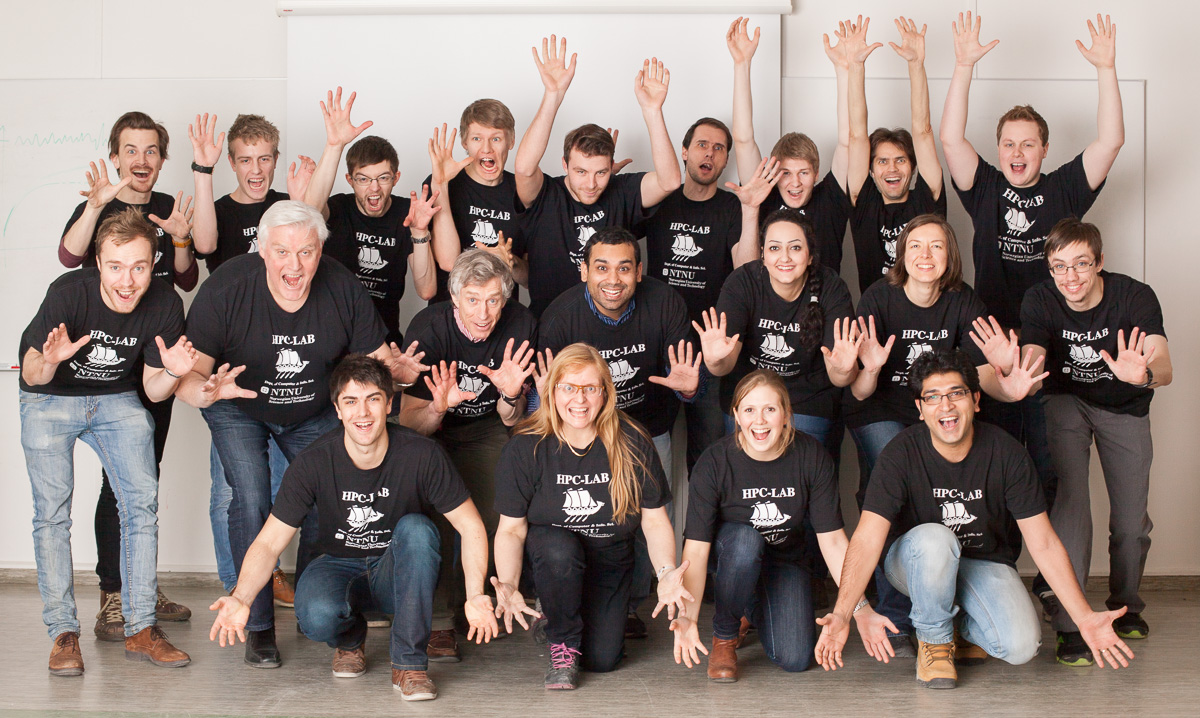
Prof. Anne C. Elster is a Professor of Computer Science at NTNU's Department of Computer & Information Science (IDI), leading the HPC-Lab. She specializes in High-Performance Computing (HPC), GPU acceleration, and heterogeneous systems. Her work spans HPC applications in medical imaging, seismic processing, and oil & gas simulations, with collaborations at CERN, NVIDIA, and Schlumberger. Elster holds a PhD in Electrical Engineering from Cornell University (1994) and is an IEEE Senior Member since 2000. She has supervised over 70 master students and numerous PhD candidates, emphasizing GPU computing. Her teaching includes courses like Parallel Computing and Compilers , with a focus on programming and problem-based learning. She leads EU projects like CLOUDLIGHTNING (2015–2018) and has organized major conferences (e.g., ISC, SC, PARA). Her HPC-Lab is a CUDA Research and Teaching Center, and she advocates for HPC infrastructure investments in Norway through policy engagement.
Xing Cai is a Professor at the Department of Informatics, University of Oslo, specializing in Scientific Computing and Machine Learning. His academic career spans several decades with a consistent focus on high-performance computing and its applications to complex scientific problems. He maintains an active research profile with numerous publications in top-tier journals and conferences. Professor Cai's research interests encompass parallel programming and high-performance computing, performance modeling and optimization, automated code generation, heterogeneous computing, and numerical methods for solving partial differential equations. His work extends to specialized applications in computational cardiology, computational geoscience, and biomedical computing. His research bridges theoretical computer science with practical applications in medicine and earth sciences, demonstrating exceptional interdisciplinary reach. An analysis of his recent publications (2019-2024) reveals a strong trend toward leveraging novel hardware architectures (GPUs, AI processors, specialized accelerators) for scientific computing, with particular emphasis on cardiac modeling applications. His work shows increasing sophistication in hardware-aware algorithm design, with publications spanning from fundamental performance modeling to domain-specific applications. The interdisciplinary nature of his work is evident in the diverse range of journals and conferences where he publishes, from computer science venues to specialized medical and geoscience publications. Professor Cai leads or participates in several significant research projects including the EuroHPC Centre of Excellence: Numerical Modeling of Cardiac Electrophysiology at the Cellular Scale (MICROCARD-2), High resolution simulation of cardiac electrophysiology on realistic whole-heart geometries, Maelstrom Associate Team, ODISSEE, Simula-Berkeley Education and Research collaboration (SIMBER), and aCG eX3: Experimental Infrastructure for Exploration of Exascale Computing. These projects reflect his leadership in both computational methodology development and domain-specific applications. His research group maintains strong collaborations with medical researchers, particularly in cardiac electrophysiology, and with geoscientists working on reservoir simulation. The publications list demonstrates consistent mentorship of junior researchers, with frequent co-authorship patterns suggesting an active supervision of PhD and postdoctoral researchers. His work on the EMI model for cardiac tissue represents a significant contribution to computational cardiology with potential clinical applications. The laboratory environment surrounding Professor Cai's work appears to be well-equipped for high-performance computing research, with access to advanced hardware platforms including GPU clusters, AI processors, and specialized accelerators. His publications on the use of Graphcore IPUs, Xeon Phi processors, and NVIDIA architectures indicate a well-resourced research environment capable of experimenting with cutting-edge hardware.
Professor Lasse Natvig is a faculty member at the Norwegian University of Science and Technology (NTNU) in the Faculty of Information Technology and Electrical Engineering , specifically the Department of Computer Science . His research focuses on computer architecture , parallel processing , multi-core programming , and energy-efficient computing . His work includes studying vectorization techniques , cache management , power emulation models , and task scheduling policies to improve performance and energy efficiency in modern processors. He has published extensively in journals like Expert Systems With Applications , The Journal of Supercomputing , and Lecture Notes in Computer Science , with recent 2024 work on micromobility simulation tools. Lasse Natvig's research spans computer architecture , green computing , parallel algorithms , and energy measurement through publications addressing vectorization , cache optimization , and heterogeneous processing . His articles reveal a consistent focus on performance-energy tradeoffs , hardware-software co-design , and simulation tools for computational challenges. Email: lasse.natvig@ntnu.no