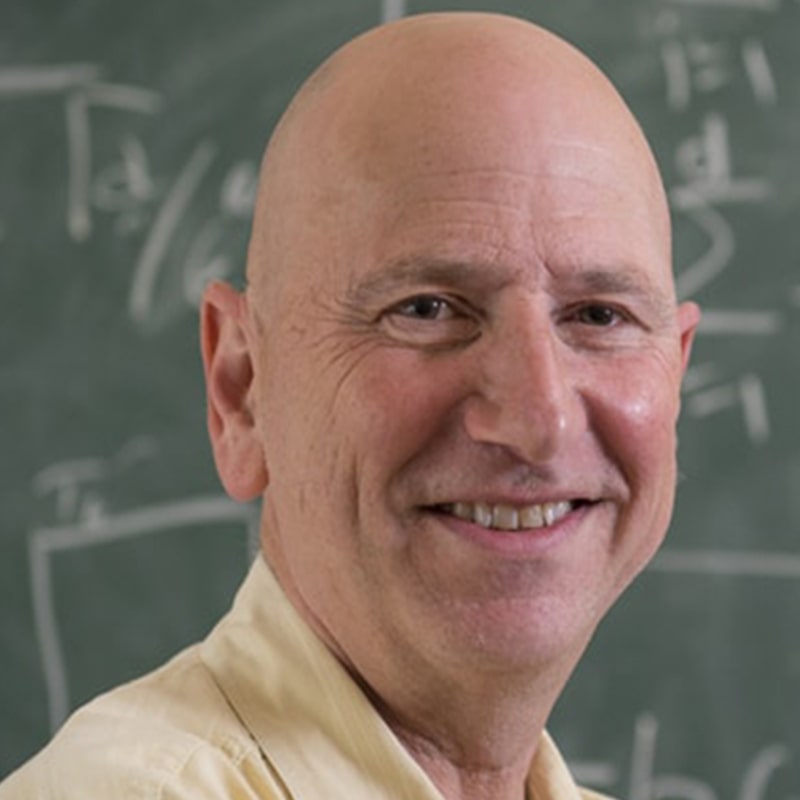
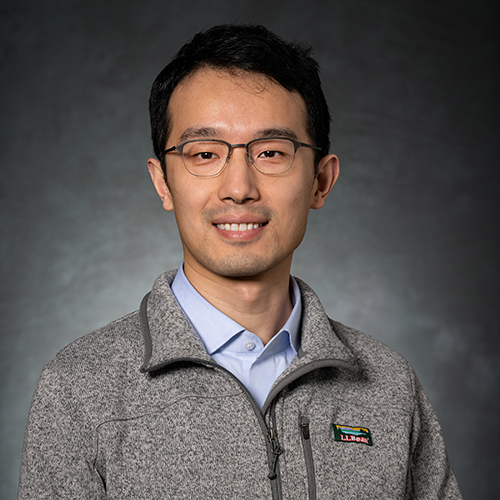
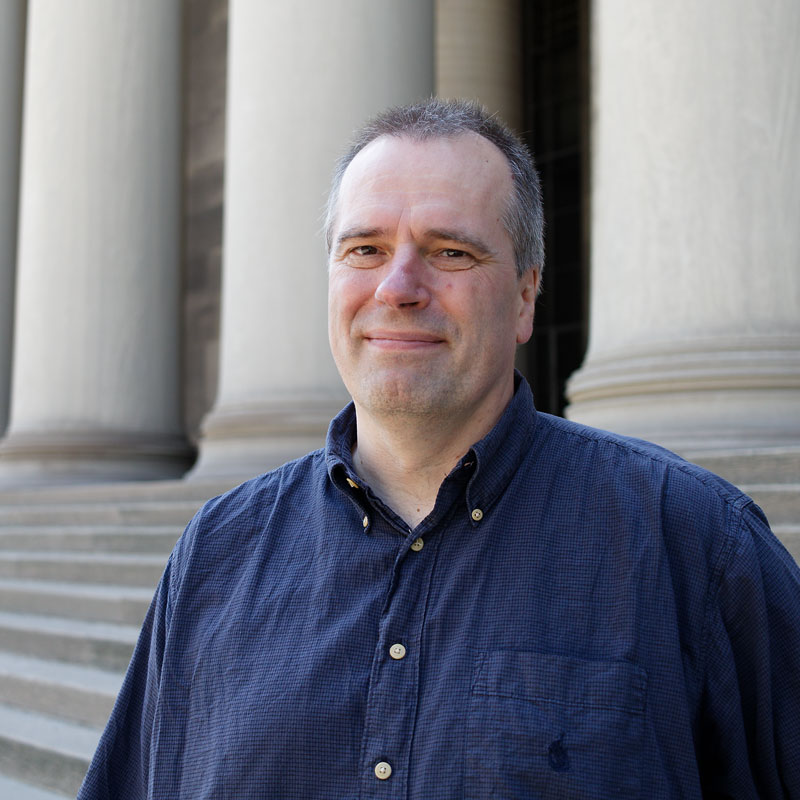
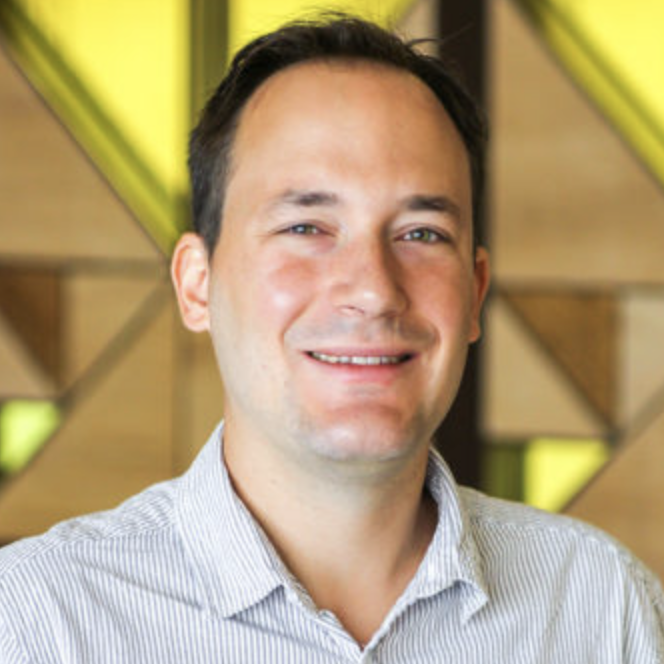
Larry Wasserman is a UPMC University Professor at Carnegie Mellon University, jointly appointed in the Department of Statistics and Data Science and the Machine Learning Department. He received his Ph.D. from the University of Toronto in 1988 and is recognized as one of the leading statisticians of his generation. His research spans theoretical and applied statistics, with core interests in: Foundational inference : Nonparametric methods, asymptotic theory, causal frameworks Modern applications : Machine learning, high-dimensional statistics, astrostatistics Interdisciplinary domains : Bioinformatics, genomics, physical sciences via the STAMPS group His recent publications demonstrate strong emphasis on causal methodology, optimal transport, and robust inference, with applications ranging from particle physics to genomic analysis. Articles frequently develop novel nonparametric techniques with minimax optimality guarantees. Award highlights include: COPSS Presidents' Award (1999) - Top honor for statisticians under 40 CRM-SSC Prize (2002) - Landmark contributions to statistics Fellowships: American Statistical Association, Institute of Mathematical Statistics, AAAS He leads the Statistical Machine Learning Theory Group and founded STAMPS (Statistical Methods for Physical Sciences). His textbooks All of Statistics and All of Nonparametric Statistics are widely used in graduate programs globally.
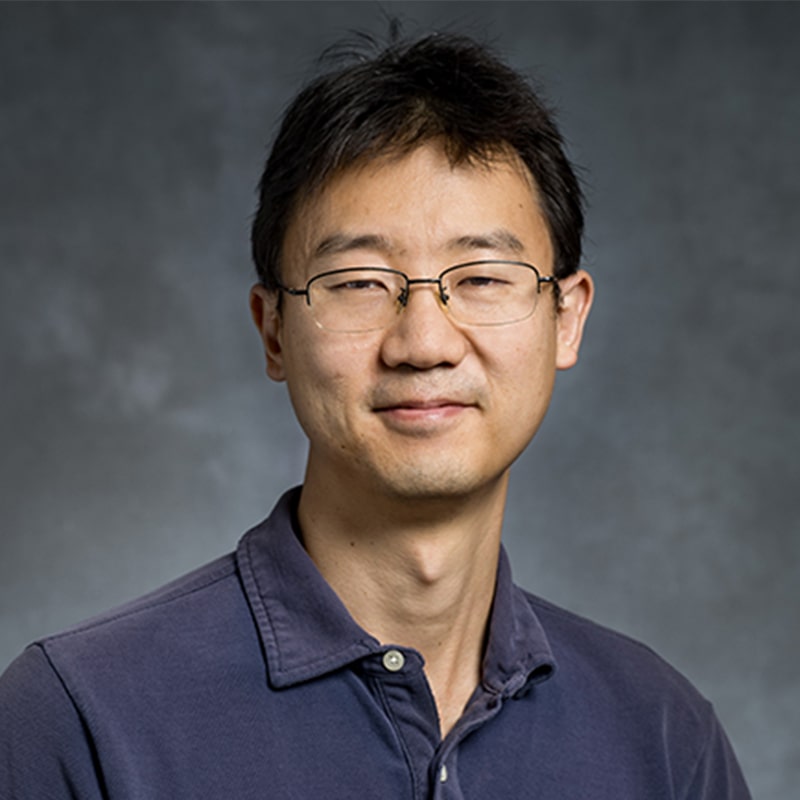
David Choi is an Associate Professor at the Heinz College, part of Carnegie Mellon University's Dietrich College of Humanities and Social Sciences, with a courtesy appointment in the Department of Statistics. His expertise lies in statistics and machine learning applied to network data, including community detection and causal inference in social networks. He holds a PhD in Electrical Engineering from Stanford University (2004) and has held roles at MIT Lincoln Laboratory, Harvard University, and UC Berkeley. Research focuses on network models involving latent variables, exploratory data analysis, and interference effects in network experiments. His work bridges statistical methodology with practical applications in public policy and social sciences. Recent studies include analyzing Medicaid expansion impacts, single-cell network construction, and Alzheimer's disease microglia regulation. Prominent publications address network clustering, dynamic network analysis, and causal inference in experimental settings. Technical reports explore structured blockmodels and exposure mappings in experiments. Contact: Hamburg Hall 2118B, davidch@andrew.cmu.edu.
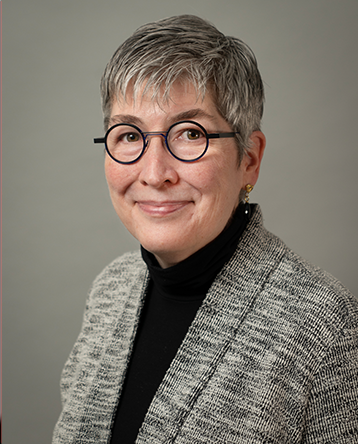
Ying Jin is an Assistant Professor in the Department of Statistics and Data Science at the Wharton School, University of Pennsylvania. She received her PhD in Statistics from Stanford University in 2024, advised by Emmanuel Candès and Dominik Rothenhäusler, and holds a B.S. in Mathematics and B.A. in Economics from Tsinghua University. Current faculty at UPenn Wharton Former postdoctoral fellow at Harvard Data Science Initiative Her research focuses on Uncertainty Quantification and Generalizability in AI models, particularly through conformal prediction , causal inference , and multiple testing . Recent work explores distribution shifts in large-scale replication studies and methods for trustworthy AI in drug discovery and medical applications. Key article trends show expertise in: Conformal prediction methods Causal inference under distribution shifts LLM-driven scientific discovery Replicability analysis AI uncertainty quantification High-stakes AI validation Scientific awards include: 2025 IMS Lawrence D. Brown PhD Student Award 2024 Jack Youden Prize for best expository paper in Technometrics She organizes the Online Causal Inference Seminar and contributes to open science through the awesome-replicability-data GitHub repository containing curated replication datasets.
Katia Sycara is a Research Professor at Carnegie Mellon University's Robotics Institute, part of the School of Computer Science. She also holds the Sixth Century Chair (part-time) in Computing Science at the University of Aberdeen, UK. Her research focuses on multi-agent systems, human-robot interaction, game theory, and adversarial reasoning. She leads the Advanced Agent-Robotics Technology Lab and has developed frameworks like the RETSINA multiagent infrastructure. Education: B.S. in Applied Mathematics (Brown University), M.S. Electrical Engineering (University of Wisconsin), Ph.D. Computer Science (Georgia Tech), Honorary Doctorate (University of the Aegean, 2004). Research interests include semantic web services, agent interoperability, crisis response systems, and negotiation support. She has pioneered work on the DAML-S language for semantic web services and contributed to the OASIS UDDI standard. Notable awards include the 2002 ACM SIGART Agents Research Award and AAAI Fellowship. She has led multimillion-dollar projects funded by DARPA, NASA, AFOSR, and ONR, focusing on applications like autonomous robotics, urban search and rescue, and enterprise integration. Awards: ACM SIGART Autonomous Agents Research Award (2002) AAAI Fellow (2002) IEEE Fellow (2013) Outstanding Alumnus (University of Wisconsin, 2005) Grants and Projects: Command and Control of Multi-Robot Teams (ONR) Games on Graphs (MURI/ONR) Urban Search and Rescue (NASA) Labs/Teams: Director of Advanced Agent-Robotics Technology Lab and contributor to the Semantic Web Science Association.
Elizabeth Holm is Professor and Department Chair of Materials Science and Engineering at the University of Michigan. Her research employs computational methods to study microstructural evolution, with expertise spanning atomic-scale molecular dynamics to continuum-scale modeling. Education includes a PhD in Materials Science and Scientific Computing from University of Michigan. Research focuses on computational materials science with emphasis on grain boundary dynamics, machine learning applications in materials, and additive manufacturing characterization. Recent publications develop AI methods for microstructure prediction, grain growth modeling, and automated analysis of material images. Work integrates machine vision with physics-based models to understand material behavior across scales. National Academy of Engineering Member (2025) ASEE Mike Ashby Outstanding Materials Educator Award (2022) AIME Honorary Member (2022) ASM Edward DeMille Campbell Memorial Lecturer (2021) The Minerals, Metals & Materials Society Fellow (2019) Professor Holm leads research on computational design of hierarchical materials and has held leadership positions including President of The Minerals, Metals & Materials Society (2013).
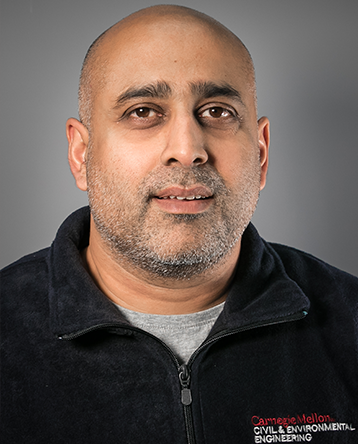
Kaushik Dayal is a Professor in the Department of Civil and Environmental Engineering at Carnegie Mellon University's College of Engineering. He leads the Multiscale Mechanics Research Group and is affiliated with several interdisciplinary centers including the Center for Nonlinear Analysis, the Center for the Mechanics and Engineering of Cellular Systems, the NextManufacturing Center, and the Wilton E. Scott Institute for Energy Innovation. His research bridges theoretical and computational mechanics with applications in materials science, energy, and environmental systems. Ph.D., Mechanical Engineering, California Institute of Technology (2007) M.S., Aeronautics, California Institute of Technology (2001) B.Tech., Naval Architecture, Indian Institute of Technology Madras (2000) His research focuses on theoretical and computational multiscale methods , particularly in modeling the behavior of materials across atomic to continuum scales. Key areas include non-equilibrium response , electromagnetic effects , phase-field modeling of fracture , poroelasticity , soft active materials , and data-driven inverse design . He investigates phenomena such as microstructure evolution, dislocation dynamics, surface growth, and material behavior under extreme conditions. His work integrates mechanics with chemistry, robotics, and climate resilience, often leveraging machine learning and Bayesian inference. His recent publications reveal a strong trend in computational mechanics of heterogeneous and functional materials , with emphasis on phase-field models, multiscale homogenization, and instability exploitation in soft electromechanical systems. Many studies involve collaboration with national labs and cross-departmental teams, reflecting a highly interdisciplinary approach. McGaw Graduate Fellowship in Mechanical Engineering Army Research Laboratory Journeyman Fellowship Adamson Fellowship Bushnell Doctoral Fellowship Mao Yisheng Outstanding Dissertation Award MIT Postdoctoral Fellowship for Engineering Excellence Center for Machine Learning and Health Fellowship Dowd Doctoral Fellowship Steinbrenner Doctoral Fellowship Dunlap Awardee Dayal has advised numerous PhD students, many of whom have gone on to postdoctoral positions at institutions such as Caltech, MIT, Johns Hopkins, and Los Alamos National Laboratory. His research is supported by major grants from the Department of Defense (MURI program), Air Force Research Laboratory, and other federal agencies. He actively promotes education through teaching assistant awards and participation in Rising Stars workshops. He leads the Multiscale Mechanics Research Group , a vibrant team engaged in cutting-edge research on material modeling, soft robotics, energy materials, and environmental mechanics. The group emphasizes open scientific exchange, interdisciplinary collaboration, and innovation in computational methods.
Peter Zhang is an Assistant Professor at Carnegie Mellon University's Heinz College of Information Systems and Public Policy, with a courtesy appointment in Civil and Environmental Engineering. He holds a PhD in Engineering Systems from MIT (2019), an MASc in Mechanical and Industrial Engineering from the University of Toronto (2013), and a BASc in Engineering Science from the same university (2011). His research focuses on optimization theory, applied to supply chains, transportation systems, health, and socio-technical systems. He emphasizes robust optimization, dynamic and bilevel problems, and their applications in policy design and high-stakes decision-making. Education PhD in Engineering Systems, MIT (2019) MASc in Mechanical and Industrial Engineering, University of Toronto (2013) BASc in Engineering Science, University of Toronto (2011) Research Interests Robust optimization and its applications Transportation safety and last-mile delivery systems Supply chain resilience and policy design Machine learning integration with optimization Awards & Recognition INFORMS Koopman Prize (2020) First Place, INFORMS Junior Faculty Forum (2022) Ford Engineering Excellence Award (2015) INFORMS Daniel H. Wagner Prize (2014) Advising & Mentorship Supervised PhD students including Hao Hao and Guanting Wu, with postdoctoral mentorship for Ningji Wei and Alberto Japón Sáez. Research teams have participated in datasets like the U.S. Household Commuting Dataset and NASA’s Blue Skies Competition. Labs & Collaborations Collaborates on transportation fairness, hydrogen aviation decarbonization, and school bus optimization through interdisciplinary projects involving data science and policy analysis.
Stefan Bernhard is a Professor of Chemistry at Carnegie Mellon University's Mellon College of Science. He holds a Ph.D. in Chemistry from Université de Fribourg, Switzerland (1996). His research focuses on renewable energy, particularly photocatalytic systems for hydrogen evolution and CO₂ conversion, leveraging transition metal complexes and high-throughput experimentation. His lab develops automated reactors using Raspberry Pi, 3D printing, and machine vision to streamline data collection for AI-driven science. Key research areas include energy conversion via light-to-electrochemical processes, optoelectronic materials, and chiral luminophores. He pioneered cost-effective hydrogen-sensitive films and has advanced understanding of structure-property relationships in transition metal complexes. Notable awards include the Scott Energy Center Fellowship (2019) and NSF CAREER Award (2005). The Bernhard Lab emphasizes automation and high-throughput methods, with projects spanning photocatalytic reaction screening, nanomaterials synthesis, and circularly polarized luminescence. Their work bridges synthetic chemistry with data science, enabling scalable solutions for sustainable energy challenges.
Dr. Eduardo Feo Flushing is an Assistant Teaching Professor in the Software and Societal Systems Department at Carnegie Mellon University's School of Computer Science , based in Pittsburgh, PA. His role involves academic instruction and research at the intersection of software engineering, societal computing, and intelligent systems. Research Focus: His work spans robotics, distributed AI, and networked systems, with applications in critical domains. Primary research themes include: Multi-robot coordination for spatially distributed tasks Machine learning in healthcare diagnostics and renewable energy Wireless network optimization for mobile systems Human-robot collaboration under uncertainty Publication Trends: Recent articles (2021-2025) demonstrate a strong emphasis on applied machine learning (LLMs for medical ECG, deep learning for solar panel inspection) and advanced robotics (indoor mapping, task allocation in communication-constrained environments). Earlier work (2016-2020) focused on foundational aspects of multi-robot coordination, optimization, and wireless network resilience.
Weina Wang is an Assistant Professor in the Computer Science Department at Carnegie Mellon University, joining in Fall 2018. Her research lies at the intersection of applied probability , stochastic systems , and reinforcement learning , focusing on decision-making in large-scale systems with applications to computing resource orchestration, data privacy, and graph statistics. She has received prestigious awards including the NSF CAREER Award (2022) , ACM MobiHoc Best Paper (2022) , and ACM SIGMETRICS Rising Star Research Award (2023) . PhD in Electrical Engineering, Arizona State University (2016) Bachelor’s in Electronic Engineering, Tsinghua University (2009) Her recent publications span restless bandits , queueing theory , and attributed graph alignment , reflecting her dual focus on fundamental limits and algorithmic solutions. Notable collaborations include work on privacy-preserving data routing , phase-aware scheduling , and erasure-coded servers for heterogeneous traffic. She has advised PhD students Jalani Williams , Tuhinangshu Choudhury , and Yige Hong . Her research has been recognized with best paper awards and grants like the NSF CAREER . She also contributes to professional societies, recently joining the INFORMS Applied Probability Society council . Her teaching includes courses like Probability and Computing and Fundamentals of MDPs and Reinforcement Learning .