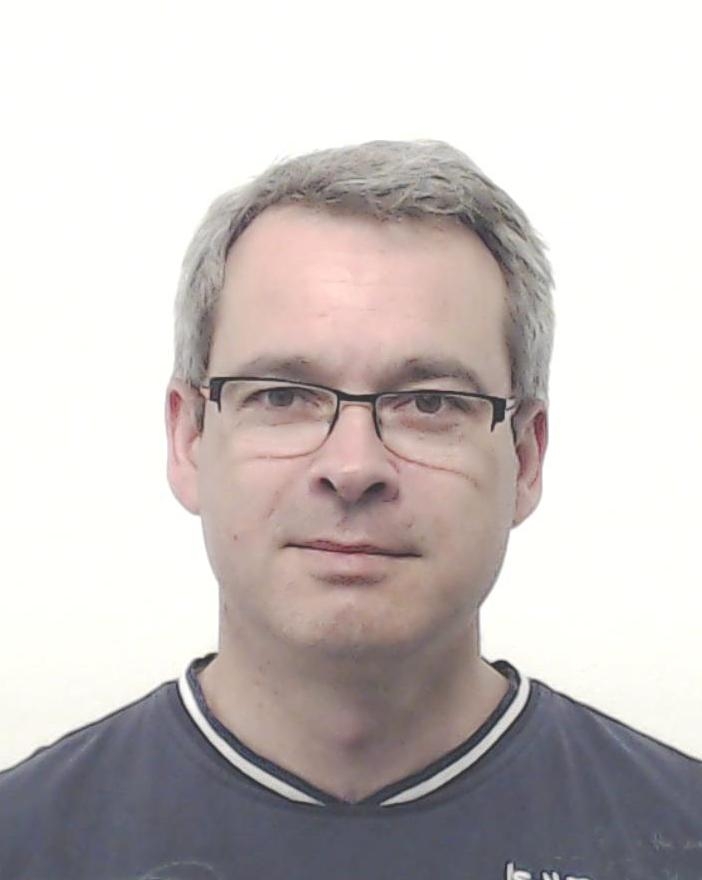
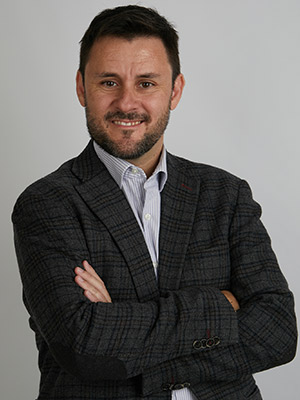
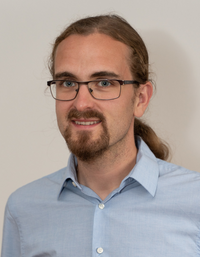
Prof. Redha Gouicem holds the Chair of Operating Systems at RWTH Aachen University. His research focuses on operating system design, virtualization, and multicore scheduling, with an emphasis on formal verification and performance optimization. Professorship: Operating Systems Location: RWTH Aachen University, Germany Research interests include: Multicore scheduling algorithms Binary translation and virtualization Formal verification of OS components CPU frequency scaling and performance optimization Comparison of scheduling models in Unix/Linux Domain-specific languages for scheduler development Recent work explores hypervisor-agnostic guest overlays, weak memory model translation, and provably correct multicore schedulers. His publications demonstrate technical depth in system software design and concurrency management. Current affiliations: RWTH Aachen University Chair of Operating Systems
Pascal Richard is a Full Professor specializing in Real-Time Systems at the Institute of Technology, University of Poitiers. He is affiliated with the LIAS (Laboratoire d'Ingénierie des Applications de la Résolution des Systèmes) laboratory, which has locations at both ENSIP (École Nationale Supérieure d'Ingénieurs de Poitiers) in Poitiers and ISAE-ENSMA (Institut Supérieur de l'Aéronautique et de l'Espace - École Nationale Supérieure de Mécanique et d'Aérotechnique) in Chasseneuil. His research spans over two decades with continuous publication from 1999 through 2023. Professor Richard's primary research interests focus on real-time scheduling theory, embedded systems, and avionics. His work particularly emphasizes AFDX networks , cache-related preemption delays , self-suspending tasks , and worst-case response time analysis . His research bridges theoretical foundations with practical applications in safety-critical systems, particularly in the aerospace domain. He has made significant contributions to the understanding of scheduling anomalies, feasibility analysis, and the development of approximation schemes for complex real-time problems. His publication record demonstrates strong collaboration with researchers across France and internationally, with consistent contributions to major real-time systems conferences including RTSS, ECRTS, and RTNS. His work shows an evolution from foundational scheduling theory toward increasingly complex systems including multiprocessor platforms, mixed criticality systems, and integrated modular avionics architectures. Professor Richard has contributed to the real-time community through numerous journal publications in Real-Time Systems , IEEE Transactions on Computers , and IEEE Transactions on Industrial Informatics , among others. His most recent work continues to address cutting-edge challenges in real-time scheduling for modern computing platforms.
Houssameddine Yousfi serves as an ATER (temporary academic researcher) in Data Engineering at the University Institute of Technology (IUT) of the University of Poitiers, France. He maintains dual institutional affiliation through the LIAS laboratory (Laboratoire d'Ingénierie des Systèmes Automatisés), operating jointly at ENSIP (University of Poitiers) and ISAE-ENSMA engineering school. His doctoral research culminated in a 2023 PhD thesis titled Efficient Query Processing when Spatial Data Meets RDF Graph , co-supervised by ISAE-ENSMA and Université Aboubekr Belkaid de Tlemcen (Algeria). This work established foundational integration methods between spatial databases and semantic web technologies. Yousfi's research centers on overcoming scalability barriers in heterogeneous data systems, specifically developing novel query optimization techniques for RDF graphs and spatial databases. His methodology emphasizes hybrid indexing structures and distributed processing frameworks to handle industrial-scale datasets, with applications spanning geospatial analytics and knowledge graph querying. Current projects focus on optimizing R-tree exploration for spatial RDF datasets through parallel computation strategies. His publication pattern reveals consistent specialization in big data infrastructure, with both 2020-2021 conference papers addressing computational bottlenecks in spatial and semantic data domains. The 2021 WISE conference paper introduced RDF_QDAG for distributed RDF querying, while the 2020 AI2SD paper pioneered R-tree enhancements for spatial big data. As a core member of LIAS' Data Engineering research team, he collaborates with international researchers including Boumediene Saidi, Amin Mesmoudi, and Allel Hadjali on EU-funded data infrastructure projects. His laboratory work integrates automated control systems with advanced data processing pipelines at the Poitiers and Chasseneuil research sites.
Dr. Daniel Selva is an Associate Professor in the Department of Aerospace Engineering at Texas A&M University. His research focuses on space systems, systems engineering, and intelligent systems, with emphasis on AI-driven design tools like the SEAK Lab’s Daphne cognitive assistant. He leads projects funded by NASA, NSF, and DOD, addressing challenges in satellite constellations, autonomous decision-making, and metamaterials. Awards include recognition for highly cited papers and conference best papers. Education: Ph.D. in Space Systems from MIT (2012), M.Sc. in Aerospace Engineering from ISAE/Supaero (2004), B.S. in Telecommunications Engineering from UPC (2002). Research Interests : Space Systems Architecture, AI for Design, Autonomous Sensor Webs, and Metamaterial Design. Key projects include the Multi-Agent Anomaly Resolution System (MAARS) and the TAT-C ML tool for constellation design. Awards : First Author of most cited Acta Astronautica paper, 2013 IEEE Best Paper Award, and 2018 Design Computing Best Paper. Grants & Projects : NASA STTR (Multi-Agent Anomaly Resolution), NSF-funded metamaterials research, and collaborations with NASA on TROPICS missions. Lab location: HRBB Building, Texas A&M.
Christian Dietrich is a Professor at the Technische Universität Hamburg (TUHH) in the Operating System Group (OSG) . His research focuses on Operating Systems , Real-Time Systems , and Embedded Systems , with specific interests in Software Fault Tolerance , Memory Management , and Software Variability . Projects: ParPerOS (Parallel Persistency OS), ATLAS (Adaptable Thread-Level Address Spaces), CLASSY-FI (Cross-Layer Fault Injection), AHA (Automated Hardware Abstraction), CADOS (Configurability-Aware OS) Supervised Theses: 10+ completed theses on topics like io_uring Integration , Heterogeneous Multi-Core , Virtual Memory Primitives , and Fault Injection His recent publications (2022-2024) address Heterogeneous Computing , Virtual Memory Interfaces , and Crash-Consistent Systems . He received awards including USENIX ATC 2017 Best Paper , RTAS 2015 Best Paper , and ISORC 2022 Outstanding Paper .
Dr. Tom Spink is a Lecturer at the School of Computer Science, University of St Andrews. His research focuses on efficient cross-architecture hardware virtualization, leveraging Dynamic Binary Translation (DBT) and hardware acceleration to enhance virtualized system performance. He teaches Operating Systems (CS3104) and Computer Architecture (CS4202), and serves as the First-level CS Coordinator. Dr. Spink holds a PhD in computer systems architecture from the University of Edinburgh and is a Fellow of the British Computer Society (BCS). His research interests span operating systems, virtualization, compilers, and runtime systems. Notable contributions include work on DBT hypervisors, weak memory model architectures (Risotto/Lasagne), and embedded systems security. He has been awarded the Best Paper Award in 2019 for his work on retargetable DBT hypervisors. Dr. Spink advises PhD student Ferdia McKeogh and collaborates on tools like Risotto and Lasagne. His work addresses challenges in cross-platform execution, IoT virtualization, and compiler optimizations for embedded systems. He actively engages in academic activities, including organizing conferences and delivering invited talks on hardware acceleration and virtualization techniques.
Deepak Garg is a tenured faculty member at the Max Planck Institute for Software Systems and an Honorary Professor of Computer Science at Saarland University. His research focuses on programming languages, software security, formal verification, and information flow control. Research Interests: Programming Languages and Type Theory Software Security and Secure Compilation Information Flow Control and Access Control Formal Verification of Low-Level Programs Probabilistic Programming and Security Compiler Correctness and Runtime Systems Scientific Contributions: He has authored over 40 publications with notable awards including the Dr.-Eduard-Martin-Prize for thesis supervision, Distinguished Paper and Distinguished Artifact awards at PLDI 2021, and the Internet Defense Prize for ERIM 2019. His work spans foundational research (e.g., logics for authorization) and practical systems (e.g., Groundhog, RefinedC, ERIM). Advising: Supervised 12 PhD students to completion and currently advising 7 PhD candidates across institutions like Saarland University, MPI-SWS, and Penn State University. His group includes co-advised students with researchers such as Derek Dreyer and Peter Druschel. Service: Active in program committees for top conferences including CSF , LICS , and OOPSLA , with leadership roles in workshops like PLMW and Dagstuhl Seminars on Secure Compilation.
Binoy Ravindran is a Professor and Bradley Senior Faculty Fellow in the Department of Electrical and Computer Engineering at Virginia Tech, where he leads the Systems Software Research Group. He holds a Ph.D. from The University of Texas at Arlington (1998). His research focuses on computer systems, emphasizing security, performance, energy efficiency, and timeliness in areas like concurrent, heterogeneous, distributed, and real-time computing. Recent projects include the Low-level Reasoning Machine (LLRM), Popcorn Linux, and LibrettOS. He teaches courses such as ECE/CS 5510 (Multiprocessor Programming), ECE/CS 5544 (Compiler Optimizations), and ECE 5984/SS (Modern Binary Exploitation). His service roles include editorial board positions at IEEE Transactions on Cloud Computing and ACM Transactions on Embedded Computing Systems, and he co-chaired ACM Systor 2025. Ravindran has published over 330 papers, earning nine best paper awards, and has mentored 26 PhD students, 23 postdocs, and 11 research faculty. Notable honors include ACM Distinguished Scientist and an Office of Naval Research Faculty Fellowship. His research group explores projects like LLRM (binary security verification), Popcorn Linux (heterogeneous ISA systems), and KairosVM (real-time hypervisor). Recent advancements include Stramash OS (ASPLOS'25) and Hexo (DOD infrastructure offloading).
Yatin Manerkar is an Assistant Professor in the Department of Computer Science and Engineering at the University of Michigan. His research focuses on formal methods for ensuring correctness in computing systems, particularly in hardware and software verification. He holds a PhD from Princeton University and has conducted postdoctoral research at UC Berkeley. His work has led to significant contributions in verifying memory consistency models, hardware security, and cache coherence protocols. **Education:** PhD in Computer Science, Princeton University (Advisor: Margaret Martonosi) M.S. in Computer Science and Engineering, University of Michigan BASc in Computer Engineering, University of Waterloo **Research Interests:** Manerkar's research bridges computer architecture and formal methods. He develops automated techniques for verifying and synthesizing computing systems, targeting emerging hardware like heterogeneous processors. Key areas include memory consistency models, security vulnerabilities (e.g., Meltdown/Spectre variants), and ethical AI implications of hardware design. **Awards & Recognition:** ACM SIGARCH/IEEE CS TCCA Outstanding Dissertation Award Honorable Mention (2021) Best Paper Nomination (FMCAD 2022) IEEE Micro Top Picks Honorable Mentions (2023, 2021, 2018) Heidelberg Laureate Forum Participant (2019) **Advising & Teaching:** Manerkar advises PhD and undergraduate students on formal verification and hardware-software co-design. He has taught courses on parallel computer architecture and formal verification at the University of Michigan.
Manuel Wimmer is a Professor affiliated with the Department of Business Informatics at TU Wien's Faculty of Informatics. His main research area is Model-Driven Engineering , focusing on topics such as AutomationML, Cyber-Physical Systems (CPS), and industrial standards like IEC 62264 and ISA-95. He leads the Network Lab and contributes to interdisciplinary projects involving robotics, cloud computing, and blockchain applications. Research Interests: Model Transformation, Tool Interoperability, Industrial Automation, Educational Methodologies in Software Engineering. Key Technologies: UML, ATL, OPC UA, AutomationQL. Recent work emphasizes bridging metamodeling platforms (e.g., ADOxx/EMF integration) and adapting robotic mission planning systems. He has published extensively in workshops like MDE 2023 and conferences on model-driven engineering. Teaching activities include remote-learning strategies for software engineering education, as documented in his 2021 paper. No explicit awards are listed, but his contributions to standards like AutomationML reflect industry recognition.
İsa Yıldırım is an Associate Professor in the Department of Electronics and Communication Engineering at Istanbul Technical University (ITU) , Faculty of Electrical and Electronics Engineering. He earned his PhD from the University of Illinois at Chicago in 2009, following MSc and BSc degrees from ITU in 2004 and 2002, respectively. He has been a full-time academic at ITU since 2012, advancing from Assistant to Associate Professor in 2015. Education: PhD, University of Illinois at Chicago, 2009 MSc, Istanbul Technical University, 2004 BSc, Istanbul Technical University, 2002 His research centers on biomedical imaging , signal and image processing , and deep learning , with a focus on medical image reconstruction techniques. His work applies advanced computational methods to improve imaging in digital breast tomosynthesis and low-dose CT. He has led multiple research projects funded by TUBITAK and BAP, focusing on non-convex optimization, total variation regularization, and compressed sensing. His recent publications (2022–2024) demonstrate a strong trend in integrating deep learning with model-based reconstruction , particularly in self-supervised and unsupervised frameworks for low-dose CT. His work also extends into robotics , specifically air-ground robot localization, indicating interdisciplinary collaboration. Scientific Awards: PhD Scholarship, Presidency of the Board of Higher Education, 2004 He actively mentors graduate students, having supervised 29 theses. He serves as Principal Investigator on ongoing projects, including Patient-Adapted Digital Breast Tomosynthesis Design (TUBITAK, 2023–2026). His research combines theoretical innovation with clinical applicability, particularly in reducing radiation exposure while enhancing diagnostic image quality. Labs and Research Teams: While specific lab names are not mentioned, his projects suggest leadership in a research group focused on Medical Image Reconstruction and Signal Processing , likely involving graduate students and collaborators in biomedical engineering and computer science.
Andrew Nere serves as Assistant Professor of Computer Science in the Math & Computer Science Department at Western Colorado University, teaching courses including Introduction to Web Design, Computer Science I, and Software Entrepreneurship since joining the faculty in Fall 2022. His industry background includes co-founding Thalchemy (2013), a startup specializing in embedded machine learning for wearable and environmental sensor applications, alongside prior internships at IBM and Qualcomm. His educational credentials feature: PhD in Electrical Engineering from University of Wisconsin-Madison (2013) MS in Electrical Engineering from University of Wisconsin-Madison (2010) B.S. in Computer Engineering from St. Cloud State University (2007) Nere's research centers on hardware-software co-design for efficient AI deployment, with dual focus on neuromorphic computing architectures and practical embedded systems implementation. He bridges theoretical neuroscience with engineering solutions, particularly for resource-constrained environments like fitness trackers and environmental sensors where computational efficiency is paramount. His work emphasizes translating academic research into real-world applications rather than pure theoretical exploration. Analysis of his 2010-2013 publications reveals consistent innovation in brain-inspired computing hardware, with recurring themes of GPU-accelerated neural simulations, specialized cache architectures for AI workloads, and energy-efficient neuromorphic designs. The research demonstrates strong interdisciplinary collaboration across computer architecture, neuroscience, and machine learning communities, frequently targeting hardware acceleration for cognitive computing tasks. Scientific recognition includes: Best Paper Nomination at IEEE International Symposium on Workload Characterization (2012) Best Paper in Track at International Parallel and Distributed Processing Symposium (2011) Nere brings substantial industry experience to academia, having served as university collaborator on the DARPA/IBM SyNAPSE project modeling brain functionality in computing systems. His startup Thalchemy exemplifies his commitment to applied research translation, while his current Software Entrepreneurship course provides students with practical business development frameworks for technology ventures. He actively leverages Gunnison Valley's natural environment for both recreation and potential research applications, noting particular interest in environmental sensing opportunities afforded by the region's wilderness proximity and diverse ecosystems.
Manuel Alejandro Pajuelo González is a researcher at the Universitat Politècnica de Catalunya (UPC), affiliated with the Department of Computer Architecture and the School of Computer Science. His research focuses on Performance measurement Operating systems Virtualization Thread assignment in multithreaded processors Recent publications show strong trends in RISC-V architectures, cybersecurity, and performance optimization. Key themes include Hardware virtualization Intrusion detection frameworks Statistical thread assignment approaches Spin-lock overhead analysis Scientific awards include BDigital Global Congress 15ª Edició Computación de Altas Prestaciones VI HiPEAC Paper Award He participated in multiple competitive R&D projects, including the DRAC project focused on RISC-V accelerators for next-generation computing.
Sang-Hoon Kim is an Associate Professor in the Department of Software and Computer Engineering and Department of Artificial Intelligence at Ajou University, South Korea. He leads the Systems Software Lab (Paldal Hall 1004-2) and maintains active collaborations with Virginia Tech as a Visiting Scholar since August 2024. His academic journey includes a Ph.D. in Computer Science from KAIST (2016) under advisors Seungryoul Maeng and Jin-Soo Kim, and a B.S. in Computer Science from KAIST (2002). His research spans operating systems, memory management, and storage systems with focus on mobile platforms, heterogeneous architectures, and SSD technologies. Key interests include memory fragmentation control , distributed thread execution , key-value storage optimization , and resource disaggregation . His work bridges theoretical innovation with practical system implementations, particularly for mobile and datacenter environments. Kim's publication portfolio shows consistent output in top-tier venues including USENIX FAST, VLDB, ICDCS, and ASPLOS. His research demonstrates evolution from mobile memory management (2015-2017) toward distributed systems and hardware-aware software (2019-present), with recent emphasis on resource-disaggregated environments and heterogeneous-ISA computing. The 2024 Best Paper Award at USENIX FAST highlights his impact in storage systems research. Best Paper Award at USENIX FAST'24 Multiple patents including US-9588912B2 for memory control He directs significant research projects funded by ETRI, NRF, and US ONR, including current work on memory-centric computing systems (2020-2023) and disaggregated non-volatile memory systems using RDMA (2018-2020). His Systems Software Lab maintains strong industry partnerships with Samsung Electronics and NHN, with prior projects improving Android memory management and developing SSD-based storage systems for large-scale internet services.
Brice Chardin is an Associate Professor in Data Engineering at ISAE-ENSMA since 2013, affiliated with the LIAS (Laboratoire d'Ingénierie des Applications de la Connaissance et des Systèmes) Data and Model Engineering team. His work bridges academic research and industrial applications, focusing on data management solutions for critical systems. His research spans clustering algorithms under dissimilarity constraints , RDF query relaxation for explaining empty/overabundant results, pattern mining through the RQL language, and energy data management . Key projects include Chronos (a NoSQL system for industrial sensor data) and collaborations with energy companies SRD and Nexeya for predictive consumption analysis. Recent publications (2021-2024) emphasize constrained clustering techniques and cooperative query processing for RDF knowledge bases, revealing a strong trend toward practical solutions for industrial data challenges. His work integrates machine learning with database theory to address real-world data imperfections. PhD in Computer Science from INSA Lyon (2011) Postdoctoral position at LIRIS (2012-2013) on ANR DAG project Specialized in industrial data management since 2011 EDF collaboration Chardin actively supervises academic projects including drone simulation with Ardupilot and Smart Data mining initiatives. His industrial partnerships focus on energy sector applications, particularly predictive analysis for electricity distribution and storage systems. Current work involves developing clustering algorithms with error bounds and query relaxation frameworks for semantic web technologies.