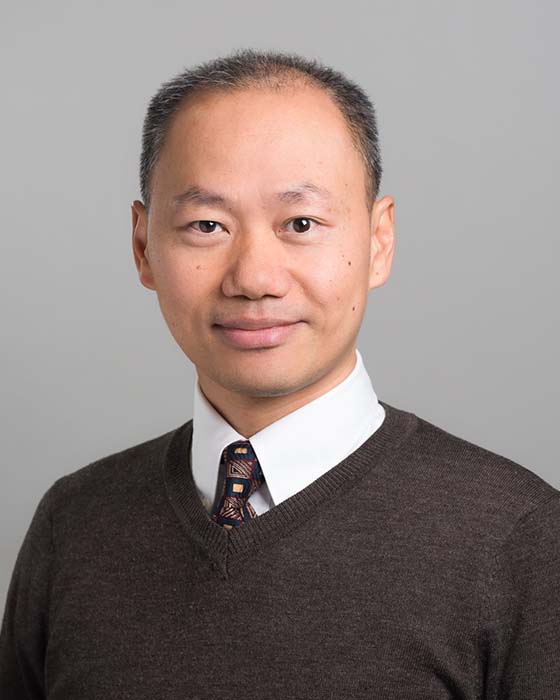
Kay C. Wiese is a Professor and Software Systems Chair at the School of Computing Science, Simon Fraser University. His research focuses on computational intelligence and bioinformatics, particularly RNA secondary structure prediction and visualization. He leads the Bioinformatics Research Lab and has contributed to RNA design and gene finding. Wiese holds a PhD in Computer Science from the University of Regina (1999) and degrees in Computer Science and Mathematics from the Universität des Saarlandes (Germany). He has extensive editorial roles, including Associate Editor for the IEEE/ACM Transactions on Computational Biology and Bioinformatics, and has organized major conferences like the IEEE Symposium on Computational Intelligence in Bioinformatics. His teaching interests include Bioinformatics, Computational Biology, and Discrete Mathematics. Wiese has supervised numerous graduate students, including Boris Shabash, Wenbo Jiang, and Andrew Hendriks. His research group developed tools like jViz.RNA for RNA visualization and SARNA-Predict for structure prediction. His work bridges computational methods with biological applications, emphasizing algorithmic innovation and practical software solutions.
Ronald D. Haynes is a Full Professor and Chair of Scientific Computing Graduate Programs in the Department of Mathematics and Statistics at Memorial University of Newfoundland. He leads research in numerical methods for PDEs and industrial-scale optimization problems. His work develops advanced domain decomposition techniques, adaptive mesh methods, and parallel computing approaches for solving complex physical systems. Applications include modeling pitting corrosion of materials, predicting rock strength for drilling optimization, and simulating multiphase fluid flows in porous media. Recent publications demonstrate innovations in mesh adaptation, parallel algorithms, and machine learning applications for industrial problems. Collaborative projects have addressed reservoir simulation, drill bit analysis, and corrosion prediction through integrated computational approaches. Professor Haynes has received the President's Award for Outstanding Research (2018) and Dean of Science Distinguished Teaching Award (2017). He serves as Co-editor-in-chief of the CAIMS Mathematics in Science and Industry Journal and was President-Elect of the Canadian Applied and Industrial Mathematics Society (2023-2025). He maintains active doctoral supervision with current research groups focusing on domain decomposition methods, closest point algorithms, and optimization techniques. Industry partnerships include projects with ExxonMobil and Global Maritime addressing drilling optimization and mooring design challenges.
Yves Bourgault is a Full Professor in the Department of Mathematics and Statistics at the University of Ottawa. He holds a MSc and PhD from Laval University. His research focuses on computational fluid dynamics, numerical methods, finite element techniques, and continuum mechanics modeling, with applications in cardiac electrophysiology and ecological systems. Dr. Bourgault has supervised several graduate students, including Edward Boey (co-supervised), Sana Keita, Saint-Cyr Koyagurebo-Ime, and Kak Choon Loy. His work integrates advanced numerical techniques to address complex problems in biomedical engineering, environmental science, and mathematical physics. Key methodologies include finite element methods, deferred correction schemes, and anisotropic mesh adaptation. His research group is part of the Applied Mathematics division at the University of Ottawa, emphasizing interdisciplinary applications. Recent work explores climate change impacts on ecological systems, cardiac tissue modeling using high-resolution MRI data, and robust numerical methods for reaction-diffusion equations. Publications span topics such as bidomain models for cardiac electrophysiology, fluid-structure interaction in heart mechanics, and mathematical modeling of fuel cells. His contributions bridge theoretical numerical analysis with real-world biomedical and environmental challenges.
Grant Weddell is an Associate Professor in the David R. Cheriton School of Computer Science at the University of Waterloo. His research focuses on database technology for real-time applications, including large-scale schema management, information clustering, dependency theory, and query optimization for heterogeneous data sources. He teaches courses such as CS338 (Introductory Databases), CS348 (Advanced Databases), CS446 (Software Engineering), and CS848 (Advanced Database Systems). His research interests emphasize the interplay between description logics and database systems, particularly in optimizing query processing and managing complex schemas. Recent work explores path agreements, functional dependencies, and ontology-mediated querying to enhance data integration and schema management efficiency. Teaching responsibilities include foundational database courses (CS338/348), software engineering (CS446), and advanced topics in information integration (CS848). No scientific awards are explicitly listed, though his contributions to database theory and optimization are extensive.
Dr. Bei Jiang is an Associate Professor in the Department of Mathematical and Statistical Sciences at the University of Alberta , Canada. She holds the Canada CIFAR AI Chair and is affiliated with the Alberta Machine Intelligence Institute (Amii) . Her academic journey includes a PhD in Biostatistics (2014) from the University of Michigan, MS (2008) and BS (2004) from the University of Alberta and Beijing University of Technology, respectively. Current Positions : 2021–Present (Associate Professor), 2022–Present (CIFAR AI Chair) Past Appointments : Assistant Professor (2015–2021), Postdoctoral Fellow at Columbia University (2014–2015), Research Assistant at University of Michigan (2009–2013) Research Interests : Dr. Jiang specializes in methods for joint modeling of longitudinal and health outcome data , Bayesian hierarchical modeling , functional and imaging data analysis , and statistical machine learning . Her work integrates kernel machine regression , differential privacy , and synthetic data generation to address challenges in heterogeneous health data and neuroimaging. Scientific Awards : Highlights include the 2015 SAMSI New Research Fellow , multiple Rackham Conference Travel Awards (2013, 2012), and prestigious NSERC scholarships (2009–2012). She has also received the J Gordin Kaplan Graduate Award (2008) and Statistical Society of Canada Travel Award (2008). Grants : $375,000 (CIFAR AI Chairs, 2022–2027), $480,000 (MITACS Accelerate, 2022–2025), and $210,000 (Canadian Statistical Sciences Institute, 2022–2025) Students and Postdocs : She mentors numerous PhD , MSc , and Postdoctoral Fellows , including Junxi Zhang (2023–Present), Enze Shi (2022–Present), and former advisees like Wenxing Guo (now Lecturer at University of Essex) and Yafei Wang (Assistant Professor at University of Alberta).
Luis A. Ricardez-Sandoval is an Associate Professor in the Department of Chemical Engineering at the University of Waterloo and holds a Tier II Canada Research Chair in Multiscale Modelling and Process Systems. His research group develops advanced computational tools for optimizing chemical processes across multiple scales. Doctorate: Chemical Engineering, University of Waterloo (2008) MASc: Chemical Engineering, Instituto Tecnologico de Celaya (2000) BASc: Chemical Engineering, Instituto Tecnologico de Orizaba (1997) The research group focuses on multiscale modelling and process systems engineering , particularly for CO2 capture , energy systems , and heterogeneous catalysis . Their work combines advanced mathematics, machine learning , and uncertainty analysis to optimize chemical processes before physical implementation. Recent publications emphasize dynamic system optimization under uncertainty, multiscale simulation , and CO2 conversion technologies . Key methodologies include probabilistic uncertainty quantification and economic predictive control . Scientific Awards : 1997: First Place, XII National Creativity Contest 1998: Best Student Award, Instituto Tecnologico de Orizaba 1999: Third Place, XIV National Creativity Contest 2000: J.M. Smith Award for Best MASc Student He has collaborated with international institutions like CONACyT-Mexico, China Scholarship Council, and Universidad de Los Andes. His teaching includes graduate courses in process control, optimization, and computer-aided design.
Parameswaran Krishna Nair is a Professor of Medicine and the Frederick E. Hargreave Teva Innovation Chair in Airway Diseases at McMaster University, with a clinical role as Staff Respirologist at the Firestone Institute for Respiratory Health, St. Joseph’s Healthcare Hamilton. His work focuses on complex obstructive airway diseases, severe asthma, and eosinophilic lung disorders, integrating immunology, hematology, and imaging specialists in multidisciplinary care. He leads an advanced airway diseases fellowship training program. University: McMaster University Clinical Affiliation: Firestone Institute for Respiratory Health, St. Joseph’s Healthcare Hamilton His research explores airway autoimmunity, biologics for inflammatory disorders, and pulmonary imaging techniques like hyperpolarized ¹²⁹Xe MRI. Key studies include mechanisms of eosinophilic asthma, corticosteroid dependence, and post-acute sequelae of COVID-19 with rheumatological implications. Recent publications analyze biologic therapies (benralizumab, mepolizumab), ventilation heterogeneity in asthma, and sputum immunoglobulins as biomarkers. Awards include the Frederick E. Hargreave Teva Innovation Chair in Airway Diseases. Scientific Awards: Frederick E. Hargreave Teva Innovation Chair He contributes to clinical guidelines, therapeutic trials, and autoantibody research in severe respiratory diseases.
Arian Novruzi is a Full Professor in the Department of Mathematics and Statistics at the University of Ottawa, Faculty of Science. His expertise lies in partial differential equations (PDEs), shape optimization, numerical analysis, and mathematical modeling. He holds an MSc from the University of Tirana and a PhD from the University of Nancy. His research integrates theoretical and applied mathematics, with a focus on fluid dynamics, biomedical applications, and engineering challenges. Education: MSc in Mathematics, University of Tirana PhD in Mathematics, University of Nancy Dr. Novruzi’s research interests include the analysis and numerical solutions of PDEs, optimization of geometric shapes for engineering systems, and modeling of complex physical phenomena such as blood flow and tumor radiation therapy. His work bridges pure mathematics with practical applications, addressing problems in fluid mechanics, materials science, and biomedical engineering. His recent publications highlight advancements in non-diffusive neural network methods for hyperbolic conservation laws, blood flow modeling using Navier-Stokes equations, and the optimization of convex domains for energy maximization. These studies emphasize both theoretical rigor and computational innovation. Awards: No scientific awards explicitly mentioned in the provided texts. Dr. Novruzi has supervised students such as Terence C. Ngouoko. His grants and collaborations are not detailed here, but his research has implications for energy-efficient engineering designs and medical treatments. He has authored a Springer textbook on PDEs, reflecting his commitment to educational resources in mathematical sciences.
Shinichi Nakagawa is a Professor of Evolutionary Ecology and Synthesis at the University of Alberta's Faculty of Science, Biological Sciences Department. He holds the Canada Excellence Research Chair in Open Science and Synthesis in Ecology and Evolution. His research focuses on quantifying biological variation through meta-analysis and synthesis, with a strong emphasis on open science practices. He leads a lab that explores topics in ecology, evolutionary biology, and environmental sciences, while also advancing meta-science to improve research transparency and reproducibility. Dr. Nakagawa earned his BSc(Hons) at the University of Waikato and PhD at the University of Sheffield. He previously held positions at the University of Otago (2008–2015) and the University of New South Wales (2015–2024). He is the founder of EcoEvoRxiv, a preprint server for ecology and evolution, and actively promotes open science through initiatives like the Society for Open, Reliable, Transparent Ecology and Evolutionary Biology (SORTEE). His research interests include quantitative ecology, statistical methodology for meta-analysis, and understanding biological variability. Key areas of focus include thermal physiology in ectotherms, sexual selection, and the impacts of climate change on biodiversity. He has authored influential papers on meta-analytic techniques, including location-scale models and variance-based analyses. Notable contributions include the development of the 'orchard plot' visualization tool for meta-analyses and advocacy for preregistration and open data practices. His work bridges ecological theory with data synthesis, emphasizing reproducibility and methodological rigor. Awards include the Canada Excellence Research Chair, recognizing his leadership in advancing open science and ecological synthesis.
Kristy Robinson is an Associate Professor in the Department of Educational and Counselling Psychology at McGill University , where she investigates classroom teaching practices and contextual factors that enhance student motivation and wellbeing. Her research program focuses on creating theoretical and empirical frameworks to support equitable instructional strategies for students' goal achievement. SSHRC-funded researcher FQRSC grant recipient Key Research Areas Motivational climate theory Expectancy-value-cost models STEM education equity Self-determination theory Emotion dynamics in learning Awards & Recognition Canadian Psychological Society President's New Researcher Award AERA Division C Outstanding Early Career Scholar AERA Motivation SIG Wilbert C. McKeachie Early Career Award Top-Producing Educational Psychology Scholar (2024) Research Platforms Director of MILES Lab (Motivation, Instructional, and Learning Experience Study) Developer of "mFlip" flipped classroom framework
Professor Ben Liang is a faculty member at the Department of Electrical and Computer Engineering , University of Toronto, holding the L. Lau Chair . He has served on editorial boards of IEEE Transactions on Mobile Computing , IEEE Transactions on Wireless Communications , and Wiley Security and Communication Networks . His research focuses on networked systems , mobile communications , and distributed machine learning , with applications in wireless network virtualization, edge computing, and resource optimization. He explores stochastic scheduling , computation-communication co-design , and multi-resource fair allocation . Key publication trends: Wireless federated learning (2024-2025) Network virtualization and MIMO systems (2022-2025) Online distributed optimization (2023-2025) Stochastic resource management (2020-2024) Scientific Awards: Fellow of IEEE Best Paper Award, ACM MSWiM 2013 INFOCOM 2010 Finalist Ontario ERA Award 2007 IFIP Networking 2005 Best Paper Intel Foundation Graduate Fellowship 2000 Polytechnic University valedictorian 1997 Affiliated with IEEE , ACM , and Tau Beta Pi , he teaches courses like ECE368: Probabilistic Reasoning and ECE421: Machine Learning , emphasizing stochastic networks and random processes .
Md. Zoheb Hassan serves as an Assistant Professor in the Department of Electrical Engineering and Computer Engineering at Laval University, where he leads cutting-edge research in wireless communications and spectrum management. His academic role includes graduate recruitment and active participation in the university's research ecosystem, particularly through the Establishment of the Next Generation of Professors program funded by FRQNT. Dr. Hassan's research centers on spectrum sharing and management, wireless communication systems, and communications network control systems. He pioneers the integration of digital twin technology and machine learning to solve critical challenges in next-generation networks, including interference management in 5G/6G aerial corridors, Internet of Vehicles, and satellite-terrestrial integration. His work emphasizes practical implementations such as proof-of-concept demonstrations for tactical networks and proactive resource allocation in dynamic environments. Analysis of his 2024-2025 publications reveals a dominant trend toward AI-driven wireless resource optimization, with 12 of 15 recent papers featuring digital twins for interference management, spectrum sharing, and energy efficiency. Key thematic clusters include vehicular communications (4 papers), underwater IoT networks (2 papers), and hardware-impairment resilient designs (3 papers), demonstrating his focus on bridging theoretical advances with real-world deployment challenges across diverse network topologies. Dr. Hassan has secured significant competitive funding for his research initiatives: Digital Twin-Enhanced Interference Management for Next-Generation Radio Access Networks in the FR3 Band (FRQNT, 2025-2027) Center for Radio Frequency and Communications Systems, Technologies and Applications (FRQNT, 2024-2030) Context-Aware Spectrum Sharing and Management for Next Generation Wireless Networks (NSERC, 2024-2029) Development of innovative technologies for modeling predictive systems in urban mobility (MITACS, 2022-2026) Springboard to Discovery supplement for Context-Aware Spectrum Sharing (NSERC, 2024-2025) He actively mentors doctoral candidates, currently supervising Mahima Karim (PhD in Electrical Engineering, expected 2025) and Mohammadamin Parhizgar (PhD in Electrical Engineering, expected 2024). His supervisory approach combines theoretical rigor with practical problem-solving, focusing on spectrum management algorithms and digital twin implementations for next-generation networks. While specific laboratory affiliations aren't detailed in the source material, his projects indicate strong alignment with Laval University's wireless research infrastructure and the Center for Radio Frequency and Communications Systems.
Yazan Otoum is a Part-Time Professor in the School of Electrical Engineering and Computer Science at the University of Ottawa and concurrently an Assistant Professor in the School of Computer Science and Technology at Algoma University . A licensed Professional Engineer in Ontario, he is internationally recognized for his interdisciplinary work at the intersection of cybersecurity, artificial intelligence, and the Internet of Things . Education Ph.D. in Electrical and Computer Engineering, University of Ottawa (September 2022) M.Sc. in Network Engineering and Management, DePaul University (December 2009) Research Interests Dr. Otoum’s research program is dedicated to securing the rapidly expanding IoT ecosystem. His core themes include: Scalable meta-learning models that adapt to evolving threats in resource-constrained IoT devices. Federated and transfer learning to enable privacy-preserving, collaborative intrusion detection across heterogeneous networks. Healthcare IoT (IoMT) security, ensuring safe and trustworthy medical devices and data streams. Smart-city infrastructures , where AI-driven security safeguards critical urban services. His recent work leverages large language models (LLMs) , blockchain , and differential privacy to push the boundaries of next-generation cyber-defence mechanisms. Publication Trends Across 23 peer-reviewed works (2017-2025), a clear evolution is evident: early studies established foundational deep-learning intrusion detection frameworks (DL-IDS), followed by federated and transfer-learning paradigms tailored for IoT and IoMT. The latest 2024-2025 publications integrate cutting-edge generative AI and blockchain techniques, highlighting a shift toward holistic, scalable, and privacy-preserving security ecosystems for IoT, Internet of Vehicles, and healthcare domains. Professional Recognition & Service Licensed Professional Engineer (P.Eng), Ontario Certifications: CEH, CCNA, CHFI, ISO 27001 Lead Implementer Peer reviewer for IEEE, ACM, and Elsevier journals Invited speaker and mentor in cybersecurity education initiatives Teaching & Mentorship Dr. Otoum currently teaches Data Science and Data Structures and Algorithms at the University of Ottawa. His office hours are held Mondays 11:30 AM–1:30 PM in SITE room 4075. While specific student advisees are not listed, he is actively engaged in mentoring emerging researchers and practitioners in secure AI and IoT systems. Labs & Teams Operating at the intersection of academia and industry, Dr. Otoum collaborates with multidisciplinary teams spanning embedded systems, AI laboratories, and healthcare technology partners, fostering innovation that transitions seamlessly from theory to real-world deployment.
Fedor Dokshin is an Assistant Professor in the Department of Sociology at the University of Toronto, Downtown Toronto (St. George) campus. His research bridges computational social science with environmental and political sociology, focusing on energy transitions, partisan dynamics, and social network structures. Key research areas include racial and income disparities in solar photovoltaic adoption, policy feedback mechanisms in renewable energy programs, and partisan influences on environmental decision-making. Fields of Study: Computational and Quantitative Methods, Environmental Sociology, Political Sociology, Social Networks Areas of Interest: Computational social science, Energy and the environment, Political polarization Research Trends: Dokshin's publications reveal a focus on energy justice, behavioral diffusion models, and political polarization. His work combines computational methods with environmental policy analysis, examining how socioeconomic factors and partisan identities shape renewable energy adoption. Articles demonstrate geographic heterogeneity in opposition to extraction projects, digital discourse analysis techniques, and institutional dynamics affecting scholarly knowledge production. Methodological Emphasis: Utilizes large-scale data analysis, spatial modeling, and automated textual analysis to explore energy-environment-society intersections. Research highlights the tension between technical solutions and social equity in energy transitions, with recurring themes of policy design, public engagement, and networked political behavior.
Dr. Weihua Zhuang is a University Professor and University Research Chair in the Department of Electrical and Computer Engineering at the University of Waterloo. She holds prestigious fellowships from IEEE, Royal Society of Canada, and other organizations. Her research focuses on future communication networks, including 6G, network virtualization, autonomous vehicles, and smart grids. She has led groundbreaking work on MAC protocols like VeMAC for vehicular networks and has contributed extensively to AI-driven network management. Education : Doctorate in Electrical Engineering, University of New Brunswick, Canada (1993) M.Sc. and B.Sc. in Electrical Engineering, Dalian Maritime University, China Research Interests : Dr. Zhuang's work spans wireless networking, IoT, autonomous systems, and smart infrastructure. She explores solutions for network architecture evolution, machine learning applications in communication systems, and service customization for dynamic environments. Her recent projects include digital twin-driven networks, cross-modal transmission strategies, and AI-native slicing for 6G. Awards : Women's Distinguished Career Award (IEEE VTS, 2021) R.A. Fessenden Award (IEEE Canada, 2021) Fellowships from IEEE, RSC, CAE, EIC Grants & Professional Activities : She led the Tier I Canada Research Chair in Wireless Communication Networks (2010–2024) and has held roles such as IEEE VTS President (2023–2024). Her grants include the NSERC Discovery Accelerator Supplements and PREA awards. She edits journals like IEEE Transactions on Vehicular Technology and co-chairs major conferences. Labs & Teams : Her research group focuses on network architecture, AI-driven protocols, and vehicular communication. Collaborations include projects on 6G, satellite-terrestrial integration, and edge computing for autonomous systems.