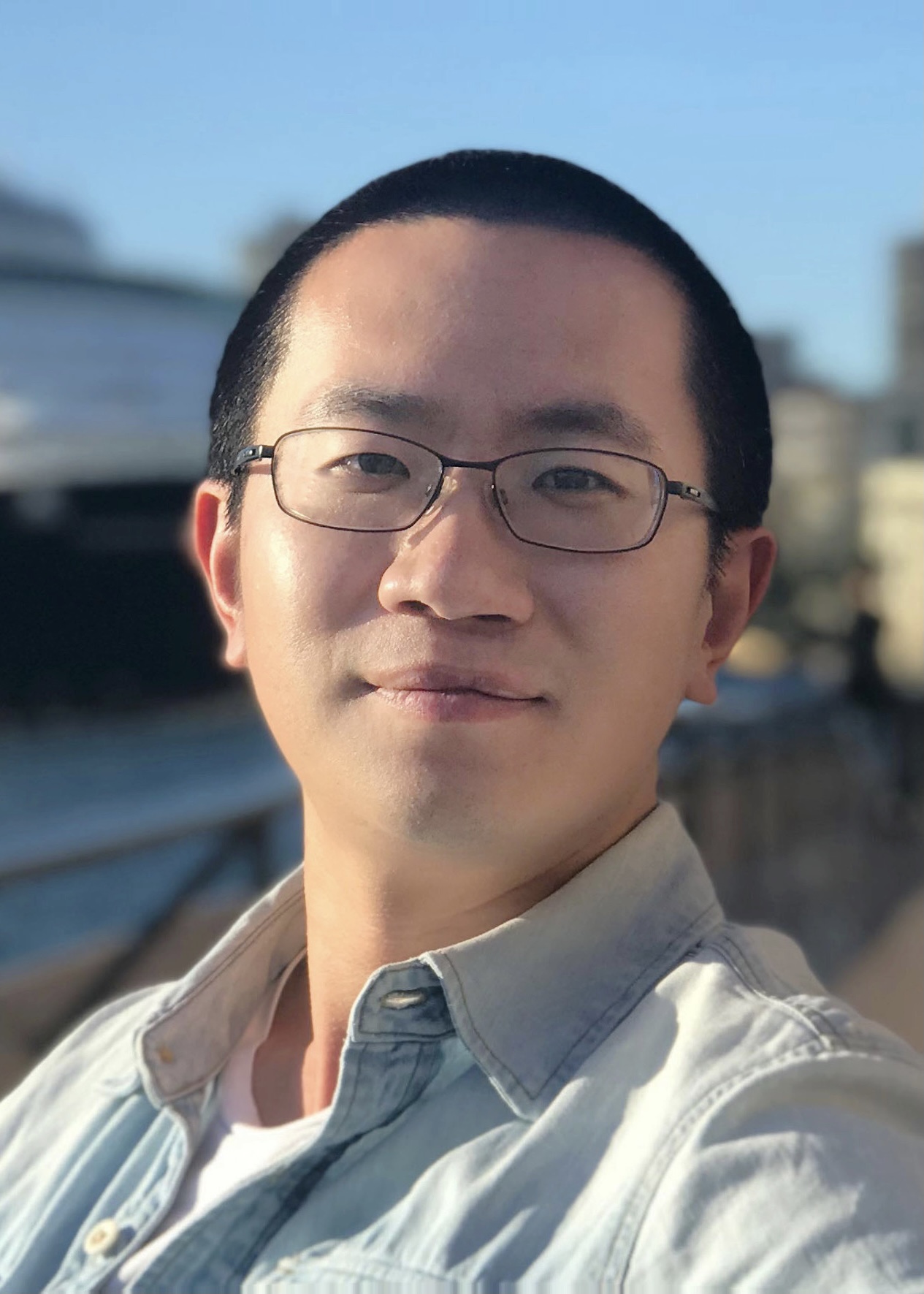
Matthias S. Maier is an Associate Professor in the Department of Mathematics at Texas A&M University, affiliated with the College of Arts & Sciences. His research focuses on multiscale methods, computational fluid dynamics, and finite element software development, particularly with the deal.II library. He organizes an annual undergraduate summer school on PDE modeling and simulation. Research Interests: Multiscale effects in Maxwell’s equations, computational fluid dynamics, finite element methods, and numerical analysis. His work includes studies on surface plasmon-polaritons, homogenization theory, and high-performance computing for hyperbolic systems. Developed ryujin, a high-performance finite-element solver for compressible flows. Contributed to deal.II, a widely used open-source finite element library. Recipient of NSF awards (DMS 1912847, DMS 2045636) and AFOSR funding. Teaching includes courses on numerical methods (Math 417, 610), mathematical modeling (Math 442), and finite element methods (Math 676). He advises graduate students in applied mathematics and computational science. Labs/Teams: Core developer of deal.II and contributor to the ryujin framework. Collaborates with interdisciplinary teams in physics and engineering.
Yubai Yuan is an Assistant Professor of Statistics at the Pennsylvania State University, affiliated with the Department of Statistics within the Eberly College of Science. He holds a PhD from the University of Illinois Urbana-Champaign (2020) and completed postdoctoral research at UC Irvine. His research focuses on network science, causal inference, and statistical machine learning, with applications to neuroscience and social systems. Notable awards include the 2022 NSF-Simons Center Fellow Award and the 2019 ASA Student Paper Award. Education: PhD in Statistics (UIUC, 2020), MS in Statistics (Sun Yat-sen University, 2016), BS in Mathematics (Shandong University, 2012). Research interests span complex network analysis, optimal transport, active learning, and mediation analysis. Current projects include de-confounding causal inference and hypergraph modeling. Teaching includes courses on probability theory and statistical modeling at Penn State. Advises PhD students Yuanchen Wu (active learning on graphs) and Siyu Huang (latent network structures). Collaborates with the Center for Social Data Analytics and organizes workshops in statistical network science. Publications emphasize methodological advancements in network analysis, causal pathways, and data integration. Recent work addresses disaster response via social media data and neuronal activity analysis using optimal transport frameworks.
Luis Antonio Azpicueta Ruiz is an Associate Professor in the Department of Signal Theory and Communications at Carlos III University of Madrid. He leads research in the Signal Processing and Learning Group (GTSA) and Machine Learning for Data Science (ML4DS) group, focusing on interdisciplinary applications spanning acoustics, telecommunications, and machine learning. Research Interests: His work bridges signal processing theory with practical applications in environmental acoustics, adaptive filtering systems, and machine learning. Key research themes include: Advanced adaptive filtering architectures for nonlinear systems Distributed estimation in sensor networks Acoustic echo cancellation and room equalization Psychoacoustic evaluation methods Machine learning applications in noise monitoring and sound analysis Research Projects: Principal investigator for multiple funded projects including: Diagnóstico del ruido de chorro en aeronaves (AEI, 2022-2025) LearnINg FLow and Noise Dynamics via AI (COMUNIDAD DE MADRID, 2024-2026) BODYinTRANSIT - Sensory-driven Body Transformation (EUROPEAN COMMISSION, 2022-2026) Aprendizaje Automático para análisis Big Data (MINISTERIO DE ECONOMÍA, 2018-2021)
Dr. Dipanwita Thakur serves as Assistant Professor at the Department of Computer Engineering, Modeling, Electronics and Systems (DIMES) at the University of Calabria, Italy since July 2023. She is an active member of the European Cooperation in Science & Technology (COST Action CA22104) focusing on cybersecurity and serves in the IEEE Future Networks Working Group for Artificial Intelligence/Machine Learning. Previously, she held a 15-year Assistant Professor position at Banasthali University, Rajasthan, and has industry experience at TechMahindra and C-DAC. Education: Ph.D. in Smart Healthcare from West Bengal University of Technology, Kolkata M.Tech. in Software Engineering from Banasthali Vidyapith MCA from NIELIT, Government of India B.Sc. from University of Calcutta Her research pioneers Green Artificial Intelligence with emphasis on energy-efficient federated learning and smart healthcare applications. She develops privacy-preserving human activity recognition systems using multimodal data fusion, focusing on performance evaluation and environmental sustainability. Her work bridges theoretical machine learning with practical healthcare solutions, optimizing AI systems for reduced carbon footprint while maintaining clinical efficacy through hardware-algorithm co-design and quantization techniques. Recent publications reveal a strong trajectory toward sustainable AI, with increasing focus on energy-aware federated learning frameworks, multimodal medical segmentation, and non-IID data handling. Her work consistently addresses the critical balance between model accuracy, convergence speed, and energy consumption across edge devices, with growing emphasis on quantization techniques and hardware-algorithm co-design for real-world deployment. Scientific Awards: Elevated to IEEE Senior Member (2024) Dr. B.C. Roy Memorial Scholarship for outstanding 10th Board results (1992) Student Science Seminar Award by West Bengal Government (1990) Dr. Thakur actively mentors students as evidenced by her congratulations to advisee Farwa for paper acceptances. She serves as Associate Editor for Information Fusion (Elsevier) and IEEE Sensors Journal, and holds editorial roles at Scientific Reports. Her research is advanced through COST Action CA22104 and IEEE working groups, though specific grant details aren't listed in the source material. She has organized key workshops including Green-Aware AI 2024 and Green Federated Learning at IJCNN 2025. She leads research within the MONAI community on data quality and federated learning, and contributes to IEEE IoT and Future Networks initiatives. Her work with the COST Action CA22104 Behavioral Next Generation in Wireless Networks connects cybersecurity with sustainable AI development, while her Missouri S&T visiting scholar position focuses on energy optimization for federated learning systems.
Ashish Venkat is an Associate Professor in the Department of Computer Science at the University of Virginia, part of the School of Engineering and Applied Science. He holds a Ph.D. from UC San Diego and has established himself as a leading researcher in computer architecture, compilers, and computer security. Research Interests: His research focuses on cross-disciplinary hardware and software techniques to build secure, high-performance computing systems. He investigates robust exploit mitigations that maintain energy efficiency and programmability, with a particular emphasis on speculative execution, memory safety, hardware security, and privacy-preserving computing. He also explores the application of machine learning to detect security threats and model execution behavior. Publication Trends: His recent publications (2020–2025) demonstrate a strong focus on hardware-based security, particularly microarchitectural vulnerabilities (e.g., micro-op cache attacks), memory safety via microcode capabilities, and secure accelerators for bioinformatics. There is a consistent trend of publishing in top-tier venues like ISCA, MICRO, IEEE S&P, and USENIX Security, often featuring novel hardware/software co-design solutions. Scientific Awards: NSF CAREER Award (2023) NSF CRII Award (2018) IEEE Micro Top Pick (2019) IEEE Design & Test Top Pick (2020, 2021) HPCA Best Paper Runner-Up (2019) DATE Best Paper Nominee (2023) UVA Research Achievement Award (2023) ISCA Prolific Author of the Decade (2013–2022) Advising and Grants: He actively mentors graduate and undergraduate students, many of whom have pursued advanced degrees or joined leading tech companies. He has secured significant funding as PI or co-PI from NSF, DARPA, SRC, and Intel, including a $4.9M DARPA HERCULES grant and an NSF CAREER award. His projects focus on holistic security solutions, speculative optimization, and privacy-preserving machine learning frameworks. Labs and Teams: He leads a research group focused on secure and efficient computing systems, collaborating with researchers at institutions like UC San Diego, UC Riverside, and UC Irvine, as well as industry partners including Intel and IBM.
Mohammad Kamrul Hasan is an Associate Professor and Head of the Network and Communication Technology Research Lab at the Center for Cyber Security, Faculty of Information Science and Technology, Universiti Kebangsaan Malaysia (UKM). He holds a Ph.D. in Electrical and Communication Engineering from the International Islamic University Malaysia (IIUM) and has over a decade of prior industry experience in communication systems and network design. He has held academic positions at Universiti Malaysia Sarawak and IIUM, and is currently active in research and leadership at UKM. Ph.D. in Engineering (Electrical and Computer Engineering), International Islamic University Malaysia, 2016 M.Sc. in Communication Engineering, International Islamic University Malaysia, 2012 His research focuses on cutting-edge areas in network and communication technologies. Key interests include Wireless Communication and Network Security , Industrial Internet of Things (IIoT) , Cyber-Physical Systems , 5G and Beyond (6G) Networks , Smart Grids , and AI-driven security . He explores machine learning, federated learning, blockchain, and optimization algorithms to enhance network resilience, privacy, and efficiency in critical infrastructure and consumer electronics. His recent publications (2023–2025) demonstrate a strong trend toward intelligent and secure next-generation networks. Topics include intrusion detection in IIoT, passwordless authentication, federated learning for healthcare IoT, 6G security, and digital twins for SCADA systems. His work is frequently published in high-impact IEEE and Springer journals, reflecting a consistent and influential research output. Gold Medal for research excellence Young Scientist Award Fulbright Scholarship (Ministry of Higher Education Malaysia) Senior Member, IEEE (since 2013) Member, Institution of Engineering and Technology (IET) Member, Internet Society Dr. Hasan has served as an editorial member for prestigious journals including IEEE, IET, and Elsevier. He has led funded research projects such as the design of a two-way wireless communication system for medium-voltage electrical networks at Universiti Malaysia Sarawak. He has mentored students and collaborated widely, with co-authors from Malaysia and international institutions. He has also contributed to professional service as Chairperson of the IEEE IIUM Student Branch and as a peer reviewer for over 13 journals including Computer Networks , Internet of Things , and Soft Computing . He leads the Network and Communication Technology Research Lab at UKM, focusing on secure, intelligent, and scalable communication systems for smart cities, industry, and healthcare. His team works on AI-powered intrusion detection, blockchain for critical infrastructure, and privacy-preserving data fusion in IoT environments.
Professor Tariq Durrani is a Research Professor in the Department of Electronic and Electrical Engineering at the University of Strathclyde, UK. He is also recognized as a Visiting Professor and Honorary Professor at other institutions, reflecting his international academic engagement. His research spans signal and image processing with applications in sensor networks, UAVs, and intelligent communication systems. Research Interests: Signal and Image Processing Integrated Sensing and Communication (ISAC) Unmanned Aerial Vehicle (UAV) Networks Wireless Sensor Networks Big Data Analytics for Energy and Infrastructure Cognitive Neuroscience-Inspired Systems His recent publications highlight a strong trend in leveraging deep learning and optimization techniques for next-generation wireless systems, particularly in intelligent transportation, secure communications, and IoT. The integration of sensing, communication, and computing in UAV-enabled environments is a dominant theme. His work contributes to UN Sustainable Development Goals in clean energy, smart cities, and climate action. Scientific Awards and Honors: Thales Scottish Technology Prize 2009 (Third Place) Elected Honorary Member, Eta Kappa Nu (2010) Honorary Professor, University of Stirling (2010) Visiting Professorial Fellow (2012) Vice President (International Activities) Recipient (2012) Research Leadership: He has led and co-led multiple funded research projects, including those supported by the Royal Society of Edinburgh and the British Council, focusing on geological disaster monitoring, microseismic detection in oil exploration, and cognitive information integration in heterogeneous networks. His collaborative network spans the UK, China, and other international partners. Laboratories and Research Teams: His work is associated with advanced research in intelligent systems and sensor networks at the University of Strathclyde, contributing to the Fingerprint research profile in areas such as Unmanned Aerial Vehicles, Algorithms, and Optimization.
Benjamin Klusemann is Professor of Materials Mechanics at the Institute for Production Engineering and Systems, Leuphana University of Lüneburg. He holds leadership positions including Chairman of the School of Management and Technology (2024), Chairman of the Masterprogramme, and Chairman of the Graduate School (since 2017), demonstrating his significant academic standing and administrative responsibilities within the university. His research spans multiple engineering disciplines with a strong focus on mechanics, process simulation, and material modeling. Professor Klusemann specializes in continuum mechanics and the finite element method, applying computational approaches to solve complex problems in materials science and manufacturing engineering. His work bridges theoretical modeling with practical applications in advanced manufacturing processes, particularly in friction-based joining techniques and material behavior analysis. Professor Klusemann's extensive publication record (224 publications) reveals a consistent research trajectory focused on advanced manufacturing techniques, particularly friction-based joining processes, material modeling, and simulation. His recent work emphasizes laser shock peening applications, intermetallic compound evolution in solid-state joining, and the mechanical behavior of nanocrystalline materials. His research demonstrates a strong interdisciplinary approach combining materials science, mechanical engineering, and computational modeling to address industrial challenges in lightweight materials processing. His notable scientific achievements include: Professor O.C.Zienkiewicz Award NUMIFORM 2023 Auszeichnung für herausragende Leistungen in der Forschung (Recognition for outstanding research achievements) ESAFORM Scientific Prize Professor Klusemann actively contributes to academic governance and the international research community. He has organized and participated in numerous conferences including ESAFORM, GAMM meetings, and specialized workshops on computational mechanics. His leadership extends to research projects focused on aluminum processing, material flow analysis, and data-driven design of recycled materials, demonstrating his commitment to both fundamental research and practical applications in manufacturing technology.
Mihai Marasteanu serves as Professor and Miles Kersten Chair in the Department of Civil, Environmental, and Geo-Engineering at the University of Minnesota, with affiliations at the Center for Transportation Studies. His research bridges fundamental material science and practical pavement engineering solutions for Minnesota's infrastructure network. His primary research focuses on asphalt pavement engineering , specializing in fracture mechanics and viscoelasticity applied to low-temperature cracking analysis. Key interests include recycled material integration , asphalt binder-mixture property relationships , and innovative testing methodologies for quality control. His work emphasizes cost-effective solutions for local roads while advancing predictive models for pavement performance. Recent publications (2022-2024) demonstrate strong trends in asphalt mixture optimization , probabilistic density modeling , and nanomaterial-enhanced asphalt (e.g., graphene nanoplatelets). The research consistently targets Minnesota-specific challenges including cold-climate durability, recycled material validation, and field-compaction efficiency. Professor Marasteanu maintains active funding through 9 current projects including: Tools to improve asphalt pavement durability (MN DOT, 2025-2027) Asphalt lift thickness impact on density (MN DOT, 2024-2026) Sawing/sealing joints for cracking control (MN DOT, 2023-2026) EV data for pavement quality assessment (FHWA, 2023-2025) His national leadership includes coordinating pooled fund studies with Wisconsin, Iowa State, and Illinois researchers on low-temperature cracking. While specific lab names aren't documented, his team operates within University of Minnesota's testing facilities, utilizing advanced rheometers and computational models to validate size-effect theories and representative volume element concepts for asphalt mixtures.
Jean-Marie Bonnin is a Researcher at IMT Atlantique , affiliated with the Network Systems, Cyber Security and Digital Law department. His work spans autonomous industrial vehicles, vehicular networks, and cooperative systems, with a focus on energy management, task allocation, and safety protocols. IMT Atlantique, Rennes Campus Research in Industry 4.0 and Smart Mobility Research Interests : Autonomous Industrial Vehicle Fleets Fuzzy Logic for Multi-Agent Systems V2X Communication Protocols Scientific Contributions include: Modeling energy consumption in extreme-edge IoT nodes Decentralized task allocation for autonomous vehicles Collision avoidance in industrial environments
Hua Huang is an Assistant Professor in the Department of Computer Science and Engineering at the University of California, Merced. He holds a Ph.D. in Computer Engineering from Stony Brook University (2020), an M.S. in Computer and Information Sciences from Temple University (2014), and a B.E. in Electronic and Information Engineering from Huazhong University of Science and Technology (2012). Ph.D. in Computer Engineering, 2020 — Stony Brook University, New York M.S. in Computer and Information Sciences, 2014 — Temple University, Pennsylvania B.E. in Electronic and Information Engineering, 2012 — Huazhong University of Science and Technology, Wuhan, China Hua Huang's research focuses on sensor systems, wireless networks, ubiquitous computing, and smart healthcare. His work bridges theoretical and practical challenges in mobile computing, emphasizing real-world applications like device-free intrusion detection, driving safety monitoring, and healthcare wearables. His publications span key conferences and journals such as ACM MobiCom, IEEE ICCPS, ACM Transactions on Sensor Networks, and INFOCOM, with a notable Best Paper Runner-Up award at ACM MSWiM 2018. Themes include wireless sensor optimization, deep learning applications, and mobility-aware infrastructure design. Scientific Awards Best paper runner-up at ACM MSWiM 2018 Research Collaborations Collaborated with prominent researchers like Shan Lin, Fei Miao, and Tian He Advising Seeks self-motivated students with backgrounds in wireless systems and signal processing Labs & Teams Leads a research group at UC Merced focusing on wireless and ubiquitous systems
Xiaoyang Wang is a Senior Lecturer in the School of Computer Science and Engineering (CSE) at the University of New South Wales (UNSW). He holds a Bachelor's and Master's degree in Computer Science from Northeastern University, China, and earned his PhD from CSE UNSW. Dr. Wang's research focuses on database systems with a special emphasis on query processing and data mining on large-scale graph, spatial, and streaming data. His expertise extends to data-driven machine learning, smart contract analysis on blockchain, and FinTech with financial network analysis. His work spans Graph Processing, Graph Neural Networks, Spatial Data Processing, AI for Databases (AI4DB), Database for AI (DB4AI), and FinTech applications. His publication record shows significant contributions to the field with 7 book chapters, 56 journal articles, 61 conference papers, 7 edited conference proceedings, and 4 conference abstracts. Recent publications (2022-2025) demonstrate his strong research trajectory in advanced graph processing techniques, neural network applications, and innovative database approaches. Key themes include hierarchical contrastive learning, robust attack frameworks, temporal graph processing, influence maximization, knowledge graph-enhanced reasoning, and rumor mitigation. Dr. Wang actively recruits PhD students interested in pursuing research in related fields and encourages current undergraduate and master's students at UNSW to contact him about research opportunities. He maintains an active research agenda with practical implications for industries dealing with large-scale network data, financial technology applications, and data-intensive systems. He can be reached at xiaoyang.wang1@unsw.edu.au and is located in Engineering building K17-501D at UNSW.
Joshua Blumenstock is a Chancellor's Associate Professor at the University of California, Berkeley, holding joint appointments at the School of Information and Goldman School of Public Policy. He co-directs the Global Opportunity Lab and Center for Effective Global Action, focusing on leveraging machine learning and empirical economics to address challenges faced by vulnerable populations. Ph.D. in Information Science and M.A. in Economics from UC Berkeley B.A. in Computer Science and Physics from Wesleyan University His research spans technology for developing regions, social network analysis, and ethical AI applications. Key projects include poverty prediction via mobile phone data, digital credit fairness, real-time economic indicators, and humanitarian aid optimization. His work has been published in Science , Nature , and leading economics/computer science venues. Recent publications emphasize algorithmic welfare optimization, privacy-preserving humanitarian data use, and migration dynamics. Awards include NSF CAREER and UC Berkeley Chancellor's Award for Public Service. He teaches graduate courses on applied machine learning and big data for development, advising Ph.D. students at the intersection of data science and poverty alleviation. Active in policy workshops, his lab develops tools for global poverty microestimation and conflict impact analysis.
Seyyed A. Hosseini is a Research Professor at the Bureau of Economic Geology (BEG), Jackson School of Geosciences, University of Texas at Austin . His work focuses on subsurface fluid dynamics with applications to geological carbon storage (CO 2 sequestration) and underground hydrogen storage . Education: Ph.D. in Petroleum Engineering (University of Tulsa, 2008) M.S. in Biotechnology (Sharif University of Technology, 2005) B.S. in Chemical Engineering (University of Isfahan, 2002) Research Interests include: Multiphase fluid flow in porous media Pressure-pulse testing for CO 2 monitoring Reservoir engineering fundamentals Machine learning for subsurface energy projects Geomechanical impacts of fluid injection Environmental risk assessment for CO 2 and hydrogen storage Article Trends reveal his expertise in developing applied methodologies for CO 2 and hydrogen storage, emphasizing machine learning integration , 3D modeling , and fault leakage detection . Recent work explores deep learning workflows and microfluidic experiments for subsurface energy systems. Grants and Funding PI on a $1.5M DOE/NETL grant (2015) to study brine extraction for CO 2 storage pressure management Collaborative Initiatives include the SMART program for machine learning in CCS and partnerships with institutions in Mississippi, Texas, and the Gulf Coast . His research extends to laboratory experimentation following BEG's facility upgrades.
Dr. Jed Pitera is an Adjunct Assistant Professor at the University of California, San Francisco (UCSF) Department of Pharmaceutical Chemistry and currently serves as the strategy co-lead for Accelerated Discovery in Sustainable Materials at IBM Research - Almaden. He has spent over two decades at IBM Research, applying computational tools and machine learning to materials R&D challenges. Caltech (Biology, Chemistry) University of California, San Francisco (Ph.D. in Biophysics) ETH Zurich (Postdoctoral work in computational physical chemistry) His research focuses on leveraging AI, machine learning, high-performance computing, and quantum computing for advanced materials discovery, particularly in sustainability applications such as carbon capture, energy storage, and PFAS replacement. He also works on improving the sustainability of existing materials in semiconductor manufacturing and directed self-assembly techniques. His work spans computational physical chemistry, polymer science, and AI-driven approaches to material design. His publications demonstrate a focus on AI-driven materials discovery (6 papers), directed self-assembly applications (4 papers), semiconductor manufacturing (4 papers), computational modeling (4 papers), and sustainability-focused research (5 papers). Notable trends include integrating robotics with AI for materials discovery and developing lifecycle assessment tools for sustainable design. Dr. Pitera leads the Accelerator Technologies project at IBM and contributes to the IBM Safer Materials Advisor initiative. He has collaborated with researchers across multiple institutions, including Dan Sanders, Brandi Ransom, Seiji Takeda, and Teodoro Laino.