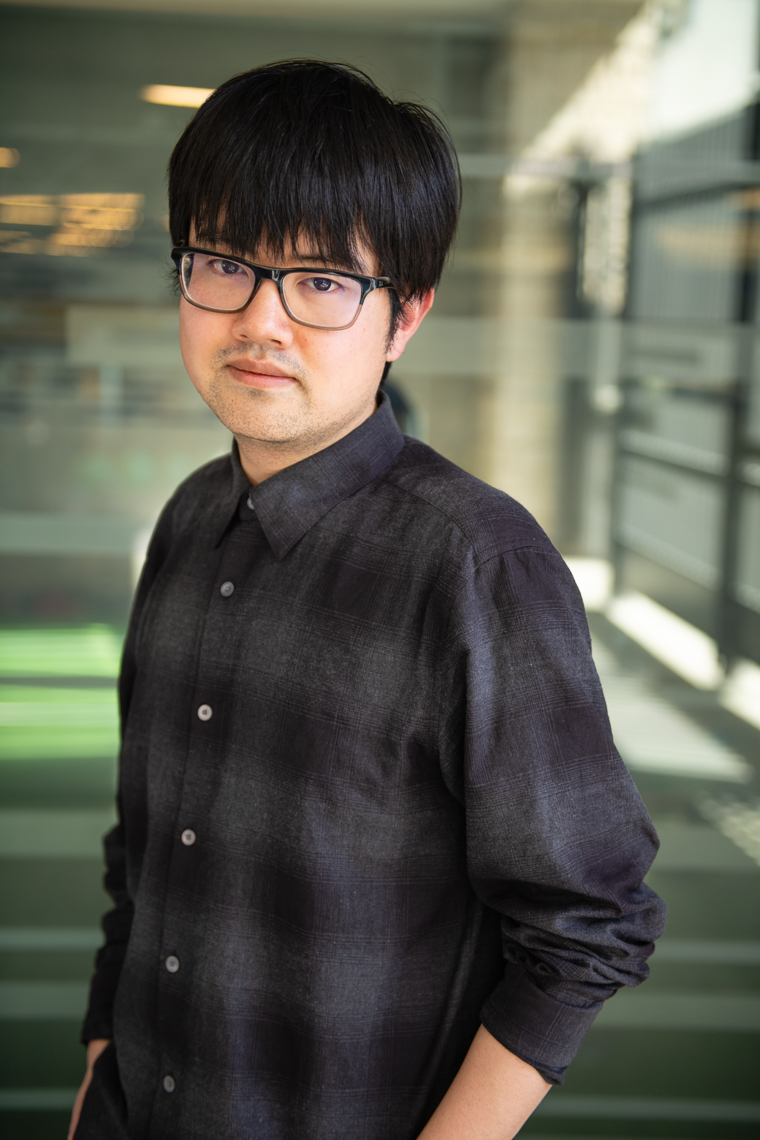
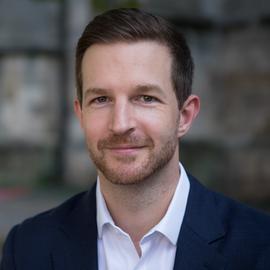
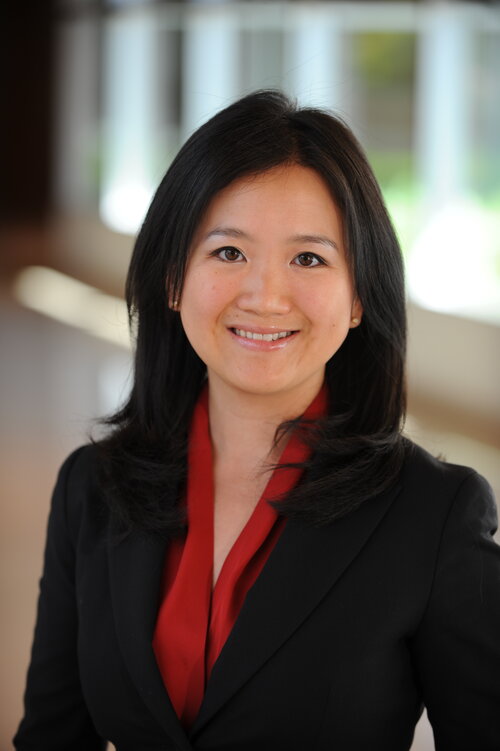
Chen Lian is an Assistant Professor in the Department of Economics at UC Berkeley. Holding a PhD from MIT, their research bridges macroeconomics, behavioral economics, and finance, with a focus on bounded rationality, monetary theory, and macro-finance interactions. Education: PhD in Economics, MIT Chen’s work explores how incomplete information and behavioral biases shape macroeconomic outcomes. Key themes include inflation effects on households, fiscal-monetary policy interactions, and financial stress dynamics. They employ heterogeneous-agent models and analyze how micro-level shocks propagate through the economy. Their publications and working papers address topics like credit cycles, demand shock propagation, and the psychological underpinnings of economic decisions. Papers such as Low Interest Rates and Risk Taking (2019) and Confidence and the Propagation of Demand Shocks (2022) highlight their interdisciplinary approach.
Christian Wolf is an Assistant Professor at the Massachusetts Institute of Technology (MIT) Department of Economics and a Faculty Research Fellow at the National Bureau of Economic Research (NBER). His work bridges macroeconomics, monetary economics, and econometric methodology. Research Interests: Wolf specializes in macroeconomics and monetary policy , with a focus on econometric techniques like structural vector autoregressions (VARs) and local projections . His research explores policy counterfactuals, heterogeneous-agent models, and fiscal-monetary interactions. Recent Publications: His work spans topics such as equivalence between fiscal and monetary tools in HANK models, robust identification in VARs, and the interplay between inequality and macroeconomic dynamics. Articles appear in journals like Econometrica , Journal of Political Economy , and American Economic Review . Awards: Faculty Research Fellow, NBER Contact: ckwolf@mit.edu | Office: E52-554, MIT
Benjamin Born serves as Professor of Macroeconomics at Frankfurt School of Finance & Management and Research Director at the ifo Institute. He is a Research Fellow at CEPR and CESifo, advises the European Commission's DG ECFIN, serves on the European Parliament's Expert Group on Monetary Policy, and sits on the CEPR–EABCN Euro Area Business Cycle Dating Committee. Starting in September 2025, he will join the University of Bonn as Professor of Macroeconomics. Education PhD in Economics, 2011, University of Bonn, Germany MSc in Econometrics and Economics, 2007, University of York, UK BA/MA in Economics, 2006, University of Siegen, Germany Professor Born's research focuses on business cycles, fiscal and monetary policy, heterogeneous agent models, and empirical methods in macroeconomics. His work bridges theoretical modeling with empirical analysis, often using innovative data sources including firm surveys and social media data. He has made significant contributions to understanding how monetary policy affects different segments of the economy, how fiscal policy transmits through various channels, and how firms form expectations about the future. His recent publications reveal a strong trend toward analyzing heterogeneous effects in macroeconomics, particularly examining how different groups (firms, workers, consumers) respond differently to economic shocks and policies. His work increasingly incorporates social media data and novel survey methodologies to capture real-time economic behavior. A significant portion of his research addresses policy responses to the COVID-19 pandemic, including fiscal stimulus packages and lockdown effects. Professor Born is actively involved in the academic community, serving on the editorial boards of the Journal of Monetary Economics and the European Economic Review. He regularly organizes major academic conferences including the BASEforHANK Winterschool and the ifo Conference on Macroeconomics and Survey Data. Teaching and Supervision Currently teaches Macroeconomics II (first-year Ph.D. course at BGSE) Has taught Macroeconomics and Econometrics at all levels Supervises theses in macroeconomics and applied econometrics
Adrien Auclert is an Associate Professor in the Department of Economics at Stanford University. He holds prestigious research affiliations including Research Fellow at the Centre for Economic Policy Research (CEPR), Senior Fellow at the Stanford Institute for Economic Policy Research (SIEPR), Research Associate at the National Bureau of Economic Research (NBER), and member of the French Council of Economic Analysis. His research centers on inequality, macroeconomics, and international economics with a focus on heterogeneous-agent models (HANK). He develops computational tools like the Sequence-Space Jacobian to analyze fiscal/monetary policy, debt relief, and global imbalances. His work bridges theoretical macroeconomics with urgent policy questions, particularly examining how distributional heterogeneity shapes aggregate economic dynamics. Recent publications reveal a dominant trend in studying household-level heterogeneity's role in macroeconomic transmission mechanisms. Auclert demonstrates how fiscal stimulus, monetary policy, and trade shocks propagate asymmetrically through income/wealth distributions, with significant implications for inequality dynamics and policy design in open economies. His scientific honors include: Research Fellow, Centre for Economic Policy Research Senior Fellow, Stanford Institute for Economic Policy Research Research Associate, National Bureau of Economic Research Member, French Council of Economic Analysis Auclert actively engages in policy formulation through the French Council of Economic Analysis, co-authoring influential notes on fiscal consolidation and monetary policy. He is co-organizing the upcoming SITE workshop "Macroeconomics in the Sequence Space" at Stanford (September 8-10, 2025), advancing methodological frontiers in heterogeneous-agent modeling.
Ralph Luetticke is a Professor of Economics at the University of Tübingen, affiliated with the Centre for Economic Policy Research and the Stone Centre on Wealth Concentration at University College London. His research focuses on fiscal/monetary policy, business cycles, and computational methods, emphasizing household heterogeneity. Key contributions include analyzing liquidity channels of fiscal policy, military multipliers, and unconventional policy shocks. Recent work explores military spending multipliers, endogenous gridpoint methods for distributional dynamics, and the distributional impacts of monetary policy. His 2023 ERC Starting Grant ('AIRMAC') supports research into aggregate uncertainty in business cycles. Teaching includes advanced macroeconomics courses at UCL and Tübingen, emphasizing HANK models and policy analysis. Scientific awards include the ERC Starting Grant (2023). Research tools developed include the BASE for HANK toolbox (Julia) and open-source codes for heterogeneous agent modeling. His work bridges theoretical macroeconomics with empirical policy analysis, addressing modern challenges like inequality and pandemic stimulus effectiveness.
Christian Bayer is a Professor of Economics at the University of Bonn , specializing in macroeconomics with a focus on inequality , heterogeneous agent models , and business cycles . His research explores the interplay between economic shocks and income inequality, emphasizing the role of financial frictions in shaping macroeconomic outcomes. Key Research Areas: Macroeconomics, Inequality, Heterogeneous Agent Models, Financial Frictions, Business Cycle Analysis Recent Publication Trends: 2024 work on U.S. business cycle inequality, monetary unions, and pandemic consumption dynamics; 2023 studies on fiscal policy liquidity channels, energy shock responses, and wage determinants. Scientific Awards: Three ERC Grants for inequality research Collaborative Approach: Bayer actively mentors young researchers through international collaborations and peer-to-peer team dynamics, fostering interdisciplinary work with economists like Benjamin Born, Ralph Luetticke, and Moritz Kuhn. He leads projects on topics such as monopsony in East Germany and HANK model applications. Contact: Department of Economics, University of Bonn; christian.bayer@uni-bonn.de
Jing Cynthia Wu is a Professor and Paul W. and Catherine A. Boltz Chair in the Department of Economics at the University of Illinois at Urbana-Champaign, part of the College of Liberal Arts & Sciences. Her research focuses on macroeconomics and finance, with an emphasis on monetary policy, fiscal policy, and financial market dynamics. She holds editorial roles at the Journal of Money, Credit and Banking and the American Economic Journal: Macroeconomics , and is a Research Associate at the National Bureau of Economic Research (NBER). Her work examines unconventional monetary policies such as quantitative easing (QE), central bank digital currencies (CBDC), and the implications of zero lower bound constraints. Key themes include fiscal-monetary policy interactions, inflation targeting strategies, and the transmission mechanisms of global financial integration. Recent studies address post-pandemic inflation dynamics, policy normalization, and the distributional effects of monetary interventions. Dr. Wu’s contributions span both theoretical modeling (e.g., New Keynesian frameworks, heterogeneous agent models) and empirical analysis of financial markets. She has published extensively on yield curve dynamics, bond risk premia, and the macroeconomic impacts of unconventional policies. Her research bridges academic theory with policy relevance, informing central bank decision-making on tools like QT (quantitative tightening) and forward guidance. Awards/Honors: Paul W. and Catherine A. Boltz Chair, NBER Research Associate, Journal Editorial Roles Grants/Advising: Active in funding and mentorship through UIUC and NBER collaborations, though specific grants/students are not listed in available data. Her work often addresses pressing policy questions such as optimal QE design, CBDC frameworks, and the role of international financial linkages in policy transmission. Current projects likely explore evolving central bank toolkit strategies and inflation dynamics in a post-pandemic world.
Professor Christian Bayer is a Professor of Economics at the University of Bonn, specializing in macroeconomics, investment, labor markets, and heterogeneity. He is affiliated with the Department of Economics and the Institute for Macroeconomics and Econometrics at the University of Bonn. Bayer has held visiting positions including at the Faculty of Economics at Cambridge University (November 2023) and previously served as a visiting professor in Olaf Scholz's Finance Ministry. Christian Bayer's research focuses on macroeconomic dynamics , particularly examining how financial frictions, heterogeneous agents, and various shocks impact business cycles, investment decisions, and labor markets. His work often employs sophisticated modeling techniques, including Heterogeneous Agent New Keynesian (HANK) models, to analyze complex economic phenomena. He has made significant contributions to understanding income risk, precautionary savings, and the macroeconomic implications of fiscal and monetary policy. Analysis of Bayer's recent publications reveals a clear research trajectory focusing on heterogeneous agent models and their application to real-world economic issues. His work increasingly integrates distributional considerations into macroeconomic analysis, examining how different economic policies affect various demographic and income groups. There's a notable emphasis on pandemic economics and energy transition challenges in his most recent work, reflecting contemporary economic concerns. Professor Bayer is actively engaged with the public through regular OpEds in the Frankfurter Allgemeine Zeitung (FAZ) and hosts a German-language economics podcast called "WRINT: Wirtschaftskunde." His policy-relevant research has positioned him as an influential voice in German economic policy discussions, particularly regarding fiscal responses to crises and long-term economic challenges.
Christian Bayer is a Professor of Economics at the University of Bonn, affiliated with the Department of Economics and the Institute for Macroeconomics and Econometrics. His research spans macroeconomic dynamics, labor economics, and heterogeneous agent modeling, with a focus on inequality, fiscal policy, and business cycles. Research Interests: Macroeconomics, labor economics, income risk, computational economics, fiscal and monetary policy, business cycles. Collaborations: Benjamin Born, Ralph Luetticke, Moritz Kuhn, and others. Recent work explores HANK models , pandemic consumption , and energy shock responses , with applications to policy design. Key trends include integrating heterogeneous agent frameworks and numerical methods to analyze shock propagation and market frictions. Press Contributions: Regular op-eds in Frankfurter Allgemeine Zeitung on wealth distribution, CO₂ pricing, and gas dependency. Projects: Active revisions include "Which Ladder to Climb?" (2019) and "Monopsony Makes Firms..." (2022). He is associated with the Institute for Macroeconomics and Econometrics at the University of Bonn, contributing to policy-focused research and methodological advancements in economic modeling.
Adrien Auclert is an Associate Professor in the Stanford Economics Department and a Senior Fellow at the Stanford Institute for Economic Policy Research (SIEPR). He also holds affiliations as a Research Fellow at the Center for Economic Policy Research (CEPR), a Research Associate at the National Bureau of Economic Research (NBER), and a member of the French Council of Economic Analysis. Research Focus: Inequality, macroeconomics, international economics, and heterogeneous-agent models. Teaching: Courses include Advanced Macroeconomics, Macroeconomic Seminar, and Macroeconomics II. Scientific Awards: The Sakurako and William Fisher Family Faculty Scholar (2023) Alfred P. Sloan Foundation Research Fellow (2022) Notable Contributions: Development of the Sequence-Space Jacobian toolkit for solving heterogeneous-agent models, influential publications in American Economic Review , Econometrica , and Quarterly Journal of Economics .
Florin O. Bilbiie is Professor of Macroeconomics at the University of Cambridge, an Official Fellow of Clare Hall, and a CEPR Research Fellow. His research develops tractable heterogeneous-agent models to analyze business cycles and stabilization policies with microfoundations. Bilbiie's primary research focuses on Aggregate Demand dynamics incorporating heterogeneity and inequality, Aggregate Supply mechanisms driven by firm entry and product variety, and optimal monetary-fiscal policy design. His work emphasizes analytical tractability while preserving realistic microeconomic foundations, summarized by his research statement: "Max (Micro in Macro) s.t. Tractable". Analysis of his recent publications reveals a trend toward integrating heterogeneous-agent frameworks (HANK/TANK) with aggregate supply models, particularly examining how inequality and firm dynamics amplify business cycles and affect policy transmission. This has produced influential contributions on liquidity traps, optimal forward guidance, and the role of profit distribution in aggregate demand amplification. Scientific awards include: Journal of Monetary Economics 2021 Best Paper Award for "The New Keynesian Cross" Bilbiie has supervised PhD students and collaborated extensively with leading macroeconomists including Ghironi, Melitz, Monacelli, and Perotti. His prolific publication record in top journals indicates sustained research funding, though specific grant details aren't listed. He remains highly active in the macroeconomics community through conference presentations and policy-relevant research.
Petros Varthalitis serves as an Assistant Professor in the Department of Economics within the School of Economic Sciences at Athens University of Economics and Business (AUEB). His academic trajectory includes significant roles at the Economic and Social Research Institute (Ireland), University of Glasgow, and Scottish Fiscal Commission, complemented by a visiting scholar position at the Central Bank of Greece. His institutional affiliations demonstrate deep engagement with European fiscal policy institutions and central banking frameworks. Dr. Varthalitis specializes in theoretical and applied macroeconomics, with concentrated expertise in fiscal and monetary policy analysis using Dynamic Stochastic General Equilibrium (DSGE) models for both open and closed economies. His research portfolio critically examines fiscal and currency unions, debt consolidation mechanisms, and structural reforms in public finance. Methodologically, he integrates advanced modeling techniques including Heterogeneous Agent New Keynesian (HANK) frameworks and machine learning applications to address contemporary economic challenges. Analysis of his 15 most recent publications (2020-2025) reveals three dominant research clusters: Euro Area fiscal architecture (debt sustainability, HANK modeling, fiscal spillovers), crisis response economics (comparative analysis of Global Financial Crisis and COVID-19 impacts, intangible investment dynamics), and methodological innovations (machine learning for economic data construction, asymmetric link functions in risk modeling). His work consistently bridges academic rigor with policy relevance, particularly regarding fiscal policy design in monetary unions. Dr. Varthalitis maintains active contributions to policy institutions including the Economic and Social Research Institute and Scottish Fiscal Commission. His scholarly output appears in premier journals such as Journal of Economic Dynamics and Control and International Journal of Central Banking, alongside authoritative edited volumes from Cambridge University Press and MIT Press. While his research demonstrates significant policy impact, specific grant funding details and student mentorship activities are not documented in the available materials.
Daniel Aviles Stempel is a Postdoc at Heinrich Heine University Düsseldorf since August 2018, affiliated with the Chair of Economics, especially Monetary Economics within the Faculty of Business and Economics. He holds a Ph.D. in Economics (2022) from Heinrich Heine University, an M.Sc. in Economics from the University of Mannheim (2018), and a B.Sc. in Economics and Business Administration from Goethe University Frankfurt (2015). He also studied at the University of Florida (2017-2017). His research focuses on monetary policy distributional effects, asymmetries in New Keynesian models, and the implementation of monetary policy. Key themes include household inflation heterogeneity, central bank digital currencies (CBDCs), and macroeconomic implications of inequality. His work bridges theoretical DSGE models with empirical analysis, particularly in studying the Euro Area and the US. He has published in journals like Journal of International Financial Markets, Institutions & Money and Economic Modelling , and presented at major conferences such as the Royal Economic Society Annual Conference and the European Economic Association meetings. Current projects include a Deutsche Bundesbank-funded study on socio-demographic differences in HANK models and monetary policy transmission. Teaching responsibilities include courses on International Currency Relations, Business Cycle Theory, and Monetary Economics at both bachelor and master levels. He has supervised bachelor’s and master’s theses and term papers since 2019. Office hours are by appointment.
Sushant Acharya is an Associate Professor of Economics at the University of Melbourne since September 2024. Prior to this, he served as a Senior Research Advisor at the Bank of Canada and a Senior Economist at the Federal Reserve Bank of New York . Current Role : Associate Professor at University of Melbourne Previous Roles : Senior Research Advisor (Bank of Canada), Senior Economist (NY Fed) Research Focus : Macroeconomic policy with household heterogeneity His research explores how household inequality impacts monetary policy design, cross-border economic effects, and global policy coordination. He has published extensively in journals like the American Economic Review and Econometrica, often utilizing HANK (Heterogeneous Agent New Keynesian) models to analyze monetary economics and fluctuations. Collaborations include work with scholars such as Edouard Challe, Jess Benhabib, and Paolo Pesenti. While no specific awards, grants, or teaching roles are detailed in the text, his contributions to international finance and economic inequality remain central to his academic profile.
Benjamin Born is Professor of Macroeconomics at the Frankfurt School of Finance & Management, where he is affiliated with the Centre for Central Banking. He currently serves as Research Director at the Center for Macroeconomics and Surveys of the ifo Institute, an external consultant to DG ECFIN of the European Commission, and co-editor of the European Economic Review. He is also a Research Fellow at CEPR and CESifo, serves on the European Parliament's Expert Group on Monetary Policy, and sits on the CEPR–EABCN Euro Area Business Cycle Dating Committee. He will be joining the University of Bonn as Professor of Macroeconomics in September 2025. Dr. Born's educational background includes a PhD in Economics from the Bonn Graduate School of Economics (2011), an MSc in Econometrics and Economics from the University of York (2007), and a BA/MA in Economics from the University of Siegen (2006). His research focuses on macroeconomics with particular emphasis on fiscal and monetary policy interactions, business cycles, and heterogeneous agent modeling . His work frequently employs sophisticated empirical methods and structural models to examine how policy interventions affect economic outcomes across different market conditions. He has made significant contributions to understanding expectation formation among firms, the transmission mechanisms of fiscal policy, and the heterogeneous effects of monetary policy. Analysis of his recent publications reveals a strong trend toward integrating micro-founded behavioral insights into macroeconomic modeling, particularly examining how firms and households form expectations and how these expectations drive economic decisions. His work increasingly focuses on real-world policy applications, with several studies analyzing pandemic-related fiscal interventions and their transmission mechanisms. The methodological approach spans structural vector autoregressions, heterogeneous agent New Keynesian (HANK) models, and innovative use of survey data combined with machine learning techniques. Dr. Born serves on the editorial boards of the Journal of Monetary Economics and the European Economic Review, reflecting his standing in the field. His research has been published in top-tier journals including the American Economic Review, Journal of Political Economy, and Journal of Monetary Economics. As an educator, he teaches Macroeconomics at the Bachelor level and has previously taught Macroeconomics and Econometrics at all levels. He supervises theses in macroeconomics and applied econometrics, emphasizing empirical methods and policy-relevant research questions.