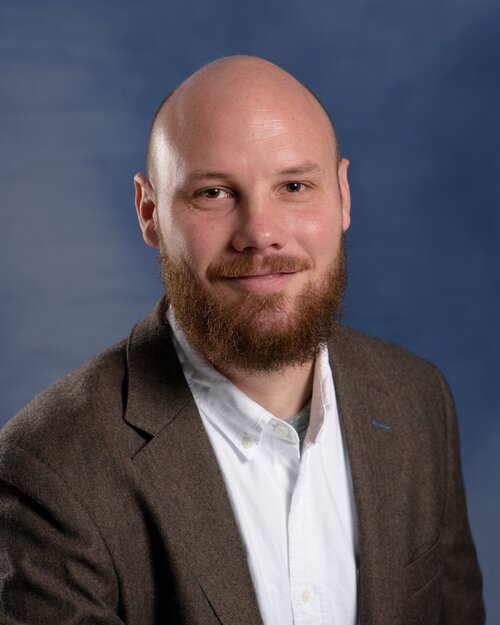
Daniel Hyde is an Associate Professor in the Department of Psychology at the University of Illinois Urbana-Champaign, affiliated with the College of Liberal Arts & Sciences and the Neuroscience Program. His research explores the nature and development of abstract conceptual knowledge through behavioral and neural measures. PhD in Psychology from Harvard University Hyde investigates cognitive development from infancy to adulthood, focusing on quantitative reasoning , spatial reasoning , and psychological reasoning using techniques like event-related brain potentials (ERPs) , functional near-infrared spectroscopy (fNIRS) , and behavioral assessments. His recent work examines how symbolic number knowledge builds on non-symbolic foundations and how neural sensitivity to mental states in infancy predicts later theory of mind abilities. Hyde's publications demonstrate a consistent focus on numerical cognition, multisensory integration, and developmental neuroscience. He leads the Brain and Cognitive Development Lab , participates in global initiatives like ManyNumbers and ManyBabies , and collaborates across disciplines to apply developmental insights to education and public health contexts.
Natalia Villanueva-Nieves is an Assistant Professor in the Department of Chicana and Chicano Studies at Sonoma State University. Her interdisciplinary scholarship bridges literary studies, affect theory, and digital humanities, with a focus on Latinx, Chicanx, Central American, and Caribbean expressive cultures. Her academic background includes a doctoral degree in Chicana and Chicano Studies from the University of California, Santa Barbara, and a master’s in Comparative Literary Studies from Utrecht University. Dr. Villanueva-Nieves' research explores Latinx emotional geographies, transnational feminisms, hemispheric race studies, and digital storytelling. She investigates how affect, space, and racialization intersect in Latina narratives, particularly through relational and hemispheric frameworks. Her work emphasizes collective archives of care and hope in Latinx testimonial writing. Her recent publications reflect a strong trend toward interdisciplinary and public-facing scholarship, combining literary analysis with digital tools and social justice engagement. The articles span themes such as affective spaces, digital archives, transnational feminisms, and geocritical approaches to Latinx literature. Her scholarly work has appeared in Chiricú Journal , Ex-Centric Narratives Journal , Zócalo Public Square , American National Biography , Aztlán: A Journal of Chicano Studies , and edited volumes from UNAM and the University of Alcalá de Henares. Dr. Villanueva-Nieves is currently developing a digital monograph that uses interactive maps and digital storytelling to present Latinx testimonial writing as living archives. She is also completing her book The True Colors of Feeling Brown: Affect and Space in Latina Narratives , under contract with Palgrave in the Geocriticism and Spatial Literary Studies series.
Professor Igor Wigman is a Professor of Number Theory at King's College London, affiliated with the Department of Mathematics within the Faculty of Natural, Mathematical & Engineering Sciences. He completed his PhD in Number Theory at Tel-Aviv University under Zeev Rudnick, followed by postdoctoral roles at CRM Montreal and KTH Stockholm. He joined King's in 2012 as a Lecturer, becoming a Reader in 2014 and Professor in 2018. His research focuses on analytic number theory, probability, and mathematical physics, with emphasis on nodal lines, random fields, and quantum chaos. Notable contributions include studies on the Gauss circle problem, eigenvalue clusters, and nodal volume distributions of random functions. Wigman co-organized the 2016 'Random Waves in London' workshop and delivered an inaugural lecture in 2023 on the interplay of number theory, random functions, and music geometry. His work bridges pure mathematics with applications in spectral geometry and stochastic processes.
Professor Guy Woodward is a Professor of Ecology at Imperial College London's Department of Life Sciences (Silwood Park), part of the Faculty of Natural Sciences. He leads the NERC ERCITE Programme and holds affiliations with the Freshwater Biological Association, serving on its Board of Directors. His research focuses on the impacts of stressors like chemical pollution, climate change, and habitat alteration on aquatic ecosystems, particularly food web dynamics and metabolic theory. Woodward has secured over £13M in grants, including a £2.5M ERCITE grant, and collaborates with international experts such as Dr. Jose Montoya and Prof. Owen Petchey. His work emphasizes individual-based approaches to ecological networks and the application of allometric scaling laws. Key contributions include studying geothermally heated streams in Iceland and experimentally warming mesocosms to understand climate impacts. Woodward has supervised numerous PhD students, including Dr. Gabriel Yvon-Durocher, Dr. Julia Reiss, and Dr. Eoin O'Gorman. Education: PhD in Ecology from the University of London and BSc (Hons) in Ecology & Environmental Management from Cardiff University. His research spans over 20 years, with notable grants from NERC, the European Science Foundation, and AXA Insurance. He co-authored the Next Generation Biomonitoring series and serves as Series Editor for Advances in Ecological Research (Elsevier). Current affiliations include the Georgina Mace Centre for the Living Planet and the Grantham Institute. Research highlights include quantifying climate-warming effects on food webs, developing metabolic theory applications, and investigating synergistic stressor impacts. His team explores ecological resilience, with projects like 'Restoration of Chalk Rivers' and 'Climate Change Impacts on Freshwater Food Webs'. Woodward's work bridges theoretical and applied ecology, aiming to inform conservation and ecosystem restoration strategies.
Tianna Paschel is an Associate Professor in the Department of African American Studies at the University of California, Berkeley. Her research focuses on the intersection of racial ideology, politics, and globalization in Latin America, particularly exploring shifts from universal citizenship to multicultural frameworks recognizing black populations’ rights. She is the author of Becoming Black Political Subjects (winner of multiple awards) and co-editor of Afro-Latin@s in Movement . Paschel holds affiliations with the American Political Science Association Task Force on Race and Class Inequality, the Network of Anti-Racist Action and Research (RAIAR), and the Law Section of the American Sociological Association. Her work examines black mobilization in Colombia and Brazil, anti-blackness in immigration politics, and transnational solidarity networks. Key themes include racialized state policies, intersectionality of race and class, and hemispheric black activism. Her research methods combine ethnography, archival work, and survey data analysis. Paschel’s scholarly contributions bridge sociology, political science, and ethnic studies. Her 2020s work explores California’s racialized immigration debates while earlier projects analyzed Latin America’s ethno-racial rights frameworks. She has received prestigious awards recognizing her groundbreaking analysis of race, statecraft, and social movements. Her professional service includes advising on anti-racist research initiatives and collaborating across disciplines to center black perspectives in academic discourse. Office hours are held Monday-Friday 9am-4pm in 660 Social Sciences Building, UC Berkeley.
Dr. Lynn Wright is a Senior Lecturer in Psychological Sciences at Abertay University with 19+ years of teaching experience. A Chartered Psychologist and Senior Fellow of the Higher Education Academy, she specializes in laterality research with expertise in handedness, anxiety, and behavioral inhibition. Research Focus: Investigates neurological asymmetries through paradigms like Tower of Hanoi tasks, EEG, and TMS. Key interests include: handedness effects on decision-making, emotional processing biases, and personality correlates (perfectionism, escapism). Publication Analysis: Her work (2005-2023) demonstrates consistent exploration of lateralization using behavioral experiments. Recent articles examine environmental influences on anxiety and collaborative research models. Awards & Recognition: Outstanding Teacher Award 2018 Carnegie Trust Travel Grant (2012) Nominated annually for teaching awards since 2010 Supervision & Leadership: Supervised 100+ student projects and 5 Master's researchers. Founded the Research Volunteer Scheme and organized the North Sea Laterality Meeting (2018). Coordinates the Growth Mindset project with Dundee schools and Leisure/Culture Dundee. Educational Initiatives: Leads modules in Psychological Research Methods and Advanced Research Design. Developed ATLEF-funded online resources for statistics instruction.
Katherine Collins is a Research Fellow at the University of Oxford and a member of Wolfson College. She holds affiliations with the Faculty of English and contributes to interdisciplinary research bridging humanities, social sciences, and digital media. Her work emphasizes creative practice as research, critical pedagogies, and the integration of arts/sciences in Antarctic storytelling. Education Katherine earned an MFA in Poetry from the Manchester Writing School. Her academic background combines literary studies with creative writing, demonstrated through her published poetry and collaborative interdisciplinary projects. Research Interests Contemporary life-writing Creative practice as research Critical pedagogies Research cultures 'More-than-human' narratives of Antarctica Interdisciplinary arts/science integration Digital media evolution in storytelling Her publications explore themes like archival gaps in fiction, travel narratives of Frieda Lawrence, and community self-building's sociological impact. Earlier work analyzed Brexit's implications for UK citizens in the EU27 through policy and citizenship frameworks. Recent projects focus on Antarctic storytelling and southern hemisphere textual resonances. Awards Rosamond Prize (2022) for collaboration with composer Christopher Cook Highly Commended in the Plough Prize (2023) for poetry Collaborations & Grants Co-investigator on Wellcome Trust-funded 'Leading in Academic Research Environments' project Collaborator with Joanna Wheeler and Elleke Boehmer on British Academy/Wellcome Trust Antarctic storytelling initiative Former project leader for Ibai (educational inclusion in Nigeria/South Africa/UK) Labs & Teams Affiliated with interdisciplinary teams at the English Faculty and Wolfson College, actively engaging in collaborative research environments and digital humanities projects.
Jens Kattge is an Independent Research Group Leader at the Max Planck Institute for Biogeochemistry in Jena, Germany, specializing in Functional Biogeography. His career spans roles from Research Associate (2002–2005) to Senior Scientist (2010–2012) and current group leadership since 2013. He focuses on plant functional traits, their role in terrestrial ecosystems, and their integration into Earth system models. He coordinates the global TRY Initiative , a plant trait database for biodiversity research, and contributes to the German Centre for Integrative Biodiversity Research (iDiv). His research spans functional biogeography, trait-climate relationships, ecosystem modeling, and biodiversity-ecosystem functioning. Key projects include developing the rtry R package for trait data preprocessing and analyzing global datasets like CoRRE Trait Data and sPlotOpen. Recent publications investigate leaf cuticle thickness, drought responses in tree species, trait controls on biomass, global biodiversity patterns, and the integration of citizen science with Earth observation data. His work emphasizes trait data representativeness and future-proofing ecological science.
Ramana Vinjamuri is an Associate Professor in the Department of Computer Science and Electrical Engineering at the University of Maryland, Baltimore County (UMBC). He holds a secondary appointment as Visiting Professor at the Indian Institute of Technology, Hyderabad, India. His academic journey includes a Ph.D. in Electrical Engineering from the University of Pittsburgh (2008), M.S. in Bioinstrumentation from Villanova University (2004), and B.Tech. in Electrical and Electronics Engineering from Kakatiya University (2002). Dr. Vinjamuri's research focuses on Brain-Machine Interfaces (BMIs) for upper-limb prostheses control , neuroprosthetics and exoskeletons , machine learning in motor control , and neurophysiological signal processing . His work extends synergy-based models to control 37-dimensional hand movements, addresses human-robot interaction through emotionally intelligent systems, and develops neurotechnologies for substance use disorder using wearable sensors and AI. NSF CAREER Award (2019) NSF IUCRC BRAIN Center Planning Grant (2020) Harvey N Davis Distinguished Teaching Assistant Professor Award (2018) His publications demonstrate expertise in EEG and EMG signal analysis , deep learning for motor decoding , synergy modeling , and humanoid robot control . The Vinjamuri Lab at UMBC involves graduate, undergraduate, and high school researchers, with international collaborations in India and the US.
Dr. Michael P. Byrne is an Associate Professor at the School of Earth and Environmental Sciences , University of St Andrews, and a Marie Skłodowska-Curie Research Fellow at the Atmospheric, Oceanic and Planetary Physics Group , University of Oxford. His research focuses on climate dynamics, monsoons, land-climate interactions, and the water cycle. He leads the Climate Dynamics Lab at St Andrews, exploring topics like cloud feedbacks, tropical climate change, and continental-ocean temperature contrasts. He completed his PhD at MIT under Paul O’Gorman. His work bridges theory, models, and observations to address fundamental climate questions, including monsoon dynamics, intertropical convergence zone behavior, and extreme temperature amplification over tropical land. Key contributions include studies on ITCZ width impacts, elevation-dependent warming, and biases in precipitation projections. Education: PhD from Massachusetts Institute of Technology (advisor: Paul O’Gorman) Research Highlights: Cloud feedback mechanisms in tropical climates Land-ocean warming contrasts and their societal impacts ITCZ dynamics and global climate modeling Awards: Marie Skłodowska-Curie Fellowship (Oxford) Labs/Teams: Climate Dynamics Lab (St Andrews), ITCZ-MIP collaboration
Daniel D. De Haan serves as the Frederick Copleston Senior Research Fellow and Lecturer in Philosophy and Theology in the Catholic Tradition at Campion Hall and Blackfriars, University of Oxford. He is also a Research Fellow in the Ian Ramsey Centre for Science and Religion within the Faculty of Theology and Religion. As principal investigator, he leads the "Conceptual Clarity Concerning Human Nature" project sponsored by the Templeton World Charity Foundation. Dr. De Haan received his doctorate in philosophy in 2015 from the Center for Thomistic Studies at the University of St Thomas, Houston, Texas, and the De Wulf-Mansion Centre for Ancient, Medieval and Renaissance Philosophy at the Catholic University of Leuven, Belgium. Prior to Oxford, he was a postdoctoral fellow on the neuroscience strand of the "Theology, Philosophy of Religion, and the Sciences" project at the University of Cambridge. His research focuses on philosophical anthropology, examining how moral psychology, phenomenology, neuroscience, and metaphysics inform our understanding of human persons. He investigates challenges neuroscience and evolution pose for hylomorphism, along with questions in philosophy of religion and medieval philosophy, particularly Thomas Aquinas and Avicenna. His work demonstrates a distinctive integration of Thomistic philosophy with contemporary cognitive science and neuroscience. Analysis of Dr. De Haan's publications reveals consistent engagement with Thomistic philosophical anthropology, exploring the relationship between intellectual operations and psychosomatic processes. His work spans medieval philosophy, metaphysics, philosophy of mind, and theology-science dialogue, with notable application of Thomistic concepts to contemporary philosophical challenges in cognitive science. Dr. De Haan has secured significant research funding as principal investigator for the Templeton World Charity Foundation project "Conceptual Clarity Concerning Human Nature." His scholarly activities include editorial work on collections related to medieval philosophy and active participation in interdisciplinary research bridging theology, philosophy, and cognitive science. At Oxford, Dr. De Haan is affiliated with both Campion Hall and Blackfriars, institutions with strong connections to Catholic intellectual tradition. His work with the Ian Ramsey Centre positions him at the intersection of theological inquiry and scientific investigation, contributing to dialogues about religion and scientific understanding.
Jean Daudelin serves as an Associate Professor at Carleton University's Norman Paterson School of International Affairs in Ottawa, specializing in Latin American political dynamics with concentrated expertise on Brazil and Central America. His academic profile integrates conflict studies, development theory, and security policy through extensive field research on armed insurgencies, indigenous mobilizations, and urban violence. His research program critically examines property rights frameworks, illegal market governance, and the political economy of violence, with recent fieldwork focused on drug markets in Recife, Brazil. He investigates how inequality shapes deterrence mechanisms and homicide reduction policies, notably analyzing Pernambuco's "Pact for Life" initiative. His scholarship bridges theoretical contributions in tenure regimes with empirical studies of land conflicts and religious movements across the Global South. Analysis of his 2017-2023 publications reveals dominant thematic clusters around Brazilian urban violence (particularly crack markets in Recife), hemispheric security policy, and foreign policy analysis of Canada-Brazil relations. The work demonstrates methodological innovation in studying illegal economies while maintaining policy relevance for security governance in Latin America.
Professor Annette Byrne is a leading academic at RCSI University of Medicine and Health Sciences , where she serves as Professor of Physiology and Head of the Precision Cancer Medicine (PCM) Group. She has held this position since 2019 after progressing through roles as Lecturer (2008), Senior Lecturer (2013), and Associate Professor (2017). Her research focuses on precision medicine approaches for colorectal and brain cancers , integrating multi-modality molecular imaging , Next Generation Sequencing , and patient-derived xenograft models . PhD in Cell Biology (University of York, 1999) John Kerner Fellowship in Gynaecologic Oncology (UCSF, 1999-2001) Scientist at Pharmacyclics Inc. (2001-2003) Senior Scientist at Angion Biomedica Corp. (2003-2005) Principal Investigator at UCD Conway Institute (2005-2008) Her research interest lies in precision cancer medicine , particularly elucidating predictive biomarkers (genomic, transcriptomic, proteomic) and identifying novel therapeutic targets . Key methodologies include radiomics , fluorescence-guided surgery , and systems modeling of apoptosis pathways. She has pioneered Ireland's first Tumour Xenograft Facility and Translational In Vivo Imaging Centre . Recent publications highlight her work on cross-species radiomics , cell-free DNA analysis , and glioblastoma microenvironment subtyping . Her Marie Curie networks (Gliotrain, Glioresolve) and COLOSSUS project have trained 25+ PhD researchers in brain cancer therapeutics. Over €45M in national/international grants Member of Royal Irish Academy (2025) Highly cited in Cancer Discovery , Annals of Oncology , and Nature journals She supervises multiple PhD candidates and leads the RCSI Precision Cancer Medicine Group , which utilizes computational approaches and molecular imaging to improve cancer treatment outcomes. Her GLIORESOLVE and EDIReX projects focus on tumor microenvironment manipulation and distributed PDX infrastructure.
Joel Talcott is Professor of Developmental Cognitive Neuroscience at Aston University, specializing in dyslexia and language disorders. His research examines genetic, neural, and cognitive foundations of reading development using methods including neuroimaging, genetic analysis, and large-scale behavioral assessment. Leadership Roles: Vice President of the British Dyslexia Association (2010-present), Fellow of the Royal Society of Arts (2012), and IBRO-UNESCO Science of Learning Fellow (2020). Editorial responsibilities include service for Dyslexia and Annals of Dyslexia journals. Research: Leads the Aston Brain Centre's investigations into neurocognitive trajectories of reading skills. Current projects include the ECCaToN transdiagnostic protocol for neurodevelopmental characterization and analysis of literacy development datasets (LIBS Dataset). Awards: IBRO-UNESCO Science of Learning Fellow (2020) Fellow of the Royal Society of Arts (2012) Honorary Vice-President, British Dyslexia Association (2010)
Aaron Diefendorf is a Professor of Geosciences at the University of Cincinnati within the College of Arts and Sciences. His research focuses on the application of organic geochemical techniques to address questions in paleoclimatology, biogeochemistry, and environmental science. He directs the University of Cincinnati Stable Isotope Laboratory, where his team analyzes biomarkers from sedimentary archives to reconstruct past climate and environmental conditions. Dr. Diefendorf's research interests center on isotope geochemistry, biogeochemistry, organic geochemistry, biomarkers, and stable isotope geochemistry. His work particularly emphasizes plant-derived biomarkers such as leaf waxes (n-alkanes) and diatom-derived highly branched isoprenoids (HBIs) as proxies for reconstructing past hydrological conditions. He investigates how these biomarkers form in modern ecosystems, their preservation in sediments, and their application to paleoclimate reconstruction across various timescales from the Holocene to deep time. His research spans diverse environments including midcontinental North America, the Sierra Nevada, Falkland Islands, and Arctic regions. The analysis of his recent publications reveals a strong focus on methodological development for biomarker analysis, seasonal and spatial variability studies of biomarker production, and their application to specific paleoclimate questions. His work increasingly integrates multi-proxy approaches, combining plant wax and diatom biomarkers with other geochemical indicators to provide more robust paleoenvironmental reconstructions. Recent research shows growing interest in applying these techniques to understand hydrological changes during significant climate transitions including the Little Ice Age and Holocene. Extensive research on plant wax n-alkanes as paleohydrological proxies Pioneering work on diatom-derived HBIs for paleoclimate reconstruction Studies on biomarker production in modern ecosystems to improve paleo-interpretations Applications to major climate events including the Paleocene-Eocene Thermal Maximum Development of analytical methods for biomarker extraction and analysis Dr. Diefendorf has established productive collaborations across multiple institutions and disciplines, working with researchers in geology, biology, environmental science, and climate science. His research has been supported by multiple NSF grants, including collaborative projects focused on biomarker development and paleoclimate applications. He actively engages in public science communication, including outreach at local farmer's markets in the Cincinnati community. His laboratory work focuses on the Stable Isotope Laboratory at the University of Cincinnati, where his team processes sediment samples, extracts organic compounds, and analyzes isotopic compositions using state-of-the-art instrumentation. The lab serves as a hub for interdisciplinary research, training graduate and undergraduate students in geochemical techniques while advancing methodological approaches in biomarker paleoclimatology.