Dr. Andrea Martinez is a Research Fellow in Qualitative Methods at the University of Surrey's School of Psychology. She holds a PhD in Psychology from King’s College London, a bachelor’s degree in Behavioural Science, and a master's in Special Education from the University of the Philippines. Her research focuses on mental health, violence against women and children, health inequalities, and migration-related health issues, particularly among marginalized communities. Dr. Martinez has over 25 years of public service in charity and non-profit organizations, addressing mental health, homelessness, domestic violence, and modern slavery. She has led monitoring and impact evaluations of welfare programs and serves as a speaker/trainer on mental health and well-being. Her work emphasizes co-production research methods and participatory action research. Her publications explore mental health literacy among Filipino migrant workers, barriers to help-seeking in Filipino communities, ethnic disparities in dementia outcomes, and online child sexual exploitation. She collaborates with interdisciplinary teams and has contributed to global health equity efforts. While no specific grants or advising roles are detailed, her extensive engagement with vulnerable populations underscores her commitment to applied research with real-world impact.
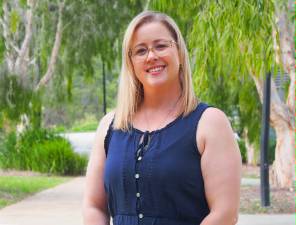
Arlen Rowe is a Postdoctoral Research Fellow at the University of Southern Queensland (USQ) within the Centre for Health Research, affiliated with the School of Psychology and Wellbeing. Her work focuses on improving health outcomes for vulnerable populations through technology-driven interventions. BPych(Hons), University of Southern Queensland (2017) PhD, University of Southern Queensland (2020) Dr. Rowe's research examines digital mental health engagement, particularly for youth and rural populations. Key areas include: Adherence and engagement behaviors in online programs Digital mental health solutions for adolescents Adaptive technology applications Chronic health population interventions Cancer survivorship support Her recent work explores adolescent anxiety interventions, eHealth user experience frameworks, and geographical disparities in cancer care. Notable grants include the HCF Health Services Research Grant (2022) and Australian Rotary Health funding (2020). Awards: Advance Queensland PhD Scholarship (2017) Australian Psychological Society Health Psychology Thesis Award (2021) Dr. Rowe contributes to digital mental health supervision and collaborates on projects addressing rural healthcare challenges.
Daniela Ghio is Lecturer in Psychology at the University of Manchester's Division of Psychology and Mental Health. A chartered psychologist with PhD in Clinical and Health Psychology, her research develops digital interventions for chronic conditions across the lifespan, with special focus on paediatric psychology. Research spans: Digital health interventions for chronic illness Self-management of long-term conditions Paediatric pain perception Behaviour change methodologies Co-production of healthcare research Publication analysis reveals three core themes: Paediatric chronic pain mechanisms and management Parental experiences of childhood illness Digital intervention development for dermatological conditions Awards: None reported Research involvement includes the Manchester Centre for Health Psychology and national NIHR projects. Activities demonstrate commitment to knowledge translation and public engagement.
Hironori Shimada is Professor at Waseda University’s Faculty of Human Sciences and a member of the Science Council of Japan. Holding a Ph.D. from Waseda, he has served continuously on the faculties of Waseda, Niigata and Hiroshima Universities since 1996, specialising in clinical psychology, cognitive-behavioural therapy, stress management and public-health education. Education: 1996 – Ph.D. in Health Sciences, Graduate School of Human Sciences, Waseda University Research interests: Shimada’s work integrates cognitive-behavioural models with public-health approaches to develop and validate interventions for stress, anxiety, addiction, sexual offending, gambling disorder, and childhood behavioural problems. He investigates mechanisms such as cognitive fusion, self-compassion, and contingency perception, and translates findings into scalable manuals, smartphone apps, and school-based programmes. Recent articles (2024-2025) reveal concentrated effort on: Forensic CBT (sex-offender and adolescent-delinquency programmes), Addiction CBT (gambling, internet-gaming, kleptomania) utilising ACT and mindfulness components, Stress-management education in schools and workplaces (self-compassion, help-seeking, teacher mental-health), Psychometric development (Japanese versions of IORNS, cognitive-fusion scales, gambling-urge scales). Scientific awards: JSSM Awards 2018 JAHP Awards 2018 JABCT Awards 2017 Japan Society for Stress Management Award (joint) 2017 JABT Awards 2006 & 2004 JACS Awards 2001 JSBM Awards 2001 JSPM & JAHP Awards 1997 Advising & grants: While individual student names are not listed, Shimada leads large-scale school-based intervention trials and forensic treatment projects implying substantial graduate supervision; funding sources are implied through continuous institutional and ministerial committee appointments. Labs & teams: He heads clinical-psychology laboratories within Waseda’s Faculty of Human Sciences, coordinating multi-site projects on CBT dissemination, stress-management scale development, and forensic risk assessment, while collaborating with correctional and educational authorities nationwide.
Prof. Veroni Eichelsheim is an endowed professor of Intergenerational Continuity of Deviant Behavior at the University of Groningen’s Faculty of Behavioural and Social Sciences, in collaboration with the NSCR. She also serves as a senior researcher at NSCR and a research fellow at VU Amsterdam. Her work focuses on intergenerational transmission of deviant behavior, family dynamics influencing criminality, and the impact of youth care systems. She holds positions in advisory committees like the Complaints Advisory Commission of the Dutch Child Care and Protection Board and chairs the ESC Working Group on Intergenerational Criminology. Education: PhD (2011): Utrecht University, focusing on family relationships and adolescent delinquency. MSc in Clinical/Foresic Psychology (2005): Leiden University. Research Interests: Her research explores how deviant behaviors persist across generations, particularly in families with criminal histories. Key areas include childhood adversity, domestic violence, institutional care effects, and interventions to break harmful cycles. She has led projects like Stay Home, Stay Safe? (examining domestic violence during the pandemic) and the EPIC Project (reducing youth involvement in organized crime). Publications: Over 60 peer-reviewed articles and book chapters since 2007, addressing topics like intergenerational crime, domestic violence mechanisms, and youth care outcomes. Recent work highlights the pandemic’s impact on crime patterns and barriers to help-seeking for sexual violence victims. Grants & Collaborations: Secured NWA grants for projects like EPIC (€1.5M+). Collaborates with Dutch ministries and international criminology networks. Her work bridges academic research with policy advisory roles. Labs/Teams: Leads the NSCR’s Intergenerational Transmission research theme and collaborates with interdisciplinary teams at the University of Groningen and VU Amsterdam.
Sarah Liddle is a Lecturer and Psychology Research Fellow at Monash University's School of Psychological Sciences, affiliated with the Turner Institute for Brain & Mental Health. She holds a PhD in Clinical Psychology (2022) and a Bachelor of Psychology (Honours Class 1) from the University of Wollongong (2014). Her research focuses on adolescent mental health, suicide prevention, and sport-based interventions. She teaches in postgraduate clinical psychology programs and coordinates Master of Clinical Psychology placements. Key projects include developing the 'Help Out a Mate' sports intervention for adolescent males, evaluating suicide prevention training for aged care workers, and co-designing mental health literacy programs for journalists. She has served as an editorial board member for PLoS ONE and peer reviewer for journals like Behaviour Research and Therapy. Her work addresses UN SDGs related to mental health and education, emphasizing context-specific interventions and improving psychology student competencies. Current supervisory roles include mentoring one Master's and two PhD students in mental health/sport-related research.
Professor Viviana Wuthrich is a clinical psychologist and faculty member at Macquarie University's School of Psychological Sciences. She directs the Lifespan Health & Wellbeing Research Centre, integrating research across aging, mental health, and youth psychology. Her work focuses on anxiety and depression interventions for older adults and youth, including programs like Ageing Wisely and Study without Stress. Research interests span geriatric mental health (anxiety, depression, cognitive decline prevention), youth academic stress, and translational research. She has led over 40 projects, including NHMRC grants and international collaborations. Awards include the NSW Young Tall Poppy and Australian Association for Cognitive Behavioural Therapy Mid-Career Award. Teaching includes clinical psychology courses on geriatric mental disorders. She serves on editorial boards (e.g., Clinical Gerontologist) and held roles like National Convenor of the Australian Psychological Society's Psychology & Ageing Interest Group. Key Projects: MRFF Emerging Leadership Fellowship II (2021-2025) CogCoach Health Trial (2024-2028) CONTACT-GAD Multinational Clinical Trial (2022-2027) Her research emphasizes evidence-based interventions, with over 146 publications and 8 major awards. Supervised 14+ HDR students, currently guiding 5 PhD candidates.
Professor Genevieve Dingle is a Professor in Clinical Psychology at the University of Queensland's School of Psychology within the Faculty of Health, Medicine and Behavioural Sciences. She also serves as an affiliate Professor at Nottingham Trent University (UK). Her academic leadership includes course convenor roles for PSYC7291 Cognitive Behaviour Therapies for Adults and PSYC3102 Psychopathology. Dingle holds significant professional roles as Associate Editor of Psychology of Music journal, Culture and the Arts on Prescription lead for the Australian Social Prescribing Institute for Research and Education (ASPIRE), and committee member of the Arts Health Network QLD (AHNQ). Professor Dingle's research centers on social (non-medical) interventions for mental health, with particular expertise in music, arts, and nature-based programs. Her work explores how these interventions can address loneliness, improve emotion regulation, and enhance wellbeing through social identity processes. She has developed notable interventions including the 'Tuned In' music emotion regulation program and 'Groups for Belonging' for loneliness reduction. Her research spans multiple populations including university students, people experiencing homelessness, and those in addiction treatment. Analysis of her recent publications (2023-2025) reveals a strong focus on social prescribing, music-based interventions, and university student mental health. Her work demonstrates consistent application of social identity theory to understand how group membership and community engagement contribute to mental wellbeing. Key themes include the therapeutic potential of choir singing, the development of evidence-based protocols for social prescribing, and the impact of the pandemic on student mental health. Professor Dingle leads several significant research projects including a $1.29M NHMRC-funded cluster randomized controlled trial of 'Groups for Belonging,' a $480K UQ-funded 'Sharper Minds' mental health prevention package for university students, and an Australian Research Council linkage grant evaluating social prescribing for loneliness. Her collaborative work involves interdisciplinary teams across multiple institutions and sectors. Her laboratory work focuses on the School of Psychology at UQ, with particular emphasis on the development and evaluation of group-based interventions. She maintains strong connections with community organizations through her roles with ASPIRE and AHNQ, ensuring her research has practical applications in real-world settings.
Dr. Emily Michelle David is an Associate Professor of Organisational Behaviour at the National University of Singapore (NUS Business School), where she also serves as Academic Director of the MSc in Human Capital Management and Analytics. Previously, she held roles at CEIBS (Shanghai) and Zayed University (Dubai). Her research focuses on workplace inclusivity, employee well-being, and prosocial behaviors, with notable contributions to Journal of Applied Psychology and Journal of Management Studies . She has been recognized with the CEIBS Research Award (2021) and named a 'Best 40 under 40 Business Professor' by Poets & Quants (2019). Dr. David earned her PhD in Industrial-Organisational Psychology from the University of Houston. Her work blends academic rigor with practical experience, including roles at NASA (Wyle Laboratories) and M.D. Anderson Cancer Center, as well as consulting for organizations like Exxon Mobil and Saudi ARAMCO. She teaches courses across leadership, organizational behavior, and innovation, emphasizing real-world applications. Her research interests include: Person-organization fit and diversity in workplaces Employee burnout prevention and resilience Leadership development and authentic self-expression Coworking spaces and collaborative dynamics Unethical pro-organizational behavior and ethical leadership Her recent publications highlight trends in leadership dynamics, CSR impacts on work-life balance, and the interplay between workplace diversity and justice perceptions. She advocates for environments that foster creativity and ethical practices, as exemplified in her book Innovative to the Core (2022). As an educator, Dr. David prioritizes experiential learning and has developed over 20 courses across undergraduate, MBA, and executive education programs. Her advising and grants focus on human capital analytics and management strategies, though specific grant details are not documented here. She leads initiatives to enhance workplace inclusivity through NUS’s Human Capital Management programs, aiming to bridge theoretical insights with practical managerial solutions.
Dr. Sally Barlow is a Senior Lecturer in Mental Health Nursing at City St George's, University of London, where she has been a faculty member since 2013. She is affiliated with the School of Health Sciences and the Department of Mental Health Nursing, contributing significantly to education and research in recovery-focused mental health and collaborative care. Education BSc (Hons) in Neuroscience Postgraduate Diploma in Statistics PhD in Behavioural Neuroscience, Trinity College Dublin Research Interests Dr. Barlow's research centers on recovery-focused mental health care, shared decision-making, risk assessment and management in mental health services, and collaborative care models. Her early work involved molecular neuroscience, particularly the pathophysiology of depression and anxiety, before transitioning into clinical and healthcare research. She has led and contributed to numerous studies exploring how mental health service users experience risk management and how peer support can improve discharge outcomes. Her work emphasizes patient-centered approaches, co-production with service users, and the integration of experiential knowledge into mental health service design. Publication Trends Her recent publications (2017–2024) reflect a strong focus on qualitative and mixed-methods research in mental health services. Key themes include shared decision-making, peer support interventions, recovery-oriented care planning, and the experiences of service users and carers in dementia and severe mental illness. She frequently collaborates on large-scale, cross-national studies and randomized controlled trials, often using the Theoretical Domains Framework to analyze behavioral influences in clinical practice. Scientific Awards Patrizia Matteucci Prize for Best Letter of Intent (2007) Health Research Board (HRB) Scholar Award (2004) Children's Memorial Hospital, Chicago Scholarship (2002) Advising and Grants Dr. Barlow has served as a second supervisor for PhD students including Michelle Parker and Nafiso Ahmed, whose research explored dementia diagnosis help-seeking and shared decision-making in risk management. Her research has been supported by funding from City, University of London, and the East London NHS Foundation Trust. She actively engages in co-produced research and collaborates with service user advisory groups such as SUGAR (Service User and Carers Group Advising on Research). Labs and Teams She is part of research teams focusing on mental health service delivery, recovery-oriented practices, and peer support interventions. Her work is closely linked with NHS mental health services and involves longitudinal, mixed-methods studies evaluating the impact of care coordination and discharge planning. She contributes to editorial boards, including the British Journal of Psychiatry Bulletin , and serves as a peer reviewer for NIHR grant programs.
Anita Laidlaw is an Honorary Senior Lecturer in the School of Medicine at the University of St Andrews, within the Department of Medical & Biological Sciences. She is actively involved in teaching and research, with a strong focus on medical education, clinical communication, and professional wellbeing. University: University of St Andrews School: School of Medicine Department: Medical & Biological Sciences Academic Rank: Senior Lecturer (Honorary) Email: ahl1@st-andrews.ac.uk Her research spans two overlapping domains: healthcare communication and higher education research. In healthcare communication, she investigates factors influencing clinical interactions and develops training to enhance patient-centered communication, including observational studies on weight management discussions and empathy maps in medical education. In higher education, she focuses on student and professional wellbeing, burnout, help-seeking behavior, and academic career pathways, especially during transitions such as those caused by the COVID-19 pandemic. Her recent publications highlight a consistent trend in wellbeing, communication, and medical education, with increasing use of narrative and animation-based methods to support healthcare professionals' mental health. These works reflect interdisciplinary approaches combining psychology, education, and organizational theory. She has received several scientific awards and recognitions: AMEE Associate Fellow (2018) Education Research Committee member, Association for the Study of Medical Education (2021) McCall MacBain Teaching Excellence Award (2018) SMERC Travel Fellowship (2019) Travel Award to attend AMEE conference (2006) Anita Laidlaw supervises postgraduate research students and has led or co-led multiple research projects, including those funded by SMERC, The Russell Trust, and internal awards. She is actively involved in professional networks such as the Association for the Study of Medical Education (ASME), the European Association of Communication in Healthcare (EACH), and the Scottish Medical Education Research Consortium (SMERC), where she serves as a Board Member. She also organizes academic activities such as the St Andrews Research Internship Scheme and presents her work widely at conferences and workshops.
Amos Simms holds a Doctor of Philosophy in Psychological Medicine and is actively engaged in research addressing mental health challenges among UK military personnel and veterans. His work contributes to UN Sustainable Development Goals focused on good health and well-being. He collaborates on interdisciplinary studies involving mixed-methods approaches, qualitative interviews, and longitudinal cohort analyses. Research interests include alcohol misuse in military populations, veteran loneliness, health and well-being outcomes, and the usability of digital tools for behavioral health interventions. Recent studies have explored help-seeking behaviors for self-harm/suicidal ideation among ex-serving personnel and long-term mental health impacts of conflict service. Collaborations span academic institutions and healthcare agencies, with publications in journals like European Journal of Psychotraumatology and BMJ Open . His research emphasizes practical applications, such as pilot testing mobile health apps for alcohol reduction in veterans.
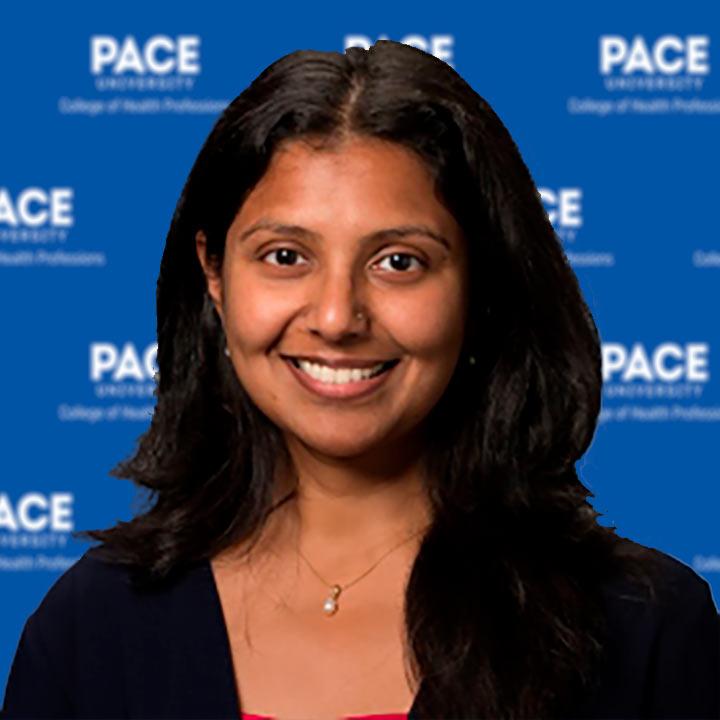
Sethu Karthikeyan is an Associate Professor in the Department of Communication Sciences and Disorders at the College of Health Professions, Pace University, where he has been a faculty member since 2013. He holds a PhD in Speech-Language-Hearing Sciences from The Graduate Center, City University of New York. His academic roles are deeply integrated with interdisciplinary research at the intersection of evolutionary psychology, speech science, and sociolinguistics. PhD, Speech-Language-Hearing Sciences, The Graduate School and University Center, The City University of New York, 2012 MS, Speech and Hearing, All India Institute of Speech and Hearing, Mysore, India, 2003 BS, Speech and Hearing, Dr. MV Shetty College of Speech and Hearing, Mangalore, India, 2001 Dr. Karthikeyan's research focuses on evolutionary behavioral sciences, particularly the human capacity for spoken language, social evaluations based on speech, vocal-verbal flexibility, and cultural diversity. He investigates how voice pitch, articulation, and dialect influence perceptions of attractiveness, status, and empathy, often using an evolutionary psychology framework. His work bridges speech science and sociocultural factors, with collaborations involving the Evolutionary Psychology Lab at SUNY New Paltz and the Behavioral Endocrinology and Evolution Lab at Penn State. His recent publications, including in Scientific Reports and Evolutionary Behavioral Sciences , reveal a strong trend toward understanding human mating behaviors, sound symbolism (e.g., Bouba-Kiki effect), and cross-cultural communication. The articles collectively emphasize experimental and evolutionary approaches to language and social perception, often incorporating cross-modal and cross-cultural data. Dr. Karthikeyan has received several honors, including the College of Health Professions Dean's Scholarship Award (2023), the Martin Gitterman Excellence in Teaching Award (2010), and the Moe and Hannah Bergman Award (2009). He has advised multiple student researchers and secured numerous grants, such as the Dean’s Summer Research Grant (2024), SRC awards, and the Kenan Grant for conference presentations (2014–2024). He is also actively involved in university governance, serving on committees including the Allied Health Search Committee and the Scholarly Research Committee. Dr. Karthikeyan is an Editorial Board member of Scientific Reports (Human Behaviour) and a member of professional organizations such as the International Society for Human Ethology and the American Speech-Language-Hearing Association. He teaches courses such as Evolutionary Psychology, The Science of Speech Sounds, and Research in Communication Science Disorders, reflecting his broad expertise and integrative approach to behavioral and communication sciences.
Dr. Margarita Panayiotou is a Lecturer in Educational Psychology at the Manchester Institute of Education (University of Manchester), specializing in adolescent mental health, psychometric analyses, and social media impacts. She has led multiple large-scale school-based mental health intervention projects including the HeadStart evaluation (2016–2023) and the Good Behaviour Game (2017–2020). Her methodological expertise includes structural equation modeling (SEM), Monte Carlo simulations, and network analysis. She founded the MIE SEM group in 2018 to promote collaborative research in advanced quantitative methods. Her academic journey includes a PhD in Clinical Psychology from the University of Edinburgh (2015) and an MA in Psychology from the University of Cyprus (2011). Her research focuses on refining mental health measurement tools, such as the WHOQOL-BREF, and evaluating intervention efficacy through advanced statistical techniques like complier average causal effect (CACE) estimation. Key Projects: HeadStart, Good Behaviour Game, INSPIRE trial, AWARE trial Methodologies: SEM, Monte Carlo simulations, latent class analysis, panel networks SDG Contributions: Education (Goal 4), Good Health (Goal 3) Her recent work highlights the nuanced relationship between social media usage and adolescent mental health, emphasizing the need for context-aware measurement frameworks. Awards include the 2020 RSSG Excellence Award (Highly Commended) and 2019 Exceptional Performance Reward.
Jack Andrews is a Wellcome Early-Career Fellow and Stevenson Junior Research Fellow in Medical Sciences (Psychology) at University College, University of Oxford. He also holds an affiliated Research Fellow position at the Matilda Centre for Mental Health and Substance Use at the University of Sydney. His academic journey includes completing Psychological & Behavioural Sciences at Cambridge and a PhD at the UCL Institute of Cognitive Neuroscience, followed by postdoctoral work at UNSW and the University of Sydney. Andrews' research focuses on adolescent development through the lens of social networks and mental health. His work examines peer influence effects on adolescent mental health (including social contagion and co-rumination), novel methods for evaluating school-based mental health interventions using social network analysis, and the development of social cognition during adolescence (particularly social working memory). He employs diverse methodologies spanning experimental psychology, computational social sciences, epidemiology, and intervention science. His recent publications demonstrate a strong emphasis on adolescent mental health interventions, with particular attention to how social networks influence mental health outcomes. Andrews frequently investigates the complex relationships between emotional problems and substance use in adolescents, while also examining how universal school-based interventions can be improved through trauma-informed approaches and attention to gender and sexuality diversity. Wellcome Early-Career Fellow Stevenson Junior Research Fellowship in Medical Sciences (Psychology) Andrews actively supervises DPhil students interested in mental health, social influence, and social development during adolescence. His research is primarily funded by the Wellcome Trust and University College, Oxford. He collaborates extensively with researchers across institutions, particularly with the Matilda Centre at the University of Sydney and colleagues in Australia. Andrews maintains an active research laboratory focused on adolescent social networks and mental health, utilizing both experimental and observational methods. His team employs social network analysis to understand how adolescents navigate their complex social worlds and how these networks impact mental health outcomes. The lab's work often bridges theoretical psychological concepts with practical applications for mental health interventions.