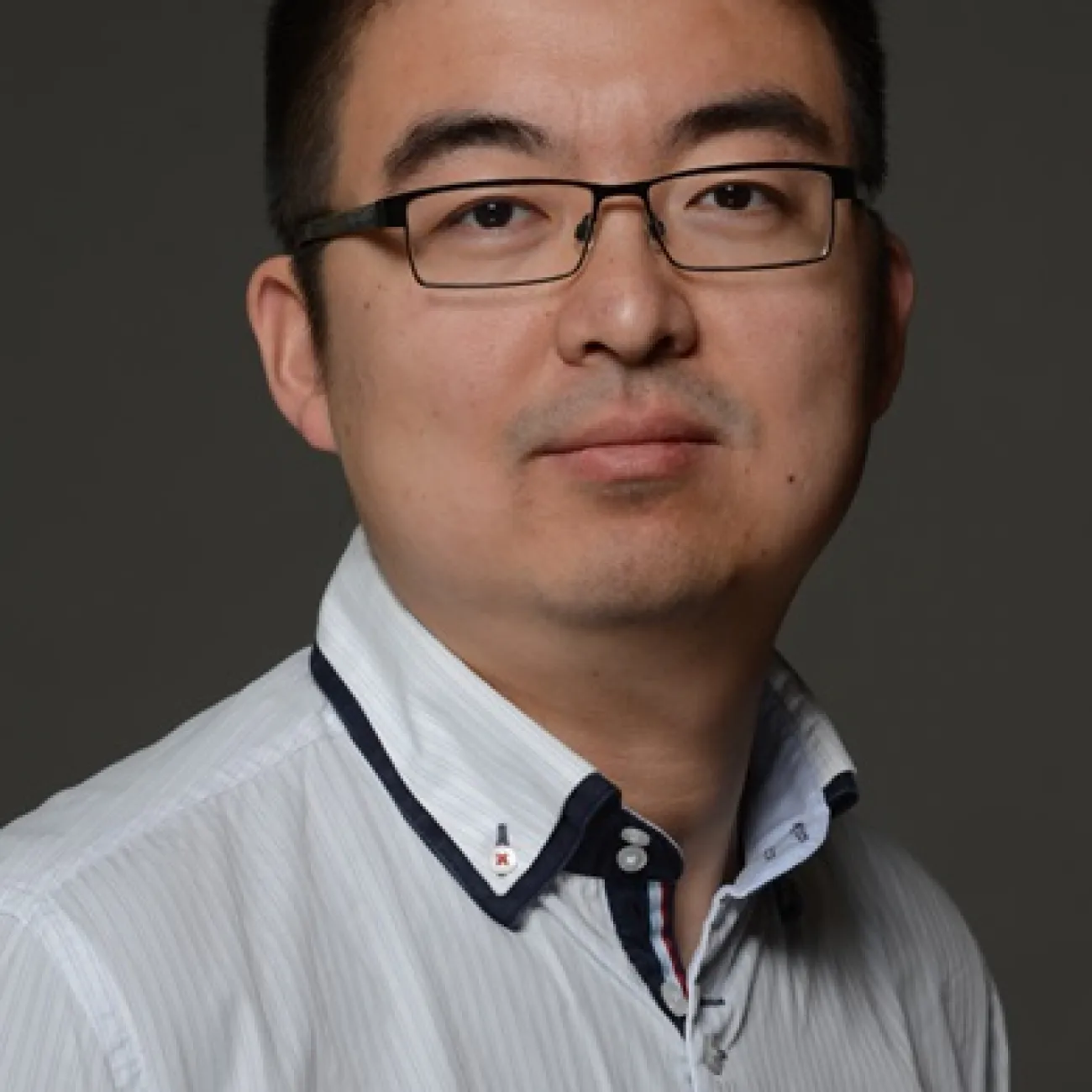
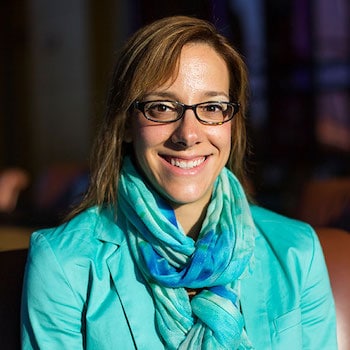
Jesse Liu is an Assistant Professor of Physics at the New York University College of Arts & Science , joining in Spring 2025. He collaborates with the ATLAS Experiment at CERN and leads the NYU Experimental Particle Physics group. Research Interests: Liu's work bridges fundamental particle physics and detector innovation. He investigates Tau-lepton electromagnetic dipoles via photon collisions at the LHC High-luminosity LHC silicon tracker upgrades Dark matter searches through collider experiments and the BREAD axion detection project Cosmic ray physics using ATLAS data Recent Publications focus on tau magnetic moment measurements, detector thermal stress mitigation, and cosmic ray signature analysis. His work has been featured in Phys. Rev. D , Phys. Rev. Lett. , and JINST . Outreach & Mentorship: Liu actively engages in public science communication through Pint of Science talks The Conversation articles School visits to CERN First-gen student mentorship at NYU CU*iP Contact: Office at 726 Broadway, Room 852, New York City. Email: jesse.liu2@nyu.edu
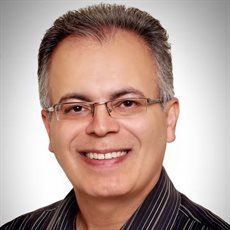
Dr. Xi Yu is a Lecturer in Chemical Engineering at the University of Southampton, affiliated with the Faculty of Engineering and the Environment. He holds a Bachelor's from Tianjin University and a Ph.D. from the University of Sheffield. His research focuses on low carbon fuels, granulation techniques, and computational fluid dynamics. He has supervised PhD students such as Jerin Jacob and is currently accepting new PhD applicants in these areas. Dr. Yu's educational background includes degrees in Chemical Engineering and prior academic roles at Aston University and the Energy and Bioproducts Research Institute (EBRI). His work spans bioenergy systems, particle technology, and multi-physics modeling. Key research projects include advancements in biomass gasification, biofuel production, and sustainable energy systems. His publications emphasize computational modeling, fluid dynamics, and biomass utilization. Recent articles explore topics like absorption chiller systems, fluidization validation, and bio-oil aging strategies. He contributes to teaching modules such as CHEG3000 and CHEG3004, reflecting his commitment to both research and education.
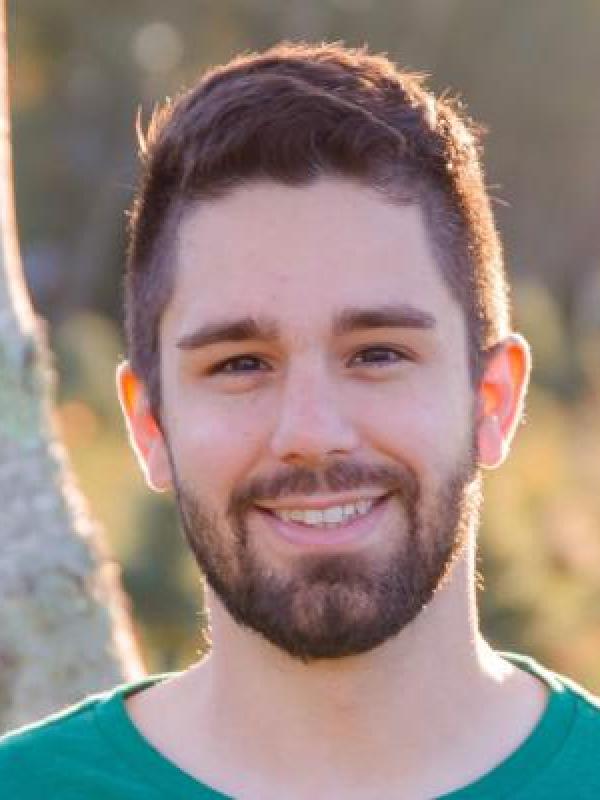
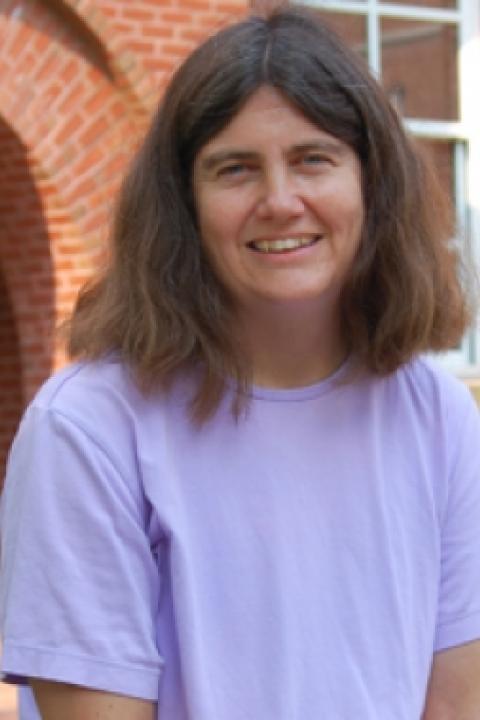
Daniel Brandenburg is an Assistant Professor of Physics at Ohio State University, affiliated with the Physics Research Building. His research focuses on studying nuclear matter under extreme conditions via relativistic heavy-ion collisions, particularly creating and analyzing the quark-gluon plasma (QGP). He is a key member of the STAR Experiment at RHIC and the EPIC Collaboration for the Electron Ion Collider (EIC). His work explores ultra-strong electromagnetic fields generated in collisions to probe QGP dynamics and search for physics beyond the Standard Model. Brandenburg holds a B.S. in Physics from the University of Florida (2013), followed by an M.S. (2015) and Ph.D. (2016) in Physics from Rice University. He has received notable awards including the Blavatnik Regional Award (2022), Elsevier Young Scientist Award (2019), and Goldhaber Fellowship (2020). His research interests span QGP imaging using high-energy photons, gluon tomography in nuclei, and precision measurements with the upcoming EIC. Recent work includes studies on charge-parity symmetry breaking in baryons, entanglement-based interferometry, and observation of antimatter hypernuclei. His group actively develops detector technologies for STAR and EPIC collaborations. Key achievements include publishing over 50 peer-reviewed articles since 2023, focusing on flow coefficients, strangeness production, and jet modifications in heavy-ion collisions. His 2025 work on QGP photon imaging and 2024 discoveries in ultra-peripheral collisions highlight his contributions to advancing frontier physics.
Dr. Quirin Thomas Simon Vogel is a Senior Lecturer at the Department of Statistics, University of Klagenfurt. He previously held postdoctoral positions at the Technical University of Munich, New York University Shanghai, and served as an Interim Professor at Ludwig-Maximilians University of Munich. His research bridges probability theory with statistical mechanics and algorithmic applications. Current role: Senior Lecturer (2025) Previous roles: Postdoc (TUM, NYU Shanghai), Interim Professor (LMU Munich) His research focuses on: Random walks and their geometric/stochastic properties Randomized algorithms with applications in statistical models Quantum-inspired probabilistic systems (e.g. interacting bosonic loop soups) Large deviation theory for complex systems Percolation and phase transitions in particle models The articles reflect trends in probability theory, mathematical physics, and algorithmic applications. Key topics include high-dimensional percolation, Bose gas models, neural network theory, and stochastic geometry. The work combines rigorous mathematical analysis with interdisciplinary applications in physics and computer science. Scientific awards and functions cannot be determined from the provided data, as they describe other researchers. The department's research activities include projects on statistical learning, quantum models, and algorithmic probability, though Vogel's direct involvement in these specific funded projects isn't explicitly stated.
Thomas Cohen is a Professor and Associate Chair in the Department of Physics at the University of Maryland. He holds a B.A. from Harvard College (1980) and a Ph.D. from the University of Pennsylvania (1985). A Fellow of the American Physical Society, he was also an NSF Presidential Young Investigator from 1990 to 1995. His teaching accolades include the Celebrating Teaching Award, Dean's Award for Excellence in Teaching, and Distinguished Scholar-Teacher Award. Cohen's research focuses on quarks, hadrons, and nuclei, with affiliations to the Maryland Center for Fundamental Physics. His work explores QCD dynamics, exotic hadrons, and quantum algorithms for particle physics. Recent contributions include studies on gauge invariance, heavy-ion collisions, and adiabatic quantum computing. His research spans theoretical particle physics, nuclear physics, and computational methods, with notable publications on QCD phase diagrams, tetraquark states, and adiabatic state preparation. Cohen actively collaborates on projects involving quantum simulations and high-energy physics phenomena. His awards reflect both scholarly and pedagogical excellence.
Masatoshi Takano is a Professor at the Faculty of Science and Engineering, Waseda University, specializing in theoretical studies of nuclear physics, particle physics, and astrophysics. His work focuses on nuclear equations of state (EOS) for neutron stars and core-collapse supernovae, incorporating realistic nuclear forces like the Argonne v18 and Urbana IX potentials. He has developed variational methods with explicit energy functionals to model hyperonic nuclear matter, spin-orbit forces, and finite-temperature effects. Education : PhD in Science, Waseda University Professional Memberships : American Physical Society, Japan Physical Society Research spans neutron star structure, supernova simulations, and nuclear matter phase transitions. His recent presentations address neutrino emission rates, braking radiation in nuclear matter, and cluster variational methods. Key collaborations include H. Togashi, K. Nakazato, and K. Sumiyoshi. Scientific contributions involve refining variational energy expressions for asymmetric nuclear matter, incorporating three-body forces, and studying pion condensation effects on neutron star cooling. He has applied his EOS models to multidimensional supernova simulations and cosmic ray detector design.
Stephen Pankavich is a Professor and Department Head in the Department of Applied Mathematics and Statistics at the Colorado School of Mines. He holds a PhD in Mathematical Sciences from Carnegie Mellon University, with research focused on partial differential equations, kinetic theory, and mathematical biology. His work bridges theoretical analysis and computational methods, addressing challenges in plasma dynamics, epidemiological modeling, and multiscale systems. Education: PhD, Mathematical Sciences, Carnegie Mellon University (2005) MS, Mathematical Sciences, Carnegie Mellon University (2001) BS, Mathematical Sciences, Carnegie Mellon University (2000) Research interests include the analytical and numerical study of collisionless plasmas, HIV dynamics, and epidemiological models. He has received awards such as the W.M. Keck Mentorship Award and the Colorado School of Mines Alumni Teaching Award. His articles explore topics like plasma decay rates, HIV therapy models, and particle-tracking algorithms. He has advised over 20 graduate and undergraduate students, contributing to impactful research in applied mathematics and computational science.
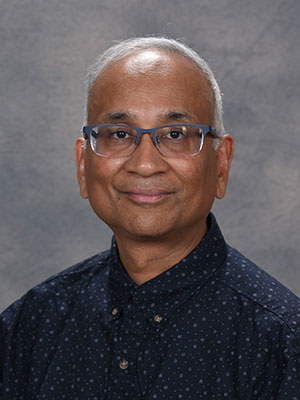
Sandeep Kumar is an Associate Professor in the Department of Computer Science and Engineering at Texas A&M University, College Station. He holds a PhD in Computer Science from Purdue University (1995) and a B.Tech in Electrical Engineering from the Indian Institute of Technology, New Delhi (1985). His research focuses on computer security, networking, and system-level programming. Prior to academia, he worked in industry roles including at VMware in Palo Alto, CA. He currently teaches courses such as CSCE 313 (Introduction to Computer Systems) and CSCE 222 (Discrete Mathematics), emphasizing system software, networking, and cybersecurity. His teaching philosophy incorporates modern tools like GCP and Docker for practical learning. He advises students on technical projects but notes his non-tenure track role limits formal research supervision. Professional interests include curriculum design, educational technology, and bridging industry-academia gaps in cybersecurity. Education: Ph.D., Computer Science, Purdue University, 1995 M.S., Computer Science, University of Tennessee, 1987 B.Tech, Electrical Engineering, IIT Delhi, 1985 Research Interests: Computer Security, Networking, Operating Systems Teaching: CSCE 313 (Computer Systems), CSCE 222 (Discrete Math), CSCE 111 (Java Programming) Industry Experience: VMware (Networking & Security), Former Googler Awards: Hagler Fellow (2023), Google GCP Educational Grants Dr. Kumar’s work emphasizes practical system-level programming and security, with contributions to intrusion detection systems and secure enterprise networks. His courses integrate modern tools like RustRover and Docker, reflecting industry standards. He actively engages with educational technology, including LaTeX-based lecture materials and Gradescope integration.
Professor Guennadi Borissov is affiliated with the Department of Physics at Lancaster University , actively participating in the ATLAS experiment at CERN . His research focuses on CP violation in particles containing b quarks , aiming to explain the universe's matter-antimatter imbalance. Research Interests: Dr. Borissov investigates deviations from lepton flavor universality (LFU) using top quark decays to tauons. His work involves precision measurements of branching fractions and testing Standard Model predictions through ATLAS detector data . Recent Publications (2025): His contributions include studies on jet track functions, Higgs boson decays, W-boson cross-sections, and searches for new physics phenomena like heavy neutral leptons and long-lived particles. These articles emphasize Standard Model validation , CP violation , and detector performance . Grants & Projects: He is involved in responsive and consolidated grants funded by the STFC , supporting Lancaster's Experimental Particle Physics group and ATLAS-related research (2022–2026). PhD Supervision: Dr. Borissov supervises Beltran Fernandez Barbadillo , focusing on top quark decay measurements. Contact: Department of Physics, B016, B-Floor, Physics Building, Lancaster University. Email: g.borissov@lancaster.ac.uk .
Georges FOKOUA is a Lecturer-Researcher at ESTACA (École Supérieure des Techniques Aéronautiques et de Construction Automobile), Paris-Saclay Campus, Saint-Quentin-en-Yvelines, France. He serves as the Training Manager for the 5A Specialty in New Energies and Environment. His academic career spans multiple institutions, including IRSTEA Rennes as a Research Engineer (2014-2016) and the Naval School in Brest as a Teaching and Research Assistant (2009-2014). Dr. FOKOUA's research focuses on experimental and numerical fluid mechanics with particular interest in multiphase flows, turbulence, wake flows, and the characterization of spatio-temporal dynamics of particulate and gaseous pollutants. His work bridges fundamental fluid mechanics with practical applications in transportation systems, naval propulsion, and environmental engineering. He has developed expertise in advanced measurement techniques including PIV, LDV, Ombroscopy, hot wire, optical probes, PTV, and both mono- and biphasic CFD using Ansys-Fluent, Comsol Multiphysics, and Matlab. His publication record demonstrates strong expertise in particle dispersion in transportation systems, with recent work focusing on brake particle dispersion in underground train stations, vehicle wake flows, and ultrafine particle dispersion. His earlier work investigated bubble effects in Taylor-Couette flow for naval propulsion applications. His research consistently combines experimental work with numerical modeling to address complex fluid dynamics problems. Dr. FOKOUA actively supervises doctoral and master's students, with current PhD candidates working on topics related to air quality in vehicle cabins, particulate pollutant dispersion in vehicle wakes, and navigation emissions. He has also contributed significantly to major research projects including CEPARER (2022-2025), AmCoAir (2020-2023), and CAPNAV (2019-2022), all funded by ADEME with various industrial partners. As an educator, he teaches Fluid Mechanics, Thermodynamics, Thermal Engineering, and Energy Conversion and Transfer courses across all undergraduate and graduate levels at ESTACA. He has also led the Euroglider project (2016-2019), developing a two-seat electric propulsion glider for pilot training.
Chiharu Tokoro is a Professor and currently serves as the Dean of the School of Creative Science and Engineering at Waseda University. She also holds positions as an External Director at Toppan Photomasks Inc. and JX Metals Corporation, and is a Specially Appointed Professor at The University of Tokyo's Graduate School of Engineering. With a Dr. Engineering degree from The University of Tokyo (2003), she has established herself as a leading researcher in resource recycling and environmental engineering, with over 184 papers and an h-index of 27 (Scopus) or 30 (Google Scholar). Dean of School of Creative Science and Engineering, Waseda University (2024.09-present) External Director, Toppan Photomasks Inc. (2023.11-present) External Director, JX Metals Corporation (2021.04-present) Specially Appointed Professor, The University of Tokyo, Institute of Industrial Science (2016.11-present) She received her Dr. Engineering degree from The University of Tokyo in March 2003 after completing her undergraduate studies at Waseda University's School of Science and Engineering (1994-1998). Professor Tokoro's research spans transport phenomena, metals production, earth resource engineering, energy sciences, and environmental materials recycling. She specializes in solid-liquid and solid-solid separation processes, powder simulation and processing, and environmental treatment technologies. Her work focuses on innovative recycling methods for lithium-ion batteries, photovoltaic panels, and other electronic waste, with particular emphasis on pulsed discharge techniques for material separation. She has pioneered novel electrical pulse methods that enable high-precision separation of battery components while minimizing environmental impact. Her recent publications demonstrate a strong focus on advanced recycling technologies, particularly for lithium-ion batteries and electronic waste. She has developed groundbreaking pulsed discharge methods for separating battery components with high precision, achieving over 95% material recovery rates. Her research also extends to water treatment technologies, heavy metal removal, and sustainable materials development. The interdisciplinary nature of her work bridges chemical engineering, materials science, and environmental engineering to address critical resource circulation challenges in the context of circular economy principles. Jubilee Global Diversity Award from The American Ceramic Society (2024) 令和4年度リサイクル技術開発本多賞 (2022) 5th APT Outstanding International Contribution Award (2022) Falling Walls Science Breakthroughs of the Year 2021 finalist in Engineering and Technology 平成31年度文部科学大臣表彰 科学技術賞 (2019) Professor Tokoro serves on numerous national and international committees related to resource recycling, environmental policy, and scientific research evaluation. She is an active editorial board member for several prestigious journals including Scientific Reports and Minerals. Her research is supported by various grants from government agencies and industry partnerships focused on sustainable resource management and circular economy development. She has been instrumental in developing policy recommendations for electronic waste recycling and resource conservation in Japan. As Dean of the School of Creative Science and Engineering at Waseda University, she leads one of Japan's premier institutions for engineering education and research. Her laboratory focuses on developing innovative recycling technologies, particularly for lithium-ion batteries and photovoltaic panels. She collaborates extensively with industry partners and government agencies to translate research findings into practical applications that address real-world resource circulation challenges.
Susan T. Lepri is a Professor in the Department of Climate and Space Sciences and Engineering at the University of Michigan's College of Engineering, where she serves as Director of the Space Physics Research Laboratory. Her work focuses on heliospheric physics, utilizing spacecraft data from missions like ACE, WIND, and Solar Orbiter to investigate solar wind origins and coronal mass ejections. Her educational background includes: Ph.D. in Atmospheric and Space Sciences, University of Michigan M.S. in Atmospheric and Space Sciences, University of Michigan B.S. in Physics, Astronomy and Astrophysics, University of Michigan Lepri's research centers on tracing charged particles in the heliosphere using heavy ion measurements to study solar wind sources, coronal mass ejection physics, and particle acceleration mechanisms. She develops space-based ion mass spectrometers for missions including the European Space Agency's Solar Orbiter (Heavy Ion Sensor) and the Interstellar Mapping and Acceleration Probe. Her work integrates statistical analysis of solar wind composition with magnetohydrodynamic model validation to unravel plasma behavior in space environments. Analysis of her 15 most recent publications (2015-2017) reveals consistent focus on solar wind composition dynamics, particularly charge state evolution and elemental fractionation. Key themes include magnetic reconnection signatures in slow solar wind formation, anomalous composition in depleted interplanetary coronal mass ejections, and solar wind charge exchange contributions to X-ray backgrounds. Her instrumentation work bridges observational gaps in inner heliospheric measurements. Major recognitions include: 2018 Claudia Joan Alexander Trailblazer Award (University of Michigan) 2012-2013 Kenneth M. Reese Outstanding Research Scientist Award 2008 JGR-Space Physics Excellence in Refereeing Citation NASA Graduate Fellowship (2001-2003) Lepri actively mentors through outreach programs including K-12 initiatives with the Michigan Space Grant Consortium and Detroit Area Pre-College Engineering Program. She has coordinated Rochester Adams High School STEAM fairs and elementary science outreach while developing educational content like MConnex videos. Her research is supported by NASA grants enabling instrument development for Solar Orbiter and IMAP missions, with collaborations spanning international space agencies and academic institutions. As Director of the Space Physics Research Laboratory, she leads teams developing next-generation space instrumentation, particularly ion mass spectrometers for heliospheric exploration. Current projects include the Heavy Ion Sensor for Solar Orbiter (measuring inner heliospheric composition) and innovative sensors for IMAP, advancing capabilities to trace solar wind sources and particle acceleration mechanisms.
Dr. Taghi Miri is an Assistant Professor in the School of Chemical Engineering at the University of Birmingham, specializing in Chemical Engineering with a focus on food processing safety, environmental engineering, and nanotechnology. He holds a PhD from the University of Birmingham, focusing on plant-based food processing. His research spans food waste valorization, novel food processing technologies, and bioremediation of heavy metals. He has collaborated with industry leaders such as Marlow Food, CSM Bakery, and P&G, and has led modules in Food Engineering, Food Safety, and Chemical Engineering education. Education: BSc, MSc & PhD in Chemical Engineering from the University of Birmingham. Research Interests: Food safety challenges in reformulation, circular economy applications, and nanocomposite development for drug delivery. His current projects include food waste valorization via supercritical CO₂ extraction and ohmic heating for food safety. Editorial Roles: Associate Editor of the Journal of Water and Environmental Nanotechnology and Guest Editor of the Journal of Sustainability (Special Issue on Food Waste). Advising: Supervises PhD/MSc projects in Food Engineering and Environmental Bioprocessing. Leads modules such as 'Food Microbiology and Safety' and 'Novel Food Processing'.
Lynn Kistler is a Professor in the Department of Physics & Astronomy at the University of New Hampshire (UNH), part of the College of Engineering and Physical Sciences. Her research focuses on plasma physics, space weather, and magnetospheric dynamics, particularly investigating the interactions between the solar wind and Earth's magnetosphere-ionosphere system. She holds a Ph.D. in Physics from the University of Maryland, along with a B.S. from Harvey Mudd College. Dr. Kistler's work emphasizes understanding plasma processes such as ion outflow from the ionosphere, magnetic reconnection, and storm-time magnetospheric evolution. She has led studies using data from missions like the Van Allen Probes, Solar Orbiter, and Cluster, contributing to advancements in instrumentation (e.g., the SWA suite) and computational modeling. Her research bridges observational analysis, theoretical frameworks, and machine learning to address challenges in space weather prediction and plasma dynamics. Key areas of her research include the role of ionospheric ions (O⁺, H⁺) in plasma sheet dynamics, the effects of geomagnetic storms on ring current formation, and the behavior of heavy ions in near-Earth space. She has authored or co-authored over 260 publications, spanning journals like Nature Communications , Geophysical Research Letters , and Journal of Geophysical Research . Dr. Kistler has secured grants and collaborations through initiatives like the NASA Interstellar Mapping and Acceleration Probe (IMAP) and has served as a co-investigator on multiple missions. Her work emphasizes interdisciplinary approaches, combining spacecraft observations with ground-based data and numerical simulations to unravel the complexities of Earth's space environment.
Sinan Yıldırım is a Researcher in the Faculty of Engineering and Natural Sciences at Sabancı University, Turkey. His primary research focuses on Bayesian Statistics, Monte Carlo methods, and data privacy, with interdisciplinary applications in machine learning and signal processing. He holds a BSc and MSc in Electrical and Electronics Engineering from Boğaziçi University, followed by a PhD in Mathematical Statistics from the University of Cambridge. Postdoctoral research (2013-2015) at the University of Bristol’s School of Mathematics involved the EPSRC-funded project 'Intractable Likelihood: New Challenges from Modern Applications (i-like).' His work bridges theoretical statistics with practical problems in privacy, control systems, and energy optimization. Research interests emphasize Bayesian methodologies for privacy-preserving data analysis, dynamic modeling of complex systems, and stochastic optimization algorithms. Recent publications explore differential privacy in machine learning, Monte Carlo techniques for high-dimensional inference, and applications of Bayesian methods in robotics and energy systems. Advising and grants include contributions to multi-party resource sharing frameworks and privacy-aware algorithms. His work integrates computational methods with real-world challenges in engineering and policy modeling.