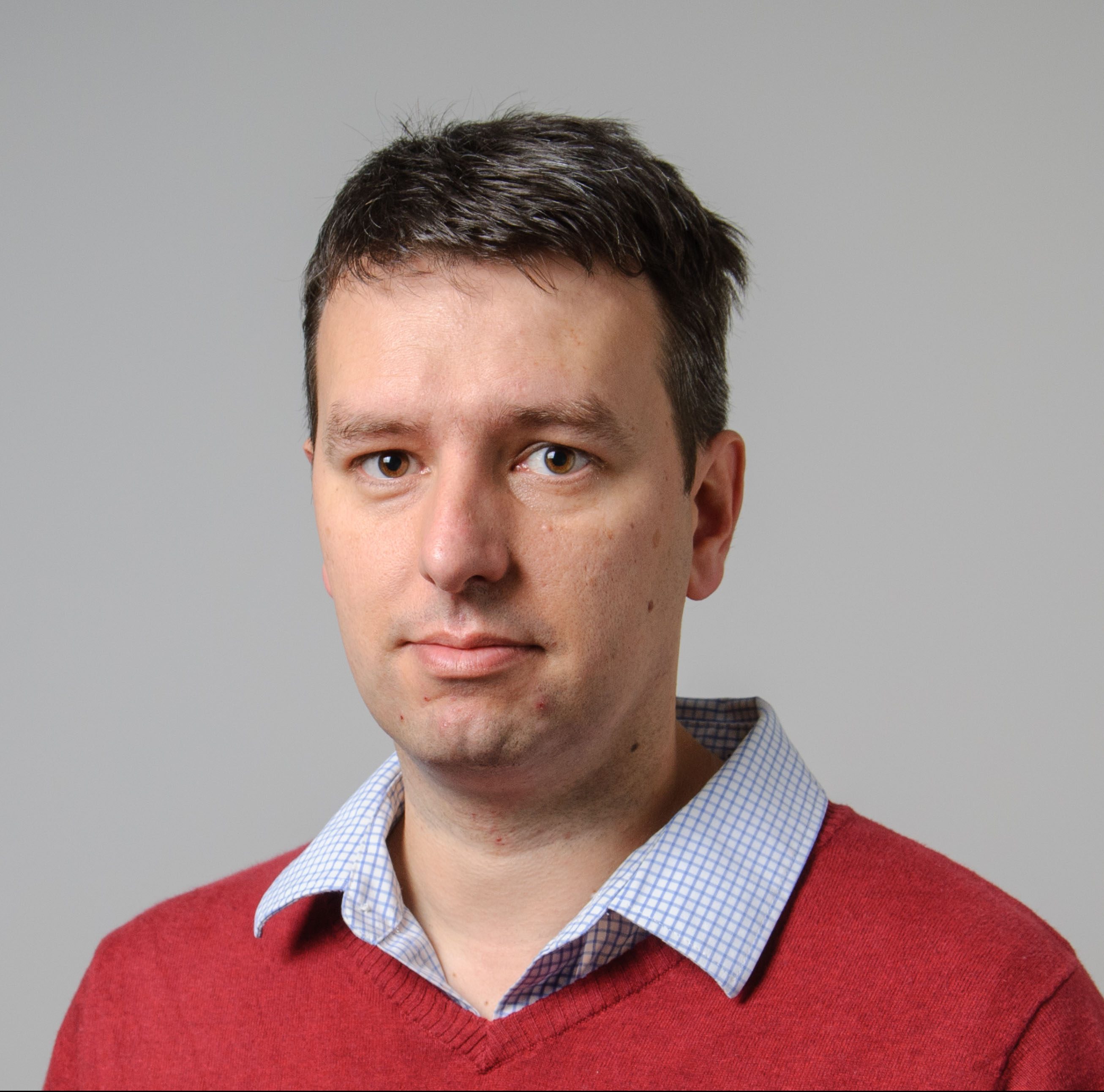
Olivier Tougait is a Professor at the Chemistry, materials and processes for sustainable nuclear power (CIMEND) department within the Unité de Catalyse et Chimie du Solide (UCCS) at Université Lille . He specializes in solid-state chemistry, nuclear materials, and actinide-based compounds, with a focus on understanding fuel cycle processes for nuclear energy. Academic Background: PhD in Chemistry (1998, Université de Rennes1), Postdoctoral Fellow at Northwestern University (1998-2000). Career: Lecturer at Rennes1 (2000-2014), now Professor at UCCS since 2014. Collaborations include the French Alternative Energies and Atomic Energy Commission (CEA) , Orano , and Framatome . Research Interests: Actinide-based intermetallic compounds Phase diagrams of nuclear materials Magnetocaloric properties Fuel cycle process optimization Synthesis and thermodynamic behavior of uranium alloys Collaborative industrial nuclear R&D Publications since 2012 focus on: Uranium-molybdenum fuel characterization Germanium/Aluminum substitution in actinide systems Thermal stability of uranyl peroxide nanoclusters Crystallographic analysis of heavy-fermion materials Labs: Directs the joint research laboratories LR4CU and LRC PUMA, which collaborate with Orano and Framatome on nuclear fuel cycle innovations.
Prof. Fakher Assaad is a Professor of Theoretical Physics I at Julius-Maximilians-Universität Würzburg. His research focuses on quantum many-body systems, with expertise in numerical methods like quantum Monte Carlo simulations. He investigates metal-insulator transitions, heavy fermion compounds, and correlated electron systems. His work spans topics including Hubbard models, graphene physics, and topological quantum phases. Assaad leads the Theoretical Physics I team and collaborates with postdocs and students such as Dr. Marcin Raczkowski and Jonas Schwab. Research interests include quantum phase transitions, strongly correlated systems, and emergent phenomena in condensed matter. His studies often address challenges like sign problems in fermionic simulations and the interplay between magnetism and topology. Recent publications highlight advancements in quantum criticality, lattice models, and topological defects. His work bridges theoretical frameworks with computational methods to explore novel materials and quantum phenomena. Advising includes supervision of PhD and master’s students in theoretical physics. His group is part of the Wilhelm Wien Institute and contributes to the FOR1807 research network. The team is based at the M1 Computer Science/Physics building in Würzburg.
James N. Eckstein is a Professor of Physics at the University of Illinois at Urbana-Champaign, affiliated with the Frederick Seitz Materials Research Laboratory. He holds a PhD from Stanford University (1978) and joined UIUC in 1997 after 15 years as a senior scientist at Varian Associates. His research focuses on superconductivity, magnetic materials, and thin-film growth via molecular beam epitaxy (MBE). Eckstein pioneered atomic layer-by-layer MBE techniques for oxide films, enabling precision studies of cuprate superconductors and manganites. His work has advanced understanding of spin-valve magnetoresistance, interface effects, and quantum phase transitions. He has authored over 50 journal articles and holds six U.S. patents. Awards include the James C. McGroddy Prize (2021) and APS Fellowship (2005). Eckstein teaches advanced electromagnetism courses (PHYS 435/436) and leads the Eckstein Group, leveraging facilities like the Electron Microscopy Core and X-ray Analysis Core. Education: B.S. Physics (St. Olaf College, 1973); Ph.D. Physics (Stanford University, 1978). Research Interests: Superconducting and magnetic oxide materials Molecular beam epitaxy of complex oxides Colossal magnetoresistance in manganites Interface engineering for novel electronic phases Quantum transport in low-dimensional systems Publications Highlight Trends: His recent work explores topological superconductivity in Bi/Sb films (2020), strain-tuned Dirac surface states (2018), and coherence in superconducting qubits (2016). Earlier contributions addressed quantum criticality in Ce-based compounds (2012) and phase separation in manganites (2005). Awards: James C. McGroddy Prize (2021) Bernd T. Matthias Prize (2012) Arnold O. Beckman Award (2015, 2001) Lab/Team: Eckstein Group at UIUC focuses on thin-film synthesis and characterization, collaborating with Stanford, Berkeley, and international institutions. Facilities used include X-ray analysis, microscopy, and nanofabrication cores.
Stephan Rosenkranz is a Research Fellow and Group Leader at the Materials Science Division of Argonne National Laboratory, where he has been a key figure in advancing neutron and synchrotron x-ray scattering techniques since 2002. He holds a Ph.D. in Physics from ETH Zurich (1997) and a Diploma in Experimental Physics (1992) from the same institution. Educational Background Ph.D. in Physics, ETH Zurich (1997) Diploma (with distinction) in Experimental Physics, ETH Zurich (1992) His research focuses on probing short-range spin, charge, and lattice correlations in strongly correlated electron systems using neutron and x-ray scattering methods. He has led the development of the CORELLI instrument at Oak Ridge National Laboratory's Spallation Neutron Source and pioneered novel approaches to model correlated disorder from diffraction data. Recent publication trends highlight his expertise in charge density waves, spin density waves, and geometrically frustrated magnets. His work integrates experimental scattering with machine learning for big data analysis, particularly in quantum materials like nickelates, iron pnictides, and superconductors. Scientific Awards ETH Pólya Prize (1992) ETH Zurich Medal (1997) University of Chicago Distinguished Performance Award (2006) Fellow of the American Physical Society (2013) Fellow of the Neutron Scattering Society of America (2018) As Co-Director of the National School on Neutron and X-ray Scattering (2018–2024) and former President of the Neutron Scattering Society of America (2013–2016), Rosenkranz plays a pivotal role in training and governance in scattering sciences. He has contributed to beamline reviews, grant panels, and international workshops on competing interactions in transition metal compounds. His leadership extends to the development of advanced x-ray and neutron instrumentation and fostering collaborations between Argonne, Northern Illinois University, and the University of Illinois Chicago through graduate faculty appointments.
John F. DiTusa is a Professor of Physics and Dean of the School of Science at Indiana University. His research focuses on condensed matter physics, particularly in magnetic semiconductors, superconductivity, quantum criticality, and spintronics. He has extensive experience in crystal growth, electronic structure analysis, and experimental investigations of quantum materials. Ph.D. in Experimental Condensed Matter Physics from Cornell University (1992) B.A. in Physics with Honors from Oberlin College (1985) His work spans topics such as Dirac semimetals, chiral magnets, skyrmion lattices, and unconventional fermions. He has explored the interplay between magnetic order, structural transitions, and electronic transport in materials like MnSi, Sr 1−y Mn 1−z Sb 2 , and AuBe. The 15 most recent articles highlight his contributions to topological materials, quantum criticality, and spintronic systems. Keywords include Condensed Matter Physics , Quantum Transport , and Electronic Structure , with subfields like Dirac Semimetals , Chiral Magnets , and Magnetic Anisotropy . 2000 College of Basic Sciences Faculty Research Award 1998 Phi Kappa Phi Non-tenured Faculty Award 1997 NSF CAREER Award He has advised researchers across multiple institutions and collaborated on studies involving magnetic, thermodynamic, and transport properties of complex materials. His affiliations include the American Physical Society since 1988.
Professor Andy Schofield serves as Vice-Chancellor and Professor of Physics at Lancaster University, leading theoretical research in strongly correlated electron systems. His work investigates quantum phenomena where electron interactions cannot be treated classically, spanning superconductivity, magnetism, and emergent quantum particles through close collaboration with experimental groups. His research focuses on quantum criticality , spin-charge separation , and non-Fermi liquid behavior in low-dimensional systems. Key areas include Luttinger liquids in quantum wires, nematic phases in iron-based superconductors, and metamagnetic transitions in ruthenates. His theoretical frameworks explain emergent behaviors in materials where traditional mean-field approaches fail. Analysis of his publications reveals consistent focus on one-dimensional quantum conductors , strongly correlated metals , and quantum phase transitions . Recent work examines Fermi surface reconstruction in FeSe compounds and spectral signatures of fractionalized excitations. His research bridges condensed matter theory with experimental probes like tunneling spectroscopy and quantum oscillation measurements. As Vice-Chancellor, he oversees institutional research strategy while maintaining active theoretical contributions. His leadership includes the project Reimagining research practices: towards a sustainable, ethical and inclusive future (2024-2026), reflecting commitment to research integrity. He leads the Condensed Matter Theory research group within Physics, fostering collaborations between theoretical and experimental physicists. Current work explores quantum critical endpoints and topological aspects of Fermi surface instabilities, with implications for quantum computing materials.
Emilia Morosan is a Professor of Physics and Astronomy at Rice University, affiliated with the School of Natural Sciences. Her research focuses on quantum materials, particularly topological fermions, superconductivity, and magnetism. She leads the Morosan Research Group, which specializes in designing and synthesizing novel materials to explore emergent quantum phenomena. Education: B.S. in Physics from University 'Al. I. Cuza' (Romania, 1999); Ph.D. in Physics from Iowa State University (2005). Research interests include condensed matter experiment, with emphasis on topological materials, unconventional superconductivity, and magnetic phase transitions. Her work combines solid-state synthesis, crystal growth, and advanced characterization techniques to discover materials with unique electronic properties. Recent studies highlight discoveries in Weyl semimetals (e.g., SmAlSi), topological magnets (e.g., EuGa4), and quantum spin liquids (e.g., Ce2Zr2O7). Her group's publications emphasize magnetotransport phenomena and quantum criticality in itinerant electron systems. Awards: Fellow of the American Physical Society (2019) Students: Advises PhD/Master’s students including Jaime Moya, Long Qian, and Karthik Rao. Key Labs: Morosan Research Group at Rice, collaborating with national labs for neutron scattering and muon spin rotation studies.
Claudia Felser is a Director at the Max Planck Institute for Chemical Physics of Solids in Dresden, Germany, and holds a C4 professorship at Johannes Gutenberg University Mainz. She studied Chemistry and Physics at the University of Cologne, earning her diploma (1989) and doctorate (1994). Her research focuses on the design and discovery of new inorganic compounds, particularly Heusler compounds and topological quantum materials. Education : Diploma in Solid-State Chemistry, University of Cologne (1989); Doctorate in Chemical Physics, University of Cologne (1994) Felser's work spans topological insulators, Weyl semimetals, Kondo behavior, non-centrosymmetric superconductivity, and spintronics. She explores multifunctional properties in Heusler compounds, such as band inversion, rare-earth element-induced superconductivity, and heavy fermion behavior. Her publications highlight advancements in magnetic Heusler compounds, Weyl semimetals, and Berry curvature-driven effects. Key areas include spin polarization, high Curie temperatures, and strong electromagnetic responses. Scientific Awards : ERC Advanced Grants (2011, 2017), APS James C. McGroddy Prize (2019), Max Born Prize (2022), EPS Europhysics Prize (2023), and memberships in prestigious academies. Felser leads a research team at the Max Planck Institute, focusing on quantum materials and functional devices for future technologies.
Max Pelly is a Research Fellow at the School of Chemistry, University of St Andrews, with cross-disciplinary ties to the School of Physics and Astronomy. His work focuses on experimental condensed matter physics involving quantum materials and nanoscale measurement techniques. Education: Master in Science (Honours) in Chemistry and Physics, University of St Andrews (2016-2021) Research centers on superconductivity and nanoscale thermometry , particularly examining magnetic field effects in heavy fermion compounds like CeRh 2 As 2 and developing Coulomb blockade-based calorimetry. His fingerprint reveals strong expertise in phase diagrams, microcrystals, and superconducting materials. Recent 2025 publications demonstrate methodological innovation in nanocalorimetry and phase mapping, reflecting his dual-school expertise in chemistry and physics. These works contribute to understanding quantum phase transitions and thermal properties at microscopic scales. Collaborations span international institutions, with datasets archived at University of St Andrews and Edmond repositories. His research shows significant online engagement through academic social media platforms.
Jason N. Hancock is a Professor and University Teaching Fellow in the Department of Physics at the University of Connecticut. His research focuses on experimental condensed matter physics, applied physics (including additive manufacturing and aerosol science), and physics education. He holds a PhD from the University of California, Santa Cruz, and has held academic positions at institutions such as Université de Genève and Stanford University. Hancock has received numerous awards, including the Innovative Scholarship Award (2023) and University Teaching Fellow designation (2020). His service includes leading roles in the UConn Quantum Consortium’s Education Subcommittee and proposal review panels at Brookhaven National Laboratory and Argonne National Laboratory. His education includes a B.Sc. (Highest Honors) from Georgia Tech (1998), M.Sc. and Ph.D. from UC Santa Cruz (2000 and 2005). Research interests span quantum effects, topological materials, and spectroscopic techniques like inelastic X-ray scattering. He actively mentors students and teaches courses such as Quantum Mechanics, Advanced Laboratory Writing, and Optics with Laboratory. Key awards include recognition for teaching innovation (shared with Diego Valente) and national fellowships in science education. His work bridges fundamental physics with applied challenges, such as pandemic-related respirator development and quantum material characterization.
Professor Matthias Vojta is a faculty member at Dresden University of Technology's Institute of Theoretical Physics, actively engaged in cutting-edge research in theoretical condensed matter physics. He holds significant leadership roles in major German Research Foundation (DFG) initiatives. His research expertise spans several critical areas in modern physics: Quantum phenomena in correlated electron systems Topological aspects of quantum materials Magnetic frustration and quantum spin systems Quantum critical behavior in heavy-fermion compounds Unconventional superconductivity in cuprates Transport properties of nearly magnetic metals Professor Vojta's work represents the forefront of theoretical investigations into complex quantum phenomena, with particular emphasis on how topology, frustration, and strong correlations give rise to novel physical states. As a principal investigator, Professor Vojta has secured substantial research funding through multiple DFG mechanisms. He currently serves as speaker for the Cluster of Excellence EXC 2147: Complexity and Topology in Quantum Materials (CT.QMAT) and the Collaborative Research Center SFB 1143: Correlated Magnetism: From Frustration to Topology. He also manages several sub-projects within SFB 1143 focusing on spin liquids, transport phenomena, and quantum criticality in frustrated magnets. Professor Vojta's research is conducted within the theoretical physics framework at Dresden University of Technology, which provides a robust environment for advanced investigations into quantum materials and condensed matter systems, with strong connections to experimental groups working on correlated electron systems.
Steffen Wirth is a Professor and Group Leader in the Physics of Correlated Matter department at the Max Planck Institute for Chemical Physics of Solids in Dresden, Germany. He has held a W2 position at the institute since 2010 and has been conducting research there since May 2000. His work spans multiple institutions across Germany, Ireland, France, and the United States, reflecting his international scientific collaborations. Wirth's research focuses on the investigation of electronic correlations using Scanning Tunneling Microscopy/Spectroscopy, electronic transport, and magnetic measurements of bulk and thin film samples. His primary areas of interest include 4f heavy fermion systems, superconductivity, electronic inhomogeneity, two-dimensional transport, and non-trivial topological surface states. His group specializes in cryogenic scanning tunneling microscopy and spectroscopy, with particular emphasis on topological materials. He has made significant contributions to understanding quantum criticality, Kondo physics, and the interplay between structure and electronic properties in strongly correlated electron systems. Analysis of Wirth's recent publications (2023-2025) reveals a strong focus on topological materials, heavy fermion systems, and quantum critical phenomena. His work spans experimental techniques including scanning tunneling microscopy, thermal transport measurements, and X-ray spectroscopy, often applied to rare earth compounds, hexaborides, and novel quantum materials. A recurring theme is the investigation of electronic and magnetic properties at the intersection of topology, strong correlations, and quantum criticality. Fellow of the American Physical Society (2017) Outstanding Referee of the American Physical Society (2015) Feodor Lynen Fellowship by the Alexander von Humboldt-Foundation (1997-1999) Wirth has supervised numerous PhD students and postdoctoral researchers throughout his career, though currently no PhD projects are available in his group. His research has been supported by various grants enabling advanced experimental capabilities in cryogenic STM, thin film preparation, and low-temperature measurements. His work often involves international collaborations with institutions across Europe and the United States. Wirth leads a research group with laboratory facilities including cryogenic STM (B3.3.11), thin film preparation (B3.3.15), and additional STM capabilities (A1). His team combines local probe techniques with bulk measurements to obtain complementary information across different length scales, providing comprehensive insights into correlated electron systems.
Dr. Andrzej Ptok is an Associate Professor at the Department of Computational Materials Research, Institute of Nuclear Physics, Polish Academy of Sciences (Kraków, Poland), specializing in condensed matter theory and computational materials science. He obtained his Ph.D. (2012) and M.Sc. (2007) in Physics from the University of Silesia, followed by a habilitation (2020) from the Polish Academy of Sciences. His research integrates ab initio methods to explore quantum phenomena in solids. Research interests span unconventional superconductivity , topological materials , and chiral phonons , with emphasis on iron-based superconductors, Majorana quasiparticles, and altermagnetism. Recent work (2023–2025) focuses on: Dynamical properties of charge density waves in kagome metals Chiral edge states in superconducting systems Electronic structure of rare-earth topological semimetals Altermagnetic ruthenium dioxide Honors include the Henry Niewodniczanski Scientific Award (2018), scholarships for young scientists (2019), and recognition as an IOP Trusted Reviewer (2020). He leads/co-leads multiple grants from Poland's National Science Center, including FUGA 5 (PI) and OPUS projects. He collaborates internationally (e.g., Paris-Saclay, Zurich) and leads computational studies of quantum materials. No advising or lab details are explicitly provided.
Prof. Hidenori Takagi is the Alexander von Humboldt Professor at the University of Stuttgart and Director of the Max Planck Institute for Solid State Research. He holds a concurrent professorship at the University of Tokyo. His research focuses on correlated electron systems, including superconductivity, quantum magnetism, and metal-insulator transitions in transition metal oxides. He has pioneered studies of high-temperature superconductors, spin-orbital physics, and Dirac semimetals. Education: Bachelor's/Master's in Applied Physics, University of Tokyo (1982-1987) PhD in Physics, University of Tokyo (1989) Research Interests: Prof. Takagi explores exotic phases in quantum materials, such as unconventional superconductivity in iron-based materials, spin-liquid states in iridates, and electronic phase transitions in cuprates. His work combines advanced experimental techniques like angle-resolved photoemission and scanning tunneling microscopy with theoretical modeling. Awards: IBM Science Prize (1988) Nissan Science Prize (1994) K. H. Onnes Prize (2006) Honda Frontier Award (2009) Alexander von Humboldt Professorship (2014) Eugen and Ilse Seibold Prize (2020) Advising & Grants: As director of the Max Planck Institute and university professor, he oversees large-scale research initiatives and collaborates internationally. His labs focus on quantum materials with potential for novel functionalities in energy and electronics. Labs/Teams: Leads the Quantum Materials Department at the Max Planck Institute, collaborating with teams at University of Tokyo and Stuttgart on projects like spin-orbital entanglement and Dirac electron systems.
Jennifer Cano is an Assistant Professor in Physics and Astronomy at Stony Brook University. She joined the faculty in 2018 after postdoctoral work at Princeton Center for Theoretical Science and completed her Ph.D. at UC Santa Barbara in 2015. Research Focus: Specializes in theoretical condensed matter physics, particularly classification and prediction of topological phases of matter. Current work explores fractional Chern insulators, Weyl semimetals, and quantum Hall systems using analytical and computational methods. Recent publications emphasize moiré materials (40%) and topological superconductivity (30%). Research funded by NSF CAREER award and Sloan Fellowship supports investigations into quantum geometry effects in correlated electron systems. Teaching: Regularly offers graduate courses in Solid State Physics (PHY 556) and undergraduate mechanics (PHY 303/573), with innovative approaches to quantum materials education.