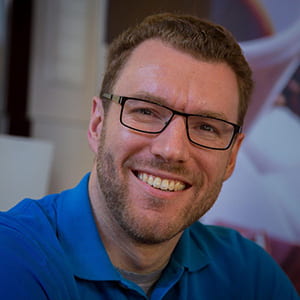
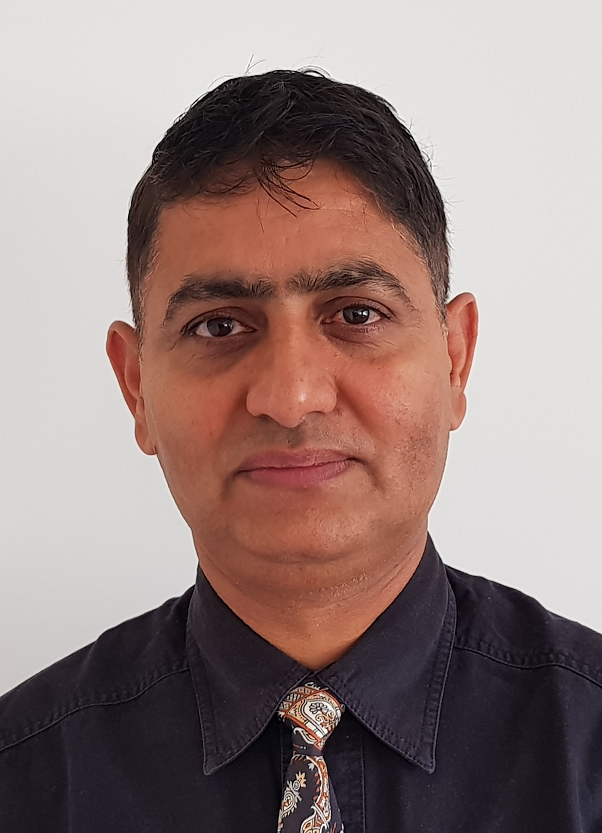
Prof Ineke De Moortel is a Professor in Applied Mathematics at the University of St Andrews, affiliated with the School of Mathematics and Statistics. Her research focuses on magnetohydrodynamic (MHD) waves in the solar corona, coronal seismology, and numerical modeling of solar phenomena. She has led projects funded by organizations like the Leverhulme Trust and STFC, contributing to understanding coronal heating mechanisms and wave dynamics. Prof De Moortel has supervised PhD students including Elisabeth Enerhaug and Anmol Kumar. She holds editorial roles, including at the Monthly Notices of the Royal Astronomical Society, and has received prestigious awards such as the Phillip Leverhulme Prize (2009) and the RAS Fowler Award (2010). Research Highlights: MHD wave propagation, coronal seismology, numerical simulations of solar plasma dynamics. Projects: Includes 'Joining up an Unprecedented View of our Sun' (Leverhulme Trust) and collaborations on the Multi-slit Solar Explorer (MUSE) mission. Awards: Royal Society of Edinburgh Young Academy Co-Chair (2012), Deputy Chair of UK Solar Physics Council (2013).
Graeme J. Kennedy is an associate professor in the Daniel Guggenheim School of Aerospace Engineering at the Georgia Institute of Technology where he leads the Simulation-based Multidisciplinary Design Optimization (SMDO) research group. His research focuses on developing numerical optimization techniques for structural and multidisciplinary design problems, particularly for fixed-wing aircraft analysis and design. Dr. Kennedy received his PhD from the University of Toronto Institute for Aerospace Studies (UTIAS) in 2012, followed by a postdoctoral research fellowship at the University of Michigan in the Department of Aerospace Engineering. His research spans several critical areas in aerospace design optimization: Development of advanced numerical optimization techniques for structural design Large-scale topology optimization for aerospace structures Aeroelastic and aerothermoelastic optimization of flexible aircraft Optimization of composite structures with manufacturing constraints Electric motor optimization for electric vertical take-off and landing (eVTOL) vehicles He has developed multiple open-source research codes including TACS (parallel finite-element solver), ParOpt (optimization toolkit), TMR (mesh generation tool), and FUNtoFEM (aeroelastic coupling framework). Dr. Kennedy is particularly interested in designing structures that manage heat from battery packs in air taxis while achieving optimal aeroelastic performance. His publications reveal a strong focus on computational methods for solving large-scale optimization problems in aerospace design. The research shows progressive development from fundamental optimization algorithms toward increasingly complex multidisciplinary applications, with particular emphasis on making high-fidelity simulation-based optimization practical for industrial design cycles through high-performance computing approaches. Dr. Kennedy actively mentors numerous graduate students, including six current PhD candidates and multiple former PhD and MS students who have completed their degrees under his supervision. His research group maintains strong connections with industry through various grants supporting the development of computational tools for aerospace design. The SMDO group also engages in educational outreach through 'Optimization through Intuition,' providing accessible learning modules about optimization concepts for middle and high school students, demonstrating Dr. Kennedy's commitment to broadening participation in engineering education.
Prof. Maciej Lewenstein is a Group Leader and ICREA Professor at the Institute of Photonic Sciences (ICFO), Spain. He leads the Quantum Optics Theory group, focusing on theoretical and computational studies of quantum many-body systems, topological phases, and nonlinear optics. He holds a Dr.rer.nat. in Physics from the University of Essen, Germany. His research interests include quantum simulations, high-harmonic generation, Bose-Einstein condensation, and quantum information processing. He has pioneered work on topological quantum thermometry and ultrafast phase transitions in materials like vanadium dioxide. His group actively explores the intersection of quantum optics with condensed matter physics and quantum computing. Recent articles highlight advancements in tensor network approaches for topological phases, quantum algorithms for many-body systems, and the application of sonification to quantum entanglement dynamics. He has received a prestigious ERC Advanced Grant and the ICREA Professorship, recognizing his contributions to quantum science. Prof. Lewenstein advises over a dozen PhD students and postdoctoral researchers, fostering a dynamic research environment at ICFO. His grants include ERC and ICREA funding, supporting projects on quantum simulations and nonlinear optical phenomena. The Quantum Optics Theory group collaborates internationally, with expertise in light-matter interactions, quantum resource theory, and quantum many-body localization. Their lab develops novel methods for probing quantum systems using high-harmonic spectroscopy and quantum trajectory simulations.
Dr. Mark Hoggard is an ARC DECRA Research Fellow at the Research School of Earth Sciences, The Australian National University (ANU). His research focuses on geodynamics, sea-level modelling, nuclear test monitoring, and critical mineral systems. He holds a PhD from ANU and has studied at institutions including Cambridge University, Harvard, and Columbia. Hoggard’s work integrates geophysical data with numerical modelling to explore Earth’s dynamic processes, including mantle convection, glacial isostatic adjustment, and lithospheric evolution. Affiliations: Research School of Earth Sciences (ANU), Geoscience Australia (collaborative projects). Education: PhD (ANU), MA (Cambridge), BSc (ANU). Research Interests: Dynamic topography and its influence on sea-level records. Mantle structure and its relationship to mineral systems. Glacial cycles and ice sheet dynamics. Seismic monitoring of underground nuclear tests. Recent Article Trends: Recent work emphasizes geodynamic corrections to Pliocene sea-level estimates, mantle rheology influences on ice sheet models, and statistical methods for distinguishing seismic events from explosions. Key themes include linking deep Earth processes to surface observations and advancing methods for critical mineral exploration. Grants & Projects: Leads projects such as CoastRI GIA Modelling (2024–2027) and Next Generation Sea-Level Modelling (2022–2025). Collaborates with institutions like Los Alamos National Laboratory on nuclear test detection algorithms. Labs/Teams: Part of ANU’s Geodynamics group and the Exploring for the Future program at Geoscience Australia, focusing on Australia’s crustal structure and mineral potential.
Patrick Kastner is an Assistant Professor at the School of Architecture and holds an adjunct appointment at the H. Milton Stewart School of Industrial and Systems Engineering at Georgia Tech. He directs the Sustainable Urban Systems Lab, focusing on environmental performance simulation and urban decarbonization. His work emphasizes software tools for sustainable urban decision-making, such as Eddy3D, a microclimate modeling toolkit widely adopted in academia and practice. Education: Ph.D. and M.S. in Systems Science and Engineering, Cornell University (2022, 2021) M.S. in Sustainable Building Science, Technical University of Munich (2017) B.S. in Energy Engineering, University of Erlangen–Nuremberg (2012) Research Interests: Environmental performance simulation, urban decarbonization, machine learning applications in urban systems, spatial analysis, and software development for sustainability. His work integrates computational fluid dynamics (CFD), surrogate modeling, and data-driven approaches to address urban climate challenges. Key Projects: Leads the Vertically Integrated Project SMUR (Surrogate Modeling for Urban Regeneration), fostering interdisciplinary collaboration across Georgia Tech. Developed Eddy3D, which streamlines microclimate simulations for architects and urban planners. Grants & Advising: Engages students from sophomore to graduate levels in sustainability research. Teaches at Cornell and UPenn previously. Advises on projects blending engineering, urban design, and climate science. Labs & Teams: Director of the Sustainable Urban Systems Lab, focusing on software tools for sustainable urban transformation. Collaborates with industry partners and global institutions on decarbonization strategies.
Professor Manolis Gavaises is a leading academic in the field of mechanical engineering and computational fluid dynamics at City St George's, University of London, where he holds the position of Professor in the School of Engineering and Mathematical Sciences. He earned his PhD from Imperial College London and has been a faculty member since 2001, progressing to full Professor in 2009. His research is centered on advanced modeling of multi-phase flows, cavitation, and fuel injection systems, with extensive collaborations across Europe and industry partners such as Delphi, Caterpillar, and BP. Education: DIC, Mechanical Engineering, Computational Fluid Dynamics, Imperial College London, 1997 PhD, Mechanical Engineering, Computational Fluid Dynamics, Imperial College London, 1997 Diploma (5 years), Mechanical Engineering, National Technical University of Athens, 1992 His research interests span computational fluid dynamics, cavitation, fuel injection, atomization, high-pressure and supercritical flows, and alternative fuels . He has developed advanced numerical models and experimental techniques, including X-ray phase contrast imaging and high-pressure test rigs. His work integrates fundamental DNS and LES simulations with industrial applications in automotive, marine, aerospace, and medical devices such as heart valves. The recent publications reflect a strong trend toward real-fluid thermodynamic modeling (e.g., PC-SAFT), multi-component fuel behavior, cavitation erosion, and advanced diagnostics . His research increasingly incorporates machine learning and high-fidelity imaging to understand complex flow phenomena across energy, transportation, and biomedical domains. Scientific Awards and Recognitions: Richard Way Prize (1998) Arch T. Collwell Merit Award (1998) Best Oral Paper, SAE World Congress (2006) PE Publication Award, IMechE (2007) Best Presentation Award, Engine Combustion Processes (2009) Fellow, IMechE (2013) Fellow, IMA (2015) As a dedicated mentor, Professor Gavaises has supervised 13 PhDs to completion and currently guides 23 doctoral students. He has secured over €16 million in EU and UK funding, including multiple Horizon 2020 Marie Skłodowska-Curie ITN projects (CAFÉ, HAOS, IPPAD), which support 46 early-career researchers globally. He has created academic opportunities for post-docs and junior faculty, significantly advancing the research profile of his institution. He leads the International Institute of Cavitation Research (IICR), co-founded in 2011 with partners from Loughborough University, TU Delft, and Imperial College, supported by The Lloyd’s Register Foundation. His lab maintains strong experimental capabilities, including a 2000bar pressure flow rig with micro-transparent nozzles and collaborations with Argonne National Laboratory for X-ray imaging.
Eduardo Pereyra is a Professor in the McDougall School of Petroleum Engineering at The University of Tulsa, where he serves as Associate Director for the Tulsa Fluid Flow Projects (TUFFP) and the Horizontal Wells Artificial Lift Project (TUHWALP) . His academic career spans theoretical and applied research in multiphase flow, flow assurance, artificial lift systems, and separation technologies. Education: Ph.D. and M.Sc. in Petroleum Engineering from The University of Tulsa; Dual B.S. in Mechanical Engineering and Systems Engineering from the University of Los Andes, Venezuela Pereyra’s research focuses on multiphase flow dynamics , particularly in gas-liquid and oil-water systems. His work addresses critical challenges such as slug flow mitigation , downhole separator efficiency , and ESP motor cooling , leveraging computational fluid dynamics (CFD) and experimental validation. Recent publications emphasize inclined pipe flows , severe slugging mitigation , and plunger lift optimization . Pereyra has received multiple accolades, including the 2023 SPE Production and Operations Award and the 2022 Kermit Brown Outstanding Teacher Award . His contributions to multiphase flow modeling have been recognized through the 2021 Zelimir Schmidt Outstanding Researcher Award . He actively collaborates with industry partners through TUFFP and TUHWALP, directing projects like the Horizontal Wells Artificial Lift Initiative .
Tobias Hermann serves as an Associate Professor at the University of Oxford's Department of Engineering Science, where he leads research within the Oxford Thermofluids Institute and holds a prestigious UKRI Future Leaders Fellowship. Affiliated with St. Hilda's College as an Associate Research Fellow, his work centers on experimental hypersonics and advanced diagnostic development for extreme aerospace environments. Hermann earned his Dipl.-Ing. in Aerospace Engineering from the University of Stuttgart (2012) followed by a Dr.-Ing. degree (2017), with doctoral research focused on spacecraft re-entry phenomena and aerothermochemistry during atmospheric entry. His thesis involved developing optical diagnostics including Vacuum Ultraviolet spectroscopy and tomographic emission systems. His research program emphasizes experimental hypersonics and plasma flows , with core expertise in spacecraft re-entry physics , high-temperature material-flow interactions , and optical diagnostic innovation . Hermann pioneered analytical methods for transpiration cooling in porous media and developed system engineering tools for thermal protection systems. His current work bridges fundamental fluid dynamics with practical aerospace applications, particularly in hypersonic vehicle design and re-entry simulation through facilities like the T6 expansion tube. Analysis of Hermann's publication record reveals consistent focus on high-enthalpy flow diagnostics and thermal protection systems , with recent work advancing expansion tube capabilities for boost-glide re-entry simulation, integrated arc-jet facilities for ablating models, and vacuum ultraviolet spectroscopy for plasma flow characterization. His research demonstrates strong integration of experimental validation with analytical modeling across hypersonic testing regimes. Hermann's scientific recognition includes: UKRI Future Leaders Fellowship (2021-present) As an educator, Hermann supervises 4th-year undergraduate projects and DPhil (PhD) students in hypersonics while teaching Thermodynamics and Fluid Mechanics. His current research portfolio—primarily funded through his UKRI Fellowship—comprises three major thrusts: development of high-enthalpy wind tunnels (including the multi-mode T6 facility), pre-heating of hypersonic models using plasma flows, and advancement of measurement techniques like spatially resolved UV-nIR spectroscopy. These projects address critical gaps in hypersonic testing infrastructure and instrumentation. Hermann directs experimental efforts at Oxford's Southwell Laboratory within the Oxford Hypersonics group, operating facilities including the T6 Stalker tunnel, OPG1 plasma wind tunnel, and specialized arc-jet systems. His team develops cutting-edge instrumentation such as vacuum ultraviolet spectroscopy systems, high-speed focused Schlieren, and pressure-sensitive paint diagnostics to investigate complex phenomena in hypersonic boundary layers and re-entry flows.
Parviz Moin holds the Franklin P. and Caroline M. Johnson Professorship in Stanford University's School of Engineering. As founding director of the Center for Turbulence Research (CTR)—a NASA-Stanford consortium established in 1987—he has pioneered computational methods for turbulence physics, including direct numerical simulation and Large Eddy Simulation (LES) techniques. CTR serves as an international hub for turbulence studies across engineering, mathematics, and physics disciplines. Moin's research encompasses computational physics of turbulent flows, with emphasis on boundary layer control, hypersonic aerodynamics, propulsion systems, and aircraft icing. His recent work advances high-fidelity simulations for aerospace applications, particularly developing wall models for LES that accurately capture separation phenomena under complex pressure gradients and Reynolds number effects. Recent publications demonstrate extensive applications of LES to aircraft design challenges, including transonic buffet prediction, high-lift configuration analysis, and icing aerodynamics. Investigations consistently address fundamental turbulence physics while developing practical computational tools for aerospace engineering, with particular focus on hypersonic boundary layers, flow separation mechanisms, and conjugate heat transfer in iced environments.
Professor Vishnu Pareek is the John Curtin Distinguished Professor at Curtin University, leading the Western Australian School of Mines (WASM) within the Faculty of Science and Engineering. He has held academic roles including Dean of Engineering, Head of School, and various professorships since 2002. His research focuses on multiphase flow modeling, computational fluid dynamics, and reactor engineering, with applications in energy and chemical processes. He holds a BE (Hons) from MNIT, MTech from IIT Delhi, and a PhD from UNSW. Key research interests include LNG process modeling, erosion modeling, and granular flow dynamics. He has authored over 200 peer-reviewed publications, with recent work emphasizing structured packing design, biomass gasification, and additive manufacturing for process intensification. Notable projects include CFD-ANN hybrid models for fluidized beds and experimental studies on 3D-printed structured packings. His expertise spans industrial collaborations in LNG safety, fluid catalytic cracking, and biofuel production. Teaching areas include chemical engineering fundamentals and process systems engineering. He advises on energy policy and leads research teams in multiphase flow and reactor design.
John S. McCartney is a Professor and Hal Sorenson Endowed Chair in the Department of Structural Engineering at the University of California San Diego (UCSD). He directs the Englekirk Structural Engineering Center and holds editorial roles at journals such as ASCE Journal of Geotechnical and Geoenvironmental Engineering and Computers and Geotechnics. His research focuses on unsaturated soil mechanics, energy geotechnics, and geosynthetics engineering, with applications in thermal energy systems, landfill covers, and seismic response analysis. Education: B.S. and M.S. in Civil Engineering from University of Colorado Boulder (2002), Ph.D. in Civil Engineering from University of Texas at Austin (2007). Research interests include thermo-hydro-mechanical behavior of soils, geothermal energy piles, tire-derived aggregates, and seismic performance of geotechnical systems. His work combines laboratory testing, centrifuge modeling, and numerical simulations to address challenges in sustainable infrastructure and energy systems. Key awards include the Walter L. Huber Research Prize (2016), NSF CAREER Award (2011), and multiple teaching and service recognitions. He actively contributes to ASTM standards and serves as President of the IGS-NA chapter. Lab facilities are located in the Structural and Materials Engineering Building (SME 409). Courses taught include advanced soil mechanics, energy geotechnics, and geotechnical earthquake engineering.
Lande Liu is a Senior Lecturer in Chemical Engineering at the University of Huddersfield's School of Applied Sciences. Previously, he held a Lectureship at the University of Manchester (2010-2014), and earlier worked as an industrial consultant and research fellow at Leeds and Sheffield Universities. His academic journey began with a MEng in Chemical Engineering and a PhD in kinetic theory of aggregation from Sheffield (2004), preceded by a visiting PhD at Twente University (2002). Education: PhD in Chemical Engineering (University of Sheffield, 2004) Visiting PhD (Twente University, 2002) MEng in Chemical Engineering (Tsinghua University, 1999) BSc in Applied Mathematics (Tsinghua University, 1996) Liu's research focuses on multi-scale particle interactions (molecular to granular) using kinetic theory of aggregation, with applications spanning nanotechnology, pharmaceutical engineering, and sustainable chemical processes. His work aligns with UN Sustainable Development Goals for environmental protection and industrial innovation. Recent publications examine particle deposition in turbulent flows, enhanced heat exchanger designs, and nanofluid stabilization techniques. He teaches core chemical engineering topics including transport phenomena, unit operations, and process design. Active in collaborative research, Liu has partnered with institutions across Europe on projects involving spectroscopy, ultrasonics, and dynamic modeling. His technical expertise includes particle size analysis, tomography, and computational simulation of complex systems.
Andrew Thompson is the John S. and Sherry Chen Professor of Environmental Science and Engineering at the California Institute of Technology. He serves as Director of the Ronald and Maxine Linde Center for Global Environmental Science and Executive Officer for Environmental Science at Caltech. With a Ph.D. from Scripps Institute of Oceanography (2006), his career at Caltech spans from Assistant Professor (2011-17) to his current Professor role since 2017. Education: B.S. in Physics from Dartmouth College (2000), C.A.S. (2001) and M.Phil. (2002) at University of Cambridge Leadership: Director of Linde Center (2023-), Academic Officer (2019-22) His research focuses on ocean circulation dynamics and physical processes governing climate systems . Key areas include: Ocean Turbulence and Submesoscale Dynamics Antarctic Circumpolar Current and Drake Passage Dynamics Climate Change Impacts on Ice Shelf Melt Rates Current projects involve ChinStrAP (Changes in Stratification at the Antarctic Peninsula), using autonomous ocean gliders to study eddy formation and air-sea exchange. His group employs idealized numerical models , remote sensing , and climate simulations to explore topics like: Warm water pathways onto Antarctic continental shelves Role of mesoscale/submesoscale eddies in ocean mixing Global overturning circulation responses to climate change Scientific achievements include the Packard Fellowship for Science and Engineering . He mentors graduate students Xiaozhou Ruan , Giuliana Viglione , and Andrew Delman , fostering interdisciplinary collaboration with institutions like Scripps Institution of Oceanography and CSIR . His group emphasizes inclusive training for early-career scientists in climate-relevant STEM careers .
Gustav Amberg is a Professor at KTH Royal Institute of Technology, affiliated with the Flow Mechanics research group within the School of Engineering Sciences. His primary appointment is in the Department of Mechanics, where he focuses on fluid dynamics, multiphase flow, and interfacial phenomena. He holds a permanent full professorship with no indication of兼职 roles. Research interests center on dynamic wetting mechanisms, phase-field modeling, and computational fluid dynamics applied to complex fluid systems. His work explores contact line behavior, microstructured surface interactions, and material phase transformations. Notable areas include rapid droplet spreading, viscoelastic fluid dynamics, and boiling heat transfer on engineered surfaces. Recent studies investigate the interplay between surface topography and wetting dynamics, oscillatory contact line phenomena, and numerical benchmarking across molecular and continuum models. He has pioneered methods for simulating surfactant effects in multiphase flows and developed novel approaches for analyzing weld pool behavior during sintering processes. No academic awards or grants are explicitly listed in the provided materials. His advising record remains undisclosed, though his prolific publication history suggests active research supervision. Laboratory affiliations are not detailed, but his work aligns with KTH's broader initiatives in computational mechanics and materials science.
Terese Løvås serves as Vice Dean of Research and Innovation at the Faculty of Engineering, Norwegian University of Science and Technology (NTNU), where she leads strategic development of research and innovation activities. She concurrently holds the position of Professor of Combustion and Thermodynamics within the Department of Energy and Process Engineering. Her leadership responsibilities include oversight of Centers of Excellence, Horizon Europe projects, and PhD researcher training. Her research focuses on combustion engineering and alternative fuel technologies , particularly investigating ammonia and hydrogen combustion for zero-emission engines, biomass gasification processes, and reactive multiphase flow modeling. She heads the Engine Lab at NTNU and teaches Thermodynamics, Heat, and Combustion courses. Her work bridges theoretical modeling with experimental validation in sustainable energy systems. Løvås actively contributes to major research initiatives including LowEmission (SFI center), ACTIVATE (ammonia-powered agricultural vehicles), AMAZE (ammonia zero-emission), and CAHEMA (marine ammonia/hydrogen engines). Her publications reveal strong trends in ammonia combustion chemistry , emissions reduction , and advanced computational modeling for sustainable fuel systems, with increasing focus on nitrogen oxide formation mechanisms and dual-fuel strategies. Member of the Board of Directors, Combustion Institute (2022–present) Joint Editor, Proceedings of the Combustion Institute (2019–present) Alumni Fellow in Engineering, Churchill College, Cambridge University As Vice Dean, she manages NTNU's Research and Innovation Committee and represents the faculty in NTNU's Research and Innovation Committee. She supervises multiple PhD candidates and leads international collaborations through projects funded by the Norwegian Research Council, Nordic Energy Research, and EU programs. Her laboratory work focuses on optical engine diagnostics and advanced combustion testing. Løvås maintains active industry engagement through her leadership in the ComKin Research Group and membership in the Institute of Physics and Scandinavian-Nordic Section of the Combustion Institute. Her current work emphasizes practical implementation of ammonia-fueled engine technologies for marine and agricultural applications.