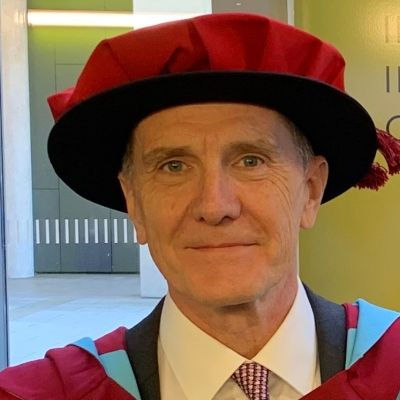
Daniel Courteix is an Adjunct Professor at the School of Behavioural and Health Sciences, Faculty of Health Sciences. His research integrates exercise physiology, metabolic health, and pediatric science, with a focus on obesity, bone metabolism, and cardiovascular adaptations in clinical and athletic populations. Research Interests: Dr. Courteix's work spans: Exercise interventions for metabolic syndrome and type 2 diabetes Bone health adaptations in obese adolescents and athletes Cardiovascular physiology and autonomic regulation Pediatric obesity management and multidisciplinary weight-loss strategies Stress biomarkers and occupational health interventions His recent publications (2016-2021) predominantly investigate the effects of physical activity on metabolic, cardiovascular, and musculoskeletal systems. Common themes include randomized controlled trials (e.g., RESOLVE, ADIBOX), longitudinal athlete studies, and systematic reviews addressing obesity-related complications. Research consistently emphasizes clinical applications for diabetes, arthritis, and pediatric populations.
Christian Luhmann is an Associate Professor of Cognitive Science at Stony Brook University. His academic roles include positions in the Department of Psychology, Department of Computer Science, Institute for Advanced Computational Science, and Institute for Engineering-Driven Medicine. He holds a PhD from Vanderbilt University (2006) and completed a postdoc at Yale Medical School. His research focuses on decision-making processes, learning mechanisms, and computational modeling, employing methods like EEG, fMRI, and agent-based simulations. Current projects explore how decision-makers handle uncertainty and incomplete information in contexts like economic choices and perceptual judgments. Notable contributions include studies on group decision-making dynamics, the neural bases of temporal discounting, and the role of anxiety in perceptual processing. He has secured NIH funding for collaborative research on fetal heart rate monitoring and co-edited a special issue on Group Decision Making in Cognitive Research. His work has been published in journals such as Psychological Science , Journal of Experimental Psychology , and NeuroImage . Dr. Luhmann advises multiple PhD students in cognitive science and social psychology, with research themes spanning social learning, computational modeling, and applied neuroscience. His lab investigates topics like altruistic behavior contagion in networks and the transmission of collective memories.
Virpi-Liisa Kykyri is an Associate Professor at the Department of Psychology, University of Jyväskylä, within the Faculty of Education and Psychology. Her research focuses on nonverbal communication, embodied responses in therapy, and therapeutic interactions in clinical and educational settings. Key areas include analyzing physiological synchrony in couple therapy, metacommunication in organizational consulting, and the application of self-determination theory in educational and therapeutic contexts. Her work integrates qualitative and physiological methodologies, such as stimulated recall interviews and remote physiological monitoring. Notable projects include the PhinGAIN initiative to optimize remote work meetings using stress indicators and a multi-case study on educational detachment among Finnish Roma early school leavers. She has contributed to developing the Stimulated Recall Interview Coding System (SRI-CS) for therapeutic practice. Research interests extend to animal-assisted therapy, digital health interventions, and the dynamics of conflict resolution. Kykyri’s interdisciplinary approach bridges psychology, education, and organizational behavior, with a focus on enhancing human well-being through evidence-based practices.
Ana Doblas, PhD, is an Assistant Professor in Electrical and Computer Engineering at the University of Massachusetts Dartmouth. She holds a PhD in Physics from the University of Valencia (2015), an MSc in Advanced Physics (2011), and a BSc in Physics (2010). Her Optical Imaging Research Laboratory develops multimodal imaging platforms and computational methods for biomedical applications. Research interests include: Digital holographic microscopy reconstruction algorithms Low-cost diagnostic imaging systems 3D super-resolution microscopy Automated image processing pipelines She has received NSF CAREER and industry funding for developing accessible microscopy technologies. Current projects focus on improving resolution and accessibility of optical imaging for healthcare applications.
Deirdre Hon is an Assistant Professor of Education at the University of Portland. Her work focuses on Social and Emotional Learning (SEL), particularly on developing educator training programs to integrate SEL into classrooms and schools. Collaborated with Oregon’s Teacher Standards and Practices Committee (TSPC) to create SEL Specialty Endorsement standards for Oregon Teaching Licenses Developed a three-course SEL series at UP culminating in the specialty endorsement Current research: Pre-service teacher resilience and SEL skill cultivation Her research spans both educational practices and physiological responses to stress, with recent publications analyzing SEL frameworks and older works exploring biomarkers like oxytocin and cortisol in social contexts. She incorporates undergraduate and graduate students into her SEL-related studies, drawing from psychology and education disciplines. Her teaching emphasizes action research, adapting SEL pedagogy through continuous data collection and analysis.
Bindu Balakrishnan is an Associate Professor in the College of Rehabilitative Sciences at the University of St. Augustine for Health Sciences. She holds a Ph.D. in Neurophysiology from the National Institute of Mental Health and Neurosciences and completed postdoctoral training at Wayne State University, Johns Hopkins, and University of Illinois. Her expertise spans neurological disorders, maternal-fetal neurodevelopment, and nanomedicine applications for neurological conditions. Her research focuses on: Maternal infection impacts on fetal brain development Neuroinflammatory mechanisms Multiple sclerosis pathophysiology Nanoparticle-based neurotherapeutics Animal models of neurological disorders Her publications demonstrate a progression from basic neurodevelopmental research to applied biomedical engineering. Recent work includes robotic system development and yoga's cardiovascular benefits, alongside ongoing neuroinflammation studies. Articles reflect interdisciplinary approaches combining neuroscience, engineering, and clinical rehabilitation. No specific scientific awards or research grants are mentioned in the provided materials. No information is available regarding student mentorship, laboratory facilities, or research teams.
Ulrik Wisløff is a Professor and Head of the Cardiac Exercise Research Group (CERG) at the Norwegian University of Science and Technology (NTNU), Faculty of Medicine and Health Sciences, Department of Circulation and Medical Imaging. He is also an Honorary Professor at the University of Queensland, Australia, and has led over 280 peer-reviewed publications with ~72,000 citations, placing him among the world's top 4 most cited scientists in 'exercise' and the most cited Exercise Physiologist. Research spans from molecular mechanisms to population health Inventor of the fitness calculator (9.5M users) and PAI metric Scientific leadership in translating experimental findings to clinical applications Mentored 22 postdocs and 38 PhD students Research trends focus on high-intensity exercise in heart disease, aging, and metabolic disorders, with clinical translation and population health tools. Articles emphasize aerobic capacity, cardiovascular risk, and molecular-cardiovascular interactions. Scientific Awards Norwegian Health Association's Heart Research Award (2020) Teaching: Courses on exercise and cardiovascular health, brain health, and scientific writing. Labs: Leads CERG (55 employees) and collaborates internationally.
Dr. Alexis D. Boro Dr. Alexis D. Boro is an Assistant Professor of Neurology at Albert Einstein College of Medicine and an Attending Physician at Montefiore Medical Center. He also holds roles as Associate Professor in the Departments of Neurology and Medicine (Critical Care) . His clinical practice focuses on adolescents and adults with epilepsy, specializing in epilepsy surgery evaluations and diagnostic assessments of uncertain neurological spells. Education & Training Medical School & Internship: SUNY Health Sciences at Stony Brook Residency & Chief Residency: Mount Sinai Medical Center Fellowship: Epilepsy and Neurophysiology at Montefiore/Einstein Research Dr. Boro leads Montefiore’s Epilepsy Surgery Program and oversees clinical trials and epilepsy fellowship education. He co-investigates NIH-funded projects like the Epilepsy Phenome/Genome Project , exploring genetic and clinical factors influencing epilepsy treatment efficacy. His research includes autonomic effects of seizures, EEG monitoring in critical care, and non-pharmacologic interventions for photosensitive epilepsy. Grants & Collaborations NIH-funded Epilepsy Phenome/Genome Project (EEG Core) Multidisciplinary epilepsy clinical trials Affiliations Primary Location: Montefiore Medical Center (Bronx, NY) Additional Sites: Montefiore at Taxter Road (Elmsford, NY) and Yonkers Executive Plaza
Denise Solomon is a Distinguished Professor of Communication Arts and Sciences at Pennsylvania State University's College of the Liberal Arts. Her research focuses on interpersonal communication, particularly relational turbulence theory, which examines how transitions in relationships influence cognitive, emotional, and communicative responses. She has applied this theory to understand communication in contexts like parental loss, infertility, and raising children with Autism Spectrum Disorder. Educations: B.A., Lewis & Clark College, 1987 M.A., Northwestern University, 1990 Ph.D., Northwestern University, 1992 Her research interests include supportive communication, conflict resolution, and the physiological and emotional impacts of communication styles. Recent work explores dynamic dyadic systems, longitudinal relational turbulence, and the role of technology in interpersonal interactions. Scientific Awards: Fellow of the International Communication Association Fellow of the International Association for Relationship Research Distinguished Scholar of the National Communication Association Her advising and grant activities are not explicitly detailed in the provided text, but her extensive publication record reflects collaborative research in family communication, health communication, and relational dynamics. She has authored a textbook on interpersonal communication and contributes to academic leadership in communication studies.
Dr Gabija Toleikyte is a Lecturer in Psychology at Sheffield Hallam University, affiliated with the Sheffield Institute of Social Sciences within the College of Social Sciences and Arts. She holds a PhD from University College London (UCL), completed in 2015, focusing on the neuroscience of memory and navigation. Her research emphasizes developing HRV-based tools to assess cognitive wellbeing and intervention efficacy. She teaches modules including Cognitive Neuroscience Methods and The Psychology of Education, and co-leads The Practice of Psychology module. Education: PhD in Neuroscience, UCL (2015) MSc and BSc qualifications Research interests: Neuroscience applications in organizational and educational settings Cognitive wellbeing metrics using HRV Neural mechanisms of memory and navigation Publications focus on neural integration mechanisms, dopaminergic neurodegeneration models, and developmental neurochemistry. She has authored a popular neuroscience book on behavioral change and delivered seminars to major organizations like Google and Transport for London. Advising: Supervises BSc Criminology dissertations Labs/Teams: Active in applied neuroscience research groups at SHU.
Rob Aseltine is currently the Chair and Professor in the Department of Behavioral Science and Community Health at the University of Connecticut. His work focuses on public health disparities, mental health surveillance, and statistical methodologies for healthcare data analysis. He has led studies on racial/ethnic disparities in healthcare outcomes, suicide risk prediction, and data imputation techniques for administrative health records. Key research areas include analyzing preventable hospitalizations, health information exchange systems, and longitudinal studies of chronic disease management. His methodological contributions span survival analysis, generalized estimating equations, and privacy-preserving statistical techniques. Recent projects include evaluating disparities in heart failure hospitalizations across Connecticut, developing suicide risk identification frameworks using health IT systems, and comparing imputation methods for race/ethnicity data in healthcare databases. Aseltine collaborates widely with interdisciplinary teams, publishing in journals like Public Health Reports, Annals of Applied Statistics, and Journal of Public Health Management and Practice. His work bridges statistical innovation with real-world public health challenges, emphasizing equity and data-driven solutions.
Paula Niedenthal is a Professor in the Psychology Department at the University of Wisconsin–Madison, where she leads the Niedenthal Emotions Lab. Her research bridges Social Psychology and Affective Neuroscience, focusing on how individuals process emotional information through facial expressions, with particular emphasis on smile authenticity and cultural influences. Her work examines neural, cognitive, and sociocultural mechanisms underlying facial mimicry and eye gaze behaviors. Recent investigations explore smile functionality across cultures and contexts, using multimodal approaches including psychophysiology and behavioral experiments. Dr. Niedenthal's publication record demonstrates consistent focus on emotion communication across diverse domains including political psychology, human-robot interaction, and developmental studies of facial perception.
Prof. Alex Bronstein is a Professor at the Henry and Marilyn Taub Department of Computer Science, Technion – Israel Institute of Technology, where he holds the Dan Broida Academic Chair and heads the VISTA Lab and the Center for Intelligent Systems. He concurrently serves as a Visiting Professor at the Austrian Institute of Science and Technology. His research spans computer vision, machine learning, computational geometry, signal processing, and bioinformatics, with a focus on geometric data analysis and AI applications in science. He has held significant industry roles including Principal Engineer at Intel Corporation, co-founding startups such as Invision (acquired by Intel), VideoCites, and Sibylla. His work bridges academia and industry, emphasizing practical applications of theoretical insights. Research interests include foundational AI models for molecular biology, robust machine learning systems, and interdisciplinary applications in healthcare and robotics. Notable projects include protein structure prediction using AlphaFold integration, adversarial robustness frameworks, and medical imaging innovations like T1-PILOT for MRI acceleration. He actively collaborates with global institutions, maintaining labs in Haifa, Vienna, and Sardinia. Recent publications highlight advancements in quantum computing simulations, wearable health monitoring systems, and AI-driven biomedical solutions. While no explicit awards are listed, his leadership roles and industry impact underscore significant contributions to computational science. He mentors graduate students in his VISTA Lab, focusing on cutting-edge projects in AI, computer vision, and computational chemistry.
Dr. Keiran Henderson is a Senior Lecturer at Buckinghamshire New University since 2004. Prior to this, he worked in biomedical research at Nottingham University and UCL Medical Schools. His research interests include cardiovascular health, cancer screening, medical education, and professional challenges in nursing practice. He holds a BSc and PhD from the University of Nottingham, with his doctoral thesis focusing on glycosaminoglycans in skin fibroblasts from tuberous sclerosis patients. His academic contributions span nursing ethics and biomedical studies. Recent work explores nurses' moral agency in out-of-work emergencies and the physiological effects of exercise on arterial stiffness in diverse populations. Collaborations with researchers like David Brodie and Jeyasundar Radhakrishnan highlight his interdisciplinary approach. He is a Fellow of the Higher Education Academy (FHEA). As a teaching faculty member, Henderson oversees full-time nursing programs including BSc and MSc courses in Adult, Children’s, and Mental Health Nursing. He also contributes to part-time Non-Medical Prescribing courses. His research frequently employs innovative methodologies such as grounded theory and ambulatory monitoring, addressing topics like metabolic syndrome management and telemedicine interventions.
Dr. Kalyanam Shivkumar is a distinguished Professor of Medicine (Cardiology), Radiology, and Bioengineering at the University of California, Los Angeles (UCLA). He serves as the Director of the UCLA Neurocardiology Research Program of Excellence and previously directed the UCLA Cardiac Arrhythmia Center & EP Programs from 2002-2025. Dr. Shivkumar is also the Editor-in-Chief of the Journal of the American College of Cardiology: Clinical Electrophysiology and leads multiple NIH-funded research initiatives. University of Madras, Kilpauk Medical College (MD, 1991) UCLA (PhD in Physiology, 2000) Henry Ford Hospital (Internal Medicine Residency & Chief Residency) UCLA/Cedars Sinai Medical Center (Cardiology & Clinical Cardiac Electrophysiology Fellowships) Dr. Shivkumar specializes in interventional cardiac electrophysiology with research focusing on the mechanisms of cardiac arrhythmias, particularly the role of the autonomic nervous system in sudden cardiac death. His work bridges basic/translational and clinical research, developing innovative techniques like epicardial ablation and neuromodulation for cardiac arrhythmia management. His research transcends single-organ perspectives, contributing significantly to neurovisceral sciences. The UCLA Neurocardiology Research Program, which he established in 2014, serves as the specialized research arm of the Arrhythmia Center. Analysis of Dr. Shivkumar's recent publications reveals a strong focus on neurocardiology, with particular emphasis on cardiac innervation, autonomic nervous system regulation, and innovative ablation techniques. His work spans from fundamental anatomical studies to clinical consensus statements and therapeutic innovations, demonstrating a comprehensive approach to understanding and treating cardiac arrhythmias through neurocardiological perspectives. Fellow, American College of Cardiology (ACC) Fellow, American Society of Clinical Investigation (ASCI) Fellow, Association of American Physicians (AAP) Fellow, Association of University Cardiologists (AUC) Honorary Fellow, Royal College of Physicians, London (FRCP) President, International Society of Autonomic Neuroscience (ISAN) Editor-in-Chief, JACC: Clinical Electrophysiology Dr. Shivkumar has mentored numerous PhD candidates and received multiple teaching awards. His research has been continuously funded by the NIH since 2006, with current grants including an NIH Program Project Grant on cardiac arrhythmia mechanisms and leadership of a Leducq Foundation International consortium grant on bioelectronics for neurocardiology. He previously oversaw a 15-university NIH consortium investigating neural control of the heart. His intellectual property has been incorporated into FDA-approved medical devices currently in clinical use. Dr. Shivkumar founded the Amara-Yad Project, an open-access knowledge portal for medical education that provides detailed cardiac anatomy resources. He leads the UCLA Neurocardiology Research Program of Excellence, which focuses on human mechanistic studies, development of new intellectual property, and medical technology for cardiovascular therapeutics. His team actively investigates cardiac neuromodulation approaches to treat chronic cardiovascular diseases through closed-loop systems.


/prod01/production-cdn-pxl/media/umassdartmouth/profiles/engineering/electrical-amp-computer/Ana-Doblas2023.jpg)