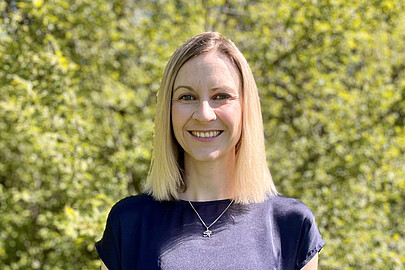
Dr. Megan Renna is an Assistant Professor in Clinical Psychology at the University of Southern Mississippi. She earned her Ph.D. in Clinical Psychology from Columbia University's Teachers College and completed a postdoctoral fellowship funded by the National Cancer Institute at Ohio State University Comprehensive Cancer Center. Her research focuses on the bidirectional relationship between psychological and physical health, particularly how emotion regulation and negative emotionality contribute to chronic disease risk in breast cancer survivors and healthy adults. Education: Ph.D. in Clinical Psychology (2019) and M.Ph. (2018) from Teachers College, Columbia University Training: Predoctoral internship at Duke University Medical Center Her work bridges clinical psychology, psychophysiology, and behavioral medicine through studies on inflammation, autonomic dysfunction, and cancer survivorship. Recent publications examine metabolic syndrome, smartwatch body composition metrics, and couples' health dynamics. Key research themes include stress reactivity, emotion regulation therapy, and biobehavioral pathways linking mental states to physiological outcomes. Dr. Renna teaches Advanced Psychopathology and can be reached at Megan.Renna@usm.edu. Her methodological expertise spans experimental worry inductions, longitudinal studies, and psychometric scale development, with a focus on reducing distress disorders through emotion regulation interventions.
Professor Lee Wallace is a distinguished academic at the University of Sydney, serving as Director of the Sydney Social Sciences and Humanities Advanced Research Centre (SSSHARC) and Professor in the Discipline of Film Studies within the Faculty of Arts and Social Sciences. She joined the university in 2011 from the University of Auckland, where she earned her PhD in postcolonial literary studies in 1997. Her research focuses on queer theory, lesbian/gay studies, feminist theory, colonial/postcolonial discourse, and cinema studies. Wallace’s work explores intersections of sexuality, space, and cultural representation, with notable projects analyzing queer architectures and cinematic narratives. Education: PhD in Postcolonial Literary Studies from the University of Auckland (1997). Roles: Director of Research Development (Humanities), Research Coordinator, and member of the Sydney Centre for Healthy Societies and Sydney Policy Lab. Research interests include queer theory’s engagement with cultural space, colonial discourse analysis, and interdisciplinary studies of film and literature. Her recent articles analyze topics like midlife lesbian identity, queer science communication, and cinematic representations of commitment. Notable publications include Lesbianism, Cinema, Space (2009) and Reattachment Theory: Queer Cinema of Remarriage (2020). Awards: 2024 Eureka Prize finalist, Marsden Fund Grants (2007 and 1997). Her work has been featured in The Conversation and media outlets. Current grants include projects on queer community-building and sexual violence prevention in schools. Supervision: Guides PhD/Master’s students in queer theory, feminist theory, and interdisciplinary cultural studies. Her research team collaborates across disciplines to address societal challenges through humanities research.
Tomiko Yoneda is an Assistant Professor in the Department of Psychology at the University of California, Davis. Her research focuses on understanding how personality traits, social relationships, and lifestyle factors influence health and cognitive outcomes in older adults. She employs interdisciplinary methods, including longitudinal studies and coordinated data analyses, to explore topics like personality-cognition links, social determinants of health, and aging disparities. Dr. Yoneda is also committed to fostering inclusive academic environments and mentoring students from diverse backgrounds. Her work spans multiple domains: (1) Personality dynamics in aging, examining traits like neuroticism and conscientiousness as predictors of health and longevity; (2) Social relationships' impact on physiological health (e.g., cortisol regulation in couples); and (3) Cross-cultural studies of aging in Japan and North America. Notable contributions include systematic reviews on personality-allostatic load relationships and meta-analyses linking personality to mortality risks. Received EDITOR'S CHOICE recognition in Psychoneuroendocrinology (2024) and Journal of Personality and Social Psychology (2022) Principal investigator of the Yoneda Lab at UC Davis Dr. Yoneda emphasizes translational research that bridges psychological and biomedical perspectives. She collaborates internationally on projects analyzing cognitive healthspan, dementia risk factors, and interventions to promote healthy aging. Her teaching focuses on lifespan development and research methodologies.
Kim A. Johnston is a Professor in the School of Advertising, Marketing & PR at Queensland University of Technology (QUT). Her research focuses on public relations, community engagement, disaster management communication, and stakeholder relationships. She has authored over 90 publications, including the influential Handbook of Communication Engagement (2018). Her work bridges theory and practice, emphasizing resilience-building in vulnerable communities, social impact assessment, and organizational communication strategies. Education & Roles: Holds a PhD in Strategic Communication (QUT, 2011). Served as lead researcher in multiple projects funded by organizations like Natural Hazards Research Australia and Healthy Waterways. Research Highlights: Pioneered frameworks like the 'Authenticity Matrix for Community Engagement' (2019) and 'Co-orientation on Social Impact' (2025). Her work on disaster preparedness has informed policy through systematic reviews and toolkit development. Grants & Collaborations: Collaborated with institutions such as Bushfire and Natural Hazards CRC and Murray-Darling Basin stakeholders. Projects include assessing stakeholder engagement in water governance and evaluating community flood experiences post-2022. Labs/Teams: Active in QUT's Business School research clusters on strategic communication and CSR. Leads interdisciplinary teams in disaster resilience and employee engagement studies.
Claudia Haase is an Associate Professor in Human Development and Social Policy at Northwestern University’s School of Education and Social Policy (SESP), with a courtesy appointment in Psychology. She leads the Life-Span Development Laboratory, focusing on emotions, relationships, and well-being across the life course. Her work integrates developmental, affective, and social science methodologies, including neuroimaging and longitudinal studies. She holds affiliations with the Buffett Institute for Global Studies and the Institute for Policy Research. Education: PhD in Psychology (University of Jena, 2007), Postdoctoral research at UC Berkeley (2013). Her research is funded by the NIMH, NIA, and the Brain and Behavior Research Foundation. Notable awards include the 2024 Outstanding Professor Award and the 2022 Fletcher Prize for mentorship. Research interests span emotion regulation in couples, aging, and cultural influences on emotional health. Key findings link positive emotions to memory preservation and healthy relationships to longevity. Her lab collaborates with diverse populations, including neurodegenerative disease patients and adolescents. Current projects include studies on emotion in late-life marriages, adolescent mental health, and the neural underpinnings of social context sensitivity. She advises doctoral students like Felix Yu and Matías Martínez, and collaborates with institutions like the Institute for Innovations in Developmental Sciences.
Aida Maria de Oliveira Cruz Mendes is a distinguished academic and researcher at the Coimbra School of Nursing, where she has maintained a continuous appointment since 1987. With over three decades of academic service, she has established herself as a leading expert in nursing science with particular specialization in mental health, occupational health, and sleep quality among healthcare professionals. She currently serves on the Scientific Council for Life and Health Sciences at the Foundation for Science and Technology, demonstrating her significant contribution to Portuguese scientific policy. Education background: PhD from University of Minho (1996-2000) Master's in Occupational Health and Hygiene from University of Coimbra Medical School (1992-1995) License in Mental Health and Psychiatric Nursing (1990-1991) Bachelor's degree in Nursing (1977-1980) Multiple specialized certifications in psycho-oncology, cognitive therapy, and qualitative research Dr. Mendes' research program demonstrates remarkable consistency in addressing critical issues in nursing practice and healthcare delivery. Her work spans mental health services evaluation, occupational health challenges faced by nursing staff, sleep quality determinants in healthcare settings, and innovative programs for healthy aging and retirement transition. She has developed expertise in both qualitative and quantitative methodologies, with numerous systematic reviews and intervention studies to her credit. Her research bridges clinical practice with health promotion initiatives, creating tangible impacts on nursing education and healthcare policy. Analysis of her recent publication trajectory reveals a sophisticated evolution in research focus. While maintaining consistent attention to nursing staff wellbeing (particularly regarding sleep quality and stress biomarkers), she has expanded into developing and evaluating health promotion programs, most notably the REATIVA program for retirement transition. Her work increasingly incorporates international collaborations and demonstrates methodological sophistication, with publications appearing in multiple languages (Portuguese, English, and Spanish) across diverse healthcare contexts. Research funding highlights: Active Retirement: study of a healthy ageing promotor program (2013-2015) funded by Foundation for Science and Technology Mental Health Education and Sensibilization: A School-based Intervention Program for Adolescents and Young (2011-2014) funded by Foundation for Science and Technology Dr. Mendes has supervised numerous graduate students and collaborated extensively with international research teams, particularly in European nursing education contexts. Her work on nurse professional competence assessment among newly graduated nurses demonstrates her commitment to advancing nursing education standards. She maintains active research partnerships with institutions across Portugal and internationally, contributing to both clinical practice improvements and healthcare policy development.
Prof. Dr. Mike Martin is a leading researcher at the University of Zurich's Center for Gerontology . His work spans cognitive aging, social development in old age, and life-span developmental psychology, with a focus on ecological validity in aging research. Professor, University of Zurich Director, Zurich Longitudinal Study on Cognitive Ageing Co-editor, Journals of Gerontology series Key research areas include: Healthy aging and quality of life Cognitive-emotional interactions in aging Dyadic adaptation in dementia caregiving Mobile sensing of aging-related behaviors Participatory research methodologies Language use as a biomarker of aging His recent publications analyze: GPS mobility and cognitive function Machine learning in reminiscence detection Prospective memory trajectories Emotion regulation in couples Digital interventions for cognitive health Neuroimaging correlates of aging
Prof. Dr. Nadja Kabisch is a leading academic at the Institute of Earth System Sciences within the Faculty of Natural Sciences at Leibniz University Hannover. Her work bridges landscape ecology , population geography , and health geography , focusing on nature-based solutions for urban challenges like climate change, demographic shifts, and environmental justice. She employs digital methods for ecosystem service analysis and urban climate resilience. Her research explores the health impacts of urban green spaces , environmental justice in global change contexts, and systematic approaches to human-environment interactions. Recent studies analyze allergenic pollen dynamics , microclimate regulation , and 15-minute city models for climate-resilient urbanism. As Deputy Management of her institute and a member of multiple committees (e.g., M.Sc. Landscape Sciences Selection Committee ), she shapes academic governance and curriculum. Her collaborations span institutions like Springer and Edward Elgar Publishing, with peer-reviewed articles in journals such as Nature Reviews Biodiversity and Landscape and Urban Planning .
Thomas Beikler serves as a Professor in the Department of Periodontology, Preventive Dentistry and Dental Conservation at the University Medical Center Hamburg-Eppendorf (UKE), which operates under the Faculty of Medicine. His academic credentials include dual doctoral degrees as indicated by his title 'Univ.Prof.Dr.Dr.' Dr. Beikler's research spans multiple dimensions of periodontal science and oral-systemic health connections. His work investigates the relationship between periodontal disease and various systemic conditions including hypophosphatasia, liver cirrhosis, depression, and neurological changes. He has made significant contributions to understanding oral health literacy, particularly among German adult populations with migration backgrounds through the MuMi Study. His research methodology frequently employs large population-based studies like the Hamburg City Health Study to establish epidemiological connections between oral and general health. His publication record demonstrates a strong interdisciplinary approach, bridging dentistry with neurology, hepatology, psychiatry, and public health. Notable research directions include microbiome-based therapies for periodontitis, the role of biomarkers in oral health assessment, and the development of innovative dental education models in Germany. Dr. Beikler has led significant research projects including the 'Transplantation of a healthy oral donor microbiome for periodontal therapy' (2016-2019), which explored cutting-edge approaches to treating periodontal disease. He has also contributed to dental education reform through the iMED DENT program, Germany's first model dental study program.
Dr. Nancy L. Sin is an Associate Professor in the Department of Psychology within the Faculty of Arts at the University of British Columbia. She teaches undergraduate and graduate courses in health psychology and supervises students at multiple levels. She is Co-Chair of the Antiracism Task Force for the Society for Biopsychosocial Science and Medicine and a member of the Steering Committee at the UBC Edwin S.H. Leong Centre for Healthy Aging. Previously, she served on the Executive Committee for the American Psychological Association's Division on Adult Development and Aging and established the Diversity Mentorship Program. PhD, University of California, Riverside, 2012 Dr. Sin's research focuses on biological and behavioural pathways linking daily well-being and stress to health. Her work demonstrates that emotional responses to daily stressors are associated with inflammatory, neuroendocrine, and autonomic mechanisms implicated in aging-related conditions like cardiovascular disease. She investigates daily positive events as protective factors for stress processes and health, with particular interest in emotional well-being and aging, stress-sleep cycles, and health equity. Her research spans multiple disciplines including health psychology, gerontology, and social psychology. Analysis of Dr. Sin's recent publications reveals consistent focus on daily stress processes, positive emotions, and health outcomes across the lifespan. Her work increasingly examines pandemic-related stressors, social determinants of health, and health disparities, with strong emphasis on methodological rigor through daily diary and longitudinal approaches. The publications demonstrate interdisciplinary collaboration across psychology, public health, and medicine, with growing attention to diversity, equity, and inclusion in health research. Distinguished Alumni Award, Department of Psychology, University of California, Riverside (2025) Fellow, Gerontological Society of America (2025) Innovative Research on Aging Award (Bronze Award) from the Mather Institute (2021) Michael Smith Foundation for Health Research Scholar (2020) Springer Early Career Achievement Award in Research on Adult Development and Aging (2019) Gerontological Society of America's Behavioral and Social Sciences Student Research Award Editor's Choice article at Annals of Behavioral Medicine Dr. Sin actively supervises undergraduate, MA, and PhD students, with a current focus on Health Psychology graduate students specializing in adult development and aging, stress, and health equity/disparities. Her research has been supported by significant grants as PI or Co-I from the U.S. National Institute on Aging, Social Sciences and Humanities Research Council of Canada, Canadian Institutes of Health Research, Canada Foundation for Innovation, and the Michael Smith Foundation for Health Research. She has established a strong research program examining daily experiences and their health implications across adulthood. Dr. Sin directs the UPLIFT Health Lab (Understanding Pathways Linking Inter- and Intraindividual Factors To Health), which explores psychosocial well-being and biobehavioural mechanisms underlying healthy aging. The lab investigates how daily positive events promote health through lower inflammation, adaptive cortisol profiles, and better health behaviors, with particular attention to how positive emotions buffer stress processes. The lab actively recruits community participants for studies on daily experiences and health, contributing to intervention development for promoting psychological and physical well-being across adulthood.
Noelle Hurd is a Professor of Psychology at the University of Virginia and co-Director of Diversity, Equity, and Inclusion Initiatives (co-DDEI). She leads the Promoting Healthy Adolescent Development (PHAD) Lab, focusing on marginalized youth development through intergenerational relationships and systemic oppression disruption. Her research integrates clinical and community psychology to address adolescent development, racial discrimination, and mental health disparities. Key interests include natural mentoring as protective factor, anti-racist frameworks, and leveraging community strengths to counteract systemic barriers for Black and Latinx youth. Her work emphasizes youth agency in social justice movements and resilience through familial and community support networks. Recent publications (2023-2025) reveal concentrated exploration of natural mentoring dynamics across marginalized populations, with methodological diversity spanning qualitative analyses of immigrant youth experiences and longitudinal studies of college adjustment. Recurring themes include anti-immigration policy impacts, youth-led anti-racism initiatives, and the intersection of discrimination with mental health outcomes. Dr. Hurd's scientific contributions have earned significant recognition: William T. Grant Scholar and Spencer/National Academy of Education Postdoctoral Fellow Rising Star Award (Association for Psychological Science, 2015) Outstanding Professor Award (UVA Psychology, 2017) Faculty Excellence in Diversity, Inclusion, and Equity Award (2021) Fellowships in American Psychological Association and Society for Community Research and Action As PHAD Lab director, she mentors emerging researchers in community-engaged scholarship funded by NIH, NSF, William T. Grant Foundation, and Institute of Education Sciences. Her team examines mentoring relationships, discrimination mechanisms, and intervention development for youth thriving in oppressive contexts. The PHAD Lab operates as an interdisciplinary research collective developing evidence-based approaches to dismantle systemic barriers through youth-adult partnerships and natural mentoring frameworks.
Lars Nyberg is a Professor of Neuroscience at Umeå University's Medical Faculty and Director of the Umeå Centre for Functional Brain Imaging (UFBI) since 2001. He has held concurrent roles as Guest Professor in Bergen and Oslo, Norway, and led the Wallenberg Centre for Molecular Medicine (WCMM) from 2019. His academic leadership includes directing major initiatives like the EU-funded Lifebrain project (2017–2022) and holding the Torsten & Ragnar Söderberg Research Professorship in Medicine (2012–2017). Education: PhD in Psychology (1993) and Docent (1996) from Umeå University, with postdoctoral training at the Rotman Research Institute, Toronto. His research focuses on neuroimaging techniques (MRI/PET), dopamine systems, working memory, aging, and episodic memory. Key contributions include linking dopamine receptor availability to cognitive decline and demonstrating brain maintenance mechanisms in aging. Research Interests: Neuroimaging of memory systems, dopamine's role in cognition, aging-related brain changes, and cognitive reserve. Grants: EU Horizon 2020 (Lifebrain, €10M), KA Wallenberg Scholarships (2009, 2016), Swedish Research Council funding for COBRA (2013–2017). His awards include Royal Swedish Academy of Sciences membership (2008), Mångbergs Prize in Neural Sciences (2008), and multiple Wallenberg grants. Nyberg has supervised 27 PhD students and 11 postdocs, advancing translational neuroscience and aging research through interdisciplinary teams at UFBI and WCMM.
Ehud Gazit is a distinguished Professor in the Department of Molecular Microbiology and Biotechnology at Tel Aviv University's Faculty of Life Sciences. He holds the Chair for Nano-Biology and serves as Vice President for Research and Development at Tel Aviv University. Professor Gazit has held numerous prestigious visiting appointments including at Umeå University, Fudan University, and Cambridge University. His academic journey began with a B.Sc. (summa cum laude) from Tel Aviv University's Special University Program for Outstanding Students in 1991, followed by a Ph.D. (with distinction) from the Weizmann Institute of Science in 1997, and postdoctoral training at MIT from 1997-2000. Professor Gazit's research focuses on molecular structure and self-assembly at the nano-scale, particularly examining protein folding, unfolding, and misfolding phenomena. His laboratory investigates the mechanisms and significance of protein unfolding and misfolding, with experimental systems including bacterial toxin-antidote systems, type II diabetes-related amyloidogenic proteins, and the VHL tumor suppressor protein. His work bridges fundamental biochemistry with nanotechnology applications, exploring how molecular self-assembly can be harnessed for technological innovation. His recent publications demonstrate a strong trajectory in peptide-based nanomaterials, with particular emphasis on amyloid formation mechanisms, peptide self-assembly for functional materials, and therapeutic applications targeting neurodegenerative diseases. His work spans multiple disciplines including biochemistry, nanotechnology, materials science, and biomedical engineering, showing increasing integration of fundamental research with practical applications. Professor Gazit has received numerous prestigious awards including: 2020 Landau Prize in Sciences and Arts in the Field of Healthy Aging 2019 Rappaport Prize for Excellence in Biomedical Research 2018 Foreign Fellow of the National Academy of Sciences, India 2016 ERC Advanced Grant from the European Research Council 2015 Elected Member of the European Molecular Biology Organization (EMBO) Professor Gazit has been actively involved in mentoring students and researchers, as evidenced by his extensive publication record with numerous collaborators. He has secured significant research funding including an ERC Advanced Grant. His professional activities include editorial board memberships for journals including Journal of Peptide Science, Nanoscience & Nanotechnology - Asia, and Amyloid. He previously served as Chief Scientist of the Ministry of Science and Technology (2012-2014). His laboratory has developed innovative approaches to studying molecular self-assembly, with particular expertise in peptide nanostructures. The research team has made significant contributions to understanding amyloid formation mechanisms while simultaneously developing novel biomaterials with applications ranging from electronics to medicine. They have established strong collaborations with research groups worldwide, creating a dynamic interdisciplinary research environment focused on the intersection of biology and nanotechnology.
Associate Professor Myra Hamilton is a Principal Research Fellow at the University of Sydney Business School, specializing in gender, ageing, and care. She holds a BA (Hons 1) and PhD from the University of Sydney. Her research focuses on work/care reconciliation, policy needs of carers, and retirement income inequalities. She is a member of the Sydney Centre for Healthy Societies and Sydney Policy Lab, and serves on the Board of COTANSW. Education: BA (Hons 1), University of Sydney PhD, University of Sydney Research Interests: Myra’s work examines how policies and services can improve wellbeing in work and care across lifecourses. Key areas include unpaid care responsibilities, retirement income disparities, and intergenerational relationships. She combines academic research with applied policy projects for governments and NGOs. Articles Trends: Recent publications emphasize multigenerational workforce policies, grandparent childcare dynamics, and barriers to formal aged care access. Her 2024 book The Multigenerational Workforce explores age and gender in workplaces. Grants & Advising: Current grants include 'New models of replacement care for working carers' (ARC) and 'Women in Construction Industry Innovation Program'. She has supervised students on topics like aged care services and mature-age labor markets. Labs/Teams: Active in the ARC Centre of Excellence in Population Ageing Research and collaborates with organizations like the Social Policy Research Centre (UNSW).
Peter K. Smith is a Professor in Psychology at Goldsmiths, University of London. His research focuses on bullying and cyberbullying prevention, peer relationships, and child development. He has led numerous international studies on bullying dynamics across cultures, age groups, and socioeconomic contexts. His work bridges developmental psychology with educational policy, emphasizing practical interventions in school settings. Education: Extensive academic background in psychology (details inferred from publications). Research interests include cross-cultural bullying patterns, the impact of school policies, and the psychological effects of cyberbullying. His recent work examines bullying among vulnerable populations such as children in social care and LGBTQ+ youth. Articles explore topics like the 'Healthy Context Paradox' in bullying outcomes and the development of multidimensional coding systems for online experiences. Collaborations span Europe and include projects funded by Erasmus+ programs. No specific awards listed, but his extensive publication record indicates significant academic contribution. Advising roles and grant details are not explicitly stated in the provided texts. Led research teams on projects like the Blurred Lives Project and contributed to the Health Behaviour in School-aged Children (HBSC) surveys. Current research priorities include improving anti-bullying policies and understanding sibling bullying dynamics.