- ADHD
- Cognitive Neuroscience
- Neuroimaging
- +۷ مورد دیگر
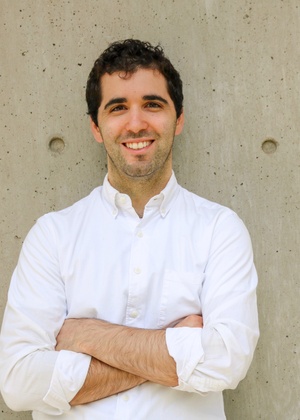
Julie Beth Schweitzer is a Professor in the Department of Psychiatry and Behavioral Sciences at UC Davis Health School of Medicine and a key figure at the MIND Institute. She serves as Director of the CTSC Mentoring Academy for Research Excellence (MARE), Director of the Mentored Clinical Research Training Program (MCRTP), and Co-Director of the CTSC TL1 Program. Her work bridges cognitive neuroscience and clinical psychology, focusing on ADHD across the lifespan and its comorbidities. Education: A.B. from University of Southern California (1982), M.S. (1987) and Ph.D. (1990) in Clinical Psychology from University of Massachusetts Amherst, with internship at University of Minnesota and fellowship at Emory University. Dr. Schweitzer's research explores brain-behavior-environmental relationships in ADHD, utilizing neuroimaging to study self-control development and designing tech-based interventions like virtual reality and computerized games to enhance attention and academic outcomes in ADHD and autism. Her work spans developmental psychology, translational neuroscience, and mental health technology. Recent publications highlight her focus on predicting ADHD symptom trajectories, environmental influences (e.g., phthalate exposure, neighborhood conditions), and behavioral interventions (e.g., fidget devices). Studies also address cognitive functioning in autism-ADHD comorbidity and irritability as a predictive factor. Scientific Awards & Honors Dean's Award for Excellence in Mentoring, UC Davis Health (2024) President Elect, International Society for Child and Adolescent Psychopathology (2027-2029) Selected Fellow, Association for Psychological Science (2018) Sigma Xi Grant in Aid of Research (1989) Predoctoral Traineeship, U.S. Department of Education (1984-1987) Dr. Schweitzer actively trains translational scientists through the UC Davis Clinical and Translational Science Center, emphasizing mentoring excellence. Her leadership roles and research programs underscore her commitment to advancing ADHD and developmental disorder studies, integrating clinical practice, neuroscience, and environmental health.