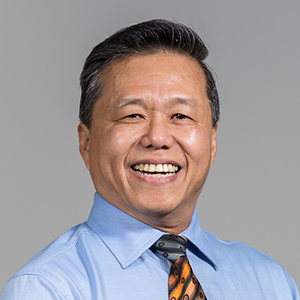
Cornelia Schneider is a Professor and Head of the Institute of Computer Science at the University of Applied Sciences Wiener Neustadt. She leads research in digital health and care technologies, focusing on applications like Augmented Reality, sensor data analysis, and social robotics for vulnerable populations. Her work emphasizes user-centered design and has been supported by projects funded by FFG and the Active Assisted Living Programme. Her research spans telemedicine infrastructure, elderly care robotics, and health monitoring systems. Notable projects include 24/7-Digital (2023-2026), Care about Care (2021-2023), and AgeWell (2019-2022). She has pioneered solutions like CARU cares and DigiCare training programs. Dr. Schneider has been recognized with the AAL Award (2014) and the tecnet | accent Innovation Award (2021). She coordinates interdisciplinary teams and actively participates in conferences like Health Informatics Meets Digital Health. Her lab collaborations include FOTEC and Salzburg Research, where she previously led the e-Health Competence Center until 2019.
Drew R. Gentner is an Associate Professor of Chemical & Environmental Engineering at Yale University, with an additional appointment in the School of the Environment. His research focuses on air quality, atmospheric chemistry, and their intersections with climate, energy, and health. He holds a B.S. from Northwestern University and a Ph.D. from UC Berkeley. Affiliations: Yale School of Engineering & Applied Science, Yale School of the Environment Research Interests: Complex organic mixtures, urban air quality, non-traditional emissions (e.g., volatile chemical products), indoor air pollution, climate impacts of energy systems. Dr. Gentner leads the Gentner Research Group, which employs advanced analytical techniques and sensor networks to study atmospheric processes. Recent work highlights the role of asphalt and commercial cooking emissions in urban pollution. His team collaborates on large-scale field campaigns like AEROMMA and ASCENT. Key findings include identifying gaps in emissions reporting and demonstrating the health risks of aged wildfire smoke. His group develops low-cost sensors and calibration methods for high-spatiotemporal air quality monitoring. Grants & Funding: NSF, NOAA, EPA, and private foundations support his work on energy efficiency, sensor networks, and pollution mitigation. Labs/Teams: SEARCH Center at Yale, Atmospheric Science and Chemistry mEasurement NeTwork (ASCENT), and collaborations with Environment and Climate Change Canada.
Dr. Lucy Hederman is an Associate Professor in Computer Science at Trinity College Dublin (TCD), affiliated with the O'Reilly Institute. Her research focuses on leveraging data and documents to support clinical decision-making, particularly in healthcare knowledge work. She has led interdisciplinary projects addressing data integration for rare diseases (e.g., ANCA-vasculitis, MND) and socio-technical challenges in adopting patient-generated health data (PGHD) into clinical practice. Dr. Hederman has secured over €xxxk in research funding and leads the Heterogeneity and Interoperability (H&I) challenge in the SFI-funded ADAPT 2 Centre. Her educational background includes advanced studies in computer science and healthcare informatics, though specific degree details are not explicitly stated in the text. She has supervised 4 PhDs, 2 research MScs, and co-supervised 6 PhDs, while currently mentoring 8 graduate students. Her career includes founding TCD spinouts PBOC and BIOLOGIT, which align with her research in health informatics and technology. Key research interests include: Interdisciplinary collaboration between clinicians, researchers, and technologists Data harmonization for multi-national clinical studies (e.g., FAIRVASC, Precision-ALS) Development of clinical decision support systems (CDSS) Design of mobile health (mHealth) tools for underserved populations Recent work emphasizes FAIR principles for healthcare data and socio-technical factors influencing PGHD adoption. She has contributed to over 70 peer-reviewed publications and actively participates in initiatives like the EU-funded TRANSFORM project and HRB Primary Care Research Centre. Dr. Hederman’s professional memberships include the Irish Computer Society, ACM, and Healthcare Informatics Society of Ireland. Her research has impacted healthcare practices in Ireland, with many MSc student projects influencing local health services.
Professor Ian Ruthven is a Professor of Information Seeking and Retrieval in the Department of Computer and Information Sciences at the University of Strathclyde. He chairs the Scottish Library and Information Council (SLIC) and the Steering Committee of the Information Seeking in Context (ISIC) conference series. His research focuses on human information interaction, including information seeking in health, migration, and cultural heritage contexts. He authored Dealing With Change Through Information Sculpting , proposing a theory explaining how people use information behaviors to adapt during life transitions. Education: PhD in Abduction, Explanation, and Relevance Feedback (University of Glasgow, 2001), MSc (University of Birmingham, 1993), BSc in Computing Science (University of Glasgow, 1992). Research Interests: Information seeking theory, interface design for information access, user studies. His work bridges human-computer interaction with socio-technical systems, emphasizing ethical and inclusive design. Publications: Over 170 peer-reviewed papers, including influential works on information resilience, digital divides, and pandemic impacts on international students. Recent work includes Grey Digital Divide: Factors Associated with Older People’s Use of the Internet for Financial Transactions (2025) and Information Avoidance: A Critical Conceptual Review (2025). Awards: Tony Kent Strix Memorial Award (2020), Fellow of the Royal Society of Arts (2010), and multiple best paper awards. His contributions span academic and policy realms, addressing societal challenges through information science. Projects: Co-investigator in the Participatory Harm Auditing Workbenches and Methodologies (PHAWM) project (2024–2028) and leader of the Scottish Network on Digital Cultural Resources Evaluation (ScotDigiCH) (2015–2016). These projects emphasize participatory design and cultural heritage evaluation. Professional Activities: Editorial roles for major conferences, visiting researcher at the University of Pretoria (2021), and advisory roles in library and information science initiatives. His work fosters collaboration between academia and cultural institutions.
Scott MacKenzie is an Associate Professor at the Lassonde School of Engineering, York University, where he leads research in Human-Computer Interaction (HCI). He holds a Ph.D. from the University of Toronto (1992) and specializes in interaction devices, mobile computing, and human performance modeling. His work emphasizes accessibility, text entry systems, and assistive technologies. He maintains an active research group focused on advancing HCI through empirical studies and innovative design. Education: Ph.D. in Computer Science, University of Toronto, 1992 Dr. MacKenzie’s research explores how interaction techniques can enhance user performance and accessibility. Key areas include touch-based interfaces, gestural input, and systems for users with disabilities. His recent work investigates eye-tracking for wheelchair control, mid-air gesture interaction, and text entry methods for VR environments. His publications reflect a focus on practical applications of HCI principles, such as improving mobile device usability and evaluating novel input methods. Notable contributions include studies on soft keyboards, tilt-based interaction, and accessibility solutions for motor-impaired users. Labs/Teams: Affiliated with the Lassonde School of Engineering’s research initiatives in interactive systems and human-centered computing.
Onur Varol is an Assistant Professor at Sabanci University's Computer Science Department and leads the VIRAL Lab, which focuses on computational social science, network science, and machine learning. He has affiliations with the Center of Excellence for Data Analytics. His research spans social bot detection, misinformation analysis, and online behavior modeling.
Parv Venkitasubramaniam is a Professor in the Department of Electrical & Computer Engineering at Lehigh University, affiliated with the P.C. Rossin College of Engineering. Previously, he served as a postdoctoral researcher at UC Berkeley under Prof. Venkat Anantharam. His research focuses on theoretical foundations of privacy and security in networks, leveraging statistical signal processing, information theory, and game theory. Key application areas include smart grids, transportation systems, and peer production networks. Education includes a Ph.D. and M.S. in Electrical Engineering from Cornell University, and a B.Tech from the Indian Institute of Technology. His doctoral work concentrated on wireless sensor networks, particularly distributed communication and statistical inference. Research interests span privacy-utility tradeoffs, cybersecurity in control systems, and resilient network design. He explores topics like stealthy attacks on dynamical systems, privacy-aware stochastic games, and resilient energy storage systems. Recent work emphasizes transportation system resilience and cyber-physical system security. His publications address cutting-edge challenges in anonymizing networks, detecting cyber attacks, and optimizing privacy-preserving mechanisms. Notable projects include NSF-funded research on anonymous networking and information-theoretic security frameworks.
Dr. Lisa Wang is a tenure-track Assistant Professor in the Department of Civil & Environmental Engineering at Old Dominion University (ODU). She holds a Ph.D. and Postdoctoral Fellowship in Structural Engineering from Colorado State University (CSU), with additional research at NIST’s Center for Risk-Based Community Resilience Planning. She is a licensed California Professional Engineer (PE) and has expertise in multidisciplinary community resilience assessment, mitigation strategies, and policy analysis. Her research focuses on integrating physical, socio-economic, and infrastructural systems to enhance disaster resilience in coastal and hazard-prone communities. Education: Ph.D. and Postdoc (CSU, 2022-2024), M.S. in Structural Engineering (University of Colorado Denver & Jilin University, 2015), B.S. in Civil Engineering (Jilin University, 2012). Professional licenses include CA PE #94251 and CO EIT #007558. Research Interests: Community resilience under multi-hazards (tornadoes, floods, climate change), resilience-based design of structural systems, data fusion across disciplines, and equitable decision-making for disaster resilience. Recent grants include $31k for AI-driven coastal resilience strategies and $10k for minimum building portfolio development. Grants & Awards: Principal Investigator (PI): Trustworthy AI in Coastal Resilience (ICAR, $31k), AI-Driven Building Portfolios (ODU PURS, $10k) Awards: O. H. Ammann Fellowship (ASCE), ICAR Travel Grant, AGU NSF Travel Grant, Jack E. Cermak Fellowship Labs & Teams: Wang Research Group and Structural Engineering Research Laboratory at ODU.
Gabriel A. Silva is a Professor in the Shu Chien-Gene Lay Department of Bioengineering at UC San Diego’s Jacobs School of Engineering, with a joint appointment as Assistant Professor in Ophthalmology. His research bridges neuroscience, theoretical physics, and applied mathematics to explore how the brain encodes and processes information, leveraging quantum logic and algorithms for advanced neural modeling. University: University of California, San Diego School: Jacobs School of Engineering Department: Shu Chien-Gene Lay Department of Bioengineering Academic Rank: Professor Joint Appointment: Assistant Professor in Ophthalmology Research Interests: Silva focuses on neural computation at cellular and network scales, aiming to abstract biological mechanisms into mathematical models that emulate brain-like processing. His work has implications for understanding neurological disorders, developing neural engineering nanotechnologies, and advancing AI systems through emergent complexity. Recent Article Trends: His publications span quantum-enhanced neural modeling, EEG-based disease detection, nonlinear dynamics in brain networks, and interdisciplinary applications of graph theory. Emerging themes include the integration of category theory for network analysis and AI optimization via emergence-promoting schemes. Labs & Teams: Affiliated with UC San Diego’s Institute of Engineering in Medicine, Silva leads research at the intersection of bioengineering, ophthalmology, and neural systems, fostering collaborations with neuroscience and quantum computing domains.
Prithvi Ravi Kantan is a full-time Researcher at Aalborg University's Department of Architecture, Design and Media Technology within The Technical Faculty of IT and Design. His work focuses on developing sound-based and multimodal feedback systems for motor rehabilitation, integrating principles from music technology and biomedical engineering. Education: PhD in Embodied Sonification Design (2021-2023) M.Sc. in Sound and Music Computing (2018-2020) B.E. in Electronics and Telecommunications (2009-2013) Research interests include real-time auditory feedback systems for neurological rehabilitation, user-centered design of clinical technologies, and the application of generative music in data sonification. He actively contributes to projects like HearWalk (2023-2027), exploring sound-facilitated motor learning in cerebral palsy patients. Notable achievements include winning the Danish Sound Day Research Pitch Battle (2023) and receiving the Best Student Paper Award at ICAD 2024. His work aligns with UN SDG 3 (Good Health) and SDG 4 (Quality Education). Teaching responsibilities include coordinating bachelor and master-level courses in PBL-based learning, emphasizing interdisciplinary approaches. He has supervised multiple student projects and contributed to over 39 publications since 2013.
Danny Poo Chiang Choon is a tenured Associate Professor at the School of Computing (SOC), National University of Singapore (NUS). As Curriculum Chair of the Department of Information Systems and Analytics, he plays a key role in designing and implementing Information Systems and Computer Science curriculum at NUS. Dr. Poo earned his BSc (Honours), MSc and PhD in Computation from the University of Manchester Institute of Science and Technology (UMIST), United Kingdom. His academic journey has established him as a leader in health informatics and information systems at NUS. His research spans multiple domains with strong focus on Healthcare Informatics , where he investigates mobile health interventions, health analytics, and systems for improving patient care. His work in Data Science & Business Analytics explores knowledge management, information sharing, and effective search strategies. In Intelligent Systems , he examines software engineering approaches, object-oriented systems, and knowledge classification frameworks. His recent publications demonstrate a clear trajectory toward mobile health applications, particularly in coronary heart disease prevention and diabetes management. Dr. Poo's work consistently bridges technical computing with practical healthcare applications, focusing on user-centered design and evidence-based interventions. His research shows strong interdisciplinary integration between computer science, healthcare systems, and behavioral science, with emphasis on practical implementation in Singapore's healthcare context. Dr. Poo has served in numerous leadership roles including as the founding Director of the Centre for Health Informatics at NUS (2012-2015) and as a member of the Steering Committee of the Asia Pacific Software Engineering Conference (APSEC) since 1994, serving as Vice-Chairman from 2003-2005. He has been invited to speak at international forums including the Japanese Government's "USA, Kyushu and Asia International Exchange Project" and as a keynote speaker at the 2009 Arabic Scripts Second Symposium in Abu Dhabi. His expertise is recognized through invitations to speak on knowledge management topics at conferences in Singapore. Dr. Poo has authored five books in the Information Technology area: "Enterprise JavaBeans for Students" (2014), "Object-Oriented Programming and Java" (1998, 2007), "Learn to Program Enterprise JavaBeans 3.0" (2009), "Learn to Program Java" (2009), and "Learn to Program Java User Interface".
Helena Webb is a Visiting Lecturer in the Department of Computer Science at the University of Oxford, where she contributes to research and teaching within the Human Centred Computing theme. Her work bridges social science and computer science, focusing on responsible innovation, AI ethics, and user interactions with digital technologies. PhD in Social Sciences, University of Nottingham Bachelor’s in Social and Political Sciences, University of Cambridge Former Senior Researcher, University of Oxford Department of Computer Science Researcher at Work, Interaction and Technology (WIT) Research Centre, King’s College London (2009–2014) Her research interests include human-computer interaction, algorithmic fairness, privacy in smart homes, and ethical design of social robots. She specializes in qualitative research methods and interdisciplinary collaboration to understand how technology shapes and is shaped by social practices. She has led and contributed to major projects such as Digital Wildfire , UnBias , ReEnTrust , and RoboTIPS , all focused on responsible governance and design of digital systems. Her recent publications span topics from algorithmic accountability to ethical black boxes in robotics, reflecting a strong trend toward integrating ethical considerations into the technical design of AI and interactive systems. These works emphasize participatory design, transparency, and societal impact. Scientific Awards and Recognition: Named one of the Brilliant Women working in AI Ethics She actively supervises and co-supervises students, contributes to ethics education, and is involved in outreach and diversity initiatives at Oxford. She has also served on the Departmental Equality and Diversity Committee and the Research Ethics Committee. Helena is a member of the advisory board for the ReEnTrust project and continues to develop the ethical hackathon model with colleagues. Her work exemplifies a deep commitment to interdisciplinary, socially responsible research in computing.
Luigi Acerbi is an Associate Professor in the Department of Computer Science at the University of Helsinki, where he leads the Machine and Human Intelligence research group. He is also an active member of the Finnish Center for Artificial Intelligence (FCAI) and ELLIS (European Laboratory for Learning and Intelligent Systems). His research focuses on probabilistic machine learning and computational neuroscience, particularly on developing efficient methods for statistical inference, Bayesian models of perception, and resource-constrained rationality. His work bridges machine learning and cognitive science, with applications in Bayesian optimization, simulation-based inference, and image completion. The recent publications highlight a strong trend toward unifying probabilistic conditioning across diverse tasks using transformer-based meta-learning frameworks like the Amortized Conditioning Engine (ACE). These works emphasize amortized inference, flexible latent variable modeling, and the integration of prior knowledge at runtime, enabling efficient and scalable Bayesian methods for complex problems. Scientific Affiliations: University of Helsinki, Department of Computer Science Finnish Center for Artificial Intelligence (FCAI) ELLIS (European Laboratory for Learning and Intelligent Systems) Education: PhD in Computational Neuroscience, Doctoral Training Centre, Edinburgh, UK Advisor: Sethu Vijayakumar and Daniel Wolpert Visiting work at Computational and Biological Learning Lab, Cambridge Postdoctoral Experience: Alex Pouget’s lab, University of Geneva, Switzerland Wei Ji Ma, New York University, USA Collaboration with the International Brain Laboratory Luigi Acerbi mentors PhD students including Daolang Huang and Nasrulloh Loka, and collaborates widely with researchers such as Samuel Kaski. He has contributed to open-source tools like PyVBMC and is involved in community initiatives such as the EurIPS conference. His work is supported by grants from the Research Council of Finland, Business Finland, and the UKRI Turing AI World-Leading Researcher Fellowship. He leads a research lab focused on amortized probabilistic inference, with ongoing projects including PriorGuide and Stacked VBMC, aiming to make Bayesian methods more practical and accessible for real-world scientific and engineering applications.
Sanjeev Dewan is a Professor of Information Systems and Associate Dean of Masters Programs at the Paul Merage School of Business, University of California, Irvine. He also serves as Faculty Director of the Master of Science in Business Analytics program. Prior to joining UCI in 2001, he held faculty positions at the University of Washington and George Mason University. PhD, University of Rochester MS, University of Rochester Bachelor of Technology, Indian Institute of Technology, Delhi His research focuses on the economics of digital platforms , social and mobile analytics , and the valuation of technology investments . He investigates how information technology creates business value, impacts consumer behavior, and influences firm performance. His work spans electronic markets, Web 2.0 technologies, IT productivity, and the digital divide. The most recent publications reveal a strong emphasis on empirical analysis of digital platforms , including studies on gender bias in open source communities, quality certification in the sharing economy (e.g., Airbnb), personalized ranking in app stores, and mobile health applications. His research frequently uses large-scale datasets to examine behavioral patterns, market dynamics, and the economic implications of IT innovations. Faculty Service Award for 2023-24, UCI Paul Merage School of Business Best Paper Award, INFORMS 2019 e-Business Cluster Faculty Service Award for 2016-17, UCI Paul Merage School of Business Best Paper Award, INFORMS Conference on Information Systems and Technology (2009) INFORMS Service Award (2009) INFORMS Certificate of Appreciation (2008) Beta Gamma Sigma Honor Society (1991) University of Rochester Fellowship (1985–1990) Sanjeev Dewan has advised numerous PhD students who have secured faculty positions at leading institutions such as the University of Wisconsin-Madison, HKUST, Penn State, and the University of Hong Kong. His editorial service includes senior editor roles at Information Systems Research and associate editor at Management Science . He has also chaired tracks at ICIS and served as program co-chair for PACIS. There is no indication of external grant funding in the provided text, but his sustained publication record and leadership roles suggest significant research activity and institutional support. He is actively involved in academic leadership and research dissemination, contributing to major conferences and editorial boards. His work bridges theory and practice, particularly in digital platform ecosystems and analytics-driven decision-making.
Helge Langseth is a Professor at the Department of Computer Technology and Informatics , within the Faculty of Information Technology and Electrical Engineering at the Norwegian University of Science and Technology (NTNU). His research focuses on Artificial Intelligence , Machine Learning , and Probabilistic Graphical Models , particularly Bayesian Networks and their applications in Decision Support Systems . Langseth's work addresses Explainable AI (XAI) , Reinforcement Learning , and Recommender Systems . He has contributed to Bayesian Optimization , Probabilistic Modeling , and Robotic Control in oceanic environments. His recent publications emphasize transparency , fairness , and scalability in AI systems, with applications spanning maritime trade, migraine diagnosis, and power grid management. He is affiliated with the Intelligent Systems Research Group at NTNU and actively mentors doctoral and master's students. Co-authored works with Yanzhe Bekkemoen , Sverre Herland , and Jørgen Hanssen reflect his role in advising the next generation of AI researchers.


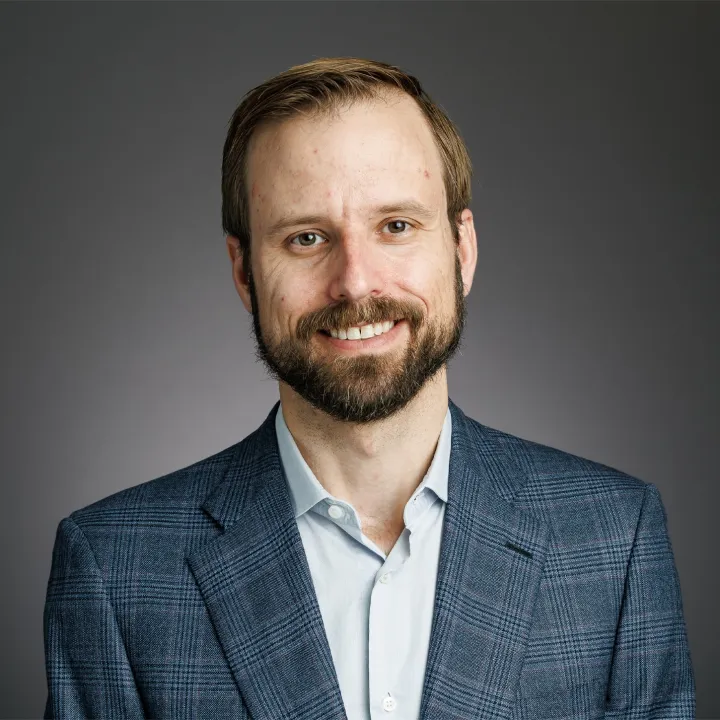
/prod01/channel_3/media/tcd/scss/headshots/Lucy-Hederman-BW-1.jpg)