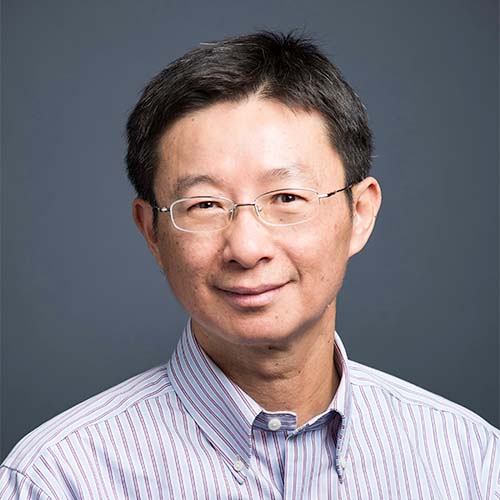
Jiju Antony is a Professor at Northumbria University , specializing in quality management, Lean Six Sigma, and operational excellence. His research bridges industrial engineering, sustainability, and service sector optimization through rigorous academic inquiry and cross-industry collaboration. University: Northumbria University Email: jiju.antony@northumbria.ac.uk His research interests include: Quality Management Systems Lean Six Sigma Implementation Continuous Improvement Methodologies Sustainable Operations Industry 4.0 Integration Digital Transformation in Business Processes Recent publications focus on leveraging Lean Six Sigma for UNSDG compliance , Quality 4.0 in digital industries, and ESG performance enhancement through Kaizen practices. His work spans manufacturing, logistics, and healthcare sectors, emphasizing pandemic operational resilience.
Pedro Vilaça is a **Professor and Head of the Department of Energy and Mechanical Engineering** at **Aalto University's School of Engineering**, Finland. Previously, he worked at the Instituto Superior Técnico (Técnico), University of Lisbon, Portugal (1995–2013). His research focuses on **welding technology**, **solid-state manufacturing**, **non-destructive testing (NDT)**, **hydrogen-related materials science**, and **materials safety**, with applications in energy and aeronautics sectors. He leads R&D teams and has collaborated globally, contributing to 142+ publications (h-index 32 via Scopus). **Research Interests**: Advanced welding techniques (e.g., friction stir welding), hydrogen embrittlement in steels, supercapacitor materials, and smart composites. He has pioneered methods for **zero-material-loss welding** and **self-sensing metallic materials**. **Key Projects**: Led initiatives like **THEWFuelCells** (fuel cell welding innovations) and **EARLY/Vilaca** (hydrogen damage assessment). His work aligns with **UN Sustainable Development Goals**, emphasizing renewable energy storage and industrial sustainability. **Awards**: 2011 Eng. Cruz Azevedo Award for outstanding research in Mecânica Experimental. **Collaborations**: Active in international networks, including the International Institute of Welding and European research consortia. He has organized conferences, reviewed patents, and advised doctoral students globally. **Recent Articles**: Focus on corrosion-resistant materials, piezoelectric composites, and hydrogen-induced failure in steels. His 2023–2025 work emphasizes energy storage innovations and advanced joining technologies. **Grants**: Principal investigator for projects funded by Business Finland, EU EIT, and Academy of Finland. **Labs/Teams**: Oversees Aalto’s mechanical engineering research teams and collaborates with institutions like Helmholtz-Zentrum Geesthacht.
Overview Catherine O'Neill Buck is an Assistant Professor in the Department of Pediatrics, Division of Neonatal-Perinatal Medicine at Yale School of Medicine. She is a neonatologist and clinical researcher focused on maternal metabolic health during pregnancy and its influence on infant growth, body composition, and neurodevelopment. Her work bridges clinical care and translational research, with a particular emphasis on preterm infants and obesity prevention. Education & Training MD: University of Connecticut School of Medicine BS: University of Connecticut (Molecular/Cell Biology and Spanish) Pediatric Residency: University of Texas Southwestern Medical School (2015) Neonatal-Perinatal Medicine Fellowship: Brown University/Women and Infants Hospital (2019) MHS (Clinical Investigation): Yale School of Medicine (2025) Research Focus Dr. Buck's research investigates how maternal metabolic conditions (e.g., diabetes) and early neonatal nutrition affect preterm and term infants' growth trajectories, adiposity, and long-term cardiometabolic health. Key areas include: Adipokine and metabolite profiling in newborns Ultrasound-based body composition assessment in preterm infants Optimizing nutritional protocols for preterm growth Impact of maternal diabetes on neonatal morbidities Clinical Trial Principal Investigator for the trial Preventing Obesity in Preterm Infants (HIC ID 2000031084), exploring strategies to mitigate obesity risks in preterm populations. Labs/Teams Leads the Yale Neonatal NOuRISH Team , focusing on nutritional and metabolic interventions for neonates.
Maria C.W. Peeters serves as a Full Professor at Eindhoven University of Technology (TU/e) within the Department of Industrial Engineering and Innovation Sciences, specifically the Human Performance Management Group. She concurrently holds an Associate Professor position at Utrecht University in the Department of Social, Health and Organizational Psychology, reflecting her dual institutional engagement in Work and Organizational Psychology. Her educational background includes: MSc in Health Sciences from Maastricht University PhD from Radboud Universiteit Nijmegen (dissertation: effect of social support on work stress) Peeters' research investigates sustainable workforce performance through the critical lens of worker diversity in high-tech environments. She specializes in worker (ill)health and well-being, work engagement, sustainable employability, job crafting interventions, work-life balance dynamics, and tailored technological innovation implementation. Her work emphasizes adapting technologies to accommodate older workers, those with lower educational levels, and disabilities to extend labor market participation. Recent publications (2025) analyze psychosocial safety climate and the DISC model for office workers, while earlier studies (2018-2015) focused on job crafting transmission and intervention efficacy. Her research consistently employs quantitative methodologies like regression analysis within the Job Demands-Resources framework, addressing sustainable performance threats from rapid technological implementation. No specific scientific awards or prizes are documented in the provided text. Peeters has published over 100 national and international articles and book chapters, with 75 research outputs listed in TU/e's repository. She co-edited the textbook "An Introduction to Contemporary Work Psychology" (Wiley Blackwell, 2014) and serves on editorial boards for Work & Stress and Gedrag en Organisatie (Dutch Journal of Behaviour in Organizations). Her academic leadership includes presidency of the Dutch Association of Work & Organizational Psychology since 2018. She operates within the Human Performance Management Group at TU/e, which studies workforce optimization through health, engagement, and sustainable employability metrics in digitized workplaces.
Miguel Mujica Mota is a Senior Lecturer at the Faculty of Technology, National Autonomous University of Mexico (UNAM), and a member of the Centre of Applied Research Technology. His research focuses on airport operations, multimodal transport systems, and simulation modeling. He has expertise in analyzing capacity challenges in multi-airport systems, particularly in Mexico City, and developing decision support systems for airport security and resource allocation. His work integrates sustainability and efficiency, addressing topics like environmental reporting in airlines and post-pandemic airport recovery strategies. Research Contributions: Dr. Mujica Mota has published extensively on airport capacity optimization, multimodal transport integration, and simulation-based methodologies. Key projects include the X-TEAM D2D initiative for door-to-door travel and the IMHOTEP project for smart passenger flow management. His work often involves collaboration with institutions like Schiphol Airport and the H2020 EU framework. Research Interests: Airport terminal design, air traffic management, simulation modeling, multimodal logistics, and sustainable aviation. Awards: A-BOOST Research Fund (2020) Beste paper award EMM2018 X-TEAM D2D Project Recognition (2020) Activities: Organized conferences like the 2023 EUROSIM Simulation Seminar and served on committees for events such as the 2024 Multilog Conference. Grants & Projects: Involved in EU-funded initiatives like H2020, focusing on multimodal integration and sustainable transport solutions. His research also explores climate change impacts on infrastructure and simulation-based validation approaches.
Amanda Jensen-Doss is a Professor and Director of Clinical Training in the Department of Psychology at the University of Miami's College of Arts and Sciences. Her work focuses on improving mental health care for children and adolescents through evidence-based practices, particularly in community settings. She leads the Child Implementation and Effectiveness Lab (CIELO Lab), which emphasizes translating research into clinical practice. Her research interests include measurement-based care (MBC), trauma-informed treatments, and implementation science. She has extensively studied clinician training, consultation strategies, and the role of data in optimizing youth psychotherapy outcomes. Key areas of focus include unaccompanied migrant children, adolescent treatment engagement, and therapist fidelity to evidence-based protocols. Dr. Jensen-Doss collaborates with community agencies to scale up evidence-based practices (EBPs), addressing barriers like funding and clinician self-efficacy. Her work bridges academic research with real-world clinical challenges, emphasizing pragmatic solutions to enhance mental health service delivery. She has contributed to national initiatives on MBC and EBP sustainability, and her lab provides resources for clinicians via platforms like shinyDLRs diagnostic tool. Notable grants and projects include the COMET study (Community Study of Outcome Monitoring for Emotional Disorders in Teens), which evaluates transdiagnostic treatments, and a focus on modular therapy approaches for anxiety, trauma, and conduct problems in schools. She advocates for clinician training models that balance expert consultation with cost-effectiveness. Her lab’s CIELO Lab website highlights ongoing projects on family support protocols for internalizing disorders and podcasts to improve health literacy. She is active in editorial roles, emphasizing methodological rigor and translational research in youth mental health.
Dr. Olga Yakusheva is a Professor of Nursing at the Johns Hopkins School of Nursing and an economist specializing in health services research. She serves as the Economics Editor for the International Journal of Nursing Studies (IF=8.6) and has an academic background in mathematics (BS) and economics (MS, PhD), with post-doctoral training at the Yale Schools of Medicine and Public Health. Education: BS in Mathematics, MS and PhD in Economics Post-doctoral training: Health services research at Yale Her research focuses on quantifying the economic value of nursing in patient outcomes, societal impact, and organizational efficiency. She leads national initiatives like the ANA’s Framing and Articulating the Economic Value of the Nursing Profession and advocates for alternative payment models in nursing reimbursement. Scientific awards include induction as an Honorary Fellow of the American Academy of Nursing (2023). She is a principal investigator on two NIH R01 grants and funded by the American Nurses’ Association and Foundation for her work on nursing economics. Dr. Yakusheva co-directs the ANA’s national summit Re-imagining the Economic Value of Nursing and authored a six-part series in Nursing Outlook titled Value-informed nursing practice and leadership .
Dr. Genevieve Cezard is a Research Fellow in the Cardiovascular Epidemiology Unit at the University of Cambridge and a fellow of the Big Data for Complex Diseases driver programme (HDR UK). Her work leverages linked electronic health records across 70 million UK residents to investigate population health, with emphasis on health inequalities, disease associations, and multimorbidity development. Her educational trajectory began as a statistician at the University of Edinburgh (2010), leading to a PhD from the University of St Andrews (2016) focused on ethnic health disparities in Scotland. Subsequent research established methods to characterize multimorbidity trajectories based on core diseases. Genevieve's research spans: Long-term health impacts of diabetes and chronic conditions Social determinants of disease trajectories Population-level vaccine effectiveness analysis Epidemiological modeling of multimorbidity Health record linkage methodologies Disparities in healthcare access by demographics She currently leads a fellowship project examining diabetes complications during the COVID-19 era (2020-2027), analyzing health consequences across diverse subgroups using integrated GP/hospital records from England, Scotland, and Wales. Scientific recognition includes: Competitive St Leonard’s PhD studentship (University of St Andrews) Prestigious HDR UK Big Data for Complex Diseases Fellowship As lead analyst for England on the first UK-wide study of under-vaccination using individual-level health records, her findings directly informed national public health interventions. Current work focuses on identifying diabetes-related disease trajectories to optimize clinical follow-up protocols across the UK healthcare system. She collaborates within HDR UK's Molecules to Health Records Driver Programme, utilizing cross-institutional health data infrastructure.
Elizabeth Lemmon is a Research Fellow within the Health Economics Group of the Edinburgh Clinical Trials Unit at the Usher Institute, University of Edinburgh. Her work focuses on applying econometric methods to healthcare and social care data, particularly in the context of aging populations and long-term care provision. PhD in Economics, University of Stirling (2019) MSc in Economics, University of Edinburgh (2014) BA Hons in Economics, University of Stirling (2013) Her research spans applied econometric analysis of survey and administrative data, economic aspects of aging, unpaid care dynamics, long-term care provision, health and care resource utilization at end-of-life, and policy implications derived from data-driven insights. A key component of her work involves leveraging Scottish and English national health data repositories to evaluate cancer care costs, screening efficiency, and treatment outcomes. Recent publications highlight her expertise in analyzing colorectal cancer economics, end-of-life hospital cost trajectories, and long-term care vulnerabilities during pandemics. She has contributed to the development of the national CORECT-R data repository and has explored international comparisons of care home mortality during the COVID-19 crisis. Elizabeth is actively engaged in public and patient involvement initiatives, ensuring her research informs both policy and clinical practice through the integration of administrative datasets.
Yong-Bin Kang is a Senior Data Science Research Fellow at the ARC Centre of Excellence for Automated Decision Making and Society (ADM+S) at Swinburne University of Technology, affiliated with the School of Social Sciences, Media, Film and Education. He holds a PhD in AI from Monash University and leads numerous transdisciplinary research projects applying artificial intelligence to address complex societal challenges. Education: PhD in Faculty of IT, Monash University, Australia Dr. Kang's research focuses on Responsible AI and Society, with specific interests in developing Societal-AI platforms that integrate social data with ethical principles. His work spans healthcare, humanitech, education, financial planning, environmental health, and justice domains. He investigates how AI can enhance decision-making processes while promoting societal well-being, with particular attention to ethical implementation and human-centered approaches. His expertise encompasses AI, natural language processing, machine learning, and decision-making optimization. Analysis of Dr. Kang's recent publications reveals a strong trajectory toward socially responsible AI applications across diverse domains. His work consistently bridges technical AI capabilities with social implications, particularly focusing on ethical frameworks, community-centered design, and addressing societal inequalities through technology. The publications demonstrate increasing collaboration across disciplines including criminology, environmental science, mental health, and education. Dr. Kang is actively involved in significant research funding initiatives, with multiple ongoing projects that address critical societal challenges through AI. His supervision availability includes Doctorate (PhD) candidates, indicating his commitment to mentoring the next generation of researchers in AI and data science fields. Current Flagship Areas: Digital Capability Innovative Society Manufacturing Futures Sustainable Development Goals: Good Health and Well Being (SDG 3) Industry, Innovation and Infrastructure (SDG 9) Affordable and Clean Energy (SDG 7)
Professor Chun-Hung Chen is a distinguished academic at George Mason University ’s Volgenau School of Engineering , where he holds the rank of Professor in the Department of Systems Engineering and Operations Research . He has also held professorships at National Taiwan University and visiting roles at institutions like University of Pennsylvania and Microsoft Research Asia . Education: PhD in Decision and Control, Harvard University (1994) MS in Electrical Engineering, National Taiwan University (1989) BS in Control Engineering, National Chiao-Tung University (1987) Research Interests focus on Stochastic Simulation Optimization , particularly his pioneering Optimal Computing Budget Allocation (OCBA) methodology. OCBA enhances simulation efficiency by dynamically allocating computational resources to critical design alternatives, reducing computation time by orders of magnitude. Applications span air transportation , healthcare , power grids , and semiconductor manufacturing . His 15 most recent articles (2022–2025) explore intersections of simulation optimization , artificial intelligence , reinforcement learning , and personalized medicine , emphasizing computational efficiency and stochastic systems in domains like microgrids and organ transplant logistics . Scientific Awards include: IEEE Fellow (2015) K.D. Tocher Medal (2017) Best Paper Awards at IEEE CASE (2019), LOGMS (2019), and IEEE ICC (2021) Harvard’s Eliahu I. Jury Award (1994) Advisory roles include editorial leadership in IIE Transactions , Journal of Simulation , and IEEE Transactions series. He has coordinated graduate programs at George Mason (2006–11, 2015–19) and led conferences like INFORMS International Meeting (2025) and Harvard Control Workshop (2024). His work is funded by organizations such as the National Science Foundation , National Institutes of Health , and Department of Energy , with applications in healthcare logistics and microgrid control .
Bonnie Berger is the Simons Professor of Mathematics at the Massachusetts Institute of Technology and head of the Computation and Biology group at MIT's Computer Science and AI Lab. She holds additional appointments as an Associate Member of the Broad Institute, Faculty member of Harvard/MIT Health Science & Technology, and Affiliated Faculty of Harvard Medical School. Her career has been dedicated to pioneering computational approaches in molecular biology, where she has been instrumental in defining the field. Professor Berger's research focuses on designing algorithms to extract biological insights from large-scale data sets. Her work spans Compressive Genomics, Network Inference, Structural Bioinformatics, Genomic Privacy, and Medical Genomics. She actively collaborates with experimental biologists to maximize the power of computation for biological discovery, developing methods that address the challenges of modern high-throughput biological data. Her recent publications demonstrate a strong trend toward integrating machine learning with structural biology and genomic privacy. The articles show increasing sophistication in using deep learning for protein structure prediction, developing privacy-preserving techniques for genomic data sharing, and creating efficient algorithms for massive biological data sets. Her work bridges theoretical computer science with practical biological applications. Professor Berger's scientific recognition includes: Election to the National Academy of Sciences (2021) ISCB Accomplishments by a Senior Scientist Award SIAM Sonya Kovalevsky Lecture Prize Fellowships in ACM, ISCB, AMS, and other prestigious societies Multiple RECOMB Test of Time Awards NIH Margaret Pittman Director's Award She has mentored numerous students who have gone on to make significant contributions in computational biology, including Ellen Zhong, Yun William Yu, and Hyunghoon Cho. Her lab receives substantial research funding supporting projects in genomic privacy, structural bioinformatics, and compressive algorithms for biological data. Professor Berger serves on the Executive Editorial Board of the Journal of Computational Biology and multiple other editorial boards. The Computation and Biology group at MIT CSAIL, which she leads, is at the forefront of developing computational methods for biological discovery. The group combines expertise in algorithms, machine learning, and biology to tackle fundamental challenges in genomics and structural biology. They are currently organizing the Machine Learning in Structural Biology workshop at NeurIPS 2025, highlighting their leadership in this rapidly evolving interdisciplinary field.
Golnoosh Farnadi is an Associate Professor at the Department of Computer Science and Operational Research at the University of Montreal and an Assistant Professor at the School of Computer Science at McGill University. She holds a Canada-CIFAR Chair in Artificial Intelligence and serves as a Senior Academic Member at Mila - Quebec Institute for Artificial Intelligence. Her interdisciplinary work bridges computer science, operations research, and ethical AI considerations. Her educational background includes a Ph.D. in Computer Science from KU Leuven and Ghent University (2017), followed by postdoctoral positions at the University of Montreal/MILA (2018-2020) and the University of California, Santa Cruz (2017-2018). Her research focuses on algorithmic fairness, responsible AI, deep learning, and probabilistic models, with applications spanning healthcare, recommender systems, and public policy. Farnadi's recent publications demonstrate a strong emphasis on addressing fairness in machine learning systems, with particular attention to cultural diversity in recommender systems, fairness in healthcare optimization (particularly kidney exchange programs), and mitigating hallucinations in large language models. Her work consistently combines theoretical rigor with practical applications, often employing novel mathematical frameworks to tackle complex ethical challenges in AI. Among her notable recognitions are the Google Scholar Award (2021), Facebook Research Award (2021), Google Award for Inclusion Research (2023), and being named one of the 100 Brilliant Women in AI Ethics (2023). She was also recognized as a Rising Star in AI Ethics in 2021. Farnadi supervises numerous graduate students through her EQUAL Lab (EQuity & EQuality Using AI and Learning algorithms), which focuses on developing AI systems that promote fairness and equity. Her teaching includes courses on Responsible AI, Machine Learning, and Trustworthy Machine Learning at both McGill University and HEC Montreal.
Gil Serrancoli Masferrer is an Associate Professor in the Department of Mechanical Engineering at the School of Engineering of East Barcelona (EEBE), part of the Polytechnic University of Catalonia (UPC). He is affiliated with the InSup - Research Group in Surface Interaction in Bioengineering and Materials Science and the LAM - Multimedia Applications and ICT Laboratory. His work focuses on biomechanics, computational modeling, and telerehabilitation systems development for clinical applications. Dr. Serrancoli's research spans multisolid dynamics, dynamic optimization, movement simulation, and telerehabilitation systems. His expertise lies in applying computational techniques to solve complex problems in orthopedics, gait analysis, and rehabilitation engineering. His work bridges mechanical engineering with biomedical applications, particularly in musculoskeletal modeling and simulation of orthopedic procedures. He has developed novel computational frameworks for estimating internal musculoskeletal loading and muscle adaptation in various conditions, including hypogravity environments. His recent publications demonstrate a strong focus on in-silico modeling of orthopedic procedures, particularly knee osteotomies (proximal fibular osteotomy versus high tibial osteotomy), with detailed analysis of joint pressure redistribution. He has also pioneered the application of machine learning techniques, particularly recurrent neural networks, to biomechanical problems including cycling biomechanics and running dynamics prediction. His work consistently integrates computational efficiency with clinical relevance. Technical Award - OpenSim+ Advanced Workshop March 2024 Accésit del XLV Congreso de la Sociedad Ibérica de Biomecánica y Biomateriales European Society of Biomechanics Travel Award OpenSim Virtual Workshop - Technical Award OpenSim Visiting Scholar 2017 Enginyers BCN 2018 Dr. Serrancoli leads several competitive R&D projects including 'Muvity: a novel physical telerehabilitation system' for vulnerable populations and 'Simulaciones predictivas in silico para cirugías ortopédicas' (Predictive in-silico simulations for orthopedic surgeries). He collaborates extensively with researchers across Europe, particularly with Jordi Torner, Josep Maria Font Llagunes, and Joan Carles Monllau, and has secured funding from national and regional programs including Plan Estatal de Investigación Científica y Técnica y de Innovación. He is actively involved in the BIOMEC - Biomechanical Engineering Lab and the TecSalut - Research Group in Health Technologies, where he contributes to the development of innovative solutions for healthcare challenges, particularly in the areas of telerehabilitation and computational biomechanics for orthopedic applications.
Aleksandr (Sasha) Aravkin is Associate Professor in the Department of Applied Mathematics and Adjunct Associate Professor of Health Metrics Sciences, Mathematics, and Statistics at the University of Washington. He serves as Director of Mathematical Sciences at the Institute for Health Metrics and Evaluation (IHME), where he leads the Mathematical Sciences and Computational Algorithms team and contributes to strategic direction for applying mathematical sciences to analytic challenges. Dr. Aravkin earned his PhD in Mathematics (Optimization) and MS in Statistics from the University of Washington in 2010, following a BSc in Mathematics and Computer Science in 2004. His educational background forms the foundation for his interdisciplinary research approach. His research expertise spans large scale optimization, machine learning, data science, convex and variational analysis, algorithm design, robust statistics, inverse problems, and uncertainty quantification . These methodologies are applied across diverse domains including health metrics, computational medicine, tracking and navigation, seismic imaging, computational finance, and neuroscience. Dr. Aravkin has pioneered approaches for fusing physics-based and data-driven models, enabling innovative solutions to complex problems. Dr. Aravkin's publication record demonstrates a strong focus on health metrics and Global Burden of Disease studies, with recent work emphasizing meta-analytic approaches for risk-outcome relationships. His research spans epidemiological modeling, health effects of various exposures, and forecasting disease burden across populations. The publications reveal a consistent pattern of high-impact work in top journals including The Lancet and Nature Medicine, often addressing critical public health questions through rigorous statistical and mathematical frameworks. At IHME, Dr. Aravkin has led significant projects including the Burden of Proof Studies (2019-2024) which analyzed 153 risk-outcome pairs, and COVID-19 Modeling (2020-2023) where his team developed forecasting models and excess mortality estimation methods. He has also been instrumental in developing the Evidence Score model, requiring novel algorithmic approaches. His work bridges theoretical mathematical sciences with practical applications to improve global health policy and practice.