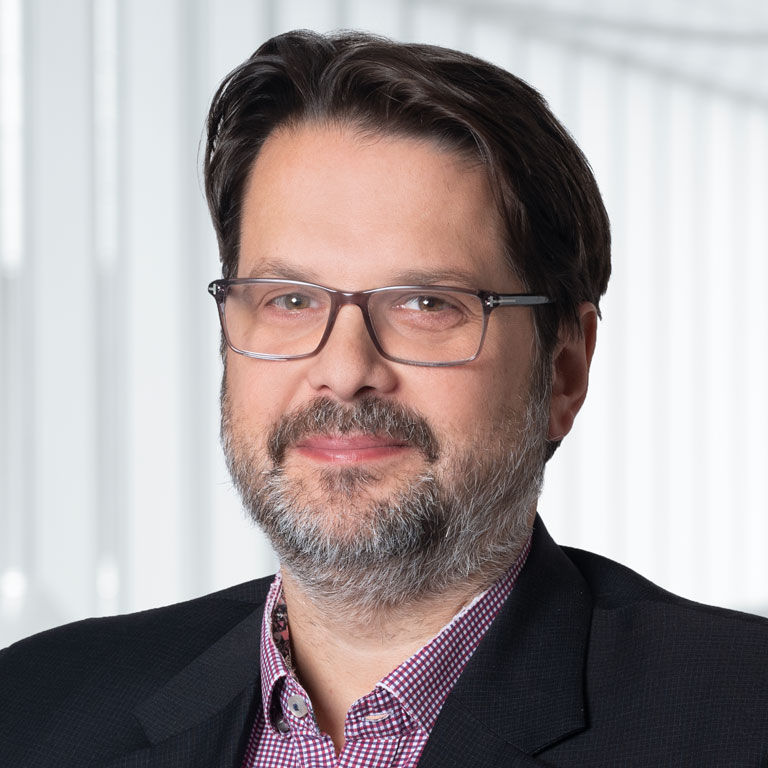
Irene Kim is the Edward J. Pryzbyla Chair in Business & Economics and an Associate Professor at The Catholic University of America's Busch School of Business, Department of Accounting and Finance. Prior to joining CUA, she was an assistant professor at Duke University's Fuqua School of Business and George Washington University's School of Business. Education: B.S. and M.S. in Accounting from Case Western Reserve University, Ph.D. in Business Administration from the University of Michigan, and Certified Public Accountant in Ohio. Her research focuses on Financial Accounting , Earnings Quality , Class Action Securities Litigation , and Corporate Governance . Recent publications also include interdisciplinary work in Health Economics , Oncology , and Pharmacology . Key trends in her publications span over two decades: (1) foundational work on earnings quality, securities litigation, and D&O insurance from 2002-2015; (2) recent forays into cost-effectiveness analyses of oncological treatments and pharmacotherapies for obesity (2019-2022). Deloitte & Touche Doctoral Fellowship Award She teaches courses in Introductory Accounting, Managerial Accounting, Intermediate Accounting I, and Graduate Seminar.
David Crainich is a Full Professor at IÉSEG School of Management and Research Director at CNRS. He holds a Ph.D. in Economics from Facultés Universitaires Saint-Louis and HDR from University of Lille 1. His research focuses on risk theory, health economics, and behavioral decision-making. His work examines economic aspects of prevention incentives, diagnostic test valuation, and risk preferences in health decisions. He develops theoretical models to optimize health incentive programs and understand individual risk management strategies. Crainich's publications demonstrate strong focus on behavioral economics applications in healthcare, particularly financial incentive design for health behaviors and the economic valuation of personalized health information. His research combines theoretical rigor with experimental validation.
Athina Kontogianni serves as Assistant Professor of Greek Civil Law at the School of Law, Department of Law, European University Cyprus, while maintaining active roles as Acting Member of Greece's National Commission on Human Rights (2015-today), Research Fellow to the Hellenic Parliament's Scientific Council (2009-today), and member of critical medical oversight bodies including the Advisory Board of the Greek National Organization of Medicines (2019-today) and Supervisory Board of the Greek National Authority of Medical Assisted Reproduction (2021-today). Her academic credentials include a PhD in Civil Law (2005), MA in Civil Law (1999), and BA in Law (1997), all from the National and Kapodistrian University of Athens. These qualifications underpin her expertise in both Greek civil law foundations and European legal harmonization. Dr. Kontogianni's research centers on Consumer Protection Law, European Civil Law, and Medical Law, with significant contributions to understanding EU consumer directives' implementation, medically assisted reproduction regulations, and human rights case law interpretation. Her work bridges theoretical scholarship with practical legislative impact, particularly evident in her advisory roles for Greek government bodies on consumer protection and family law reforms. Analysis of her 15 most recent publications (2018-2023) reveals three dominant research trajectories: consumer protection mechanisms (especially online dispute resolution under EU Regulation 524/2013), medically assisted reproduction regulations (focusing on traceability and cross-border healthcare), and human rights jurisprudence (detailed commentaries on European Court of Human Rights judgments concerning privacy, vaccination mandates, and family rights). Her scientific recognition includes: Scholar awardee of the State Scholarship Foundation (1998-2000) Scholar awardee of the European Commission's Program for Civil Law Consolidation (1999-2000) Election as rapporteur for Greece before the European Parliament's IMCO Committee on the 'New Consumer Agreement' proposal (2019) Dr. Kontogianni has secured and led significant research funding including the European Commission's Consumer Protection Program (2014-2019) as Program Director and the Conflict Resolution with Equitative Algorithms project (2018-2019) as researcher. Her governmental advisory work spans legislative committees for Family Law reform (1999-2000) and Consumer Protection Law reform (2016), where she provided legal drafting expertise that shaped national legislation. She actively contributes to scholarly communities through membership in the Hellenic Association for European Law (promoting research on European civil law responsibility concepts) and the Association of Greek Civil Law (critical analysis of contemporary civil law issues), while serving on editorial committees including the quarterly journal 'European Law'.
Prof. Gisela Michel is a Professor of Health and Social Behavior at the University of Lucerne’s Faculty of Health Sciences and Medicine, and Co-Director of the PhD Program in Health Sciences. She holds a PhD in psychology from the University of Fribourg and has held roles including a visiting scholar at New York University (2003) and post-doctoral fellow at the University of Sheffield (2007-2009). Her research focuses on psychosocial outcomes and long-term care for childhood cancer survivors, palliative care, and health services research. She co-leads the Health and Social Behaviour Team and has secured grants such as the Swiss National Science Foundation’s Ambizione Grant (2009-2013). Her work integrates epidemiology, clinical psychology, and healthcare policy to address survivorship challenges, family dynamics, and mental health in vulnerable populations. Research interests include childhood cancer survivorship, palliative care for pediatric oncology patients, psychosocial adaptation in families, and health literacy. Key projects include the Swiss Childhood Cancer Survivor Study-Parents, the HEAR Study (hearing screening protocols), and international collaborations like the PanCareSurFup study. Her recent articles address parental resilience, financial hardships in cancer-affected families, and the impact of the pandemic on mental health outcomes. Prof. Michel’s contributions extend to healthcare policy, particularly in improving follow-up care models and palliative services across Europe. She has authored over 100 peer-reviewed articles and serves on advisory boards for survivorship programs. Her work emphasizes interdisciplinary approaches to address the holistic needs of patients and families facing chronic or life-limiting illnesses.
Tom Baker is the William Maul Measey Professor of Law at the University of Pennsylvania Law School. His expertise spans insurance law, legal policy, and behavioral economics. He holds leadership roles as the Reporter for the American Law Institute’s Restatement of Liability Insurance and a Board member of Bowhead Specialty Holdings. Baker co-founded Picwell, a health analytics firm, and created the COVID Coverage Litigation Tracker to monitor pandemic-related insurance disputes. Education: Harvard Law School graduate, former clerk for Judge Juan R. Torruella, and prior faculty at the University of Miami Law School. His research integrates historical, economic, and psychological perspectives to address insurance governance, litigation finance, and health policy. Research Interests: Focus on insurance institutions, risk management, cybersecurity, and the intersection of law with behavioral economics. Notable projects include studying ransomware insurance dynamics and the impact of litigation funding on legal outcomes. Recent Articles: Explore themes like litigation finance frameworks, AI-driven financial advice regulation, and historical insights into insurance governance. His work bridges academic analysis with practical policy recommendations. Scientific Awards: Recognized with the 2024 Harry J. Kalven, Jr. Prize for empirical law scholarship and the 2013 Robert B. McKay Award for contributions to tort and insurance law. Advising & Grants: Extensive involvement in shaping insurance law through Restatement projects and industry collaborations. His work on Picwell and the litigation tracker reflects a commitment to real-world legal challenges. Labs/Teams: Leads initiatives at the Leonard Davis Institute for Health Economics, focusing on health insurance decision tools and data analytics.
Professor Paul Latimer is an Adjunct Professor at the School of Business, Law and Entrepreneurship, Swinburne University of Technology. He specializes in commercial law, financial regulation, and whistleblowing, with notable research on carbon markets and securities law. His academic career includes visiting scholar roles at Columbia University, NYU, Cambridge, and others. He holds degrees from UNSW, University of Sydney (LLB, LLM), and a PhD from Monash University focusing on financial market disclosure. His research has been supported by ARC grants, and he authored the award-winning Australian Business Law textbook (35 editions). Teaching focuses on financial services, stock exchange law, and banking regulation. Professional memberships include the Law Institute of Victoria, Society of Legal Scholars, and Melbourne Forum. He also serves as a sessional tribunal member and pro bono solicitor. Research interests span whistleblower protections, carbon market regulation, anti-bribery compliance, and digital currency regulation. His recent articles address product intervention orders, post-COVID-19 insurance challenges, and corporate responses to whistleblower reforms. Education: Bachelor of Arts, UNSW Diploma of Education, UNSW LLB, University of Sydney LLM, University of Sydney PhD (Monash University, Financial Market Regulation) Awards: Publisher award for Australian Business Law ’s 25th edition. Grants: Two ARC grants for whistleblowing/carbon markets research. Labs/Teams: Active in cross-disciplinary research on financial regulation and legal ethics. Future work includes exploring digital currency oversight and sustainable carbon market frameworks.
Professor Graham Brooks is a faculty member at the Institute for Policing Studies at the University of West London. He specializes in corruption , anti-corruption , and fraud in international contexts , particularly focusing on healthcare, insurance, and sports sectors. His roles include Head of Research and Ethics and Knowledge Exchange and Course Leader for MSc Policing . Research Interests Primary: Healthcare Fraud (corruption, error, waste) Secondary: Insurance Fraud (e.g., 'cash-for-crash' schemes) Additional: Internet Fraud , Money Laundering , and Sports Corruption Recent Publications 2024 : Healthcare Corruption (book on causes, costs, and criminal justice responses) 2023 : Forensic Interviews with Autistic Adults (cross-cultural research) 2022 : Private Healthcare Insurance Fraud (systematic analysis) Professional Engagement Plenary speaker at Cabinet Counter Fraud Conference 2012 Keynote speaker at EHFCN 2015 (The Hague) and Athens 2018 Contributor to RUSI Workshops on AML and online fraud
Pat Sims is an active Associate Professor at the University of Southern Mississippi's School of Child and Family Sciences, serving as Director of the School and President of the Council of Directors. She maintains licensure as a Marriage and Family Therapist and Supervisor, with professional memberships including the American Association for Family and Consumer Sciences, American Association for Marriage and Family Therapy, and National Council of Family Relations. Her educational credentials feature: Ed.D in Counselor Education from Auburn University (1993) MS from University of Southern Mississippi (1982) BS in Sociology from University of Southern Mississippi (1978) Research focuses on Marriage and Family Therapy , Counselor Education , and Family Science , examining family dynamics, sexual abuse recovery, juvenile justice fragmentation, and interventions for disadvantaged populations. Her work integrates clinical practice with systemic social analysis. Publications from 2000-2014 reveal consistent themes: recent works address clinical training practices and trauma-related group therapy techniques (2014), while earlier studies investigate juvenile justice policy (2007), at-risk youth programs (2003), and educator roles in abuse disclosure (2000). No scientific awards are documented in the provided materials. As School Director, she oversees academic operations and likely mentors graduate students, though specific advisees are unlisted. Her 2003 publication on university-based youth programs suggests grant involvement for community interventions, but funding details are absent. She directs institutional initiatives including university-based programs for disadvantaged youth (referenced in 2003 publications), though dedicated laboratories or research teams are not specified.
Dr. Ewa Kowalewska is a Professor at the Faculty of Law and Administration, University of Szczecin, specializing in financial market law, banking law, and tax law. She holds a doctoral degree in law from the same institution and has been affiliated with the university since 2012. Her research focuses on financial security frameworks, foreign exchange control, and local taxation systems. She leads the Financial Law Research Team and coordinates the Young Lawyer Academy program. She is also deputy editor-in-chief of the Acta Iuris Stetinensis and Studia Administracyjne journals. Education: Completed legal studies at University of Szczecin (Faculty of Law and Administration), defended doctoral thesis titled "Foreign exchange control exercised by the National Bank of Poland" (2015). She previously worked at the National Bank of Poland's Szczecin branch (1998-2012). Research interests include banking regulation, financial crisis management, tax incentives, and cross-border financial transactions. Her recent work analyzes administrative fines in banking frameworks and comparative central bank roles in foreign exchange oversight. She actively participates in academic councils and quality assurance bodies at both faculty and university levels.
Dr. hab. Ilona Kwiecień, prof. UEW is a Professor and Head of the Department of Insurance at Wrocław University of Economics since 2017. She holds a habilitation in economics and a PhD in Economics from the University of Wrocław, with a background in Commercial Law. Her research focuses on insurance markets, risk management, liability insurance, compensation for bodily injuries, and the gender pension gap. Education: MSc in Commercial Law (University of Wrocław) PhD in Economics (University of Wrocław, dissertation: Insurance in Business Risk Management ) habilitation in finance (monograph: Economic Analysis of Claims for Compensation for Personal Injury under Civil Liability Insurance ) Research & Projects: Project leader of EU-funded research on the gender pension gap (2021-2024) Lead researcher on "Silver Insurance" project addressing elderly-specific insurance needs Investigated motor insurance trends and liability compensation mechanisms in Poland Professional Roles: Attorney and law firm owner specializing in insurance law, consumer protection, and financial law Teaches legal trainees at the Regional Bar Association in Wałbrzych Co-founder of brokerage firm and board member in insurance-related ventures Key Contributions: Over 40 publications on insurance law, risk management, and pension disparities Reviewer for Prawo Asekuracyjne journal and active in AIDA Polska (insurance lawyers association) Prominent speaker at conferences like EKF Insurance Conference
Pierre-Carl Michaud is a Full Professor in the Department of Applied Economics at HEC Montréal, holding the prestigious Jacques-Parizeau Research Chair in Economic Policy. He serves as Scientific Director of the Retirement and Savings Institute (RSI) and maintains affiliations as a Research Associate at the National Bureau of Economic Research (NBER) and a Principal Researcher at CIRANO. His academic leadership extends to editorial roles as Co-Editor of Canadian Public Policy and Editor of the Journal of Pension Economics and Finance. Michaud earned his Ph.D. in Economics from Tilburg University in the Netherlands (2005), supervised by Arthur van Soest and Jan van Ours, following an M.Sc. in Applied Economics from HEC Montréal (2001). His academic career progressed from Assistant Professor at the University of Quebec in Montreal (ESG) in 2010 to Full Professor at HEC Montréal since 2016, with earlier research experience at RAND Corporation. His research program centers on the economic implications of demographic change, with particular expertise in health economics, retirement systems, and financial decision-making. Michaud examines how public policies influence individual behavior regarding savings, retirement timing, and long-term care decisions, combining theoretical modeling with empirical analysis of large datasets. His work has significant policy relevance for aging societies navigating pension reform, healthcare financing, and financial literacy challenges. Michaud's recent publications demonstrate sustained excellence in top economics journals including the Journal of Political Economy, Review of Economics and Statistics, and Journal of Public Economics. A notable trend is his increasing focus on policy evaluation, particularly regarding Quebec's and Canada's retirement systems, with several influential studies on tax incentives for older workers and interventions to delay public pension claiming. His research frequently bridges academic rigor with policy relevance through collaborations with government agencies and policy institutes. King Charles III's Coronation Medal (2024) Esdras-Minville Award, HEC Montréal (2023) Elected Member of The College of New Scholars, Artists and Scientists of the Royal Society of Canada (2021) Financial Literacy Research Award, 5th Cherry Blossom Financial Education Institute (2019) Prix Marcel-Dagenais, Société canadienne de science économique (2018) Michaud has supervised numerous doctoral and master's students to completion, with recent graduates including Nicholas-James Clavet (2018) and Ismaël Choinière-Crèvecoeur (2020). His research is supported by multiple grants including the Jacques-Parizeau Research Chair in Economic Policy (2023-2028), SSHRC grants on long-term care (2024-2029), and projects funded by Ministère de la Santé et des Services sociaux. He serves on the editorial boards of leading journals and regularly provides expert testimony to government committees. As Scientific Director of the Retirement and Savings Institute, Michaud leads a multidisciplinary research team examining retirement preparation, pension systems, and financial literacy in Canada. The institute has developed innovative tools like the Canadians' Preparation for Retirement (CPR) calculator and produces regular policy briefs that inform public debate on retirement security. His leadership extends to the Société canadienne de science économique, where he served as President-elect in 2023-2024 and became President in 2024.
Conrad Meyer is an Adjunct Professor of Law at Loyola University New Orleans College of Law and the University of New Orleans Masters Level Health Administration Program , specializing in healthcare regulatory compliance and law. He holds a Juris Doctorate from Loyola Law School and a Master of Health Administration from Tulane University School of Public Health. Research interests include: Healthcare regulatory compliance Telemedicine legal frameworks Stark/Anti-kickback analysis Hospital-physician integration Healthcare fraud investigations Publications focus on healthcare policy, compliance trends, and technology integration, with key themes in ACO regulations , social media in healthcare , HIPAA updates , and telemedicine compliance . Awards and affiliations : Louisiana Super Lawyer Chambers USA Band 1 attorney Fellow of American College of Healthcare Executives Louisiana Hospital Association American Health Lawyers Association Practice areas cover physician employment agreements, peer review proceedings, fraud investigation defense, and healthcare transaction structuring with a focus on CMS and ACA compliance.
Dr. Der-Chin Horng is a Research Fellow (Professor) at the Institute of European and American Studies, Academia Sinica , with part-time appointments at National Taiwan University (2022–) and National Chengchi University (2007–). His expertise spans European Union Law , WTO Law , and Biotechnology Regulation , focusing on intersections with Climate Change , Energy Security , and Digital Policy . Research interests include: EU Banking Union and Financial Regulation ECB Legal and Monetary Policy Post-Brexit Trade Dynamics AI Legal Control and Circular Economy Food Safety and Biotechnology Governance Climate Change and Energy Crisis Responses Recent articles analyze the EU’s Vaccine Diplomacy , Energy Crisis Management , and US CHIPS Act Impacts . Awards include multiple Academia Sinica Investigator Awards and the Hu Shih Memorial Chair . He has served as an expert for the European Commission and edited volumes on EU Constitutional Law. Scientific awards include: 2022 Academia Sinica Investigator Award 2014 Dr. Hu Shih Memorial Chair 2008 Fellow, Society of Advanced Legal Studies 2003 Distinguished Research Award for Young Scholar Advisory and editorial roles span institutions like the International Law Association , European University Institute , and journals including EurAmerica and European Law Journal . Conferences organized address topics like EU Food Safety and Biotechnology Policy .
Gülşüm Günbalı Durhan serves as a Lecturer at Gaziantep University's Oğuzeli Vocational School within the Law Department since 2013. Her academic foundation includes a Doctorate in Private Law from Marmara University (2017-2024), a Degree in Private Law from Zirve University (2014-2016), and foundational legal education from Istanbul University's Faculty of Law (2001-2007). Doctorate (2017-2024): Marmara University, Faculty of Law, Department of Private Law Degree (2014-2016): Zirve University, Faculty of Law, Department of Private Law Licence (2001-2007): Istanbul University, Faculty of Law Her research concentrates on Civil Law frameworks with specialized focus on mediation mechanisms, occupational health and safety liability, consumer rights protection, and corporate social responsibility. She examines how legal structures impact economic development while addressing contemporary issues like gender equality in legal frameworks and franchising contract regulations. Her work bridges theoretical legal concepts with practical applications in Turkish commercial and civil law contexts. Analysis of her 17 publications reveals strong emphasis on Turkish legal system applications across civil procedure, contract law, and human rights frameworks. Key thematic clusters include occupational safety liability evolution (33% of works), mediation economics (18%), and consumer protection mechanisms (24%), demonstrating consistent engagement with practical legal challenges in commercial and civil contexts. Her research methodology combines doctrinal legal analysis with empirical economic impact assessments. ISERD Excellent Paper Award (2017) for interdisciplinary economic-legal research Durhan has secured four research projects including TÜBİTAK-funded work on genetic data protection in private law and EU-funded initiatives on women's economic empowerment. She actively participates in legal education through mediation training programs and gender equality workshops while serving on Gaziantep University's Women's Issues Research Center board. Her professional legal practice experience (2007-2013) at Turkish Bank and as a practicing attorney informs her applied research approach. She maintains active roles in legal professional organizations including the Turkish Tennis Federation Central Referee Board and Gaziantep Bar Association, while contributing to national legal discourse through conference presentations on civil procedure reforms and human rights applications.
Associate Professor Ines Matić Matešković serves at the University of Rijeka's Faculty of Law as Vice Dean for Business Relations and faculty member of the Department of Roman Law. Her scholarly work bridges ancient Roman legal traditions with contemporary legal frameworks through meticulous analysis of medieval statutes from Croatia's Adriatic regions. Her research centers on Roman legal continuity in medieval Croatian statutes, particularly examining debt security instruments in Dalmatian, Istrian, and Kvarner legal texts. Key specialties include: Evolution of antichresis and debt enforcement mechanisms Roman law influences on medieval Adriatic jurisprudence Historical development of insolvency and bankruptcy concepts Legal analysis of medieval wine trade regulations and vineyard protection Diachronic study of price control systems from Diocletian's Edict to modern economies Recent publications reveal a pronounced focus on 2024-2025 on higher education's role in public administration competency development and modern Croatian university funding models within European frameworks. Her historico-legal methodology consistently connects ancient legal principles to current administrative challenges, notably through examination of the 'salus populi' doctrine in pandemic contexts and evolution of ombudsman institutions from Roman tribunes. Dr. Matić Matešković secured Croatian Science Foundation project 6558 ( Business and Personal Insolvency–the Ways to Overcome Excessive Indebtedness ) and contributes significantly to doctoral education at Rijeka's Law Faculty as evidenced by her 2018 publication on new PhD graduates. Her supervisory role extends to guiding research on Roman legal principles in Croatian judicial practices and medieval statute interpretations.