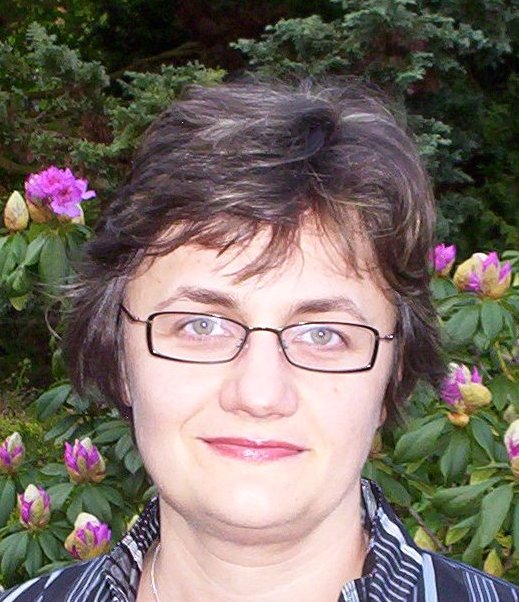
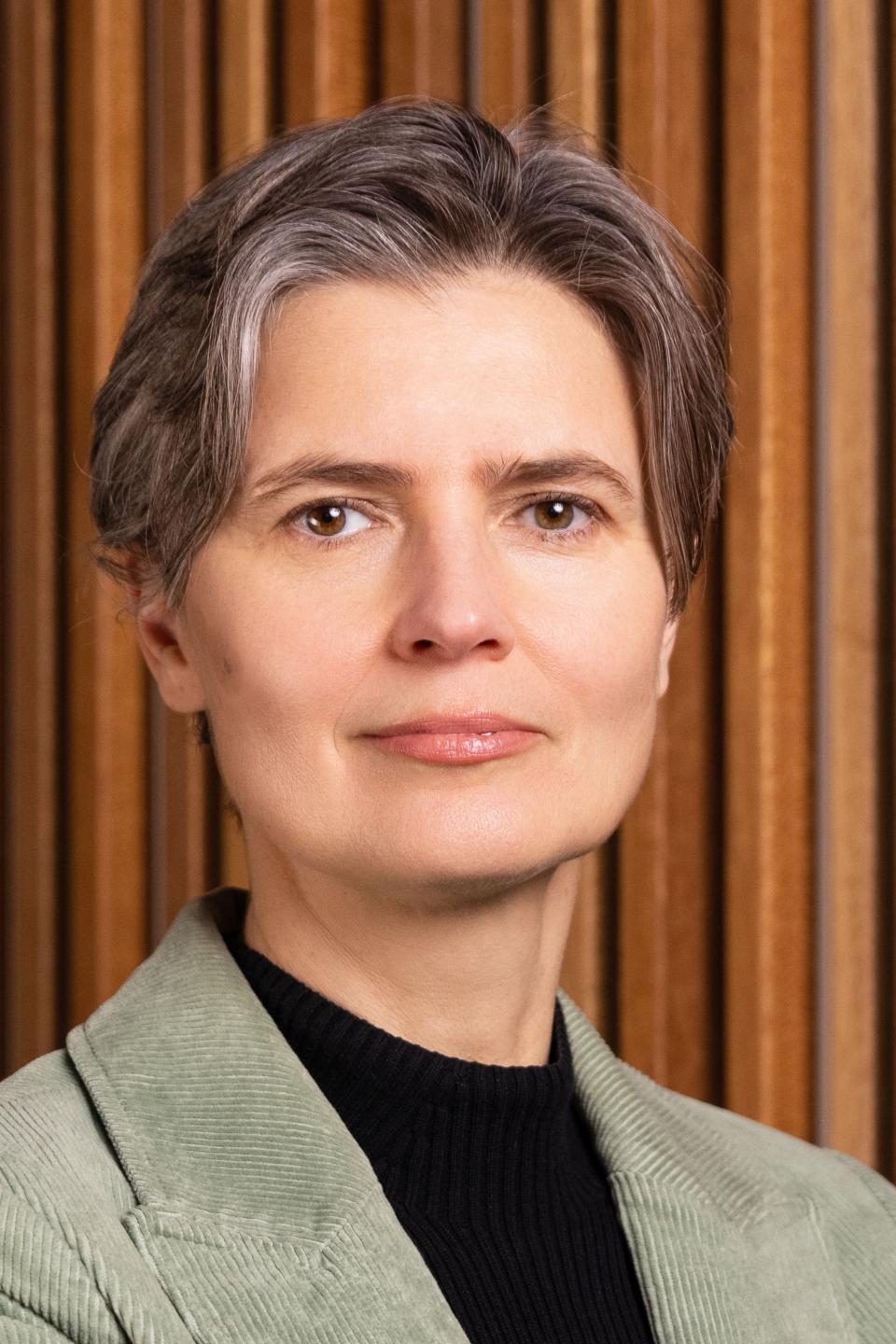
Carine J.M. Doggen is a Full Professor in Health Technology & Services Research at the TechMed Centre, University of Twente. She also serves as Scientific Director at Rijnstate Hospital since October 2017. Her academic career includes previous positions as Senior Researcher at Leiden University Medical Center (2000-2009), University of Washington, Seattle (2002-2003), and Sanquin Blood Bank (2006-2009). Her research focuses on evaluating healthcare innovations, particularly technologies enabling the transition of care from hospitals to home settings. Dr. Doggen specializes in assessing the implementation, reliability, and effectiveness of new medical technologies including wearable sensors and remote monitoring systems. Her work examines measurement validity and incorporates perspectives from both healthcare providers and patients. Analysis of her recent publications reveals strong expertise in cardiovascular technology evaluation, digital health interventions, and quality of life assessment. Her research shows particular strength in randomized clinical trials of medical devices, health technology assessment methodologies, and post-COVID health outcomes research. Dr. Doggen has presented her work at numerous conferences, with recent oral presentations including 'Towards personalised medicine: the potential of intensive longitudinal data to assess the interplay of chronic diseases' (2024) and 'Prognostic markers for acute heart failure in Chronic Obstructive Pulmonary Disease' (2021). She has also contributed to media discussions about healthcare innovations through the Rijnstate Collegetour series.
Laura Maruster is an Assistant Professor at the Faculty of Economics and Business, University of Groningen, Netherlands. She holds an MSc from the West University of Timisoara, Romania, and a PhD in Technology Management from Eindhoven University of Technology, Netherlands. Her research focuses on process mining, process modelling, and healthcare networks, with applications in operations research and data science. She collaborates extensively with industry and public sector partners on projects like the Casimir initiative (RuG and Gasunie). Teaching areas include business processes, data mining, and research methodology. Recent work includes studies on healthcare logistics optimization and process mining beyond traditional workflows. Her publications appear in leading journals such as BMJ Open , IEEE Transactions on Engineering Management , and Computers in Industry . Research interests span healthcare networks, emergency medical services analytics, and enterprise process optimization. Notable recent contributions include analyzing interhospital patient transfers and redesigning engineering design processes using data-driven methods.
Syeda Amna Sohail is an Lecturer at the University of Twente , affiliated with the Public Administration school and the Datamanagement & Biometrics department. Her research focuses on process mining, metadata management, and privacy-preserving techniques in healthcare contexts. She actively contributes to interdisciplinary projects addressing ethical challenges in AI and data governance. Key research interests include: Data privacy in healthcare processes Process mining applications for metadata analysis Ontology-based frameworks for FAIR data principles Ethical AI and surveillance technologies Recent work highlights collaborations with institutions like CAiSE and VMBO workshops. She has presented at conferences such as the 33rd International Conference on Advanced Information Systems Engineering and delivered invited talks on privacy value modeling. Her research has been published in peer-reviewed venues including Lecture Notes in Computer Science and MDPI journals. Professional activities include organizing workshops, contributing to conference proceedings, and participating in multidisciplinary initiatives aligning with UN Sustainable Development Goals. Her work emphasizes practical solutions for balancing privacy and utility in healthcare data systems.
Valentijn M.T. de Jong is an Assistant Professor at Utrecht University, specializing in methodological advancements in biostatistics and epidemiology. His research focuses on causal inference, missing data analysis, and meta-analytical techniques in medical studies. Research Trends: Recent publications highlight his expertise in statistical methods for handling missing data (e.g., Heckman selection models), causal inference in individual-participant data meta-analyses, and enhancing prediction model discrimination in healthcare research. His work spans disciplines like epidemiology, biostatistics, and health data science.
Thomas Poell is Senior Lecturer in the Department of Media Studies at the Faculty of Humanities, University of Amsterdam. His scholarly work sits at the intersection of digital media studies, platform studies, and political communication, with a focus on how digital platforms reshape public communication and cultural production. Poell's research interests primarily center on platformization processes and their societal implications. His influential work examines how digital platforms mediate public communication, with particular attention to protest movements, multilingual communication, and the transformation of cultural industries. He has made significant contributions to understanding the political economy of platforms, platform power dynamics, and the evolving relationship between platforms and public values. His methodological approach combines qualitative analysis of platform architectures with empirical studies of user practices across different cultural and linguistic contexts. Analysis of Poell's recent publications reveals a clear trajectory from studying social media's role in political movements to examining broader platformization processes. His work increasingly focuses on platform power across specialized domains including medical imaging, advertising ecosystems, and news industries. A consistent thread throughout his scholarship is examining how platform architectures shape communication practices and power relations, with growing attention to issues of visibility, governance, and equity in platformized environments. Poell has made significant contributions to the field through his co-authored book The Platform Society (2018), which established foundational concepts for understanding how digital platforms transform various sectors of society. He has also co-edited Global Cultures of Contestation (2017) and The Sage Handbook of Social Media (2018), demonstrating his leadership in synthesizing scholarly knowledge about digital media and platform dynamics. His influential article "Twitter as a multilingual space: The articulation of the Tunisian revolution" exemplifies his approach to studying platform-mediated communication during political upheavals. This work demonstrated how Twitter functioned as a global communication space during the Tunisian revolution, with different language communities articulating distinct accounts of the revolution while remaining interconnected through strategic language use by key activists.
Dimitra Dritsa is a Postdoctoral Researcher in the Department of Industrial Design at Eindhoven University of Technology (TU/e), specializing in human-computer interaction applied to urban health, physiological data analysis, and remote patient monitoring systems. Her work bridges design research with healthcare innovation, particularly in cancer surgery prehabilitation and wellbeing technologies. Her academic foundation includes a Master's degree from Delft University of Technology and a PhD from the University of Technology Sydney, where her dissertation focused on Spatiotemporal dynamics of urban health: Physiological data driven strategies for enhancing urban health and wellbeing . Dr. Dritsa's research centers on leveraging physiological data and AI to improve urban health outcomes and clinical interventions. She investigates user-centered design for telemonitoring systems, uncertainty-aware data visualization in design processes, and experience sampling methods for office wellbeing. Her work emphasizes contextual data integration and ethical AI applications in healthcare settings. Recent publications (2023-2025) reveal a clear trajectory toward human-AI collaboration in health contexts, with significant contributions to remote patient monitoring frameworks and data-driven design methodologies. Key themes include physiological response tracking in urban environments, AI-guided wellbeing interventions, and multidimensional data exploration tools for design researchers. She actively contributes to the STRAP project ( Self Tracking for Prevention and diagnosis of heart disease , 2020-2025) as a core project member, focusing on big data solutions and AI-driven healthcare innovations. Her supervisory role includes guidance for two students as indicated in institutional records, and she teaches the course Making sense of sensors since 2016.
Prof. Julia van Weert is a Professor of Health Communication at the Faculty of Social and Behavioural Sciences of the University of Amsterdam. Her research focuses on improving patient-provider communication through digital health interventions, shared decision-making processes, and health equity. Specializing in areas such as AI applications in healthcare, cancer care communication, and falls prevention in older adults, her work bridges communication science with practical healthcare challenges. She leads projects like the SNOWDROP initiative, which uses big data to empower seniors in managing medication-related fall risks. Her studies frequently address barriers to effective communication in multicultural healthcare settings and the impact of online health information on patient outcomes. Key collaborations include work with Amsterdam UMC and ASCoR, emphasizing user-centered design for clinical decision support systems. Her expertise spans health literacy, pandemic communication during crises, and the role of mental wellbeing in health messaging. Notable projects include systematic reviews on decision aids for older adults and longitudinal studies on media consumption patterns during the COVID-19 pandemic. Prof van Weert’s research integrates qualitative and quantitative methods, often involving cross-disciplinary teams to address complex healthcare communication challenges. She has contributed to the development of clinical tools like the ADFICE_IT system for deprescribing fall-risk drugs and the Online Value Clarification Tool for early-phase clinical trials. Her work emphasizes translating academic findings into actionable strategies for improving healthcare delivery and patient empowerment across diverse populations.
Prof. Emiel Krahmer is a Professor at the Department of Communication and Cognition, Tilburg School of Humanities and Digital Sciences (TSHD), Tilburg University. His research focuses on healthcare communication, digital health technologies, and patient-centered approaches. He explores barriers/facilitators in return-to-work strategies for trauma patients, personalized predictions in rehabilitation, and the role of serious games in health behavior change. His work also addresses ethical challenges in self-monitoring platforms for mental health, emphasizing epistemic justice and algorithmic fairness. Collaborations with medical professionals and interdisciplinary teams highlight his contributions to digital health innovation. Key projects include studies on trauma patient perspectives, implementation of patient-reported outcome measures (PROMs), and game-based interventions. His research bridges communication science and clinical practice, aiming to enhance patient engagement and equitable healthcare delivery through technology.
Helga Gardarsdottir is a Professor in Pharmacoepidemiology at Utrecht University (Netherlands), serving as Scientific Director of the Center for Pharmacoepidemiology. She also holds an adjunct professorship at the University of Iceland and serves as a Seconded National Expert at the European Medicines Agency (EMA). Her work focuses on real-world data for regulatory decision-making, drug safety, and clinical guideline implementation. She leads international projects like IMI Trials@Home and EMA IMPACT, addressing decentralized clinical trials, risk minimization, and pharmacovigilance impact. Her roles include co-chairing the ENCePP steering group and editing Pharmacoepidemiology & Drug Safety . Beyond research, she chairs the Faculty of Science’s EDI committee, promoting inclusive academic practices. Education: Pharmacist training in Sweden; Pharmacoepidemiology specialization in the Netherlands. Research Interests: Innovations in real-world evidence generation, regulatory science, drug safety surveillance, and clinical trial modernization. Key areas include RWE’s role in HTA/regulatory decisions, unintended impacts of drug policies, and digital health integration. Publications: Recent work emphasizes methodological advancements in decentralized trials, pharmacovigilance outcomes (e.g., fluoroquinolone prescribing shifts), and harmonized approaches to external control trials. Her studies bridge regulatory practices with clinical practice guideline adherence. Achievements: Overseeing multi-country initiatives like the IMI Trials@Home consortium (decentralized trials framework) and EMA IMPACT (guideline-RMM integration). Recognized for leadership in ENCePP’s methodological standards and ISPE’s Real-World Evidence Task Force. Grants & Teams: Principal investigator on EMA-funded projects and IMI grants. Leads Utrecht’s Applied Data Science initiative and collaborates with the EU PEV Research Network. Active in training next-generation researchers through teaching and mentoring. Labs/Teams: Utrecht Center for Pharmaceutical Policy & Regulation; Trials@Home consortium; ENCePP working groups.
Mark D. Smucker is a Professor in the Department of Management Science and Engineering at the University of Waterloo, cross-appointed with the David R. Cheriton School of Computer Science (Faculty of Mathematics). His research focuses on interactive information retrieval systems, including search engines and recommendation systems, aiming to enhance evaluation methods for better prediction of human search performance. He co-organized the TREC Health Misinformation Track (2019–2022) and currently co-leads the TREC DRAGUN Track, addressing health misinformation and trustworthiness assessment in news. Education: PhD (Computer Science, UMass Amherst, 2008), MSc (Computer Science, UW-Madison, 1996), BSc (Physics & Computer Science, Iowa State, 1994). Research interests include design/analysis of interactive IR systems, evaluation frameworks, and human-computer interaction. He has been recognized with the ACM SIGIR 2012 Best Paper Award and teaching excellence awards from the University of Waterloo. Teaching includes courses like Search Engines (MSCI/MSE 541/720) and Databases/Software Design (MSCI 245). Active in organizing TREC tracks and publishing over 50 peer-reviewed articles.
Rom Langerak is an Associate Professor at the University of Twente , affiliated with the Digital Society Institute and the Formal Methods and Tools department. His research bridges computer science and medical applications , focusing on timed automata modeling for healthcare diagnostics and treatment optimization. Key research areas: Formal Methods , Medical Informatics , Bioengineering , and Software Applications . Recent work includes modeling sleep apnea diagnostics , cartilage regeneration , and cancer immunotherapy adverse events , emphasizing interdisciplinary collaboration between computational and biomedical domains. His publications highlight hybrid modeling techniques and in silico validation frameworks. Notable contributions: Timed Automata for Healthcare , True Concurrency in Verification , and Computational Biology .
Dr. Saer Samanipour is a Visiting Professor at the Van 't Hoff Institute for Molecular Sciences, part of the Faculty of Science at the University of Amsterdam. His research focuses on advanced analytical techniques for environmental and biomedical applications, with a strong emphasis on non-targeted analysis, mass spectrometry, and machine learning integration. He leads efforts in developing open-source tools like GcDUO and jHRMSToolBox to enhance data interpretation in complex chemical datasets. Key areas include environmental contaminant detection, chemical exposure assessment via wastewater-based epidemiology, and proteomic analysis of snake venoms. His work bridges computational methods with experimental chemistry to address global challenges in environmental health and toxicology. Primary affiliation: Van 't Hoff Institute for Molecular Sciences Research themes: Non-targeted LC-HRMS workflows, machine learning applications in analytical chemistry, PFAS analysis, and exposome research Software contributions: GcDUO (GC×GC-MS), jHRMSToolBox (HRMS data processing) His publications highlight innovations in data-driven approaches for compound prioritization, toxicity prediction, and method optimization. Recent work explores chemical space exploration and chemometric strategies for complex mixture analysis, with applications to environmental monitoring and forensic science.
Cagatay Catal is a Lecturer at the Information Technology Department of Wageningen University & Research in the Netherlands. Previously, he served as Associate Professor at Istanbul Kultur University's Department of Computer Engineering (2012–2017), including three years as Department Head (2014–2017). Prior to academia, he worked for 8 years at TÜBİTAK's Information Technologies Institute as Senior Researcher & Project Manager (2002–2012), contributing to large-scale software systems. He holds a BSc/MSc from Istanbul Technical University and a PhD from Yildiz Technical University, all in Computer Engineering. His research focuses on machine learning applications in software engineering, software quality assurance, testing methodologies, and architecture design. He actively reviews for funding bodies like the European Union's EUROSTARS program, Canada's Research Council, and Turkey's Research Council. Catal leads projects such as INREF Smart-In-Ag (SMART farming in Indonesia), VIRAL (ICT in agricultural education), and malware detection in software systems. His work bridges academic research with practical software development challenges in diverse sectors like healthcare and education.
Adriana Iamnitchi is a Full Professor and Key Domain Chair for Computational Science at Maastricht University's Faculty of Science and Engineering, affiliated with the Department of Advanced Computing Sciences. Her research focuses on computational social science, social media dynamics, and misinformation detection. Her primary research interests include: Analysis of coordinated information campaigns across social platforms Development of LLM-based synthetic data generation for social media research Polarization quantification in multi-community networks Policy compliance frameworks for digital regulation (e.g., EU's Digital Services Act) Ethical AI applications for content moderation and transparency Her recent publications (2023-2025) demonstrate strong focus on: Cross-platform disinformation detection using multimodal embeddings Generative AI for synthetic social media datasets Quantitative analysis of toxicity monetization in creator economies Regulatory compliance automation for content transparency
Dr. Jun Hu is an Associate Professor in Design Research on Social Computing at the Department of Industrial Design, Eindhoven University of Technology (TU/e). He serves as the Scientific Director for the Engineering Doctorate program in Designing Human-System Interaction and is the chair of the working group "Aesthetics and empowerment" of IFIP TC14. Additionally, he holds positions as a Distinguished Adjunct Professor at Jiangnan University and a Guest Professor at Zhejiang University. Dr. Hu earned his Ph.D. degree in Interaction Design and an Engineering Doctorate degree in User-system Interaction, both from TU/e. He also holds a B.Sc degree in Mathematics and an M.Eng degree in Computer Science. He is a System Analyst and a Senior Programmer with qualifications from the Ministry of Human Resources and Social Security, and the Ministry of Industry and Information Technology of China. His research focuses on the intersection of Human-Computer Interaction, Social Computing, and Design Research, with particular interests in data physicalization, empowering systems, and health informatics. Dr. Hu's work explores how technology can be designed to support human needs in social contexts, with applications in health, stress management, and physical activity motivation. His approach often combines aesthetic considerations with functional design to create systems that empower users. Analysis of Dr. Hu's recent publications reveals a strong focus on data physicalization, social aspects of personal informatics, and health applications of interactive systems. His work spans from theoretical frameworks for understanding user interaction with physicalized data to practical applications in stress management for children and motivation for physical activity. There's a clear trend toward integrating AI capabilities into human-centered design approaches while maintaining a focus on user empowerment. Senior Member of ACM Distinguished Adjunct Professor at Jiangnan University Guest Professor at Zhejiang University Editor-in-chief for EAI Endorsed Transactions on Pervasive Health and Technology Associate editor for Behaviour & Information Technology and Entertainment Computing Editor for the International Journal of Arts and Technology Dr. Hu has supervised numerous students through the Engineering Doctorate program and has been involved in various research grants, particularly in the areas of health technology and human-system interaction. He has served in leadership roles including head of the Designed Intelligence group at ID TU/e from 2015-2017 and currently chairs the working group "Aesthetics and empowerment" of IFIP TC14. He coordinates the TU/e DESIS Lab in the DESIS Network and serves on multiple editorial boards. Dr. Hu is actively involved with the Design Of Empowering Systems research group and the EAISI Health initiative at TU/e. His work often involves interdisciplinary collaboration across computer science, design, and healthcare domains, focusing on creating systems that empower users through thoughtful integration of technology into everyday contexts. He also serves as Chairman of the Foundation for Design Promotion in Europe and China and is a board member of the International Chinese Association of Computer Human Interaction (ICACHI).