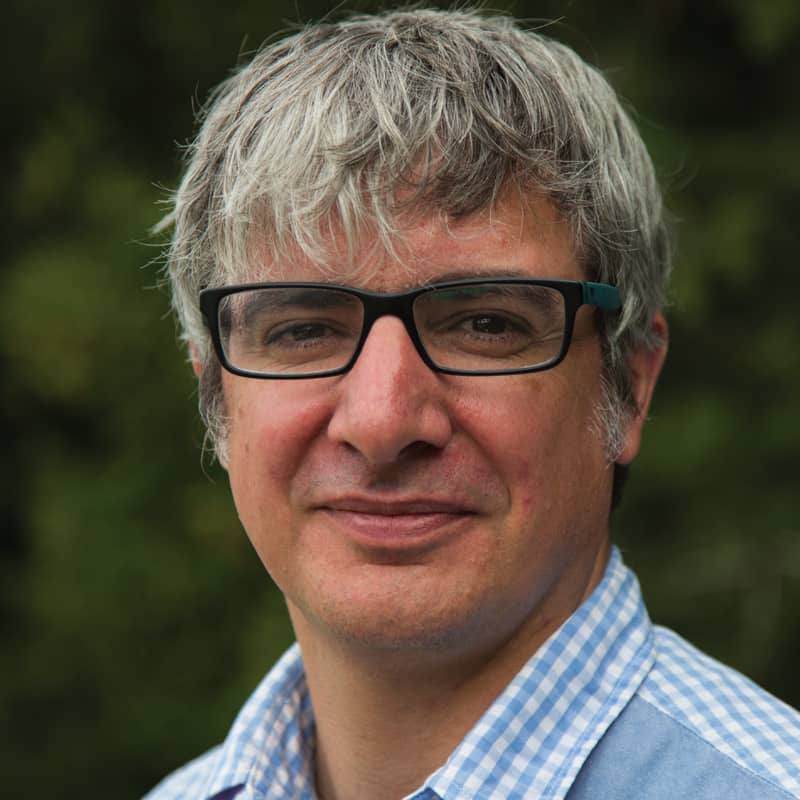
Hisham Zerriffi is an Associate Professor at the University of British Columbia (UBC) in the Department of Forest Resources Management, Faculty of Forestry. He also serves as Associate Dean for Equity, Diversity, and Inclusion. His research intersects technology, energy, and the environment, focusing on rural areas in the Global South. Affiliation: BioProducts Institute Affiliation: Clean Energy Research Centre Affiliation: Institute for Resources, Environment and Sustainability His research examines institutional factors in technology diffusion, household energy choices, and welfare impacts of energy use. Current projects include analyzing forest density's ecological impact, clean cooking transitions in India, and decentralized energy systems. Recent publications address just transitions, biomass energy economics, and policy misalignments in Indigenous communities. He has authored works on climate change mitigation via forest carbon credits and rural electrification strategies. Scientific Award: Ivan Head South/North Research Chair As a PhD supervisor, he has guided Natalie Payer on urban energy poverty in the U.S. He collaborates on interdisciplinary grants and leads the Energy Resources, Development and Environment Lab (ERDELab).
David N. Thomas is a Professor of Arctic Ecosystem Research and Director of the International Masters Programme for Environmental Change and Global Sustainability at the University of Helsinki. He is affiliated with the Faculty of Biological and Environmental Sciences, working within the Ecosystems and Environment Research Programme and the Helsinki Institute of Sustainability Science. Dr. Thomas is a distinguished Marine-Arctic-Antarctic-Climate Biologist with extensive expertise in sea ice research, polar ecosystems, and climate change impacts. His research focuses on the biogeochemical processes within sea ice, carbon cycling in polar regions, and the ecological implications of a changing Arctic Ocean. He has made significant contributions to understanding how sea ice ecosystems function and respond to environmental change, with particular attention to microbial communities, nutrient dynamics, and carbon fluxes. His recent publications demonstrate a strong focus on the changing Arctic Ocean ecosystem, carbon and microbial dynamics in thawing permafrost landscapes, and sea ice biogeochemistry. Dr. Thomas has also contributed to important policy documents such as the PAME Synthesis Report on Ecosystem Status in the Central Arctic Ocean, bridging the gap between scientific research and environmental management. Professor Thomas has recently published the 4th Edition of "Sea Ice: Its Physics, Chemistry, Biology, Geology and Societal Importance," which represents a comprehensive update to this seminal work in polar science. His research spans both Arctic and Antarctic environments, examining how these critical polar regions are responding to global environmental change.
Professor Maia Chankseliani is Professor of Comparative and International Education at the University of Oxford and a Governing Body Fellow of St Edmund Hall. She serves as Editor-in-Chief of the International Journal of Educational Research and Chair of the Executive Committee of the Education and Development Forum (UKFIET), and is a Trustee of the University of Bahrain. She leads the International Mobility and World Development research project funded by the U.S. Department of State. Her educational background includes: BA and MA from Tbilisi State University MA from the University of Warwick EdM from Harvard University PhD from the University of Cambridge Professor Chankseliani's research explores the public role of tertiary education in diverse settings, examining how universities contribute to social, economic, and political development, and how international engagement shapes both institutions and societies. Her work spans international student mobility and its developmental impact, academic freedom, university contributions to sustainable development, and higher education in post-Soviet contexts. Her monograph What Happened to the Soviet University? (OUP, 2022) offers insights beyond the former Soviet context, addressing contemporary debates around academic freedom and institutional autonomy. Her major international study International Mobility and World Development represents the first global mixed-methods project examining how international education contributes to societal development. Her recent publications (2023-2025) demonstrate a consistent focus on the ripple effects of international student mobility, particularly examining poverty reduction mechanisms, intercultural competence development, and systemic impacts on home countries. Based on extensive qualitative data from over 700 interviews across 70 countries combined with quantitative analysis, her research reveals how internationally mobile individuals become agents of change through knowledge transfer, policy influence, and institutional reform. This body of work shows that returnees adapt, translate, and embed reform through multiple mechanisms far beyond simple skill transfer. Professor Chankseliani has secured significant research funding from diverse sources including the U.S. Department of State, UKRI/ESRC, British Council, World Bank, Qatar Foundation, and European Commission. Her research has informed policy dialogue in areas such as poverty reduction, education and health systems, gender equality, and civic life. She regularly engages with governments and international audiences, and her work is frequently featured in global media outlets including Nature and University World News. At Oxford, Professor Chankseliani convenes the Comparative and International Education Research Group and previously led the department's MSc in Comparative and International Education from 2017 to 2024. She supervises multiple doctoral students and has worked on numerous externally funded research projects involving UK government departments, international organizations, and academic institutions. Her current research portfolio includes examining how international education experiences translate into societal development outcomes, with particular emphasis on poverty reduction mechanisms and the long-term impacts of mobility on home countries.
Thomas Grote is a Research Fellow at the University of Tübingen's Ethics and Philosophy Lab within the Cluster of Excellence 'Machine Learning: New Perspectives for Science'. His research focuses on philosophical and ethical dimensions of artificial intelligence, particularly interpretability, fairness, and reliability in medical and social contexts. He co-supervises the Carl-Zeiss-Stiftung-funded project 'Certification and Foundations of Safe Machine Learning Systems in Healthcare' and co-organizes the 'Philosophy of Science Meets Machine Learning' conference series. Research Focus Grote's interdisciplinary work bridges philosophy of science and applied AI ethics. Key areas include: Methodological foundations of AI ethics and epistemology Clinical reliability and safety of ML systems Fairness metrics in sociotechnical healthcare systems Interpretability requirements for medical AI Computational psychiatry and evolving mental health frameworks His recent publications demonstrate strong emphasis on healthcare applications, with critical analyses of reliability in foundation models, ethical paradigms for LLMs, and rethinking evaluation methodologies at the epistemology-ethics interface.
Tania Burchardt is an Associate Professor of Social Policy at the London School of Economics (LSE) , where she serves as Deputy Director of STICERD and Associate Director of CASE (Centre for Analysis of Social Exclusion). Her work bridges theoretical frameworks like the capability approach with empirical analyses of inequality , disability policy , and applied welfare policy . Key Research Areas : Theories of justice, inequality measurement, time poverty, and social care systems Leadership Roles : Co-led projects on multidimensional inequality, intergenerational exchanges, and child poverty Her recent work explores intra-household resource allocation , social care inequities , and public engagement in policymaking . She has collaborated with organizations like the Nuffield Foundation and Sense about Science to translate research into practice. Scientific Contributions span empirical studies on: Long-term care funding reforms (2015–2020) Disability-related income disparities Time poverty intersections with economic hardship Data-driven policy recommendations for Roma/Gypsy/Traveller communities Multidimensional child poverty frameworks
Professor Heiko Spallek is Head of School and Dean at the University of Sydney’s Sydney Dental School, leading the school’s integration with the Faculty of Medicine and Health. He also serves as Academic Lead for Digital Health and Health Service Informatics at the faculty level. His research focuses on advancing dental informatics, teledentistry, and evidence-based practice, while advocating for improved oral health policy and public health initiatives. He holds roles including director at Community Connections Australia and membership in the Charles Perkins Centre. Education: DMD, Dr. med. dent., MSBA(CIS), FACD, FAIDH Leadership: Oversees Sydney Dental School’s academic and clinical programs, emphasizing interprofessional education and digital health innovation. Research interests include leveraging big data and machine learning in dentistry, improving access to oral healthcare through teledentistry, and addressing systemic issues in dental education and policy. He has led projects on laser dentistry applications, dental caries prevention, and healthcare workforce regulation. Notable contributions include the OpenWide conference series, the BigMouth dental data repository, and advocacy for equitable dental funding in Australia. Grants include initiatives on oral hygiene in aged care and analysis of healthcare advertising perceptions. Media engagements highlight his role in public discourse on dental access and policy, including commentary on Australia’s dental crisis and aged care reforms. He actively promotes interdisciplinary collaboration through platforms like the Dental Informatics Online Community. Labs/Teams: Directs the Sydney Dental School’s research programs in informatics and public health, collaborating with national and international networks such as the National Dental PBRN.
Miguel Rodrigues is a Professor of Information Theory and Processing at University College London's Department of Electronic & Electrical Engineering. He leads the Information, Inference and Machine Learning Lab at UCL and serves as the founder and director of the master programme in Integrated Machine Learning Systems. Rodrigues is also the UCL Turing University Lead and a Turing Fellow with the Alan Turing Institute, the UK National Institute of Data Science and Artificial Intelligence. His academic background includes an undergraduate degree in Electrical and Computer Engineering from the Faculty of Engineering of the University of Porto, Portugal, and a PhD in Electronic and Electrical Engineering from University College London. He has held appointments at prestigious institutions worldwide including Cambridge University, Princeton University, Duke University, and the University of Porto. Dr. Rodrigues's research spans information theory, information processing, and machine learning. His work has attracted over £5 million in funding from competitive national and international funding bodies and resulted in more than 250 publications with over 8000 citations in leading journals and conferences, including top AI venues like NeurIPS, ICML, and ICLR. His recent publications demonstrate a strong focus on multimodal learning, machine learning security, climate modeling with satellite data, and applications of AI in healthcare and precision medicine. His work shows increasing interdisciplinary collaboration across fields from climate science to pharmaceutical engineering. IEEE Communications and Information Theory Societies Joint Paper Award 2011 Fellow of the Institute of Electronics and Electrical Engineers (IEEE) Prize for Merit from the University of Porto Prize Engenheiro Cristian Spratley Prize Engenheiro Antonio de Almeida Fellowships from the Portuguese Foundation for Science and Technology Fellowships from the Foundation Calouste Gulbenkian Dr. Rodrigues has served as Editor for IEEE BITS – The Information Theory Magazine and IEEE Transactions on Information Theory, among other editorial roles. He consults widely in machine learning and AI with government institutions, funding agencies, industry, and startups, and sits on committees responsible for AI standardization such as the BSI Art/1 working group. His leadership extends to directing research labs and educational programs focused on advancing machine learning systems. He leads the Information, Inference and Machine Learning Lab at UCL, which focuses on fundamental aspects of information theory and their applications to machine learning and data processing. The lab works on both theoretical foundations and practical implementations of learning systems.
Dr. Peter H. Ditto is a Professor of Psychological Science at the University of California, Irvine (UCI), affiliated with the School of Social Ecology and the Department of Psychological Science. He holds a Ph.D. from Princeton University. His research focuses on 'hot cognition'—the interplay of emotion and reason in social, political, moral, medical, and legal judgments. Central themes include motivated reasoning, partisan political bias, and the role of emotion in moral decision-making. His work has explored how political ideology skews judgments, denial in response to medical threats, and how moral principles are selectively applied to justify desired conclusions. Research affiliations include the Hot Cognition Lab at UCI and contributions to platforms like Yourmorals.org for data collection. His interdisciplinary efforts bridge psychology, ethics, and societal issues through studies on topics ranging from end-of-life medical decisions to workplace wellness incentives. He has published extensively in top journals such as Science , Journal of Personality and Social Psychology , and Psychological Science . His articles collectively examine moral psychology, political behavior, and health decision-making, highlighting biases in self-reported happiness, free will perceptions, and punitive motivations. Advising and grant activities are not explicitly detailed here, but his lab’s research emphasizes practical applications to real-world social problems, such as constructive political dialogue through Civil Politics.
Nicholas Antipa is an Assistant Professor at the University of California San Diego's Jacobs School of Engineering, in the Electrical and Computer Engineering department. His research focuses on the co-design of optical systems and algorithms to develop advanced computational imaging systems, leveraging innovations in 3D printing, sensors, machine learning, and AI. He holds a PhD in Computational Imaging from UC Berkeley and previously worked at the Lawrence Livermore National Lab on optical metrology for the National Ignition Facility. His work includes pioneering projects like the DiffuserCam and Miniscope3D, which enable high-dimensional optical signal capture and 3D microscopy. Education: PhD in Computational Imaging, UC Berkeley (2020) MS in Optics, University of Rochester Institute of Optics BS in Optical Science and Engineering, UC Davis Research Interests: Computational imaging systems, single-shot high-dimensional optical capture, lensless imaging, and applications in neuroscience and marine science. His lab explores novel optical designs, compressed sensing, and AI-driven imaging techniques to push the boundaries of conventional systems. Scientific Awards: Best Paper at ICCP 2019, 2016 Best Demo at ICCP 2017 No. 2 in Optica 15 Top-Cited Articles (2020) Affiliations: Director of the Computational Imaging Systems Lab at UCSD. Collaborates with institutions like Lawrence Livermore National Lab and the Scripps Institution of Oceanography for projects in marine sediment mapping and underwater object detection. His lab emphasizes open-source tools, such as the DiffuserCam Raspberry Pi tutorial.
Dr. Araz Taeihagh is an Assistant Professor at the Lee Kuan Yew School of Public Policy, National University of Singapore (NUS), where he also serves as Principal Investigator at the Centre for Trusted Internet and Community (CTIC) and NUS Cities. He previously chaired the PhD Programme in Public Policy (2020-2023). Taeihagh holds a DPhil from the University of Oxford and has over two decades of consulting experience in energy, environment, transportation, and technology domains. His research focuses on policy design and governance of emerging technologies , with expertise spanning autonomous systems, AI governance, sharing economies, and smart cities. Key research areas include: Decision support systems and complexity approaches to public policy Infrastructure and sustainable development (energy/environment/transport) Socio-technical systems and technology governance Recent publications demonstrate strong focus on AI governance frameworks , autonomous systems regulation , and smart city development , particularly examining policy innovation in Singapore and comparative Asian contexts. Research frequently addresses tensions between technological innovation and regulatory oversight. Major recognitions include: Ranked Top 2% Scientist worldwide for energy (2023) and citation impact (2020-2022) Best Paper Award from Transport Reviews (2020) Research Excellence Awards (2019-2022) Faculty Research Fellowships from LKYSPP and NUS Humanities & Social Sciences He serves on editorial boards of Technological Forecasting and Social Change , Policy and Society , and other leading journals, and co-chairs scientific committees for AI Singapore's governance initiatives.
Biondo Biondi is the Barney and Estelle Morris Professor of Geophysics at Stanford University, affiliated with the School of Earth Sciences. He leads the Stanford Exploration Project and holds roles such as Chair of the Geophysics Department (2019–2022) and Director of the Stanford Earth Imaging Project (1998–Present). His research focuses on seismic imaging algorithms, computational geophysics, and fiber-optic sensing technologies. He earned his Ph.D. (1990), M.S. (1987) in Geophysics from Stanford, and M.Sc. in Electrical Engineering from Politecnico di Milano (1984). Dr. Biondi's research emphasizes improving seismic data imaging through advanced computational methods. He pioneered urban seismic monitoring using preexisting telecommunication fibers, enabling cost-effective subsurface analysis. His work integrates machine learning and high-performance computing to address challenges in reservoir imaging, CO2 monitoring, and infrastructure health. Key research areas include distributed acoustic sensing (DAS), ambient noise tomography, and inverse theory applications. He has authored over 180 publications and received awards like the SEG Honorable Mention (2019, 2016, 2009) and the Distinguished Instructor Short Course (2007). His teaching includes courses like 3-D Seismic Imaging and Reflection Seismology, and he advises graduate students in geophysics and computational science. Collaborations span industry (e.g., Schlumberger, Saudi Aramco) and global institutions. Biondi’s administrative contributions include co-directing the Stanford Earth Sciences Algorithms and Architectures Initiative and serving on editorial boards like the SIAM Journal on Imaging Sciences. His lab’s innovations bridge geophysics with emerging technologies, advancing both academia and industry applications in energy, environment, and urban infrastructure.
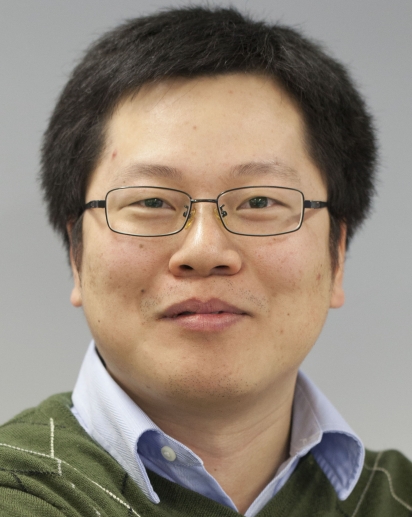
Feng Fu is an Associate Professor of Mathematics at Dartmouth College, with an adjunct appointment in Biomedical Data Science. He leads the Fu Lab, focusing on interdisciplinary research at the intersection of evolutionary game theory, computational social science, and biomedical data science. His academic roles include teaching courses such as Evolutionary Game Theory, Stochastic Processes, and Game Theory and Artificial Intelligence. Education: Senior Postdoc, ETH Zurich (2012-2015); Postdoc, Harvard University (2010-2012); PhD, Peking University (2010); B.S., Fudan University (2004). Research interests span evolutionary dynamics of cooperation, computational models of human behavior and social networks, cancer evolution, and behavioral epidemiology. Notable work includes studies on vaccine hesitancy, misinformation dynamics, and the hysteresis effect in vaccination uptake. His lab has received prestigious funding, including a Bill & Melinda Gates Foundation Grant (2019). Teaching and mentoring: Advised numerous graduate and undergraduate researchers, many of whom have received awards and advanced to academic or industry roles. Courses taught include QSS/MATH 30.04 (Evolutionary Game Theory) and MATH 146 (Game Theory and AI). Labs/Teams: Fu Lab at Dartmouth collaborates across disciplines, with projects in cancer immunotherapy modeling, network-based interventions, and computational social science. Recent lab highlights include advancements in understanding polarization and the development of targeted public health strategies.
Steven Siciliano is a Professor and NSERC/FCL Industrial Research Chair in In Situ Remediation and Risk Assessment at the University of Saskatchewan's College of Agriculture and Bioresources. He leads the CREATE Human and Ecological Risk Assessment Program. His expertise spans soil toxicology, greenhouse gas dynamics in polar ecosystems, and nitrogen cycle interactions in contaminated environments. Education: Ph.D. in Toxicology, University of Saskatchewan B.Sc. in Biochemistry, Concordia University Research Interests: His work focuses on human-soil interaction dynamics, including soil pollution impacts on human health (e.g., PAH toxicity via soil ingestion) and ecosystem resilience (e.g., nitrogen cycle disruptions). He investigates Arctic/Antarctic soil microbiology, greenhouse gas production in polar deserts, and the ecological effects of pollutants like mercury and petroleum hydrocarbons. His lab is divided into toxicology (e.g., metal cardiovascular effects, soil ingestion models) and ecology (e.g., sub-zero water effects on gene expression, Arctic nitrogen cycles). Teaching: Teaches courses on environmental fate analysis, contaminated site management, and advanced risk assessment methodologies at both undergraduate and graduate levels. Courses include EVSC 420, TOX 820, and EVSC 821. Grants & Labs: Directs the CREATE Program and leads projects funded by NSERC and industry partnerships. His lab integrates fieldwork, molecular techniques, and modeling to address environmental remediation challenges. Collaborates on projects like cryoturbation-driven carbon dynamics and microbial community analysis in agricultural systems. Labs/Teams: Active in soil science research teams, including Arctic soil microbiology and bioremediation innovation groups. Engages in interdisciplinary collaborations with environmental engineers and ecologists to advance in situ remediation technologies.
Jan Akmal is an Assistant Professor at Aalto University, holding dual affiliations in the Department of Energy and Mechanical Engineering and the Materials to Products group. His research specializes in additive manufacturing (AM), focusing on defect detection, smart materials, and 4D printing applications. He leads the AIM-Zero project (2023–2026), exploring AI-driven zero-defect AM processes. Akmal has received the Aalto Doctoral Incentive Scholarship (2023) and an Honorary Award (2023). He serves on editorial boards for Frontiers in Manufacturing Technology and Frontiers in Mechanical Engineering , and chairs the Finnish Rapid Prototyping Association (FIRPA). Key research areas include AI-based defect detection in metal AM, self-sensing components, and hybrid materials for dynamic displays. He collaborates globally on topics like optical tomography in powder bed fusion and medical AM applications. His work addresses sustainability, industrial adoption of AM, and legal frameworks for military logistics. Akmal has authored 24 publications and contributed to datasets on AM inaccuracies and defect classification, emphasizing practical applications and industry integration.
Patrick Kastner is an Assistant Professor at the School of Architecture and holds an adjunct appointment at the H. Milton Stewart School of Industrial and Systems Engineering at Georgia Tech. He directs the Sustainable Urban Systems Lab, focusing on environmental performance simulation and urban decarbonization. His work emphasizes software tools for sustainable urban decision-making, such as Eddy3D, a microclimate modeling toolkit widely adopted in academia and practice. Education: Ph.D. and M.S. in Systems Science and Engineering, Cornell University (2022, 2021) M.S. in Sustainable Building Science, Technical University of Munich (2017) B.S. in Energy Engineering, University of Erlangen–Nuremberg (2012) Research Interests: Environmental performance simulation, urban decarbonization, machine learning applications in urban systems, spatial analysis, and software development for sustainability. His work integrates computational fluid dynamics (CFD), surrogate modeling, and data-driven approaches to address urban climate challenges. Key Projects: Leads the Vertically Integrated Project SMUR (Surrogate Modeling for Urban Regeneration), fostering interdisciplinary collaboration across Georgia Tech. Developed Eddy3D, which streamlines microclimate simulations for architects and urban planners. Grants & Advising: Engages students from sophomore to graduate levels in sustainability research. Teaches at Cornell and UPenn previously. Advises on projects blending engineering, urban design, and climate science. Labs & Teams: Director of the Sustainable Urban Systems Lab, focusing on software tools for sustainable urban transformation. Collaborates with industry partners and global institutions on decarbonization strategies.