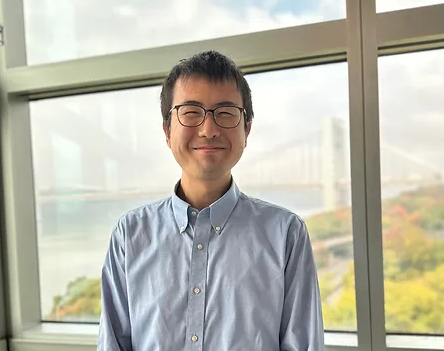
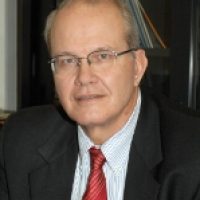
Professor Nicholas Carah is a leading academic at the School of Communication and Arts , The University of Queensland , and serves as Director of the Centre for Digital Cultures & Societies . He is also an Associate Investigator in the ARC Centre of Excellence for Automated Decision-Making and Society . His research focuses on the algorithmic and participatory advertising model of digital media platforms , with a sustained investigation into digital alcohol marketing . His research spans digital media, algorithmic culture, and affective capitalism , examining how platforms like Instagram, Snapchat, and Facebook shape promotional practices and user behavior. He has led major ARC-funded projects and co-edited works such as Digital Intimate Publics and Social Media (2018) and Conflict in My Outlook (2022). As Deputy Chair of the Foundation for Alcohol Research and Education , he contributes to policy development on unhealthy product marketing. His recent publications highlight trends in social media advertising, algorithmic transparency, and health-risk marketing . Supervision roles include Principal Advisor for PhD projects on topics like digital labor, FemTech, and augmented reality , and Associate Advisor for cross-cultural studies in media and communication. He advocates for citizen science approaches to monitor digital marketing and its societal impacts.
Kiyohito Iigaya is an Assistant Professor at the Department of Psychiatry at Columbia University, affiliated with the Neurobiology and Behavior Program, Center for Theoretical Neuroscience, and Mortimer B. Zuckerman Mind Brain Behavior Institute. He is also connected to the Health Analytics, Computing Systems for Data-Driven Science, and Computational Social Science centers. Ph.D. in Physics, Columbia University (advisor: Stefano Fusi) Postdoctoral training at University College London (Gatsby Computational Neuroscience Unit, Max Planck Centre for Computational Psychiatry and Ageing) and Caltech (advisor: John O’Doherty) The Iigaya lab specializes in computational psychiatry, studying computational principles of learning and decision-making in mental disorders. They integrate reinforcement learning models, neural circuit models, and empirical research (e.g., fMRI) through collaborations with clinical and basic neuroscience labs. Kyo’s research bridges algorithmic and neural implementation levels of analysis, focusing on mental health applications. His work aligns with data-driven science and computational social science. Key affiliations include: Neurobiology and Behavior Program Center for Theoretical Neuroscience Mortimer B. Zuckerman Mind Brain Behavior Institute Health Analytics Computing Systems for Data-Driven Science Computational Social Science His academic journey combines physics, theoretical neuroscience, and translational psychiatry research. The lab’s website ( iigayalab.com ) provides further details.
Olivia Adair is a researcher in the School of Mathematics and Physics , focusing on health economics and colorectal cancer screening. Her work integrates microsimulation modeling, systematic reviews, and cost-effectiveness analysis to evaluate public health policies in Northern Ireland and internationally. Research Trends : Her recent publications emphasize comparative modeling methods, economic evaluations of screening programs, and systematic reviews of healthcare interventions. Key themes include cost-effectiveness , population-specific screening , and health policy validation . Scientific Awards : William and Betty MacQuitty Travel Scholarship (2023) Grants & Collaborations : She collaborates with experts like Dr. Felix Lamrock, Professor Mark Lawler, and Dr. Emma McFerran, focusing on regional cancer screening challenges. Her thesis project highlights interdisciplinary teamwork in healthcare modeling.
Teemu Malmi is a Professor in the Department of Accounting at the School of Business, Aalto University, Finland. He has been an influential figure in management accounting research, particularly in management control systems and performance measurement. His academic qualifications include a Doctoral degree (1997), Licentiate degree (1994), and Master's degree (1990), all in Business and Economics from the Helsinki School of Economics. His research interests span management control, performance measurement, digitalization in finance, public sector accounting, and organizational behavior. His work often integrates empirical analysis with case studies, including a notable investigation into Nokia’s management control challenges. He has published extensively in top-tier journals and contributed to major handbooks in accounting and information systems. The recent trend in his publications (2020–2025) reflects a growing emphasis on digital transformation, blockchain, data analytics, and the evolving role of finance functions. His research increasingly bridges traditional accounting with technology and public policy, especially in healthcare financing and sustainability. Scientific Awards: “Thirst for knowledge” (“Tiedon Jano”) award by JOKO Executive Education Oy (2001) Teemu Malmi has supervised at least five theses and led externally funded research projects, including the SOTE/Kaks project (2015–2016) on social and healthcare services. He has been actively involved in academic service, such as serving on editorial boards, hosting international scholars, presenting keynote lectures, and participating in funding organization committees. His media appearances demonstrate his engagement in public discourse on welfare policy and regional financing in Finland. There is no indication of part-time status, retirement, or former staff designation; he remains an active academic.
Hummy Song is an Associate Professor at the Wharton School of the University of Pennsylvania , holding dual appointments in the Operations, Information and Decisions and Health Care Management departments. Her research bridges healthcare operations and service systems , focusing on improving organizational performance through empirical analysis and data-driven methodologies. Education: PhD, MS, and BA from Harvard University Professor Song investigates health care delivery optimization , examining issues like patient flow , capacity management , and workforce retention . Her work leverages electronic health records , administrative databases , and health workforce surveys to derive actionable insights. Her recent publications analyze AI-driven resource allocation , shift scheduling optimization , and telemedicine adoption , reflecting her focus on service operations and digital transformation in healthcare systems. Awards highlight her contributions to health services research and operations management , including the POMS Early Career Research Accomplishments Award (2022) and multiple INFORMS recognitions. Scientific Awards: Poets & Quants Top 50 Undergraduate Professors (2022) POMS Early Career Research Award (2022) INFORMS Public Sector Operations Best Paper 2nd Place (2023) AcademyHealth Best Abstract Award (2014) Harvard Derek Bok Teaching Excellence Certificate (multiple years) She serves as Associate Editor for Management Science , Operations Research , and Service Science , and actively collaborates with U.S. and international healthcare delivery organizations.
Professor David E. Gloriam is a leading expert in G protein-coupled receptors (GPCRs) at the University of Copenhagen , Department of Drug Design and Pharmacology. Recognized as a top 1% Clarivate Highly Cited Researcher, he leads GPCRdb, a major database with >50,000 annual users, and develops computational tools like GPCRgraphs for drug discovery. His innovation roles include Senior Scientific Expert at Kvantify A/S and applications in pharmaceutical industry tools with patent citations. Education: Ph.D. in Medicine (Uppsala University, 2006), M.Sc. in Pharmaceutical Sciences (Uppsala University, 2003) Leadership: Head of GPCRdb (2014–), EU COST Actions member (2014–17), and institutional leadership roles in Pharmaceutical Data Science unit and Research Leadership Forum Research Interests: His work spans computational modeling of GPCR dynamics, virtual screening methods for inaccessible receptors, pharmacogenomics (PGxDB platform), and biased signaling for safer drugs. He integrates structural biology, data science, and bioinformatics to advance pharmaceutical discovery. Awards: Clarivate Highly Cited Researcher (2022) IUPHAR Analytical Pharmacology Award (2023) Lars Arge Prize for Big Data (2021) UCPH Forward Talent Program (2019) ERC Starting Grant (2014) Teaching & Supervision: Teaches Molecular Pharmacology and AI in Drug Discovery , and supervises 3 current PhD students. He has mentored 13 PhDs and 14 Postdocs, with former members attaining tenured academic or industry roles.
Professor Riikka Rinnan (University of Copenhagen) is a leading expert in ecosystem-atmosphere interactions, focusing on volatile organic compounds (VOCs) in Arctic environments. Her groundbreaking discovery of VOCs in permafrost has advanced climate prediction models, revealing complex interactions between climate warming, insect herbivory, microbial activity, and vegetation shifts. Current position: Professor, Department of Biology, University of Copenhagen Major research themes: Permafrost VOCs, Arctic climate feedbacks, plant-insect-microbial interactions International collaborations: China, Germany, Russia Her work combines field expeditions in extreme Arctic conditions with laboratory experiments and advanced VOC analysis. Climate warming experiments show VOC emissions could increase 40-fold with combined warming and insect attacks, while Arctic soils may act as unexpected VOC sinks. Key publications appear in Nature Communications , Nature Geoscience , and Global Change Biology . Riikka Rinnan has received prestigious awards including the EliteForsk Award, European Research Council Consolidator Grant, and Sapere Aude Research Leader. She leads international research teams, advises five PhD candidates, and supervises four postdocs (including two Marie Curie fellows). Her Siberian expedition plans demonstrate commitment to real-world scientific challenges.
Christy M.K. Cheung serves as Chair Professor in Information Systems and Digital Innovation Management at Hong Kong Baptist University's Department of Management, Marketing and Information Systems within the School of Business. She also holds the prestigious position of Director of the Research Office at HKBU and serves as Editor-in-Chief of Internet Research . As President of the Association for Information Systems (AIS-Hong Kong Chapter), she demonstrates significant leadership in her academic community. Professor Cheung's research focuses on Digital Wellness and Safety, Digital Health and Well-Being, and Workplace Diversity, Equity, and Inclusion (DEI). Her work explores the complex relationship between technology use and human well-being, examining how digital environments impact both professional and personal lives. She investigates social media dynamics, data analytics applications, and information systems security from a human-centered perspective, with particular attention to ethical implications and social justice considerations. Her publication record shows a consistent focus on technostress, cyberdeviance, social media activism, and digital well-being. Recent work examines the episodic nature of technostressors and their effects on workplace behavior, social justice implications of doxing during political protests, and the interplay between technology use and work-family dynamics. These publications appear in top-tier journals including MIS Quarterly , Information Systems Research , and Information Systems Journal , reflecting her standing as a leading scholar in the field. Emerald Literati Network Award for Excellence (2007) Emerald Literati Network Award for Excellence (2016) Best Paper Award at International Conference on Information Systems (2003) Excellence in Reviewing Honorable Mention (2018) Best Reviewer in Journal of Association for Information Systems (2020) President's Award for Outstanding Performance in Scholarly Work (HKBU, 2021/22) President's Award for Outstanding Performance in Research Supervision (HKBU, 2019/20) Professor Cheung has successfully supervised three PhD students who now hold positions at prestigious institutions including Leicester University, Manchester University, and the University of Auckland. She has secured over HK$15 million in research funding through more than 25 competitive grants from sources including the General Research Fund, UGC Additional Funding, and the National Natural Science Foundation of China. Her RGC Senior Research Fellow award provided HK$7.8 million for a 60-month research program. As Director of the Research Office at HKBU, Professor Cheung plays a key role in advancing the university's research mission while maintaining her own vigorous research program. Her leadership extends to editorial roles for major journals and organizational positions within the Association for Information Systems.
Dr. Naveen K. Vaidya is a full Professor at San Diego State University (SDSU) in the Department of Mathematics and Statistics . He received his PhD and M.Sc. in Applied Mathematics from York University, Canada , and M.Sc., B.Sc., and B.Ed. from Tribhuvan University, Nepal . His postdoctoral research was conducted at Los Alamos National Laboratory and Western University, Canada . Research Interests : Dr. Vaidya specializes in applied mathematics and mathematical biology , focusing on modeling infectious diseases such as HIV, SARS-CoV-2, dengue, malaria, and tuberculosis. His work spans within-host and between-host dynamics, integrating differential equations , dynamical systems , optimal control , and biostatistics . Recent projects explore climate impacts on disease spread and machine learning in public health analytics. Scientific Awards : He has received prestigious honors, including the University of Missouri Faculty Scholars (2015/2016) Susan Mann Dissertation Award (2008) NSERC Visiting Fellowships in Canadian Government Laboratories (2008/2009) Travel Support Awards from NSF and MBI (2018) Simons Foundation Collaboration Grant (2020, declined due to NSF grants) Grants and Funding : Dr. Vaidya has secured multiple grants from the National Science Foundation (2016–2021; 2020–2023), Simons Foundation , International Mathematical Union , and SDSU Start-up Funds . He also organized the AMNS-2019 conference in Nepal and led workshops on collaborative research. Labs and Teams : As principal investigator of the SDSU-DiMoLab , he leads a multidisciplinary team studying COVID-19 , HIV , and other infectious diseases. The lab trains graduate and undergraduate students and collaborates internationally, particularly with Tribhuvan University, Nepal .
Dr. Zhi Chen is a Lecturer in Computing at the School of Mathematics, Physics and Computing, University of Southern Queensland, specializing in Artificial Intelligence and Machine Learning with applications spanning digital agriculture and healthcare systems. Education: Master of Information Technology (MIT), University of Queensland, 2018 PhD, University of Queensland, 2023 Research Focus: His work centers on zero-shot learning, domain adaptation, and multimodal systems, addressing core challenges in computer vision and deep learning. Current projects integrate AI with agricultural risk modeling and medical diagnostics, emphasizing real-world deployment of robust algorithms under data-scarce conditions. Publication Trends: Recent output (2022-2025) shows concentrated expertise in source-free domain adaptation and generalized zero-shot learning, with significant contributions to plant disease recognition (via mobile multimodal systems) and diabetes subgroup analysis. His work consistently appears in premier venues including AAAI, CVPR, and ACM MM, demonstrating methodological innovation applied to critical domains like climate-resilient agriculture and precision medicine. Supervision: Currently serves as Associate Supervisor for a doctoral candidate developing parametric insurance models for oyster farms to mitigate climate-related risks from king tides and extreme weather events. Awards: No scientific awards were documented in the provided materials.
Johannes Schöning is a Professor of Human-Computer Interaction (HCI) at the University of St. Gallen and leads the Ubiquitous Media Technology Lab . His research focuses on developing user interfaces that empower individuals and communities through data-driven decision-making, with interdisciplinary applications in geographic information science, public health, medical contexts, and extreme environments like space missions. He emphasizes methodological rigor from AI, computer graphics, and cognitive psychology. Organizes AlpCHI 2026 Chair of ACM Eugene Lawler Award Committee Editorial Board, AI Perspectives (Springer Nature) Research Trends : His publications from 2025–2024 reveal a focus on Mixed Reality (autoethnography, weight perception), Accessibility (visual impairment support), Environmental HCI (CO2 eco-feedback), and Geospatial Technologies (navigation externalities, map analytics). Interdisciplinary work appears in journals like Nature and PLOS ONE . Scientific Recognition : ACM Distinguished Member Best Paper & Accessibility Awards (Interact 2019, MobileHCI 2015) Junior Fellow, Gesellschaft für Informatik (2013) Academic Service : Active in conference leadership (SIGCHI Switzerland Chair 2021–2023, ISS 2016 Program Chair) and reviewing for top venues including ACM CHI , Ubicomp , and IEEE VR . Regular reviewer for European science foundations and DFG/BMBF proposals.
Sarah Xiao is a Professor of Marketing and Head of Department at Durham University Business School, with a dual role as Programme Director for the Doctorate in Business Administration (DBA) at Fudan University, China. As a consumer psychologist, her work bridges technology, marketing, and behavioral analysis in retail, tourism, and digital economies. Her research spans: Behavioral Change in consumer decision-making Consumer Analytics (AI, Big Data, Machine Learning) Illicit Consumption and consumer misbehavior Neuroscience in marketing and consumer choice Mobile Commerce and Digital Marketing strategies Recent publications focus on AI-driven consumer behavior, social media revenge typologies, and predictive modeling in tourism demand forecasting. She supervises PhD students including Bai Dan, Matthew He, Coco Li, and Shujun Xiao, while collaborating with global institutions and private-sector partners. Her work has attracted significant research funding and appears in leading journals like Journal of the Academy of Marketing Science and Annals of Tourism Research .
George Vasilakopoulos is a Professor in the Department of Digital Systems at the University of Piraeus , where he also serves as Vice-Chancellor for Academic Affairs and Personnel. By law, he is President of the Quality Assurance Unit (MODIP) and the Employment and Career Structure (DASTA) of the university, overseeing the development of modern information systems. He earned his PhD from the University of London and has held leadership roles including Department President, Director of Postgraduate Programs, and Scientific Director of the Digital Health Services Laboratory. PhD: University of London Current Roles: Vice-Chancellor, Department of Digital Systems Professor Labs: Digital Health Services Laboratory His research focuses on Health Informatics , Cloud Computing , and Medical Data Security , with key contributions to: Emergency healthcare process automation Privacy-preserving personal health record systems Context-aware authorization models Cloud-based medical service frameworks Machine learning in clinical data analysis Interoperable health information systems The trends in his 15 most recent articles (2010-2015) reveal a consistent emphasis on integrating cloud infrastructure , semantic technologies , and mobile platforms to enhance emergency care, chronic disease management, and patient data security. His work bridges biomedical engineering , software architecture , and public health policy . He has held advisory roles for the Minister of Health on IT issues, served on hospital boards, and contributed to national committees for healthcare technology standards. His professional activities include project evaluation for Greek and European research programs and authoring three books on health informatics.
Mikael Johansson is a Professor at Kungliga Tekniska Högskolan (KTH), specializing in Control Technology . He teaches and coordinates courses such as Distributed Optimization (FEL3311) and various advanced-level degree projects in computer science, electrical engineering, and systems engineering. His research spans Control Systems , Machine Learning , and Optimization , with a focus on asynchronous algorithms, federated learning, and applications in energy systems and construction. His work includes 15 recent publications on topics like neural networks, distributed optimization, and battery technology. Notable areas of contribution are in asynchronous learning, federated learning with privacy constraints, and quasi-Newton methods for optimization. His research bridges theoretical advancements with practical applications in urban design, healthcare, and autonomous systems.
Natalia Díaz Rodríguez is an Assistant Professor of Artificial Intelligence at ENSTA ParisTech, where she works in the Computer Science and Systems Engineering department within the Autonomous Systems and Robotics Lab (U2IS). She is also affiliated with the INRIA Flowers team, focusing on developmental robotics. Her research spans deep learning, reinforcement learning, continual learning, and symbolic AI, with applications in explainable AI, computer vision, and robotics for social good. Her academic background includes a double PhD in Artificial Intelligence from Abo Akademi University and the University of Granada, alongside MSc degrees in Soft Computing and Computer Engineering from the University of Granada. She contributes to interdisciplinary AI, particularly in robotics, ethics, and healthcare applications, and co-organizes workshops on continual learning. Double PhD in Artificial Intelligence (2015), Abo Akademi University and University of Granada Doctoral diploma on Innovation and Entrepreneurship (2017), EIT Digital MSc in Soft Computing and Intelligent Systems (2012), University of Granada MSc in Computer Engineering (2010), University of Granada Her recent publications focus on trustworthy AI, including bias identification, counterfactual explanations, and continual learning strategies, reflecting her commitment to ethical and robust AI systems. She also explores AI applications in structural engineering, climate visualization, and financial risk assessment, emphasizing practical deployment and interpretability.