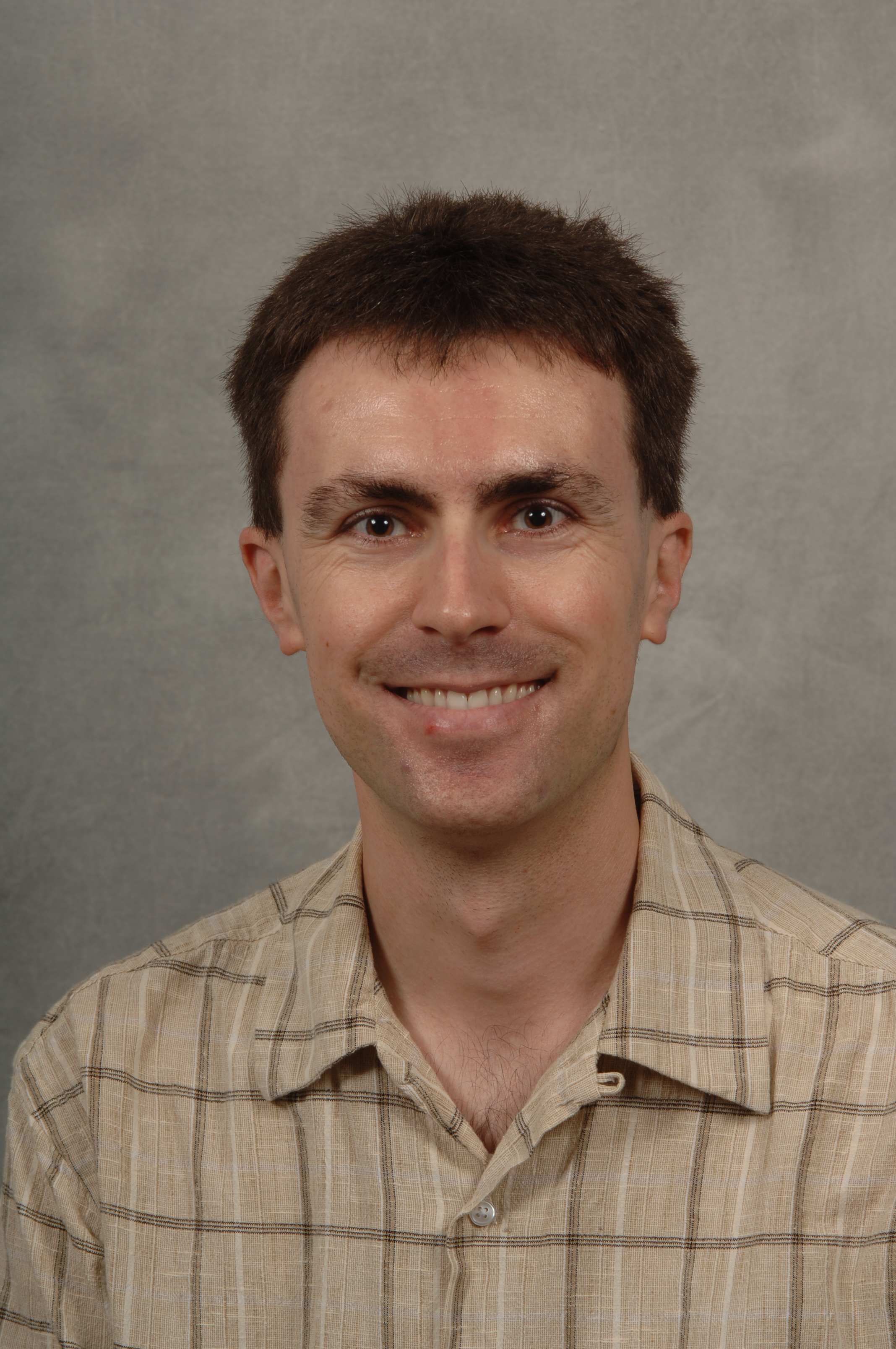
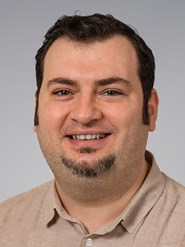
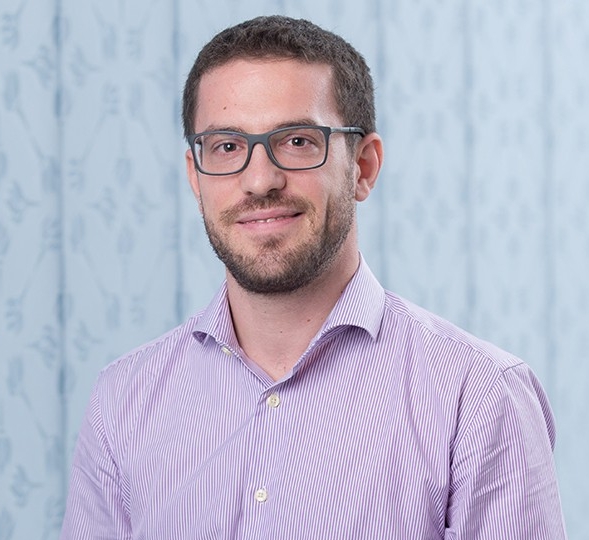
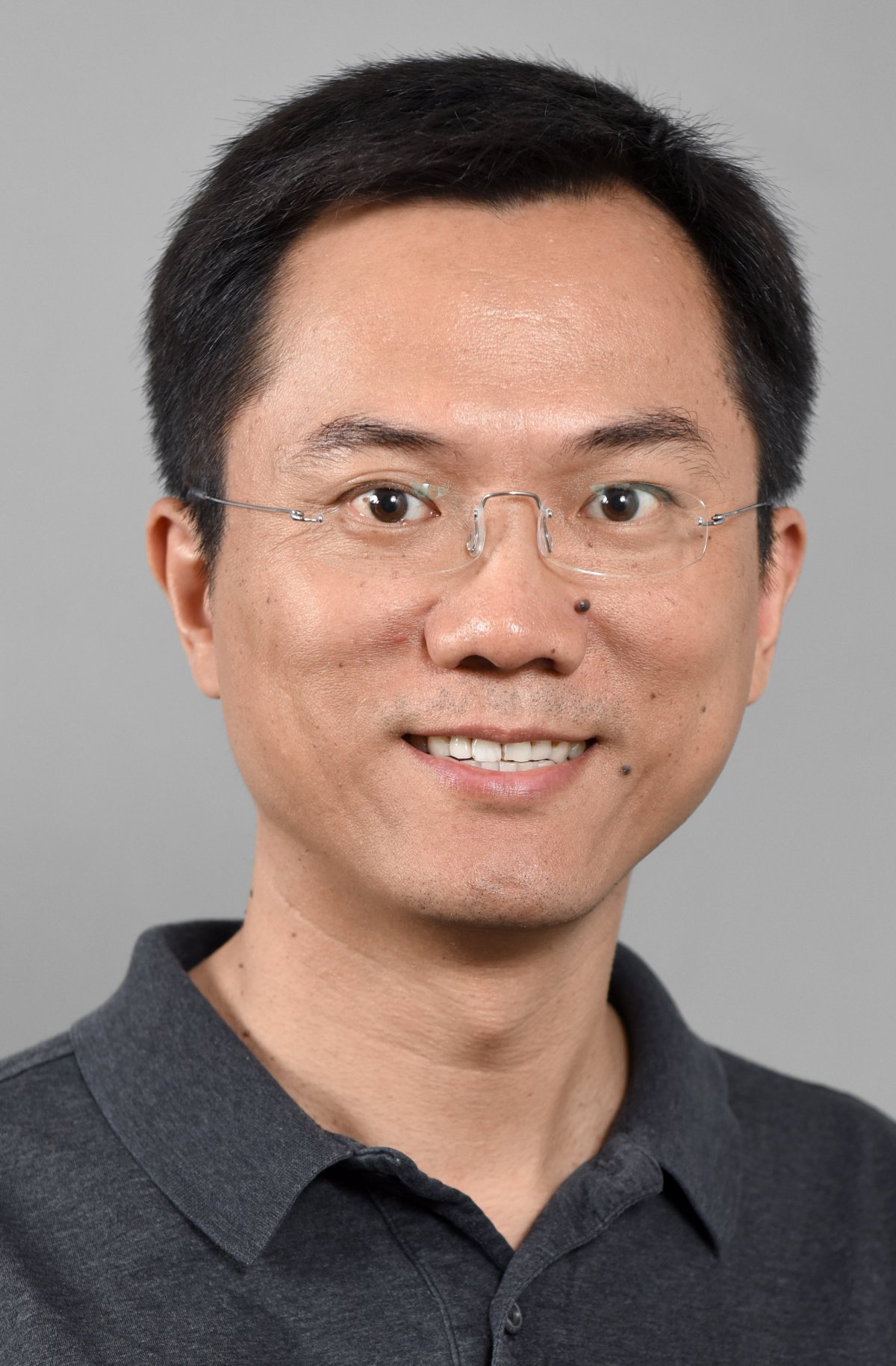
Shaked Flur is a Researcher at the Department of Computer Science and Technology, University of Cambridge. His work focuses on formal methods, instruction-set semantics, and concurrency models in computer architectures. He contributes to the development of formal verification tools and specifications for ISA standards like ARMv8-A, RISC-V, and CHERI-MIPS. His research bridges academic formal models with practical software and hardware design, emphasizing the adoption of rigorous methods in real-world systems. Flur collaborates on projects such as the Sail specification language, enhancing clarity and precision in ISA documentation. His publications address challenges in memory models, concurrency semantics, and automated verification techniques.
Anthony Harris is a Visiting Professor in the Department of Computer Science and Technology at the University of Cambridge. He holds roles as Director of Studies for Computer Science at Emmanuel College, Fellow and Tutor at Clare Hall, and mentor for the Accelerate entrepreneurial program at the Judge Business School. He is also a visiting fellow at Kellogg College (Oxford) and a research fellow at Regent’s Park College (Oxford). His research focuses on digital humanities, generative AI in teaching/research, and early mathematics/astronomy. Education: PhD from Cambridge (Sidney Sussex College), degrees from Oxford and the University of Reading. Entrepreneurial background includes co-founding Software 2000, recognized with Queen’s Awards for Export and Prince of Wales Award for Technology. Research interests include AI applications in humanities, medieval computus analysis, and digital manuscript studies. Awards include the Fulbright All-Disiplines Scholar Award and British Academy Neil Ker Memorial Fund Award. Professional activities: business angel investor in over 50 companies, non-executive director at ScaleXP and Flit Bikes, and treasurer roles at Clare Hall, Kellogg College, and Regent’s Park College. Teaching: Developed workshops on LLMs in humanities research, supervises courses in e-commerce, business studies, and computer science. Active in grants and labs related to AI-humanities integration and early mathematics.
Andrea Guerrieri serves as an Associate Professor at the School of Engineering, University of Applied Sciences and Arts Western Switzerland Valais (HES-SO Valais-Wallis), specializing in reconfigurable computing and electronics design automation. His research has established significant industry impact through tools like DynaRapid and Dynamatic, with technology adopted by major semiconductor companies including MIPS, Intel, and AMD-Xilinx. BSc HES-SO in Industrial Systems - System-on-Chip specialization BSC HES-SO in Computer and Communication Systems - Digital Design specialization MSc HES-SO in Engineering - Embedded Hardware and Firmware specialization Professor Guerrieri's research focuses on reconfigurable computing, electronics design automation (EDA), and security, with particular emphasis on FPGA design, high-level synthesis, and post-quantum cryptography implementations. His work bridges the gap between theoretical computer architecture and practical hardware implementations, with strong applications in space technology and embedded security systems. His recent publications demonstrate increasing focus on energy-efficient implementations for space applications and quantum-resistant cryptographic systems. Analysis of his 15 most recent publications reveals a clear research trajectory toward optimizing FPGA implementations for post-quantum cryptography and space applications. His work consistently addresses the performance bottlenecks in high-level synthesis while maintaining practical applicability for industry partners like NASA, CERN, and major semiconductor companies. The recent surge in best paper awards (three in 2024 alone) reflects growing recognition of his contributions to efficient FPGA compilation techniques and cryptographic implementations. Scientific Awards: Best Paper Award at FPL 2024 Best Paper Award at HPEC 2024 Best Paper Award at ISFPGA 2020 Outstanding Short Paper Award at IEEE HPEC 2024 Outstanding TPC Member Award at DAC 2024 IEEE Senior Member (2021) Multiple Best Paper nominations (FCCM 2022, FPL 2022, HiPEAC 2022) Professor Guerrieri actively participates in international research projects including the DyReCte project (2019-2021) on dynamically reconfigurable cryptoengines for nano-satellites. He currently chairs the Onboard Computing topic for the Swiss consortium CHEESE affiliated with NASA SSERVI and collaborates extensively with industry partners including AMD-Xilinx, NVIDIA, Arm, NASA, and CERN, as well as academic institutions like ETH Zurich and University of Geneva. His current research focuses on developing next-generation EDA tools and reconfigurable computing platforms for both terrestrial and space applications. His laboratory work centers around FPGA-based prototyping and validation, with specialized facilities for space applications testing. Professor Guerrieri leads a research team that includes Andres Upegui, Quentin Berthet, Laurent Gantel, and Gabriel Da Silva Marques, focusing on practical implementations of reconfigurable architectures for security and space applications.
Frank Hannig is a Professor at the University of Erlangen-Nuremberg, Germany, specializing in computer architecture and high-performance computing. His research focuses on FPGA acceleration, hardware-software co-design, neural network optimization, and embedded systems. He has collaborated extensively with co-authors such as Jürgen Teich and Oliver Reiche, producing over 200 publications since 2001. His work emphasizes domain-specific languages (DSLs) for image processing (e.g., Hipacc) and compiler optimizations for FPGAs. Key contributions include techniques for quantized neural networks on microcontrollers, CGRA toolchain evaluation, and efficient mapping of CNNs onto processor arrays. Hannig also explores energy-efficient architectures and reconfigurable computing for emerging applications like edge AI and automotive systems. Publications span conferences like ASAP, FPL, and ARC, reflecting his interdisciplinary approach to bridging algorithm design and hardware implementation. His research often addresses practical challenges in deploying machine learning models on resource-constrained devices while maintaining performance and energy efficiency.
Prof. Wan Fokkink is a Full Professor in Theoretical Computer Science at Vrije Universiteit Amsterdam (VU) and holds a part-time position as Professor of Model-Based System Engineering at Eindhoven University of Technology (TU/e). His research focuses on distributed systems, formal analysis of protocols, and supervisory control synthesis. He leads the Theoretical Computer Science group at VU and has authored three influential textbooks: Introduction to Process Algebra , Modelling Distributed Systems , and Distributed Algorithms: An Intuitive Approach . Education: MSc in Mathematics (University of Amsterdam, 1990) and PhD in Computer Science (University of Amsterdam, 1994). Postdoctoral work at Utrecht University and lectureship at Swansea University preceded his leadership roles at CWI (2001–2004) and VU (since 2004). Teaching includes courses on logic, concurrency, and distributed algorithms. He is editor of Logical Methods in Computer Science and co-founder of the Electronic Proceedings in Theoretical Computer Science . Active in professional organizations: co-founder of IFIP WG 1.8 (Concurrency Theory) and steering committee member of the CONCUR conference. Research interests span formal verification, concurrency theory, and practical applications of supervisory control in engineering systems (e.g., traffic management, ship locks). His work aligns with sustainable development goals through contributions to reliable system design and optimization. Recent articles explore model-based specification, distributed control under communication delays, and tools like Eclipse ESCET for supervisory control synthesis. Collaborations span international teams in Europe and beyond.
Ken Salem is a Professor at the Cheriton School of Computer Science, University of Waterloo. His research focuses on database systems, distributed systems, cloud computing, and storage management. He has supervised 12 PhD students to completion, with graduates now working at companies like Google, Qualcomm, and SAP. His research interests include: Database system architecture and optimization Distributed transaction processing Cloud-based data management Energy-efficient computing Storage systems and hardware interactions Recent publications show strong focus on transactional systems, durability mechanisms, and cloud-native database architectures. His work consistently appears in top-tier venues like VLDB, SIGMOD, and IEEE Transactions on Knowledge and Data Engineering. Key projects include: SHADOW systems for high availability DimmStore for memory power optimization NoSE for NoSQL schema design RemusDB for transparent database availability
Martin Sjölund is an Associate Professor at Linköping University's Department of Computer and Information Science (IDA), part of the Software and Systems (SAS) division. His work focuses on software engineering and cyber-physical systems, with a specialization in Modelica compiler development and open-source simulation tools. He contributes to the OpenModelica project, advancing compiler frameworks, integration with Julia, and standardization efforts. Research interests include compiler design, formal methods, and domain-specific languages. Recent work emphasizes modular compiler architectures, structural variability handling, and interoperability between Modelica and other systems like Julia and Python. He has co-authored over 30 peer-reviewed publications since 2017, with a focus on compiler optimization, co-simulation, and educational applications of Modelica. As part of the SAS division, he collaborates with researchers like Lena Buffoni, Adrian Pop, and Peter Fritzson on projects funded by the MODPROD Center and other initiatives. His contributions to open-source tools have been recognized through conference proceedings and industry partnerships.
Jignesh Patel is a Professor in the Computer Science Department at Carnegie Mellon University, specializing in database systems and data-intensive computing. His research focuses on hardware-software synergy for high-performance databases and democratizing data analytics through no-code interfaces. He co-founded DataChat, a startup focused on intuitive data analytics platforms. He holds fellowships from AAAS, ACM, and IEEE, along with teaching awards. His work emphasizes building systems that leverage novel hardware and user-friendly interfaces. Research interests include scalable data platforms, LLM-based query interfaces, and optimizing database performance through hardware collaboration. Notable projects include the Quickstep data platform and the Ava conversational interface. Awards: Fellow of AAAS, ACM, IEEE; Multiple Teaching Awards Labs/Teams: CRISP (Intelligent Storage and Processing), DataChat startup
Milos Prvulovic is a Professor in the School of Computer Science at Georgia Institute of Technology's College of Computing. His research focuses on computer architecture, hardware security, and physical side channels, particularly leveraging electromagnetic emissions for program monitoring, malware detection, and secure execution. He has published extensively in top-tier conferences like HPCA, MICRO, and IEEE Transactions series. His work has been recognized with awards including ACM Senior Member (2009) and multiple best paper awards. Teaching includes courses such as High Performance Computer Architecture (OMS CS 6290/CS 4290), Processor Design (CS 3220), and advanced topics like Reliability & Security in Computer Architecture (CS 7292/8804). His research lab explores innovative solutions for embedded system security, IoT protection, and side-channel vulnerabilities. Key contributions include the EMSim tool for electromagnetic side-channel simulation, REMOTE malware detection framework, and the EDDIE anomaly detection system. Collaborations with Alenka Zajic and others highlight interdisciplinary work in hardware-software security interfaces.
Randy Verdecia-Peña is a researcher specializing in wireless communication and 5G technologies, focusing on millimeter-wave (mmWave) systems, software-defined radio (SDR), and network protocols. His work emphasizes practical experimentation with advanced signal processing techniques, including machine learning for channel estimation and hardware prototyping for integrated access and backhaul (IAB) architectures. Key contributions include phased array-aided 5G prototypes, flexible layer 2 protocols, and cooperative relay node design in both indoor and outdoor environments. Collaborations frequently involve hardware validation and performance analysis across frequencies like 26 GHz and 60 GHz.
Fredrik Kjolstad is an Assistant Professor of Computer Science at Stanford University. His research focuses on compilers, programming models, and systems for sparse computing, with an emphasis on separating algorithms from data representation. He leads efforts in developing compilers like TACO, Simit, and Legate Sparse to optimize sparse tensor algebra and distributed computations. Kjolstad's work spans compiler design, hardware-software co-design, and programming languages for high-performance computing. His research group aims to enable portable applications across diverse data representations and architectures. Notable projects include the TACO compiler for sparse tensor algebra, the Simit programming language for physical simulations, and the Copy-and-Patch compilation technique for fast runtime code generation. He has also contributed to distributed systems like Legate Sparse and hardware accelerators such as Onyx. Kjolstad has received prestigious awards including the NSF CAREER Award and the MIT EECS PhD Thesis Award. His publications cover topics like sparse tensor compilation, compiler optimization, and agile hardware design. He advises multiple PhD students and collaborates with researchers like Kunle Olukotun and Alex Aiken. Key areas of impact include efficient sparse data processing, compiler-driven hardware design, and scalable distributed computing frameworks. His work bridges theoretical compiler techniques with practical system implementations, aiming to simplify and accelerate complex computational tasks.
Atakan Aral is a Visiting Lecturer at the Department of Computing Science, Umeå University. His research focuses on Edge Computing, Edge AI, and the Internet of Things (IoT), with a particular emphasis on resource management and sustainable environmental monitoring. He is affiliated with the Autonomous Distributed Systems Lab and Green Distributed Computing Group, both part of the Wallenberg AI, Autonomous Systems and Software Program (WASP) initiative. His work spans theoretical frameworks and practical implementations in edge intelligence and distributed systems. Research Interests: Edge Computing architectures and workflows Neuromorphic and energy-efficient AI systems Federated learning and multi-cluster collaboration Sensor networks for environmental monitoring Optimization of resource allocation in distributed systems Key Publications Trends: Recent work emphasizes neuromorphic edge AI applications, hierarchical federated learning, and energy-efficient IoT deployments. His articles often intersect computing continuum concepts with real-world challenges like rural environmental monitoring and latency-critical systems. Scientific Awards: No awards explicitly listed in the provided text. Advising & Grants: No formal student advisees or grant details provided. However, he contributes to the De facto Center of Excellence in Autonomous Distributed Systems (2023–2029), indicating involvement in large-scale collaborative research. Labs & Teams: Member of the Autonomous Distributed Systems Lab (lead in distributed systems research) and Green Distributed Computing Group (focused on sustainability in computing).
Christopher F. Barnes is an Associate Professor in the School of Electrical and Computer Engineering at the Georgia Institute of Technology, with adjunct status as a Principal Research Engineer at the Georgia Tech Research Institute (GTRI). He holds a Ph.D. from Brigham Young University (1989) and has over 27 years of experience in radar signal processing, software engineering, and applied research. His research focuses on synthetic aperture radar (SAR) analysis, data mining, and image/video-driven technologies with applications in remote sensing, medical imaging, and seismology. Dr. Barnes' expertise includes radar imaging algorithms, software architectures for radar systems, and object-oriented programming. He pioneered methods for three-dimensional coherently fused SAR imaging and developed image-driven systems for hurricane damage assessments and bioinformatics. His work in video tracking and content-based search leverages residual vector quantization and machine vision techniques. Notable achievements include the Georgia Tech Outstanding Professional Education Award (2009) and an Interdisciplinary Research Initiative Award (2006). His contributions span over 140 publications and one patent, with research supported by defense and academic collaborations. Dr. Barnes teaches SAR at professional and graduate levels and advises research in video-driven data mining and medical imaging applications. His current projects explore AI-driven SAR analysis and advanced radar system architectures.
Michail Maniatakos is a Global Network Associate Professor of Electrical and Computer Engineering at NYU Tandon and a Research Associate Professor at NYU Abu Dhabi, serving as Program Head of Computer Engineering. He holds a PhD in Electrical Engineering from Yale University. His primary affiliations include the NYU Center for Cybersecurity (CCS) and directs the Modern Microprocessor Architectures (MoMA) Lab. Education: B.Sc. in Computer Science (University of Piraeus, 2006), M.Sc. in Embedded Systems (University of Piraeus, 2007), M.Sc. in Computer Engineering (Yale, 2008), M.Phil. in Electrical Engineering (Yale, 2009), and Ph.D. in Electrical Engineering (Yale, 2012). Research focuses on encrypted computation, industrial control systems security, and 3D printing security. His work is funded by the U.S. Office of Naval Research, DARPA, and Abu Dhabi's Department of Education and Knowledge. He has authored numerous IEEE/ACM publications, holds patents on privacy-preserving data processing, and serves on conference technical committees. Recent articles explore hardware security, adversarial machine learning, and privacy-preserving computation. His teams have developed secure microprocessor architectures and frameworks for ICS vulnerability analysis. Awards include Senior Member of IEEE. Teaching includes courses like Computer Organization and Architecture and Hardware Security , emphasizing design, security, and ethical implications of emerging technologies. Active in research initiatives such as the NYUAD secure microprocessor project and ICSFuzz framework development. Labs/Groups: MoMA Lab (specializing in microprocessor architectures and security), affiliated with NYU CCS. Collaborates on projects like TREBUCHEt (FHE accelerators) and ICSML (industrial control ML frameworks).
Yu [Kevin] Cao is the Louis John Schnell Professor in the Department of Electrical and Computer Engineering at the University of Minnesota. His research focuses on microelectronics co-design for energy-efficient computing, spanning integrated circuit design, semiconductor physics, and machine learning methodologies. He leads the Microelectronics Co-design Research Group and actively collaborates with institutions like Georgia Institute of Technology, Sandia National Laboratories, and Notre Dame. His research interests include AI hardware acceleration , in-memory computing , cryogenic CMOS design , and 3D integration of heterogeneous chiplets . Current initiatives explore reconfigurable on-package systems for AI, spiking neural networks on neuromorphic hardware, and low-temperature logic technologies. Recent publications and projects highlight advancements in AI accelerators , RRAM-based compute-in-memory , graph convolutional networks , and 3D integration . His group develops tools like MN-SIM 2.0 for memristor modeling and investigates novel materials for neuromorphic systems. Grants include collaborative NSF funding for chiplet-based AI systems, CoCoSys center funding from SRC, and DOE/Sandia projects on neuromorphic hardware. Future work emphasizes scalable co-design frameworks for intelligent systems and heterogeneous integration challenges.