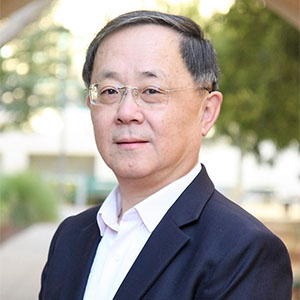
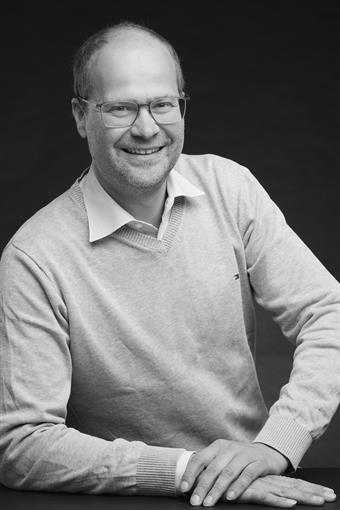
Srdjan Lukic is the Deputy Director of the FREEDM Systems Center and a Distinguished Professor in the Department of Electrical and Computer Engineering at North Carolina State University. His research focuses on power electronics, power systems, and electric vehicle infrastructure. He holds a Ph.D. in Electrical Engineering from the Illinois Institute of Technology (2007). His work emphasizes high-power converters, DC microgrids, and extreme fast charging (XFC) technologies for electric vehicles. Recent projects include the development of a 13.2 kV solid-state transformer for EV XFC stations and resilient distributed control frameworks for smart grids. He has contributed to wireless charging systems and modular medium-voltage fast chargers. Key Awards: University Faculty Scholars (2022) Grants: DOE-funded XFC projects, modular EV charging infrastructure Labs/Teams: FREEDM Systems Center, RIAPS control architecture development Publications highlight innovations in microgrid control, power electronics modeling, and privacy-preserving distributed systems. His work addresses grid resilience, cyber-physical integration, and high-efficiency energy conversion.
Shuran Song is an Assistant Professor of Electrical Engineering at Stanford University, with a courtesy appointment in Computer Science. Previously, she was faculty at Columbia University. She holds a Ph.D. in Computer Science from Princeton University and a BEng from HKUST. Her research focuses on the intersection of computer vision and robotics, particularly in embodied AI, robot manipulation, and sensorimotor learning. Song's work emphasizes learning from physical interactions to enable robots to perform complex tasks autonomously. She leads the Robotics and Embodied AI Lab (REAL@Stanford) and has received prestigious awards, including the NSF Career Award, Sloan Fellowship, and Microsoft Faculty Fellowship. Education: Ph.D., Computer Science, Princeton University; BEng, HKUST Affiliations: Stanford School of Engineering, Department of Electrical Engineering Research interests include deformable object manipulation, visuomotor policy learning, and generalizable robot skills. Her lab develops algorithms for robots to learn through interaction, with applications in household assistance (e.g., TidyBot) and industrial automation. Notable contributions include the TossingBot and Diffusion Policy frameworks. Publications span robotics, computer vision, and AI conferences (RSS, ICRA, CVPR), focusing on policy learning, deformable object handling, and embodied intelligence. Awards highlight her impact in advancing robot learning and perception. Advises doctoral and master's students in robotics and AI, and collaborates on grants from NSF, DoD, and industry partners. Teaches courses on robot perception and embodied AI at Stanford.
Prof. Dimitris Gizopoulos is a Professor at the Department of Informatics & Telecommunications, University of Athens, leading the Computer Architecture Laboratory. His research focuses on fault tolerance, design validation, performance, and energy efficiency in microprocessors, GPUs, and AI accelerators. He is an IEEE Fellow (2013) and ACM Distinguished Member (2022). His work is supported by Horizon Europe projects like DARE, Neuropuls, and Vitamin-V, alongside industry grants from AMD, Cisco, and Meta. He participates in networks like HiPEAC and Eurolab4HPC and serves on editorial boards of journals including ACM Computing Surveys and IEEE Transactions on Computers . Prof. Gizopoulos teaches Computer Architecture courses at both undergraduate and graduate levels. His research spans cross-layer reliability analysis, voltage scaling effects, and secure hardware design. Notable contributions include frameworks for GPU reliability assessment (GUFI, GPUI-4) and tools like MerLIN for microarchitecture-level analysis. His lab’s work has been funded by the EuroHPC Joint Undertaking and the Greek-China Research Collaboration program. Key Projects: DARE (RISC-V Europe), Neuropuls (neuromorphic accelerators), Vitamin-V (RISC-V cloud environments). Awards: IEEE Fellow (2013), ACM Distinguished Member (2022), IEEE Golden Core (since 2002). Industry Partnerships: AMD, Cisco, Bosch, NVIDIA, Intel, IBM Research. Labs: Leads the Computer Architecture Lab, focusing on fault tolerance and energy-efficient computing. His work emphasizes bridging hardware-software co-design challenges, with publications in top venues like IEEE Transactions on Computers and ACM Computing Surveys . Recent efforts include analyzing silent data corruptions (SDCs) in CPUs and GPUs, and developing validation frameworks for cloud-native architectures.
Zhibo Pang is an Adjunct Professor at KTH Royal Institute of Technology's Department of Intelligent Systems (EECS) and Senior Principal Scientist at ABB Corporate Research Sweden. His work focuses on digital transformation in industry and healthcare, spanning robotics, AI, control systems, and wireless communication. He leads projects in embodied intelligence, Industry 4.0, and Healthcare 4.0, with 23 granted patents and over 120 journal papers. Education: PhD in Electronic and Computer Systems (KTH, 2013), MBA in Innovation & Growth (University of Turku, 2012). Key Roles: IEEE Technical Committee Chair, Editor of 6 IEEE journals, ABB Inventor of the Year (2016, 2018, 2021). Research Interests: Robotics safety, wireless automation, federated learning, digital twins, and IoT security. Recent Projects: Cloud-fog automation frameworks, robot skin systems for healthcare, and latency-aware industrial control. His work bridges academia and industry through cross-functional collaborations.
Behnaam Aazhang is the J.S. Abercrombie Professor of Electrical and Computer Engineering at Rice University and Director of the Rice Neuroengineering Initiative (NEI). He holds a B.S., M.S., and Ph.D. from the University of Illinois at Urbana-Champaign. His roles include leading the multi-university Rice Neuroengineering Initiative and directing the Center for Neuroengineering. He has held an Academy of Finland Distinguished Visiting Professorship (FiDiPro) at the University of Oulu (2006-2014) and received an Honorary Doctorate from the University of Oulu in 2017. Education: Ph.D. in Electrical Engineering, University of Illinois at Urbana-Champaign (1986) M.S. in Electrical Engineering, University of Illinois at Urbana-Champaign (1983) B.S. in Electrical Engineering, University of Illinois at Urbana-Champaign (1981) Research Interests: Dr. Aazhang’s work focuses on signal/data processing, information theory, and neuroengineering applications. Key areas include: Neuronal circuit connectivity and learning impacts Real-time closed-loop neuromodulation for neurological disorders (epilepsy, Parkinson’s, depression) Patient-specific cardiac pacing systems Cybersecurity in cloud computing Awards & Honors: 2022 Rice Outstanding Doctoral Thesis Advisor Award 2019 SIGMOBILE Test of Time Award 2017 Honorary Doctorate (University of Oulu) 2013 IEEE Communication Society Advances in Communication Award AAAS and IEEE Fellowships (2012 and 1999) Grants & Advising: His research is supported by multi-university collaborations and grants. He has advised numerous graduate students in electrical engineering and neuroengineering, though specific names are not listed here. Labs & Teams: Leads the Aazhang Lab and the Rice Neuroengineering Initiative, focusing on translational technologies for neurological and cardiac disorders, including non-invasive neuromodulation and cloud security systems.
Prof. Dr.-Ing. Eric Sax is a Professor of Electronic Systems Engineering and Management at the Karlsruhe Institute of Technology (KIT), serving as Dean of the Department of Electrical Engineering and Information Technology (ETIT). He leads the Institut für Technik der Informationsverarbeitung (ITIV) and directs the Forschungszentrum Informatik ESS division . As Program Director of the Electronic Systems Engineering & Management (ESEM) master's program at the HECTOR School, he focuses on integrating academic and professional education. His research spans automotive systems engineering , self-learning functions , cybersecurity , and data-driven validation . Key themes include over-the-air updates, scenario-based testing, and the synergy between machine learning and automotive systems. His work addresses challenges in autonomous driving validation, software-defined mobility, and cyber-physical system security. Prof. Sax's contributions include frameworks for automotive software partitioning, cloud-enabled vehicle architectures, and methodologies for quantifying data quality impacts on perception systems. He actively collaborates with industry partners to bridge academic research with industrial application. His recent projects include OptiCAM (cloud/edge function offloading), Drive4C (autonomous driving benchmarking), and UNCOVER (data-driven security monitoring). He holds leadership roles in both KIT and the HECTOR School's technology business programs.
Steve Collins is an Associate Professor of Mechanical Engineering at Stanford University, with a courtesy appointment in the Department of Bioengineering. His research focuses on wearable robotics, biomechanics, and human-machine interaction. He leads projects on exoskeleton optimization, prosthetic design, and energy-efficient robotic actuators. His work aims to improve mobility for older adults and individuals with mobility impairments through innovative assistive technologies. Research Interests: Collins explores biomechanical principles underlying human movement, exoskeleton torque control strategies, and the design of devices that reduce metabolic costs during walking. His lab develops both hardware (e.g., exoskeleton emulators) and software (e.g., AddBiomechanics modeling tools) to advance assistive technologies. Key Contributions: He pioneered human-in-the-loop optimization methods for exoskeleton control, demonstrated energy-saving designs for ankle exoskeletons, and investigated how exoskeletons can enhance balance and reduce fall risks. His team also developed the 'Tripod' prosthesis emulator and electrostatic clutch systems for energy-efficient actuators. Grants & Collaborations: His work is supported by NSF grants (e.g., NRI: Small grant for exoskeleton control) and industry partnerships. He collaborates with clinicians to translate robotic innovations into clinical applications for amputees and aging populations. Labs & Teams: His research is conducted in Stanford's robotics and biomechanics facilities, focusing on interdisciplinary projects at the intersection of mechanical engineering, bioengineering, and computer science.
Dr. Yuping He is a Professor in the Department of Automotive and Mechatronics Engineering at the University of Ontario Institute of Technology (UOIT). He holds a PhD in Mechanical Engineering from the University of Waterloo (2002) and has extensive academic and industry experience, including postdoctoral fellowships at the University of Windsor and University of Waterloo. His research focuses on autonomous driving, vehicle dynamics, chassis design, and active safety systems, with expertise in modeling and simulation techniques. Education: PhD (Mechanical Engineering), University of Waterloo, 2002 MASc (Automotive Engineering), Tsinghua University, China, 1991 BASc (Automotive Engineering), Hubei Automotive Industries Institute, China, 1985 Research interests include automated design synthesis, multidisciplinary optimization, and driver-hardware-in-the-loop simulations. He has contributed to advancements in heavy vehicle stability control, trailer steering systems, and energy-saving strategies for steer-by-wire vehicles. His work bridges mechanical systems, control engineering, and real-time simulation technologies. Awards include the 2010 Research Excellence Award from UOIT’s Faculty of Engineering and Applied Science, and a nomination for the Governor-General’s Gold Medal (2003). His publications span journals like Vehicle System Dynamics and ASME Journal of Computational and Nonlinear Dynamics , with a focus on improving vehicle safety and performance through advanced control strategies. Advising and Grants: Dr. He has advised student teams in capstone projects, including the 2010 FEAS Capstone Design Competition-winning team. His research integrates industrial collaboration, as seen in roles like Senior Product Engineer at American Axle & Manufacturing (2005). His work emphasizes practical applications in automotive and mechatronic systems.
Kyojin Choo is a Tenure Track Assistant Professor at the Swiss Federal Institute of Technology Lausanne (EPFL) in the School of Engineering , affiliated with the Mixed-Signal Integrated Circuits Lab (MSIC-LAB). He also holds teaching roles in Microengineering and Electrical and Electronics Engineering at EPFL. B.S. and M.S. in Electrical Engineering from Seoul National University (2007, 2009) Ph.D. in Electrical Engineering from the University of Michigan (2018) His research focuses on charge-domain analog/mixed-signal circuits , low-power sensor interfaces , and compact ADCs for IoT, wearables, and millimeter-scale systems. He has pioneered charge-injection cell techniques for energy-efficient circuits in energy management, sensor front-ends, and communication. His work emphasizes reducing power consumption to nanowatt levels while enabling ultra-compact designs. His recent publications highlight advancements in compact SAR ADCs , low-power MEMS accelerometers , millimeter-scale imaging systems , and ultra-low-power timing generators . His research integrates charge-domain circuit design with sensor interface optimization , energy harvesting , and high-speed link architectures . He holds over 20 US patents and has taught courses in Microengineering and Electrical Engineering at EPFL. His group (MSIC-LAB) addresses challenges in battery-free sensor design, power-constrained system scaling, and commercialization of wearables with unconventional form factors.
Antonello Monti is a Professor and Director of the Institute for Automation of Complex Power Systems at RWTH Aachen University. His research focuses on modern power systems, including smart grid technologies, hybrid AC-DC grids, and quantum computing applications in energy systems. Recent publications demonstrate innovations in grid resilience, EV charging optimization, quantum-assisted power system planning, and advanced simulation techniques. His team develops open-source tools like JuliaGrid for power system analysis and validates concepts through real-time testing platforms. Research addresses energy transition challenges including renewable integration, grid modernization, cyber-physical security, and next-generation optimization methods combining quantum computing with traditional power engineering approaches.
René Jr Landry is a full Professor in the Department of Electrical Engineering at École de technologie supérieure (ETS), Université du Québec, specializing in Global Navigation Satellite Systems (GNSS), avionics, and wireless communication technologies. His academic journey includes a B.Ing. from Polytechnique Montréal, M.Sc. from University of Surrey (UK), and Ph.D. from SupAréo in Toulouse. He maintains active research leadership through two key laboratories: LASSENA (Laboratory of Space Technologies, Embedded Systems, Navigation and Avionics) and LACIME (Communications and Microelectronic Integration Laboratory). His research spans critical aerospace navigation domains including GNSS signal processing, inertial navigation systems, software-defined radio for avionics, radio frequency interference mitigation, and indoor positioning technologies. Landry's work addresses real-world challenges in satellite navigation robustness, precision positioning in urban/denied environments, and next-generation avionic system security. His current projects focus on blockchain-enhanced IoT security, AI-driven GNSS disruption analysis, and adaptive RF front-ends for multi-band avionics applications. Analysis of his recent publications reveals strong emphasis on resilient positioning systems through multi-constellation integration (particularly Iridium-NEXT), blockchain applications for navigation security, and explainable AI techniques for GNSS signal quality assessment. His work increasingly bridges traditional navigation engineering with cutting-edge security and machine learning paradigms. 2014 Prix d'excellence du c.a. pour les services à la collectivité Landry has supervised over 100 graduate students across doctoral, master's, and research projects since 2005, with current supervision extending through Summer 2025. His research funding supports multiple industry partnerships focused on avionics certification, software-defined radio implementations, and next-generation navigation systems. The LASSENA laboratory under his leadership develops certified avionic products from open-source SDR platforms and advances multi-sensor fusion techniques for challenging navigation environments. His research infrastructure includes specialized facilities for GNSS signal simulation, avionics hardware testing, and multi-sensor integration. Current work emphasizes flight-tested validation of RF front-end technologies, blockchain-secured navigation data, and real-time interference mitigation systems for aviation applications.
Prof. Ping Lu is the Albert W. Johnson Distinguished Professor and Department Chair in the Department of Aerospace Engineering at San Diego State University (SDSU), College of Engineering. He holds a PhD from the University of Michigan. His research focuses on advanced guidance systems, autonomous trajectory planning, flight control, and flight mechanics, with applications to space transportation systems like the X-33, Orion Crew Exploration Vehicle, and Mars missions. Prof. Lu has contributed to major programs such as the Evolvable Mars Campaign and has pioneered algorithms for propellant-optimal guidance and trajectory optimization. His awards include the NASA Director’s Innovation Group Achievement Award (2016) and AIAA Mechanics and Control of Flight Award (2008). Research highlights include model predictive guidance algorithms, six-degree-of-freedom rocket landing optimization, and fuel-optimal strategies for Mars and lunar missions. His work bridges theoretical control systems with practical aerospace applications, emphasizing real-world feasibility through convex optimization and numerical methods. Key contributions include over 150 peer-reviewed articles, with recent trends focusing on end-to-end trajectory optimization from entry to powered descent, asteroid landing trajectory design, and robust abort protocols. He leads SDSU’s aerospace systems research, collaborating on cutting-edge projects like the Pterodactyl entry vehicle and fractional-polynomial guidance frameworks.
Amir Shaikhha is an Associate Professor (Reader) in the School of Informatics at the University of Edinburgh. He was previously an Assistant Professor (Lecturer) at the same institution from 2020 to 2024 and a Departmental Lecturer at the University of Oxford until August 2020. He is also a Junior Research Fellow at University College, Oxford. His academic journey began with a Ph.D. from EPFL in 2018, where he was awarded the Google Ph.D. Fellowship in structured data analysis and a Ph.D. thesis distinction. His research centers on the design and implementation of data-analytics systems, drawing upon techniques from databases, programming languages, compilers, and machine learning. He develops high-performance systems such as SDQL.py, StructTensor, and VecHT, focusing on the compilation of data science workloads and optimization of tensor operations. His work bridges the gap between high-level abstractions and efficient execution, particularly in sparse and probabilistic computing domains. The recent publications highlight a strong trend in compiler-driven optimizations for data-intensive applications, including automatic differentiation, loop fusion, probabilistic programming, and domain-specific language (DSL) restaging. His research integrates machine learning for systems decisions and emphasizes reproducibility and performance. He has published consistently in top venues like PLDI, OOPSLA, SIGMOD, and CGO, reflecting sustained impact in programming languages and database systems. Dahl-Nygaard Junior Prize, 2025 Google Research Scholar Award, 2025 Most Influential Paper Award, GPCE 2024 Best Paper Award, GPCE 2017 Most Reproducible Paper Award, SIGMOD 2017 Google Ph.D. Fellowship, 2017 Amir Shaikhha has advised PhD students including Hesam Shahrokhi and has been nominated for Best Supervisor of the Year at the University of Edinburgh. He leads research projects that have received recognition and support through awards and grants, including the Google Research Scholar Award. He actively serves the community through program committees (e.g., GPCE, DBPL, DRAGSTERS), editorial roles, and peer review for premier journals. His leadership in organizing workshops and conferences underscores his role as a central figure in the programming languages and databases research communities. He leads a research group focused on compiler and database systems, with recent open-source releases such as StructTensor and VecHT. His team collaborates with researchers from institutions like MIT, EPFL, and TU Berlin, and he co-chairs workshops like Sparse@PLDI and DRAGSTERS. His lab emphasizes innovation in how data-intensive programs are compiled and executed efficiently across modern hardware.
Prof. Dr.-Ing. Ralf Beck serves as Professor for Control and Regulation Technology and Automation Technology at Hochschule Düsseldorf University of Applied Sciences within the Faculty of Electrical Engineering & Information Technology. His academic responsibilities span multiple degree programs including BEng Electrical Engineering, BEng Industrial Engineering, and MSc Electrical Engineering and Information Technology. His educational background includes Mechanical Engineering studies at TU Braunschweig (1998-2004), followed by doctoral research at RWTH Aachen's Institute of Control Engineering where he earned his Dr.-Ing. in 2010 with a dissertation on predictive energy management for hybrid vehicles. Prior to his current professorship, he held progressive roles at FEV Europe GmbH from 2009-2018, culminating as Senior Project Manager for Vehicle and Powertrain Electronics. Beck's research focuses on control engineering systems with particular emphasis on automation technology, regulation systems, and model-based development approaches. His work bridges theoretical control methodologies with practical automotive applications, especially in hybrid vehicle energy management, multi-robot systems, and intelligent air path control. The Modellfabrik Fab21 serves as his primary experimental platform for model-based development applications. His publication record since 2005 demonstrates consistent contributions to control engineering, particularly in hybrid vehicle systems, emission control optimization, and calibration methodologies. Recent work shows increasing focus on distributed robotics and intelligent transportation systems, reflecting evolving research directions while maintaining core expertise in control theory applications. As an educator, Beck teaches foundational and advanced courses including Electrical Engineering III, Control and Regulation Technology, Model-Based Development, Technical Mechanics, and Advanced Control Engineering at the Master's level. His teaching integrates theoretical concepts with practical laboratory applications through the university's Moodle platform, emphasizing hands-on implementation of control algorithms and system modeling techniques.
Professor Antonio Griffo holds the position of Professor of Power Electronics and Electric Drives at the University of Sheffield's School of Electrical and Electronic Engineering. He leads the Electrical Machines and Drives Research Group and is involved in the High Reliability Drives Group. His academic journey includes a MSc (2003) and PhD (2007) in Electrical Engineering from the University of Naples, followed by research roles at Bristol and Sheffield Universities before becoming a Lecturer in 2013 and later a Professor. His research focuses on advanced control of electric drives, SiC-based power electronics for aerospace/renewables, fault detection in machines, and thermal management. Key projects include modeling hybrid AC/DC power systems for 'More Electric Aircraft', sensorless control techniques, and real-time simulation methodologies. He has pioneered work on SiC converter reliability, insulation monitoring, and condition-based maintenance systems. Publications (15+ in top journals like IEEE Transactions) emphasize innovative solutions for power electronics challenges, including voltage stress mitigation, thermal modeling, and fault tolerance. His work bridges theory and application, addressing critical issues in aerospace, renewable energy, and electric vehicle systems. Griffo also contributes to educational advancements through modular training platforms for power electronics education. Labs/Teams: Active in the Electrical Machines and Drives Research Group, focusing on high-reliability drive systems and sustainable energy technologies. Collaborates with industry on projects like the EPSRC Offshore Wind Prosperity Partnership.