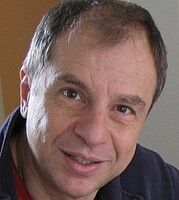
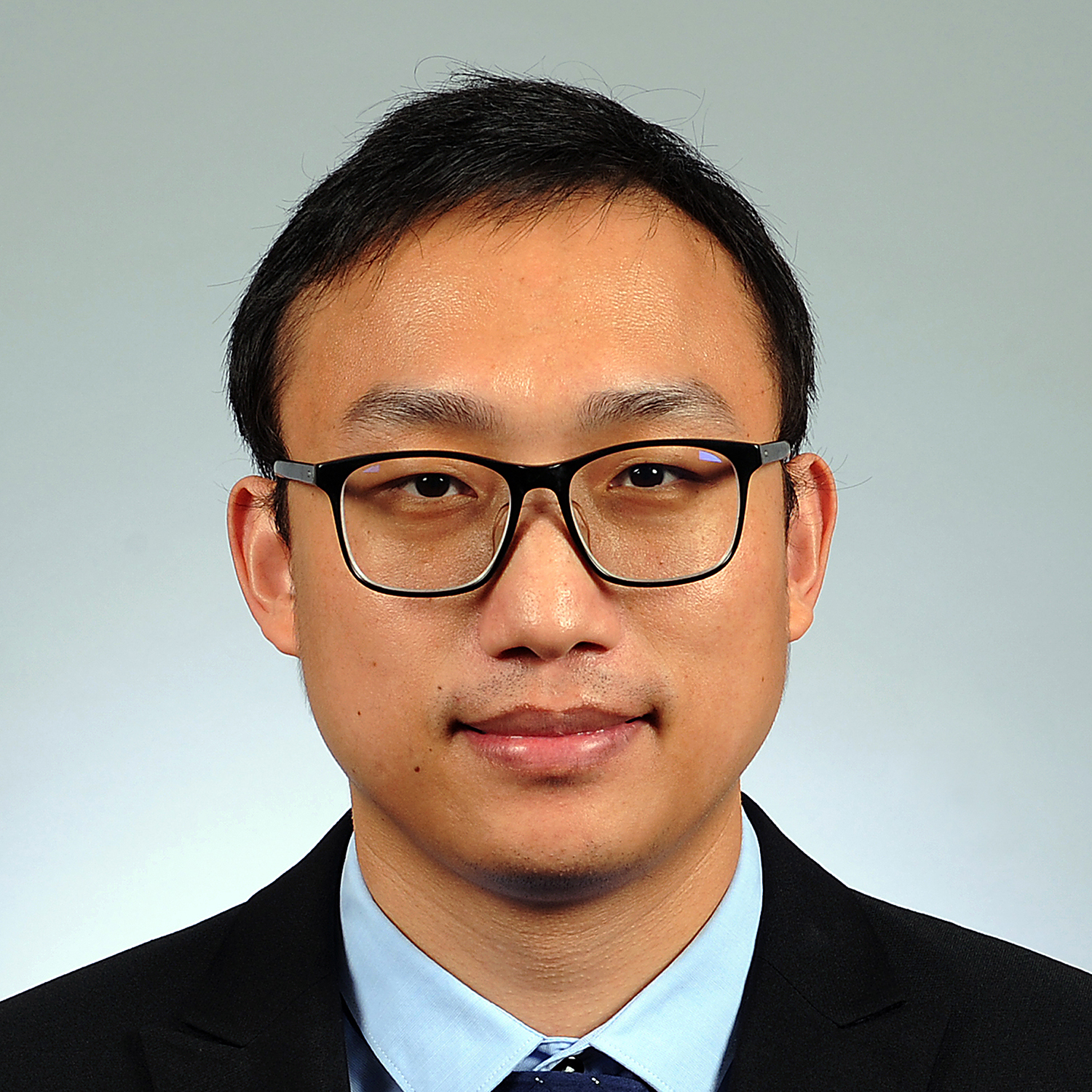
Yingyan (Celine) Lin is an Associate Professor in the School of Computer Science at Georgia Institute of Technology, leading the Efficient and Intelligent Computing (EIC) Lab. Her work focuses on cross-layer innovations in machine learning systems, from algorithms to chip design, aiming to advance green AI and ubiquitous machine learning. She holds a Ph.D. in Electrical and Computer Engineering from the University of Illinois at Urbana-Champaign (2017). Research interests include efficient machine learning, neural rendering (e.g., NeRF), hardware-software co-design for AI acceleration, and graph neural networks. Her lab has pioneered projects like RTML and 3DML, funded by NSF, NIH, DARPA, and industry partners (Qualcomm, Intel, Meta). Awards: NSF CAREER Award (2021), ACM SIGDA Outstanding Young Faculty (2022), Meta Faculty Research Award (2022) Grants: Multi-university projects funded by NSF, NIH, DARPA, SRC, ONR, and industry Recognition: First-place wins at DAC 2022 and TinyML Design Contest 2022, IEEE Micro Top Pick 2023 Her research bridges algorithmic innovation with hardware implementation, emphasizing energy efficiency and real-time performance for applications in AR/VR, computer vision, and neuro-symbolic AI systems.
Giorgio Grisetti is a Full Professor at Sapienza University of Rome within the Department of Systems and Computer Science, maintaining active research roles in the RoCoCo lab at Sapienza since November 2010 and the Autonomous Intelligent Systems Lab at Freiburg University where he previously served as a Post Doc under Wolfram Burgard starting in 2006. His educational background includes a M.Sc. in Computer Engineering from the University of Rome (2001) and a Ph.D. from Sapienza University of Rome's Intelligent Systems Lab (2006), supervised by Daniele Nardi. His doctoral thesis focused on SLAM using Rao-Blackwellized particle filters. Dr. Grisetti's research centers on mobile robotics with emphasis on robust solutions for autonomous navigation systems. His work spans theoretical and practical advancements in Simultaneous Localization and Mapping (SLAM), robot localization, path planning, and sensor fusion, particularly leveraging LiDAR and multi-sensor configurations. Recent publications demonstrate strong focus on optimization techniques, sensor calibration, and real-time performance for autonomous systems operating in complex environments. His publication trends reveal deep specialization in LiDAR-based SLAM (7 of 15 recent articles), bundle adjustment methods (4 articles), and sensor calibration/perception (3 articles), with consistent contributions to top robotics venues like IEEE Robotics and Automation Letters and ICRA. Key recognitions include: Nomination for the best IROS paper award (2010) Open Source achievement award from Willow Garage (2010) Best paper award at the International Conference and Exhibition on Unmanned Areal Vehicles (2010) Best Paper award at ICRA 2009 (2009) His research is conducted through the RoCoCo lab at Sapienza University of Rome and the Autonomous Intelligent Systems Lab at Freiburg University, focusing on developing foundational algorithms for mobile robot autonomy. Current projects emphasize robust perception systems, optimization frameworks for sensor fusion, and practical implementations for real-world navigation challenges.
Jiro Katto is a Professor at Waseda University's School of Fundamental Science and Engineering, where he has been conducting research and teaching since 1999. He received his Ph.D. from the University of Tokyo and has established himself as a leading researcher in multimedia signal processing and computer networks. His academic journey includes positions as Associate Professor (1999-2004), Professor (2004-present), and Director at NEDO (2004-2008), along with research experience at NEC C&C Laboratories (1992-1999) and a Visiting Scholar position at Princeton University (1996-1997). Professor Katto's research interests focus on Multimedia Signal Processing and Computer Networks, with particular expertise in video compression, 5G network performance, and learned image compression techniques. His work bridges theoretical advancements with practical implementations, as evidenced by his extensive publications in top-tier conferences and journals. His research group has made significant contributions to point cloud compression, latency compensation in remote systems, and hardware-accelerated video encoding for UHD streaming. His publication record is impressive, with 276 papers cited 3,323 times in Scopus and 6,169 times in Google Scholar, reflecting his substantial impact in the field. His recent work shows a strong trend toward applying deep learning techniques to traditional signal processing problems, particularly in the areas of image and video compression, where his team has developed novel approaches to improve compression efficiency while reducing computational complexity. Electric Telecommunications Promotion Foundation Telecommunications System Technology Award (2023) Takayanagi Kenjiro Foundation Takayanagi Kenjiro Achievement Award (2020) Institute of Image Information and Television Engineers Fellow (2020) Institute of Electronics, Information and Communication Engineers Fellow (2015) IEICE Communications Society Activity Contribution Award (2006) IEICE Academic Encouragement Award (1995) SPIE VCIP 1991, Best Student Paper Award (1991) Professor Katto has served on numerous prestigious committees including IEEE ComSoC Tech News Editorial Board, IEEE Technical Program Committees for major conferences (Globecom, ICC, ICIP), and editorial boards for several academic journals. His leadership in the academic community extends to chairing conferences like IWAIT 2011 and serving as Editor-in-Chief for journals in his field. His research has practical applications in commercial 5G networks, video streaming services, and remote monitoring systems, demonstrating the real-world impact of his work.
Yogananda Isukapalli is a Teaching Professor and Vice Chair in the Computer Engineering Program at the Electrical and Computer Engineering Department , University of California, Santa Barbara . He joined the faculty in Winter 2017 after a career as a staff scientist at Broadcom (2010–2017), where he designed Wi-Fi chips (11n/11ac/11ax) and worked on underwater wireless communication models during a postdoctoral stint at Scripps Institution of Oceanography (2009–2010). His PhD in Communication Theory and Systems from UC San Diego (2009) forms the basis of his expertise in wireless systems and digital design .
Jarno Vanne is a Professor at the Department of Computing Sciences, Faculty of Information Technology and Communication Sciences at Tampere University. His research focuses on video coding standards, real-time systems, and hardware acceleration, particularly in the context of FPGA implementations and open-source tools. He leads projects involving VVC (Versatile Video Coding), V-PCC (Volumetric Video Coding), and HEVC (High Efficiency Video Coding), with an emphasis on efficiency, low latency, and machine learning integration. Key research interests include point cloud compression, saliency-guided encoding, parallelization schemes, and real-time video communication protocols. His work often addresses challenges in multi-party video streaming, embedded systems, and encryption mechanisms for privacy protection. He has contributed to open-source projects like the UVG dataset, Kvazaar encoder, and CiThruS simulation frameworks. Recent publications highlight advancements in VVC intra encoding optimizations, machine learning-driven partitioning schemes, and FPGA-accelerated solutions for edge computing. His research bridges theoretical video coding algorithms with practical implementations, aiming to improve compression efficiency while maintaining real-time performance.
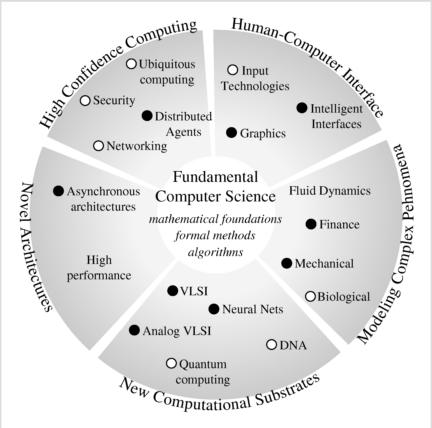
Alan H. Barr is a Professor of Computer Science at the California Institute of Technology (Caltech), affiliated with the Division of Engineering and Applied Science and the Computation & Neural Systems (CNS) department. He is a founding member of the Caltech Computer Graphics Group and a leader in developing mathematically rigorous methods for computer graphics and predictive modeling. His research focuses on enhancing computational modeling accuracy through approaches like interval analysis and constraint-based systems. Notable contributions include deformable models, quaternion interpolation, and cellular simulation frameworks. He has advised over 20 graduate students, many of whom became industry leaders at Pixar, Microsoft Research, and academic institutions like NYU and Brown University. Awards include the ACM SIGGRAPH Achievement Award (1988) and ACM Fellow (1995). Research Interests: Predictive modeling with error bounds Scientific visualization and MRI data analysis Biophysical systems simulation (e.g., cellular organelles) Self-assembling robotic structures for space colonization Mathematically robust computer graphics techniques Key Collaborations: Caltech Biological Imaging Center (Beckman Institute) JPL (Jet Propulsion Laboratory) New computational substrates research (quantum/DNA computing) Recent Work: Expanding into computational biology, medical imaging optimization, and high-confidence systems for managing complex computational interactions. Active in interdisciplinary projects across Caltech divisions.
Zhan Ma is a Professor and PhD Advisor at the School of Electronic Science and Engineering, Nanjing University. He leads research in Neural Video Communication, Smart Cameras, and Computational Vision Models. His work focuses on end-to-end learning for compression, networking, and hardware-software co-design. Dr. Ma holds a PhD from New York University's Tandon School of Engineering (2010), and prior to his current role, he served as Senior Staff Researcher at Huawei (2013-2015) and Senior Researcher at Samsung (2011-2013). Research highlights include pioneering work in point cloud compression (adopted into IEEE standards) and dual-camera systems for high-resolution video acquisition. His algorithms are deployed in WeChat/WeChat Video for rate-quality optimization and in ISO standards for video complexity indicators. Recent work emphasizes machine learning-driven approaches for image/video compression and adaptive streaming frameworks. Honors include the 2023 IEEE CAS Society Outstanding Young Author Award and multiple best paper awards at IEEE WACV, BMSB, and other venues. He leads the Vision Lab at Nanjing University and collaborates with industry partners on practical implementations of his research.
Eakta Jain is an Associate Professor in the Department of Computer & Information Science & Engineering at the University of Florida's College of Engineering. Her research centers on human-computer interaction with a specialized focus on eye-tracking technologies, virtual reality, and privacy-preserving techniques in immersive environments. With over 15 years of sustained academic contributions, she has established herself as a leading researcher in gaze analysis and its applications across multiple domains. Dr. Jain's research interests span eye-tracking, virtual reality, extended reality (XR), privacy in immersive technologies, human-computer interaction, computer vision, and animation. Her work demonstrates a consistent trajectory from fundamental gaze analysis techniques to practical applications addressing critical privacy concerns in emerging technologies. She has made significant contributions to understanding how gaze data can be used to enhance user experience while simultaneously developing methods to protect user privacy in these systems. Analysis of her recent publications reveals a strong focus on privacy challenges in XR environments, with particular attention to gaze data protection, face-swapping technologies, and the psychological impacts of continuous monitoring. Her research bridges theoretical insights with practical implementations, often resulting in novel algorithms and frameworks that address real-world problems in immersive technologies. The interdisciplinary nature of her work connects computer science with cognitive psychology and human factors research. Dr. Jain has received recognition through publications in top-tier venues including IEEE Transactions on Visualization and Computer Graphics, ACM Transactions on Applied Perception, and the Symposium on Eye Tracking Research and Applications. Her work has been influential in shaping the discourse around privacy in immersive environments and has practical implications for the development of ethical XR systems. She actively mentors students and collaborators, with several junior researchers appearing as co-authors on her publications. Her research group appears to focus on the intersection of computer vision, graphics, and human-centered computing, with projects spanning from fundamental gaze analysis to applied privacy-preserving techniques in commercial VR systems. Current projects suggest strong industry connections and potential grant funding supporting her privacy-focused XR research.
Pasquale Davide Schiavone holds multiple research and teaching positions at École Polytechnique Fédérale de Lausanne (EPFL), serving as a Lecturer at the School of Computer and Communication Sciences (IC) and as a Scientist at both the Embedded Systems Laboratory (ESL) within the School of Engineering (STI) and PAT Administration. His interdisciplinary work bridges computer architecture, embedded systems design, and biomedical applications, with office located at ELG 136 in Lausanne, Switzerland. Dr. Schiavone's research focuses on ultra-low-power computing systems, particularly RISC-V architectures and TinyML applications for edge devices. His work develops open-source hardware platforms like X-HEEP and HEEPOCRATES that enable energy-efficient AI at the edge, with applications spanning biomedical monitoring, neural interfaces, and wearable computing. He explores innovative hardware-software co-design approaches to overcome energy constraints in resource-limited environments. His recent publications reveal a consistent research trajectory centered on open, configurable computing platforms for specialized applications. The work spans from fundamental RISC-V architecture improvements (ARCANE, e-GPU) to application-specific implementations for biomedical contexts (BiomedBench, neural interfaces). A strong emphasis on energy efficiency permeates all his research, whether through novel arithmetic approaches (Posit), system architecture (near-memory computing), or specialized accelerators (Strela, Quadrilatero). Lecturer, School of Computer and Communication Sciences (IC) Scientist, Embedded Systems Laboratory (ESL), School of Engineering (STI) Scientist, PAT Administration, School of Engineering (STI) Dr. Schiavone teaches courses on hardware compilation, presenting algorithms and methods for transforming hardware description languages into optimized circuit implementations. His Embedded Systems Laboratory work places him at the forefront of developing practical, open-source solutions for next-generation computing challenges in energy-constrained environments.
Paolo Prandoni is a Lecturer at École Polytechnique Fédérale de Lausanne (EPFL) in the School of Computer and Communication Sciences (IC). He serves as a Scientist in the Audiovisual Communications Laboratory (LCAV) and teaches in the SSC-ENS and SIN-ENS units, focusing on signal processing theory and practical applications in audiovisual communications. He earned his PhD from EPFL after completing all prior education there, driven by childhood fascination with long-distance telephony. His doctoral work established foundations in communication systems that continue to inform his research. Prandoni's research spans audio/image processing, machine learning for media analysis, and DSP education. Key areas include computational photography (e.g., spectral imaging, stained glass rendering), speech quality assessment via transfer learning, music information retrieval (e.g., fingering prediction), and audience analytics through his company Quividi. His work consistently bridges theoretical signal processing with real-world implementation. Recent publications reveal a strategic shift toward machine learning integration in signal processing tasks, particularly non-intrusive speech assessment and lensless imaging reconstruction. Simultaneously, he advances DSP pedagogy through MOOC development and hands-on teaching tools using off-the-shelf hardware, emphasizing accessibility and practical skill development. No scientific awards are documented in the provided materials. He has advised PhD student Thanikachalam Niranjan (thesis: Image Based Relighting of Cultural Artifacts , 2016) and teaches Communication Systems and Computer Science courses. His educational impact extends through the open-access textbook Signal Processing for Communications (2008) and tools like MultiPub for maintainable online classes. Industry engagement includes Quividi co-founding (2006) and ongoing CSO role in attention analytics. As a core LCAV laboratory member, he collaborates on interdisciplinary projects including cultural heritage digitization, embedded signal processing systems, and real-time audience measurement, leveraging EPFL's infrastructure for both academic and commercial applications.
Dr. Alexander Plopski is an Assistant Professor at the Institute of Visual Computing, Technische Universität Graz. His research focuses on advancing augmented reality (AR) technologies, human-computer interaction (HCI), and optical display systems. He holds a PhD, M.Sc., and BSc in relevant fields. His work emphasizes perceptual optimization in AR displays, eye tracking integration, and accessibility solutions for color vision deficiencies. Key research areas include gaze-contingent AR interfaces, light field manipulation for extended reality, and multimodal interaction techniques. Notable contributions include the development of the 'guitARhero' interactive AR guitar tutorial system and studies on focal distance effects in optical see-through displays. His publications span topics from AR display calibration to gesture recognition using radar sensing. He has explored applications in industrial training, medical AR, and robotic telemanipulation. His work often bridges theoretical perceptual studies with practical system implementations, aiming to enhance user experience and accessibility in AR/VR environments.
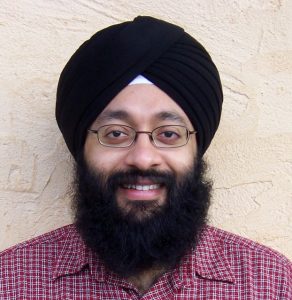
Montek Singh serves as an Associate Professor and Associate Chair for Academic Affairs in the Department of Computer Science at the University of North Carolina at Chapel Hill. His research focuses on high-performance and energy-efficient digital systems with particular emphasis on asynchronous and mixed-timing circuit design. Dr. Singh received his Ph.D. in Computer Science from Columbia University in 2002 and his B.Tech. in Electrical Engineering from IIT Delhi, India, in 1993. His primary research interests span high-performance and low-power digital systems, with specialization in asynchronous or clockless and mixed-timing integrated chip design. His work encompasses circuit design methodologies, CAD tools for automated synthesis, analysis and optimization techniques. He has also explored applications in energy-efficient mobile graphics hardware, secure chip design for computer security, and design challenges in emerging computing technologies. His research has practical applications in industry, with work transferred to companies including IBM, Boeing, and Handshake Solutions. Analysis of Dr. Singh's publications reveals a strong focus on asynchronous circuit design spanning two decades. His work covers fundamental pipeline architectures (MOUSETRAP), high-speed asynchronous systems, latency-insensitive design methodologies, and practical applications in graphics hardware and mobile devices. The research demonstrates consistent innovation in making asynchronous design more practical for real-world implementation while addressing performance, power efficiency, and testing challenges. His notable scientific achievements include: Best Paper Award at the 6th IEEE Intl. Symp. on Adv. Res. in Async. Circ. and Syst. (ASYNC-2000) Best Paper Finalist at the 8th IEEE Intl. Symp. on Async. Circ. and Syst. (ASYNC-02) Dr. Singh has secured significant research funding including participation in the DARPA CLASS Program (led by Boeing) in 2005, where he collaborated with Philips/Handshake Solutions to develop an industrial-strength automated synthesis flow for high-speed asynchronous systems. His research has strong industry connections and practical applications, with technology transferred to major companies including IBM and Boeing. He has also organized major academic events such as the International Symposium on Asynchronous Circuits and Systems 2009 (ASYNC 2009) at UNC Chapel Hill. Dr. Singh leads research in asynchronous systems design with connections to industry partners and practical applications. His work has been featured in prominent media outlets including The New York Times, International Herald Tribune, and Technology Review Magazine, highlighting the significance of clockless design approaches as traditional synchronous design approaches face limitations.
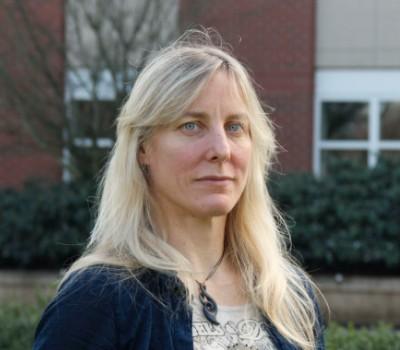
Cindy Grimm is a Professor and Graduate Program Director in the School of Mechanical, Industrial, and Manufacturing Engineering at Oregon State University (OSU), part of the College of Engineering. She is affiliated with the Robotics group, Human-Centered Computing, and Graphics and Visualization. Her research focuses on robotic grasping and manipulation for agricultural applications, ethics in robotics, and interdisciplinary projects such as 3D modeling, medical imaging segmentation, and bio-inspired sensor design. Education: Ph.D. in Computer Science, Brown University, 1996 M.S. in Computer Science, Brown University, 1992 B.A. in Computer Science and Art, University of California, Berkeley, 1990 Research Interests: Dr. Grimm’s work bridges computer science and robotics, emphasizing practical applications in agriculture and ethics. Key areas include robotic fruit harvesting systems, human-robot interaction, and the development of perception-driven algorithms for complex tasks like tree pruning and object manipulation. Her earlier projects explored surface modeling, bat sonar patterns, and 3D sketching interfaces. Publications: Her recent work addresses challenges in autonomous orchard management, robotic gripper design, and public understanding of service robots. Themes include precision agriculture, grasp planning, and sociotechnical aspects of robotics adoption. Awards: Recipient of the NSF CAREER Award, recognizing her contributions to robotics and interdisciplinary research. Service: Leads the Robotics graduate program at OSU, emphasizing ethical and technical training. Collaborates with the Collaborative Robotics and Intelligent Systems Institute (CoRIS) to advance robotics applications. Labs/Teams: Active in the CoRIS Institute, focusing on collaborative robotics and real-world robotic systems. Her lab develops hardware-software solutions for agricultural robotics and human-centered robotic interfaces.
Professor Dollas Apostolos serves as a Professor in the School of Electrical and Computer Engineering at the Technical University of Crete (TUC), where he has held leadership roles such as Department Chairman. He directs the Microprocessor and Hardware Laboratory, focusing on reconfigurable computing, embedded systems, and high-performance digital systems. His work emphasizes rapid prototyping and real-world implementation of computational solutions. Education: Ph.D., Computer Science, University of Illinois at Urbana-Champaign (1987) M.Sc., Computer Science, University of Illinois at Urbana-Champaign (1984) B.Sc., Computer Science, University of Illinois at Urbana-Champaign (1982) Research Interests: Reconfigurable computing architectures FPGA-based acceleration for bioinformatics and genomics Embedded systems and real-time processing Hardware-software co-design for high-performance computing His research bridges theoretical innovation with practical applications, such as FPGA implementations for genome assembly and aquaculture monitoring systems. Publications: Recent work highlights FPGA-based solutions for bioinformatics (e.g., genome assembly acceleration), real-time embedded systems (e.g., fish cage net monitoring), and scalable data processing frameworks. His articles often explore the intersection of FPGA technology with computational biology, embedded vision, and distributed systems. Awards and Affiliations: Senior Member, IEEE and IEEE Computer Society Recipient of IEEE Computer Society Golden Core and Meritorious Service Awards Twice honored with the University of Illinois Teaching Excellence Award He is a co-founder of IEEE conferences like FCCM and RSP, reflecting his leadership in the reconfigurable computing community. Teaching and Labs: Teaches courses on computer architecture, logic design, and VLSI design. The Microprocessor and Hardware Lab under his direction drives advancements in FPGA-based systems, with projects ranging from bioinformatics hardware accelerators to embedded vision systems.
Fan Yao is an Associate Professor in the Department of Electrical and Computer Engineering at the University of Central Florida's College of Engineering and Computer Science. She received her Ph.D. in Computer Engineering from The George Washington University in 2018 and currently leads the Computer Architecture and Systems Research (CASR) lab. Her research focuses on the intersection of computer architecture, security, and machine learning, with particular emphasis on hardware-based security vulnerabilities and defenses. Dr. Yao's research interests span computer architecture, hardware and system security, AI security, energy-efficient computing, and cloud computing. Her work addresses critical security challenges in modern computing systems, particularly focusing on microarchitecture attacks, hardware-based model tampering in deep learning systems, and information leakage threats in emerging non-volatile memory systems. She has developed innovative defense mechanisms against cache timing channels, branch predictor vulnerabilities, and GPU-based side channels. Her recent publications demonstrate a strong focus on AI security (particularly Deep Neural Network vulnerabilities), hardware security (including cache and branch predictor attacks), and secure memory architectures. The research shows an evolution from traditional computer architecture topics toward the security implications of AI hardware and emerging memory technologies, with increasing emphasis on practical attacks and defenses in real-world systems. NSF GW I-Corps Site Grant Award, 2018 Best Dissertation Award, GWU, 2018 The Norris & Betty Hekimian Engineering Endowment Fellowship, GWU, 2017 Top Picks in Hardware and Embedded Security, 2019 NSF CAREER project award, 2024 Dr. Yao currently leads multiple NSF-funded research projects including 'Understanding and Taming Deterministic Model Bit Flip Attacks in Deep Neural Networks' (NSF SaTC, 2020-2023), 'Towards Secure-By-Design Integration of Emerging Non-Volatile Memory in Future System' (NSF CNS, 2020-2023), and 'Architecting Secure-by-Design Memristor-Based Memories' (NSF CNS, 2019-2022). She has successfully mentored numerous PhD students, many of whom appear as first authors on top-tier conference publications, demonstrating her commitment to graduate education and research mentorship. As the leader of the CASR lab, Dr. Yao oversees a vibrant research group focused on building secure-by-design, efficient, and advanced future systems through novel techniques spanning hardware, computer architecture, and systems. The lab actively publishes at top computer architecture and security conferences including ISCA, MICRO, HPCA, IEEE S&P, and USENIX Security, with multiple papers accepted to these venues annually. The group has developed several influential tools and frameworks for security analysis, including proof-of-concept code for BranchSpec exploits that has been widely cited in the hardware security community.