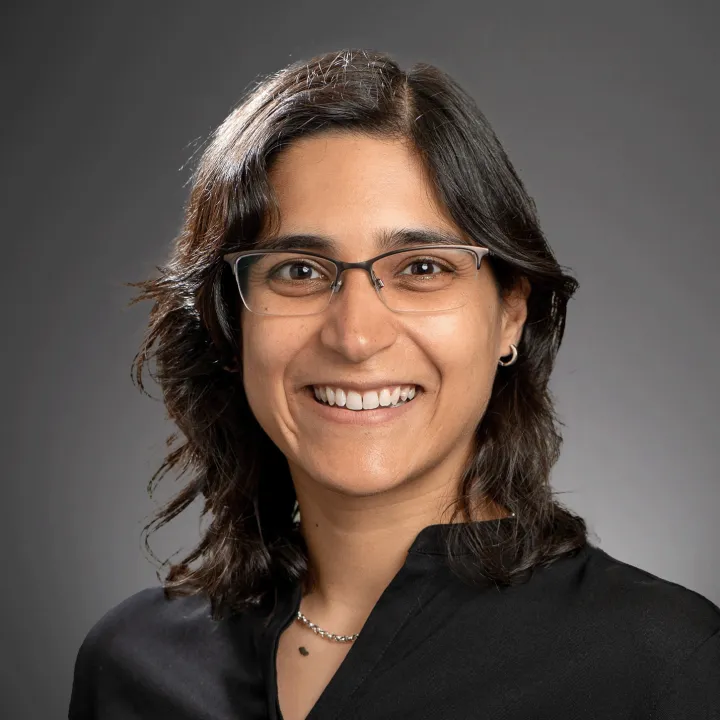
Dr. Hafizul Asad serves as a Lecturer in Dependability at City St George's, University of London, leveraging his PhD in Electrical Engineering (City University of London, 2016) and MS in Aerospace Engineering (University of Belgrade, 2008) to advance cybersecurity and formal verification research. His expertise bridges critical infrastructure protection and cyber-physical systems security, with significant contributions to IoT/IIoT security frameworks. His educational journey includes: PhD in Electrical Engineering, City, University of London (2012-2016) MS in Aerospace Engineering, University of Belgrade, Serbia (2007-2008) BSc in Electrical and Electronics Engineering, University of Engineering and Technology Peshawar, Pakistan (1999-2003) Asad's research centers on formal verification of hybrid systems and verifiable intrusion detection mechanisms for interconnected environments. He pioneers provably robust security architectures for IoT/IIoT systems, emphasizing mathematical verification to ensure system resilience against cyber threats. His work integrates diversity principles to create defense-in-depth strategies for critical infrastructure, with recent focus on wind turbine cyber-safety and industrial control system protection. Analysis of his 15 most recent publications (2014-2025) reveals an evolution from aerospace applications and analog circuit verification toward cutting-edge cybersecurity for cyber-physical systems. His 2023-2025 work demonstrates increasing specialization in IoT security and formal methods, while maintaining foundational contributions to diversity-based security architectures established in his 2015-2018 research. No scientific awards or prizes are documented in the provided materials, though he maintains professional standing as a British Computer Society member and Higher Education Academy Associate Fellow. Details regarding doctoral student supervision or specific research grants are not disclosed in the source text. His professional trajectory indicates significant project involvement, including the D3S security project at City University of London (2015-2018) and Rolls-Royce-funded Future Systems Simulator development at Cranfield University (2018-2019), though current laboratory affiliations remain unspecified.