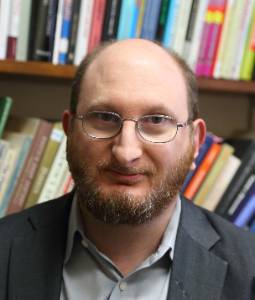
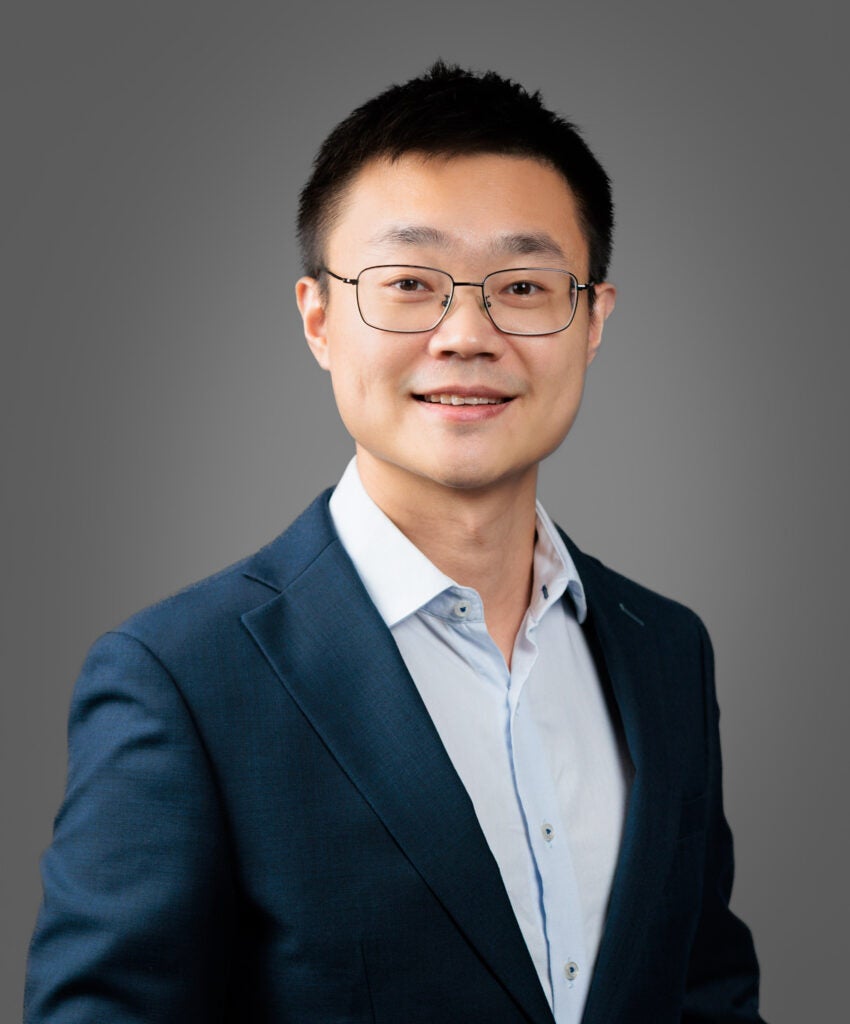
Joseph A. November is an Associate Professor in the Department of History at the University of South Carolina, affiliated with the McCausland College of Arts and Sciences. His research focuses on the history of biomedical computing, distributed computing, and the intersection of technology and medicine. He holds a Ph.D. from Princeton University (2006), an M.A. from the University of Chicago (2002), and a B.A. from Hamilton College (1997). His work includes the award-winning book Biomedical Computing: Digitizing Life in the United States (2012), which explores the co-development of biomedicine and computing technologies. Current projects include Revolutions@home , examining distributed computing in protein folding research, and a biography of computing pioneer Robert S. Ledley. He has received grants from the NSF, NIH, and the Charles Babbage Institute. Teaching interests span the history of science and technology, including courses on the history of medicine, digital humanities, and the role of games in historical education. He actively contributes to professional organizations like SHOT and the History of Science Society. Awards include the Computer History Museum Prize (2013) and the National Institutes of Health DeWitt Stetten Fellowship (2007-2008). His research bridges historical analysis with contemporary issues in technology and biomedical ethics.
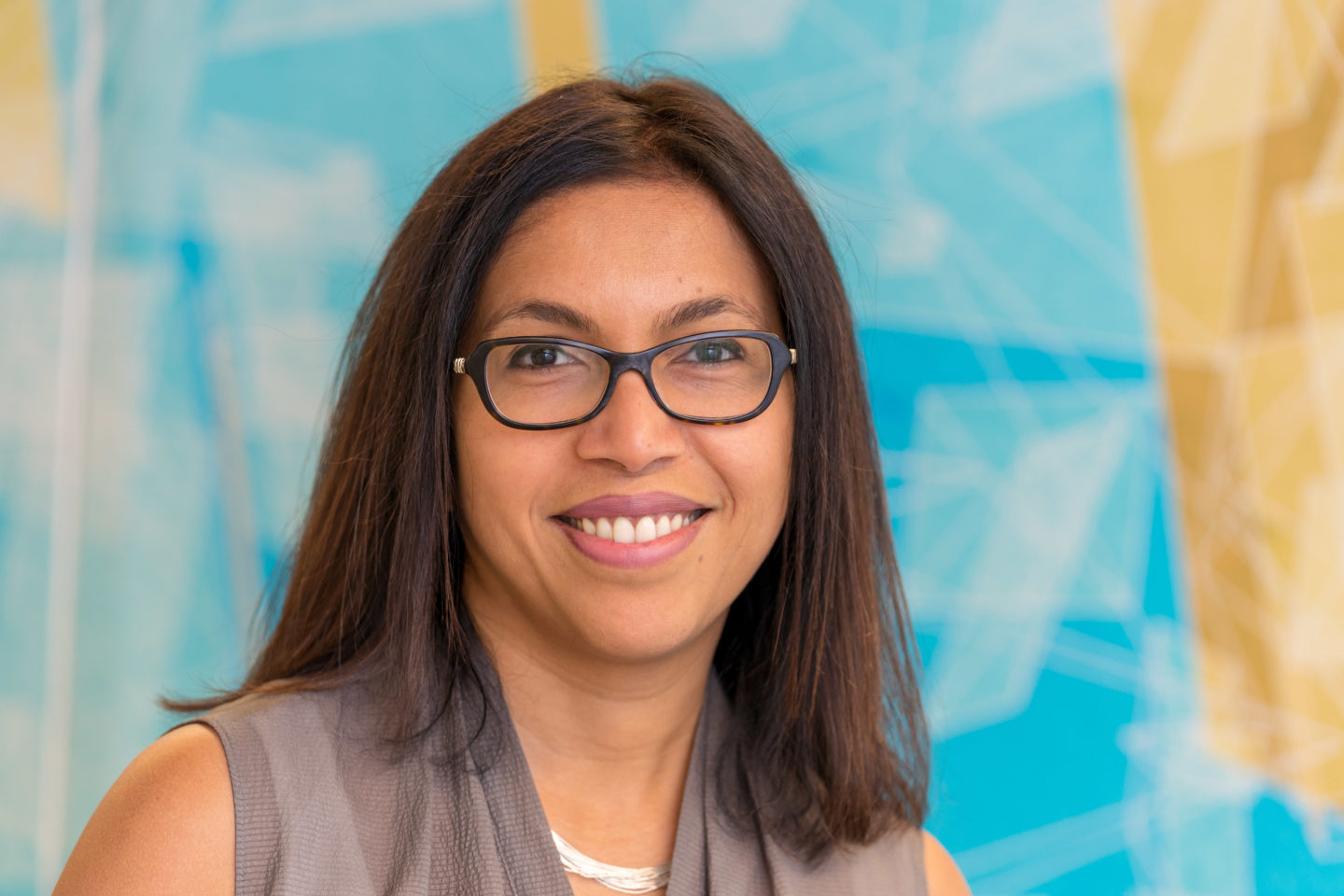
Tanzeem Choudhury is a Professor at the Jacobs Technion-Cornell Institute at Cornell Tech, specializing in Information Sciences. She co-founded HealthRhythms Inc. and directs the People-Aware Computing lab, focusing on machine learning for human activity and social network analysis. Her work pioneered the 'Reality Mining' field, leveraging mobile sensors to model social interactions. Choudhury holds a Ph.D. from MIT's Media Lab and B.S. in Electrical Engineering from the University of Rochester. Her research spans wearable tech, mental health interventions, and ubiquitous computing. Notable projects include affective touch wearables for anxiety reduction, stress detection systems (e.g., StressSense), and the BeWell app for well-being monitoring. Choudhury has been recognized as an ACM Fellow and SIGCHI Academy member, with impactful contributions to healthcare technology and sensor-based behavioral analysis. Current lab initiatives include developing closed-loop interventions for mental health, equity-driven sensing systems, and exploring AI integration in psychotherapy. She advises PhD students on topics like digital biomarkers, burnout detection in healthcare workers, and smartphone-based mental health assessment. Education: Ph.D. in Media Arts & Sciences (MIT), M.S. (MIT Media Lab), B.S. in Electrical Engineering (University of Rochester) Lab Team: Includes PhD candidates (Dan Adler, Yiran Zhao) and researchers focusing on health AI, wearable devices, and clinical applications. Major Awards: ACM Fellowship (2020), SIGCHI Academy (2018), Best Paper Awards at Ubicomp and MobileHCI conferences. Key Projects: OptoBeat (skin-tone calibrated blood oxygen sensor), EmotionCheck (anxiety intervention), and Affective Touch devices.
Muhannad S. Bakir is the Dan Fielder Professor in the School of Electrical and Computer Engineering at Georgia Institute of Technology and serves as the Director of the 3D Systems Packaging Research Center. His research focuses on heterogeneous integration of microsystems, including 2.5D and 3D ICs and packaging technologies, with significant contributions to advanced cooling systems, electrical and photonic interconnects, and biosensor integration with CMOS. Dr. Bakir's research interests span heterogeneous microsystem design and integration, advanced cooling and power delivery for emerging architectures, electrical and photonic interconnect technologies, biosensor technologies, and nanofabrication. His work addresses critical challenges in next-generation electronics, enabling polylithic integration that concatenates heterogeneous ICs of various functionalities while mimicking monolithic-like densities. His research particularly focuses on co-design of thermal technologies, power delivery networks, and signaling networks for silicon nanoelectronic systems. His recent publications demonstrate strong trends in fused-silica stitch-chip technology for heterogeneous integration, with particular emphasis on RF and mm-wave applications, power delivery for AI accelerators, and thermal management solutions. His work bridges electrical engineering, materials science, and thermal management to solve critical bottlenecks in computing performance and efficiency. 2013 Intel Early Career Faculty Honor Award 2012 DARPA Young Faculty Award 2011 IEEE CPMT Society Outstanding Young Engineer Award 2012 National Academy of Engineering Frontiers of Engineering Symposium Invited Participant 2015 IEEE CPMT Society Distinguished Lecturer 2014 Best Paper of the IEEE Transactions on Components Packaging and Manufacturing Technology More than 25 conference and student paper awards Twelve issued US Patents Dr. Bakir leads the Integrated 3D Systems Lab (I3DS) at Georgia Tech, which is actively researching advanced packaging, interconnects, electrical and thermal design, and system integration. His team has received significant recognition for their work, including multiple best paper awards from major conferences like ECTC, IITC, and CICC. The lab is currently seeking postdoctoral researchers and research faculty to advance next-generation electronics through collaborative research. His lab focuses on enabling the next phase of Moore's Law through polylithic integration, which concatenates heterogeneous ICs of various functionalities (digital, analog, photonic, and mm-wave) using advanced off-chip '2.5D' and '3D' heterogeneous interconnects and packaging. This work impacts applications in high-performance computing, machine learning, edge intelligence, autonomous vehicles, augmented/virtual reality, and healthcare.
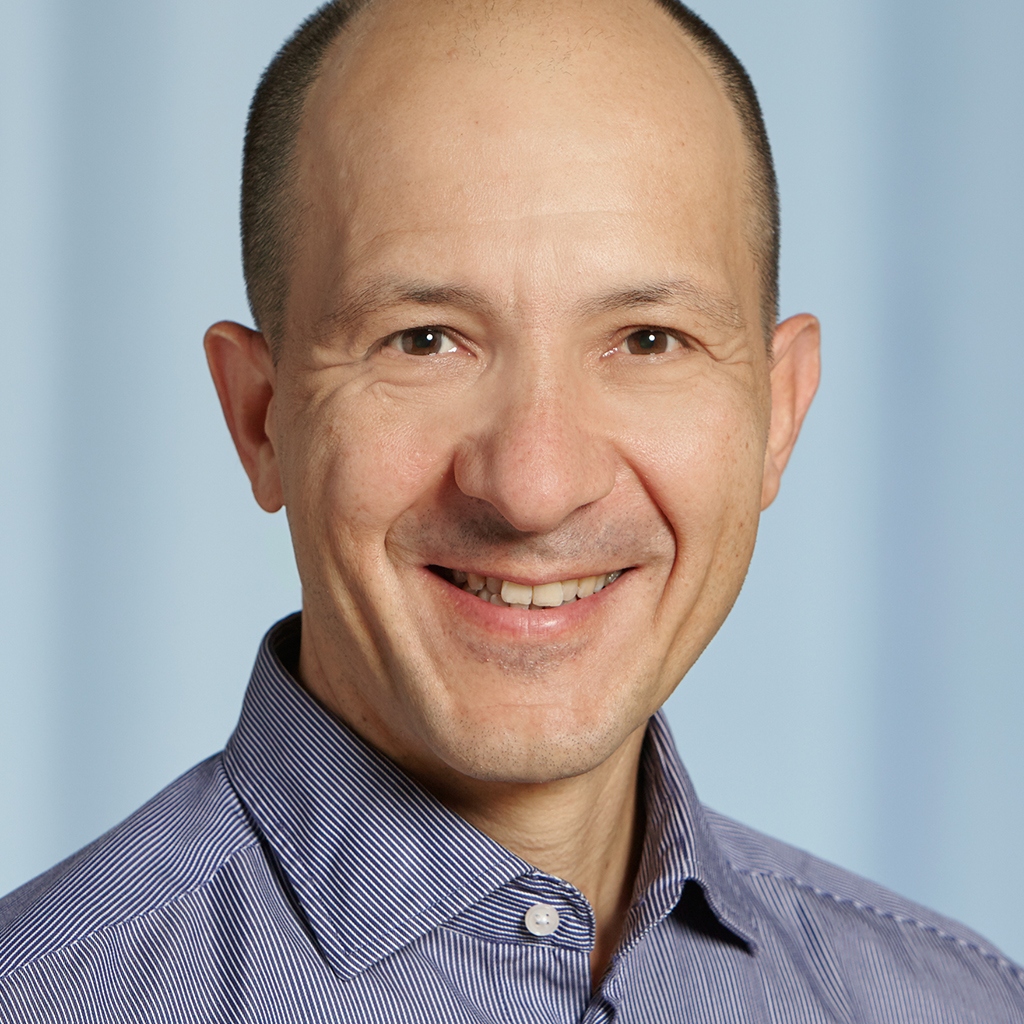
Matteo Sonza Reorda is a Full Professor at the Polytechnic University of Turin, affiliated with the Department of Automatic Control and Computer Science (DAUIN). He holds roles such as Partnership Agreement Coordinator with SMAT and has served as Vice-Rector for Research (2021–2024). His research focuses on fault tolerance, hardware reliability, and AI acceleration, with contributions to GPU/CNN reliability, self-test libraries, and defect-oriented testing. Education: M.S. in Electronics Engineering, Politecnico di Torino (1986) Ph.D. in Computer Engineering, Politecnico di Torino (1990) Research Interests: His work spans automatic test equipment, circuit reliability, GPU fault tolerance, neural network hardening, and embedded systems safety . He leads the Electronic CAD & Reliability Group and collaborates with institutions like the ISI Foundation and the National Research Council (CNR). Publications & Impact: With over 180 publications, his recent work emphasizes AI accelerator reliability, fault injection techniques, and safety-critical systems. Key trends include GPU resilience for CNNs, self-test library optimization, and radiation fault modeling in neural networks. Awards & Recognition: IEEE Fellow (2016–) Multiple best-paper awards at IEEE conferences (DDECS, DATE, etc.) Grants & Collaborations: Coordinator of EU projects (RESCUE, TUTORIAL) Partnerships with EDF, Marelli Europe, and SMAT Lead on National HPC/Quantum Computing Spoke 1 (2022–2025) Labs/Teams: Leads the CAD Group and collaborates with the French-Italian LIA LAFISI lab on hardware-software integration.
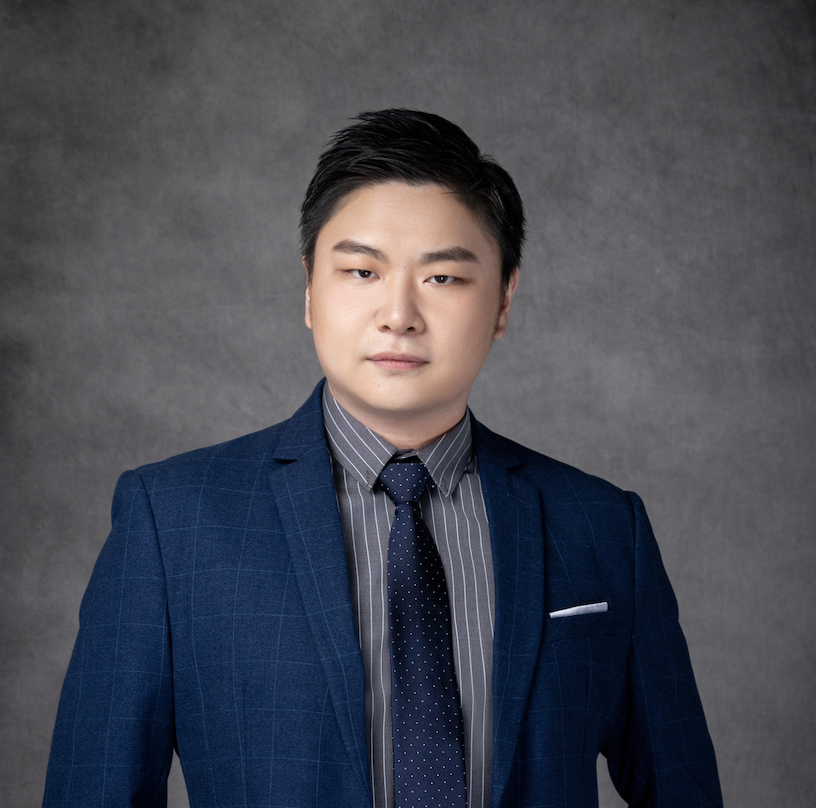
Geng Yuan is an Assistant Professor at the University of Georgia's School of Computing, specializing in AI systems, energy-efficient deep learning, and hardware-software co-design. His work bridges machine learning algorithms with emerging hardware technologies like superconducting circuits and ReRAM. He holds a Ph.D. in Computer Engineering from Northeastern University (2023) and a Master's in Electrical & Computer Engineering from Syracuse University (2016). Doctor of Philosophy (Ph.D.) in Computer Engineering, Northeastern University (2023) Master of Science (M.S.) in Electrical & Computer Engineering, Syracuse University (2016) Bachelor of Science (B.S.) in Electrical Engineering, Beijing University of Technology (2014) His research focuses on optimizing deep learning systems for edge computing and mobile platforms through techniques like model compression, sparse training, and hardware-aware neural architecture search. Recent projects include adapting large language models via hybrid-grained pruning and developing ultra-low-power AQFP circuits for binary networks. Geng Yuan's publications span top venues like NeurIPS, CVPR, ICML, ICLR, ISCA, and DAC, with notable awards including a Best Paper Award at ICLR Workshop 2021, Spotlight Papers at ICLR 2023 and NeurIPS 2021, and a Design Contest 1st Place at ISLPED 2020. Best Paper Award (ICLR Workshop'21) Spotlight Paper Award (ICLR'23, NeurIPS'21) Design Contest 1st Place (ISLPED'20) Best Paper Nomination (DATE'21, ISQED'18) He actively recruits Ph.D., Master's students, and interns to his research group, focusing on advancing AI systems through interdisciplinary approaches combining machine learning, computer architecture, and electronic design automation.
Stefanie Mueller is the TIBCO Career Development Associate Professor at MIT's Electrical Engineering and Computer Science Department, with joint affiliation in Mechanical Engineering. She leads the HCI Engineering Group at the Computer Science and Artificial Intelligence Laboratory (CSAIL), focusing on advancing fabrication techniques through hardware/software innovations that enable novel object interactions. Develops computational fabrication methods combining photochromic dyes, lenticular lenses, birefringent materials, and optical illusions Co-chaired ACM CHI 2023 and ACM UIST 2020 program committees Recipients of 9 MIT EECS Best Undergraduate Researcher Awards among mentees Her research spans four key directions: Appearance-changing Objects: Photo-Chromeleon (ACM UIST 2019), Lenticular Objects (ACM UIST 2021), and Polagons (ACM CHI 2023) demonstrate reprogrammable surfaces through advanced materials and optical engineering. Tracking Systems: InfraredTags (ACM CHI 2022) and G-ID (ACM CHI 2020) enable passive object tracking via infrared markers and slicing artifacts. Embedded Sensing: MechSense (ACM CHI 2023) and Sprayable User Interfaces (ACM CHI 2020) integrate sensing capabilities into complex geometries. Curved Surface Prototyping: FlexBoard (ACM CHI 2023) and CurveBoard (ACM CHI 2020) develop specialized tools for non-planar electronics. Her recent publications focus on functionality segmentation (UIST 2023), fluorescent markers (UIST 2023), and machine-knitted haptics (UIST 2023). These works combine machine learning, material science, and interactive design principles to push fabrication boundaries. Scientific recognition includes: 2022 MIT Technology Review Innovators Under 35 2020 Microsoft Research Faculty Fellowship 2020 Alfred P. Sloan Research Fellowship 2019 ACM UIST Best Paper Award 2019 NSF CAREER Award 2018 MIT EECS Outstanding Educator Award 2017 Forbes 30 Under 30 in Science Mentoring 9 PhD students and over 20 master's students, her lab has produced 20+ publications at top HCI conferences. She redesigned MIT's 6.810 Engineering Interactive Technologies course during the pandemic, maintaining hands-on learning through home electronics kits and Slack-based collaboration.
Giacomo Indiveri is a dual Professor at the Faculty of Science of the University of Zurich and the Department of Information Technology and Electrical Engineering of ETH Zurich . He serves as the Director of the Institute of Neuroinformatics at both institutions. Indiveri holds an M.Sc. in Electrical Engineering (1992) from the University of Genoa and a Ph.D. in Computer Science (2004) from the same university. Primary Affiliation: University of Zurich (Faculty of Science, Institute of Neuroinformatics) Secondary Affiliation: ETH Zurich (Department of Information Technology and Electrical Engineering) Indiveri's research bridges neuroscience , computer science , and machine learning to develop neuromorphic cognitive systems . His work focuses on spike-based learning , recurrent neural networks , and analog/digital circuit design for real-time sensory-motor systems . He integrates emerging memory technologies into fault-tolerant event-based architectures, enabling brain-inspired computing paradigms in applications like robotics and medical monitoring. His recent publications emphasize neuromorphic hardware for epileptic seizure detection , spiking neural networks in robotic painting , and scalable processors with on-chip learning . These works explore biologically plausible neurons , delay lines , and memory arrays for temporal processing, with applications in healthcare , edge computing , and adaptive control . Scientific Awards & Recognitions: 2021 IEEE Biomedical Circuits and Systems Best Paper Award Senior Member of IEEE Society ERC Fellow with three European Research Council grants Indiveri's group at the Institute of Neuroinformatics develops event-based systems for real-world validation of brain-inspired computing. His work includes multi-core processors , feedback optimizers , and dynamic routing architectures , supported by grants for advancing neuromorphic technologies .
Di Zhu is a Presidential Young Professor in the Department of Materials Science and Engineering at the National University of Singapore (NUS). He holds a B.Eng. from Nanyang Technological University and M.Sc./Ph.D. from MIT, both in Electrical Engineering. His postdoctoral research at Harvard focused on lithium niobate integrated photonics and superconducting detectors. He previously worked as a research scientist and PI at A*STAR's Institute of Materials Research and Engineering (IMRE). Research Interests : Integrated quantum photonics, superconducting detectors, nonlinear optics, and nanofabrication. His group develops scalable quantum photonic devices using lithium niobate and superconducting materials, emphasizing applications in quantum computing, communication, and sensing. Awards : National Research Foundation (NRF) Fellowship Harvard Quantum Initiative (HQI) Postdoctoral Fellowship MIT Jin-Au Kong Thesis Award Advising & Recruitment : Actively recruiting postdocs, PhD students, and interns in areas like integrated photonics, quantum optics, and superconducting detectors. Positions include work on thin-film lithium niobate, quantum simulation, and microwave-optical transduction. Group website: dizhulab.org .
Yimin D. Zhang is an Associate Professor in the Department of Electrical and Computer Engineering at Temple University's College of Engineering, where he leads the Advanced Signal Processing (ASP) Lab. His research spans statistical signal processing, array processing, radar, wireless communications, and convex optimization. Research Interests: Dr. Zhang's work focuses on cutting-edge signal processing techniques including compressive sensing, sparse arrays, time-frequency analysis, and robust beamforming. These are applied to radar systems, satellite navigation, assisted living, and wireless networks. His research addresses core challenges in target localization, direction-of-arrival estimation, and spectrum-efficient joint radar-communication systems. The recent publications highlight a strong trend in exploiting sparsity, virtual arrays, and deep learning to enhance resolution and robustness in radar and communication systems. Themes include multi-frequency processing, low-rank matrix recovery, and optimized OFDM waveforms for dual-function systems. Scientific Awards: 2016 IET Radar, Sonar and Navigation Premium Award 2017 IEEE Aerospace and Electronic Systems Society Harry Rowe Mimno Award 2018 IEEE Signal Processing Society Young Author Best Paper Award (coauthor) Advising and Grants: Dr. Zhang has served as Principal or Co-Principal Investigator on over $6 million in research funding from the NSF, AFRL, ONR, and DARPA. While student advisees are not listed, his leadership of the ASP Lab suggests active mentorship of graduate researchers. He contributes extensively to the academic community as an associate editor for IEEE Transactions on Signal Processing and editor for Signal Processing journal, and serves on key IEEE technical committees. Labs and Teams: He directs the Advanced Signal Processing (ASP) Lab at Temple University, which focuses on developing novel algorithms for real-world applications in radar, communications, and navigation. Previously, he led the Wireless Communications and Positioning Lab and the RFID Lab at Villanova University.
Dr. Hiren Patel is a Professor in the Department of Electrical and Computer Engineering at the University of Waterloo. He holds a Doctorate in Computer Engineering from Virginia Tech and previously worked as a postdoctoral fellow at UC Berkeley under Edward A. Lee. His research focuses on real-time embedded systems, computer architecture, machine learning hardware, and cybersecurity. He teaches courses like ECE 150 (Programming), ECE 320/429 (Computer Architecture), and ECE 327 (Digital Systems). Research Interests: Cyber-physical systems and hybrid architectures Hardware/software co-design methodologies Predictable cache coherence protocols IoT and edge computing systems Security in embedded and real-time systems Recent work emphasizes cache coherence solutions for safety-critical systems and GPU acceleration strategies. His publications address challenges in multicore predictability, FPGA bandwidth optimization, and autonomous robotics orchestration. No specific awards are listed, though his extensive publication record indicates significant contributions to embedded systems research. He currently oversees graduate student applications focusing on his core research areas.
Shiyu Su is an Assistant Professor in the Department of Electrical and Computer Engineering at the University of Waterloo. His research focuses on high-speed data converters, wireless transceivers, digital phase-locked loops (PLL), and AI-assisted analog/mixed-signal design automation. He holds a Ph.D. from the University of Southern California (2019) and teaches courses such as ECE 340 (Electronic Circuits 2) and ECE 432 (Radio Frequency Integrated Devices and Circuits). Education: B.S. from Beijing University of Post and Telecommunication (China) and Queen Mary, University of London (UK), 2011; M.S. and Ph.D. from USC, 2013 and 2019, all in electrical engineering. Research Interests: High-speed ADCs/DACs RF/mm-wave transceivers Time-approximation filters (TAF) Analog/mixed-signal design automation Memristor-based computing Biomedical interfaces Key Awards: IEEE SSCS Predoctoral Achievement Award (2017–2018) Best Student Paper Award at IEEE RFIC (2022) Ming Hsieh Institute Scholar (2019–2020) Lab Focus: The Shiyu Su Lab develops integrated circuits for communications, sensing, and computing, with a focus on AI-driven methodologies and digital-analog co-design. Collaborations include work with Prof. Wei Wu (USC) on memristor-based systems.
Manoj Sachdev is a Professor in the Department of Electrical and Computer Engineering at the University of Waterloo, Faculty of Engineering. His research focuses on semiconductor devices, low-power electronics, and secure hardware systems. He leads projects in flexible electronics, nanotechnology, and radiation-hardened circuits, with applications in displays, memory technologies, and biomedical sensors. His work integrates advanced materials science with circuit design to address challenges in energy efficiency and security. Education: Not explicitly stated in provided text. Research interests span thin-film transistors (TFTs), resistive switching memories, neuromorphic computing, and physically unclonable functions (PUFs). Recent efforts include developing low-power circuits for flexible substrates and secure microprocessors. His contributions to semiconductor device physics and integration techniques have advanced applications in wearable electronics and medical diagnostics. Publications highlight innovations in low-power flip-flops, energy-efficient display drivers, and memristor-based systems. He collaborates on interdisciplinary projects combining photonics, nanoelectronics, and biomedical engineering. Awards: None explicitly listed in provided text. Grants and advising: Advises on semiconductor fabrication, secure hardware design, and radiation effects in electronics. Leads research groups focused on next-generation memory technologies and flexible integrated systems. Labs/Teams: Active in the University of Waterloo's semiconductor and flexible electronics research clusters, contributing to both academic and industry partnerships.
Paulo Blikstein serves as Associate Professor of Communications, Media and Learning Technology Design at Columbia University. Previously, he was Assistant Professor of Education and (by courtesy) Computer Science at Stanford University and co-founded the Lemann Center for Brazilian Education (2008-2018). Education: Ph.D. in Learning Sciences, Northwestern University (2009) M.A. in Media Arts & Sciences, MIT Media Lab (2002) M.Eng. in Electronic Engineering, University of São Paulo (2000) B.S. in Metallurgical Engineering, University of São Paulo (1998) His research pioneers constructionist learning environments through digital fabrication, educational robotics, and tangible interfaces—focusing on equitable access for underserved communities. Inspired by Paulo Freire and Seymour Papert, he develops open-source tools like the GoGo Board robotics platform and leads the global FabLab@School initiative establishing fabrication labs in schools across four continents. Current work emphasizes multimodal learning analytics to study student interactions in maker-centered classrooms. Publications reveal strong focus on democratizing invention through maker education, with recurring themes in constructionist theory application, multimodal assessment, and context-specific technology adaptation. Brazilian education reform and low-cost computational solutions form significant threads, particularly in 2016-2017 publications. Scientific Awards: Two Google Faculty Awards National Science Foundation Early Career Award (highest U.S. government honor for early-career scientists) Blikstein directs the Transformative Learning Technologies Lab (TLTL) and co-founded Stanford's Center for Educational Entrepreneurship and Innovation in Brazil. His FabLearn conference established the first academic forum on Maker Movement applications in education. While specific grant details aren't listed, the NSF CAREER Award signifies major federal research funding. He spearheads the FabLab@School project deploying advanced fabrication labs in K-12 institutions worldwide and founded the FabLearn conference series. His work integrates teams of engineers, educators, and designers to create scalable solutions for resource-constrained learning environments.
Morteza Fayazi is an Assistant Professor in the Department of Electrical and Computer Engineering at the University of Utah, with an adjunct position in the Kahlert School of Computing. His research focuses on Electronic Design Automation (EDA), applying machine learning to automate analog and mixed-signal circuit design, and developing high-performance computing systems. He holds a B.Sc. from Sharif University of Technology, and M.S.E./Ph.D. degrees from the University of Michigan. His research interests include AI-driven EDA, RF/circuit automation, and energy-efficient processors. Key achievements include the MEDAL lab’s work on terahertz radars, systolic-array processors (e.g., DAP and Versa), and open-source frameworks like FASCINET and Tablext. He has received awards such as the 2024 College of Engineering Dean’s ETR Fund and the 2017 Outstanding Undergraduate Thesis Award. Teaching responsibilities include multiple iterations of the Digital System Design course (ECE/CS 3700). His work spans over 15 peer-reviewed articles in IEEE Transactions, ACM, and top conferences like ICCAD and VLSI-SOC, emphasizing automation, efficiency, and AI integration in hardware design.
Olga Fink is a Tenure Track Assistant Professor at the École Polytechnique Fédérale de Lausanne (EPFL), affiliated with the Department of Intelligent Maintenance and Operations Systems (IMOS) within the School of Architecture, Civil and Environmental Engineering (ENAC). She also holds roles in PhD program committees for Civil and Environmental Engineering (EDCE) and Robotics, Control, and Intelligent Systems (EDRS). Her research focuses on machine learning for infrastructure monitoring, predictive maintenance, and physics-informed AI models. She teaches courses on machine learning, data science for infrastructure, and advanced deep learning topics. Fink advises multiple PhD students and is involved in interdisciplinary projects such as ThermoNeRF (multimodal 3D thermal modeling) and physics-informed neural networks for fault diagnostics. Her work bridges AI and engineering with applications in smart infrastructure, energy systems, and industrial IoT. Education: PhD in Engineering (inferred from role) Affiliations: IMOS Lab, ENAC-SGC, EPFL PhD Committees (EDCE, EDRS) Key Research Themes: Explainable AI, Digital Twins, Structural Health Monitoring, Domain Adaptation Her publications (2023–2025) emphasize robust AI for industrial systems, including fault detection in high-voltage equipment, multimodal data fusion, and physics-consistent models. She collaborates on EU and industry-funded projects, focusing on real-world applications like predictive maintenance and energy efficiency.