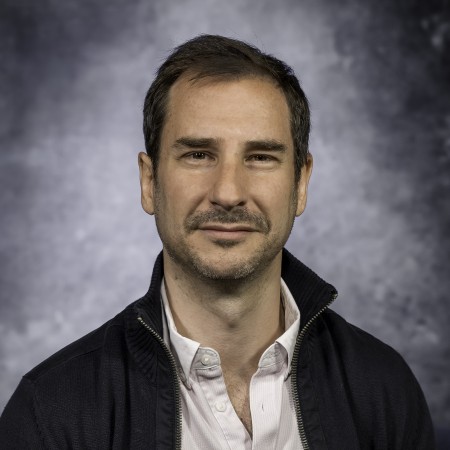
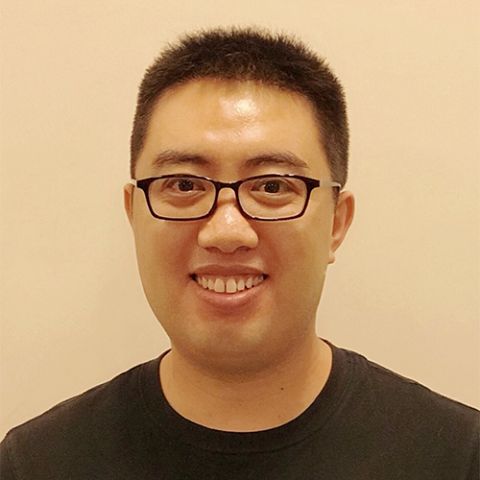
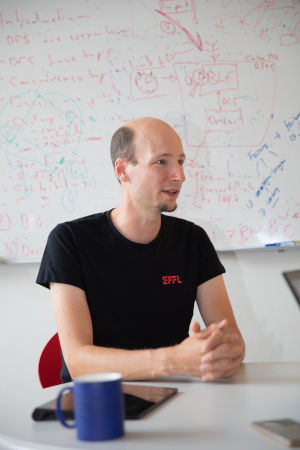
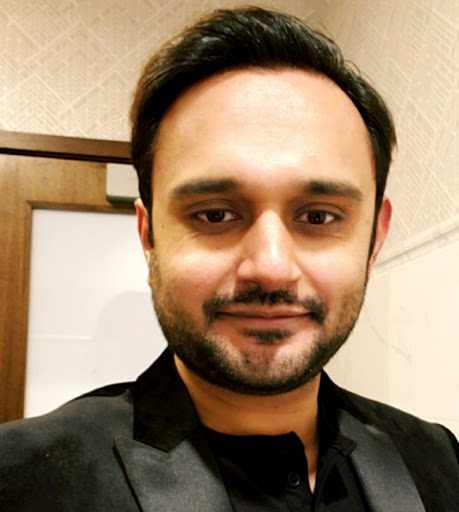
Anton Akusok is a Part-time Lecturer in the Big Data Analytics Master's program at Arcada University of Applied Sciences. He holds a BSc in IT from Moscow (2011), MSc in ML and Data from Aalto University (2014), and a DSc in ML from the University of Iowa, USA (2016). His research focuses on Extreme Learning Machines (ELM), hardware acceleration for ML on mobile devices, and real-time geospatial predictions. He has developed libraries like HPELM and Scikit-ELM, and created the HaSuRiski app for acid sulfate soil prediction in Finland. Research Interests: ELM applications in environmental modeling, federated learning security, mobile edge computing, and geospatial visualization. Key projects include real-time mapping apps with iOS integration and open-source ML tools. Publications (2021-2024) highlight work on federated learning privacy, acid sulfate soil detection, signature verification, and distributed ELM algorithms.
Diego F. Aranha is an Associate Professor in the Department of Computer Science at Aarhus University . His research focuses on cryptographic systems, cybersecurity, and privacy-preserving technologies with applications in voting systems, post-quantum cryptography, and secure computation. He has contributed extensively to homomorphic encryption, secure multiparty computation (MPC), and cryptanalysis of cryptographic implementations. Key projects include: MPCC (2025-2028) : Multi-Party Computation in the Confidential Cloud SCI (2024-2027) : Secure Computation Infrastructures for the Retail Industry RENAIS (2021-2026) : Residue Number Systems for Cryptography His work emphasizes practical efficiency and formal verification of cryptographic protocols. Recent publications highlight advancements in lattice-based cryptography, secure voting schemes, and mitigating side-channel vulnerabilities in post-quantum algorithms. He actively collaborates on open-source cryptographic libraries and standards, with a focus on bridging theoretical security and real-world implementation challenges.
Dr. Abusaleh Jabir is a University Reader at the School of Engineering, Computing and Mathematics, Oxford Brookes University. He holds a DPhil in Computing from the University of Oxford and leads the Advanced Reliable Computer Systems (ARCoS) group. His research focuses on reliable hardware design, memristive nanotechnology, edge computing, and secure authentication systems. He has over 80 peer-reviewed publications and multiple patents, including innovations in error-tolerant circuits and memristive architectures. **Education**: DPhil in Computing (University of Oxford). **Research Interests**: Reliable hardware design, electronic design automation, sensing at the edge, physical uncloneable authentication, and emerging memristor technologies. His work addresses challenges in IoT, edge computing, and cybersecurity through innovative electronic systems. **Funding & Projects**: Current projects include the Leverhulme Trust-funded MONITOR gas sensor array initiative. His research has been supported by the UK Ministry of Defence, EPSRC, and Finance South East. **Awards & Patents**: Multiple patents granted, including EU 17706875.6 (memristive logic) and GB 1914221.5 (reconfigurable memristive logic). Recognized with best paper awards. **Advising & Impact**: Supervised PhD students now leading semiconductor and automotive industries (e.g., Infineon Technologies, Continental Teves AG). Collaborates with academic and industrial partners globally. **Labs & Teams**: Leads the ARCoS group within the Artificial Intelligence, Data Analysis and Systems (AIDAS) Institute, fostering interdisciplinary innovation in secure and reliable electronics.
Benjamin Carrion Schaefer is an Assistant Professor of Electrical Engineering at the University of Texas at Dallas (UTD), affiliated with the Erik Jonsson School of Engineering and Computer Science. His research focuses on reconfigurable computing, FPGA-based systems, and hardware security. He holds a PhD in Electrical Engineering from the University of Birmingham, UK (2003). His work emphasizes high-level synthesis (HLS), electronic design automation (EDA), and secure hardware design. Key research interests include FPGA optimization, embedded systems security, and accelerating runtime reconfiguration in CGRAs. His recent publications address challenges in cloud-based split logic synthesis, mitigating side-channel attacks on legacy hardware, and HLS-driven RTL bug detection. He leads research on resource-sharing architectures like MOSAIC and PEPA for performance enhancement in embedded processors. No scientific awards are explicitly listed, but his contributions to hardware-aware design automation highlight his technical expertise. Advising and grant details are not provided in the text. Schaefer is associated with a lab at UTD, though specific lab name or focus areas are not detailed here.
Xing-Dong Yang is an Associate Professor of Computer Science at Simon Fraser University (SFU) and holds an adjunct appointment as Assistant Professor at Dartmouth College. He directs the XDiscovery Lab and focuses on Human-Computer Interaction (HCI), particularly in developing interactive systems for smart everyday objects such as wearables, garments, and appliances. His research emphasizes accessibility for visually impaired users and prototyping tools for non-specialists. He earned his PhD from the University of Alberta, following degrees from the University of Manitoba and University of Alberta. Affiliations: Simon Fraser University (School of Computing Science), Dartmouth College (Adjunct) Education: PhD, Computer Science, University of Alberta MS, Computer Science, University of Alberta BS, Computer Science, University of Manitoba His research explores novel interactive systems, including tactile interfaces for education, assistive technologies for visual impairments, and innovative input methods for wearables. Key projects include MakeBronze (cultural preservation through interactive crafts), AccessibleCircuits (inclusive electronics for blind users), and systems like iWood and MicroFluID that merge materials science with HCI. His work has been recognized with awards such as the Best Paper Award at UIST'19 and multiple Honorable Mentions at CHI and UIST conferences. He advises a dynamic team of PhD and MSc students, emphasizing hands-on prototyping and industry collaborations through internships at companies like Google, Microsoft, and Apple. Yang has secured grants including an NSF CRII grant for device modulation and an NSF CSR Large grant for health-focused earpiece technology. His lab fosters interdisciplinary innovation, bridging computer science with design, engineering, and cultural studies.
Arijit Khan is an Associate Professor in the Department of Computer Science at Aalborg University, Denmark. He leads the Data Engineering, Science and Systems group and is affiliated with the Technical Faculty of IT and Design. His research focuses on Graph Neural Networks , Blockchain , Data Management , and AI interpretability . He is the Principal Investigator (PI) of a major project on Data Management, Fundamental Algorithms, and Machine Learning for Emerging Problems in Large Networks (2022–2027). Research Interests : Graph Data Management & Machine Learning Blockchain Transaction Analysis Large Language Model + Knowledge Graph Synergies Healthcare AI (e.g., ICU glucose prediction) Explainable AI for Graph Neural Networks Research Trends : His publications emphasize neuro-symbolic systems , uncertain graph analysis , and AI-driven blockchain insights . Recent work bridges large language models with knowledge graphs and explores GPU performance optimization via shader code analysis. Awards & Grants : No explicit awards listed, but his active research grants include a 5-year project on large network analysis with interdisciplinary applications in life and health sciences. Funding emphasizes algorithmic innovation and data science integration. Labs/Teams : Head of the Data Engineering, Science and Systems research group, focusing on AI for societal impact ('AI for the People') and scalable graph data systems. Collaborations span blockchain analytics, healthcare informatics, and GPU architecture design.
Prof. Akash Kumar is a Professor at the Chair of Embedded Systems at Ruhr University Bochum, Germany. He previously held professorships at TU Dresden (2015–2024) and the National University of Singapore (NUS; 2011–2015). His research focuses on design automation of embedded systems, reliability optimization, and approximate computing, with a strong emphasis on FPGA and emerging technologies. He leads projects such as Lean-MICS (DFG-funded) and SecuREFET-II, addressing cross-layer reliability and secure circuits. Education: PhD in Multimedia Multiprocessor Systems from Eindhoven University of Technology (TUe) and NUS (2005–2009), Master of Technological Design (Embedded Systems) from NUS (2003–2004), and B.Eng (Computer Engineering) from NUS (1999–2002, First Class Honours). Research interests span embedded systems, reconfigurable architectures, and hardware-software co-design. His work includes optimizing energy efficiency, fault tolerance, and cross-layer approximation techniques. Recent publications highlight advancements in FPGA-based accelerators, machine learning optimizations, and mixed-criticality systems. Active in grants and leadership, Kumar is Principal Investigator on multiple DFG and industry-funded projects, emphasizing collaborative research in distributed computing and approximate architectures. His contributions bridge theory and practice, with applications in edge AI, IoT, and cybersecurity.
Prof. Mohammed Khalid is a Professor in the Department of Electrical and Computer Engineering at the University of Windsor. He specializes in FPGA-based systems, network-on-chip architectures, and hardware acceleration for signal processing applications. His leadership roles include serving on the executive committee of IEEE Canada. His research focuses on optimizing cryptographic hardware, automotive embedded systems, and efficient algorithm implementations on FPGAs. Key contributions include advancements in PUF-based security mechanisms, high-speed elliptic curve processors, and FPGA-accelerated machine learning algorithms. He has led projects in automotive radar systems and AUTOSAR configuration tools. His work emphasizes practical applications of hardware-software co-design principles. Research Highlights : Development of novel FPGA architectures for real-time signal processing Innovative approaches to resource-efficient cryptographic hardware Pioneering work on hybrid NoC architectures for multi-FPGA systems Awards : IEEE Windsor Section Award (2019) for group leadership Best Student Paper Award (2024) for supervised research by Mohit Sharma Prof. Khalid's 150+ publications span FPGA design methodologies, adaptive signal processing, and embedded systems security. His research group collaborates with industry partners to advance automotive electronics and IoT applications.
Fenglong Ma is an Associate Professor at Pennsylvania State University, affiliated with the Institute for Computational and Data Sciences and the Center for Socially Responsible Artificial Intelligence. His research focuses on data mining, healthcare informatics, machine learning, natural language processing, and multimodal learning. He holds a Ph.D. from the University at Buffalo (2019) and degrees from Dalian University of Technology. His work addresses challenges in federated learning, medical AI, adversarial robustness, and multimodal systems. Key contributions include innovations in quantization for large language models, federated knowledge injection, and medical vision-language benchmarking. Recent publications explore topics like collaborative fairness in federated learning, robust medical vision-language models, and adversarial attack mitigation. His research bridges theory and practical applications in healthcare, cybersecurity, and personalized recommendation systems. He leads the PSU Data Science Lab and collaborates on projects involving AI ethics, multimodal data integration, and scalable medical foundation models.
Kanad Basu is an Associate Professor in the Department of Electrical, Computer, and Systems Engineering at The University of Texas at Dallas, Jonsson School of Engineering and Computer Science. He leads the Trustworthy and Intelligent Embedded Systems (TIES) lab, focusing on hardware security, reliability, and emerging computing paradigms. His research spans AI hardware, quantum computing, functional safety, and hardware-based security validation. Research Interests: His work emphasizes improving the trustworthiness of modern hardware systems. Key areas include hardware security (e.g., side-channel analysis, hardware trojans), functional safety in AI accelerators, quantum computing security and verification, and post-silicon validation techniques. He combines formal methods, machine learning, and hardware design to address vulnerabilities in SoCs, DNN accelerators, and quantum systems. Publication Trends: Recent publications (2023–2025) show a strong focus on interdisciplinary research, integrating AI/ML with hardware security, quantum computing, and functional safety. There is a growing emphasis on using large language models for assertion generation, symbolic execution for hardware fuzzing, and graph neural networks for quantum circuit analysis. His work frequently appears in top venues like DAC, DATE, HOST, ISVLSI, and IEEE journals. Scientific Awards: NSF CAREER Award, 2025 IEEE Top Picks in Test and Reliability, 2024 and 2023 Multiple Hack@DAC Prizes (2nd and 3rd) Best Paper Award at VLSI Design 2011 Assistant Professor Award at UTD Jonsson School, 2024 Nominated for Blavatnik Awards for Young Scientists, 2019 Advising and Grants: Dr. Basu has mentored numerous PhD, MS, and undergraduate students, many of whom have published in top-tier venues. He leads the TIES lab, which has received significant recognition, including the NSF CAREER Award. He actively collaborates across disciplines, advising students on topics ranging from quantum computing to AI hardware and functional safety. His lab produces high-impact research with real-world applications in automotive, cloud, and embedded systems. Labs and Teams: He leads the Trustworthy and Intelligent Embedded Systems (TIES) lab at UT Dallas, which fosters innovation in hardware security and reliability. The lab has produced award-winning work, including second prize at HACK@DAC 2025. He also serves on technical committees for IEEE DATE and HOST, and acts as Hardware Hacking Chair for IEEE HOST, indicating strong leadership in the hardware security community.
James S. Plank is a Professor in the Department of Electrical Engineering and Computer Science at the University of Tennessee. He holds a PhD from Princeton University (1993) and has been at UT since 1993. His research focuses on fault-tolerant computing, erasure coding, distributed systems, and neuromorphic computing. He teaches programming courses from introductory to graduate levels and has won multiple teaching awards, including seven departmental awards, the College of Arts and Sciences Senior Faculty Teaching Award, and the Chancellor’s Citation for Excellence in Teaching. Plank is a member of the IEEE Computer Society and has contributed to open-source software like JGraph and Jerasure. His recent research emphasizes neuromorphic computing systems, including projects like NeuroPong and RISP Neuroprocessor. He collaborates with industry and academia on storage systems, checkpointing, and hardware-software co-design. Plank advises numerous graduate and undergraduate students, evident in his annual summer student gallery. He has secured grants such as the NSF-funded "Ground-roaming autonomous neuromorphic targeter" (2020). His lab, Neuromorphic UT, explores applications in control systems, vision, and robotics. Plank’s contributions to erasure coding and storage reliability include seminal works like the RAID-6 Liberation Code and SD codes for mixed failure modes.
Salvatore Livatino is an Associate Professor in Virtual Reality and Robotics at the University of Hertfordshire, UK. He holds a MSc in Computer Science from the University of Pisa (1993) and a PhD in Computer Science and Engineering from Aalborg University, Denmark (2003). His academic journey includes roles as Research Fellow and Associate Professor at Aalborg University, as well as visiting positions at institutions like INRIA Grenoble and the University of Edinburgh. He leads the Communications and Intelligent Systems research group and directs the Virtual Reality and Robotics Laboratory. His research focuses on immersive technologies (VR/AR/XR), stereoscopic 3D visualization, and teleoperation systems for applications in robotics, healthcare, and command-and-control interfaces. He has contributed to over 30 peer-reviewed publications and secured funding for projects such as the Innovate UK-backed 'iDOC: AI Empowered Document Authoring' (2023–2025) and 'Immersion for Care: Using Extended Reality in Healthcare Training' (2025–2027). Teaching expertise includes problem-based learning, 3D visualization, and immersive game design. His work spans interdisciplinary collaborations in robotics, AI, and healthcare, emphasizing practical applications of virtual environments.
Professor Roger Woods is a prominent academic and researcher affiliated with Queen's University Belfast's School of Electronics, Electrical Engineering and Computer Science, part of the Faculty of Engineering and Physical Sciences. He holds the rank of Professor and is actively involved in advancing research and innovation in embedded systems, FPGA technologies, and AI-driven solutions for industry challenges. His work emphasizes practical applications through close collaboration with industry partners. His research interests span novel computing architectures (e.g., multi-precision and edge computing), FPGA-based systems for data analytics, and secure IoT communication protocols. Notably, he co-founded and serves as Chief Scientist of Analytics Engines Ltd, a data analytics company. He has led significant initiatives like the Kelvin-2 Tier-4 High Performance Computing centre and contributed to semiconductor reviews through EFutures. Professor Woods has been recognized with prestigious awards, including the IET Northern Ireland Engineering Excellence Award and IEEE Fellowship. He has supervised numerous PhD students focusing on topics like FPGA-based image processing, secure wireless communications, and embedded AI platforms. His publications reflect interdisciplinary strengths in hardware acceleration, physical layer security, and structural health monitoring. Key Collaborations : Projects with industry and institutions on semiconductor design, bridge monitoring, and AI hardware. Grants : Principal Investigator for multiple research grants, including Core Equipment Awards for advanced instrumentation. Labs/Teams : Active in Queen's Advanced MicroEngineering Centre and the EFutures network.
Mathias Payer is an associate professor at EPFL's School of Computer and Communication Sciences (IC), leading the HexHive research group since 2018. He focuses on strengthening software and system security through fuzzing, vulnerability mitigation, and compiler-based approaches. His work includes open-source prototypes and contributions to embedded systems, IoT security, and trusted execution environments. Education: PhD in Computer Science (Dr. sc. ETH) from ETH Zurich (2012), postdoctoral researcher at UC Berkeley (2012–2014), and assistant professor at Purdue University (2014–2018). Tenured at EPFL since 2021. Research Interests: Fuzzing frameworks, memory safety, vulnerability analysis, compiler optimizations for security, and firmware security. Projects include Enclosure , HexType , and DP3T (decentralized contact tracing). Awards: Multiple best/distinguished paper awards at top venues (e.g., Usenix Security, NDSS, RAID). Co-founded the EPFL polygl0ts and Purdue b01lers CTF teams to foster cybersecurity innovation. Labs/Teams: HexHive group, CTF initiatives, and collaborations with industry (e.g., Intel SGX, Android security).
University of Illinois Urbana-ChampaignUnited States
Rohan Tabish is an Assistant Professor in the Department of Computer Science at the University of Illinois at Urbana-Champaign (UIUC), specializing in real-time systems, embedded systems, and cybersecurity. His work focuses on developing predictable and secure software frameworks for multi-core and heterogeneous architectures. Education: Ph.D. in Computer Science and Engineering Master's in Computer Science and Engineering B.Sc. in Electrical Engineering with Telecommunications specialization Research Interests: Real-Time Task Scheduling Fault Tolerance in Embedded Systems Inter-Core Communication Frameworks Memory Bandwidth Management Cyber-Physical Systems Scratchpad-Centric Operating Systems Awards: Outstanding Paper & Best Paper Award (RTSS 2020) Outstanding Paper & Best Student Paper Award (RTSS 2020) Best Presentation Award (RTAS 2016) Nominated for Best Paper Award (ECRTS 2019) Teaching: CS 431: Embedded Systems (Instructor, 2015-2018) CS 424: Real-Time Systems (Instructor, 2019) CS 438: Communication Networks (TA, 2019) Labs/Teams: Active member of the Real-Time Systems Lab (RTSL) at UIUC, focusing on safety-critical embedded systems and real-time software frameworks.