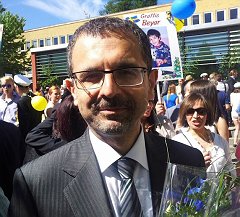
Parosh Aziz Abdulla is a Chaired Professor at the Department of Information Technology, Uppsala University, Sweden. His research focuses on algorithmic program verification, concurrency, distributed systems, and model checking, with applications to weak memory models like x86-TSO and C11.
Dr. Marc Hesse serves as Team Leader of the Cognitronics & Sensor Technology Group at Bielefeld University's Faculty of Engineering and is also a Board member of the Center for Cognitive Interaction Technology (CITEC). His work bridges engineering, robotics, and sensor technology with practical applications across multiple domains. Dr. Hesse's research spans wireless sensor networks, robotics, machine learning applications, and Industry 4.0 technologies. His work focuses on developing practical solutions for real-world problems, including physiological monitoring systems, UWB localization in challenging environments, and edge computing applications for smart grids and manufacturing. He has made significant contributions to educational robotics through the AMiRo platform, which integrates research and teaching in robotics education. His publication record shows consistent output across multiple domains, with recent work emphasizing machine learning applications in sensor networks, edge computing implementations, and digital twin technologies. The research demonstrates a trajectory from fundamental sensor and system design to applied implementations in agriculture, healthcare, and industrial settings. Dr. Hesse collaborates extensively across disciplines and institutions, with publications spanning biomedical engineering, robotics, electrical engineering, and sports science. His work often addresses the practical challenges of implementing theoretical concepts in real-world environments with resource constraints.
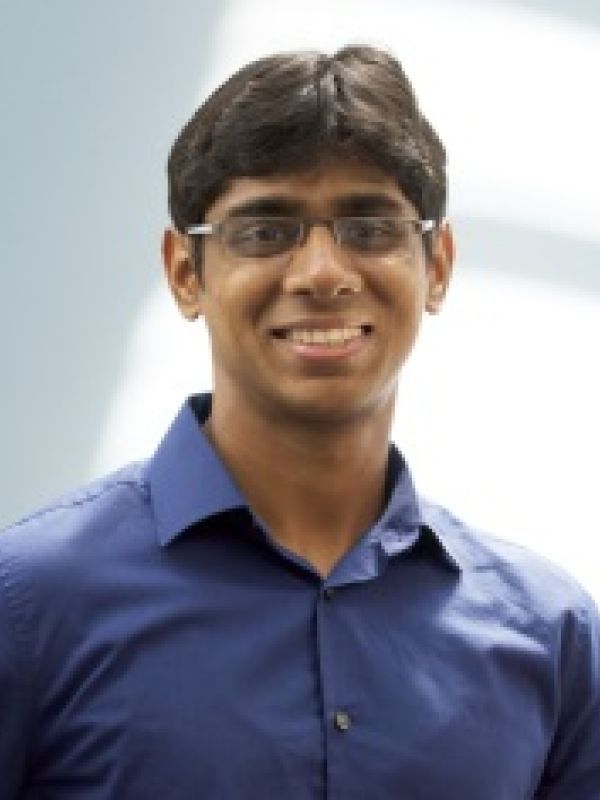
Dr. Venkittaraman Pallipuram Krishnamani is an Associate Professor in the Electrical and Computer Engineering department at the University of the Pacific's School of Engineering and Computer Science. He serves as the Program Chair of the Master of Science in Engineering program, demonstrating leadership in academic program development. His expertise bridges engineering and computer science disciplines, with a focus on creating practical frameworks that empower domain scientists. Dr. Pallipuram's educational background includes: PhD in Computer Engineering from Clemson University (2013) MS in Computer Engineering from Clemson University (2010) Bachelor of Technology from National Institute of Technology, Tiruchirapalli, TN India (2008) Dr. Pallipuram's research focuses on applying machine learning, natural language processing, and high-performance computing to solve real-world problems across various domains. His work particularly emphasizes developing user-friendly frameworks that enable domain scientists in chemistry, physics, education, and medicine to effectively utilize advanced computing technologies. His A2Cloud series provides practical solutions for cloud resource selection, while ChatReview offers innovative approaches to analyzing large survey datasets through natural language processing. His research demonstrates a consistent commitment to bridging theoretical computer science with practical applications that advance scientific discovery. His recent publications reveal a strong trend toward educational data mining and machine learning applications in education, alongside continued work in cloud computing frameworks. The research shows increasing focus on using AI to enhance teaching and learning experiences, with several 2024 publications addressing student achievement prediction and engineering education redesign. His work consistently combines theoretical rigor with practical implementation, creating frameworks that solve specific computational challenges for domain scientists. Dr. Pallipuram actively mentors undergraduate and graduate students in his research group, providing opportunities for hands-on experience with cutting-edge technologies. His collaborative approach is evident in his numerous co-authored publications across diverse domains including education, public health, and scientific computing. While specific grant information isn't detailed in the provided text, his sustained research output suggests successful funding acquisition to support his computational research initiatives. His laboratory work centers around developing the A2Cloud series of frameworks and ChatReview, creating practical tools that help domain scientists navigate complex computing environments. These projects involve interdisciplinary collaboration with chemists, physicists, educators, and medical professionals, reflecting his commitment to applying computer engineering solutions to advance science across multiple fields.
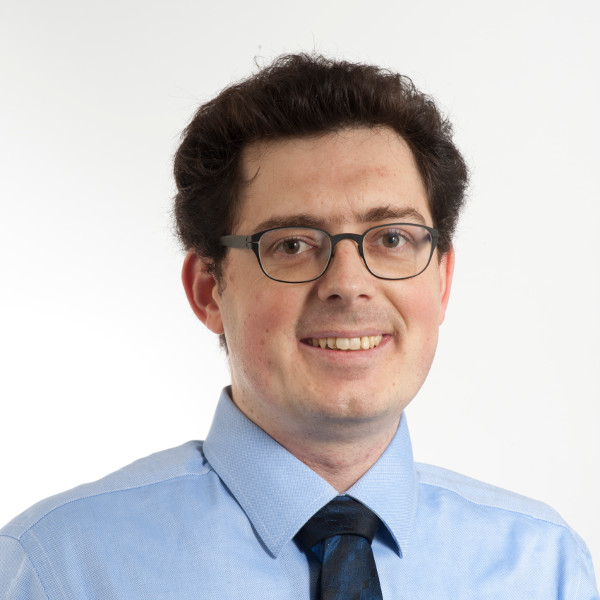
Dr. Eugenio Miguel Isern Riutort serves as a Senior Lecturer in the Department of Electronic Technology within the School of Industrial Engineering and Construction at the University of the Balearic Islands (UIB). His academic profile shows active engagement across multiple degree programs including Automation and Industrial Electronic Engineering, Telematics Engineering, and the Master's Degree in Industrial Engineering, where he teaches core courses in Analogue Electronics, Electronic Instrumentation, and related subjects. Beginning his research career in January 1991 with a pre-doctoral scholarship from the Ministry of Education and Science at the Polytechnic University of Catalonia, Dr. Isern Riutort has established three primary research domains. His foundational work focuses on test and verification methodologies for integrated circuits, where he has developed techniques for fault detection through current consumption analysis (both static IDDQ and dynamic IDDT). This research has evolved to address challenges posed by technological parameter variations in modern microelectronics, leading to innovations in predictive testing, oscillation-based testing, and auto-tuning techniques. A second research stream involves designing radiation sensors using standard MOS integrated circuits, with recent work focusing on floating gate MOS transistors that produce outputs proportional to total ionizing dose. Most recently, he has been developing non-conventional computing methodologies accelerated in hardware to enable artificial intelligence applications for massive and highly complex problems. His publication record demonstrates consistent scholarly output across these domains, with particular emphasis on practical applications of theoretical concepts in microelectronics testing and sensor design. The articles reflect a progression from fundamental circuit testing techniques to specialized applications in radiation detection and, most recently, hardware acceleration for AI systems. His work bridges theoretical foundations with experimental validation, as evidenced by his focus on both fault modeling and sensor design with experimental measurements. Dr. Isern Riutort actively supervises Final Degree Projects and Master's Theses in Automation and Industrial Electronic Engineering while teaching across multiple programs. His teaching portfolio spans from foundational Analogue Electronics courses to advanced Electronic Instrumentation Systems, demonstrating comprehensive expertise across the electronics curriculum. He maintains a personal academic website (personal.uib.eu/eugeni.isern) and has established research profiles across major academic networks including ORCID, ResearcherID, Scopus, and Dialnet. As a member of the Electronic Engineering (GEE) Consolidated R+D+I Group at UIB, he participates in a collaborative research framework that supports his work in electronics and related technologies. His office is located in room F107 on the first floor of the Mateu Orfila i Rotger building (Physics building) at the university.
Giorgio Cristiano is a Post-Doctoral Researcher at ETH Zürich in the Department of Information Technology and Electrical Engineering , affiliated with the Integrated Systems Laboratory . His work focuses on advanced circuit design for Internet of Things (IoT) applications and In-Memory Computing , with a strong emphasis on low-power and CMOS-compatible solutions. His research spans key areas such as: Temperature-stable RC oscillators for IoT nodes High-efficiency DC-DC converters using electromagnetically coupled oscillators Neural recording interface circuits with miniaturized resistors MEMS oscillators for ultra-low power consumption The trends in his publications highlight innovations in energy efficiency (e.g., 1.5pJ/Cycle oscillators), noise reduction (0.4 NEF amplifiers), and biomedical electronics integration. His work often addresses miniaturization and power optimization for wearable and implantable devices. Key institutions involved in his research include: ETH Zürich (primary affiliation) Integrated Systems Laboratory (research group) Collaborations with experts in biomedical engineering and neural networks
David W. Abraham is a senior researcher at IBM Research - Yorktown Heights specializing in quantum computing and advanced materials. His work spans multiple decades with significant contributions to near-field microscopy, thermal imaging, MRAM technology, and most recently quantum processor development. His primary research interests focus on quantum computing hardware , particularly superconducting bump bonds, through-silicon vias (TSVs), and multi-level wiring systems critical for building scalable quantum processors like IBM's 127-qubit Eagle device. Earlier work included pioneering research in magnetic force microscopy (achieving 25 nm resolution) and thermal imaging applications for disk drives. Analysis of his publication history reveals consistent innovation in quantum hardware engineering, with recent work (2021-2024) concentrated on solving practical integration challenges for quantum processors. His research bridges fundamental physics with practical engineering solutions for next-generation computing systems. Dr. Abraham collaborates extensively with IBM Quantum leadership including Jay Gambetta (VP of Quantum), Matthias Steffen (IBM Fellow), and Oliver Dial (CTO, IBM Quantum), reflecting his integral role in IBM's quantum computing initiative. His laboratory work focuses on quantum processor fabrication and characterization, with particular emphasis on developing reliable interconnect technologies and mitigating decoherence sources in superconducting qubit systems. Current projects appear directed toward scaling quantum processors beyond current device limitations through novel packaging and integration approaches.
Austin Minnich is a Professor of Mechanical Engineering and Applied Physics at the California Institute of Technology , where he has served as Division Deputy Chair for the Division of Engineering and Applied Science since 2022. He earned his B.S. from UC Berkeley (2006), M.S. and Ph.D. from MIT (2008, 2011), and joined Caltech as Assistant Professor in 2011, advancing to Professor in 2017. His research group develops nanofabrication techniques for quantum technologies and low-noise microwave amplifiers. Education: B.S., University of California, Berkeley, 2006 M.S., Massachusetts Institute of Technology, 2008 Ph.D., Massachusetts Institute of Technology, 2011 Appointments: Assistant Professor, Caltech, 2011–17 Professor, Caltech, 2017–present Division Deputy Chair, Caltech EAS, 2022–present His research focuses on quantum-limited microwave amplifiers , atomic layer etching (ALE) , and thermal laser epitaxy (TLE) for quantum materials. ALE projects aim to achieve atomic-precision subtractive manufacturing, while TLE targets ultra-pure growth of refractory quantum materials like topological semimetals. Key applications include the Next-Generation Event Horizon Telescope and superconducting quantum processors . Recent publications highlight advances in quantum simulation (2025), isotropic ALE processes (2024–2025), and noise physics in semiconductors (2023–2024). Articles span Physical Review Letters , Physical Review B , and Journal of Vacuum Science & Technology A , with sub-fields including measurement-induced phase transitions , piezoresistivity , and two-phonon scattering . His scientific achievements include the Presidential Early Career Award (2019) and Viskanta Fellow at Purdue University (2020) . He has advised numerous graduate students, including alumni now at Duke University, MIT, and industry leaders like Intel and Nvidia. The Minnich Lab at Caltech (MC 104-44) drives innovation in quantum materials processing.
Jianqing Liu is an Associate Professor in the Department of Computer Science at North Carolina State University, with a courtesy appointment in the Department of Electrical & Computer Engineering. His research addresses communication, networking, security, and data privacy challenges in next-generation systems like 5G, IoT, and the quantum internet. Ph.D. in Computer Engineering, University of Florida (2018) B.S. in Electronic Science and Technology, University of Electronic Science and Technology of China (2013) His lab combines theoretical approaches (optimization, control, statistical modeling) with experimental methods (reverse engineering, system implementation) to advance secure communication systems. Research spans differential privacy , quantum networking , and IoT security , with a focus on hardware-software co-design and low-power solutions. Recent publications highlight trends in quantum internet protocols, privacy-preserving memory design, and IoT security optimization. Many articles explore theoretical foundations and practical implementations for emerging technologies like the quantum internet and blockchain. NSF CAREER Award (2021) COE Outstanding Research Award (2022) Best Paper Awards (IEEE HotICN, IEEE MMWCST) Liu has advised Master’s students like Raj, who successfully defended his thesis, and secured over $1.4 million in grants from the NSF. His work includes projects on quantum network virtualization, wireless device error management, and differential privacy via memory design.
Michael Walfish is a Professor at the Courant Institute of Mathematical Sciences within New York University . His work focuses on computer systems, network security, and verifiable computation with applications in distributed systems and cybersecurity. Current faculty member (not retired or former staff) Teaching experience includes advanced systems courses like Operating Systems and Honors Operating Systems at NYU Research interests span multiple dimensions: Network security and defense mechanisms Verifiable computation systems Distributed system design Zero-knowledge proofs applications Hardware and software security Recent publications demonstrate strong focus on: Zero-knowledge systems (Zombie, Verifiable ASICs) Web and email security (Pretzel, Yesquel) Probabilistic verification (Less is more) Cryptographic protocols in systems (Cobra, DQE) Scientific recognition: Best Paper Award at SOSP 2017 Distinguished Student Paper Award at Security 2016
Manuel Egele is an Associate Professor at Boston University’s Department of Electrical and Computer Engineering and co-leads the Secure Systems Lab , a member of the International Secure Systems Lab. His work bridges software, systems, and embedded/mobile security with a focus on privacy. His recent research trends include IoT kernel module analysis ( FirmSolo ), PHP web application debloating ( Minimalist ), and fuzzing innovations ( MORPHUZZ , ThreadLock ). He explores microarchitectural vulnerabilities, denial-of-service detection, and hardware-assisted security mechanisms, often publishing in top venues like USENIX Security , NDSS , and ACM CCS . Egele actively contributes to academic service as an area chair, poster chair, and committee member for conferences such as IEEE Oakland, USENIX Security, and NDSS. He teaches courses like EC440: Operating Systems , EC521: Cyber-Security , and EC700: Vulnerability and Malware Defense , emphasizing practical security education.
Vaibhav Nougain is a Lecturer at the School of Engineering, University of Aberdeen, UK, since 2025. His research focuses on power systems interfaced with power electronics, emphasizing renewable energy integration and DC grid stability. Ph.D. in Electrical Engineering (2022), Indian Institute of Technology Delhi B.Tech in Electrical Engineering (2017), Delhi Technological University His work spans fault location algorithms for DC microgrids, HVDC simulation, and resilient protection against cyber intrusion. He developed a mathematical model for real-time fault detection across all DC voltage levels, significantly improving grid reliability. Recent research trends include machine learning applications in HVDC systems and adaptive control strategies for microgrids. Publications highlight collaborations with institutions like Technical University of Denmark and TU Delft. Grid India Power System Awards 2024 Foundation for Innovation & Technology Transfer (FITT) Award 2023 Best PowerWeb Paper 2023 Nougain is a member of the Aberdeen HVDC Research Centre and the IEEE, contributing to advancements in renewable energy integration and power system protection. His work has been recognized in climate action and energy research categories.
Sidrah Javed is a Postdoctoral Research Associate in the Department of Engineering at Durham University , UK. She received her PhD in Electrical and Computer Engineering from King Abdullah University of Science and Technology (KAUST) in 2021, following a B.E. in Electrical (Telecommunication) Engineering from National University of Science and Technology (NUST) , Pakistan, in 2012. Her research focuses on modelling, design, and performance analysis of wireless communication systems , particularly satellite-aerial-terrestrial hybrid networks for mitigating digital inequality. She has contributed to interference management in hardware-impaired systems through asymmetric signal processing and improper Gaussian signaling, with applications in NOMA-based HAPS , SWIPT , and full-duplex relaying . Sidrah is actively involved in teaching, delivering Control and Signal Processing 3 (ENGI3391) and tutorial sessions for Radio and Digital Communications (ENGI47915) . Her work aligns with the Communications and THz research center at Durham University, which connects with the UN Sustainable Development Goals of reducing inequality and promoting sustainable cities.
Dr. Ali Abbasi is a tenure-track faculty member at the CISPA Helmholtz Center for Information Security in Saarbrücken, Germany. He leads the Embedded Systems Security (EMSEC) research group, focusing on hardware-software co-design for security, including fuzzing techniques , side-channel analysis , and mission-critical real-time systems . His work bridges cybersecurity , space systems , and automotive security through innovative research. PhD , Eindhoven University of Technology (2017–2018) Postdoctoral Researcher , Ruhr-University Bochum (2019–2021) His research integrates hardware security and systems security , with recent publications addressing firmware vulnerabilities , satellite communication security , and PLC defense mechanisms . Key article trends include: 2025 : Differential testing of video hardware stacks 2024 : Memory safety in bootloaders, space system sandboxing, and industrial control system security 2023 : Standardized metrics for PLC defenses and experimental satellite security analysis Scientific Awards : Distinguished Paper Award, IEEE Symposium on Security and Privacy (2023) He has taught advanced courses on Foundations of Firmware Security (2025), Systems Security (2022–2024), and Reverse Engineering (2023), with practical outcomes including student-led 0-day vulnerability discovery in real-time operating systems.
Prof. Thomas Leibfried is a Professor at the Karlsruhe Institute of Technology (KIT), leading the Institute of Electrical Power Systems and High Voltage Technology (IEH). His research focuses on advanced power grid technologies, including smart grid optimization, renewable energy integration, and high-voltage engineering. He oversees multiple experimental setups, such as PLC-based hardware-in-the-loop systems and distribution grid simulations. His work addresses challenges in grid stability, energy storage, and demand-response mechanisms for future energy systems. Leibfried's contributions span academic teaching and industry collaboration, with courses on energy systems, grid control, and electrical networks. He actively participates in KIT's initiatives to modernize grid infrastructure and enhance grid resilience through novel control strategies and data-driven approaches. His research group explores cutting-edge topics like inverter-based grid systems, frequency stability, and partial discharge diagnostics in high-voltage equipment. Notable projects include the FLEMING initiative, leveraging AI for grid monitoring, and the development of cellular-organized distribution grids for flexibility optimization. His team also collaborates on EU-funded studies analyzing the impact of electric vehicle adoption on medium-voltage grids. Leibfried’s work emphasizes practical implementations, with experimental facilities for real-time grid simulations and thermal monitoring of switchgears.
Shital Joshi is a Teaching Associate Professor in the Department of Computer Science at Oklahoma State University. Her academic career spans roles as a Teaching Assistant Professor (2019–2025) and current position since July 2025. She holds a Ph.D. in Computer Engineering from the University of North Texas (2016). Her research focuses on blockchain technologies, NFT performance modeling, IoT security, energy-efficient networks, and nanoelectronic circuit design. Her work bridges theoretical models with practical implementations, including adaptive blockchain systems, secure telemedicine frameworks, and graphene-based SRAM optimization. Notable contributions include bivariate performance models for NFT chains and energy-efficient routing protocols for wireless sensor networks. She actively participates in academic service, such as the 2023 ABET Symposium. Joshi teaches core computer science courses like Operating Systems, Data Structures, and Computer Systems, emphasizing hands-on learning. Her teaching spans from foundational courses (e.g., Computer Proficiency) to advanced topics (e.g., Memory Management in OS Design).