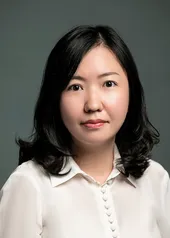
Markus Steinberger is an Associate Professor at Graz University of Technology (TU Graz), leading the GPU Computing and Visualization Group at the Institute for Computer Graphics and Vision. He holds a PhD (2013) and Habilitation (2020) in Computer Science from TU Graz. His research focuses on GPU scheduling, parallel computing, real-time rendering, and procedural content generation. He has held roles including Assistant Professor (2015–2021) and Director of Cloud Rendering at Huawei (2021–present). Education: MSc (2010), PhD (2013), Habilitation (2020) in Computer Science from TU Graz PostDoc and Research Positions: NVIDIA (2013–2014), Max Planck Institute (2015–2017) Research interests include dynamic resource scheduling, GPU algorithms, and high-performance visualization. His work has been recognized with awards such as the GI Dissertation Prize (2014), Eurographics Best Paper (2021), and the Heinz Zemanek Prize. Key Projects: Cloud-native rendering, procedural planet rendering, and GPU-optimized algorithms Advising includes PhD student Karl Haubenwallner. His lab explores cutting-edge techniques in real-time graphics and parallel computing.
Lizhong Chen is a Professor in the School of Electrical Engineering and Computer Science at Oregon State University and a core AI faculty member in the Collaborative Robotics and Intelligent Systems (CoRIS) Institute. He leads the STAR Lab which focuses on computing systems and AI applications with emphasis on computing efficiency across various computing platforms from embedded devices to supercomputers. Ph.D., Computer Engineering, University of Southern California, 2014 M.S., Electrical Engineering, University of Southern California, 2011 B.S., Electrical Engineering, Zhejiang University, 2009 Chen's research focuses on efficient computer systems (GPUs, accelerators, HPCs, IoT devices) and their applications in machine learning and natural language processing, especially large language models. His work spans machine learning accelerators, GPU architecture, AI-assisted design for computer architecture, and energy-efficient computing systems. He has made significant contributions to NoC (Network-on-Chip) power-gating research and developed the Agate simulator for simulating NoC power-gating. His recent publications (2023-2025) show a strong focus on large language models, particularly for simultaneous translation tasks, Kolmogorov-Arnold networks, and efficient model architectures. His work bridges computer architecture design with AI applications, creating synergies between hardware efficiency and machine learning performance. Scientific Awards: NSF CRII Award (2016) NSF CAREER Award (2018) Best Paper Nomination at IEEE NAS (2018) Best Paper Runner-up Award at HPCA (2020) Chu Kochen Award from Zhejiang University IEEE HPCA Hall of Fame (2020) Chen has served as an Associate Editor of IEEE Transactions on Computers and as program committee member for top computer system and machine learning conferences. He is the founder and organizer of the Annual International Workshop on AIDArc (AI-assisted Design for Architecture). His research is supported by multiple grants from NSF, NIH, Department of Energy, and the Northwest-AI-Hub supported by the CHIPS and Science Act. He teaches courses in computer architecture, high-performance computing, and specialized topics in AI accelerators and GPU architecture. As director of the STAR Lab, Chen leads research on computing efficiency across the spectrum from embedded and mobile devices to supercomputers and data centers. The lab's recent focuses include machine learning accelerators, GPU architecture, applications of AI in architecture designs, and improving the computing efficiency of machine learning and natural language processing models.
Pekka Toivanen is a Professor at the School of Computing, Faculty of Science, Forestry and Technology at the University of Eastern Finland. His research focuses on artificial intelligence, healthcare systems, IoT, cybersecurity, and machine learning. He has contributed extensively to fields like medical image analysis, smart grids, and robotics, with over 100 peer-reviewed publications. His work bridges theoretical advancements and practical applications, such as improving healthcare diagnostics via AI, enhancing IoT security, and optimizing energy management in microgrids. Research Interests: Dr. Toivanen’s primary areas include AI-driven healthcare solutions, cybersecurity for IoT devices, deep learning applications in medical imaging, and energy-efficient smart grid systems. He has pioneered methods for tuberculosis risk prediction and developed novel encryption algorithms for Bluetooth security. Publications: His recent work emphasizes AI in healthcare (e.g., tuberculosis prediction models) and energy systems (e.g., reinforcement learning for microgrid management). He also explores vulnerabilities in wireless technologies like Bluetooth and ZigBee, proposing robust countermeasures. Grants/Teams: Leads projects on AI distribution platforms for healthcare and secure IoT architectures. Collaborates with interdisciplinary teams in medical and engineering domains.
Daniel Lathrop is a Professor of Physics and Geology at the University of Maryland (UMD), and a Fellow of the American Physical Society. He joined UMD in 1997 following postdoctoral roles at Yale and faculty positions at Emory University. His research spans nonlinear dynamics, quantum science, and geophysical fluid dynamics. Lathrop directs the Nonlinear Dynamics Laboratory, focusing on experiments simulating Earth’s core (e.g., the 3-meter liquid sodium spherical Couette experiment) and superfluid helium phenomena. Education: B.A. in Physics (UC Berkeley, 1987), Ph.D. in Physics (University of Texas at Austin, 1991). Research emphasizes turbulent flows in rotating systems, magnetic field generation (dynamo effects), and quantum fluid behavior. His lab integrates machine learning for prediction of magnetic field evolution and turbulence dynamics. Collaborations include developing UAV-based geophysical sensors for landmine detection and advancing stochastic computing hardware using magnetic tunnel junctions. Awards include the NSF Presidential Early Career Award (1997), APS Stanley Corrsin Award (2012), and UMD Distinguished Scholar-Teacher designation. He served as Director of the Institute for Research in Electronics and Applied Physics (2006–2012). Advising: Supervised numerous graduate students in experimental physics and geophysics. Active in interdisciplinary projects combining fluid dynamics, quantum science, and machine learning. Labs/Teams: Nonlinear Dynamics Laboratory, Quantum Materials Center, and Institute for Research in Electronics & Applied Physics (IREAP). Research themes include planetary magnetic field modeling, turbulence in extreme conditions, and novel computing hardware inspired by physical systems.
Mustak E. Yalcin is a Professor in the Department of Electronics and Telecommunications Engineering at Istanbul Technical University (ITU). He holds a PhD from Katholieke Universiteit Leuven (2004), an MSc from ITU (1997), and a BSc from ITU (1993). His research focuses on nonlinear dynamics, chaos theory, FPGA-based systems, and secure communication. He has been elevated to IEEE Senior Member (2019) and serves as an Associate Editor for multiple journals, including the International Journal of Bifurcation and Chaos and SpringerBriefs in Nonlinear Circuits. His work spans applications in cryptographic systems, cellular neural networks, and hardware security. Notable contributions include FPGA implementations of hyperchaotic systems for medical image encryption, and designs for GPS spoofing detection. He leads projects on sensor-based navigation systems, smart weighing technologies, and energy-efficient embedded systems. Recent activities include chairing tracks at IEEE conferences and organizing events like FOSSistanbul. His lab actively explores wave computing, memristor-based networks, and bio-inspired algorithms for odor classification. Current projects include the design of fault-tolerant cryptographic hardware and real-time spectrum analyzers.
Gianpiero Cabodi is an Associate Professor in the Department of Control and Computer Science (DAUIN) at the Polytechnic of Turin, where he is also a member of the University Internship Commission. He is actively involved in teaching and research within the College of Computer, Film and Mechatronics Engineering. Research Interests: His research spans formal verification, model checking, binary decision diagrams, SAT solvers, embedded system design, and cybersecurity. His work emphasizes formal methods for ensuring correctness and security in hardware and software systems, particularly in safety-critical and automotive applications. Recent Publications: His 2024 publications demonstrate a strong focus on optimizing formal verification techniques. He explores interpolation-based improvements in bounded model checking, hardware model checking algorithms, and the use of binary decision diagrams in interpretable machine learning—highlighting a convergence of formal methods with modern AI interpretability and hardware verification. Teaching and Leadership: He has served as a course instructor for advanced data structures in Python, systems programming, and algorithms. He has also directed several doctoral programs in Computer and Systems Engineering. His leadership extends to research projects such as REBECCA and OSMOSIS, and he has chaired international workshops including FMCAD and DIFTS. Research Projects: REBECCA (2023–2026): Scientific Head of Structure, focusing on reconfigurable platforms for secure AI. OSMOSIS (2008–2010): Scientific Responsible for EU-funded codesign of embedded systems. Multiple commercial research projects on embedded systems in automotive, RFID traceability, cybersecurity, and HMI design (2008–2025). Advising and Grants: While no formal students are listed, he has supervised numerous research projects, often as Scientific Manager or Responsible, funded by both EU programs and industry contracts. His work bridges academic research and industrial applications, particularly in automotive and embedded domains. Labs and Teams: He is a key member of the FM - Formal Methods (DAUIN) research group, which focuses on formal verification techniques for digital systems.
Sophie Fosson is an Associate Professor in the Department of Control and Computer Science (DAUIN) at the Polytechnic University of Turin, Italy. She is a member of the System Identification & Control (SIC) research group and teaches courses such as Automatic Control and Modeling and Control of Cyberphysical Systems at both the master's and doctoral levels. Education: PhD in Mathematics for Industrial Technologies, Scuola Normale Superiore di Pisa Master’s in Mathematical Engineering, Politecnico di Torino Her research focuses on sparse optimization, machine learning, system identification, and control theory . She integrates mathematical modeling with practical applications in cyber-physical systems and neural networks. Her work emphasizes efficient and robust optimization techniques for deep learning and control systems. The recent publications highlight a strong trend in optimization of neural networks , particularly through sparse training, binary and ternary quantization, self-supervised learning, and fault tolerance . Her research bridges control theory with machine learning, applying mathematical rigor to modern AI challenges in safety-critical and embedded environments. Scientific Awards: No awards explicitly mentioned. She supervises several PhD students including Alice Re, Rosario Milazzo, and Simone Pirrera , and has been involved in research projects such as CRISP and collaborations with Centre Tecnològic de Telecomunicacions de Catalunya . She has held postdoctoral positions at DISMA and DET (Politecnico di Torino) and worked as a researcher at Istituto Superiore Mario Boella. Laboratories and Research Groups: System Identification & Control (SIC), DAUIN, Politecnico di Torin
Daniele Jahier Pagliari is an Associate Professor in the Department of Control and Computer Science (DAUIN) at Politecnico di Torino, where he is also a member of the Interdepartmental Center PEIC - Power Electronics Innovation Center. He is actively involved in teaching and research, focusing on embedded systems, electronic design automation, and machine learning for edge computing. He teaches courses such as Optimized Execution of Neural Networks at the Edge, Machine Learning for IoT, and Hardware/Software Codesign of Flexible Computing Systems for Edge AI across various engineering programs including Computer Science and Systems Engineering, Data Science, and Automotive Engineering. His research interests span electronic design automation, embedded systems, energy-efficient computing, low-power design, and machine learning. He is particularly engaged in applying machine learning techniques to improve the design and performance of digital and analog circuits, with a focus on edge AI applications. His work aligns with key scientific areas including computer architecture, cyber-physical systems, and scientific computing. The recent publications highlight a strong trend in optimizing deep learning models for resource-constrained environments, accelerating neural network inference on ultra-low-power devices, and integrating physics-based models with AI for battery state estimation. There is also significant focus on using machine learning to enhance electronic design automation, particularly for analog and mixed-signal circuits, reflecting a convergence of AI and hardware design. He leads and participates in several high-impact research projects, including EU-funded initiatives like HAL4SDV, ISOLDE, TRISTAN, and AMBEATion, as well as commercial projects such as MASAI and software platform development for production support. He serves as the Scientific Responsible or Director in multiple projects, demonstrating leadership in both academic and industrial research contexts. He supervises multiple PhD students in the Computer and Systems Engineering program, including Luca Benfenati, Mohamed Amine Hamdi, Beatrice Alessandra Motetti, Giovanni Pollo, and Matteo Risso, whose research topics include latency-optimized inference, compiler optimization for edge devices, and hardware-aware deep learning design. He is also involved in patent development, notably for an instrumentation method to dynamically modify circuit precision. He is a member of the College of Computer, Film and Mechatronics Engineering and contributes to various degree programs. His work supports UN Sustainable Development Goals related to good health, affordable and clean energy, industry innovation, and sustainable cities.
Antonio Carzaniga is a Full Professor and founding member of the Faculty of Informatics at Università della Svizzera italiana (USI), where he has been active since 2004. Previously, he served as an Assistant Research Professor at the University of Colorado at Boulder from 2001 to 2007. He holds a Ph.D. in Computer Science and a Bachelor’s degree in Electronic Engineering from Politecnico di Milano. Full Professor, Faculty of Informatics, Università della Svizzera italiana (2004–Present) Assistant Research Professor, Department of Computer Science, University of Colorado at Boulder (2001–2007) Ph.D. in Computer Science, Politecnico di Milano Bachelor’s in Electronic Engineering, Politecnico di Milano His research spans distributed systems and software engineering, with a strong focus on content-based addressing networks, publish/subscribe systems, middleware, software fault tolerance, and verification. He has pioneered work in information-centric networking and developed the Siena project, a scalable publish/subscribe service. His recent work extends into programmable networks, GPU-accelerated matching, and performance annotations for cloud systems. The 15 most recent publications highlight a consistent trajectory in scalable, high-performance networking and adaptive software systems. Key themes include content-based communication, packet subscriptions, information-centric networking, and leveraging redundancy for fault tolerance and testing. His work bridges theoretical foundations with practical implementations, often involving system-level software and performance evaluation. Best Paper Award, ACM SIGCOMM Workshop on Information-Centric Networking (ICN'13) Carzaniga has advised multiple graduate students, including Michele Papalini, Koorosh Khazaei, and Daniele Rogora, and has collaborated on funded research projects in distributed systems and networking. He has contributed to software development through projects like the Siena Fast Forwarding engine and the Synthetic Workload Generator. His service includes organizing workshops and contributing to major conferences in software engineering and computer systems. He leads research initiatives such as Siena and Content-Based Networking, focusing on scalable, decentralized communication infrastructures. His lab has developed key tools for evaluating publish/subscribe performance and implementing high-speed forwarding algorithms.
Dr. Olaf Hartwig is a Senior Scientist at the Albert Einstein Institute (AEI) in both Potsdam and Hannover. His research focuses on precision interferometry and fundamental interactions, specifically for the Laser Interferometer Space Antenna (LISA) project. He holds a PhD in Physics from the University of Hannover (2021) and has held postdoctoral positions at SYRTE - Observatoire de Paris and AEI. His work bridges instrumental modeling, data processing, and noise reduction for space-based gravitational wave detection. Education: BSc and MSc in Physics (University of Hannover), PhD in Physics (University of Hannover via AEI Potsdam) Current Roles: Split post-doctoral position between AEI Potsdam (global fit for LISA) and AEI Hannover (Performance and Operations team) Research Interests revolve around space-based gravitational wave detectors, with emphasis on: Instrumental Modeling - Refining noise models, addressing data gaps, and mitigating glitches in LISA data Data Processing - Developing simulations, performance models, and software tools like PyTDI Detector Optimization - Clock synchronization, light-travel time estimation, and onboard optical delay compensation Publication Trends (15 most recent) show a focus on LISA instrumentation, with key topics including time-delay interferometry (TDI), stochastic gravitational wave background reconstruction, instrumental noise characterization, and intersatellite ranging. His work frequently integrates GPU acceleration, Python-based toolchains, and end-to-end simulation pipelines.
Tyler Sorensen is an Assistant Professor at the University of California, Santa Cruz in the Department of Computer Science and Engineering. He is currently on leave working with the RiSE group at Microsoft Research . His research focuses on concurrency programming, heterogeneous systems (GPUs, accelerators), compilers , and memory consistency models . PhD in Computer Science, Imperial College London (2018) MS in Computer Science, University of Utah (2014) BSc in Computer Science, University of Utah (2012) His work explores programming models for correctness and efficiency on emerging architectures, particularly GPGPU programming. He contributes to standards evolution with the Khronos Group and has developed testing frameworks for GPU memory consistency. His research has significant implications for parallel programming and GPU architecture design . His recent publications analyze GPU memory behavior, concurrency models, and performance portability across different architectures. Key trends include formal verification of memory models, empirical testing frameworks, and performance optimization for heterogeneous systems. Scientific Awards & Recognitions: ISSTA'23 Distinguished Artifact Award ASPLOS'23 Distinguished Paper & Artifact Awards IISWC'19 Best Paper Award PLDI'18 Distinguished Paper Award FSE'17 Distinguished Paper Award ISPASS'20 Best Paper Nomination Tyler advises a diverse group of students working on GPU programming, memory models, and heterogeneous systems. He has served on numerous program committees including ASPLOS 2024, PLDI 2024, and IWOCL 2019, and has been program co-chair for PLDI 2021 and 2022 Student Research Competition.
Stephane Vialle is a researcher at CentraleSupélec, leading the Interdisciplinary Laboratory of Digital Sciences. His research focuses on High-Performance Computing (HPC), GPU Computing, Quantum Computing, and Quantum Machine Learning. He has extensive experience in developing scalable fine-grained computing environments and optimizing parallel algorithms for distributed systems. His work spans financial engineering, energy management, and railway infrastructure through digital twin technology. Recent contributions include advancements in GPU cluster energy efficiency, stochastic control algorithms, and hybrid classical-quantum architectures for data clustering. Research interests emphasize optimizing parallel computing frameworks for diverse applications, including financial modeling, material science simulations, and transportation systems. His publications demonstrate expertise in distributed computing, fault-tolerant architectures, and algorithmic innovation across multiple computational paradigms. Current projects explore quantum computing integration with classical systems, GPU-based large-scale data processing, and real-world applications of parallel simulation techniques. Notable contributions include the parXXL development environment for coarse-grained platforms and the MINERVE digital twin for railway infrastructure management. His work bridges theoretical computing advancements with practical implementations in engineering and finance domains.
Weng Fai WONG is an Associate Professor and Deputy Head of the Department of Computer Science at the School of Computing, National University of Singapore (NUS). With over three decades of academic experience at NUS, he has established himself as a leading researcher in computer systems, with particular expertise in the interface between hardware and software stacks. Dr. Wong received his B.Sc. (First Class Honors) and M.Sc. from the National University of Singapore in 1989 and 1991 respectively, followed by a Dr.Eng.Sc. from the University of Tsukuba in 1993. His academic journey began at NUS (then DISCS) in 1985, where he progressed from student to Senior Tutor in 1989, and later returned from Japan as a Lecturer in 1993. Dr. Wong's research focuses on systems and networking, with special emphasis on hardware-software co-optimization. His current research interests include approximate computing , neuromorphic computing , and hardware acceleration for deep learning. His work spans computer architecture , embedded systems , compilers and runtime systems , and programming languages . He has made significant contributions to optimizing software for novel hardware including FPGAs, GPUs, and non-volatile memory technologies. His recent publications (2023-2025) demonstrate a strong focus on energy-efficient AI computing, with particular emphasis on spiking neural networks, large language model acceleration, and FPGA-based solutions for graph processing and machine learning workloads. His research shows a clear trajectory toward green AI through hardware-software co-design that minimizes energy consumption while maintaining computational effectiveness. Dr. Wong is a Member of ACM and a Senior Member of IEEE. His paper "Exploiting half precision arithmetic in Nvidia GPUs" was a Best Paper Finalist at the IEEE High Performance Extreme Computing Conference (HPEC 2017). As Deputy Head of the Department of Computer Science at NUS, Dr. Wong plays a key leadership role in academic administration while maintaining an active research program. His work has been supported by numerous research grants, though specific details are not provided in the available information. Dr. Wong leads research in the Systems & Networking area at NUS, with particular focus on the Hardware-Software Interface Laboratory. His team explores innovative approaches to bridge the gap between theoretical computer science and practical hardware implementation, with applications spanning from edge computing to large-scale data centers.
Dr. Chenchen Liu is an Assistant Professor of Computer Science and Electrical Engineering at the University of Maryland, Baltimore County (UMBC). She is affiliated with the Computing Compass Laboratory and holds a Hans Fischer Fellowship at the Technical University of Munich Institute for Advanced Study (TUM-IAS) under the focus group Enabling Neuromorphic Computing for Multi-Tenant AI. Her work bridges hardware-software co-design with neuromorphic computing. Ph.D., Electrical and Computer Engineering, University of Pittsburgh (2017) M.S., Electrical and Computer Engineering, Peking University (2013) Her research focuses on high-performance computing for machine learning through novel computer architecture and system designs, brain-inspired computing, machine learning security, non-volatile memory, and VLSI design. Key areas include: Neuromorphic hardware resilience and optimization Memristor-based neural network architectures Runtime scheduling for multi-tenant AI Security in neuromorphic computing Energy-efficient memory systems Recent publications explore memristor defect tolerance, ReRAM-based CNN training efficiency, and spiking network quantization. The work emphasizes hardware-software co-design for AI acceleration. NSF Career Award (2023) Best Poster Award, Machine Learning and Systems Conference (2022) Best Paper Award, IEEE Symposium on VLSI (2014) She contributes to academic service as TPC Chair/Track Chair for DAC, GLVLSI, Cloud Summit conferences and serves as Associate Editor for IEEE Transactions on Circuits and Systems (TCAS-1) and Neurocomputing journal.
Davide Bertozzi is a Reader in Advanced Processor Technology at the University of Manchester. His expertise spans Neuromorphic Computing , Computer Architecture , and Electronic Design Automation . He actively supervises PhD students in areas such as interconnect technologies for neuromorphic systems, elastic computing, and silicon nanophotonic networks. Education: PhD in Electrical and Computer Engineering, Universita Degli Studi Bologna (2000-2003) Research Focus: Dr. Bertozzi's recent work emphasizes neuromorphic processor design , adaptive edge AI , and asynchronous NoC synthesis . His projects address challenges in energy efficiency, scalability, and reliability for emerging computing paradigms. Collaborations: He contributes to multi-partner initiatives like TWIN-RELECT, focusing on reliable electronics, and collaborates with institutions including IHP Microelectronics (2023-present) and Universita Degli Studi Bologna. Advising: Dr. Bertozzi accepts PhD students in neuromorphic computing and related fields.