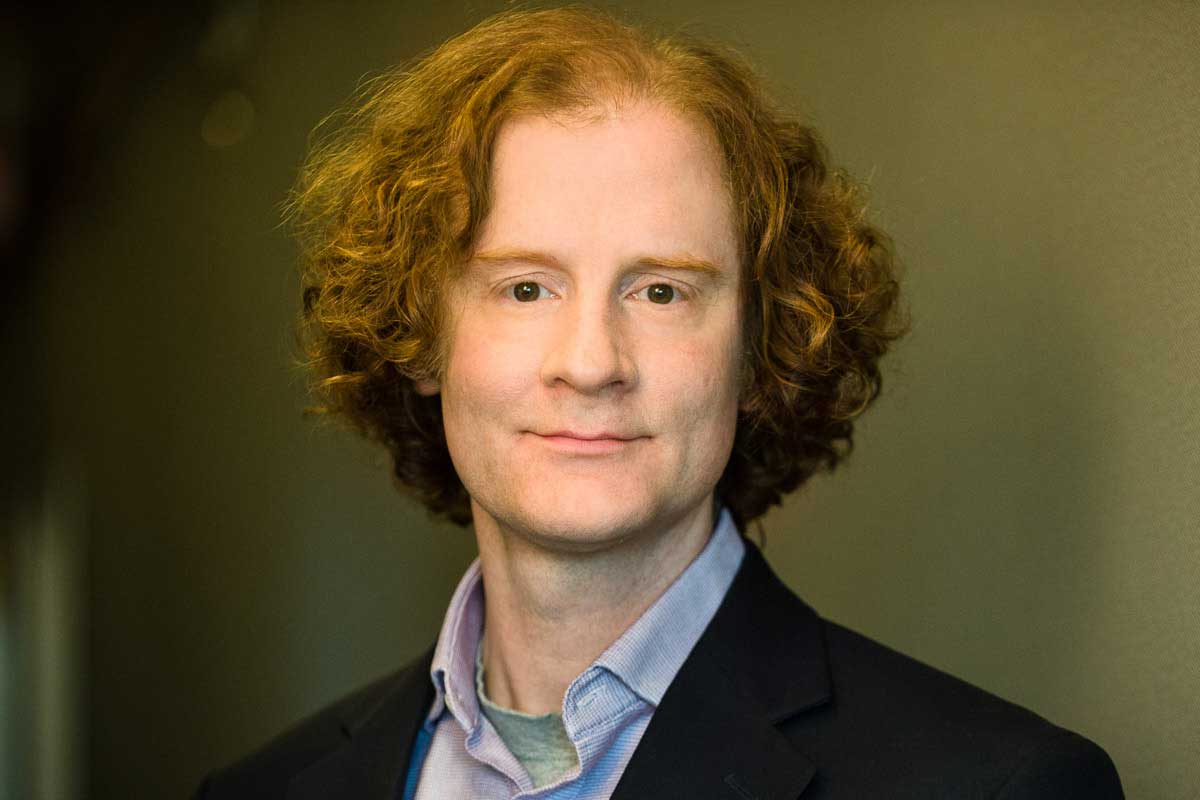
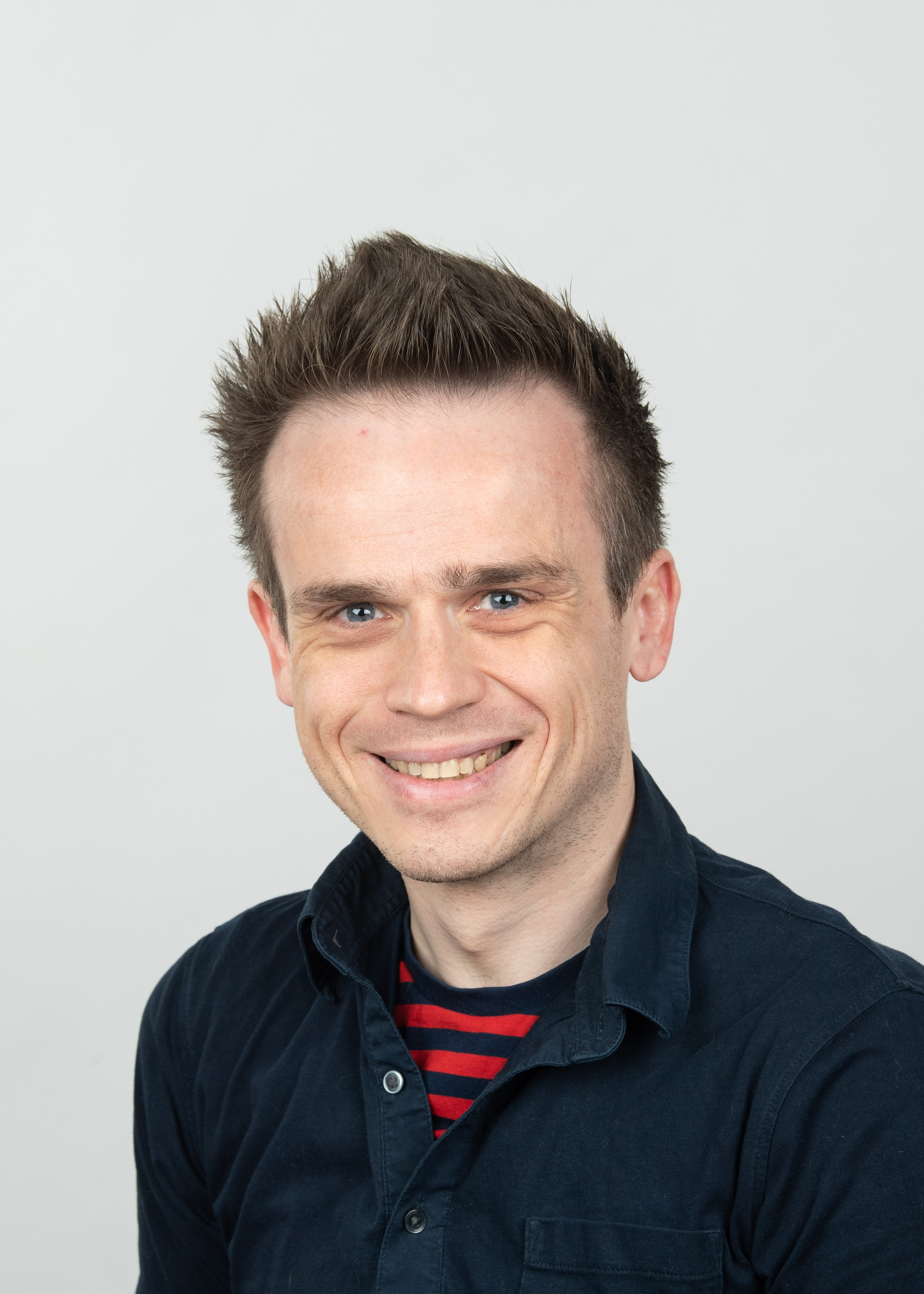
David A. Smith is an Associate Professor at the Khoury College of Computer Sciences, Northeastern University. His research focuses on Natural Language Processing (NLP) and computational linguistics, with applications in machine translation, information retrieval, digital humanities, and social sciences. He is a founding member of the NULab for Texts, Maps, and Networks, a research center focused on digital humanities and computational social sciences. Smith's work has been funded by grants from the Mellon Foundation, NEH, and IMLS, supporting projects such as the Viral Texts initiative analyzing 19th-century newspaper networks and the Oceanic Exchanges project tracking transnational information flows. He has contributed to advancements in OCR for historical texts, text reuse detection, and computational analysis of classical languages. He has advised numerous PhD students, including Shijia Liu, Si Wu, and Ryan Muther, and teaches courses like Natural Language Processing and Information Retrieval. His research has been featured in outlets like Wired and the Economist .
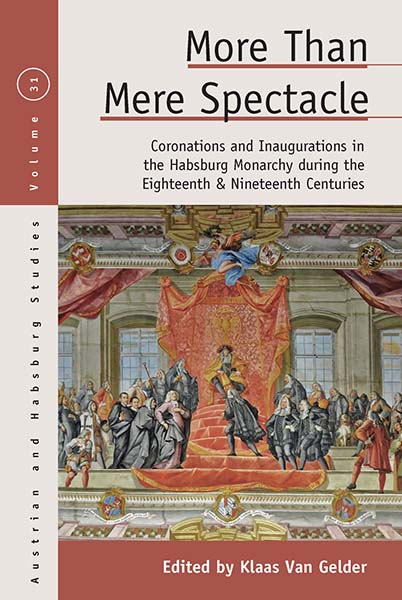
Klaas Van Gelder is an Assistant Professor of History at Vrije Universiteit Brussel (VUB) , specializing in early modern history. He is affiliated with the SHOC research group and serves as Archivist at the General State Archives in Brussels. His academic journey includes an MA (2005) and PhD (2012) from Ghent University, followed by postdoctoral fellowships at Ghent and the University of Vienna. He has held visiting roles, including at Saint Mary's University in Halifax (2024). Van Gelder’s research focuses on social, political, and cultural history of early modern Europe, particularly access to justice, litigants’ profiles, and legal rituals. Key projects include the FED-tWIN project ACCESS , examining Brabant’s legal systems, and studies on seigneurial police regulations. He has authored books like Regime Change at a Distance (2016) and edited volumes such as More Than Mere Spectacle (2021). He has received awards including the André Schaepdrijverprijs (2005) and Frans Stephan Preis (2014). His grants and collaborations include leadership roles in projects like Onderzoeksgroep Alliantie VUB-UGent . He co-edits journals and participates in international conferences, addressing topics like AI in historical archives and rural revolts.
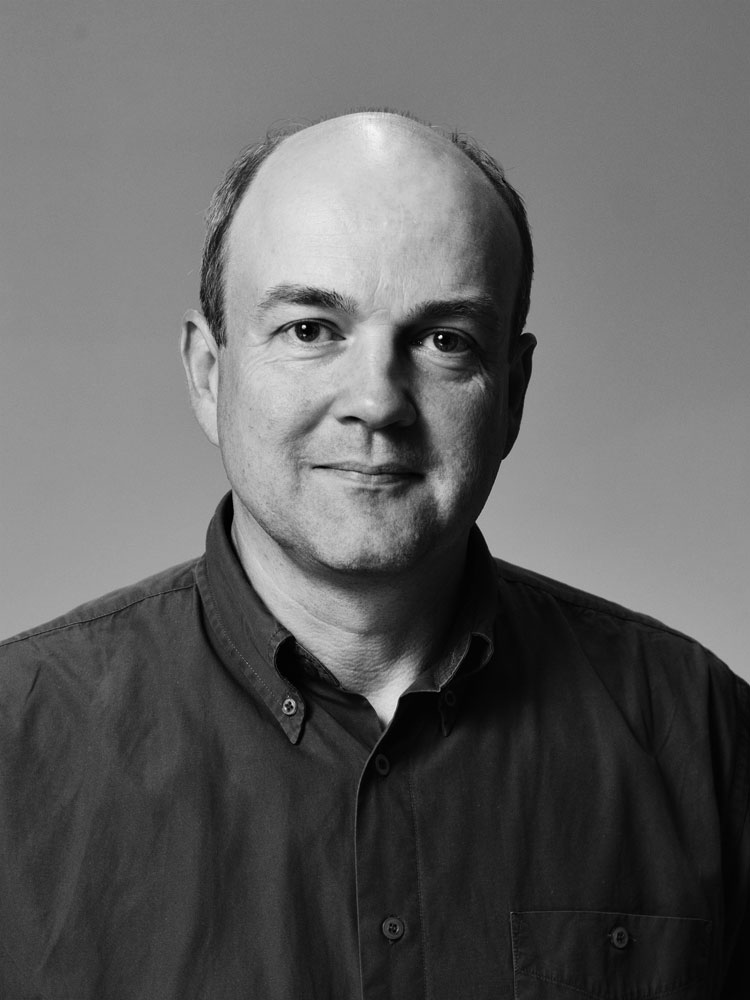
Martin Volk is a Full Professor of Computational Linguistics at the University of Zurich, with a dual affiliation to the Department of Informatics since 2019. He holds a PhD from the University of Koblenz and has held academic positions at institutions including Stockholm University (part-time from 2008-2011), Zurich University of Applied Sciences, and the University of Georgia. His research focuses on grammar engineering, machine translation evaluation, multilingual text analysis, and cross-language information retrieval. Education : Born in Cochem, Germany Studied Computer Science and Computational Linguistics at EWH University, Koblenz Master's in Artificial Intelligence at the University of Georgia (Fulbright Scholar) PhD in Computational Linguistics from the University of Koblenz Research Interests : His work emphasizes data-driven NLP methods, including corpus-based approaches, parsing technologies, and the application of machine learning to historical and multilingual texts. Key focuses include: Machine translation systems and evaluation frameworks Grammar testing environments (e.g., GTU) OCR and digitization of historical documents (e.g., Gothic script) Development of parallel corpora for linguistic research Projects : SMULTRON: Multilingual parallel treebank project Bullinger Digital: Historical document digitization initiative Text+Berg: Digital Humanities project for alpine textual heritage EU-funded MuchMore (cross-language medical IR) Grants & Collaborations : Recipient of grants from the Swiss National Science Foundation, EU projects, and industry partnerships (e.g., Siemens, Xerox). His work integrates academic and industrial perspectives in NLP tool development. Labs & Teams : Leads research teams in the Institute of Computational Linguistics at UZH, focusing on projects like the Zurich Parallel Corpus Collection and MODERN (modeling discourse for MT).
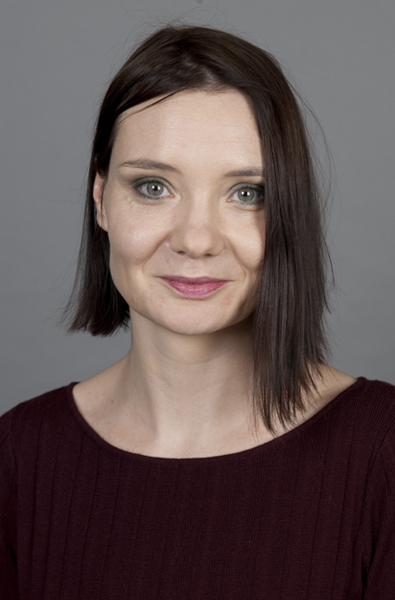
Lu Shijian is an Associate Professor (tenured) at the School of Computer Science and Engineering , Nanyang Technological University (NTU) , Singapore. He holds a PhD in Electrical and Computer Engineering from the National University of Singapore and leads the Visual Intelligence Lab (VILab) , focusing on humanlike visual perception, understanding, and creation. University: Nanyang Technological University School: School of Computer Science and Engineering Academic Rank: Associate Professor (tenured) Email: Shijian.Lu@ntu.edu.sg Office: N4-02C-101, NTU, Singapore His research spans computer vision, deep learning, image and video analytics, visual intelligence, and machine learning , with key topics including scene text detection, unsupervised domain adaptation, image synthesis, satellite image analytics, and facial expression recognition. His work integrates supervised, semi-supervised, and self-supervised learning across 2D images, 3D point clouds, and multi-spectral data. The recent publications highlight a strong trend in domain adaptation, generative modeling, 3D vision, and multimodal AI . His lab produces high-impact work accepted at top venues like CVPR, ICCV, ECCV, NeurIPS, and TPAMI, with applications in autonomous systems, image editing, and robust AI. Top winner of ICFHR2014 Competition on Word Recognition from Historical Documents Top winner of ICDAR 2013 Robust Reading Competition (scene text segmentation) Top winner of ICDAR 2013 Document Image Binarization Contest (DIBCO 2013) Top winner of H-DIBCO 2010 – Handwritten Document Image Binarization Competition Top winner of ICDAR 2009 Document Image Binarization Contest (DIBCO 2009) Lu advises several PhD students and serves as an Associate Editor for Pattern Recognition and Neurocomputing . He has held leadership roles in top conferences as Senior Program Committee member (IJCAI, AAAI) and Area Chair (ICDAR, WACV). His lab, the Visual Intelligence Lab , is actively recruiting PhD students and conducting cutting-edge research in visual intelligence, with recent work on 3D Gaussian splatting, backdoor attacks, and vision-language models.
Associate Professor Vic Ciesielski is affiliated with RMIT University's School of Computing Technologies. His research focuses on Artificial Intelligence, Evolutionary Computing, Computer Vision, and Genetic Programming, with applications in areas like robot soccer and aesthetic analysis of images. He has supervised projects including efficient neural architecture search and off-line handwritten text recognition. His work bridges computational techniques with creative fields such as art history and digital media. Key research interests include machine learning, data management, and graphics/augmented reality. He actively contributes to conferences like GECCO and IJCNN, publishing on topics ranging from neural architecture optimization to sensor-based activity recognition. His research often integrates evolutionary algorithms with deep learning methodologies. He can be contacted via vic.ciesielski@rmit.edu.au and has an ORCID identifier: 0000-0001-7273-9566 .
Dr. Irfan Ahmad serves as an Associate Professor in the Department of Information and Computer Science at King Fahd University of Petroleum and Minerals (KFUPM), Dhahran, Saudi Arabia, where he teaches undergraduate and graduate courses in Computer Science and Software Engineering while conducting research and advising graduate students. His academic service includes committee roles on graduate studies, program development, and competitions. His research expertise centers on Pattern Recognition with specialized focus on Document Image Analysis , Handwriting Recognition , and Machine-Printed Text Recognition . He actively explores Machine Learning applications including Deep Learning and Natural Language Processing , with significant contributions across Artificial Intelligence, Computer Vision, Data Mining, Neural Networks, and Computational Linguistics as evidenced by his PeerJ subject area specializations. Recent publications reveal a strategic emphasis on adaptive deep learning architectures for document analysis, particularly generative methods for handwritten text recognition and knowledge distillation techniques. His editorial work on feature extraction and multilingual fake news detection further demonstrates applied research bridging theoretical machine learning with real-world language processing challenges. As an active Academic Editor for PeerJ Computer Science with 1,205 contribution points, Dr. Ahmad provides substantial service to the scholarly community through manuscript evaluation and editorial oversight across emerging technologies in data science and artificial intelligence.
Nadine Akkerman is an Associate Professor at Leiden University's LUCAS (Leiden University Centre for the Arts in Society), specializing in Early Modern English Literature. She is Principal Investigator of the ERC Consolidator Grant project FEATHERS, which investigates collaborative authorship in early modern legal and literary texts. Her academic career spans roles at VU Amsterdam, Radboud University Nijmegen, and visiting fellowships at Queen Mary London, All Souls College Oxford, and NIAS. PhD in English Literature (cum laude) from VU Amsterdam (2008) Junior Lecturer at VU Amsterdam (0.8 FTE, 2002-2006) Junior Lecturer at Radboud University (0.3 FTE, 2006-2007) Her research focuses on epistolary culture, women's history, and intelligence studies. She pioneered the study of female spies in 17th-century Britain through her monograph Invisible Agents , and authored the authoritative biography Elizabeth Stuart, Queen of Hearts . Her work integrates manuscript studies, diplomatic history, and digital humanities, including a groundbreaking Nature Communications paper on virtual document unfolding. Recent publications include the projected The Correspondence of Elizabeth Stuart (3 vols, Oxford University Press) and co-authoring a Yale University Press trade book on early modern spycraft (2024). Her research has transformed understanding of women's roles in espionage and court politics, with methodological innovations in archival science. ERC Consolidator Grant (€2M, 2020) Ammodo Science Award (€300,000, 2019) World Cultural Council Special Recognition Award (2017) Aspasia NWO Premium (2016) Akkerman actively communicates her research to the public through TV/radio appearances and curated exhibitions. She leads the FEATHERS project (2020-2025), funded by the ERC, which examines authorship mediation in early modern texts. Her work combines rigorous archival analysis with interdisciplinary approaches, bridging history, literature, and digital methodologies.
Dr. Yang Wang is an Associate Professor in the Department of Computer Science and Software Engineering at Concordia University. His research focuses on computer vision and machine learning, with a particular emphasis on domain adaptation, meta-learning, and privacy-preserving techniques. He actively advises prospective graduate students through a dedicated webpage outlining application procedures. Research interests include few-shot learning, test-time adaptation, and cross-modal applications such as handwritten text recognition and gaze estimation. His work explores how models can adapt dynamically to new domains using limited labeled data, with applications in crowd counting, medical data analysis, and cybersecurity. He also investigates privacy-preserving methods for deep learning models to protect user attributes and sensitive information. Recent publications highlight advancements in meta-auxiliary learning frameworks and efficient user adaptation techniques. His contributions span journals and conferences, showcasing innovations in both foundational machine learning methodologies and real-world applications.
Isabella Di Lenardo is a Lecturer and Scientist at the Digital Humanities Institute (DHI) at École Polytechnique Fédérale de Lausanne (EPFL), where she also serves as the coordinator of the EPFL Time Machine Unit and the European Local Time Machines. She holds affiliations across multiple departments, including DHI-GE, SAR-ENS, SHS-ENS, and EDDH-ENS, reflecting her interdisciplinary role in teaching and research. Her educational background includes a PhD in Theories and Art History, with postdoctoral and faculty experience at institutions such as INHA (Paris), EPFL, and IUAV (Venice). Her research spans Digital Humanities, Art History, Urban History, and GIS , with a focus on digital urban reconstruction, historical cadastres, and AI applications in cultural heritage. She employs advanced computational methods including machine learning, 4D modeling, and semantic segmentation to analyze historical maps, cadastral records, and art archives. Her work bridges humanities scholarship with computer science, particularly in reconstructing urban evolution and analyzing visual patterns. The recent publications reveal a consistent trend in AI-powered historical data analysis , especially in processing non-standardized historical documents, reconstructing urban spaces, and developing open-source tools for digital heritage. Her work frequently involves large-scale datasets from Venice, Lausanne, Paris, and Jerusalem, demonstrating a transnational and interdisciplinary approach. She has contributed to significant collaborative projects such as the Venice Time Machine , Parcels of Venice , and Time Machine Organization , often acting as a principal investigator or project leader. Her role involves coordinating diverse teams of researchers, engineers, and cultural institutions. Scientific contributions include: Development of the Morphograph tool for visual pattern recognition in art archives Automatic vectorization and analysis of Napoleonic cadastres Creation of 4D models for historical cities AI-driven text and pattern extraction from historical maps Building discovery engines for digital art history She actively teaches ex cathedra courses in Digital Urban History and Art History at EPFL and internationally. Her work in grants and projects emphasizes open data, reproducibility, and interdisciplinary collaboration. She has led research funded by organizations supporting digital heritage innovation. She is a key member of the Digital Humanities Laboratory at EPFL and the Time Machine Organization , where she fosters collaboration between computer scientists, historians, and cultural institutions. Her work in the Replica Project and ARCHiVe center highlights her leadership in digitizing and making accessible large art historical archives.
Andreas Weber is an Associate Professor at the University of Twente's Digital Society Institute , specializing in the Knowledge, Transformation & Society (KiTeS) research group . His work examines the long-term historical and global relationship between Science, Technology, and Society , with particular focus on colonial histories of natural history, chemistry, and sustainability , as well as computational technologies for contextualizing digitized archives . He leads the HAICu project (2023–2029) on digital cultural heritage and coordinates STS PhD training for the Netherlands Graduate Research School (2019–2024). MA & PhD in History (2005 & 2012), Leiden University Assistant Professor (2017–2023), University of Twente Andreas' research integrates digital humanities with colonial science history , emphasizing global histories of minerals , digital humanism , and AI's societal context . His 15 most recent publications (2016–2025) explore topics like colonial bias in natural history collections , FAIR data implementation , and semantic annotation of handwritten archives , spanning disciplines from history of science to computer science and museum studies . He has received 7 scientific awards , including multiple Best Teacher Awards (2020–2023) and the IEEE eScience Best Poster Award (2018). Andreas supervises PhD and postdoctoral projects while engaging in media commentary on colonial heritage issues and co-organizing international conferences like Hydrogen Pasts and Futures (2024).
Peter A. Stokes is a Research Professor at the École Pratique des Hautes Études (EPHE) within Université PSL in Paris, specializing in Digital Humanities applied to historical writing. He holds a PhD from the University of Cambridge and has held roles including Leverhulme Early Career Fellowship at the University of Cambridge and Senior Lecturer at King's College London. His research focuses on computational palaeography, multigraphism, and the analysis of historical handwriting. He co-directs eScriptorium, a software project for automatic transcription of manuscripts, and leads the Biblissima+ Cluster 4 project. Education: PhD, University of Cambridge (2006), Dissertation: English Vernacular Script, ca 990 – ca 1035 BA (Hons) in Classics and English Literature & BE (Hons) in Computer Engineering, University of Melbourne (2001) Exchange Studies, Georgetown University (1998) Research Interests: Combining palaeography with digital humanities and computer science, focusing on theoretical and practical aspects of handwriting analysis, multigraphism, and transversal palaeography. Key projects include eScriptorium, DigiPal Framework, and contributions to Exon Domesday and Models of Authority projects. Grants & Awards: European Research Council (ERC) grant for DigiPal (2011–14) AHRC grants for Exon Domesday and Models of Authority (2015–17) Medieval Academy of America Prize (2016) Teaching & Supervision: Leads courses in digital humanities and palaeography at EPHE and King's College London. Supervised PhD students in medieval manuscript studies and digital humanities, including Salomé Pichon and Matilda Watson. Labs & Collaborations: Co-director of eScriptorium; member of Comité International de Paléographie Latine and Humanistica (Digital Humanities association). Active in international projects like Biblissima+ and CultureLab.
Silvia Cascianelli is an AI and Computer Vision Researcher at the University of Modena and Reggio Emilia (UNIMORE). She actively contributes to the computer vision and document analysis communities through research, conference organization, and academic mentorship. She serves as Area Chair for major computer vision conferences including CVPR2025, BMVC2025, and ECCV2024, demonstrating her standing in the field. Her research focuses on several key areas within computer vision and document analysis: Image Generation : Developing efficient and lightweight methods for image generation with desired characteristics, particularly using diffusion models Handwriting Imitation : Creating algorithms for generating images of text with specific content and handwriting styles, along with evaluation methods Document Understanding : Extracting information from 2D and 3D document images, ranging from modern documents to historical artifacts like carbonized Roman papyri Dr. Cascianelli's work shows a clear progression toward more sophisticated generative models and evaluation frameworks, with recent publications focusing on diffusion models for handwritten text generation, efficient token reduction for multimodal tasks, and innovative approaches to historical document analysis. Her research bridges theoretical advancements with practical applications across diverse document types. Her scientific contributions have been recognized through invitations to serve as Area Chair for top-tier computer vision conferences (CVPR, ECCV, BMVC) and opportunities to organize specialized workshops including VisionDocs at ICCV, AI4DH at ECCV, and ADAPDA at ICDAR. Area Chair at CVPR2025 Area Chair at BMVC2025 Area Chair at ECCV2024 Organizer of VisionDocs Workshop at ICCV2025 Organizer of AI for Digital Humanities Workshop at ECCV2024 Organizer of ADAPDA Workshop at ICDAR2024 Dr. Cascianelli actively mentors the next generation of researchers: Vittorio Pippi - PhD Student at UniMoRe (National PhD program in AI) Fabio Quattrini - PhD Student at UniMoRe (ICT program) Carmine Zaccagnino - Research Intern at UniMoRe (formerly MSc student) Kostantina Nikolaidou - PhD Student at Luleå University of Technology Pau Torras Coloma - PhD Student at Computer Vision Center, Universitat Autònoma de Barcelona Bram Vanherle - CV Engineer at Colruyt Group Smart Innovation (formerly PhD student) She is actively involved in several research initiatives including the AI Governance Lab where she serves as a lecturer, and collaborates with institutions worldwide. Her current projects focus on advancing diffusion models for image generation, improving handwritten text recognition systems, and developing novel methods for document understanding across historical and contemporary contexts.
R. Manmatha is an Adjunct Professor in the College of Information and Computer Sciences at the University of Massachusetts Amherst and a Principal Scientist at Amazon A9 since 2013. His academic journey includes a Ph.D. in Computer Science from University of Massachusetts Amherst (1997), an M.S. in Electrical Engineering from University of Hawaii (1986), and a B.Tech in Electrical Engineering from Indian Institute of Technology Kanpur (1983). Research Interests Manmatha's work spans Computer Vision , Information Retrieval , and Document Analysis . Key projects include: Developing Vision-Language Models for GUI grounding and OCR-free document understanding Creating Word Spotting techniques for historical manuscripts like George Washington's papers Advancing Image Retrieval through statistical and relevance models Building Meta Search systems using score distribution analysis Optimizing Diffusion Transformers for text-to-image generation Scientific Contributions His research has led to numerous publications in conferences like SIGIR , CVPR , and ICDAR , focusing on: Automatic Image Annotation using cross-media relevance models Scale Space Techniques for handwritten manuscript segmentation Alignment Methods for document-groundtruth generation Indian Language Document Search via locality-sensitive hashing Transformer-based architectures for multimodal and document tasks Advising & Collaborations Manmatha has mentored students including Jiwoon Jeon , Shaolei Feng , Toni Rath , Jamie Rothfeder , and Nitin Srimal . He co-founded Snaptell (acquired by Amazon) and contributed to Amazon's mobile search technology. Labs & Teams He leads the Multi-media Indexing and Retrieval (MIR) group at the Center for Intelligent Information Retrieval (CIIR) , focusing on non-textual information indexing through ASCII conversion and direct content analysis.
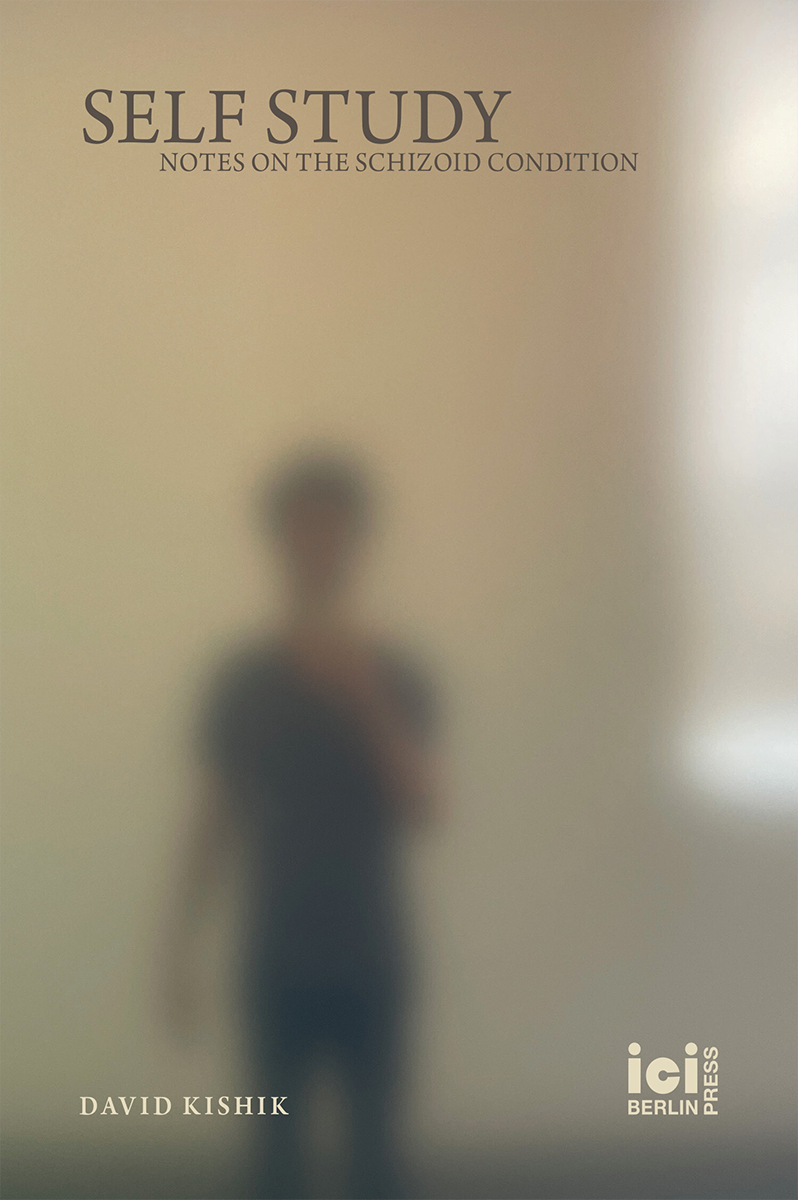
David Kishik is an Associate Professor of Philosophy at the Marlboro Institute for Liberal Arts & Interdisciplinary Studies at Emerson College in Boston, where he has received the Miller Award for Outstanding Teaching (2016) and the Huret Award for Faculty Excellence (2020). Born in Beersheba, he holds a Ph.D. from the New School for Social Research and a B.A. from Haifa University. His work bridges academic philosophy with creative writing and performance art. His educational journey began at Haifa University, followed by doctoral studies at the New School for Social Research, a prominent institution for continental philosophy. Previously, he was a fellow at the ICI Berlin Institute for Cultural Inquiry, establishing his international scholarly presence. Kishik's research spans continental philosophy with distinctive explorations of Wittgenstein's language philosophy, Agamben's biopolitics, and Benjamin's urban theory. He approaches biblical texts through a post-secular lens and investigates the philosophical dimensions of cities, particularly New York. His methodology combines rigorous philosophical analysis with experimental forms that challenge conventional academic boundaries, creating what he terms 'paraphilosophical' works. His current decade-long project represents an innovative approach to philosophical practice through 'practical philosophy' involving transcription, conversion, education, circumnavigation, and summation. His publications reveal a coherent intellectual trajectory from Wittgenstein studies through political philosophy to urban theory and biblical interpretation. The most recent phase of his work moves beyond traditional academic writing into more experimental forms of philosophical engagement with the world, culminating in his 'Self Study' volume as the conclusion of his 'To Imagine a Form of Life' series. Miller Award for Outstanding Teaching (2016) Huret Award for Faculty Excellence (2020) Kishik has translated Giorgio Agamben's works 'Nudities' and 'What Is an Apparatus?' into English, significantly contributing to bringing continental philosophy to English-speaking audiences. His shorter pieces have appeared in The New York Times, Los Angeles Review of Books, Lapham's Quarterly, 3:A.M. Magazine, Public Seminar, and Alaxon. As a performer, he has engaged with philosophical ideas through artistic expression, notably appearing in Netta Yerushalmy's 'Paramodernities,' demonstrating his commitment to interdisciplinary approaches. His work has achieved international recognition with translations into German, Russian, Korean, Farsi, and Hebrew. His current projects through 2030 indicate ongoing scholarly activity and innovation. The 'current decade' project represents his most experimental phase, moving philosophical practice into tangible actions including defacing coins and handwritten editions of his previous works, challenging conventional boundaries between theory and practice.
Paul Gooding is a Professor of Library Studies and Digital Scholarship at the University of Glasgow. His research focuses on digital library collections' impact, reuse in Digital Humanities, and user behavior analysis. He holds a BA in English Literature (University of East Anglia), MA in Library and Information Studies (UCL), and a PhD in Digital Humanities (UCL). Research interests include digital collections evaluation, legal deposit frameworks, and AI applications in cultural heritage. Notable publications include Historic Newspapers in the Digital Age (2016) and co-editing Electronic Legal Deposit (2020). He leads projects like Digital Library Futures (AHRC-funded) and the Global Dataset of Digitised Texts Network. Recent articles explore topics such as 'Slow AI' principles, HTR in heritage contexts, and inclusive AI requirements for Indigenous knowledges. His work bridges library studies, digital humanities, and ethical technology. Fellowships include the Higher Education Academy and Royal Historical Society. He serves as Associate Editor for Digital Scholarship in the Humanities and AHRC Peer Review College member.