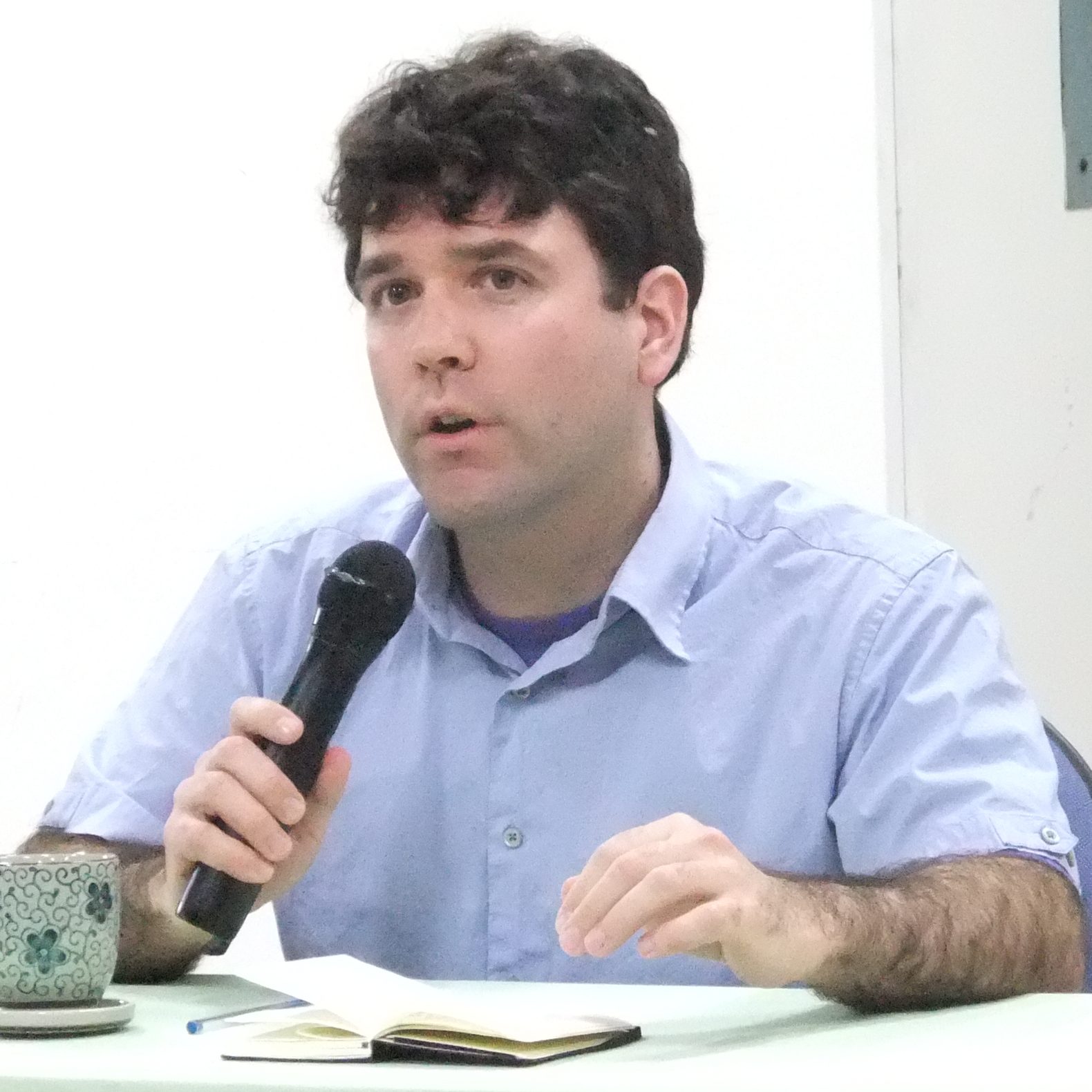
Christopher Bush is an Associate Professor of French and Comparative Literary Studies at Northwestern University, serving as Chair of the Department of French and Italian. He holds a Ph.D. in Comparative Literature from UCLA. His research focuses on transnational literary modernisms, European and East Asian avant-gardes, aesthetic theory, and media. He is currently completing a book on modernist haiku as world literature for Columbia University Press. Recent publications include articles in Esprit créateur , T.S. Eliot Studies Annual , and the Surrealism Beyond Borders exhibition catalog. He has received grants and awards from NEH, Fulbright, and the Mellon Foundation. Dr. Bush teaches courses on modernist literatures, historical avant-gardes, and critical theory, including 'The Avant-gardes in the World' and 'Bergsonism and Global Modernism.' He co-directs the Global Avant-garde and Modernist Studies graduate cluster and served as coeditor of Modernism/modernity (2016–2021). His prior works include Ideographic Modernism: China, Writing, Media (Oxford, 2010) and a translation of Victor Segalen’s Stèles (Wesleyan, 2007).
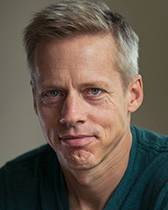
Yoshiko Matsumoto is the Yamato Ichihashi Professor in Japanese History and Civilization and Professor of East Asian Languages and Cultures at Stanford University, with a courtesy appointment in Linguistics. She has been a faculty member at Stanford since 1992, progressing from Assistant Professor to her current distinguished position. Matsumoto also serves as coordinator of the Japanese Language Program and has held significant administrative roles including Chair of the Department of Asian Languages (2003-2005) and Interim Chair of the Department of East Asian Languages and Cultures (2016). Matsumoto earned her Ph.D. in Linguistics from the University of California, Berkeley (1989), following M.A. degrees in Linguistics from UC Berkeley and General and Applied Linguistics from the University of Tsukuba, an M.I.A. in American Studies from the University of Tsukuba, and a B.A. in English Language & Literature from Japan Women's University. Professor Matsumoto's research focuses on linguistic pragmatics from cross-linguistic perspectives, with particular expertise in Japanese language. Her work spans structural and sociocultural aspects of language in use, including noun-modifying clause constructions, honorifics, discourse markers, and the intersection of language with gender and aging. She has pioneered research on conversational narratives of older adults, examining how ordinary framing strategies help individuals navigate difficult experiences. Her current projects explore intergenerational communication through haiku, communicative abilities of people with dementia, and noun-modifying constructions across Eurasian languages. Matsumoto's scholarship consistently bridges theoretical linguistics with practical applications for understanding human communication in diverse social contexts. Matsumoto's recent publications reveal a growing focus on practical applications of linguistic research for social benefit, particularly in intergenerational communication and dementia care. Her work increasingly integrates arts-based approaches, especially haiku poetry, to bridge generational divides and enhance communication with elderly populations. The research shows a consistent trajectory from theoretical linguistic frameworks toward applied, human-centered language studies that address real-world challenges in aging societies, with particular attention to how ordinary language practices help individuals navigate life transitions and difficult experiences. Dean's Award for Distinguished Teaching, School of Humanities and Sciences, Stanford University (2000) Richard E. Guggenhime Faculty Scholar, Stanford University (2000-2003) Violet Andrews Whittier Fellow, Stanford Humanities Center (2019-2020) Faculty Research Fellow, Michelle R. Clayman Institute for Gender Research (2014-2015) Research Fellow, Japan Foundation (2002) Internal Fellow, Stanford Humanities Center (2005-2006) Presidential Fund for Innovation in the Humanities, Stanford University (2009-2011) Professor Matsumoto has mentored numerous students through her teaching in Japanese language and linguistics courses, including specialized offerings on language and aging, points in Japanese grammar, and haiku-based communication. Her research has been supported by prestigious grants from the National Endowment for the Humanities, the Japan Foundation, and Stanford's Presidential Fund for Innovation in the Humanities. She has served on multiple editorial boards including the Journal of Pragmatics since 1992, demonstrating long-standing leadership in her field. Matsumoto has also advised students through individual studies and thesis projects in East Asian Languages and Cultures. Matsumoto leads several collaborative research initiatives including the 'Sharing Conversations' project which examines intergenerational communication through haiku, and research on communicative abilities of people with dementia. Her work often involves interdisciplinary teams spanning linguistics, gerontology, and creative arts, with fieldwork conducted in both Japan and the United States. The 'Noun-Modifying Constructions in Languages of Eurasia' project represents a major international collaboration examining linguistic structures across cultural boundaries. She also directs the 'Language, Old Age and Gender in Japan' project supported by the Stanford University/Japan Foundation, and the 'Difficult Conversations Continue: Memories of the 3.11 Disaster and Bereavement Narratives' project focused on post-disaster communication.
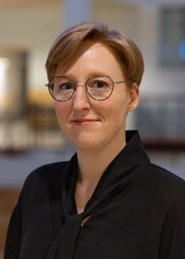
Darcie Dennigan is Associate Professor In Residence in the Department of English at the University of Connecticut, College of Liberal Arts and Sciences. She holds an MFA in Poetry from the University of Michigan (2002) and a BA in English from University of Massachusetts, Amherst (1998). Her creative practice spans poetry, experimental fiction, and performance texts, with specializations in nature writing, absurdist traditions, and hybrid literary forms. She has received numerous awards including the Howard Foundation Fellowship and Poetry Society of America prizes. Her performance collaborations include works with Wilbury Theatre Group and composer Jason Thorpe Buchanan, exploring themes through innovative theatrical forms and operatic adaptations.
Patrick Barron is a Professor in the Department of English at the University of Massachusetts Boston, based in Wheatley Hall, Floor 06. His academic expertise spans twentieth-century American and Italian poetry, environmental literature, Native American literature, professional writing, and literary translation. Education: PhD, University of Nevada, Reno MS in Geography, University of Nevada, Reno MA, Queen's University of Belfast BA, University of Oregon Barron's research integrates literary studies with geography and environmental humanities, focusing on spatial representations in poetry and prose. His work examines agropastoral landscapes, urban wastelands ("terrain vague"), and cross-cultural literary exchanges between American and Italian traditions. He specializes in ecocritical approaches to Native American literature and environmental writing. His publication trajectory reveals consistent engagement with spatial theory across American and Italian contexts, from Edward Dorn's Western poetry to Fellini's cinematic Rome. Barron's translations of Andrea Zanzotto and Gianni Celati highlight his bridging of literary traditions through environmental and spatial lenses.
Karen Schramm serves as Professor in the Department of English at Delaware Valley University, where she has taught 23 distinct courses since joining this teaching-focused institution. Her academic journey spans appointments at Rutgers University, the University of Delaware, Rowan University, and community colleges, with her current role emphasizing innovative pedagogy and environmental advocacy. As a Partner in Conservation with the World Wildlife Fund, she actively supports global wilderness protection initiatives across the Amazon and American Prairie. Education: Ph.D. in English (American Literature), University of Delaware M.A. in English, Rutgers University B.A. in English, Rutgers University Dr. Schramm's research centers on environmental literature's role in American cultural identity, particularly examining wilderness narratives from the American Renaissance period. Her scholarship bridges literary analysis with conservation ethics through courses like Environmental Literature and Introduction to Literature: Creature Comforts, which explores animal representations in fiction and creative non-fiction. This interdisciplinary approach extends to her personal commitment to nature, demonstrated by her lifelong documentation of cicada emergences since childhood. Her 30+ publications reveal consistent thematic evolution from early pedagogical innovations to current environmental scholarship, featuring definitive contributions in Oxford and Cambridge University Press volumes. While haiku poetry reflects her nature-focused aesthetic, her academic work demonstrates sophisticated analysis of wilderness discourse in American literature and practical applications in educational technology. The publications collectively showcase her dual commitment to advancing literary scholarship and transforming classroom practice through creative methodology. Scientific Awards: $300 award for best article in Teaching for Success (1997) Dr. Schramm has mentored student writers through 15 consecutive years (1998-2013) as advisor and copy-editor for The Gleaner , the university's literary magazine, while developing innovative teaching methodologies like the 'Angered Porcupine' approach. Her scholarly productivity includes six biographical entries for the American National Biography and multiple book chapters addressing technology integration in education, though specific research grants aren't documented in available materials. Her conservation partnership with WWF represents significant professional engagement beyond traditional academic boundaries. No dedicated research laboratories or formal research teams are referenced in her professional documentation, with scholarly activities primarily conducted through individual publication and institutional teaching roles.
James Shea serves as Associate Professor and Director of the Creative and Professional Writing Programme at Hong Kong Baptist University's Department of Humanities and Creative Writing, with additional duties as Acting Director of the International Writers’ Workshop. His academic journey includes prior appointments at Nebraska Wesleyan University, University of Chicago, Columbia College Chicago, and DePaul University. He holds an MFA from the University of Iowa and a BA summa cum laude from Loyola University Chicago. His creative work spans poetry collections, literary translation, and critical editing with emphasis on cross-cultural exchange between Eastern and Western poetic traditions. Shea's publications reveal evolving engagement with experimental forms and international influences, particularly Japanese and Chinese poetry. His recent output demonstrates increasing focus on translation as literary practice while maintaining distinctive American poetic voice. Notable recognitions include: Fulbright U.S. Scholar Grant for Hong Kong Gwendolyn Brooks Award for Excellence in Teaching National Endowment for the Arts grant Hong Kong Arts Development Council support Vermont Arts Council funding As Poetry Reviews Editor for the Hong Kong Review of Books and advisor to the Hong Kong International Literary Festival, Shea actively shapes regional literary discourse while mentoring emerging writers through institutional programs.
John Bresland is an Associate Professor of Instruction in the Department of English at Northwestern University's Weinberg College of Arts & Sciences. He specializes in Digital Media & Media Theory and Creative Writing Nonfiction, blending traditional essay formats with multimedia platforms. His work includes video essays like Mangoes (exhibited at the Pulitzer Arts Foundation) and Peyton Place: A Haiku Soap Opera , which reimagines Grace Metalious's controversial novel through layered audiovisual storytelling. His research explores intersections of media theory, cultural critique, and creative nonfiction. Teaching focuses on creative writing and media arts, emphasizing interdisciplinary approaches to narrative. Though no formal academic awards are noted, his innovative projects have been featured in prominent anthologies like Essayists on the Essay: Montaigne to Our Time and The Fourth Genre . Bresland's video essays critically analyze cultural phenomena, such as the legacy of Peyton Place's scandalous TV adaptation and the formal possibilities of haiku in media. His work challenges traditional boundaries between text, image, and sound, reflecting a commitment to evolving creative practices in the digital age.
Nathan Suhr-Sytsma is an Associate Professor and Director of Graduate Studies in the Department of English at Emory University. He holds affiliations with the Institute of African Studies, Global & Postcolonial Studies, and Irish Studies programs. His research focuses on 20th/21st-century poetry, African and Irish literary traditions, and the environmental humanities. Suhr-Sytsma’s first book, Poetry, Print, and the Making of Postcolonial Literature (2017), examines mid-20th-century anglophone poet networks across Ireland, Nigeria, and the Caribbean. His second book project, African Poetry Worlds in the Twenty-First Century (under contract with OUP), explores contemporary African poetry’s global engagements. Education: B.A., Calvin College; Ph.D., Yale University. His scholarship bridges postcolonial studies, modernist aesthetics, and decolonial approaches to poetics. Recent work addresses interreligious themes in Nigerian fiction, digital African literary magazines, and planetary crises in Irish poetry. He co-edited special issues on religion in African writing ( Research in African Literatures , 2017) and global south poetics ( Interventions , 2024). Teaching emphasizes environmental humanities and global poetry. Office hours are held in-person or online weekly. For graduate inquiries, direct to english.phd@emory.edu .
Hanna Ahrenby is an Assistant Professor in the Department of Creative Studies (Teacher Education) at Umeå University, Sweden, specializing in visual arts education policy and teacher professionalism within Swedish compulsory schools. Her work critically examines how educational policies are translated into classroom practice through teacher interpretation and enactment. She earned her Ph.D. in Educational Work in 2021 with the dissertation "Teaching fundamental values in art education: a study on policy enactment in secondary school" and holds formal recognition as a university teacher. Her academic foundation combines rigorous pedagogical training with deep subject expertise in art education. Dr. Ahrenby's research focuses on the tensions between policy mandates and classroom realities in visual arts education. She investigates how teachers navigate new syllabi implementation, maintain professional autonomy, and preserve subject integrity amid evolving educational traditions. Her work highlights the critical role of teacher agency in mediating policy demands with pedagogical needs. Analysis of her 2014-2025 publications reveals a clear evolution from foundational studies on fundamental values to current investigations of syllabus enactment and teaching materials. This trajectory demonstrates growing emphasis on teacher interpretation processes and historical influences on contemporary art education practices within Sweden's unique policy landscape. She currently leads two major research initiatives: a project examining teachers' interpretation of Sweden's new art syllabus in compulsory schools, and a collaborative study analyzing teaching materials through policy and historical perspectives to understand their development and classroom integration.
Seiji Marukawa is a Professor at the School of Education, Waseda University, specializing in European literature and French literature. His research intersects poetry, art history, and philosophy, particularly examining melancholy in post-human contexts. Doctor of Letters, Paris VIII Researcher of French post-war poetry (Celan, Dupin, Deguy) Grants from Japan Society for the Promotion of Science (2015-2018, 2010-2012, 2007-2008) Marukawa's work explores: Melancholy's evolution from Renaissance to post-human eras Rhythm-figure dynamics in poetics and visual art Translation's philosophical limits in poetry Dialogues between Japanese and European aesthetics Art's role in preserving cultural memory His 15 most recent publications (2013-2023) analyze Baudelaire's symbolism, Paul Klee's rhythm, Bashō's haiku, and post-Holocaust ethics. He has authored books like Jacques Dupin, Poetics of Fragment (2022) and The lien of the museums (2020). Marukawa's teaching includes French language courses and seminars on cultural sciences. He has presented at international colloquia on Michel Deguy and Baroque melancholy, and conducted research at University of Languedoc (2007-2008).
Károli Gáspár University of the Reformed ChurchHungary
István Janó is an Assistant Professor in the Department of Japanology at the Faculty of Humanities and Social Sciences, Károli Gáspár Reformed University in Budapest, Hungary. With a distinguished career spanning over four decades, he has established himself as a leading scholar in Japanese studies, comparative literature, and cross-cultural research between Japan and the West. His academic journey began at József Attila University where he earned his MA in English and German literature and linguistics in 1978, followed by his doctoral degree in comparative literature in 1980. His educational background includes: MA in English and German literature and linguistics (1978) from József Attila University PhD in Comparative Literature (1980) from József Attila University with dissertation on 'Far Eastern influences in the poetry of imagism' Continuing doctoral studies at the Doctoral School of Literary Studies of the Hungarian Academy of Sciences (2008-) Additional studies at Eötvös Loránd University, Humboldt University in Berlin, and Osaka University of Foreign Languages Janó's research focuses on the intricate connections between Japanese and Western literary traditions, with particular expertise in classical and modern Japanese prose, Japanese literary theory, classical Japanese grammar, and linguistic problems. His scholarly work reveals a deep engagement with how Japanese poetic forms like haiku influenced Western literary movements such as Imagism and Vorticism, particularly through the works of Ezra Pound and Amy Lowell. He has made significant contributions to understanding the cultural dialogue between Japan and Hungary, as evidenced by his involvement in the Japanese-Hungarian Dictionary project since 2000. An analysis of his publications spanning from 1980 to 2022 shows a consistent scholarly trajectory exploring Japanese-Western literary connections, with recent works delving deeper into Vorticism's Eastern roots and the synthesis of Japanese haiku with French symbolism. His research demonstrates remarkable continuity in examining how Japanese aesthetics have shaped and been shaped by Western literary traditions. Throughout his career, Janó has been actively involved in academic service, including serving as an examiner for Japanese language exams at ELTE from 1992-2000, revising significant Japanese language learning materials like 'Kanji and Kana' (1995), and developing university textbooks on basic Japanese (1997). His international research fellowships at Osaka University of Foreign Languages (1990-1991) and Yokohama University (1995) under Japanese government sponsorship highlight his recognition in the field. Janó maintains active participation in the Hungarian Association of Japanese Language Teachers and has presented extensively at academic conferences, including notable appearances at the Károli Gáspár Reformed University's Literary Studies Conferences and the 20th anniversary celebration of the Japanology department in 2014. His work continues to bridge Japanese and Hungarian academic communities through translation, lexicography, and scholarly research.
J. Keith Vincent is an Associate Professor of Japanese & Comparative Literature and Women’s, Gender & Sexuality Studies at Boston University, and Convener of Japanese Language. He holds a BA from the University of Kansas, and MA and PhD from Columbia University. His research focuses on modern Japanese literature, queer theory, literary translation, and the interplay between haiku and the Japanese novel, particularly the work of Masaoka Shiki and Natsume Sōseki. Vincent’s scholarship bridges literary analysis with cultural critique, exploring themes of gender, sexuality, and aesthetics. Education: BA, University of Kansas MA, Columbia University PhD, Columbia University His research interests include queer readings of classical and modern texts, the impact of haiku on narrative forms, and literary friendships as aesthetic frameworks. Recent projects include a biography of Shiki through haiku and a book on haiku’s influence on Sōseki’s novels. Vincent has translated works by Okamoto Kanoko and Tanizaki Jun’ichirō, earning the 2011 U.S. Japan Friendship Commission Prize for his translation of A Riot of Goldfish . His translations often highlight cross-cultural resonances and subversive themes. Awardees include the U.S. Japan Friendship Commission Prize (2011) and a Lucien Stryk Asian Translation Prize shortlist (2018). He actively contributes to academic discourse through edited volumes, such as Reading Sōseki Now , and lectures on topics like Shiki’s relationship with Marcel Proust. Current projects focus on completing “I, Who Go”: The Young Shiki and the Invention of Haiku and expanding his exploration of haiku’s literary legacy. Vincent’s work emphasizes interdisciplinary approaches, blending literary criticism with psychoanalytic and cultural theories.
Adam L. Kern is a Professor of Japanese Literature & Visual Culture at the University of Wisconsin–Madison, based in the College of Letters & Science. His work focuses on early modern and modern Japanese literature and visual culture within a transcultural framework. He holds a Ph.D. from Harvard University and has published extensively on topics including Edo-period manga (kibyōshi), haiku, and comparative comicbook studies. Notable publications include Manga from the Floating World and The Penguin Book of Haiku . His research has been featured in national media, including a TV Ōsaka documentary profiling his expertise. Kern teaches courses on Japanese literature, manga, and visual culture, emphasizing digital media production in his pedagogy. Educational Background: Ph.D. in Japanese Studies from Harvard University. His expertise spans interdisciplinary areas such as transcultural studies, comparative literature, and the history of print media in Japan. He has curated courses that integrate digital humanities, such as creating digital essays to analyze early modern Japanese visual culture. Research Interests: Primary focus on Edo-period comicbook culture (kibyōshi), haiku traditions, and the intersection of Japanese visual and literary arts with global comicbook forms. He explores how these mediums reflect societal values, transcultural exchanges, and historical narratives. Awards: While no formal awards are listed, his media appearances and academic engagements highlight recognition for his contributions to Japanese cultural studies. He has collaborated with students like Rebecca Shearier and Will Fleming on digital projects, demonstrating his commitment to pedagogical innovation. Grants & Labs: Though specific grants are not detailed, his course materials and digital projects suggest active engagement in funded academic initiatives. His work with digital humanities integrates technology into traditional humanities research, creating new methodologies for cultural analysis.
Dr. Will Bridges is an Associate Professor of Japanese at the University of Rochester, specializing in modern Japanese literature, race and ethnicity studies, and African American comparative studies. His research explores intersections between Japanese literature and Black Pacific cultural exchange, with a focus on reparations and justice. He has authored Playing in the Shadows: Fictions of Race and Blackness in Postwar Japanese Literature (2020) and co-edited Two Haiku and a Microphone: Traveling Texts and Afro-Japanese Cultural Production (2015). His work has been recognized by the Mellon Foundation, Fulbright, and the National Endowment for the Humanities. Research interests: Black Pacific studies, transpacific cultural dialogue, and the ethics of reparations. Teaching includes courses on Japanese literature, calligraphy, and science fiction. Dr. Bridges is a founding editor of the Journal of Social and Cultural Possibilities and contributes creative nonfiction exploring Black life. Current projects include The Ethics of Reparations in Six Deaths and The Black Pacific: An Aesthetic History . His awards include grants from the Mellon Foundation and NEH, reflecting his interdisciplinary impact in humanities scholarship.
Hideto Tsuboi is a Professor at the Faculty of Letters, Arts and Sciences, Waseda University, with a career spanning multiple institutions including Nagoya University and Kanazawa College of Art. His research focuses on Japanese literature , postwar cultural history , transnational literary movements , and migration studies . A leading scholar in Cold War-era cultural analysis, his work bridges literary criticism, media studies, and comparative East Asian humanities. Key Research Areas : Postwar Japanese Literature, Cross-Cultural Trauma, Displacement Narratives Awards include the 72nd Yomiuri Literature Prize (Criticism/Biography) and the 4th Aoyagawa Nobuo Prize . His publications encompass monographs and edited volumes on wartime media, Cold War culture, and transnational poetic exchange. Current projects examine trauma and care in modern Japanese literature , with fieldwork in Manchuria, Siberia, and Sakhalin.