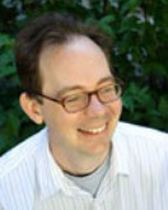
Christopher Bush is an Associate Professor of French and Comparative Literary Studies at Northwestern University, serving as Chair of the Department of French and Italian. He holds a Ph.D. in Comparative Literature from UCLA. His research focuses on transnational literary modernisms, European and East Asian avant-gardes, aesthetic theory, and media. He is currently completing a book on modernist haiku as world literature for Columbia University Press. Recent publications include articles in Esprit créateur , T.S. Eliot Studies Annual , and the Surrealism Beyond Borders exhibition catalog. He has received grants and awards from NEH, Fulbright, and the Mellon Foundation. Dr. Bush teaches courses on modernist literatures, historical avant-gardes, and critical theory, including 'The Avant-gardes in the World' and 'Bergsonism and Global Modernism.' He co-directs the Global Avant-garde and Modernist Studies graduate cluster and served as coeditor of Modernism/modernity (2016–2021). His prior works include Ideographic Modernism: China, Writing, Media (Oxford, 2010) and a translation of Victor Segalen’s Stèles (Wesleyan, 2007).
Yoshiko Matsumoto is the Yamato Ichihashi Professor in Japanese History and Civilization and Professor of East Asian Languages and Cultures at Stanford University, with a courtesy appointment in Linguistics. She has been a faculty member at Stanford since 1992, progressing from Assistant Professor to her current distinguished position. Matsumoto also serves as coordinator of the Japanese Language Program and has held significant administrative roles including Chair of the Department of Asian Languages (2003-2005) and Interim Chair of the Department of East Asian Languages and Cultures (2016). Matsumoto earned her Ph.D. in Linguistics from the University of California, Berkeley (1989), following M.A. degrees in Linguistics from UC Berkeley and General and Applied Linguistics from the University of Tsukuba, an M.I.A. in American Studies from the University of Tsukuba, and a B.A. in English Language & Literature from Japan Women's University. Professor Matsumoto's research focuses on linguistic pragmatics from cross-linguistic perspectives, with particular expertise in Japanese language. Her work spans structural and sociocultural aspects of language in use, including noun-modifying clause constructions, honorifics, discourse markers, and the intersection of language with gender and aging. She has pioneered research on conversational narratives of older adults, examining how ordinary framing strategies help individuals navigate difficult experiences. Her current projects explore intergenerational communication through haiku, communicative abilities of people with dementia, and noun-modifying constructions across Eurasian languages. Matsumoto's scholarship consistently bridges theoretical linguistics with practical applications for understanding human communication in diverse social contexts. Matsumoto's recent publications reveal a growing focus on practical applications of linguistic research for social benefit, particularly in intergenerational communication and dementia care. Her work increasingly integrates arts-based approaches, especially haiku poetry, to bridge generational divides and enhance communication with elderly populations. The research shows a consistent trajectory from theoretical linguistic frameworks toward applied, human-centered language studies that address real-world challenges in aging societies, with particular attention to how ordinary language practices help individuals navigate life transitions and difficult experiences. Dean's Award for Distinguished Teaching, School of Humanities and Sciences, Stanford University (2000) Richard E. Guggenhime Faculty Scholar, Stanford University (2000-2003) Violet Andrews Whittier Fellow, Stanford Humanities Center (2019-2020) Faculty Research Fellow, Michelle R. Clayman Institute for Gender Research (2014-2015) Research Fellow, Japan Foundation (2002) Internal Fellow, Stanford Humanities Center (2005-2006) Presidential Fund for Innovation in the Humanities, Stanford University (2009-2011) Professor Matsumoto has mentored numerous students through her teaching in Japanese language and linguistics courses, including specialized offerings on language and aging, points in Japanese grammar, and haiku-based communication. Her research has been supported by prestigious grants from the National Endowment for the Humanities, the Japan Foundation, and Stanford's Presidential Fund for Innovation in the Humanities. She has served on multiple editorial boards including the Journal of Pragmatics since 1992, demonstrating long-standing leadership in her field. Matsumoto has also advised students through individual studies and thesis projects in East Asian Languages and Cultures. Matsumoto leads several collaborative research initiatives including the 'Sharing Conversations' project which examines intergenerational communication through haiku, and research on communicative abilities of people with dementia. Her work often involves interdisciplinary teams spanning linguistics, gerontology, and creative arts, with fieldwork conducted in both Japan and the United States. The 'Noun-Modifying Constructions in Languages of Eurasia' project represents a major international collaboration examining linguistic structures across cultural boundaries. She also directs the 'Language, Old Age and Gender in Japan' project supported by the Stanford University/Japan Foundation, and the 'Difficult Conversations Continue: Memories of the 3.11 Disaster and Bereavement Narratives' project focused on post-disaster communication.
Darcie Dennigan is Associate Professor In Residence in the Department of English at the University of Connecticut, College of Liberal Arts and Sciences. She holds an MFA in Poetry from the University of Michigan (2002) and a BA in English from University of Massachusetts, Amherst (1998). Her creative practice spans poetry, experimental fiction, and performance texts, with specializations in nature writing, absurdist traditions, and hybrid literary forms. She has received numerous awards including the Howard Foundation Fellowship and Poetry Society of America prizes. Her performance collaborations include works with Wilbury Theatre Group and composer Jason Thorpe Buchanan, exploring themes through innovative theatrical forms and operatic adaptations.
Patrick Barron is a Professor in the Department of English at the University of Massachusetts Boston, based in Wheatley Hall, Floor 06. His academic expertise spans twentieth-century American and Italian poetry, environmental literature, Native American literature, professional writing, and literary translation. Education: PhD, University of Nevada, Reno MS in Geography, University of Nevada, Reno MA, Queen's University of Belfast BA, University of Oregon Barron's research integrates literary studies with geography and environmental humanities, focusing on spatial representations in poetry and prose. His work examines agropastoral landscapes, urban wastelands ("terrain vague"), and cross-cultural literary exchanges between American and Italian traditions. He specializes in ecocritical approaches to Native American literature and environmental writing. His publication trajectory reveals consistent engagement with spatial theory across American and Italian contexts, from Edward Dorn's Western poetry to Fellini's cinematic Rome. Barron's translations of Andrea Zanzotto and Gianni Celati highlight his bridging of literary traditions through environmental and spatial lenses.
Karen Schramm serves as Professor in the Department of English at Delaware Valley University, where she has taught 23 distinct courses since joining this teaching-focused institution. Her academic journey spans appointments at Rutgers University, the University of Delaware, Rowan University, and community colleges, with her current role emphasizing innovative pedagogy and environmental advocacy. As a Partner in Conservation with the World Wildlife Fund, she actively supports global wilderness protection initiatives across the Amazon and American Prairie. Education: Ph.D. in English (American Literature), University of Delaware M.A. in English, Rutgers University B.A. in English, Rutgers University Dr. Schramm's research centers on environmental literature's role in American cultural identity, particularly examining wilderness narratives from the American Renaissance period. Her scholarship bridges literary analysis with conservation ethics through courses like Environmental Literature and Introduction to Literature: Creature Comforts, which explores animal representations in fiction and creative non-fiction. This interdisciplinary approach extends to her personal commitment to nature, demonstrated by her lifelong documentation of cicada emergences since childhood. Her 30+ publications reveal consistent thematic evolution from early pedagogical innovations to current environmental scholarship, featuring definitive contributions in Oxford and Cambridge University Press volumes. While haiku poetry reflects her nature-focused aesthetic, her academic work demonstrates sophisticated analysis of wilderness discourse in American literature and practical applications in educational technology. The publications collectively showcase her dual commitment to advancing literary scholarship and transforming classroom practice through creative methodology. Scientific Awards: $300 award for best article in Teaching for Success (1997) Dr. Schramm has mentored student writers through 15 consecutive years (1998-2013) as advisor and copy-editor for The Gleaner , the university's literary magazine, while developing innovative teaching methodologies like the 'Angered Porcupine' approach. Her scholarly productivity includes six biographical entries for the American National Biography and multiple book chapters addressing technology integration in education, though specific research grants aren't documented in available materials. Her conservation partnership with WWF represents significant professional engagement beyond traditional academic boundaries. No dedicated research laboratories or formal research teams are referenced in her professional documentation, with scholarly activities primarily conducted through individual publication and institutional teaching roles.
John Bresland is an Associate Professor of Instruction in the Department of English at Northwestern University's Weinberg College of Arts & Sciences. He specializes in Digital Media & Media Theory and Creative Writing Nonfiction, blending traditional essay formats with multimedia platforms. His work includes video essays like Mangoes (exhibited at the Pulitzer Arts Foundation) and Peyton Place: A Haiku Soap Opera , which reimagines Grace Metalious's controversial novel through layered audiovisual storytelling. His research explores intersections of media theory, cultural critique, and creative nonfiction. Teaching focuses on creative writing and media arts, emphasizing interdisciplinary approaches to narrative. Though no formal academic awards are noted, his innovative projects have been featured in prominent anthologies like Essayists on the Essay: Montaigne to Our Time and The Fourth Genre . Bresland's video essays critically analyze cultural phenomena, such as the legacy of Peyton Place's scandalous TV adaptation and the formal possibilities of haiku in media. His work challenges traditional boundaries between text, image, and sound, reflecting a commitment to evolving creative practices in the digital age.
Nathan Suhr-Sytsma is an Associate Professor and Director of Graduate Studies in the Department of English at Emory University. He holds affiliations with the Institute of African Studies, Global & Postcolonial Studies, and Irish Studies programs. His research focuses on 20th/21st-century poetry, African and Irish literary traditions, and the environmental humanities. Suhr-Sytsma’s first book, Poetry, Print, and the Making of Postcolonial Literature (2017), examines mid-20th-century anglophone poet networks across Ireland, Nigeria, and the Caribbean. His second book project, African Poetry Worlds in the Twenty-First Century (under contract with OUP), explores contemporary African poetry’s global engagements. Education: B.A., Calvin College; Ph.D., Yale University. His scholarship bridges postcolonial studies, modernist aesthetics, and decolonial approaches to poetics. Recent work addresses interreligious themes in Nigerian fiction, digital African literary magazines, and planetary crises in Irish poetry. He co-edited special issues on religion in African writing ( Research in African Literatures , 2017) and global south poetics ( Interventions , 2024). Teaching emphasizes environmental humanities and global poetry. Office hours are held in-person or online weekly. For graduate inquiries, direct to english.phd@emory.edu .
Adam L. Kern is a Professor of Japanese Literature & Visual Culture at the University of Wisconsin–Madison, based in the College of Letters & Science. His work focuses on early modern and modern Japanese literature and visual culture within a transcultural framework. He holds a Ph.D. from Harvard University and has published extensively on topics including Edo-period manga (kibyōshi), haiku, and comparative comicbook studies. Notable publications include Manga from the Floating World and The Penguin Book of Haiku . His research has been featured in national media, including a TV Ōsaka documentary profiling his expertise. Kern teaches courses on Japanese literature, manga, and visual culture, emphasizing digital media production in his pedagogy. Educational Background: Ph.D. in Japanese Studies from Harvard University. His expertise spans interdisciplinary areas such as transcultural studies, comparative literature, and the history of print media in Japan. He has curated courses that integrate digital humanities, such as creating digital essays to analyze early modern Japanese visual culture. Research Interests: Primary focus on Edo-period comicbook culture (kibyōshi), haiku traditions, and the intersection of Japanese visual and literary arts with global comicbook forms. He explores how these mediums reflect societal values, transcultural exchanges, and historical narratives. Awards: While no formal awards are listed, his media appearances and academic engagements highlight recognition for his contributions to Japanese cultural studies. He has collaborated with students like Rebecca Shearier and Will Fleming on digital projects, demonstrating his commitment to pedagogical innovation. Grants & Labs: Though specific grants are not detailed, his course materials and digital projects suggest active engagement in funded academic initiatives. His work with digital humanities integrates technology into traditional humanities research, creating new methodologies for cultural analysis.
Alexis Serio Hughes is a Professor of Studio Art and MA/MFA Graduate Program Coordinator at the University of Texas at Tyler. She holds a B.F.A. from Syracuse University and an M.F.A. from the University of Pennsylvania, where she received the Charles Addams Memorial Prize. Her work explores themes of time, memory, and perception through abstract paintings that investigate light, color, and the interplay between reality and imagination. Educations: B.F.A. in Painting, Syracuse University M.F.A. in Painting, University of Pennsylvania Her research focuses on visual perception and the philosophical dimensions of art, creating works that challenge viewers to interpret personal memories through abstract landscapes and luminous color fields. Major exhibitions include the Tokyo Metropolitan Art Museum and the Martin Museum of Art at Baylor University, with collections held by institutions like Houston Airports and Lankenau Hospital. Recent works emphasize vibrant abstract landscapes that blend natural elements with symbolic abstraction, as seen in her 2024 series exploring fluid dynamics and light interactions. The 2023 Shimmering series exemplifies her interest in transient phenomena like sunrise and rainfall. Awards: Charles Addams Memorial Prize (University of Pennsylvania) As a mentor, she coordinates the graduate program and has advised students through her studio practice. Her work is represented by Edgewater Gallery and documented in Perennial Earth , a book pairing her paintings with Wallace Stevens' poetry. Her art often integrates literary references, as seen in Haiku (2023), which translates poetic structure into visual abstraction. Technical innovations include experimental oil techniques and luminous watercolor compositions.
J. Keith Vincent is an Associate Professor of Japanese & Comparative Literature and Women’s, Gender & Sexuality Studies at Boston University, and Convener of Japanese Language. He holds a BA from the University of Kansas, and MA and PhD from Columbia University. His research focuses on modern Japanese literature, queer theory, literary translation, and the interplay between haiku and the Japanese novel, particularly the work of Masaoka Shiki and Natsume Sōseki. Vincent’s scholarship bridges literary analysis with cultural critique, exploring themes of gender, sexuality, and aesthetics. Education: BA, University of Kansas MA, Columbia University PhD, Columbia University His research interests include queer readings of classical and modern texts, the impact of haiku on narrative forms, and literary friendships as aesthetic frameworks. Recent projects include a biography of Shiki through haiku and a book on haiku’s influence on Sōseki’s novels. Vincent has translated works by Okamoto Kanoko and Tanizaki Jun’ichirō, earning the 2011 U.S. Japan Friendship Commission Prize for his translation of A Riot of Goldfish . His translations often highlight cross-cultural resonances and subversive themes. Awardees include the U.S. Japan Friendship Commission Prize (2011) and a Lucien Stryk Asian Translation Prize shortlist (2018). He actively contributes to academic discourse through edited volumes, such as Reading Sōseki Now , and lectures on topics like Shiki’s relationship with Marcel Proust. Current projects focus on completing “I, Who Go”: The Young Shiki and the Invention of Haiku and expanding his exploration of haiku’s literary legacy. Vincent’s work emphasizes interdisciplinary approaches, blending literary criticism with psychoanalytic and cultural theories.
Dr. Del Doughty is a professor at Texas A&M University-Texarkana, where he served as Dean of the College of Arts, Sciences and Education from 2016 to 2022. His academic career bridges literary criticism, postmodern theory, and haiku studies, with a focus on James Joyce's works and minimalistic poetic forms. Chief administrator (2016-2022) for a multidisciplinary college Contributor to Dubliners and A Portrait of the Artist as a Young Man critical editions Haiku poet preserving traditional forms while innovating structure His research combines: Literary Analysis of modernist texts Semiotic Theory in material culture Haiku Composition emphasizing breath and nature Notable recognition includes the Virgil Hutton Haiku Memorial Award . While best known for his editorial contributions to Joyce scholarship and haiku chapbooks, his 2003 article on materiality redefined digital humanities approaches to media studies.
Shigeru Eguchi is a Senior Lecturer in Japanese at Columbia University's Department of East Asian Languages & Cultures, where he has taught all levels of Japanese since 2006. He also serves as the Administrative Director of Columbia's Summer MA Program in Japanese Pedagogy and has prior teaching experience at Middlebury College’s Summer Program in Japanese and the Hokkaido International Foundation. BA: Teaching of English, Ibaraki University MA: Japanese Pedagogy, University of Iowa Eguchi specializes in Japanese pedagogy and grammar, with a focus on creative teaching methodologies. His work integrates haiku, video projects, and authentic cultural materials into language instruction to enhance learner engagement and proficiency. He has developed innovative curricula and textbooks tailored for intermediate-level Japanese learners. His publications and teaching materials emphasize curriculum development, cultural context integration, and contextualized language acquisition. Notably, Hiyaku: An Intermediate Japanese Course (2011) exemplifies his commitment to combining pedagogical rigor with multimedia resources.
David Major is a Professor in the Department of Languages and Literature at Austin Peay State University. His office is located in Harned Hall, Room HH 228, and he can be reached at majord@apsu.edu. He holds a PhD in English from Oklahoma State University, with a background as a teacher of technical writing and editor of reports. Research Interests: Professor Major focuses on Technical Writing, Computer Editing, International Communication, and Japanese Literature and Film. His work explores intersections between technology and traditional literary forms, such as applying AI tools to editing processes and analyzing narrative subversion in classical Japanese texts like The Tale of Genji . He also investigates cross-cultural collaboration strategies and the role of Japanese poetry in enhancing technical writing practices. Publications Trends: His recent work emphasizes digital humanities and intercultural communication, with studies on AI editing limitations ( "Hey Siri" paper), Kurosawa's Ikiru as a critique of bureaucratic ethics, and localization challenges in multinational technical documentation. He frequently co-authors with scholars like Akihiro Yoshida and Tatsuya Fukushima to address global collaboration dynamics. Grants & Advising: No grants or student advising records are explicitly mentioned in the provided text. His research is self-funded or through institutional support, focusing on individual and collaborative projects. Labs/Teams: No specific labs or research teams are listed, though his interdisciplinary approach suggests potential collaborations with film studies, computer science, and international business departments.
Massachusetts Institute of TechnologyUnited States
Sandy Alexandre is an Associate Professor at the Massachusetts Institute of Technology (MIT), specializing in African American literature and cultural studies. Her research examines intersections of racial violence, material culture, and visual representation in works spanning from the late 19th century to present-day Black America. She teaches courses such as Introduction to Drama and Studies in Fiction: Toni Morrison . Her scholarship focuses on: Reinterpretations of lynching iconography as property ( The Properties of Violence , 2012) Black curation practices challenging consumer capitalism (forthcoming Up From Chattels ) Digital humanities through projects like The Reading Redux and Muses to My Gears Publications (2017-2020) predominantly analyze Toni Morrison's novels, African American drama, and material culture through lenses of trauma, gender, and historical memory. Earlier works (2002-2011) explore photography, folklore, and playwrights like August Wilson. Awards: Modern Drama Award for Outstanding Article (2009) for her analysis of property in Wilson's The Piano Lesson .
Charlie Smith is an Associate Professor in the Department of Statistics at North Carolina State University, affiliated with the Biomathematics Program. He holds a Ph.D. in Biophysics from the University of Chicago and B.S. in Physics from MIT. His research focuses on neurobiological stochastic processes, physiological models, and first passage time approximations. Smith has organized major conferences like the Gordon Research Conference on Theoretical Biology and Biomathematics (2000-2006). He teaches courses such as ST370 (Statistics for Engineers) and ST746 (Stochastic Processes), and has supervised numerous graduate students. His work spans interdisciplinary collaborations in toxicology, pharmacokinetics, and biomathematical modeling. Professional service includes directing the Biomathematics Graduate Program (2003-2005) and editorial roles in journals. Education: Ph.D. Biophysics (University of Chicago, 1979), M.S. Biophysics & Theoretical Biology (University of Chicago), B.S. Physics (MIT) Research: Stochastic modeling in neuroscience, neural diffusion models, and interdisciplinary applications in toxicology and pharmacokinetics Teaching: ST370, ST507, ST746, and graduate-level stochastic processes courses Professional Contributions: Conference chair (Gordon Research Conferences), program director roles, and advisory work in biomathematics