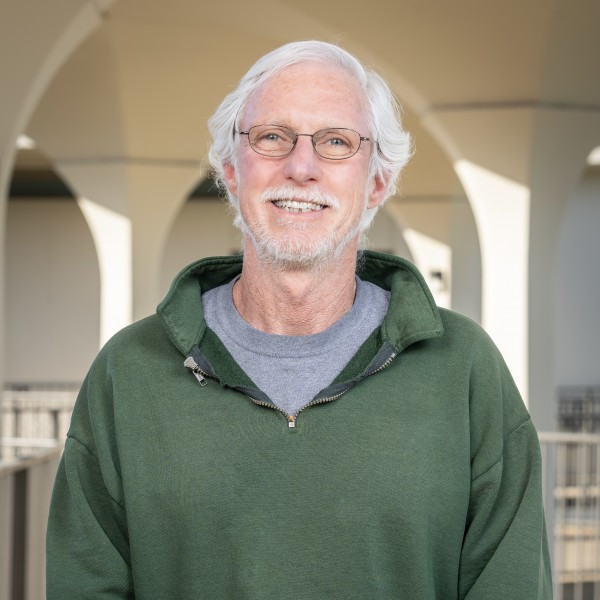
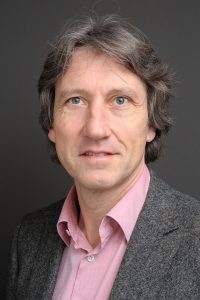
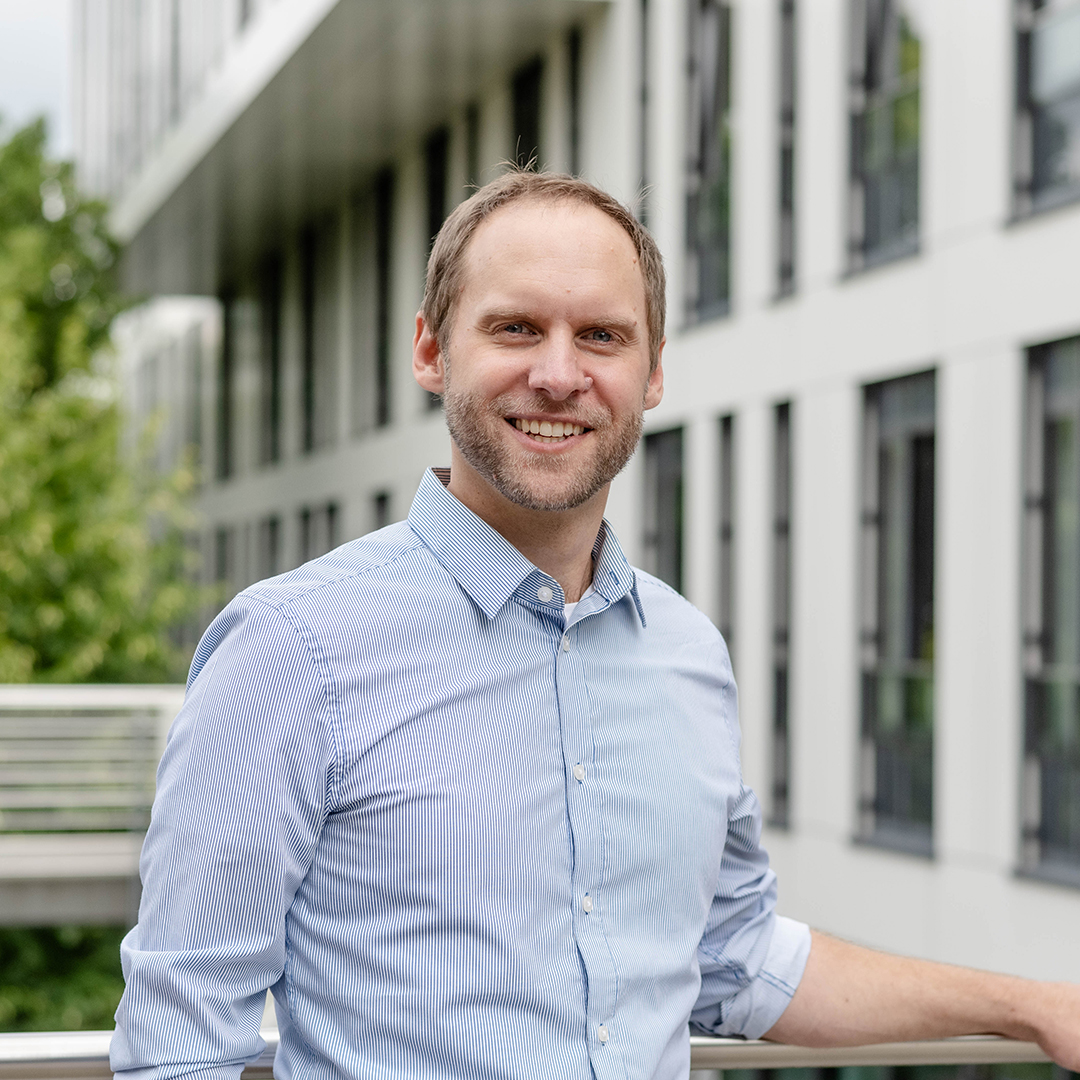
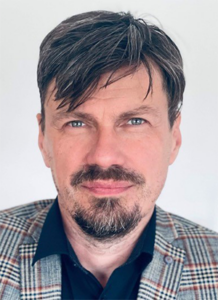
Jan Bernauer is an Associate Professor in the Department of Physics and Astronomy at Stony Brook University with a joint position at RIKEN BNL Research Center. He obtained his Ph.D. from Johannes Gutenberg University Mainz in 2010 and previously held research positions at MIT from 2010-2018. Education: Ph.D. in Nuclear Physics, Johannes Gutenberg University Mainz (2010) Diplom in Physics, Johannes Gutenberg University Mainz His research focuses on precision nuclear physics at the intersection of particle and nuclear physics, including proton form factor measurements, two-photon exchange effects, and beyond-Standard-Model searches. Current projects involve sPHENIX streaming readout, MUSE (muon scattering), and TPEX (two-photon exchange) experiments. Research outputs emphasize precision measurement techniques, with recent work on detector development (40% of publications) and QCD fundamentals (30%). Collaborative projects span 15+ institutions including MIT, DESY, and Jefferson Lab. Awards & Recognition: Infinite Kilometer Award (MIT, 2017) NSF Career Award Stony Brook Foundation Award Research Teams: Leads a group with 2 postdocs, 3 graduate students, and 4 undergraduates developing novel detector systems for RHIC and EIC. Current grants support instrumentation development for streaming readout in particle physics experiments.
Lekha Adhikari is a Teaching Professor in the Department of Physics and Astronomy at Iowa State University. Her research focuses on theoretical nuclear and particle physics, particularly using light-front quantization methods to study hadron structure, angular momentum distributions, and quark-gluon dynamics. She has contributed extensively to understanding parton distributions, spin structures of mesons, and heavy quarkonia physics. Her work bridges advanced computational techniques with fundamental questions in quantum chromodynamics. Her research interests include: Light-Front Quantization and Basis Expansion Methods Generalized Parton Distributions and Form Factors Angular Momentum Decomposition in Hadrons Heavy Quarkonia and Hadron Spectroscopy Recent publications emphasize advancements in basis light-front quantization frameworks and their applications to transverse spin physics and hadron decay mechanisms. No scientific awards or grants are explicitly listed in the provided information. She advises no students in the given data. Her academic contributions are centered at Iowa State University's Physics Department with no secondary affiliations noted.
Ian M. Lewis is an Associate Professor in the Department of Physics & Astronomy at the University of Kansas, with a focus on Theoretical High Energy Physics and Particle Physics. He has held academic positions since 2011, including Assistant Professor and Associate Professor roles, and maintains affiliations with the Pittsburgh Particle physics Astrophysics and Cosmology Center (PITT PACC) as an Associate Member since 2016. Education PhD in Physics, University of Wisconsin-Madison BS in Mathematics, University of Kansas (with Honors and Highest Distinction) BS in Physics, University of Kansas (with Honors and Highest Distinction) His research centers on theoretical high energy physics, particularly searches for new physics at the Large Hadron Collider (LHC). Key areas include proposing novel methods for new physics discovery, analyzing new physics effects in Standard Model precision measurements, and performing precision calculations of Standard Model processes. These efforts aim to address unresolved phenomena like dark matter, dark energy, matter/antimatter asymmetry, and neutrino masses. His work is structured around three main prongs: developing innovative search strategies for new physics at the LHC, exploring how new physics might manifest in precision studies of the Standard Model, and refining predictions for Standard Model processes to distinguish genuine anomalies from known effects.
Aleksey Cherman is an Assistant Professor in the School of Physics and Astronomy at the University of Minnesota. His research focuses on theoretical aspects of quantum field theory, nuclear theory, and particle physics with particular emphasis on Quantum Chromodynamics (QCD). Cherman's research interests span quantum field theory, nuclear theory, QCD, particle theory, gauge theory, baryon physics, and fermion physics. His work particularly emphasizes the large N limit, confinement phenomena, and symmetry structures in quantum field theories. He investigates fundamental questions about the nature of strong interactions, string theory approaches to QCD, and non-perturbative methods in gauge theories. Analysis of his recent publications reveals a strong focus on confinement mechanisms, symmetry structures in quantum field theories, and the interplay between gauge theories and string theory. His work often explores the large N limit of QCD, 1-form symmetries, and non-perturbative aspects of quantum field theories. Recent research has particularly emphasized the connections between confinement, symmetry, and the structure of gauge theories in various dimensions. Simons Collaboration on Color Confinement and QCD Strings (2022-2026) As Principal Investigator of the Simons Collaboration on Color Confinement and QCD Strings, Cherman leads a major research initiative focused on understanding the fundamental mechanisms of color confinement in quantum chromodynamics and the string-theoretic approaches to describing QCD phenomena. His research program involves both analytical and numerical approaches to non-perturbative quantum field theory problems.
Bernd Surrow is the Laura H. Carnell Professor of Physics at Temple University, leading research in high-energy nuclear physics and particle detector development. His work focuses on proton structure, Quantum Chromodynamics (QCD), and electroweak interactions through experiments at CERN, RHIC, and HERA. He is a key contributor to the future Electron-Ion Collider (EIC) project and has pioneered advanced detector technologies like micro-pattern gas detectors. Surrow holds a PhD from the University of Hamburg and multiple degrees from Temple University’s Fox School of Business, reflecting his interdisciplinary expertise. Education Highlights: Ph.D. in Physics, University of Hamburg (1998) Masters in Physics, Stony Brook University (1993) M.S. Business Analytics & MBA (Finance), Temple University Fox School of Business (2022-2023) Research Interests: Surrow’s experimental program examines fundamental QCD phenomena using high-energy colliders. Key areas include: Proton spin/mass distribution via jet and W/Z boson production Low-x physics and Color-Dipole models Heavy-ion collisions at RHIC (STAR experiment) Detector development for EIC and LHC Awards & Recognition: APS Fellow (2019) Goldhaber Distinguished Fellowship (2002-2003) Multiple Temple University teaching/awards Collaborations: Surrow leads international teams on STAR, ZEUS, and EIC projects, emphasizing synergy between theory and experiment to decode proton substructure and QCD dynamics.
Benjamin Grinstein is Distinguished Professor of Physics at UC San Diego, specializing in theoretical particle physics with focus on weak interactions and quark decays. His research addresses fundamental parameters in the Standard Model through studies of bottom quark decays and mixing angles. Elected AAAS Fellow and recipient of the Mexican Physical Society Medal, his work significantly contributes to understanding flavor anomalies. Key publications explore tetraquark structures, lepton flavor violation, and dark matter capture mechanisms. Recent theoretical frameworks employ Hilbert series to examine minimal flavor violation scenarios beyond the Standard Model.
Robert Szafron serves as a Scientist in the High Energy Theory group at Brookhaven National Laboratory's Physics Department since 2021, having progressed from Assistant Scientist (2021-2022) to Associate Scientist (2023-2024) before attaining his current position in 2025. Prior to BNL, he held research appointments at CERN (Senior Research Fellow, 2019-2020), TU Munich (Postdoctoral Fellow, 2016-2019), and the University of Alberta (Postdoctoral Fellow, 2012-2016). His research centers on theoretical high-energy physics with core expertise in collider physics , precision computations , and effective field theories . Specialized areas include bound state physics, QCD and QED corrections, power corrections, and gravitational soft theorems. His methodological approach combines advanced perturbative techniques with resummation methods to address precision Standard Model calculations and beyond-Standard-Model phenomena. Analysis of his publication record (2011-2023) reveals consistent contributions to leading journals like Journal of High Energy Physics and Physical Review Letters, with recent work focusing on N3LO cross sections, muon g-2 anomalies, subleading-power corrections in B-physics, and wino dark matter calculations. His research demonstrates strong international collaboration patterns and addresses critical precision frontiers in particle physics. No scientific awards were mentioned in the available documentation. Information regarding student advising, research grants, or specific mentorship activities was not provided in the source materials. Szafron operates within Brookhaven National Laboratory's High Energy Theory group, a U.S. Department of Energy national lab facility specializing in theoretical particle physics. His work contributes to BNL's broader mission in advancing fundamental understanding of particle interactions through rigorous mathematical frameworks and computational techniques.
Jesse Thaler is a Professor of Physics at the Massachusetts Institute of Technology (MIT), where he has been a faculty member since 2010. He is affiliated with the MIT Center for Theoretical Physics - a Leinweber Institute (CTP-LI), the Laboratory for Nuclear Science (LNS), the Statistics and Data Science Center (SDSC), and the Institute for Data, Systems, and Society (IDSS). Since 2020, he has served as the inaugural Director of the NSF Institute for Artificial Intelligence and Fundamental Interactions (IAIFI). Thaler received his Sc.B. in Math/Physics from Brown University in 2002, followed by a Ph.D. in Physics from Harvard University in 2006. From 2006 to 2009, he was a Miller Research Fellow at the University of California, Berkeley. His research focuses on theoretical particle physics, particularly on fusing quantum field theory with machine learning techniques to address fundamental physics questions. His work spans three main areas: Data Science and AI/ML applications in particle physics, Collider Physics and QCD, and Beyond the Standard Model physics. He is an expert in jet physics, which involves studying collimated sprays of particles produced at the Large Hadron Collider (LHC), and he investigates jet substructure to enhance searches for new phenomena and understand gauge theory dynamics. His research also explores strategies for probing dark matter at the LHC and theoretical structures of supersymmetry. Data Science and AI/ML: Merging deep learning with physics principles for improved particle physics analysis Collider Physics and QCD: Developing new theoretical frameworks for analyzing collider data Beyond Standard Model: Exploring dark matter detection strategies and theoretical extensions to the Standard Model Thaler has received numerous prestigious awards including being named an American Physical Society (APS) Fellow in 2022 and receiving a Simons Investigator Award in the same year. Other notable honors include the Fermilab Distinguished Scholar (2018-2020), Simons Fellowship in Theoretical Physics (2018), Frank E. Perkins Award for Excellence in Graduate Advising (2017), and the Presidential Early Career Award for Scientists and Engineers (2012). As an advisor, Thaler has mentored numerous Ph.D. students, postdoctoral researchers, and undergraduate students. His research group has produced significant work in jet physics, machine learning applications for particle physics, and beyond the standard model physics. He has also secured substantial research funding through grants from the Department of Energy and other agencies. Thaler leads the Thaler Research Group at MIT and serves as Director of the NSF AI Institute for Artificial Intelligence and Fundamental Interactions, which brings together researchers from MIT, Northeastern University, Harvard University, and Tufts University to advance AI research with applications to fundamental physics.
Mike Lisa is a Professor of Physics at The Ohio State University, specializing in nuclear and high-energy physics. His research focuses on quark-gluon plasma studies through heavy ion collisions and intensity interferometry applications in astrophysics. He collaborates with major facilities like RHIC, LHC, and VERITAS. Education: Ph.D. (Michigan State, 1993), M.A. (Stony Brook, 1990), B.S. (Notre Dame, 1988) Key Roles: Member of STAR and VERITAS Collaborations Research interests include hyperon polarization, vorticity in quark-gluon plasma, and adapting interferometry for astronomical imaging. Awards include APS/AAAS Fellowships, Sambamurti Prize, and multiple teaching recognitions. Publications span quark-gluon plasma dynamics, femtoscopy techniques, and astrophysical interferometry. Active in education through textbook authorship and puzzle-solving projects.
Prof. Hartmut Wittig is a Full Professor at the Institute of Nuclear Physics, Johannes Gutenberg University Mainz since 2005. He leads the Cluster of Excellence PRISMA+ (Precision Physics, Fundamental Interactions and Structure of Matter). His research focuses on Lattice QCD, hadron structure, and precision calculations of the muon's anomalous magnetic moment. Wittig holds a PhD from the University of Hamburg (1992) and habilitation in theoretical physics (1998). He has held positions at the University of Southampton (1992–1995), DESY-Zeuthen (1995–1996), and the University of Oxford (1996–2000 as PPARC Advanced Fellow). His research interests include lattice QCD applications to hadron spectroscopy, muon g−2, and precision electroweak observables. Notable achievements include pioneering work on the hadronic vacuum polarization contribution to the muon’s magnetic moment and advancing machine learning techniques in lattice calculations. He has advised over 20 PhD students, many focusing on lattice QCD and precision physics. Awards include CERN Scientific Associate (1999/2000) and a teaching award from Mainz University (2013). Wittig’s lab contributes to global initiatives like the FLAG (Flavour Lattice Averaging Group) and collaborates on projects such as the Muon g−2 experiment. His work bridges theoretical calculations with experimental precision demands in particle physics.
Jeremiah Mans is a Professor and Associate Head in the School of Physics and Astronomy at the University of Minnesota, Twin Cities. He is a leading experimental particle physicist working on the Large Hadron Collider’s CMS experiment at CERN, driving searches for new physics, precision measurements of the Higgs and Z bosons, and advanced detector R&D for the High-Luminosity LHC upgrade. Research Focus Searches for heavy right-handed neutrinos and W bosons in left-right symmetric extensions of the Standard Model. Higgs boson physics, especially in the H→ZZ channel. Precision measurements of Z/Drell–Yan processes to probe proton structure. Design and upgrade of the Hadron Calorimeter readout and trigger electronics. Major Grants & Projects LDMX: Electron Missing-Momentum Search for Sub-GeV Dark Matter – PI, DOE-funded (2020-2025). US CMS HL-LHC Upgrades – Co-I, NSF & DOE (2020-2026). Endcap Calorimeter Upgrade for HL-LHC – Co-PI, Fermilab/DOE (2019-2025). Physics at the Energy Frontier: CMS at the LHC – PI, DOE (2014-2026). 2023 Distinguished Research Award – PI, Fermilab/DOE (2023-2024). Scientific Recognition 2023 Distinguished Research Award, Fermilab & DOE. Over 1,400 peer-reviewed publications in high-energy physics. Active leadership roles within the CMS Collaboration and US detector-upgrade consortia. He mentors a sizable research group at Minnesota, contributing significantly to training the next generation of particle physicists.
Prof. Dr. John Bulava is a Professor of Theoretical Hadron Physics at Ruhr University Bochum, affiliated with the Faculty of Physics and Astronomy. His research focuses on computer simulations of the strong nuclear force using lattice Quantum Chromodynamics (QCD) to study hadron properties and interactions, particularly hyperon scattering processes relevant to neutron stars. Prof. Bulava holds a B.Sc. in Physics and Mathematics from The George Washington University, an M.Sc. from Carnegie Mellon University, and a Ph.D. in Nuclear and Particle Physics from Carnegie Mellon University under Prof. Colin Morningstar. His research explores the dynamics of quarks within protons and neutrons, with special attention to how changes in fundamental constants like quark masses affect physical phenomena. Computational approaches form the cornerstone of his investigations into quantum field theories. Prof. Bulava's recent publications demonstrate consistent focus on resonance states and scattering processes in particle physics, employing lattice QCD methodologies. Key themes include baryon/meson resonances, finite-volume spectral analysis, and coupled-channel scattering studies. He has held positions at DESY (Germany), CERN (Switzerland), Trinity College Dublin (Ireland), and University of Southern Denmark before joining Ruhr University Bochum in 2023.
Dr. Vladimir Pascalutsa is a Staff Scientist at the Institute of Nuclear Physics, Johannes Gutenberg-Universität Mainz, Germany. He holds a PhD in Theoretical Physics from Utrecht University (1998) and has held positions at NIKHEF (Netherlands), Flinders University (Australia), Ohio University (USA), and the European Centre for Theoretical Studies in Nuclear Physics (ECT*, Italy). His research focuses on QCD, hadron structure, dispersion relations, chiral perturbation theory, and light-by-light scattering effects in precision experiments like muon g-2. He has advised PhD students Nadia Krupina and Franziska Hagelstein. His work includes contributions to lattice QCD calculations, muonic hydrogen spectroscopy, and theoretical frameworks for nuclear structure. Key roles include: Staff Scientist, University of Mainz (2008–present) Assistant Professor, ECT* Trento (2006–2008) Research Associate Professor, College of William and Mary (2003–2006) Research Interests: QCD and hadron structure Dispersion relations and sum rules Chiral effective field theories Lattice QCD applications Muon hydrogen precision measurements Publications emphasize advancements in muon g-2 calculations, hyperfine splitting in hydrogen-like atoms, and nuclear structure effects in QED. His 2024 textbook 'Causality Rules' formalizes dispersion theory concepts.
Kenneth A. Bloom is a Professor in the Department of Physics and Astronomy at the University of Nebraska-Lincoln . His research focuses on experimental high-energy particle physics , particularly the study of top quarks and their weak interactions . He is actively involved in the D0 experiment at Fermilab and the CMS experiment at CERN, collaborating with faculty members Dan Claes, Aaron Dominguez, and Greg Snow.
Gary Goldstein is a Professor of Physics & Astronomy at Tufts University's School of Arts and Sciences. His research focuses on theoretical high-energy and nuclear physics, including quantum chromodynamics (QCD), spin dynamics, and the Standard Model. He also explores science policy, nuclear non-proliferation, and science education. Goldstein has held faculty roles at Tufts since 1970, progressing from Assistant to Associate and full Professor. Education: PhD (1969), SM (1964), and SB (1962) in Physics from the University of Chicago. Research interests span particle interactions at medium/high energies, gluon spin distributions, and applications of quantum computing in physics. He has published extensively on topics like generalized parton distributions (GPDs), light-front quantization, and experimental analyses using colliders like the LHC and JLab. Goldstein has secured grants from the U.S. Department of Energy and NSF for quantum simulation and science education initiatives. Teaching includes advanced courses in quantum theory, electromagnetism, and thesis supervision. He actively participates in science policy events, advocating for nuclear disarmament and peace through initiatives like MIT's 'Reducing the Threat of Nuclear War' conferences. His work bridges theoretical physics innovations with societal impact.