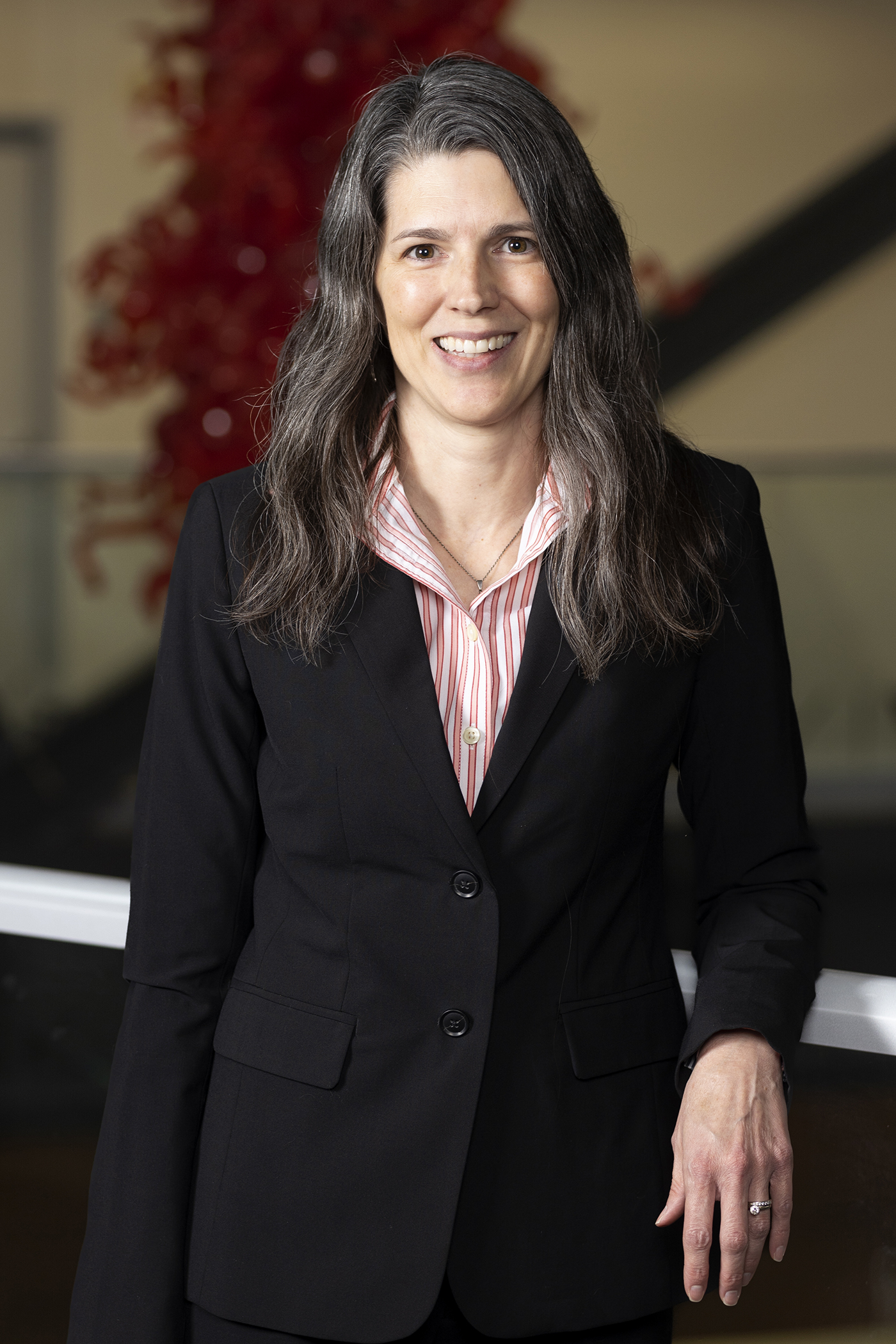
Deanna House is an Assistant Professor in the Information Systems and Quantitative Analysis department at the University of Nebraska at Omaha's College of Information Science and Technology. She co-directs the Nebraska Deterrence Lab and serves as a research fellow for NSRI, along with mentoring the USSTRATCOM Fellows program. Her academic journey includes a PhD in Information Systems from the University of Texas at Arlington and prior roles in Human Resources as a Business Systems Analyst. Bachelor of Science, Bellevue University, Management of Human Resources (2002) Master of Science, University of Nebraska at Omaha, MIS (2006) PhD, University of Texas at Arlington, Information Systems and Operations Management (2013) Dr. House specializes in behavioral cybersecurity, privacy, and quantitative risk management, with a focus on deterrence in critical infrastructure. Her research bridges individual user behavior with organizational and governmental security strategies. Recent publications highlight trends in cybersecurity education, phishing behavior, AI ethics, and infrastructure protection. She has contributed to journals like Computers & Security and Journal of Cybersecurity , with 2025 work on DoD cyber deterrence. NSRI Research Fellow Her teaching covers Risk Management, Cybersecurity, and Systems Analysis, utilizing tools like Visual Paradigm Online for technical diagrams. She actively presents at conferences such as ICIS and DSI, advocating for ethics and workforce development in technology.
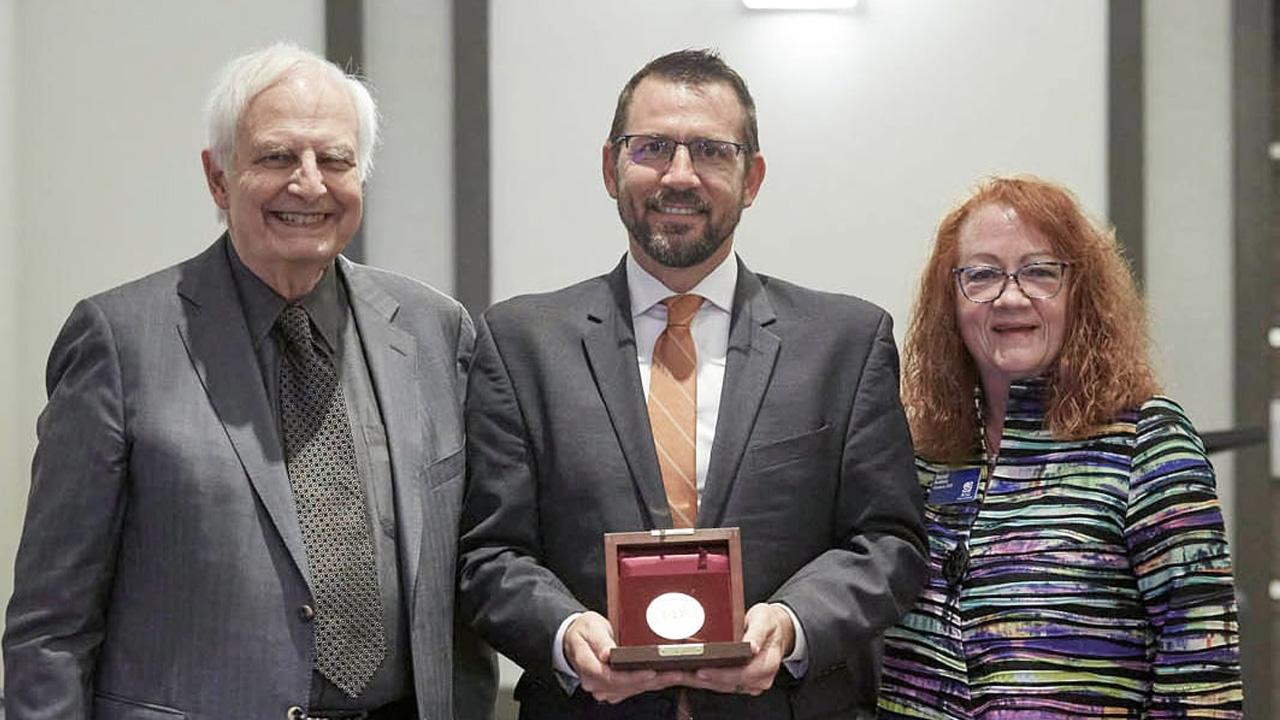
Chad M. Laux is an Associate Professor at Purdue University's Department of Computer and Information Technology within the Purdue Polytechnic Institute. He serves as the Graduate Education Chair for Computer & Information Technology and Co-Lead of Purdue University's Circular Economy Systems initiative at the Purdue University Institute for a Sustainable Future. Dr. Laux is also President-Elect of IISE SEMS (Institute of Industrial and Systems Engineers - Service Enterprise Management Society). Dr. Laux earned his Bachelor of Science and Master of Science degrees in Industrial Technology from Purdue University in 1995 and 1999 respectively, followed by a PhD in Industrial and Agriculture Technology from Iowa State University in 2007, where he received the Silvius-Wolansky Fellowship for Outstanding Dissertation. As an internationally recognized expert in Lean Sustainability and Six Sigma Systems, Dr. Laux's research integrates Lean principles with sustainability practices to address environmental challenges through circular economy models. His work spans Operations Excellence, Industry 4.0, and Quality 5.0 applications across manufacturing, healthcare, and higher education sectors. His publications demonstrate how organizations can achieve both operational efficiency and environmental responsibility through systematic process improvements. Dr. Laux's scholarly contributions have earned him numerous prestigious awards including the American Society for Quality's Crosby Medal, the Walter E. Masing Book Prize, and multiple International Book Awards. His recent book "Lean Sustainability: A Pathway to a Circular Economy" (2023) received the International Book of the Year Award from the International Lean Six Sigma Institute. With over 200 published works and experience chairing or serving on more than 100 graduate student committees, Dr. Laux maintains active roles as Associate Editor of the International Journal of Lean Six Sigma and Education Chair for the American Society for Quality. His professional affiliations include the American Society for Quality (ASQ), American Society for Engineering Education (ASEE), Association of Technology, Management, and Applied Engineering (ATMAE), and the Institute for Industrial and Systems Engineers (IISE). As a Certified Six Sigma Black Belt with industry experience from General Electric and Caterpillar Inc., Dr. Laux bridges academic research with practical industry applications, focusing on sustainable business practices that enhance both performance and environmental outcomes.
Kathryn Seigfried-Spellar serves as an Adjunct Professor in the cyberforensics program within the School of Applied and Creative Computing at Purdue University's Polytechnic Institute. She holds a prominent international reputation as an expert in the psychosocial and technological factors associated with cybercriminal behavior, with particular expertise in the criminological characteristics and grooming strategies of online child sex offenders. Her professional appointments include membership in the Tippecanoe High Tech Crime Unit and Special Deputy status for the Tippecanoe County Prosecutor's Office. Dr. Seigfried-Spellar completed her academic training at Purdue University, earning a PhD in Technology with concentration in Cyberforensics and Psychology (2011), an MA in Forensic Psychology from City University of New York, John Jay College of Criminal Justice (2007), and a BA in Psychology and Law and Society from Purdue University (2005). Her research interests focus on the psychological aspects of cybercrime, particularly the personality and motivation of cyberdeviants, child sexual exploitation, and behavioral analysis of digital evidence. Her work bridges the gap between psychological theory and digital forensics practice, with significant contributions to understanding online child sex offenders' behaviors and characteristics. She has conducted international research including a 2022-2023 Fulbright Scholar position at the University of Valencia, Spain, studying criminological differences in online child sex offenders, and has been awarded the International Fellows Award for Summer 2024 at the University of Adelaide, Australia. Dr. Seigfried-Spellar's scholarly contributions have been recognized with numerous awards including the 2023 Jefferson Award, 2022 University Faculty Scholar designation at Purdue, the 2022 Outstanding Early Career Achievement in Forensic Science Award from the American Academy of Forensic Sciences, and multiple Outstanding Research Awards from the Digital and Multimedia Sciences Section of the American Academy of Forensic Sciences (2015-2018). She serves as the Chair of the Digital and Multimedia Sciences section of the American Academy of Forensic Sciences and is a Fellow of this organization. Her professional affiliations also include membership in the American Psychological Association, American Psychology-Law Society, and International Association of Law Enforcement Intelligence Analysts. In December 2023, she co-founded and co-organized the Child Sexual Abuse Reduction Research Network workshop at the University of Adelaide, bringing together academics, nonprofit institutions, and law enforcement professionals focused on combating online child sexual abuse.
Dr. Katrien Pype is an Associate Professor at the Department of Social and Cultural Anthropology at KU Leuven University and an Honorary Research Fellow at the Department of African Studies and Anthropology at the University of Birmingham. Her work bridges anthropology, media studies, and African studies with a particular focus on urban Kinshasa in the Democratic Republic of Congo. She has established herself as a leading scholar in the anthropology of communication technologies, Pentecostalism, and urban social dynamics in Central Africa. Dr. Pype received her academic training at KU Leuven, earning an MA in Literature (German literature), an MA in Social and Cultural Anthropology, and an Advanced Masters in Social and Cultural Anthropology, before completing her PhD in Anthropology in 2008. Her doctoral research examined the production of evangelizing TV drama in Kinshasa. Following her PhD, she held prestigious postdoctoral positions including a Newton International Fellowship at the University of Birmingham (2009-2011) and a Marie Curie Fellowship at MIT and KU Leuven (2011-2013). Dr. Pype's research centers on the social and cultural contours of communication in urban Africa, particularly examining how people make sense of communication technologies in their daily lives and how these technologies impact urban lifeworlds. Her work spans multiple interconnected themes: the anthropology of Pentecostal media and religious expression, digital cultures and social media in African urban contexts, intergenerational dynamics and aging in relation to technology, and the politics of urban space and state-citizen relations. She approaches these topics through long-term ethnographic fieldwork in Kinshasa, employing participant observation and in-depth interviews to understand communication practices and their broader social implications. Her extensive publication record reveals a scholar deeply engaged with theoretical developments in media anthropology while maintaining empirical grounding in Central African contexts. Over time, her work has evolved from studying television media to examining mobile phone cultures, digital technologies, and their implications for social relations, political expression, and religious practice. A consistent thread throughout her scholarship is attention to how communication technologies mediate social relations, power dynamics, and cultural transformations in urban African settings. Newton International Fellowship (2009-2011) Marie Curie Fellowship (FP7-2009) (2011-2013) Odysseus grant (FWO G.A005.14N) FWO-ERC-Runner Up Budget (FWO G.0.E65.14N) Dr. Pype actively mentors students interested in popular culture, technology and society interactions, gender, and aging. She leads a research team working on technology cultures in urban DR Congo and beyond (1960-present), which includes five doctoral and postdoctoral scholars. This project, funded by an Odysseus grant and an FWO-ERC-Runner Up Budget, produces ethnographies of medical, energy, and communication cultures in Kinshasa, Kikwit, and Nakuru. Additionally, she is involved in a comparative research program on New Media Practices in a Changing Africa, funded by the Norwegian Research Council. Beyond her formal mentorship, she fosters academic community through the Congo Research Network, which she founded in 2009 to connect scholars working on the Democratic Republic of Congo. Dr. Pype directs the Congo Research Network, which brings together humanities scholars studying the Democratic Republic of Congo. Her current research team investigates technology cultures across urban Africa, examining how digital technologies intersect with medical practices, energy systems, and communication patterns. This work positions her at the forefront of scholarship on digital transformations in African urban contexts, while maintaining deep connections to historical trajectories and local cultural practices.
Professor Jakob Edler holds dual roles as Professor of Innovation Policy and Strategy at the University of Manchester and Executive Director of the Fraunhofer Institute for Systems and Innovation Research. He previously led the Manchester Institute of Innovation Research (MIoIR) from 2011 to 2019. His research focuses on governance of innovation systems, public procurement, and internationalization of R&D. He has advised numerous national and international bodies, including the EU Commission and the German Science Council. Edler earned a PhD in Political Science (with distinction) from the University of Mannheim, alongside master’s degrees in Business Administration and Political Science/Economic History. Education: PhD in Political Science (University of Mannheim, Distinction) Master’s in Business Administration/Management (University of Mannheim) Master’s in Political Science/Economic History (University of Mannheim, Dartmouth College) His research explores policy evaluation, demand-driven innovation, and sustainable development goals. Notable projects include the EU-funded SIPER evaluation initiative and the OSIRIS center analyzing science-society impacts. Edler has authored over 214 publications, including works on governance frameworks and procurement strategies. He received accolades such as membership in acatech (German National Academy) and leadership roles in global forums like Eu-SPRI. His work contributes to UN SDGs through policy frameworks for equitable innovation systems.
Shurui Zhou is an Assistant Professor at the University of Toronto , with primary appointment in the Department of Electrical & Computer Engineering and cross-appointments in the Department of Computer Science and the Department of Mechanical & Industrial Engineering . She is also affiliated with the Schwartz Reisman Institute and a member of the Data Sciences Institute . Zhou directs the FORCOLAB , focusing on enhancing collaboration in distributed software teams, especially in open-source and AI-enabled systems development. Her research integrates software engineering principles with human collaboration insights from organizational behavior, aiming to improve collaboration efficiency through tooling and interdisciplinary methods. Recent publications (2023-2025) explore LLM integration in software development , sustainability in scientific open-source communities , and collaborative challenges in computer-aided design . Education: PhD (2020) from Carnegie Mellon University's Software and Societal Systems Department , MSc from Peking University , BSc from Xi'an Jiaotong University Scientific Awards: Gordon Slemon Teaching of Design Award (2022) Grants: Collaborator on NSERC Alliance-Mitacs Accelerate Grant (2025) for LLM analysis in political data Her lab, FORCOLAB, develops tools like forks-insight.com to analyze GitHub forks and Redundant PR detection bots . Zhou organizes events like the Responsible LLM-Human Collaboration Hackathon (2024) and actively serves on conference committees including ICSE 2025 and ICSME 2024 .
Thomas Cokelaer is a researcher at the Institut Pasteur, affiliated with the Bioinformatics and Biostatistics HUB and based at the Platform Biomics. Since October 2018, he has led the SALSA (dry-lab) group, focusing on bioinformatics software development and data analysis. His interdisciplinary background spans astronomy, plant modeling, systems biology, and drug discovery. Institution: Institut Pasteur Unit: Bioinformatics and Biostatistics HUB Platform: Platform Biomics Group: SALSA (dry-lab group) leader His research interests center on bioinformatics, next-generation sequencing (NGS) analysis, machine learning, data visualization, and reproducible research. He develops and maintains several widely used open-source tools including Sequana (NGS pipelines), BioServices (biological web services), Bioconvert (format conversion), Sequanix (GUI for Snakemake), and GDSCTools (pharmacogenomics). He is deeply committed to promoting reproducibility in computational research through initiatives like reprohackathons. The recent publications reflect a strong trend in computational biology, with a focus on developing bioinformatics methodologies, improving data analysis workflows, and applying these tools to diverse biological problems such as fungal pathogenesis, cancer pharmacogenomics, mitochondrial metabolism, and viral evolution. The work spans genomics, transcriptomics, systems biology, and software engineering. He has contributed to numerous scientific software projects as Principal Investigator, including Sequana, Bioconvert, GDSCTools, DREAMTools, and Sequanix. He has also taught courses in scientific programming with Python and reproducible data analysis at the Institut Pasteur. His collaborative network includes researchers from EMBL-EBI, Sanger Institute, INRIA, and international partners within the Pasteur Network. The SALSA group hosts master’s students and visiting researchers annually.
Ian Roy serves as the Executive Director of Design and Innovation and the Robert I. Mallet Senior Lecturer in Engineering at Brandeis University. He holds a faculty appointment in the Engineering department and collaborates with the Senior Leadership team in the Brandeis Library. Roy teaches courses in Business, Engineering, and Anthropology, and leads the Brandeis Design and Innovation department (BDI), which manages multiple maker spaces and provides cutting-edge technology services to support teaching, learning, and research across campus. Education: Brandeis University, B.A. in Philosophy and Economics with a concentration in Film Studies (2005) Roy's research and professional work centers on digital fabrication, rapid prototyping, and the integration of emerging technologies in education and social impact initiatives. His expertise includes 3D printing, laser cutting, CNC milling, 3D scanning, robotics, drone technology, and design thinking. He emphasizes the policy implications of technology deployment and applies these skills to foster entrepreneurship and social innovation, notably through the DeisHacks social impact hackathon. Scientific Awards: No scientific awards were mentioned in the provided text. Roy actively mentors students through multiple channels. He is the staff advisor for Deis3D.org (the Brandeis 3D printing club), the Brandeis Aviation Club, and the Brandeis Prosthesis Club. He co-founded the DeisHacks hackathon and teaches several courses that involve hands-on project development, guiding students in rapid prototyping and entrepreneurship. His teaching spans the Brandeis International Business School, the Engineering department, and the Anthropology department. Roy leads the Brandeis Design and Innovation (BDI) department, which operates the Brandeis MakerLab, Automation Lab, Digital Scholarship Lab, 3D Printer Farm, and the Engineering Classroom. The BDI team provides comprehensive support for CAD/CAM workflows, 3D scanning, data visualization, GIS, XR development, machine learning, robotics prototyping, and drone use (including FAA 107 licensing). BDI's services enable faculty and students to incorporate emerging technologies into their academic and research activities.
Benjamin Mako Hill is an Associate Professor in the Department of Communication at the University of Washington, with adjunct roles in Human-Centered Design & Engineering, Computer Science & Engineering, and the Information School. He is also a Faculty Associate at Harvard’s Berkman Klein Center and a Fellow at Princeton’s Center for Information Technology Policy (2023–2024). His research focuses on online communities, peer production (e.g., Wikipedia, Linux), and how technology design influences social outcomes. He holds a PhD from MIT in Management and Media Arts & Science. Education: PhD (2013) and MS (2007) from MIT, BA (2003) from Hampshire College. Awards include the Dordick Award for Best Dissertation (2013) and multiple best paper honors at CHI and CSCW conferences. Research interests span digital public goods, collaborative knowledge systems, and socio-technical dynamics. His work has been supported by grants from the National Science Foundation (e.g., $549,959 CAREER grant for digital knowledge commons research) and the Alfred P. Sloan Foundation. Publications span journals like Proceedings of the ACM on Human-Computer Interaction and Journal of Computer-Mediated Communication , with over 50 peer-reviewed articles. He co-founded the Community Data Science Collective and leads projects on open source sustainability, governance of digital communities, and computational social science.
Alireza Jaribion is a Visiting Professor in the Department of Industrial Engineering and Management at Aalto University. His research focuses on digital technologies in operations management, including Digital Twin applications, IoT integration, and additive manufacturing. He holds a PhD in Production Economics (Tekn. toht., tuotantotalous) from Aalto University (2025) and a Master's in Engineering and Technology from Islamic Azad University Dubai (2015). Key research interests include leveraging emerging technologies like NFTs for IPR protection in manufacturing, analyzing mega hackathons for innovation mechanisms, and exploring digital twins for safety and energy management. His work addresses sustainable supply chains, crisis logistics during pandemics, and IoT-enabled smart environments such as saunas and older homes. Notable contributions include case studies on hydrogen safety systems, bio-based packaging impacts, and energy management in smart buildings. He has presented at international conferences on topics ranging from bio-plastics supply chains to crowdsourcing in tech events. Research collaborations span academic and industry partners, with a focus on芬兰 institutions and international networks. Media coverage includes discussions on hackathon innovation mechanisms featured in technology publications.
Dr. Daniel Sodickson is a Professor of Radiology, Neuroscience and Physiology, and Biomedical Engineering at New York University. He serves as Vice Chair for Research in Radiology and directs the Bernard and Irene Schwartz Center for Biomedical Imaging and the Center for Advanced Imaging Innovation and Research. His work focuses on advancing biomedical imaging techniques to improve healthcare, particularly in MRI, PET, and CT technologies. He leads multidisciplinary teams developing methods for rapid, continuous imaging leveraging parallel imaging, compressed sensing, and AI. Dr. Sodickson’s research interests include AI-driven medical imaging, low-field MRI applications, and novel imaging sensors. He co-directs Tech4Health, fostering translational healthcare technologies. Notably, he pioneered the fastMRI initiative, an open dataset and benchmarks for accelerated MRI using machine learning. Key achievements include developing the fastMRI public dataset for knee and prostate imaging, and contributions to global AI events like the World’s Largest AI for Business Summit. His work addresses challenges in imaging speed, cost, and accessibility, with a focus on clinical translation. Dr. Sodickson has received prestigious recognition, including being named a Fellow of the National Academy of Inventors. His lab collaborations and grants emphasize interdisciplinary innovation, aiming to bridge imaging technology with clinical practice.
Bilal Ahmad serves as a Postdoctoral Researcher and Technology Lead for Software Solutions in Edtech at the Learnovate Centre, Trinity College Dublin, focusing on translating stakeholder needs into innovative web and mobile applications. Education: PhD in Software Engineering from Lero, the Irish Software Research Centre (University of Limerick) MSc in Computer Science BSc in Computer Science His research bridges Software Engineering and Human-Computer Interaction, with specialized expertise in Edtech, Smart Ageing, UX Research, and Global Software Development. He has extensive experience developing technology solutions for diverse user groups, notably creating a social volunteering network application for older adults during his PhD collaboration with IBM Ireland. His work emphasizes practical implementation of software solutions to address real-world challenges in aging populations and educational technology. Scientific awards: No specific awards documented in the source material. Advising and grants: No information provided regarding student supervision, research grants, or funding sources. Labs and Teams: Bilal is actively engaged with the Learnovate Centre (a Trinity College Dublin-affiliated Edtech research hub) and previously collaborated with IBM Ireland. He recently participated in NDRC Dublin's Pre-commercialisation program as part of a multi-disciplinary postdoctoral research team, while maintaining entrepreneurial involvement through hackathons and startup events.
Dr. Sandra Diaz Pier is a Scientific Lead at the Jülich Supercomputing Centre (JSC) within the Jülich Research Centre , Germany. Specializing in computational neuroscience , high performance computing (HPC) , and machine learning , she bridges neuroscience and advanced computational methods through her research. Education: B.Sc. in Electronic Systems Engineering, Mexico M.Sc. in Computer Science (focus: machine learning, quantum computing), Mexico Second M.Sc. in Electrical Engineering, Ontario, Canada Ph.D. in Computer Science, Germany (2021) Her research focuses on modeling and simulating brain dynamics and plasticity at multiple scales, leveraging HPC to accelerate large-scale neural network simulations. She actively contributes to EU projects like the Human Brain Project (HBP) , Virtual Brain Cloud , and EBRAINS 2.0 , emphasizing infrastructure development and educational training. Her work includes open-source tools such as the NEST simulator , The Virtual Brain , and L2L , enabling efficient parameter exploration and multiscale co-simulation frameworks. The 15 most recent publications highlight her interdisciplinary approach, spanning topics from quantum computing in biomolecular simulations to neural plasticity algorithms and cloud-based brain modeling . These articles reflect her expertise in integrating machine learning , multi-scale simulation , and HPC infrastructure for neuroscience challenges, including seizure propagation, Parkinson’s disease progression, and swarm intelligence in spiking networks. She leads technical coordination in projects like EBRAINS and serves as a task leader in the HBP infrastructure work package , while also organizing workshops and hackathons for open-source tools. Her role involves supporting domain scientists through methodological research and workflow optimization for brain simulations.
Kyle Montague is an Associate Professor in the School of Computing at Newcastle University, specializing in Human-Computer Interaction with a strong emphasis on accessibility, inclusive design, and community-centered technology development. His research bridges theoretical frameworks with practical applications to create more equitable technology experiences for marginalized communities. Montague completed his PhD at the University of Dundee in 2013 with research on 'SUM: an exploration of Shared User Models and interface adaptations to improve accessibility of mobile touchscreen interactions.' His academic trajectory shows a clear evolution from foundational work on accessibility technologies to more recent explorations of feminist ethics in community-based design. His research interests span multiple critical areas in contemporary HCI: developing accessible mobile interfaces for blind and visually impaired users, creating tools for citizen-led personalization of user interfaces, exploring digital civics and community engagement through technology, and investigating ethical frameworks for community-led design. Montague's work consistently emphasizes participatory approaches, centering marginalized communities in the design process to create technologies that truly serve their needs. An analysis of his recent publications reveals an evolving research trajectory from technical accessibility solutions toward more socially conscious design frameworks. While early work focused on practical accessibility tools (like non-visual text entry methods), his recent research engages with feminist care ethics, digital citizenship, and community-led technology development. This evolution reflects a growing emphasis on ethical considerations and social justice in HCI research, with increasing attention to AI's role in community engagement and ethical design practices. Montague has established significant collaborations with researchers across institutions, particularly with Hugo Nicolau, Tiago João Vieira Guerreiro, and Reem Talhouk. His work appears consistently in top-tier venues including CHI, ASSETS, and CSCW, demonstrating recognition by the HCI community for both technical innovation and socially impactful research. His lab at Newcastle University focuses on developing practical tools for community engagement while advancing theoretical frameworks for ethical technology design. Current projects include AI-generated tools for academic conferences, frameworks for feminist community-led ethics, and platforms for citizen-led interface personalization, all reflecting his commitment to democratizing technology development and ensuring it serves diverse community needs.
Kyle Montague is an Associate Professor at Northumbria University's Computer and Information Sciences Department. His research focuses on leveraging digital technologies to address social challenges, particularly for marginalized communities, aligning with UN Sustainable Development Goals like Education. He holds a PhD in Computing from the University of Dundee (2014) and a BSc (Hons) in Computer Science (2009). Montague's work spans Human-Computer Interaction, Accessibility, and Participatory Design. He develops tools like GitUI for democratizing user interfaces and KaraokAI for enhancing academic engagement. His research explores AI assistants, wearable technologies, and smartphone accessibility solutions. His recent publications (15 most cited) emphasize real-time web accessibility, community-led ethical frameworks, and collaborative futures in embedded research. He actively contributes to academic discourse through 82 research outputs and has received 11 prizes, including multiple Best Paper Awards (2020, 2022) and Diversity & Inclusion recognitions (2019, 2020). Education : PhD (Computing, University of Dundee), BSc (Computer Science, University of Dundee) Research : Human-Computer Interaction, Accessibility, Participatory Design Awards : Best Paper Awards (2020, 2022), Diversity & Inclusion recognitions (2019, 2020)