Sylvie Delacroix is the Inaugural Jeff Price Chair in Digital Law and Director of the Centre for Data Futures at King's College London. She is also a Visiting Professor at Tohoku University, focusing on bridging theory and practice in ethics and public policy initiatives. Her research spans Data & machine ethics Ethical agency and habit Social sustainability of data ecosystems Participatory infrastructure for AI systems Uncertainty communication in LLMs Legal theory and digital law Recent publications address LLM interfaces as transitional spaces for democratic revival and sustainable data rivers in generative AI. Her work has attracted significant grant funding from the Patrick J. McGovern Foundation, Wellcome Trust, and Omidyar Network. Scientific awards include the Leverhulme Prize Peter Birks 2d Prize for Outstanding Legal Scholarship Montgomery Fellowship at Dartmouth College She supervises PhD research on large language models and uncertainty communication, as well as habit in ethical lives. Her policy contributions include advising the Law Society of England and Wales on algorithmic justice systems.
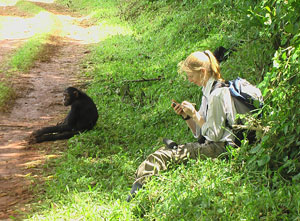
Dr. Catherine Crockford is Research Professor and Director of the Ape Social Mind Lab at the Max Planck Institute for Evolutionary Anthropology, affiliated with the Department of Human Behavior, Ecology and Culture. She co-directs the Tai Chimpanzee Project in Ivory Coast, studying habituated chimpanzee groups and sooty mangabeys. Her research examines primate social cognition, communication evolution, and neuroethology through behavioral observations, hormone sampling, and neuroimaging. Key interests include: Evolution of social bonding and cooperation mechanisms Maternal effects on offspring development Vocal communication and combinatorial signaling Neurobiological bases of social behavior Her publications demonstrate consistent focus on chimpanzee vocal combinatorics, stress physiology, social learning, and comparative neuroanatomy, often integrating field data with endocrine and imaging methodologies. She leads an ERC project investigating early-life influences on social skills and supervises 8 PhD students researching primate communication, social dynamics, and energetics. Laboratory infrastructure supports field endocrinology and collaborative neuroimaging studies.
Annemarie Kalis is an Associate Professor in Theoretical Philosophy at the Department of Philosophy and Religious Studies, Faculty of Humanities, Utrecht University. Her academic career spans over fifteen years with significant contributions to philosophy of psychology, action theory, and philosophy of mind. She maintains an active research profile with numerous publications in leading philosophy and interdisciplinary journals. Dr. Kalis's research primarily focuses on agency, normativity, and reasoning , with particular emphasis on self-control, akrasia (weakness of will), and the philosophical implications of ecological psychology. Her work often employs a neo-Wittgensteinian approach to mind-related phenomena and has increasingly engaged with Gilbert Ryle's ideas on reasoning and perception. She has developed a situated perspective on self-control that challenges traditional mechanistic understandings. Her scholarly output demonstrates a consistent trajectory from early work on akrasia and irrational behavior through to her current situated approach to self-control. The articles reflect a deep engagement with interdisciplinary perspectives, bridging philosophy with psychology, cognitive science, and even applications to mental health conditions like eating disorders. Her work shows increasing attention to ecological and situated approaches to philosophical problems. Dr. Kalis has received significant research funding, including an NWO-VENI grant (2014) for her project on the metaphysics of psychological attitudes and an NWO-VIDI project (2019-2024) titled 'Shaping our action space: a situated perspective on self-control.' These competitive grants from the Netherlands Organization for Scientific Research highlight the significance and innovation of her research program. She has contributed to major debates in philosophy of mind and psychology, including discussions on implicit bias, folk psychology, and the network approach to psychopathology. Her work often challenges reductionist approaches while developing nuanced philosophical frameworks for understanding human cognition and behavior. Dr. Kalis's research demonstrates how philosophical analysis can provide valuable insights for empirical research in psychology and cognitive science.
David Huber is a Professor in Psychology and Neuroscience at the University of Colorado. He holds a PhD from Indiana University (2000). His research focuses on human perception, memory, and decision-making from a computational perspective, integrating behavioral studies with neuroimaging techniques (fMRI, ERP) and computational models (Bayesian, neural networks). Key areas include visual cognition, spatial navigation models, memory retrieval dynamics, and priming effects. Education: PhD in Psychology from Indiana University (2000). Research emphasizes mechanisms underlying memory processes, perceptual adaptation, and the neural basis of cognitive functions. Recent work challenges traditional roles of hippocampal place/grid cells, proposing memory-centric models. He explores how perceptual fluency influences decision-making and juror cognition, with studies on serial dependence and gestalt principles in binocular rivalry. His neurocomputational methods include fMRI-based tuning function analysis and virtual electrophysiology modeling. Publications span over two decades, focusing on memory models (SAM-RI), neural habituation, and Bayesian modeling of brain activity. His work advocates for rigorous model-driven approaches in cognitive neuroscience.
Karin Peters is an Assistant Professor in the Cultural Geography Group at Wageningen University & Research, specializing in leisure, public space, diversity, and social integration. Her research focuses on how marginalized groups, particularly Muslim women and migrants, navigate leisure spaces in the Netherlands and Europe. She holds degrees in Agricultural Economics and Cultural Anthropology, blending interdisciplinary perspectives to study migration, urban environments, and cultural geography. Her work emphasizes the role of public spaces in fostering social cohesion and addressing exclusion. Key projects include analyzing the impact of weather on tourism experiences and the negotiation of identity among diasporic communities. Peters is part of the Mobilities cluster and serves as Editor-in-Chief of Vrijetijdstudies . Her research spans urban sociology, migration regimes, and the intersection of leisure with socio-cultural dynamics. Peters' publications address topics like multicultural neighborhood integration, gendered leisure constraints, and the commodification of landscapes in UNESCO Geoparks. She advocates for inclusive public spaces and sustainable tourism policies, contributing to both academic discourse and practical urban planning initiatives.
Dr. Terrance Fitzsimmons is an Associate Professor in Leadership at the University of Queensland Business School , with over 35 years as a Chartered Accountant. He serves as Managing Director of the Australian Gender Equality Council (AGEC) and holds advisory/board positions with Women and Leadership Australia and the Abbey Museum of Art and Archaeology . His research applies Pierre Bourdieu's theoretical frameworks to analyze gender inequality through concepts like field , capital , and symbolic violence . Key projects include the 'Filling the Pool' (2015) and 'Employer of Choice for Gender Equality' (2020) reports, addressing systemic workplace disparities. Recent publications focus on gendered leadership progression (2024), maverick-driven organizational change (2025), and Indigenous knowledge integration (2024). Collaborations with Dr. Miriam Yates and Professor Victor Callan examine CEO pathways, boardroom diversity, and pandemic impacts on work-life balance. Dr. Fitzsimmons supervises PhD projects on topics like Indigenous women's leadership and STEM diversity , with current grants including ARC Linkage Projects (2025-2028) for Indigenous environmental rangers' leadership amplification.
Annett Schirmer is a Professor and head of the Department of General Psychology II (Emotion and Motivation) at the University of Innsbruck, Austria, a position she assumed in 2022 after appointments at the Chinese University of Hong Kong (2017-2022), National University of Singapore (2006-2017), and the University of Georgia (2004-2006). Her research centers on nonverbal communication mechanisms, particularly vocal and tactile behaviors, and their impact on emotion processing and social interaction. Educational Background: PhD (2002) from Max Planck Institute for Human Cognitive and Brain Sciences, Germany Research Focus: Schirmer's work investigates affective touch and vocal emotion processing through behavioral and neurophysiological methods. Her lab examines how CT afferents mediate pleasant touch, cultural differences in touch perception, cross-species emotion communication (including human-dog interactions), and the role of musicality in vocal emotion recognition. Key methodologies include EEG, eye/body motion tracking, and cross-cultural experimental designs focused on health and well-being applications. Publication Trends: Recent work (2023-2025) emphasizes neural correlates of prolonged gentle stroking, human-animal touch dynamics, multisensory integration in attraction, and individual differences in vocal emotion processing. A strong thread connects affective touch mechanisms to subjective well-being across species, with increasing use of EEG to map temporal dynamics of somatosensory processing. Scientific Awards: No specific awards are documented in the provided materials. Advising and Grants: While her role as department head and editorial positions indicate leadership, specific student mentorship details and grant funding information are not disclosed in available texts. Laboratory: The Brain & Behavior Lab (https://sites.google.com/view/brainbehaviorlab/home) employs multimodal approaches to study nonverbal communication, with active projects on tactile comfort mechanisms, cross-cultural touch exchanges, and comparative analyses of emotion expression in humans and companion animals.
Leanna Hernandez, Ph.D., is Assistant Professor-in-Residence in the Department of Psychiatry and Biobehavioral Sciences at the David Geffen School of Medicine, University of California, Los Angeles. She directs the Hernandez Lab and can be reached at leannahernandez@ucla.edu . Her research integrates multimodal neuroimaging with large-scale genetics to uncover mechanisms underlying autism spectrum disorders, sex differences in brain development, and the role of immune–neurodevelopment pathways such as the complement system. Core themes include: Mapping how common genetic variation shapes brain structure and function across development. Identifying neural signatures that explain the female protective effect in ASD. Elucidating interactions between sleep physiology and brain maturation in youth. Across more than 40 peer-reviewed publications (2012-2023) she has leveraged data from the Adolescent Brain Cognitive Development (ABCD) Study, the GENDAAR Consortium, and multiple international biobanks, generating insights into white-matter microstructure, functional connectivity, and transcriptomic correlates of psychiatric traits. Scientific collaborations span UCLA, UC San Diego, University of Queensland, and the Busselton Health Study, reflecting an interdisciplinary approach that combines neuroimaging, genomics, lipidomics, and behavioral phenotyping. Dr. Hernandez’s laboratory website ( hernandezlabucla.org ) provides further resources, although specific trainees, grants, and awards are not detailed in the supplied text.
Eric Wickel, Ph.D., is a Professor and John C. Oxley Endowed Chair of Kinesiology & Rehabilitative Sciences at The University of Tulsa's Oxley College of Health and Natural Sciences. His research focuses on physical behavior assessment using wearable devices and self-report tools, with applications to cardiovascular disease risk factors, sedentary behavior, and youth health outcomes. Education: Ph.D., Iowa State University (2006) M.S., University of Wyoming B.S., University of Wyoming His work examines associations between physical activity, sedentary behavior, and sleep using advanced methods like thigh-worn accelerometers, funded by TSET and Oklahoma Center for the Advancement of Science and Technology. Current research explores emergent assessment tools for daily behavior analysis in health promotion. Notable trends in his publications (2019–2009) include: Physical behavior surveillance in early childhood interventions Methodological advancements in wearable technology validation Developmental patterns of sedentary behavior and activity compliance Maturity-related differences in physical activity among youth After-school period behavioral dynamics Cardiovascular risk factor analysis through longitudinal studies Scientific recognition includes: American Heart Association Institutional Research Advancement Award (2025) Oxley College Dean’s Excellent Faculty Award (2025) TSET Seed Grant (2023) Oklahoma Center for the Advancement of Science and Technology Award (2023) Multiple Oxley College Outstanding Research/Teaching Awards (2020, 2016, 2009) Wickel contributes to community health through Tulsa County Community Health Improvement Plan (CHIP) and serves as faculty affiliate of the TSET Health Promotion Research Center.
Oliver P. John is a Distinguished Professor at the University of California, Berkeley, directing the Berkeley Personality Lab . His research focuses on personality psychology, self-perception accuracy, emotion regulation, and life span development. Ph.D. from University of Oregon Developed the Big Five Inventory-2 (BFI-2) and its variants Research interests include: Self-concept and self-perception biases Personality development across adolescence and adulthood Cultural differences in personality expression Emotion experience, expression, and regulation strategies Recent publications emphasize cross-cultural validation of the BFI-2, personality development in childhood, emotion regulation dynamics, and social-emotional skills in educational contexts. Collaborations span global teams, with translations into 39 languages. Scientific contributions : Recipient of the L&S Distinguished Teaching Award in the Social Sciences (2002-03) Co-developer of the Emotion Regulation Questionnaire (ERQ) with James Gross Key publications on the Big Five taxonomy and developmental psychology Students and collaborators include researchers like Yi-Ke, Deb, Conrad, and Rosalinda, with alumni now leading studies in emotion, personality, and social psychology.
Antonio Verdejo-Garcia is a Professor (Research) in the School of Psychological Sciences and the Turner Institute for Brain and Mental Health at Monash University. He holds an NHMRC Leadership Fellowship and serves as Co-Chair of the Neuroscience Interest Group at the International Society of Addiction Medicine. He has an Adjunct Honorary Appointment at Turning Point (Eastern Health). His academic journey includes a PhD from the University of Granada (2006) and postdoctoral training at Johns Hopkins University, University of Cambridge, and Institut Hospital del Mar d'Investigacions Mediques. Before joining Monash in 2012, he held roles as Lecturer, Senior Lecturer, and Associate Professor at the University of Granada. Research interests center on cognitive and neural mechanisms of executive control, decision-making, and their implications for addiction, compulsive eating, and obesity. He has authored over 290 peer-reviewed articles, edited a book on Cognition & Addiction, and secured continuous national/international research funding. His work has garnered over 17,000 citations. He serves on editorial boards for journals like Addiction , PLoS One , and Current Addiction Reports . Key projects include the AAT-APP Trial for alcohol use disorder, decoding drivers of food choices for obesity management, and neurocircuitry studies in addiction. Recent articles (2023–2025) focus on impulsivity, telehealth interventions for eating disorders, and neuropharmacological comparisons between MDMA and methamphetamine users. Scientific achievements include NHMRC Leadership Fellowship and contributions to clinical translation of cognitive rehabilitation. He advises on grants and mentors students in addiction neuroscience. Current projects involve psilocybin treatment for anorexia nervosa and cortical control of feeding circuits.
Rhonda S. Hackworth is an Associate Professor of Music Education at the University of Mississippi, where she serves as Head of Music Education and Graduate Program Coordinator. She holds a Ph.D. in Music Education from the University of Missouri-Kansas City Conservatory of Music and an M.M. in Vocal Performance. Current role: Associate Professor of Music Education Key responsibilities: Graduate Program Coordinator, thesis/dissertation director Previous institutions: Rutgers University, Syracuse University, University of Missouri-Kansas City Research Interests Dr. Hackworth specializes in vocal health for music educators and students, with a secondary focus on music perception. Her work examines vocal hygiene practices, the impact of teaching experience on vocal health, and musical tension in Debussy’s compositions. She has published extensively in journals like the Journal of Research in Music Education and International Journal of Music Education , and her research spans both empirical studies and literature reviews. Publications Trends Her scholarship bridges music education and vocal health, particularly addressing how pedagogical practices affect vocal wellness. Subfields include behavioral intervention strategies, multilingual text analysis in vocal works, and choral participation models. Professional Engagement Dr. Hackworth presents research at international and national conferences, with presentations in Greece, China, and Italy. She also performs as an alto soloist in concert, opera, and musical theater settings.
Ian A. Anderson is a Postdoctoral Scholar Research Associate in Computational Neuroscience of Social Media and Emotion at the California Institute of Technology (Caltech), working under Professor Dean Mobbs. His research bridges social psychology and computational methods to investigate habitual behaviors in digital environments, with significant contributions to understanding misinformation spread and online engagement patterns. His academic credentials include: BA in Economics and Political Science from Swarthmore College (2013) MS in Management (Marketing and Consumer Psychology) from INSEAD (2019) MA (2021) and PhD in Social Psychology from the University of Southern California (2024) Anderson's research centers on psychological mechanisms underlying social media interactions, particularly how automatic processes drive online behaviors like scrolling, posting, and sharing. He examines intersections of habit formation with hate speech, conspiracy theories, identity expression, and well-being, employing mixed-method approaches including NLP, experimental designs, and advanced statistical modeling. His work reveals how habitual actions often operate independently of conscious motivation, challenging assumptions about user agency in digital spaces. Analysis of his publications shows a consistent trajectory toward understanding the neural and psychological foundations of social media habits. His PNAS-featured work demonstrates how misinformation sharing functions as automatic behavior rather than deliberate bias, while later studies explore interventions for breaking harmful digital patterns. This research program uniquely combines computational neuroscience with social psychology to address contemporary challenges in online ecosystems. Key recognitions include: Communicator of the Year 2023 (USC Dornsife College) Honorable Mention for Psych of Tech Dissertation Award 2022 Though currently in a postdoctoral role without formal advisees, Anderson actively collaborates across institutions including USC, Caltech, and the CERES Lab. His grant-funded projects investigate adolescent well-being, hate speech reporting mechanisms, and cross-platform misinformation dynamics. He maintains strong industry connections through past social media consultancy work while advancing academic research agendas. At Caltech, Anderson contributes to Professor Mobbs' research group focusing on the neuroscience of social media engagement. His collaborative network spans the CERES Lab (adolescent studies), INSEAD (marketing psychology), and interdisciplinary teams developing habit-intervention frameworks for digital well-being.
John O'Doherty is the Fletcher Jones Professor of Decision Neuroscience at the California Institute of Technology (Caltech). He holds a B.A. from Trinity College Dublin (1996) and a D.Phil. from the University of Oxford (2000). His academic trajectory includes roles as Assistant Professor (2004–2007), Associate Professor (2007–2009), and Professor (2009–present), culminating in his current endowed chair since 2021. From 2013–2017, he served as Director of the Caltech Brain Imaging Center. Research Focus: O'Doherty’s work investigates how the brain processes decisions under uncertainty, encodes reward values, and learns from experience. His group studies neural systems involved in decision-making, including arbitration between model-based and model-free learning strategies, the role of prefrontal and striatal circuits in value representation, and social learning mechanisms. They utilize computational modeling combined with neuroimaging (fMRI) and electrophysiological techniques. Key Contributions: His research bridges cognitive neuroscience and psychiatry, addressing topics like gambling disorder, autism spectrum traits, anorexia nervosa, and obsessive-compulsive behaviors. He has pioneered studies on the neural substrates of reward prediction errors, hierarchical decision-making, and the interplay between habitual and goal-directed actions. Affiliations: Caltech Brain Imaging Center (Former Director) Leading international collaborations in neuroeconomics and computational psychiatry Grants & Funding: Extensive support from NIH, NSF, and private foundations for projects on decision neuroscience and translational mental health research.
Jan Theeuwes is a full Professor and current Head of Department at Vrije Universiteit Amsterdam's Department of Cognitive Psychology. With over 250 peer-reviewed publications, he leads research in visual attention, statistical learning, and distractor suppression mechanisms. His work bridges fundamental cognitive science with practical applications in road design and human factors. His educational background includes: BSc in Mechanical Engineering (1981) BSc and MSc in Experimental Psychology with highest honors (cum laude) from Tilburg University (1987) PhD from Vrije Universiteit with highest honors (1992) Theeuwes' research focuses on fundamental knowledge acquisition regarding perception, attention, memory, and emotion using diverse methodologies including behavioral measurements, eye tracking, fMRI, psychophysiological recordings, patient studies, and computational modeling. His specific contributions span attentional and oculomotor capture, working memory, multimodal integration, remapping, face perception, visual search, emotion processing, unconscious processing, the attentional blink, reward processing, and applied road design research. His recent work demonstrates how statistical learning shapes attentional selection by creating predictive models of where and when to expect relevant information. Analysis of his recent publications reveals a strong focus on the neural and behavioral mechanisms of learned distractor suppression, with particular emphasis on how statistical regularities in the environment shape attentional priority maps. His research increasingly integrates electrophysiological methods with behavioral paradigms to uncover the temporal dynamics of attentional selection and suppression processes. His notable scientific achievements include: Election to the Royal Dutch Academy of Science (KNAW) in 2010 Receiving the first Bertelson Award for outstanding psychological research from the European Society for Cognitive Psychology in 2001 Serving as president of ESCOP (European Society for Cognitive Psychology) from 2016 to 2018 Theeuwes serves as principal advisor to the Dutch Department of Transportation (Rijkswaterstaat) regarding road design and signing. In 2023, he co-founded Attention Architects with two former PhD students, a company applying eye-tracking research to practical settings. His work has received substantial research funding supporting his investigations into attentional mechanisms and their real-world applications. Theeuwes has established collaborations across multiple institutions and mentored numerous researchers who have gone on to establish their own careers in cognitive science. He leads the Cognition Team at Vrije Universiteit Amsterdam, which investigates fundamental attentional processes using cutting-edge methodologies. The team maintains strong connections with applied research settings through projects with government agencies and industry partners, particularly in transportation safety. Their current work focuses on how statistical learning dynamically shapes attentional selection in complex visual environments.